DD
MM
YYYY

PAGES

DD
MM
YYYY

spot_img

PAGES

Home Blog Page 5388

Bfree, Nigerian Ethical Credit-Recovery Startup Raises $1.7m to Expand Services

0

Recently, digital loan companies took the center stage of Nigeria’s private data watchdog, National Information Technology Development Agency (NITDA), who found some of the lenders, who use ‘shaming’ as a debt-recovery technique, guilty of invading and violating the privacy of borrowers. Sokoloan was fined N10 million last year.

The development exposed a friction in the burgeoning digital loan market, especially in Nigeria. How can digital lenders recover their money without violating people’s privacy?  A company has found an answer to the question, and is now raising millions of dollars to expand its services around the world.

Bfree, a Nigerian credit management fintech, which uses data provided by the lenders to build the user profiles of defaulters, running their data through an algorithm to predict their behavior and recommend the best way to collect debt, has raised $1.7 million in a pre-Series A round to expand into new markets where new digital lending apps are springing up.

Investors include 4Di Capital, Octerra Capital, VestedWorld, Voltron Capital, Logos Ventures among other angel investors.

The latest round brings the total capital raised by the Lagos-based startup to $2.5 million, since it started operation in August last year. The startup raised $800,000 in a seed round last May.

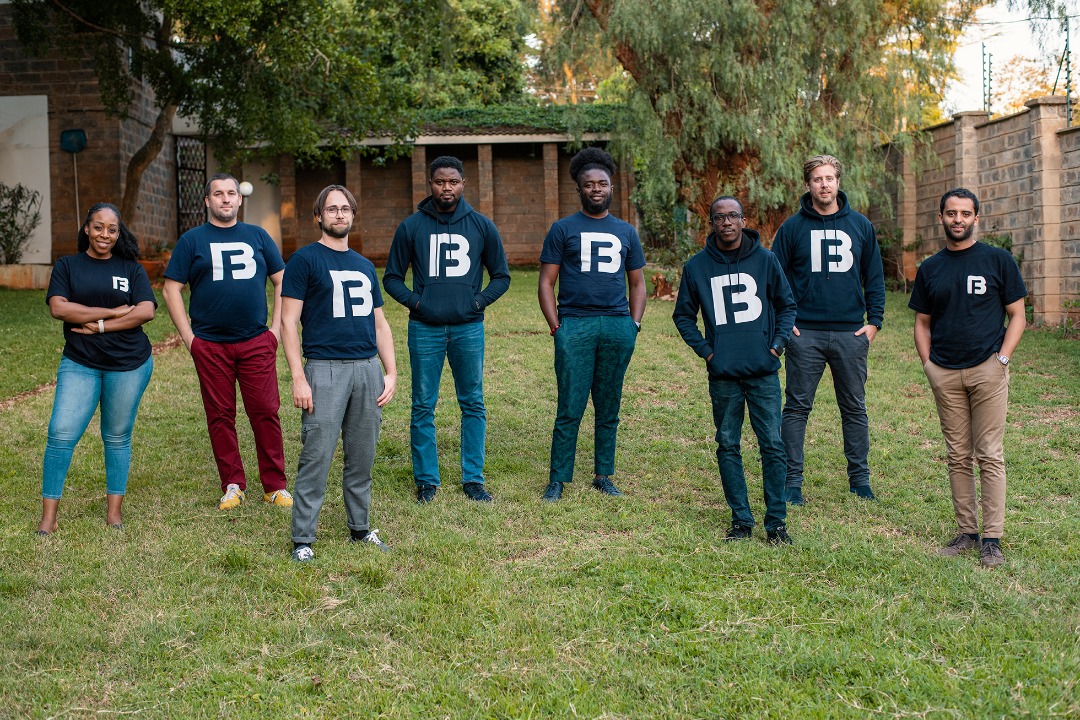
Founded by Chukwudi Enyi (COO), Moses Nmor (CPO) and Julian Flosbach (CEO), Bfree is growing rapidly as ethical tech-based debt-collection tools. This means exploring new markets following the acceleration of digital loans. The market is buoyed by the huge number of underserved people shut out of loan services by traditional financial firms.

“We are going into markets with large populations, credit deepening and an underdeveloped regulatory environment, where a behavioral collection approach is likely to work,” Bfree co-founder and CEO Julian Flosbach told TechCrunch.

“We saw that there was like a little bit of a breach in the value proposition of lenders — they are good at giving out loans, but the aftersales services of the credit market didn’t work as collections processes were inefficient and not user friendly,” said Flosbach.

Bfree has found 16 new markets which include Ghana, India, Uganda, Brazil, Colombia, Mexico, Russia, Poland, Pakistan and Indonesia. The startup is now recruiting massively as it sets up operations in the new markets.

Flosbach told TechCrunch that Bfree employs the use of ethical debt collection standards and works closely with defaulters for tailor-made settlement options, with the end-goal of increasing the repayment rate and customer satisfaction.

By applying ethical debt collection standards, Bfree ensures the privacy of customer information during the process, explore flexible repayment options and do not lead to unnecessary penalties like lateness fees and debt-shaming.

Per TechCrunch, Bfree is currently working with 30 credit institutions, including digital lenders, micro-finance institutions and banks. The startup uses a two-way method, depending on a customer’s risk. It either directs them to a self-service platform, where borrowers set new payment plans using their phone number, or follows up on debt balance through automated communication (chatbots, callbots or IVR technology) or direct calls.

Using the ethical debt collection standards, Bfree has so far followed up with 1.1 million defaulters to date, and is currently handling around 800,000 customers, a majority of them in Nigeria. Flosbach said it anticipates the startup to be handling 1.4 million profiles by the end of next month.

Bfree’s ethical debt collection now presents a solution that will end the controversial method of debt-shaming, which has seen digital loan firms calling and texting friends and family members on the contact list of their borrowers.

The Wisdom from Samuel Eto’o: “Africans have a lot of talent … “

0

The former Barcelona and Cameroon’s Indomitable Lions ace striker has a message: Africa will rise via education.

Samuel Eto’o: “I am convinced that us Africans are significant in so many things but we don’t know how to come together.”

“It has to be said that everyone has their opinion, that’s certain, and that will always be the case, but everyone’s interests must come first, ahead of the individual’s. That’s how other continents develop. We have to know how to do it here.”

“Africans have a lot of talent, Europeans a bit less. But the Europeans have understood something: education. Education is the magic of every success.”

“In Africa, we don’t know how to educate ourselves, and to educate you have to have patience. What you educate today will bear fruit in 10 years’ time. We don’t have that patience.”

“On the other hand, in Europe, people don’t stop educating themselves. You go and see someone in France and they say, ‘I’m going to do a course on this’. But why does he do that when he has a job?”

“Because the people have understood that to improve you have to educate yourself. And that’s what we Africans have to do — educate Africans and not stop. And then we will have the chance to win the World Cup.”

Source: CC WhatsApp

Nigeria Ramps Us Taxes As It Looks for Revenue to Service Debts

2

“There’s now an excise duty of N10/per liter imposed on all non-alcoholic and sweetened beverages; and this is to discourage excessive consumption of sugar in beverages which contributes to a number of health conditions including diabetes and obesity.”  Nigeria’s minister of finance,  Zainab Ahmed.

Samuel Nwite explains how Nigeria has ramped up taxation in this piece. The nation has no option with debt servicing picking a big chunk of the nation’s revenue. My prediction remains: by 2027, most national universities would be privatized as the government looks for ways to cut expenses.

The current model of everywhere tax will not do much since there are few things to tax. The key thing would be cutting expenses; you will see surprises.

The Central Bank of Nigeria (CBN) has stated that heavy debt servicing is taking a toll on lean fiscal resources.

This was disclosed by a member of the CBN board, Prof. Mike Idiahi Obadan in his personal statement at the last MPC meeting.

The debt serving position for Nigeria could hinder the availability of funds to finance critical government programmes and projects.

[…]

“The Federal Government has struggled against the tide of two debilitating recessions in five years, occasioned largely by externally-induced shocks including the coronavirus-induced health and economic shocks. With little or no fiscal buffers, it has had to borrow heavily, domestically and externally, to mitigate the negative impacts of the shocks,” he said.

He stated that the skyrocketing debt service to revenue ratio is putting pressure on Nigerian’s fiscal resources. “With the rising debt service-to-revenue ratio, which is currently put at over 90%, heavy debt servicing is taking a toll on lean fiscal resources and could hinder the availability of funds to finance critical government programmes and projects,” Obadan stated.

Sugar Tax: Nigeria Introduces N10/Liter Tax on Non-alcoholic Beverages

Energy Strikes Bitcoin Hard

0

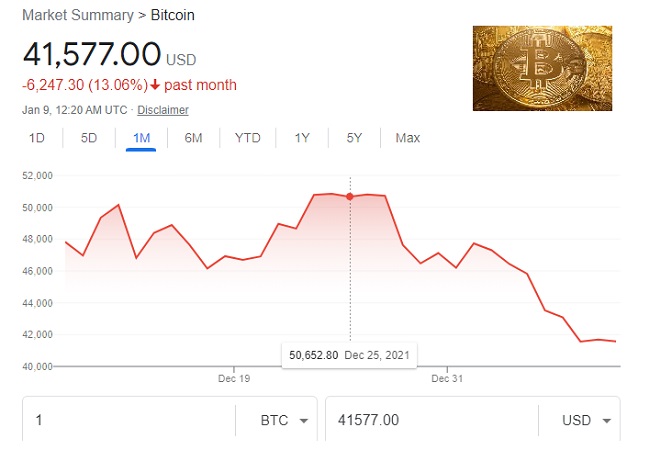
It is a big irony: a decentralized currency could be muted by a centralized asset called energy. Yes, as Kazakstan protests and Iran stays in the crosshairs of the Vienna meeting, Bitcoin will wobble; both countries mine 25% of total BTC after the great China exit.

This is a black swan on this fledgling currency because if the Nordic follows as planned, this winter for hodlers may be really long! Sure, if truly a “decentralized” currency, you will hope hodlers can mine it from their home power sockets.

The next 6 months could be extremely important for BTC and it has nothing to do with the exchanges and national “bans”, but all to do with nations that provide electricity to mine the stuff. Be on alert!

China’s crackdown on Bitcoin mining last year, culminating in a full ban in September, unleashed a diaspora of producers seeking new homes. Many flocked to green sources in the Nordic nations, while others tapped coal and natural gas in Kazakhstan, Iran, Kosovo, and tiny Abkhazia; by last fall, more than one-quarter of all of the signature currency’s coins were being minted in Kazakstan and Iran alone.

But in the past few months, those formally welcoming venues have been booting miners en masse. The newcomers are hoarding gigantic volumes of electricity, creating shortfalls that are spreading blackouts from Tehran to Almaty. The trend is especially bad news for enthusiasts who predict that the Bitcoin industry will soon solve its pollution problem by running mainly on renewable energy. In a new twist, Scandinavian nations are claiming that they can’t meet clean energy goals if crypto is hogging such a huge and growing share of their wind, energy, and geothermal resources. (Fortune)

Comment on LinkedIn Feed

Comment: Given that people in different countries get their energy from different sources, energy is not centralized. And it is distributed. During the Kazakhstan protests, Bitcoin hashrate made a new high, and has since not dropped as it did in the China ban times not even close. The network learns about weak spots and route around things like that. Even the internet was out too, yet blocks were still broadcast by some miners through eg: blockstream satellites. Oh the price drop may be correlated with the KZ protests not caused by it.

Response: Certainly, Nigeria is not powered from the same source as Iran. And Brazil is not getting energy from the same source as Canada. The concept of “centralized” energy is not defined by the geographical distribution of the global population, rather the total energy received from the national grid per population within a nation (in my understanding)

So, when I said energy was centralized, I was saying that the bulk of commercial and industrial energy sources are not disparate but largely delivered from national grids within the economies. In other words, those sources are not in people’s backyards. That does not mean that Nigeria and Ghana and USA and Canada are getting energy from the same source.

Let me also leave a formal definition of centralized energy from United States EPA: ““Centralized generation” refers to the large-scale generation of electricity at centralized facilities. … The electricity generated by centralized generation is distributed through the electric power grid to multiple end-users.” It is not defined based on global population or national sources of energy at global scale.

I do think that my usage is in order; I will not edit it. Thanks

Organize Your Team Around Your Revenue Operating Model

0
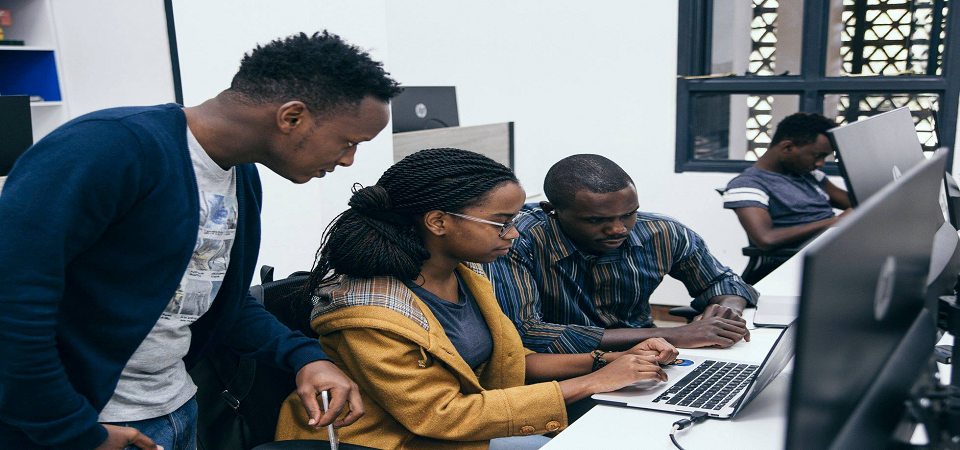
Team at work

At the very start, a business may have zero revenue streams but it should have a plan detailing how it plans to make money and keep the business afloat. I have said a bit about what a revenue model is in one of my previous posts. It is the strategy a company will use to create and manage its revenue streams, and the resources it will require to sustain it.

It could be based on sales, adverts, subscriptions, referrals, and the likes, but it will generally be a strong determinant of your long-term profitability. It should come up at the time you are drawing your business plan because revenue generation will determine the financial projections in your business plan.

It is quite important that you decide on the Revenue model first before having each department or sub-teams present you their own model. For instance, imagine that your tech team builds an application with features in line with a Freemium model. On the other hand, you have the sales or business development team presenting you a plan or strategy that drives on the Affiliate Revenue Model or Subscription Revenue Model. The situation can get even worse when your CFO now presents you with financial projections based on Direct sales or Transactional Revenue models.

Trying to merge all their plans together would be your perfect recipe for disaster. Instead, first, create a revenue operating model for the business and then have each of the teams work based on that model. You can sit with your team heads or your partners, or even speak to a consultant while trying to decide what revenue model will work best for your business.

Do proper research and speak to experts while reaching the decision, because once you hit the ground running, it is not easy to change your revenue model until you have stabilized as a business.

With the revenue model in place, staff can be properly briefed as they onboard and will know what is expected of them early enough. You will also now have a template upon which the subteams will develop their plans, strategies, and products. If you choose the subscription-based model, the product development team knows on time what features to merge into the product. The marketing and business development team also develops their plan based on this model and this way you have the entire team working in sync.