DD
MM
YYYY

PAGES

DD
MM
YYYY

spot_img

PAGES

Home Blog Page 5395

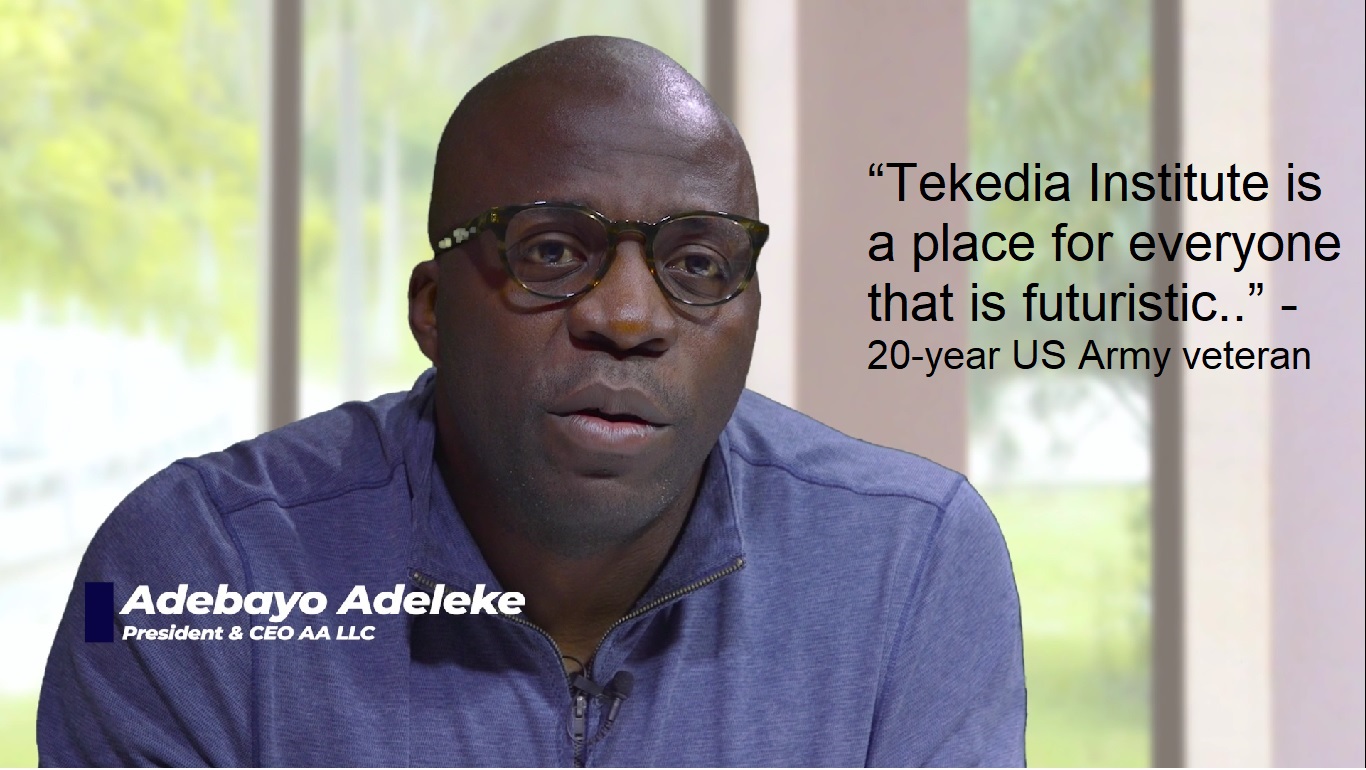
“Tekedia Institute is a place for everyone that is futuristic..”, says a 20-year veteran of the United States Army

0

A testimonial from an officer and a gentleman; a 20-year veteran of the United States Army, on the quality and impact of Tekedia Institute. As the Lead Faculty of the Institute, I ask you to listen to Adebayo Adeleke and register for Tekedia Institute programs.

We run a new model of business & entrepreneurial education where a school has a venture investing sister company. Yes, through Tekedia Capital, we’ve invested in some of the most amazing startups in Africa. We understand the patterns through data and those help us to deliver “fresh”, “quality” and “pragmatic” education.

The next Tekedia Institute Mini-MBA class begins Feb 7 and now is the time to register for yourself, your staff and your associates. It is a totally re-engineered curriculum from the best in the business.

Check all our programs here and pick one 

Think up possible revenue streams fast in new companies

0
Naira USD

At the beginning of a startup, many founders will have a long list about how they will spend any fund that comes into their business in the first couple of years. For the most part, they are not thinking about how to make money, except, of course, their big idea. With so much emphasis on expenditure and less on revenue, many businesses will get choked in their first year. This is probably one of the reasons statistics say 60 percent of businesses fail in their first year.

From my earlier article on zero-funding, you probably understand by now that I am not a fan of heavy spending at the start of a business. Leave out those things that could gulp funds first and focus on using the free resources available to get some cash flow. For instance, why would you want to spend $1000 on building a robust website in your first month of operation when you know that you will make a lot of changes over the first year? Why not start with having robust and professionally done social media handles? At least, you will not spend $1000 to create a Facebook, Instagram, or LinkedIn profile for your business?

Stop thinking about the ways you will spend the money (whether you have it or you are still expecting it) and start thinking about how to make the money come. Get your cash flow running.

In my first year in business, I put out a tricycle on hire and used the weekly returns to keep operations running till I got my first client. Hiring out a tricycle certainly had nothing to do with the services my business was rendering, but it was a little something that gave me some cash flow.

Forget that thought that says you need money to make money. You do not need money to make money. You need to work. You need to get out there and start talking to people, offering your service, selling your solution. You need time and effort to make money. And for as long as possible, I would say that you don’t start investing money until you are making some money, however little the revenue might be.

Some people have an idea and the next thing is that they are on the search for investors’ funds to build a prototype. How do you expect an investor to put his funds into something when you have not invested any fund of yours? How is the investor sure that your big idea is not just another overhyped solution that crashes as soon as it hits the markets.

You do not need investors’ money to get a prototype. You can start with using your money, or offer some products or services to some clients and use the money to build your prototype. You are most likely to build the prototype right the first time when you are using your own funds, then when you are using investors’ funds.

Well, not everyone might agree with that statement but it is mostly true. My point is that you should get creative in thinking up possible revenue streams while your business gets on its feet. Like in my case, it could be something totally unrelated to the business. It can also be something in line with the business, but it should be something that will generate some revenue on a regular basis starting immediately. It should also be something tested. Something sure.

Much Ado About Confab Report And Restructuring

0

The last time I checked, many Nigerians in various fields of endeavour were emphatically calling for restructuring of the Nigeria’s State.

Prior to this clamour, hundreds of thousands of individuals cum groups across the country had been equally calling on the Federal Government (FG) to ensure thorough implementation of the report of the National Conference, Abuja (Confab) with a view to restoring various lingering socio-economic cum political quagmires.

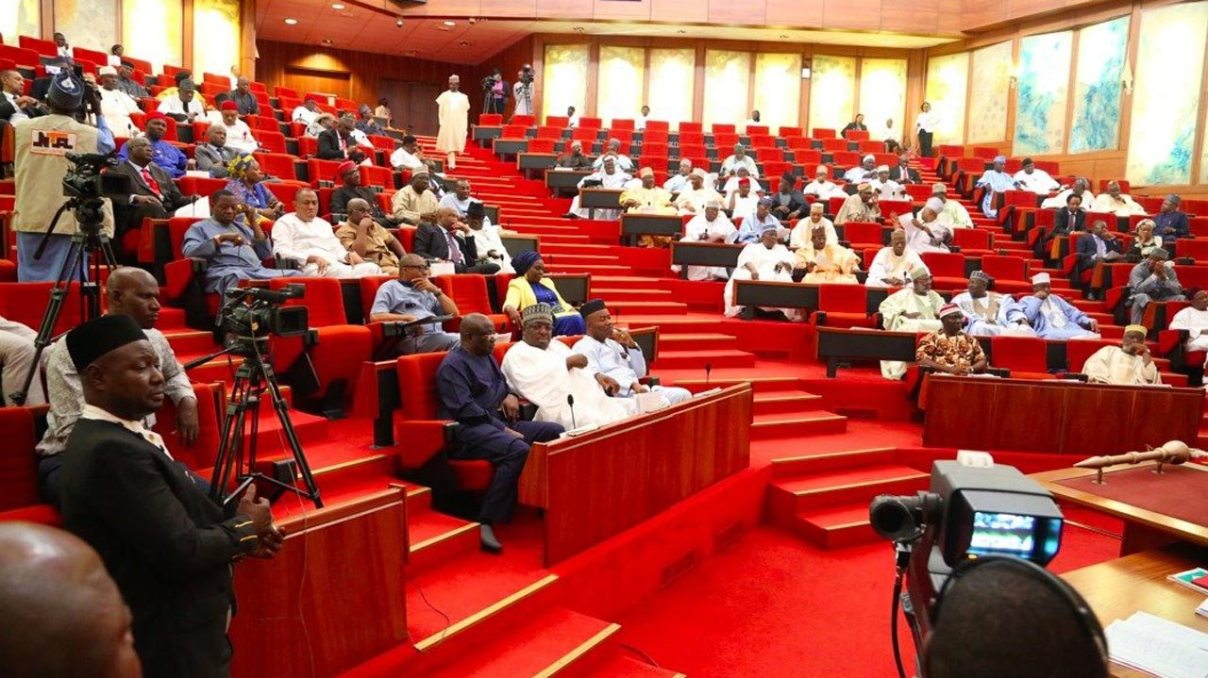
It would be recalled that, in 2014, following several agitations by the citizens, the FG under the leadership of Dr. Goodluck Jonathan thought it wise to institute a national conference. Consequently, the proposed conference was inaugurated on 17th March 2014 in Abuja, the Nigeria’s Capital Territory.

It’s noteworthy that about 492 delegates, that represented a cross-section of Nigerians including professional bodies, were present at the event that was graciously chaired by Justice Idris Kutigi (rtd.).

After plenary session of the historic outing that lasted for months, twenty committees were inaugurated among the attendees. The committees included, public finance and revenue generation; political restructuring and forms of government; national security; devolution of power; politics and governance; environment; social welfare; law, judiciary, human rights and legal reform; public service; transportation; agriculture; society, labour and sports; electoral matters; foreign policy and diaspora matters; energy; land tenure matters and national boundary; trade and investment; religion; as well as science, technology and development.

At the end, the Confab, which was originally billed to last three months but was granted about a month extension, came up with pertinent and mind-blowing resolutions towards settling the nation’s myriad problems. The report (resolutions), which was presented to former President Jonathan on 21st August 2014, summarily recommended mainly as follows: that,

  • The current system of 774 local authorities should be scrapped.
  • More 18 states should be created.
  • National income going to the FG should be reduced, thereby increasing that of the states.
  • There should be modified presidential system of government that combines the presidential and parliamentary systems.
  • Power should be shared and rotated at all levels of government.

The report, which bore more than 600 distinct resolutions and produced a 10,335-page work, contained issues ranging from the contentious revenue-sharing formula to the divisive political structure of the acclaimed giant of Africa. However, it’s equally pertinent to note that about #7 billion was utilized for the Confab.

At the moment, an average Nigerian citizen is deeply concerned over the much-talk-about proposed restructuring as well as the ‘awaited’ implementation of the Confab’s report.

From my painstaking view, the prime problem with Nigerians remains that we overstress issues. We often tend to use ‘noisemaking’ to qualify our intent, even when the object is laudable. Which rational being in Nigeria is yet to realize that the country requires restructuring? It depends on the perspective we are looking at it.

From a general context, to restructure simply means ‘to organize differently’. In other words, restructuring is the act of organizing the operational mechanism, or other structures, of a given institution/society for the purpose of making it more viable or better organized for its current needs.

Going by this brief definition, there’s no gain reiterating that Nigeria deserves to be restructured. People are however of the view that the proposed restructuring is targeted toward disintegrating Nigeria; that is a fallacy, or a misconception. Restructuring is arguably a way forward in the present Nigerian situation; hence, such campaign ought not to be overstressed.

Raising much ado over such laudable idea would make people to abuse its potential efficacy. When some things of national interest are being suggested, courtesy demands that we go back to the drawing board in order to cross-examine the essence of such mantra as well as its anticipated impact.

The point is that, all the facets of the country, to include social, economic, and political, are yearning for lobotomy, and such measure can only be actualized via restructuring. Sure, restructuring would help to strengthen the country’s national unity contrary to the ongoing presumptions in some quarters.

Considering the Confab’s report; may I ask, what was really so special about the 2014 National Conference? Prior to the Confab, I categorically made it clear that the proposed conference wouldn’t solve the country’s numerous problems; rather, may end up constituting more harm.

As far as I’m concerned, the conference in question only ended up squandering the funds that would have been channelled into other crucial matters of national interest. #7 billion wasn’t #7 million; it was a whole lot of money. Besides, the duties carried out by the Confab’s delegates could be exercised by the federal legislators; I equally pointed this very issue out, but the candid advice wasn’t heeded.

Talking about the report; was there any consequential resolution reached by the august assembly that was different from what discerning Nigerians had been clamouring for prior to the inauguration of the assembly?

Before the Confab, who didn’t know Nigeria was yearning for additional states; who didn’t know that Nigeria needed true federalism; who was yet to realize that power needed to be shared or rotated among the electorate, at all levels of government; or, who was yet to acknowledge that Nigeria needed to review most of her fiscal policies?

The Confab even suggested that we scrap the existing Local Government (LG) system that was established with the sole aim of taking the government closer to the people, forgetting that why the LG system is presently seemingly moribund is as a result of corruption among the various state governments’ officials.

It’s even more worrisome to acknowledge that the said conference suffered a derivation fiasco owing to ethnic interests among the delegates. It’s not anymore news that various well-meaning Nigerians had rigorously solicited for a return to the First Republic paradigm when regions controlled 50 per cent of their respective resources, 30 per cent was shared among all the regions, whilst 20 per cent went to the FG.

It was against this background that the Southern delegates suggested that the current derivation demand should be reduced to 18 per cent. Similarly, the Northern delegates advocated for 5 per cent revenue allocation toward rehabilitation of the North-East region ravaged by the Boko Haram insurgency.

There was agitation that the areas outside the North-East with similar challenge ought to be included as one of the beneficiaries of the 5%, but the Northern delegates frantically kicked against the agitation, thereby causing the derivation proposal to suffer a setback.

We really need to stop overstressing the Confab report, thus concentrate on the ongoing call for restructuring. Nigeria acknowledges her plight; hence, no one comprehends the plight more than she does. He who wears the shoes knows where it pinches most.

In other words, we don’t need further analysis or directive before realizing how to address the lingering anomalies. We are required to fiercely hold the bull by the horn, and quit from indulging in frivolous and retrogressive debates to avoid causing more harm to the system.

In essence, our plight can only be adequately tackled and solved if we embraced reality. The predicaments are glaring, so are the remedies.

Once Again, Nigeria’s Central Bank Devalues the Naira

0
Central Bank Governor, Nigeria

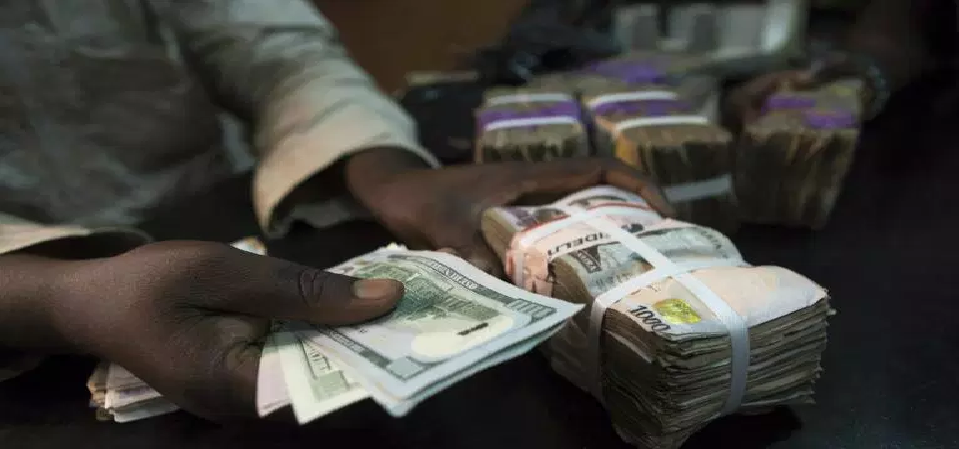
The Central Bank of Nigeria (CBN) has once again devalued the naira, this time, from N411 to N413.49/$1, adding to the many times the Nigerian currency has been devalued in 2021.

The devaluation followed CBN’s adjustment to the official exchange rate on its website, changing it from N411/$1 to N413.49/$1.

The CBN confirmed the devaluation through the response of its spokesperson, Osita Nwasinobi, who told The Cable upon inquiry: “If you see N413, then that’s what it is. The market determines the rate.” The devaluation pushed the naira to its all-time high in parallel market on Friday.

Under the leadership of governor Godwin Emefiele, the central bank has been working to tame the tides of multiple exchange rates, which has been fingered as an obstacle to Nigeria’s economic growth. In May last year, the CBN adopted the Importer & Exporter window (I&E), in an attempt to heed the repeated calls by the International Monetary Fund (IMF) and experts for Nigeria to have a unified foreign exchange rate. The naira was adjusted from N379 to N411.

The CBN has tried many regulatory policies in an attempt to stabilize the naira, which has been free-falling for years now. Recently, the apex bank cut off dollar supply to Bureau de Change operators, accusing them of inflating dollar price in the parallel market. Also, AbokiFX, an online forex aggregator, was in September, declared a ‘person’ of interest in Nigeria’s forex crisis. Emefiele accused the online outlet of being responsible for the free-fall of the naira by manipulating market prices, and vowed to go after it.

AbokiFX was forced to shut down as the pressure from the central bank heightened. The outlet said then it hopes its decision to suspend operation will boost the naira’s value in the foreign exchange market.

“We will not be publishing any form of rates on our platforms for now. We sincerely hope this suspension will lead to the Naira appreciation,” it said.

Months after AbokiFX closed its foreign exchange rates publishing, the naira is yet to show any indication that the aggregator was manipulating the forex market. The naira’s value has continued to plummet, compounding the challenges of doing business in Nigeria.

Though in its latest move to quell the forex crisis, the CBN shifted its dollar supply to commercial banks, mandating them to sell to qualified applicants at the I&E rate.

However, business owners who rely heavily on FX to run their businesses, are still lamenting that insufficient dollar supply in the Nigerian market is resulting in high cost of goods and services, nearly crippling their businesses. On Friday, December 31, 2021, the naira closed at N435/$1 after opening at N420/$1 at the official market, according to FMDQ OTC Securities Exchange, a forex data platform.

Experts said that the continuous crash of the naira is as a result of insufficient dollar liquidity in Nigeria. Increase in demand for dollars is said to be forcing the CBN to deplete Nigeria’s dollar reserve, fueling the fall of the naira. With depleted oil output and reduced diaspora remittances, the naira is expected to undergo more devaluation in 2022.

Starting the year on a legal note

0

Start the year by going big on your goals and plans. If you have a start up, business or nurturing a dream of owning a startup or running a business of your own, creating values and becoming an employer of labour, this year is the best year for you to kick off. This is the best year to initiate and execute your plans.

All you need to start is by registering the business with the corporate affairs commission (CAC) to give the business or startup a legal face and background. You can either register your startup as a business name or as a company, depending on how big the startup is. Whenever your business or startup is registered, it becomes a legal personality, separate legal entity, separate from you the founder, it can sue and be sued, acquire properties, employ staff and agents and do other things a legal personality is legally entitled to do. 

Kick off your 2022 by registering that startup or business you had in mind since or that startup you have been operating since without incorporation. It is when you are duly incorporated that you can properly expand the business. 

An investor or big clients won’t take you seriously if the business or startup you are pitching to them is yet to be incorporated with the corporate affairs commission. An investor who knows his onions will definitely not want to invest in an unincorporated startup or business for the risk of losing his or her money.