DD
MM
YYYY

PAGES

DD
MM
YYYY

spot_img

PAGES

Home Blog Page 5412

National Development Plan 2021-2025: Nigerian Govt to Increase Public Debt to N50.tn by 2023

0
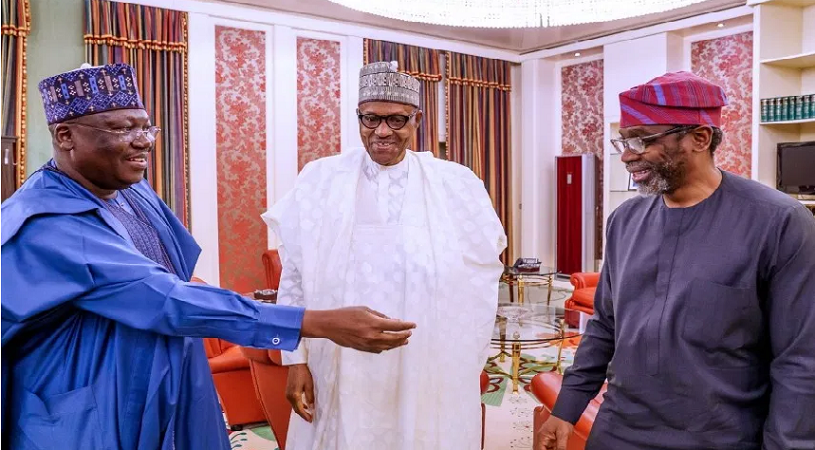
Nigeria leaders

Amidst the persistent backlash following the Nigerian government’s public debt, which has spiraled upward in the past five years, the federal government is poised to borrow more next year.

The National Development Plan 2021-2025, which contains projections that include 30% capital expenditure increment, reveals that the government plans to fund its infrastructural and social programs with loans. The move will push Nigeria’s public debt stock to N50.22tn by 2023, with domestic debt at N28.75tn and external debt at N21.47tn.

In the plan is also a plan of N348.1 trillion, which the government says it needs to finance. The borrowing framework in the plan is 45% each for both foreign and domestic borrowing.

“The plan will require an investment of about N348.1tn to achieve the plan objectives within the period of 2021-2025. It is estimated that the government capital expenditure during the period will be N49.7tn (14 per cent) while the balance of N298.3tn (86 per cent) will be incurred by the Private Sector. Of the 14 per cent, government contribution, FGN capital expenditure will be N29.6tn (9 per cent) while the sub-national governments’ capita

“The borrowing framework in the plan is 45 per cent each for both foreign and domestic borrowing while the other financing sources account for 10 per cent. Domestic bonds and concessional external loan financing, amongst others, will account for the borrowing strategies for the plan. Thus, the government will improve on current debt management strategies to ensure sustainability,” the plan reads partly.

The plan has not only increased the anxiety emanating from Nigeria’s rising debt profile, which is believed to have mortgaged the future of young Nigerians, it has also put the government’s ability to fund the 2022 budgetary allocations under serious question.

The government has been spending 98% of its revenue generation on debt servicing, a situation that has largely impacted its ability to finance budgetary allocations. Nigeria’s public debt stood at N38 trillion at the end of the third quarter of 2021, according to the Debt Management Office.

Although the plan showed that Nigeria’s revenue is expected to hit 25 trillion in four years and the government also intends to reduce total public debt by 2025, the current situation has cast doubt on its economic ability to achieve that aim. President Muhammadu Buhari’s administration has been nearly helpless in grappling with revenue shortfalls with no sight of reprieve in the near future.

Nigeria’s dwindling economic situation, which is expected to plunge more Nigerians into abject poverty, is stirring opposition to the government’s move to borrow more, as it is believed that it will exacerbate suffering.

What experts are saying

Kingsley Moghalu, former Deputy Governor of the Central Bank of Nigeria, who contested the last presidential election, described the government’s constant borrowing as “irresponsible.”

“I condemn the borrowing plan in its entirety. I think the Federal Government of Nigeria has been borrowing irresponsibly and mortgaging the future of the youth of Nigeria.

“This should stop. The damage will be very difficult to repair. There is no need for Nigeria to be borrowing at the rate it is borrowing and the huge sums it is borrowing.

“There is an element of callousness in this. They are doing everything as possible to borrow before 2023, and then walk away and hand over the problem to someone else,” he said.

Sheriffdeen Tella, a professor of Economics at the Olabisi Onabanjo University, Ago-Iwoye, Ogun State, said the government should not be thinking of adding to the already worrisome debt level.

“Even at the level that we are now, it is worrisome, not to talk of planning to borrow more. It is unfortunate that the government is always thinking of borrowing, instead of thinking of other ways to generate revenue.

“They can ensure that public-private partnership projects are built, once operational and yielding capital, though whoever implemented it can generate their money plus interest and then the project becomes ours and we can generate revenue from those. There are projects that we can scale down until we have enough funds to implement and there are projects that can generate money on their own,” he said.

Another economist, Dr. Muda Yusuf, who is the Chief Executive Officer of the Centre for the Promotion of Private Enterprise, said that the increasing debt profile is becoming a problem as the government’s revenue base is not strong enough to sustain it.

“The rising debt profile of the government raises serious sustainability concerns. Although the government tends to argue that the condition is not a debt problem, but a revenue challenge. But the truth is that debt becomes a problem if the revenue base is not strong enough to service the debt sustainably. It invariably becomes a debt problem.

“What is needed is the political will to cut expenditure and undertake reforms that could scale down the size of government, reduce governance cost, and ease the fiscal burden on the government,” he said.

He also advocated true federalism and downsizing the cost of governance.

“It is imperative for the country to operate as a true federation which it claims to be.  The unitary character of the country is making it difficult to unlock the economic potentials of the sub-nationals.  It is perpetuating the culture of dependence on the federal government.

“It is necessary to scale down the size of government and cost of governance.  Fiscal sustainability is driven by both cost and revenue. Therefore managing the major drivers of cost and revenue is imperative. As far as possible, the government should push back in sectors or activity areas where the private sector has the capacity to deliver desired outcomes. We should see more concessions and privatizations at all levels of government,” he said.

He added that the debts, which should be concessionary, should be used to strictly fund capital projects that would boost the productive capacity of the economy.

“It is important to ensure that the debt is used strictly to fund capital projects that would strengthen the productive capacity of the economy.  This is the position of the Fiscal Responsibility Act.

“Additionally, emphasis should be on concessionary financing, as opposed to commercial debts which are typically very costly,” he said.

The Executive Director of Centre for Anti-Corruption Open Leadership, Mr Debo Adeniran, said that the government is becoming reckless in borrowing at a fast pace.

“The government is fast becoming reckless in the way it is borrowing, yes, it might have its reasons to have resorted to borrowing because of the infrastructural deficit and collapse which was in existence before this administration came in. but this administration needed to understand that it could not solve all the problems of more than 50 years overnight.

“And taking interest-yielding loans is likely to enslave us and the generations to come. Most of the countries that are giving us loans are entrapping us like China. All the infrastructures we are using their loans to build are very sensitive and if they are to take over it Nigerians will suffer,” he said.

From July to September, Nigeria’s total debt stock rose by N2.540 trillion. Last month, Senate approved a fresh $17 billion, and earlier this month, $5.8 billion loan requests made by Buhari under the 2018-2020 borrowing plan.

Government’s borrowing plan focuses on domestic bonds and concessional external loans, but has been on justifiable rise. The National Development Plan 2021-2025 means that Buhari’s administration will accumulate about N12tn debt in two years from 2021 to 2023.

The borrowing pace has been described as unsustainable because almost all the revenue generated by the country is used to pay the current debt, making the government incapable of paying for a lot of its expenditure.


DuckDuckGo’s Privacy-Focused Search Techniques, Drives its Growth to 47% in 2021

0

2021 has been great for the tech industry, especially fintech, which has birthed many unicorns, opening the African continent to its biggest investment year so far. But outside the finance industry, several companies in the tech space attained ground-breaking feats – one of them – DuckDuckGo.

The privacy-focused search engine averaged over 100 million daily search queries, growing by almost 47%. It is an unprecedented growth for DuckDuckGo, who has been insignificant in the web search business dominated by Google. The growth has been attributed to the company’s privacy-protecting business model which is increasingly attracting users.

DuckDuckGo has been building on the progress from the past. Analysis by Bleeping Computers found these privacy-driven techniques as the secret of the search engine’s recent growth.

Unlike other search engines, DuckDuckGo says they do not track your searches or your behavior on other sites. Instead of building user profiles used to display interest-based ads, DuckDuckGo search pages display contextual advertisements based on the searched keywords.

This means that if you search on DuckDuckGo for a television, that search query will not be used to display television ads at every other site you visit.

Furthermore, to build their search index, the search engine uses the DuckDuckBot spider to crawl sites and receive data from partners, such as Wikipedia and Bing. However, they do not build their index using data from Google.

DuckDuckGo shows rapid growth

While Google remains the dominant search platform, DuckDuckGo has seen impressive year-over-year growth.

In 2020, DuckDuckGo received 23.6 billion total search queries and achieved a daily average of 79 million search queries by the end of December.

In 2021, DuckDuckGo received 34.6 billion total search queries so far and currently has an average of 100 million search queries per day, showing a 46.4% growth for the year.

While DuckDuckGo’s growth is considerable, it still only has 2.53% of the total market share, with Yahoo at 3.3%, Bing at 6.43%, and Google holding a dominant share of 87.33% of search engine traffic in the USA.

However, as people continue to become frustrated with how their data is being used by tech giants like Google, Facebook, Microsoft, and Apple, we will likely see more people switch to privacy-focused search engines.

To further help users protect their privacy, DuckDuckGo released an email forwarding service in 2021 called ‘Email Protection’ that strips email trackers and allows you to protect your actual email address.

They also introduced ‘App Tracking Protection for Android,’ which blocks third-party trackers from Google and Facebook found in apps.

More recently, DuckDuckGo announced they are releasing a DuckDuckGo Privacy Browser for Desktop that will not be based on Chromium and will be built from scratch.

“No complicated settings, no misleading warnings, no “levels” of privacy protection – just robust privacy protection that works by default, across search, browsing, email, and more,” explains a recent blog post about the new browser.

“It’s not a “privacy browser”; it’s an everyday browsing app that respects your privacy because there’s never a bad time to stop companies from spying on your search and browsing history.”

For those looking to take back control of their data and add more privacy to their search behavior, DuckDuckGo may be the search engine for you.

The Ascension into 2022 And the Message of the Rise of All

0

The ant-hills are not built by the elephants but by the collective efforts of the little rejected ants. The ascension into 2022 will not come because of our  individual efforts; it took a village, a community, and a nation to have gone this far.

Covid-19 showed us that the strongest among us is limited by the weakest in our midst. When a disease could not be classified as “African”, “poor nation”, “developing world”, “poor hygiene”, etc, you suddenly see that exceptionalism, most times, could be driven by perception.

In 2022, may the world preach the message of “The Rise of All”, and not just a few!  Happy New Year ahead.

How Far With WAEC’s Electronic Mode Certificate?

0

Education has in recent times been arguably regarded as one of the greatest investments anyone could lay his hands on. It’s so, because it is an area of life that breeds the mindset towards attaining a remarkable level.

The aforementioned perception could be the reason discerning individuals and families do not hesitate to sacrifice virtually their entire treasure in their tireless and endless quest for sound education upon their wards.

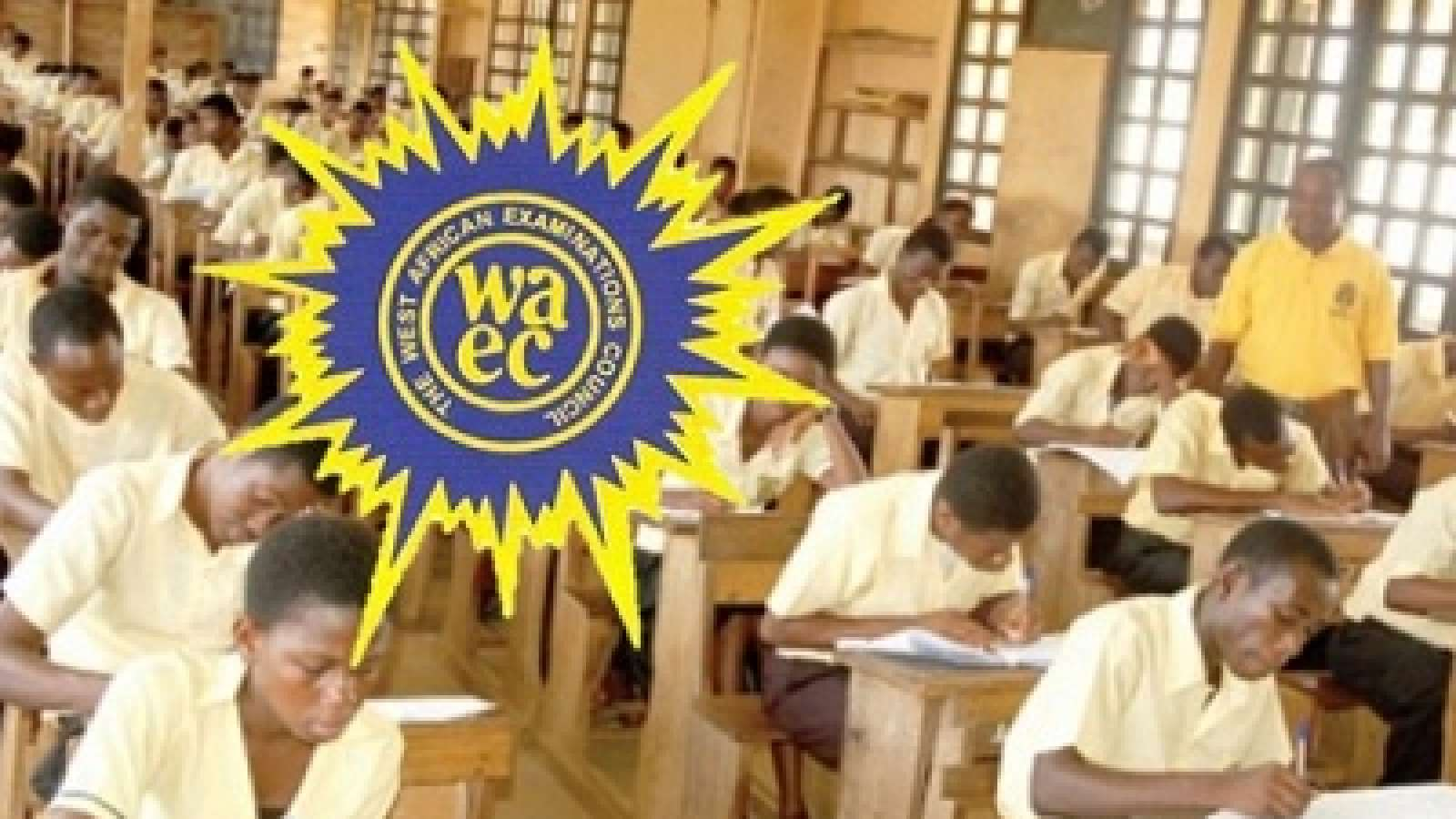
Nigeria’s education sector cannot be holistically discussed by any thinker or group without mentioning the West African Examinations Council (WAEC), which has over the decades been a household name in the sector.

Owing to the above fact, most times in the contemporary Nigerian society alongside other West African countries, rather than mention the Senior School Certificate Examination (SSCE), which encompasses the various forms of examining bodies, people find it easier to say ‘WAEC’ while discussing external examinations even when they actually mean the umbrella acronym – SSCE.

This signifies that the overwhelming popularity of WAEC has made it possible for the body to relatively overshadow the relevance of the other existing examining bodies in Nigeria such as the National Examinations Council (NECO) and National Business and Technical Examinations Board (NABTEB), among others that equally speak volumes in the country’s education sector.

Hence, no one seems to take any issue pertaining to WAEC for granted, especially when it concerns the overall interest of the concerned public. It suffices to say that whenever the revered exam board comes up with any proposed innovation, people don’t delay in cross-examining the real content and service value of the impending initiative.

It is on this premise that the recent avowal made by the WAEC instantly triggered mixed feelings among the teeming Nigerians and beyond. Nigeria’s section of the Council disclosed, three years back, its unflinching intention to, henceforth, start issuing candidates’ certificates via electronic mode otherwise known as e-mode.

According to the statement, which was tendered precisely on 13th December 2018, through the intended e-mode, the concerned candidates would have the access to apply as well as receive their certificates via an online portal.

It further informed that the proposed method became imperative as a result of the backlog of certificates currently available in their quarters domiciled in the country. The notice indicated that there were thousands of printed certificates, involving numerous years, yet to be collected by the supposed owners. The e-mode pattern, therefore, would ensure that certificates are only prepared upon request of any affected candidate.

Acknowledging that the human society at large is now conspicuously tech-driven, it’s preposterous to assert that the e-mode is a laudable concept that ought to have been born long ago. This implies that the emergence of such an idea is long overdue.

Over the years, prospective candidates of the WAEC have been registering for their intended exams via the online platform, having noted by the council that this is the fastest and easiest way to seamlessly apply for such tests of knowledge compared to the manual system that was previously in vogue.

And the online application has hitherto recorded tremendous success, if not a few technical hitches that have overtime posed a threat to the exercise. Aside from the electronic application towards sitting for either the May/June or November/December batch of the WAEC’s exams, the Statement of Results of the test can equally be accessed through online.

The target beneficiaries have reportedly been enjoying this systematic approach as some would say that the initiative, since inception, has made it possible for them to get closer to the WAEC irrespective of their respective localities or places of residence.

As at the time the WAEC thought it wise to inculcate another initiative into the existing e-mode of application cum receipt of documents, I informed the management of the body the need to comprehend the rudiments of the e-mode exercise with a view to ensuring that all needed parameters are duly considered toward averting possible hitches when fully implemented.

I therefore stated that the e-site must be a well tested and trusted one devout of any form of barrier as regards online activity. Thus, the portal ought to be foolproof that it wouldn’t give room for any operational anomaly regardless of the circumstance.

Any software to be deployed in the process should be of standard cum latest version and ought to be regularly managed by the personnel with the requisite skills who must be staff of the Council. In addition, a special unit that must be willing to work round the clock was expected to be established to handle the A-Z operations and intrigues of the exercise.

Inter alia, world-class anti-hacking softwares were meant to be utilized and maintained as the journey progresses to ensure that internet hackers do not hijack, or have access to, the portal at any time. The WAEC needs to take into cognizance that creating any lapse that could warrant the site to be hacked by any cyber criminal would definitely jeopardize the lofty motive of the body.

Against this backdrop, I mentioned that the Council was required to boast of well-experienced anti-hacking professionals in the proposed special unit. Hence, some of the personnel in the unit must, from time to time, undergo in-house workshops and training on ethical hacking terminology towards updating their expertise. So, a reliable entity should be contracted or engaged in respect of this measure.

One of the major good news concerning the e-mode pattern is that, if duly implemented, people can from anywhere across the global community apply for and have access to their WAEC certificates without involving themselves in any rigorous processes and what have you, thereby averting any kind of stress or inconvenience.

In view of this, the body needed to ensure that the target beneficiaries don’t spend longer than anticipated while assessing the e-mode site from any locality. It suffices to say that the target beneficiaries need to enjoy the services they paid for.

Also, efforts were meant to be intensified to ensure that the initiative becomes cost effective so that it won’t end up constituting further financial nuisance to the prospective certificates’ bearers, or the council in particular.

Thus, the e-application card is expected to be affordable by all concerned.  The site was required to be easily assessed or uploaded to avoid exhausting hundreds of Gigabytes (GB) of data in the process.

As the WAEC was apparently determined to decongest the ‘traffic’ usually constituted by pile-up of printed certificates by introducing an e-mode, it must equally be genuinely ready to guarantee its labour and cost effectiveness so that it wouldn’t in the long run be seen as a menace by the supposed beneficiaries.

It’s noteworthy that the e-mode certificate, which was eventually implemented, cannot be printed but can only be delivered to the candidate via any WAEC office nationwide upon request.

It’s equally advisable for other examination bodies to follow suit, so people can assess their certificates with ease without involving any tangible physical effort.

It’s an aberration to notice that in this digital age, many institutions or entities still rely on archaic modes of services to the detriment of their clients or consumers. 

At Tekedia Institute, We Redefine the VUCA Business World

0

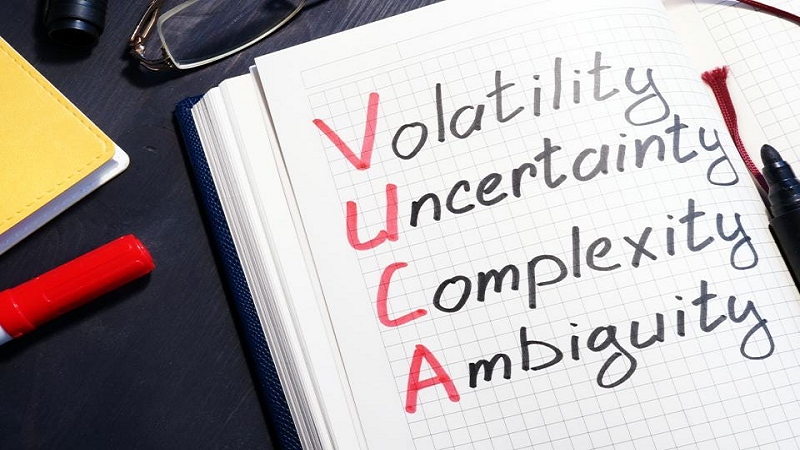
They say that it is a VUCA world. Yes, a business world of Volatility, Uncertainty, Complexity and Ambiguity. At Tekedia Institute, we turn that VUCA world into one of Vision, Understanding, Clarity and Agility through world-class entrepreneurial business education.

Begin 2022 with us and master the mechanics of business systems – and WIN.  Here are our programs with costs – https://school.tekedia.com/courses/all/

  • -Tekedia Mini-MBA: US$170 or N90,000 naira
  • -Startup Masterclass: from start-up to unicorn: $400 / N200k
  • -Advanced Diploma Program: $100 / N45k
  • -Tekedia Practice: $400 / N200k
  • -Tekedia CollegeBoost : click and email, bulk

We’re visiting global startups and spending time with innovators. We’re also embedding our programs into school programs, deepening the capabilities of students in regular schools. Click and check why more startups and companies are choosing Tekedia Institute.