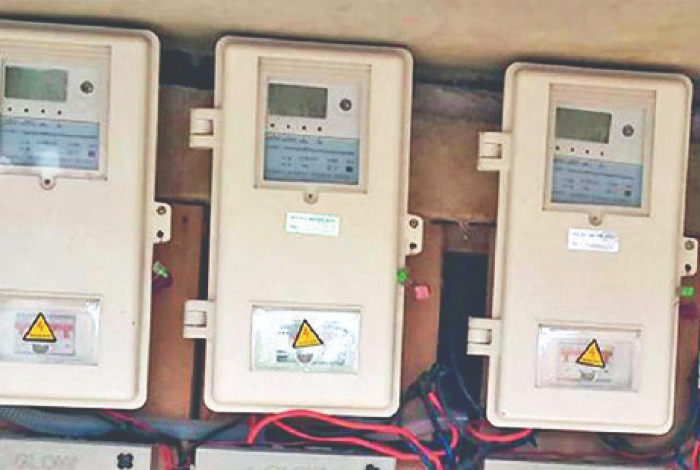
It’s illegal for the Nigerian Electricity Regulatory Commission (NERC) to disconnect your electricity supply without issuing you with 10 days notice.
Unlike what many electrify users may think, the Nigerian Electricity Regulatory commission (NERC) have no legal right to disconnect any user’s electricity connection at will or whenever they choose for any offense whatsoever without given prior notice of at least 10 days to the electricity user, Neither does any electricity distribution company (disco) like Abuja Electricity Distribution Company (AEDC), Eko Electricity Distribution and their cohorts have the power to disconnect any users light without following the due process provided by law.
The extant law regulating the procedures for connection and disconnection of electricity supply currently in Nigeria is the Nigerian Electricity Regulatory Commission’s Connection and Disconnection Procedures for Electricity Services, 2007. This is the law that laid down the guidelines that electricity providers and distribution companies (Disco) must follow while connecting or disconnecting any user’s electricity supply in-order for them not to be breaking any law or deemed to be carrying out an illegal act.
According to this law, before a staff of electricity company or electricity distribution company can disconnect any customer’s electricity supply, 10 days notice must first be issued to the customer and when the electricity official disconnects a customers light, they shall leave a written notice on the customer’s premises advising the customer what to do to get the electricity supply reconnected.
This written notice must contain; the date of the disconnection, the reason for the disconnection, what the customer should do to get his electricity supply reconnected and the contact details of the electricity officials that disconnected the electricity supply in case the customer wants to contact them.
By law, when an electricity distribution company disconnects a customer’s light without following the due process stipulated by law like issuing a 10 days notice to the customer, the customer can sue the electricity company and damages will be awarded against the distribution company for illegal disconnection and illegal tampering of a customer’s electricity supply.
The last time I checked, Nigeria was ostensibly synonymous with murder. The ubiquitous bad omen, usually occasioned by the activity of the so-called herdsmen and/or bandits or what have you, has made virtually every rational Nigerian resort to sleeping with one eye open.
The ugly scenario has lingered unabated that many have begun to insinuate that the Nigerian State is now a ‘Banana Republic’. In some quarters, most dwellers are endlessly of the notion that Nigerians as a people are facing a nemesis owing to the perceived mistake made in 2015.
It wouldn’t be an overstatement if one opines that we have lost statistics of cases pertaining to massacre or homicide that transpired in recent times. The worst of all remains that no locality across the federation is exempted while discussing those that have suffered from such dastardly acts.
Little wonder, even a kid could with ease take to the social media just to write all sorts of trash against the President Muhammadu Buhari – led government.
The purported farmers, rather than acting as guests while breeding their livestock, end up constituting evitable nuisance in their various host communities. This domineering and nonchalant idiosyncrasy of the armed herders who parade themselves with unspeakable ammunition and weapons has overtime been arguably overlooked by the government and other concerned authorities.
Five years ago, precisely on Monday, 25th April 2016, a certain group of herdsmen unleashed an astonishing and untold terror on the people of Nimbo Community in Uzo-Uwani Local Government Area (LGA) of Enugu State. The attack resulted in a massacre that could only be imagined. In the crisis, reportedly scores feared dead, countless persons maimed, about a hundred residents injured, several houses cum worship places razed, thereby rendering over two thousand dwellers homeless.
Though the above incident may have come and gone, it’s pertinent to acknowledge that the peril it inflicted on the living victims is unarguably an experience they will live to recall. Myself, each time I recollect that a certain community in Enugu in the history of this country woke one morning only to be brutally taken unawares by a group of total strangers who had supposedly been their beneficiaries, I only take solace in the perceived notion that it could be a mere dream. Yet till date, no one has been convicted in regard to the mayhem.
Subsequently, as if that wasn’t enough, such an ordeal transcended to other states. Currently, it seems states like Benue, Taraba, Zamfara, Plateau and Kaduna have abruptly become the headquarters of the cruel herders. At the moment, no day that comes on board, we wouldn’t hear that a certain part of any of the said provinces had been attacked by the ‘herdsmen’.
On Tuesday, 24th April 2018, the same set of individuals unleashed terror on the people of Ayar-Mbalom village of Gwer East LGA in Benue State during a requiem service in a Catholic Church identified as St. Ignatius. The incident, which claimed the lives of two priests – Reverend Fathers Joseph Gor and Felix Tyolaha – and seventeen worshippers, commenced at about 5:30am (WAT) when gunmen who had been lurking in the bushes swooped on the villagers who had sorrowfully gathered to bury their dead.
It was gathered that the attackers first started the attack in a neighbouring community in the evening of the previous day being Monday, but were repelled by the locals. They subsequently made effort all through the night in some villages within the surroundings and further met with stiff resistance. The invaders, who were with both machetes and firearms, reportedly numbered about thirty.
It was further reported that aside the Catholic Church, the supposed herders burnt down various homes, destroying thousands of food items and properties. Some residents who tried to flee the scene were stopped dead in their tracks by a hail of bullets.
President Buhari described the incident as vile, evil and satanic. AS at then, I strongly wished someone could tell Mr. President that it wasn’t about issuing a condolence message from the State House but swinging into action without much ado towards averting reprisal, which I had long foreseen.
It’s noteworthy that barely twenty-four hours after the aforementioned ordeal being Wednesday, 25th April 2018, a different set of attackers, or perhaps the same people, descended on another locality identified as the outskirts of Daudu still at about 5:00am. A cross-section of the villagers confirmed the attack and disclosed that people were killed, though the police couldn’t give the exact picture of what transpired. According to the report, the residents were awoken by gunshots and the cries of agony from victims.
The ugly unabated incidence of bloodshed has remained unchanged on a daily basis across the shores of the country. Worse still, in some cases, the security agents end up causing more harm than good.
It’s indeed mind-boggling to realize that while Nigerians are continually being eaten up by gunshots from these terrorists, most politicians are busy endorsing canvassing for their gains ahead of the 2023 general elections.
Isn’t it so disturbing to note that at a time when every sane mind in Nigeria is expected to be sober, we’re rather preoccupied with frivolities all in the name of 2023 elections?
I just finished reading a whitepaper on blockchain technology, authored by Africa’s pioneer fintech company, Interswitch. It is not surprising coming from the integrated payments and digital commerce company – considering the catalytic role it played many years ago when it began the digitization of payments in Nigeria, and eventual transition to the web. To a large extent, the foundational infrastructure which Interswitch built became an operating system for the first era of Nigeria’s digital commerce. As far back as then, even the banks were powered by the company’s infrastructure.
Looking into the future, Africa has a high potential to feature prominently in the second wave of the innovation age, in which autonomous systems and AI systems will become very dominant, but this will be largely built on our ability to take a commanding position. It is exciting to see that companies are gradually embracing blockchain technology and the technological advancement it brings to bear.
Data will be the enabler and that is consistent with Pythagoras’ postulation that nations and commerce are nothing but numbers (yes, data). But the question is “How do you make sure those numbers are trusted, readily available and useful?” Blockchain provides those checkmarks. And that means from law to finance, insurance to supply chain, and beyond, an enabling tech exists to help. That is what the paper is essentially saying.
But as the paper noted, we need to get the regulations right and we need to get our young people ready – and that means the universities and training ecosystems must deepen capabilities to prepare them.
In the end, I think what needs to happen here is for reliable companies like Interswitch to do what they do best: show people the way. And once governments and companies are convinced that this method works, others will join. We want innovation: “Blockchain technology has the potential to foster innovation”.
You can download the paper here – https://www.interswitchgroup.com/blockchain
Finally, it has happened: Union Bank shifts hands. In March 2021, I predicted that Atlas Mara would not survive 2021 without selling its stakes in Union Bank. I had looked at their financials and concluded that it was hopeless going into 2022 without fixing its many paralyses via Union Bank disposal.
Union Bank wrote and dismissed the “rumours”. I shared here: “Union Bank Plc has updated me after the piece on a rumoured deal …. The bank has clearly noted that it was all rumour and nothing there. I have posted the full feedback. Please take note accordingly. Yet, I will not delete the piece …!”. (I do not write such insightful pieces these days to avoid making people feel bad. This one was easy as Atlas Mara was struggling and to become whole, it must sell assets – and Union Bank was the only important asset left.)
But today, the lender has put a notice: “Titan Trust Bank Limited (TTB) has become the majority shareholder in Union Bank of Nigeria Plc. This followed an agreement by Union Global Partners Limited, Atlas Mara Limited and other majority shareholders to divest 88.39 per cent shareholding in Union Bank to TTB….subject to regulatory approvals and other financial conditions, would upon completion transfer 89.39 percent of Union Bank’s issued share capital to TTB.”
The full press release below..
Chair, Union Bank, Mrs. Beatrice Hamza Bassey said:
“On behalf of the Board, we congratulate all the parties involved in reaching this phase of the transaction and the Board looks forward to supporting the next steps to ensure a seamless completion of the process following regulatory approvals. We are grateful to our current investors whose significant and consequential
investments over the past nine years facilitated the transformation of Union Bank, one of Nigeria’s oldest and storied institutions. Today, the Bank is well-positioned with an innovative product offering, a growing customer base of over six million and consistent year on year profitability. This is a solid foundation for our incoming investors to build on as we move into a new era for the Bank.”
Chair, Titan Trust Bank, Mr. Tunde Lemo, OFR said:
“The Board of Titan Trust Bank and our key stakeholders are delighted as this transaction marks a key step for Titan Trust in its strategic growth journey and propels the institution to the next level in the Nigerian banking sector. The deal represents a unique opportunity to combine Union Bank’s longstanding and
leading banking franchise with TTB’s innovation-led model which promises to enhance the product and service offering for our combined valued customers.”
In my ranking of capabilities for starting a tech startup, experience ranks behind passion, determination, intelligence and resourcefulness.
Modern digitech firms thrive on patterns, cushioned by mobile internet: more than 80% of the largest 10 run the same business model (aggregation).
At the start-up phase, there is limited core transferable experience from a CEO of BankA to a CEO of FintechA. However, at scale-up (massive growth phase), experience becomes extremely important as the company attains stability.
An inexperienced founder either makes way at scale-up (Google founders/Eric Schmidt) or brings in an experienced person (Mark Zuckerberg/Sheryl Sandberg). AsSamuel Ajiboyede noted, there are 3 phases at play: entrepreneurial leadership (at start-up), managerial leadership (at scale-up), and corporate leadership (at maturity).
Comment 1: Yes the hardest stage is at start up ..More than 50% fail in the first 5 years. All linked directly to experience. Most times only about 10-20% of the team has the requisite experience .
An inexperienced team makes executions harder. It takes a longer time to explain what the the vision ,the mission,strategy and consumer marketing tactics are . An inexperienced team pays attention to all the wrong subjects . They aren’t used to a cohesive work style . They are mostly trying to outdo each other; profitability and the customer is lost in the maze. After natural passion ,experience is the next key capability for a startup to thrive.
Comment 1b: I share the same view on this Moses Daniel Nwaokete although passion and intelligence and resourcefulness are adequate at start-up phase, experience cannot be underrated. There are many innovative Startups that did not sail above the initial phase due to lack of experienced people in handling vital aspects for day-to-day operations.
My response to both: Note that I wrote “startup”, not “small business”. That data you quoted lumped small businesses. The Nigerian government or World Bank may write that Nigeria has 4 million startups and that about x% fail; that is not true. Nigeria may not even have up to 5,000 startups. Real startups which have genes of scalability and growth will not fail in Nigeria at that percentage.
Now, if you look at real startups, using samples of those which we can refer to, the most successful ones were NOT started by those who have experiences in their sectors. Google boys did not work in advertising. Paypal “mafia” did not work in finance. Mark Zuckerberg did not work as a community organizer. Paystack boys did work not in finance. The Ulesson founder was not a teacher. In all these digitechs, experience in those sectors did not stop them.
But as they began to grow, they went and hired those with experiences in those areas. Check the top 10 digital startups, those who started them were NEVER employed in their sectors.
Comment 2: Professor Ndubuisi Ekekwe, the examples of Eric Schmidt and Sheryl Sandberg are spot on. At the beginning, passion is a necessary fuel for the innovations that start ups tend to being to the table. Once a business model has been established though and there are many moving parts, people with good MBA type education and business administration experience are often required to keep the ship sailing as required. Thank you.
Comment 3: Not to be a kill joys, but many a times, the discussions here tend to be biased towards digital only firms (in a way that focuses on software as a product firms, rather than digital only as a business model principle, eg. Xiaomi’s marketing strategy) while completely disregarding everything else that is obtainable within the vast expanse of the technology ecosystems and this kind of limits the discussions we’re able have.
Since the fundamental idea here is that the discussions revolve around technology innovations, it would be really helpful if a clear definition of a typical tech company is established as it pertains to this space so that we can adequately evaluate any adjustments we may need to make on our expectations and relate accordingly.
Eg, why would Nike have the guts to classify itself, a mere shoe brand, as a Tech Company? Why, on the other hand, would Tesla as a Tech Company have same or more idolising repute here as the likes of Google and Facebook even though it’s not an Aggregator like they are? Are the discussions to be niched to digital tech only or are they to be holistic, because presently, tech is largely FinTechs and Facebook? Can we have a taxonomy of tech companies as it pertains to this space?
My response:… when I make a point, I am always careful where necessary to classify. This particular construct applies to digital techs as noted. If you are starting a semiconductor business, you need experience. Data does not lie; most of the leaders in digital techs were started by those without prior experiences in the fields. But that does not apply to say semiconductors, etc.
Comment 4 : Does this movement or transition hold for Elon Musk? The man Musk can easily make nonsense of all the corporate management and leadership frameworks on show out there, yet still delivers and captures massive value, because he’s Musk! Ordinary rules don’t hold in his case, but you still need to pay attention when he speaks or tweets.
In my Nation of Entrepreneurs piece, we have builders, managers and experts; the builders pioneer or found, the managers step in as CEOs and C-suite band to advance and stabilize the mission, of course the experts create those products on offer.
Ingenuity doesn’t need experience, but to run things and bring others to work like a well choreographed band, you need experienced managers.
My response: Elon Musk is peerless. Not sure there is any reason to compare him with any human.