DD
MM
YYYY

PAGES

DD
MM
YYYY

spot_img

PAGES

Home Blog Page 542

The Future of Casino Rewards: Spartans’  10% CASHRAKE Takes On Stake, Roobet, Bet365, & More

0

Online casinos love to talk about innovation, but it’s not the graphics or the game count that really matters. True change shows up when platforms start giving real value back to players. In 2025, the race isn’t about who launches the next big slot, it’s about who can actually put money back in your pocket.

That’s why Spartans is making headlines with CASHRAKE, a dual payback system that’s shaking up how casinos work. While Stake, Roobet, Rollbit, and Bet365 all bring something unique to the table, Spartans is rewriting the rulebook with a model that pays players on every bet, win or lose. Here’s how the top five platforms stack up, and why CASHRAKE™ is leading the charge.


1. Spartans: The Double-Back System Players Wanted

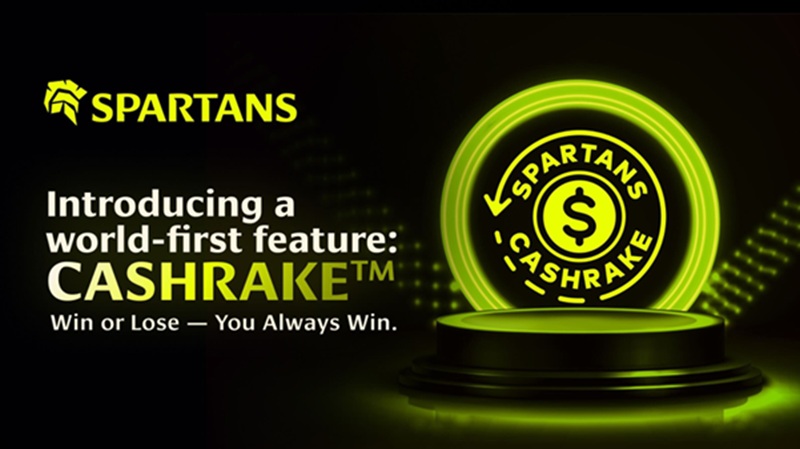
Spartans enters the race as the fastest growing casino and licensed online sportsbook, already live with over 5,963 games from 43 providers, instant cashouts across both FIAT and crypto. Spartans’ CASHRAKE™ is the headline innovation of 2025. It gives users instant rakeback on every bet plus instant cashback on every loss. That means no matter how the round plays out, you’re always walking away with something.

It’s not just a promotional trick, it’s a structural shift. Instead of chasing complicated bonus ladders, players see rewards land instantly in their balance. The transparency builds trust, and the consistency keeps people coming back. While most casinos rely on timed offers, Spartans rewards every wager in real time.

2. Stake.com: Strong Community, Weak Returns

Stake.com has built an empire on community challenges and influencer marketing. Its loyalty system encourages high-volume play, and its brand ambassadors keep the hype alive. But when it comes to payback, Stake relies on tiered rewards rather than instant returns.

That’s the big difference. Spartans’ CASHRAKE™ rewards every spin or bet, while Stake ties rewards to milestones. Stake remains popular for its culture, but it doesn’t deliver the same direct value players now expect.

3. Bet365: A Giant Stuck in Tradition

Bet365 continues to dominate as a global powerhouse in sportsbooks and casinos. Its reliability, odds, and massive coverage keep it a favorite for many. But when it comes to rewards, it still leans on old models.

Bonuses usually come with long terms and complex unlock conditions. There’s nothing comparable to the CASHRAKE™ setup, where every bet brings immediate value. Bet365’s strength is its size, but it hasn’t embraced the player-first approach that Spartans is pushing forward.

4. Roobet: Creative Branding, Thin on Rewards

Roobet stands out with its esports partnerships and flashy gamified design. It’s built to appeal to younger, streaming-savvy players. While the branding gives it an edge in identity, it doesn’t change the basic casino math.

There’s no system like CASHRAKE™ here, meaning users still face standard house odds with little return outside of traditional promos. Roobet may be fun to look at, but in terms of consistent player value, Spartans is playing on a different level.

5. Rollbit: Big Platform, Limited Incentive

Rollbit prides itself on variety. It mixes sports betting, NFT markets, trading, and casino games into one hub. That range is impressive, but the rewards model hasn’t kept pace. Bonuses are often locked behind high-volume play or tiered systems, leaving casual players with less.

Spartans, by contrast, gives every player the same benefit right from their first spin. Whether you’re betting small or chasing jackpots, CASHRAKE™ ensures everyone enjoys the same instant rewards. Rollbit may have scale, but Spartans has the engagement formula that keeps players coming back.

Why CASHRAKE Defines 2025

Across the board, Spartans sets itself apart because it pays players back on every bet, no delays, no gimmicks, no fine print. With instant rakeback and cashback built into the gameplay itself, CASHRAKE is creating a new baseline for what casinos should offer.

Other platforms continue to push promos and branding, but Spartans has built a system that makes every wager count. It’s more than marketing, it’s a practical change in how rewards are delivered. And in 2025, that’s what players are noticing.


Prediction Markets Mindshare Is Surging to ATM Seen in 2024 During U.S. Elections

0

Prediction market “mindshare” (a measure of online attention and discussion volume, often tracked via tools like Kaito AI) is surging back toward the all-time highs seen during the 2024 U.S. presidential election.

Kaito’s real-time data shows the sector’s overall mindshare hovering at around 23-25%, just shy of the ~27% peak from election night last November. This isn’t just hype; it’s backed by exploding trading volumes and fresh catalysts that are drawing in retail traders, institutions, and even mainstream media.

The 2024 election supercharged the space—Polymarket alone hit $3.8 billion in total volume, with $2.1 billion in October alone, outperforming traditional polls in accuracy for outcomes like Trump’s victory.

Fast-forward to 2025, platforms like Kalshi and PredictIt have secured CFTC approvals for expanded U.S. operations, including sports and economic event markets. Polymarket’s $112 million acquisition of a CFTC-licensed exchange in July opened doors for regulated on-chain trading, while Robinhood integrated Kalshi’s contracts, exposing 25 million users.

Unlike 2024’s election obsession (which accounted for 80% of Polymarket’s traffic), 2025 volumes are spreading to sports (e.g., NFL futures, Super Bowl odds), crypto prices (Bitcoin hitting $128K?), and quirky events like “US confirms aliens in 2025” (9% odds on Kalshi). This broadens appeal and stabilizes liquidity.

New entrants like Limitless (on Base, backed by Coinbase Ventures with $7M raised) are capturing 23% of the sector’s mindshare, thanks to campaigns like Wallchain leaderboards (0.25% token allocation to top quackers) and rumors of Kaito integrations.

Myriad crossed $10M in USDC volume with 511K users, positioning prediction markets as a “next chapter in DeFi.” Flex Sports launched Solana-based live betting, and XO Market’s testnet (backed by Cyber.fund) adds conviction-based trading.

Tools like Grok 4 are now used for sentiment analysis the milesdeutscher’s framework scans CT for coin theses, while Kaito’s dashboards track mindshare shifts in real-time. This turns casual yappers into informed traders.

Volume and Mindshare Comparison: 2024 vs. 2025

Volumes exploded on election bets (e.g., Trump vs. Harris: $150M+), but post-election dipped to $10M daily. Accuracy was a win—markets nailed Trump’s odds at 56% when polls were 50/50. Volumes stabilized at $1B weekly (down from $2.6B peak but up overall), with Kalshi leading due to U.S. integrations.

Mindshare spikes tie to non-election events, like Fed rate cuts (two priced in by year-end) and sports (e.g., 25% odds on women’s leagues drawing ad dollars). This isn’t a fleeting pump—Interactive Brokers’ founder Thomas Peterffy predicts prediction markets could eclipse stock trading in 15 years by pricing “real-world expectations.” But challenges loom:

Outside mega-events, spreads widen (e.g., thin volumes on niche geo-markets like Ukraine ceasefire: 25% odds). CFTC’s eyeing bans on “public interest” bets (e.g., assassinations), and NFL integrity concerns could spill over. 2024 saw wash trading allegations on Polymarket; tools like Nasdaq’s surveillance are stepping in.

With AI oracles (e.g., Kaito as mindshare oracle) and cross-chain (e.g., Celestia rollups), volumes could hit $95B by 2035 (46% CAGR). Expect integrations with social (X badges for projects) and enterprise forecasting.

If regulators clamp down or liquidity dries up, it fades to niche DeFi. This mindshare surge signals prediction markets evolving from election gimmick to everyday info-tool. If you’re trading, focus on high-liquidity plays like Fed decisions or BTC milestones—skin in the game beats punditry every time.

Tekedia Capital Welcomes Avelis Health

0

Tekedia Capital is happy to announce our investment in California-based Avelis Health. Onuoha and Shehu create technologies and AI agents which audit medical claims and identify errors due to coding, billing, and contract violations. With voice agents, they automate the process of requesting medical records and recovering overpaid claims from providers. In America, this is a very big deal.

Their AI agents have audited millions in claims and prevented significant overpayments for self-insured employers.

Welcome Avelis Health to Tekedia Capital.

Nigeria Scraps 5% Telecom Excise Duty As Petroleum Tax Set to Take Effect

0
FIRS signpost

The Federal Government has abolished the 5% excise duty previously imposed on telecommunications services, a policy reversal that officials say will ease cost pressures on millions of Nigerians.

The Executive Vice Chairman of the Nigerian Communications Commission (NCC), Aminu Maida, confirmed the development, saying the directive came directly from the presidency.

“President Tinubu directed the removal of the 5% excise duty on telecommunications services,” Maida said, noting the decision was reached during discussions around the Finance Act.

The withdrawal is expected to provide immediate respite to more than 171 million active telecom subscribers, many of whom have been grappling with a 50% tariff increase approved earlier this year.

The Telecom Levy’s Troubled History

The excise duty was first introduced in 2022 under former President Muhammadu Buhari as part of a strategy to expand non-oil revenues. It applied to both voice and data services, with operators mandated to remit monthly collections. The policy was justified on grounds of Nigeria’s fiscal gap and the need to widen the tax base beyond oil.

But from the outset, it was unpopular. The Association of Licensed Telecom Operators of Nigeria (ALTON) argued that the new levy piled onto a sector already struggling under 39 separate taxes, a 7.5% VAT, and a 2% contribution of annual revenue to the NCC.

Operators also faced rising diesel costs to power base stations, given unreliable electricity supply. Unable to absorb the added tax, they passed it directly to subscribers, raising the total tax burden on telecom services to roughly 12.5%. Critics said the measure was unsustainable and harmful to consumers already battling high living costs.

The scrapping of the levy comes after the NCC approved a 50% increase in telecom tariffs effective January 2025. Operators had lobbied for as much as a 100% rise, citing inflation, foreign exchange shortages, and higher import costs for equipment, but the regulator settled on a halfway adjustment.

The new tariff regime reshaped household telecom spending.

  • MTN’s 1.8GB plan jumped from N1,000 to N1,500.
  • A 20GB plan rose from N5,500 to N7,500.
  • SMS rates increased from N4 to N6.

The average cost of 1GB of data climbed from N287 to about N431 in advertised price ranges, with some operators listing even higher. The result has been growing strain on lower-income households, many of which are scaling back data use, opting for cheaper bundles, or limiting app consumption to essential services.

Clearing the Way for Petroleum Tax

While the telecom tax rollback has been welcomed by subscribers, many believe it is part of a broader fiscal balancing act. The government is believed to be clearing space to soften resistance ahead of a more consequential tax on fuel.

Under the Tax Act 2025, Nigerians will begin paying a 5% fossil fuel tax on petrol and diesel from 2026. The levy is not entirely new, but rather a reinstatement of a provision first introduced under the Federal Roads Maintenance Agency (Amendment) Act of 2007.

The Presidential Fiscal Policy and Tax Reforms Committee has said the measure was included in the new tax framework for “harmonization and transparency.” Still, analysts warn that because fuel touches nearly every sector of the economy, the petroleum tax will have far greater knock-on effects than the now-scrapped telecom duty.

Energy costs already make up a significant share of expenses for businesses, from logistics firms to small traders, while households are still adjusting to last year’s subsidy removal. Economists note that even at 5%, the fossil fuel levy could ripple across supply chains, raising prices of transport, goods, and services more sharply than any telecom tariff adjustment.

While the scrapping of the telecom levy provides relief to subscribers, calming tensions between operators and regulators for now, it may prove a short-lived victory for consumers. The introduction of the petroleum tax in 2026 threatens to intensify financial pressures across the board, with its reach extending well beyond mobile data and voice bills.

Dangote Refinery to Begin Direct Petrol Supply at N820/Liter, Launches in 11 States September 15

0

The Dangote Refinery has announced it will commence direct supply of petrol across the country on September 15, with an ex-gantry price fixed at N820 per liter.

The move marks the company’s boldest step yet to dominate Nigeria’s downstream oil sector since its long-awaited refinery began operations.

In a post shared on its official X page Thursday, the refinery said the scheme would launch in 11 states before gradually expanding nationwide.

The initial rollout covers Lagos, Ogun, Oyo, Ondo, Osun, Ekiti, Abuja, Delta, Rivers, Edo, and Kwara States.

According to the refinery, delivery prices will vary slightly by region:

  • N841 per liter in Lagos, Ogun, Oyo, Ondo, Osun, and Ekiti.
  • N851 per liter in Abuja, Delta, Rivers, Edo, and Kwara.

“All petrol station owners nationwide are invited to register for free delivery and other benefits,” the refinery wrote.

The direct-to-station model marks a departure from Nigeria’s traditional supply chain, where petroleum products pass through middlemen before reaching retailers. Dangote is seeking tighter control over pricing and distribution by cutting out intermediaries.

The company has been scaling up logistics for months. On June 15, it announced the acquisition of 4,000 new compressed natural gas (CNG)-powered tankers to enhance nationwide fuel distribution. Weeks later, on June 29, it unveiled a petroleum distribution scheme it claims could save Nigerians over N1.7 trillion annually by reducing inefficiencies and transport costs.

Labor tensions over CNG trucks

But this logistics overhaul has been met with resistance. The plan to import 4,000 CNG-powered trucks sparked a standoff with the Nigeria Union of Petroleum and Natural Gas Workers (NUPENG), whose members dominate the country’s fuel transportation sector.

Union leaders accused Dangote of sidelining existing tanker drivers by announcing that the new trucks would be operated by freshly recruited drivers who would not be allowed to join any union.

NUPENG described the refinery’s position as an affront to workers’ rights guaranteed under Section 40 of the 1999 Constitution, which upholds freedom of association, as well as a breach of international labor conventions, including ILO Convention 87 on Freedom of Association and Protection of the Right to Organize and ILO Convention 98 on the Right to Organize and Collective Bargaining, both ratified by Nigeria.

The union has threatened to stop fuel loading nationwide if Dangote pushes ahead with the plan, raising fears of another disruption in a sector already prone to strikes and supply bottlenecks.

Analysts weigh risks and opportunities

Analysts say the new supply scheme could provide relief to motorists grappling with high pump prices, as direct supply may stabilize retail costs and reduce artificial markups.

However, the refinery’s entry into full-scale distribution could also disrupt the downstream sector. Independent marketers and existing depots may face reduced margins or be forced to rethink their business models as Dangote takes on both refining and distribution.

For labor unions, the bigger concern is whether Dangote’s model signals a deliberate attempt to weaken organized labor’s role in the sector, a move they warn could set a dangerous precedent if not addressed.

The refinery’s rollout comes at a time when the Nigerian petroleum sector is undergoing unprecedented competition. For decades, fuel importation was dominated by the Nigerian National Petroleum Company Limited (NNPCL), which acted as the sole importer of petrol under a subsidy-driven system.

With Dangote Refinery now producing and directly supplying petrol, the sector is shifting away from an NNPC-dependent trajectory. This transition is already altering the balance of power in the industry, with Dangote positioned not only as a major producer but also as a disruptive distributor.

Energy analysts have welcomed the prospect of alternative supply but remain cautious, noting that while Dangote’s entry has been hailed as a potential game-changer for energy security, pump prices could still rise if global crude prices and exchange rate pressures persist.

A Nigerian parallel to global oil majors

It is believed that Dangote’s strategy increasingly mirrors the vertically integrated model of global oil majors such as ExxonMobil, Shell, and Saudi Aramco. These companies maintain dominance not only by refining crude but also by controlling pipelines, shipping, and retail distribution networks that give them end-to-end control of the value chain.

Dangote is adopting a similar playbook by building Africa’s largest refinery and simultaneously moving into direct distribution through a massive fleet of CNG-powered trucks. This vertical integration allows him to manage margins more effectively, capture value that would otherwise go to intermediaries, and wield greater influence over pricing at the pump.

Analysts point out that while ExxonMobil and Shell built this model over decades with government backing and global reach, Dangote is attempting to replicate it within Nigeria in a matter of months. The refinery’s size and its foray into nationwide retail distribution make it the first serious domestic rival to NNPC’s historical dominance, effectively positioning Dangote as Nigeria’s first oil major in the private sector.

For consumers, this could mean more predictable supply and possibly better pricing in the long run, but for smaller marketers and unions, it signals a consolidation of power that could leave them sidelined in a sector that has long relied on fragmented participation.