DD
MM
YYYY

PAGES

DD
MM
YYYY

spot_img

PAGES

Home Blog Page 544

Crypto Betting and 5963+ Games Put Spartans Ahead While DraftKings and Caesars Concentrate on NFL Promotions

0

Sports betting operators are entering September 2025 with unique strategies aimed at expanding their audiences. DraftKings has rolled out updated promos tied to the NFL season, while Caesars Sportsbook has gained traction through football-driven campaigns. Both brands are using incentives designed to align with fan activity during a key period of the sports calendar.

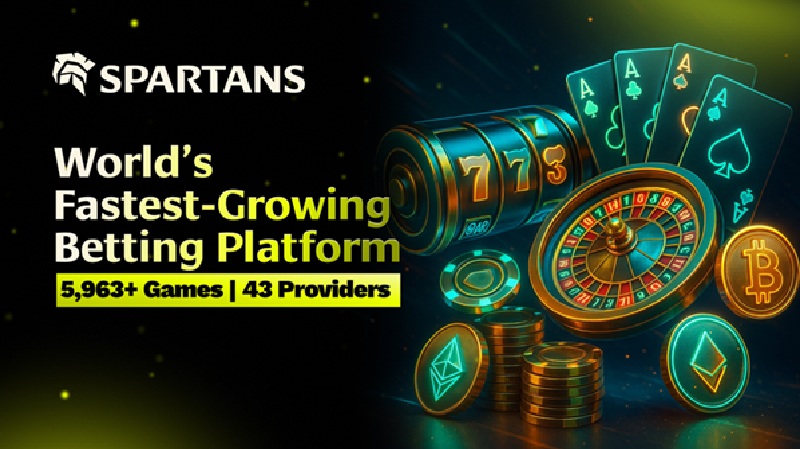
Spartans, in contrast, continues to scale by using crypto-only deposits, instant withdrawals, and a wide library of 5963+ games. By setting itself as a digital-first sportsbook and casino platform, Spartans appeals to users who want both speed and variety. With clear rules on promos and one account across products, the platform is building an alternative model where global access and decentralized payments lead adoption.

DraftKings Adds NFL Promotions for 2025 Season

DraftKings has raised visibility with a $300 bonus and a $200 NFL Sunday Ticket discount for new players. This pairing delivers direct value to football fans joining the platform as the season begins. DraftKings ties these incentives to live games, keeping bettors engaged while lowering upfront costs.

The operator uses the NFL season to its advantage, knowing that user activity reaches its peak in September. By combining streaming discounts with betting rewards, it highlights a model built on merging entertainment with wagering.

DraftKings also matches promotional cycles with seasonal events. NFL campaigns are part of its wider growth in regulated U.S. markets, where custom offers are a core requirement. Through bundling sign-up rewards with added discounts, DraftKings shows a steady effort to balance entertainment, regulation, and user demand across channels.

Caesars Sportsbook Builds Engagement With NFL Promotions

Caesars Sportsbook has launched a “Bet $1, Double Winnings 20x” deal for NFL Week 1, letting users multiply payouts at low cost. The simple setup has drawn interest by giving immediate benefits without large entry barriers. Caesars Sportsbook maintains clarity, which helps attract casual bettors and lift engagement levels.

The platform also takes advantage of football’s weekly pace to create consistent user activity. By tying offers directly to NFL games, Caesars captures bettors seeking weekly bonuses with defined outcomes.

Caesars Sportsbook further strengthens growth by linking promotions with state-level market rollouts. By pairing football specials with new betting access, Caesars combines compliance with visibility. Its approach stays clear: keep betting affordable at the entry level, scale promotions around popular sports, and secure brand reach across U.S. states through regular NFL campaigns.

Spartans Brings Casino and Sports Together Under One Wallet

Spartans combines casino and sportsbook funds in one account, removing extra steps. Players can move from 5963+ games to live football betting without shifting balances. Bonuses are shown upfront, including a 300% welcome up to $200 and a 25% daily deposit reward. This setup saves time and builds trust by showing clear rules.

Live betting features keep pace with real action. Odds changes appear before confirmation, and slips refresh right away. This fast response is vital in close matches, making sure users stay updated. Crypto withdrawals process in minutes, giving the same speed as casino cash-outs. It proves that Spartans values quick service as much as choice.
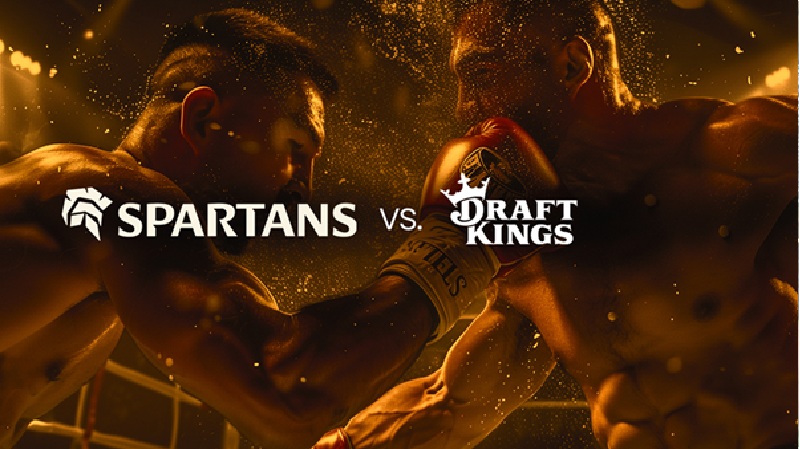
Promotions are defined by clarity. Caps and rollover rules are displayed before play, avoiding hidden details. With deposits starting at just $5, access stays open to many users. The system avoids confusion, keeping rewards practical while promoting simple and fair play.

Sports coverage reaches from major events like football and basketball to smaller markets. With 43+ providers keeping the casino library active, Spartans matches sportsbook growth with ongoing variety. Daily rewards like the 25% bonus drive engagement, while the $200 welcome offer supports new users. The single-wallet approach makes Spartans stand out against older sportsbooks in 2025.

Closing Comparison

All three top online sportsbooks mentioned above keep improving in 2025. DraftKings builds momentum with NFL-focused promos and streaming extras, while Caesars Sportsbook strengthens with clear football offers. Both brands focus on affordable entry and regulated growth to compete in the expanding U.S. betting market.

Spartans crypto games, however, keeps adding users daily with crypto payments, instant withdrawals, and thousands of games under one account. While DraftKings and Caesars Sportsbook hold strong positions in regulated markets, Spartans shows how decentralized platforms can bring both speed and scale in ways traditional operators are only beginning to match.

Find Out More About Spartans:

Website: https://spartans.com/

Instagram: https://www.instagram.com/spartans/

Twitter/X: https://x.com/SpartansBet

YouTube: https://www.youtube.com/@SpartansBet
 

Perplexity Raises $200 Million at $20 Billion Valuation After Chrome Bid

0

AI startup Perplexity has secured commitments from investors for $200 million in new funding at a $20 billion valuation, The Information reported Wednesday, citing a person with knowledge of the matter.

The funding underscores increasing market appetite for artificial intelligence ventures amid intensifying competition in the sector.

The raise comes on the heels of Perplexity’s audacious move in August, when it made an unsolicited $34.5 billion all-cash bid for Alphabet’s Chrome browser. Chrome, with more than three billion global users, is the most widely used browser in the world. Though the offer far exceeded Perplexity’s own valuation and was unlikely to succeed, it showcased the startup’s ambition to disrupt a foundational layer of the internet and position itself against rivals like OpenAI, which is developing its own AI-native browser.

Perplexity’s flagship product, the Comet browser, integrates AI to perform tasks on users’ behalf — a pitch that could redefine online browsing. The company, led by Aravind Srinivas, counts Nvidia among its backers and has framed its mission as creating the next generation of intelligent search and navigation.

Market Disruption and Scale

If Perplexity leverages its $200 million raise effectively, analysts suggest it could accelerate the development of Comet and expand its user base globally. Success here would allow it to erode the dominance of traditional browsers by offering a more personalized, task-driven experience. In this scenario, the Chrome bid — even though it failed — may be remembered as a pivotal statement of intent, marking Perplexity as the startup bold enough to challenge entrenched incumbents.

Nvidia’s involvement could also give Perplexity preferred access to advanced chips, ensuring it keeps pace with larger rivals. If user adoption grows quickly, Perplexity could evolve from a niche challenger to a central player in the AI-browser space, potentially reshaping how billions of people interact with the internet.

Overreach and Stiff Competition

The risks, however, remain substantial. Competing head-on with platforms like Chrome, which is embedded into daily digital life, could prove insurmountable. If Perplexity fails to attract users at scale, its AI-first browser may be reduced to a novelty, struggling to monetize or justify its lofty $20 billion valuation.

The Chrome bid, while headline-grabbing, could also backfire if investors come to see it as an act of overreach rather than vision. Meanwhile, rivals such as OpenAI — with its own AI browser ambitions — and Microsoft, which has embedded AI features into Edge, are better resourced and deeply integrated into existing ecosystems.

A stalled growth trajectory could push Perplexity toward a down round or force it into acquisition talks, reducing its chances of establishing itself as an independent, enduring force.

However, what is clear is that Perplexity’s trajectory is riling up interest. The $200 million infusion gives it fresh resources to push ahead, but also raises expectations for performance at scale. Analysts say the next two years will be decisive in determining whether the company’s Comet browser can break through the dominance of Chrome and other incumbents.

Currently, Perplexity has positioned itself as one of the few startups willing to publicly test the limits of Big Tech’s dominance. The question is whether its bold bets will turn into lasting breakthroughs — or cautionary tales of ambition that ran too far ahead of reality.

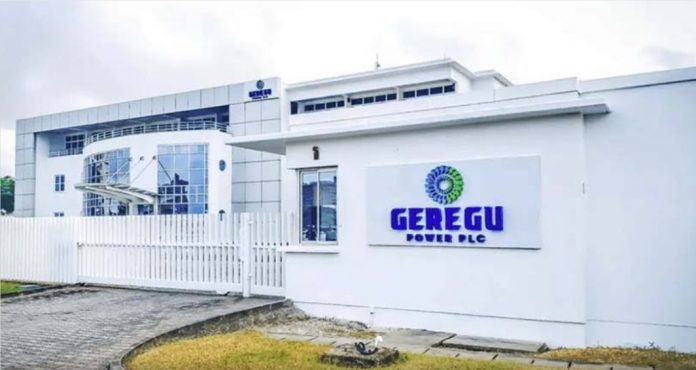
Geregu Power Forecasts N12.1bn Q4 Profit, Eyes Strongest Year Yet Amid Revenue Growth

0

Geregu Power Plc has projected a post-tax profit of N12.1 billion for the fourth quarter of 2025, a slight uptick from its N11.7 billion forecast for Q3, which is yet to be released.

The projection, filed with the Nigerian Exchange and signed by the company’s CEO and CFO, signals confidence that the power firm will close the year with its strongest earnings yet.

If realized, the estimate would bring Geregu’s full-year 2025 post-tax profit to about N44 billion or more, assuming quarterly results match expectations.

The trajectory is shaped by a mixed but resilient performance over the first three quarters. In Q1, the company projected N11.3 billion with an EPS of N4.5, but delivered slightly lower at N10.4 billion and EPS of N4.17. Q2 projections were beaten, with the company estimating N8.6 billion in profit but delivering N9.7 billion and EPS of N3.9. Analysts believe Q3’s projected N11.7 billion profit is within reach, pending official results.

Revenue Surge in Q2 a Turning Point

A major driver of Geregu’s strong outlook has been its revenue base. In Q2 2025, revenue jumped to N55.8 billion from N30.2 billion a year earlier. Energy sales contributed N35.8 billion, while capacity charges added N19.9 billion.

After accounting for N32.1 billion in cost of sales, gross profit climbed to N23.7 billion, representing an 81.8% rise from the N13 billion reported in Q2 2024.

By contrast, Q1 saw weaker top-line performance, with revenue slipping to N31.7 billion from N50.4 billion in the same period of 2024. Energy sales of N20.8 billion still outpaced capacity charges of N10.8 billion, while the cost of sales eased to N19.7 billion compared to N22 billion the year before, leaving a gross profit of N12 billion.

The rebound in Q2 reflected a healthier top-line trend, and the Q4 forecast suggests Geregu expects this momentum to carry through to year-end.

Operational Health Sustains Bottom Line

Geregu’s profitability has also been underpinned by its operational health. In Q2, operating profit rose 73.7% to N15 billion from N8.6 billion a year earlier. Rising operating expenses, including impairment losses on financial assets, which climbed to N6 billion from N2 billion, were offset by strong earnings from core operations. This allowed the company to stay profitable despite a net finance cost of N1.7 billion.

In Q1, operating profit was N14.6 billion, down from N21.7 billion in 2024. However, impairment losses reversed dramatically, turning a N3.9 billion loss in Q1 2024 into a profit of N5.2 billion. Administrative expenses inched up modestly from N2.1 billion to N2.5 billion, signaling tight cost control.

This balance between revenue growth and expense management points to a business model that has proven adaptable in a volatile power sector environment.

Comparative Industry Context

Unlike several players in Nigeria’s power sector that remain weighed down by mounting receivables and weak collections, Geregu has consistently signaled stronger balance sheet discipline. Its performance contrasts with the broader industry trend, where profitability is often hampered by regulatory bottlenecks, gas supply issues, and inefficiencies in transmission.

Analysts note that Geregu’s emphasis on energy sales as the dominant revenue source — as opposed to overreliance on capacity charges — strengthens its cash flow prospects. For comparison, many of Nigeria’s power generation companies have been more exposed to capacity payments that are often delayed by systemic liquidity challenges in the electricity market.

Experts also point to Geregu’s habit of issuing clear quarterly forecasts — and disclosing when actuals fall short or exceed estimates — as a distinguishing feature in Nigeria’s capital market. Even when projections are narrowly missed, such as in Q1, the consistency in guidance is viewed as a sign of transparency that could boost investor confidence.

In a sector where listed power firms often face skepticism over reporting delays and opaque financial disclosures, Geregu’s approach positions it as one of the more dependable power firms on the NGX. Analysts believe this practice could help attract greater institutional investor interest, particularly as Nigeria’s electricity market undergoes reforms aimed at increasing private capital participation.

Outlook

With Q4 profit projected at N12.1 billion, the company appears poised to post its best annual results since listing. Sustained profitability, however, will hinge on maintaining top-line growth, managing impairment risks, and navigating sector-wide challenges in receivables recovery and gas supply costs.

Still, Geregu’s projections place it among the more resilient and better-capitalized players in the Nigerian power space, offering a rare bright spot in a sector still struggling to stabilize.

Experts Just Revealed the 4 Best Cryptos to Invest in This Month, and One Still Costs Less Than a Cent!

1

As Q4 of 2025 rolls in, investors are on the lookout for the best crypto to invest in now. While many projects are battling for attention with flashy partnerships or unpredictable rallies, a few are building a case backed by real progress, reduced risk, and strategic pricing. Here’s a curated list of four top contenders, with BlockDAG leading the pack thanks to its technical maturity and rare presale setup that locks in investor-friendly pricing.

1. BlockDAG: Everyone Is Buying In Before October 1!

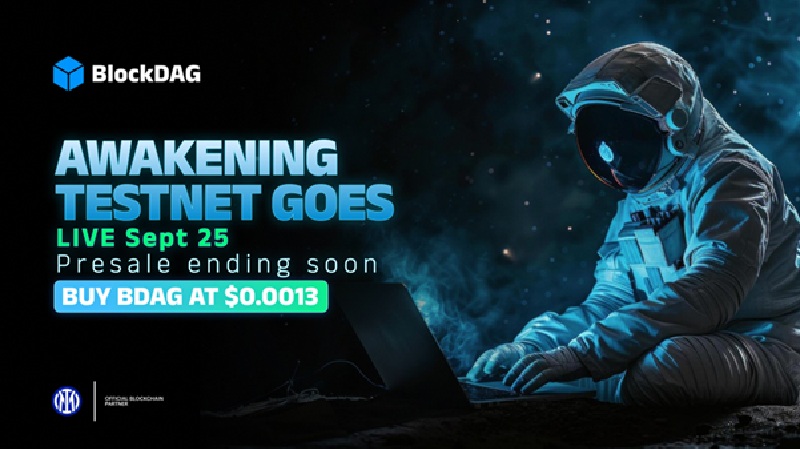
BlockDAG is setting the tone for September with a rare value window: a fixed presale price of $0.0013 despite growing network maturity. With the Awakening Testnet now set to launch on September 25, systems like vesting contracts, miner integration, account abstraction, and real-time tooling are already running. This isn’t theoretical progress; it’s actual execution. As every component will be deployed and verified, the tech risk decreases, but unlike most coins, the price will remain unchanged during this stage.

That’s what makes BlockDAG’s current position so compelling. It’s in batch 30, where the displayed price is $0.03, yet buyers can still access tokens at the locked $0.0013 rate until October 1st. With over $405 million raised and more than 26.2 billion coins sold, momentum is undeniable. Early buyers have seen an ROI of 2,900% since batch 1, and that figure may only climb once the mainnet is live.

In an ecosystem where risk often grows with reward, BlockDAG flips the equation. It offers lower risk through proven deployment while keeping the price low. That combination is extremely rare, and it’s why many view it as the best crypto to invest in now before the door shuts.

2. Dogecoin: Holding Ground With Social Power

Dogecoin continues to defy expectations. Initially viewed as a meme token, DOGE has steadily built practical traction, especially with Tesla’s continued mention of integrating DOGE payments for merchandise and future services. As of early September, Dogecoin is trading around $0.081, holding strong in the top 10 by market cap.

The biggest strength of DOGE remains its community-driven support and social media buzz. While it may not be the most technically advanced, the coin consistently garners real-world attention, a factor that matters in crypto cycles.

There are also growing talks about DOGE’s integration into X’s payment infrastructure, which could lead to a fresh wave of adoption. Dogecoin isn’t for the risk-averse, but for those banking on cultural momentum with hints of mainstream use, it still makes a case as one of the best cryptos to invest in now.

3. Solana: Speed and Value Make It a Top Runner

Solana has worked hard to repair its image after facing network issues in previous years, and it’s showing results. With significantly fewer outages reported in 2025 and improved validator support, SOL has bounced back to $36.85, backed by an increase in daily active users and Total Value Locked (TVL) on its DeFi protocols.

Its success lies in speed and affordability. Solana’s processing capability continues to make it a favorite for NFTs and DeFi apps, with platforms like Magic Eden and Jupiter thriving. In addition, new Solana phones are shipping soon, expanding its mobile-first crypto strategy.

As institutional and retail investors look for scalability and real-world use, Solana stands as a reliable choice, not just as a recovery token but as a continuously improving infrastructure project. It’s a strong pick among the best cryptos to invest in now for those wanting a blend of speed, usage, and value.

4. Ethereum: Quiet Strength, Loud Fundamentals

Ethereum remains a foundational layer in the crypto space, and it’s entering September with quiet strength. Currently trading at $1,968, ETH has gained from increased staking participation and major ETF approvals across several regions. Its move to Proof of Stake has not only improved energy efficiency but also sparked the development of Layer-2 rollups that reduce gas fees and boost throughput.

This month, Ethereum is also seeing new developer traction with enhanced tooling for smart contracts and zk-rollup scaling efforts. Moreover, institutional interest is growing, with asset managers including ETH in their digital portfolios.

While it may not offer 10x short-term potential like newer coins, Ethereum offers security, liquidity, and ecosystem stability. It’s a long-term hold that still earns its spot as one of the best cryptos to invest in now, especially for those who prioritize infrastructure and institutional confidence.

Final Thoughts

When evaluating the best crypto to invest in now, it’s not just about hype or short-term momentum. It’s about entry timing, technical strength, and pricing logic. BlockDAG stands out by offering a locked-in price even when its tech is set to go live this month and risk is actively dropping. That’s a formula that rarely aligns, and one that savvy investors recognize instantly.

Dogecoin, Solana, and Ethereum continue to build in their own lanes, each offering distinct advantages, from cultural power to technical execution and institutional trust. But in terms of risk-adjusted opportunity, BlockDAG is currently in a class of its own. October 1st is the deadline, and that makes now the time to act.

Klarna Gives Employees Rare Chance to Cash Out Equity Amid IPO Surge

0

Klarna’s Wall Street debut has not only revived the fintech’s long-awaited IPO ambitions but also delivered a rare windfall opportunity for its employees.

In a move seldom seen in the tech industry, the Swedish buy now, pay later giant is allowing staff to cash out some of their holdings during the IPO window, sidestepping the usual six-month lockup that restrains insiders from selling shares.

In an internal email sent on Wednesday and reviewed by Business Insider, Klarna told current and former employees that it is converting vested restricted stock units (RSUs) into tradable shares, exempting them from the post-IPO lockup. The converted shares can begin trading just days after Klarna’s $15 billion listing, offering workers immediate liquidity. The email noted that “roughly four RSUs will equal one publicly tradable share.”

Klarna’s filing with the Securities and Exchange Commission does not specify how many of the ordinary shares offered will come from employees. However, the company said staff will be able to sell shares during the initial window until September 30, with subsequent trading limited to quarterly windows.

Such exemptions are uncommon but not without precedent. Airbnb, when it went public in 2020, allowed employees to sell up to 15% of their holdings within the first week of trading. Traditionally, lockup periods are imposed to protect new investors from a flood of insider sales, which can weigh down a stock in its early days. By bending that norm, Klarna is signaling an effort to reward its workforce, many of whom have seen the company’s valuation swing dramatically in recent years.

Stock-based compensation has long been a staple of tech employment packages, with RSUs serving as a way to align employee incentives with company performance. But for many staffers, the IPO represents the first tangible opportunity to realize cash from those paper awards.

IPO Market Return

Klarna’s shares opened at $52 on the New York Stock Exchange—30% above the IPO price of $40—before retreating to close at just under $46, still up 15% on the day. The debut valued the company at $15 billion, far below its $45.6 billion peak in 2021 but still a remarkable rebound from the $6.7 billion trough it hit just a year later.

The IPO, delayed from April after U.S. tariff announcements rattled markets, now sits among the year’s marquee offerings. It has already generated massive paper wealth for longtime backers Sequoia Capital and Heartland A/S, each reaping more than $1 billion. Cofounders Sebastian Siemiatkowski and Victor Jacobsson also saw their stakes climb above the billion-dollar mark by Wednesday’s close.

What Next for Klarna?

Some analysts believe that Klarna’s decision to let employees sell early could build loyalty at a critical moment, offering relief to staff who endured years of delayed IPO plans and fluctuating valuations. If shares stabilize above the $40 listing price, the company may establish itself as the bellwether of a resurgent IPO market, encouraging other fintechs and tech startups to follow suit.

However, the exemption could carry risks, they note. A wave of insider selling in the coming weeks might pressure Klarna’s share price, undermining confidence in its long-term prospects. If shares drift significantly below their debut levels, critics may question whether the company’s $15 billion valuation was sustainable—or whether early insider liquidity came at the expense of new investors.

Overall, the IPO is more than a listing—it is a carefully choreographed balancing act for Klarna. The fintech is attempting to satisfy both insiders and public shareholders in a volatile market that has not forgotten the bruising valuation resets of the last two years, by rewarding staff while courting Wall Street.