DD
MM
YYYY

PAGES

DD
MM
YYYY

spot_img

PAGES

Home Blog Page 5490

Does the Attorney General of the Federation Have the Power to Declare State of Emergency?

0

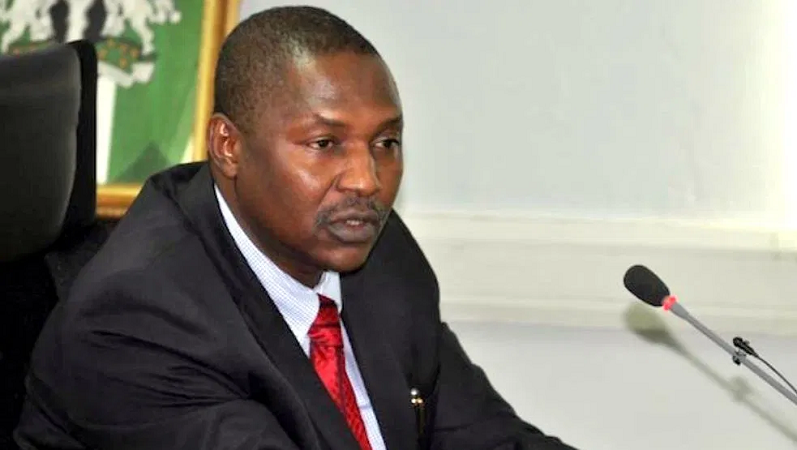
The Attorney General of the federation issued a threat sometime ago that state of emergency will be declared in Anambra state due to the on going civil unrest in the state and other neighboring states.

Perhaps, the honorable Attorney General was too hasty to make the press briefing without finding time to look deep into what the law says and advise himself in due diligence that the Attorney General of the federation does not have such power to declare state of emergency in Anambra state or any part of Nigeria thereof.

The power to declare state of emergency in any part in Nigeria rest solely on the president who is the commander in chief of the arm forces and such power cannot be delegated no matter the circumstance. The Inspector General of police doesn’t have the power to declare state of emergency, neither does Chief of Army Staff, not even the governor of a state have the power to declare state of emergency in his state and no other public servant be it elected or appointed no matter the position the fellow occupy have such power to declare a state of emergency in any part of the federation.

What then is state of emergency?

It is the suspension of normal law and order procedures ie, the regular laws regulating the state and the introduction of strict controls of the citizens. This usually involves the military taking over so that crisis, revolution, etc can be curtailed and contained. This can come into play when there’s total break down of law and order and the security foundation of the state have totally been breached and the security personnels overwhelmed. State of emergency can also be declared when there’s war or the territorial integrity of the state is been threatened.

According to section 45(3) of the constitution of the federal republic of Nigeria, 1999: period of emergency” means any period during which there is in force a Proclamation of a state of emergency declared by the President in exercise of the powers conferred on him under section 305 of this Constitution.

In this section of the constitution, it is clearly spelt out that it is only the president that have such power to declare state of emergency in any part of the country and such power was thereby conferred on him by section 305 of the same constitution.

Section 305(1) of the constitution of the federal republic of Nigeria thereby reads:

Subject to the provisions of this Constitution, the President may by instrument published in the Official – Gazette} of the Government of the Federation issue a Proclamation of a state of emergency in the Federation or any part thereof.

This power to declare state of emergency due to how precarious it is imbedded only in the president cannot be delegated by him to anybody; not even to the Vice President nor to the Attorney General, it is exercised by the president alone and he alone have the power to declare state of emergency at any given time.

It should be clearly noted that the president cannot abuse this power to declare state of emergency as there must be some threshold and a bench mark for a civil unrest in any particular state to warrant state of emergency being declared.

Ps: the word ‘state’ as constantly used in this article means ‘country’.
Valuations of Startups Which Pitched at Tekedia Capital Demo Day Posted

0

We have provided the valuations of all the startups which pitched at Tekedia Capital Demo Day.  If you are a member, check the Board and follow the next step in the deal timeline. For non-members, the Q4 2021 Investment Cycle is currently active; register for access to the deal flow – and join our members and invest in Africa’s future promising startups.

The membership fee covers four investment cycles and costs $1,000 or N550,000. Click here and begin .

Early stage investing in technology-anchored startups and companies. Our opportunity antenna and grassroot connections with innovators enable us to see patterns as they develop.  We invite you to partner with us as we nurture and build category-king companies in Africa and beyond, and in the process advance citizens, communities and nations. At Tekedia Capital, we fund the foundations of the NEXT African economy. 

Great Inequalities in Benefiting from Radio-Facebook Convergence in Ibadan

0

From the Ibadan radio market landscape quantification to the specific strategies and tactics being used by the players, our analyst had previously established the contribution of the old and new radio stations to information acquisition and sharing among the residents. The previous analyses were largely driven by the preliminary outcomes of the ongoing new and conventional media convergence in Nigeria being carried out by our analyst and other colleagues in Nigeria and other continents in the world.

Leveraging the preliminary outcomes, this piece focuses on the great inequalities which were discovered in the course of interrogating the selected radio audience in Ibadan. From the engagement, it is obvious that radio stations in the city cannot do without appropriating Facebook for live streaming of their programmes. In our experience, we discovered that this medium is being used mostly for disseminating socioeconomic related programmes more than the political focused ones. It emerged that this is being driven by the audience’s interest in understanding the issues and needs around their social and economic life within and outside the city.

“Social media has now become a vital tool for any brand in every sector and media & broadcasting isn’t an exception. I’ll say the use of Facebook, Instagram and other social networking sites for radio broadcasting in Nigeria is a great development. It gives radio stations not just the opportunity to widen their listenership, but also a platform to individually monitor their growth,” one of the audience told our analyst and others.

Another audience notes that “the use of Facebook and other social Media platform. The way I feel about it. It is a very good development as technology may be. It is a very good one. To have better sense of belonging, especially, if a presenter knows or understand how to engage his or her audience on social media platforms why joining him or her on live programmes.”

Despite the benefits, high cost of data subscription and availability of mobile phones that are compatible with Facebook live streaming remains the greatest challenges to many listeners in the city. The two challenges are mostly pronounced by the listeners who have relatively earn less than N50,000 monthly. “Facebook is good for live streaming but too expensive for 70% of listeners,” one of the listeners adduced. Another listener simply hinted that “watching radio stations live on Facebook is quite expensive viz-a-viz the cost of data.”

From the outcomes, our analyst proposes that the management of the radio stations could explore free data to the audience and possible collaboration with mobile phone sellers in the city with the intent of making the prices of the live streaming compatible mobile phone lower for the audience who could not afford those with high prices. The collaboration could be sealed after identification of loyal audience or through sales promotion of the phones during programmes audience listen to the most.

It is also imperative that the mobile communication service providers make data subscription cheaper for the audience in the city. Apart from this, service providers could also ensure free data for audience who usually watch live streaming radio programmes. This would primarily help the providers in their quest of making significant contributions to digital economy, where people are expected to be well informed of happenings around them for them to make strategic decisions towards their self-learning and development.

Nigeria And The Fintech Nation – MTN, Airtel Joins The Fray With New Licenses

0

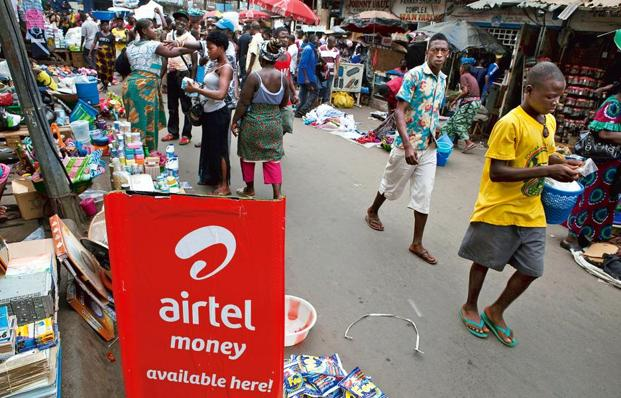
Is that it? Yes, “the Central Bank of Nigeria (CBN) has granted approval in principle to MTN and Airtel to operate a payment service bank (PSB) across the country, as the regulator pushes to deepen further financial inclusion in Nigeria.” Are we going to expect those bank charges to disappear because new species of innovators are coming.

The Nigerian financial industry has newcomers that are likely going to stir disruption. The Central Bank of Nigeria (CBN) has granted approval in principle to MTN and Airtel to operate a payment service bank (PSB) across the country, as the regulator pushes to deepen further financial inclusion in Nigeria.

Three years ago, the CBN said it would allow non-financial companies to apply for mobile banking licenses – either as PSBs or Mobile Money Operators (MMOs). The decision was drawn up from the push to increase Nigeria financial inclusion that has for years been limited to financial companies.

Nigeria has a huge financially underserved population of about 38 million adults as of 2020, mostly scattered across rural areas where banks and other financial companies are not operational. Giving telcos license to offer financial services means that rural dwellers will hence have access to adequate financial services.

But before you get carried away, all the valuations of fintechs have not changed much in the GDP of Nigeria. Why? We are just moving the little value from one person to another. It used to take 3 days but now it could go in seconds. MTN and Airtel will join the fray but who will do the really hard work? I have no answer because even myself has no answer! Why? It is really TOUGH.

Nigeria needs a bailout for its future to come because most things are happening at the base of the innovation pyramid. I welcome these new species of banks but I will continue to hope the real builders will emerge. Hope dey.

Nigeria’s Central Bank Approves PSB License for MTN, Airtel to Offer Financial Services

Nigeria’s Central Bank Approves PSB License for MTN, Airtel to Offer Financial Services

4

The Nigerian financial industry has newcomers that are likely going to stir disruption. The Central Bank of Nigeria (CBN) has granted approval in principle to MTN and Airtel to operate a payment service bank (PSB) across the country, as the regulator pushes to deepen further financial inclusion in Nigeria.

Three years ago, the CBN said it would allow non-financial companies to apply for mobile banking licenses – either as PSBs or Mobile Money Operators (MMOs). The decision was drawn up from the push to increase Nigeria financial inclusion that has for years been limited to financial companies.

Nigeria has a huge financially underserved population of about 38 million adults as of 2020, mostly scattered across rural areas where banks and other financial companies are not operational. Giving telcos license to offer financial services means that rural dwellers will hence have access to adequate financial services.

Under the guidelines, mobile network operators are allowed to provide financial services to millions of unbanked Nigerians. However, they can do so only as PSBs and through a subsidiary separate from their core operations. This means, MTN and Airtel will be providing PSB services via their respective subsidiaries, MoMo and Smartcash.

PSBs accept deposits from individuals and small businesses, offer payment and remittance services, issue debit & prepaid cards, operate electronic purses, and other activities prescribed by the CBN.

MTN announced the issuance of the PSB license through a statement signed by its Company’s Secretary, Uto Ukpanah on Friday.

“MTN Nigeria Communications Plc (MTN Nigeria) as promoter, received an Approval in Principle (AIP) dated 4 November 2021 from the Central Bank of Nigeria (CBN) for a licence application for the proposed MoMo Payment Service Bank Limited. This is the first step in the process towards a final approval, subject to the fulfilment of certain conditions as stipulated by the CBN. The decision to issue a final approval is firmly within the regulatory purview of the CBN and we respect their right and judgment in that regard,” he said.

The South African telecom giant said it would leverage the opportunity to deepen the financial inclusion agenda of the CBN and the federal republic of Nigeria.

The other recipient of the PSB license, Airtel, also announced the approval through a statement signed by the Group Company Secretary, Simon O’Hara.

“Airtel Africa, with presence in 14 countries across Africa, announces that its subsidiary SmartCash Payment Services Bank Limited has been granted approval in principle to operate a payment service bank business in Nigeria. Final approval is subject to the Group satisfying certain standard conditions within six months,” he said.

Also commenting on the approval, the CEO, Airtel Africa, Segun Ogunsanya, said: “I am very pleased that Smartcash has been granted an approval in principle to operate a service bank business in Nigeria. We will now work closely with the Central Bank to meet all its conditions to receive the operating licence and commence operations.

“The final operating licence will enable us to expand our digital financial products and reach the millions of Nigerians that do not have access to traditional financial services. I am looking forward to working closely with the government, the Central Bank and traditional financial institutions to expand financial inclusion and meet the evolving needs of our customers and the economy.”

However, the approval of the PSB license to MTN and Airtel, which is likely going to be extended to other operators, mainly, Globacom and 9mobile, Nigeria’s domestic telcos, will spell further trouble for Nigeria’s traditional financial institutions.

Already, the fintech boom is increasingly immobilizing the growth of players in the traditional financial industry. The International Monetary Fund (IMF) disclosed in its Financial Access Survey 2021 Trends and Developments on Monday, that Nigerian banks closed 234 branches and 649 Automated Teller Machines, ATMs, in 2020 leading to a decline in the country’s Financial Access Score (FAS) to 4.44 in the year against 4.78 in 2019.

This means that there is still a huge financial inclusion gap to be filled even in urban areas. With millions of subscribers in their customer-base, telecom operators are about to rule Nigeria’s financial industry. But it is not clear what it will mean for the newly launched Nigeria’s central bank digital currency – the eNaira.