DD
MM
YYYY

PAGES

DD
MM
YYYY

spot_img

PAGES

Home Blog Page 5490

Great Inequalities in Benefiting from Radio-Facebook Convergence in Ibadan

0

From the Ibadan radio market landscape quantification to the specific strategies and tactics being used by the players, our analyst had previously established the contribution of the old and new radio stations to information acquisition and sharing among the residents. The previous analyses were largely driven by the preliminary outcomes of the ongoing new and conventional media convergence in Nigeria being carried out by our analyst and other colleagues in Nigeria and other continents in the world.

Leveraging the preliminary outcomes, this piece focuses on the great inequalities which were discovered in the course of interrogating the selected radio audience in Ibadan. From the engagement, it is obvious that radio stations in the city cannot do without appropriating Facebook for live streaming of their programmes. In our experience, we discovered that this medium is being used mostly for disseminating socioeconomic related programmes more than the political focused ones. It emerged that this is being driven by the audience’s interest in understanding the issues and needs around their social and economic life within and outside the city.

“Social media has now become a vital tool for any brand in every sector and media & broadcasting isn’t an exception. I’ll say the use of Facebook, Instagram and other social networking sites for radio broadcasting in Nigeria is a great development. It gives radio stations not just the opportunity to widen their listenership, but also a platform to individually monitor their growth,” one of the audience told our analyst and others.

Another audience notes that “the use of Facebook and other social Media platform. The way I feel about it. It is a very good development as technology may be. It is a very good one. To have better sense of belonging, especially, if a presenter knows or understand how to engage his or her audience on social media platforms why joining him or her on live programmes.”

Despite the benefits, high cost of data subscription and availability of mobile phones that are compatible with Facebook live streaming remains the greatest challenges to many listeners in the city. The two challenges are mostly pronounced by the listeners who have relatively earn less than N50,000 monthly. “Facebook is good for live streaming but too expensive for 70% of listeners,” one of the listeners adduced. Another listener simply hinted that “watching radio stations live on Facebook is quite expensive viz-a-viz the cost of data.”

From the outcomes, our analyst proposes that the management of the radio stations could explore free data to the audience and possible collaboration with mobile phone sellers in the city with the intent of making the prices of the live streaming compatible mobile phone lower for the audience who could not afford those with high prices. The collaboration could be sealed after identification of loyal audience or through sales promotion of the phones during programmes audience listen to the most.

It is also imperative that the mobile communication service providers make data subscription cheaper for the audience in the city. Apart from this, service providers could also ensure free data for audience who usually watch live streaming radio programmes. This would primarily help the providers in their quest of making significant contributions to digital economy, where people are expected to be well informed of happenings around them for them to make strategic decisions towards their self-learning and development.
Nigeria And The Fintech Nation – MTN, Airtel Joins The Fray With New Licenses

0

Is that it? Yes, “the Central Bank of Nigeria (CBN) has granted approval in principle to MTN and Airtel to operate a payment service bank (PSB) across the country, as the regulator pushes to deepen further financial inclusion in Nigeria.” Are we going to expect those bank charges to disappear because new species of innovators are coming.

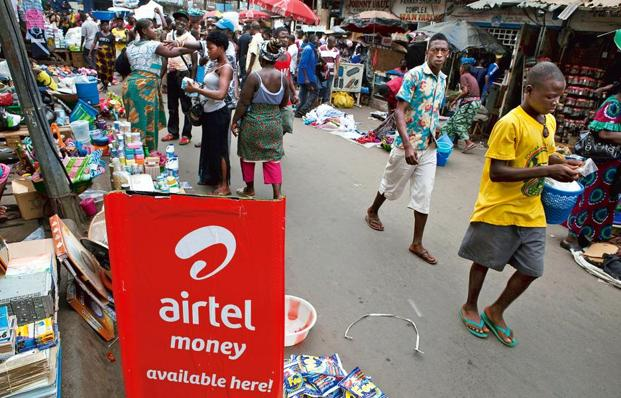
The Nigerian financial industry has newcomers that are likely going to stir disruption. The Central Bank of Nigeria (CBN) has granted approval in principle to MTN and Airtel to operate a payment service bank (PSB) across the country, as the regulator pushes to deepen further financial inclusion in Nigeria.

Three years ago, the CBN said it would allow non-financial companies to apply for mobile banking licenses – either as PSBs or Mobile Money Operators (MMOs). The decision was drawn up from the push to increase Nigeria financial inclusion that has for years been limited to financial companies.

Nigeria has a huge financially underserved population of about 38 million adults as of 2020, mostly scattered across rural areas where banks and other financial companies are not operational. Giving telcos license to offer financial services means that rural dwellers will hence have access to adequate financial services.

But before you get carried away, all the valuations of fintechs have not changed much in the GDP of Nigeria. Why? We are just moving the little value from one person to another. It used to take 3 days but now it could go in seconds. MTN and Airtel will join the fray but who will do the really hard work? I have no answer because even myself has no answer! Why? It is really TOUGH.

Nigeria needs a bailout for its future to come because most things are happening at the base of the innovation pyramid. I welcome these new species of banks but I will continue to hope the real builders will emerge. Hope dey.

Nigeria’s Central Bank Approves PSB License for MTN, Airtel to Offer Financial Services

Nigeria’s Central Bank Approves PSB License for MTN, Airtel to Offer Financial Services

4

The Nigerian financial industry has newcomers that are likely going to stir disruption. The Central Bank of Nigeria (CBN) has granted approval in principle to MTN and Airtel to operate a payment service bank (PSB) across the country, as the regulator pushes to deepen further financial inclusion in Nigeria.

Three years ago, the CBN said it would allow non-financial companies to apply for mobile banking licenses – either as PSBs or Mobile Money Operators (MMOs). The decision was drawn up from the push to increase Nigeria financial inclusion that has for years been limited to financial companies.

Nigeria has a huge financially underserved population of about 38 million adults as of 2020, mostly scattered across rural areas where banks and other financial companies are not operational. Giving telcos license to offer financial services means that rural dwellers will hence have access to adequate financial services.

Under the guidelines, mobile network operators are allowed to provide financial services to millions of unbanked Nigerians. However, they can do so only as PSBs and through a subsidiary separate from their core operations. This means, MTN and Airtel will be providing PSB services via their respective subsidiaries, MoMo and Smartcash.

PSBs accept deposits from individuals and small businesses, offer payment and remittance services, issue debit & prepaid cards, operate electronic purses, and other activities prescribed by the CBN.

MTN announced the issuance of the PSB license through a statement signed by its Company’s Secretary, Uto Ukpanah on Friday.

“MTN Nigeria Communications Plc (MTN Nigeria) as promoter, received an Approval in Principle (AIP) dated 4 November 2021 from the Central Bank of Nigeria (CBN) for a licence application for the proposed MoMo Payment Service Bank Limited. This is the first step in the process towards a final approval, subject to the fulfilment of certain conditions as stipulated by the CBN. The decision to issue a final approval is firmly within the regulatory purview of the CBN and we respect their right and judgment in that regard,” he said.

The South African telecom giant said it would leverage the opportunity to deepen the financial inclusion agenda of the CBN and the federal republic of Nigeria.

The other recipient of the PSB license, Airtel, also announced the approval through a statement signed by the Group Company Secretary, Simon O’Hara.

“Airtel Africa, with presence in 14 countries across Africa, announces that its subsidiary SmartCash Payment Services Bank Limited has been granted approval in principle to operate a payment service bank business in Nigeria. Final approval is subject to the Group satisfying certain standard conditions within six months,” he said.

Also commenting on the approval, the CEO, Airtel Africa, Segun Ogunsanya, said: “I am very pleased that Smartcash has been granted an approval in principle to operate a service bank business in Nigeria. We will now work closely with the Central Bank to meet all its conditions to receive the operating licence and commence operations.

“The final operating licence will enable us to expand our digital financial products and reach the millions of Nigerians that do not have access to traditional financial services. I am looking forward to working closely with the government, the Central Bank and traditional financial institutions to expand financial inclusion and meet the evolving needs of our customers and the economy.”

However, the approval of the PSB license to MTN and Airtel, which is likely going to be extended to other operators, mainly, Globacom and 9mobile, Nigeria’s domestic telcos, will spell further trouble for Nigeria’s traditional financial institutions.

Already, the fintech boom is increasingly immobilizing the growth of players in the traditional financial industry. The International Monetary Fund (IMF) disclosed in its Financial Access Survey 2021 Trends and Developments on Monday, that Nigerian banks closed 234 branches and 649 Automated Teller Machines, ATMs, in 2020 leading to a decline in the country’s Financial Access Score (FAS) to 4.44 in the year against 4.78 in 2019.

This means that there is still a huge financial inclusion gap to be filled even in urban areas. With millions of subscribers in their customer-base, telecom operators are about to rule Nigeria’s financial industry. But it is not clear what it will mean for the newly launched Nigeria’s central bank digital currency – the eNaira.

Waiting for the measured voice for a nation

1

Some Nigerian journalists, we need to stop the innuendos and improve our games. We cannot live in a fact-free society where people can wake up and accuse people of abominable things. It is very unfortunate that Nigeria lost citizens in the 21-storey building which collapsed in Ikoyi Lagos despite promises that the last would be the last!

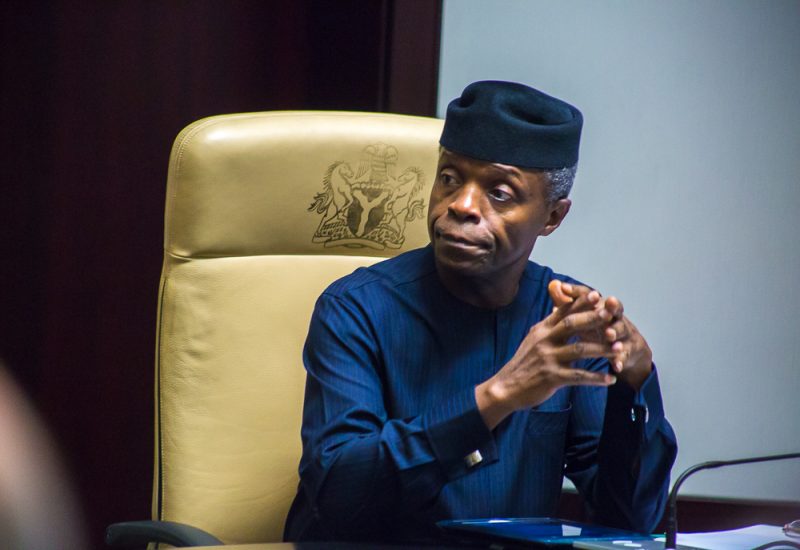
But hitting Vice President Yemi Osinbajo the way it has been characterized is not fair. And this is one area President Buhari has disappointed many people: absence of measured voice for a nation.

Vice President Yemi Osinbajo has denied having any connection with the 21-storey building that collapsed at Ikoyi, Lagos, on Monday.

At least 36 persons have died in the collapsed building, with some persons are still trapped underneath the rubble.

A report by Sahara Reporters had said the vice president allegedly owns the land on which the collapsed building was constructed.

The building developer, Femi Osibona, who also died in the collapse, was also said to be “fronting” for Mr Osinbajo.

But in a statement on Friday, Laolu Akande, the Senior Special Assistant to the President on Media & Publicity, said the vice president “has no interest whatsoever in said property.”

Mr Osinbajo, who tagged the report as “sponsored falsehood,” said he does not own and has never owned the affected land.

A Supreme Court Justice was attacked in her house by battle-ready soldiers, police, etc and magically the Attorney General, Police, EFFC, etc do not know who did the illegality and yet the President has not put those men where they belong.

I mean – is this not a republic? What is going on? I have expected the President to call these men and say if within one hour I do not have the names of the vandals who went to Justice Odili’s home, I will sack all of you for sleeping on your jobs!

The Nigerian Bar Association (NBA) said Thursday that relevant authorities’ denials of involvement in last Friday’s raid on the home of a Justice of the Supreme Court, Mary Odili, were unsatisfactory.

NBA president, Olumide Akpata, expressed the displeasure of the association about the incident and the reaction of the relevant authorities to it while speaking at the special court session held in honour of a deceased Justice of the Supreme Court, Samuel Oseji, in Abuja.

The Attorney-General of the Federation, Abubakar Malami, and the Inspector-General of Police, Usman Baba, had separately denied authorising the raid or knowledge of it.

Similarly, the Economic and Financial Crimes Commission (EFCC) and the State Security Services (SSS), both of which were also linked to the invasion, had denied involvement.

Dissatisfied with the denials on Friday, NBA president, Mr Akpata, said the body of all Nigerian lawyers would ensure those behind the raid were all exposed and punished.

BIG ISSUE: Has the University of Ibadan Goofed with Only First-Class Graduates Let-In Convocation Ceremony? Evidences Around the World

0
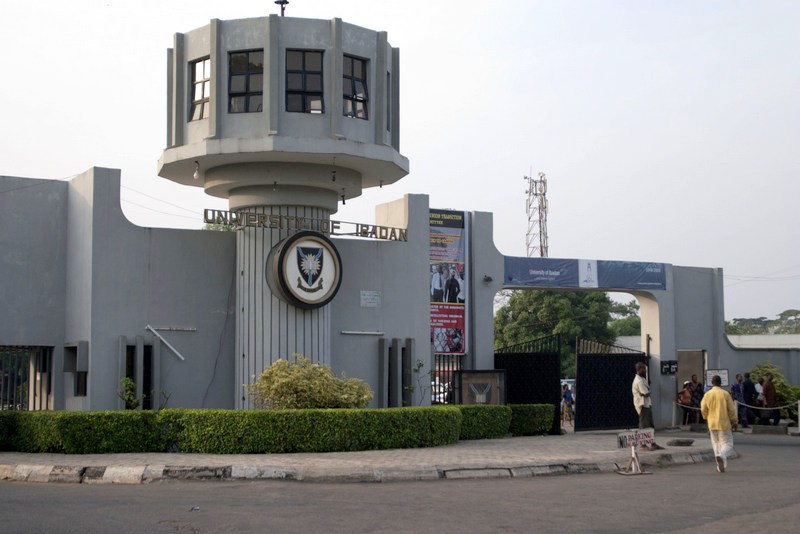
University of Ibadan, a federal university

For a few months in 2019 and over a year now, the world has been battling with the COVID-19 virus, which has impacted and still affecting people’s movement. Local and international businesses were forced to shut down during the first wave of the virus. Educational Institutions were not spared. Despite the severity of the virus during the first wave, a number of private higher Institutions in Nigeria were able to carry out their teaching duties and administrative functions through various online learning and meeting platforms. This was not actually occurred in most public institutions as the leadership failed to come up with resilient strategies and tactics to overcome the emerging challenges and issues.

As people and organisations continue experiencing impacts of the virus, this piece is not about x-raying the impacts and how the stakeholders are addressing them, the piece only interrogates the recent decision of the University of Ibadan that only graduates with First Class grade will be allowed to participate physically for the year 2021’s Convocation ceremony.

According to the University, “Attendance at the International Conference Centre is opened to First Class Honours graduands and recipients of prizes and awards only. Parents and visitors are not allowed into the campus neither will there be any form of partying or social gathering during the period. All graduands are to comply with COVID-19 protocols, including wearing of face masks, physical distancing and use of hand sanitizer.”  This decision has been earlier made and applied by the University of Ilorin which held its 2021 Convocation ceremony recently.

From the news media to the graduates, including their relatives and colleagues, the decision has been framed mostly with negative rhetoric and alternative narratives. While it is obvious that stakeholders across levels and industries and sectors need to be strategic in organizing events that require large gathering of people as the virus continues its spread in Nigeria, it is glaring, according to our checks across HEIs in different continents, that stakeholders are employing virtual playbook for graduation ceremonies.

For instance, information from the University of Regina indicates that irrespective of grades all graduates are being accommodated at the ceremony. According to the institution, “among the initiatives is a special commemorative program for graduates that will be mailed to them together with their parchment. As well, a special video tribute to graduates has been commissioned and will be posted later this month on the University website and broadcast on Access Communications.

A virtual yearbook has been designed that will allow Spring 2020 graduates to share their memories from their time at the U of R and stay connected with their colleagues. The University is also making “electronic swag” (virtual photo frames and backdrops) available on its website so graduates, their family members and friends can create their own special memories. In addition, the University is launching its #UofReginaGrads2020 social media campaign, where all community members are invited to post their congratulatory messages to this Spring’s graduates.”

Some institutions have also followed this approach. The Columbia Climate School, which cancelled in-person in 2020 and this year, adopted a virtual method without discriminating any graduate. The virtual approach was also the main strategy employed by the management of University of Michigan in February, 2021. Instead of denying all graduates opportunity of having shared memorable celebration, schools in New Jersey, the United States of America, were informed by the state government to limit the number of attendees per session and observe COVID-19 containment measures strictly.

Like schools in the New Jersey, the University of Chester, Queen Mary University of London, Cambridge University and Oxford University all had the ceremony in piecemeal, limiting the number of attendees per session/day.  Considering the approaches taken and expected to be adopted by the institutions in the global north, the big question among the different schools of thought that have been commenting on the decision, is why is it difficult for Nigeria’s premier University, which claims to be “a world-class institution for academic excellence geared towards meeting societal needs”, to consider some of the identified global practices for organizing the ceremony in the midst of the pandemic?

From virtual sphere to the physical settings, monitored by our analyst, answers to this question remains mixed according to the emerging different schools of thought. One of the schools has people who believe that telling non-First-Class graduates not to attend physically indicates limiting number of attendees in consonance with a social gathering measure of the government. It is also a way of appreciating the best among the graduates.

However, these are not augur well with the second school which believes the decision is a fundamental way of discriminating and pointing out that those with lower grades are not worthy of celebrating. Examining these reactions, our analyst concludes that the management of the University has once again reaffirmed power distance, masculinity and femininity cultural dimensions associated with Nigerians over the years. Separating the graduates is a clear manifestation of making some superior and the other inferior, which is rooted in the masculinity [superior] and femininity [inferior] dimensions. It also stresses why the non-First Class graduates should see those with the grade classification as leader. This is also embedded in the power distance cultural dimension.