DD
MM
YYYY

PAGES

DD
MM
YYYY

spot_img

PAGES

Home Blog Page 55

The Most Valuable Moat in Crypto is Privacy

2

A16z crypto general partner Ali Yahya explicitly called privacy “the most important moat in crypto” in December 2025 posts and reports. He argued that while high-performance blockchains are commoditized with easy bridging of tokens and mercenary capital flowing freely, privacy creates genuine lock-in.

Secrets and private states are hard to migrate across chains without leaking metadata like timing, and sizes, leading to stronger network effects and a winner-take-most dynamic for privacy-focused chains.

This view echoes in a16z’s broader 2026 predictions and industry commentary: Privacy enables real-world finance to move on-chain like institutional RWAs, payroll, compliant stablecoins without exposing sensitive data.

Indicators of momentum include surging Google searches for crypto privacy, Zcash’s shielded pool growing to ~4M ZEC, Railgun’s monthly flows exceeding $200M, and developments like the Ethereum Foundation’s privacy team.

Market performance backs the narrative: Privacy coins surged in 2025, with Zcash up over 700% at peaks outperforming BTC/ETH, Monero up ~100%, and others like Dash and Railgun posting triple-digit gains.

Emerging markets drove much of the volume due to capital controls, and VCs listed privacy as a top focus.Counterpoints exist: Some argue speed, scalability, reliability, or programmability remain bigger moats, and the privacy hype could be narrative-driven after recent price runs.

Regulatory pressures like delistings, MiCA bans on certain privacy coins in Europe pose risks, though compliant privacy tools like selective disclosure in Zcash are gaining traction.

As crypto matures and surveillance/forensics advance, privacy is increasingly seen as essential for mass adoption—not just a niche feature, but a defensive moat that protects users and differentiates ecosystems in a multi-chain world. 2026 could prove whether this thesis holds as institutions demand confidentiality.

Why Privacy Matters in DeFi

DeFi has revolutionized finance by offering permissionless access to lending, borrowing, trading, and yield farming on public blockchains like Ethereum. However, this transparency comes at a cost: every transaction, balance, and interaction is publicly visible forever.

This exposes users to risks like front-running (MEV attacks), targeted hacks, financial surveillance, and loss of personal data sovereignty. For institutions, public exposure of strategies or positions can lead to competitive disadvantages or regulatory scrutiny.

As of late 2025, privacy is increasingly viewed as a critical enabler for DeFi’s mainstream adoption—especially for real-world assets (RWAs), institutional participation, and compliant finance. Without it, sensitive use cases like private lending, payroll, or credit scoring remain limited.

Public ledgers enable auditability but leak metadata like wallet links, transaction patterns.Tools enabling full anonymity face scrutiny like delistings of certain privacy coins, while compliant privacy— selective disclosure is gaining traction.

Early privacy solutions were slow, expensive, or fragmented liquidity. Bots exploit visible mempools, costing users billions annually. Zero-knowledge proofs (ZKPs), particularly zk-SNARKs and zk-STARKs, dominate as the core tech—allowing proof of transaction validity without revealing details.

Aztec Network: Programmable privacy L2 on Ethereum; hybrid public/private execution; bridges to major chains like Wormhole. Adds privacy to existing Defi such as Uniswap, Aave, Yearn without fragmenting liquidity; private OTC trading and voting.

Ignition Chain live; cross-chain privacy tunnels; institutional pilots showing 300% user growth in private lending. Still scaling full decentralization.

RAILGUN: On-chain ZK privacy system for Ethereum/EVM chains; shielded transactions and DeFi interactions. Private swaps, lending, staking; compliance screening; no separate chain. TVL ~$113M (near ATH); monthly volume $150M+; endorsed by Vitalik Buterin; multi-sig privacy prototype. Relies on underlying chain security.

Oasis Network: Confidential smart contracts via TEEs; privacy at scale for DeFi/data apps. High throughput; institutional focus on RWAs, confidential computations. Partnerships growing; positioned for large-scale finance. Less DeFi-native than ZK-focused rivals.

Secret Network: Privacy-preserving smart contracts; encrypted data computation. Private DeFi (e.g., SecretSwap), NFTs, governance. Established for confidential dApps; often compared to Oasis. Slower adoption in broader EVM ecosystem.

StarkNet/StarkWare: STARK-based scalability + privacy; high TPS. Institutional trading; DeFi Spring initiatives. TVL surged 550% in prior years; low fees. Privacy features evolving alongside scalability.

Privacy infrastructure saw explosive interest in 2025, with platforms like Aztec enabling 300%+ user growth in private lending. Tools balancing privacy with compliance like selective disclosure via ZKPs are key for RWAs and tokenized assets.

Projects incorporate KYC/AML proofs without exposing data (e.g., zkPass for verifiable credentials in lending). Innovations like Miden emphasize local proofs for true device sovereignty—privacy by default, cheaper than public transactions.

Privacy-focused assets like Zcash shielded pool growth, Railgun TVL spikes outperformed in 2025 amid surveillance concerns. Privacy in DeFi is no longer niche—it’s evolving into a defensive moat and growth engine.

As regulations tighten and institutions demand confidentiality, 2026 could see widespread adoption of these tools, unlocking trillions in on-chain capital while preserving user sovereignty.
Subber Shutdown Reflects a Closing Chapter on Raffle Meta Rather than End of NFTs

0

Subber.xyz, a popular multichain platform for managing NFT collaborations, whitelist allocations, presales, raffles, giveaways, and community growth tools especially prominent on Solana and other chains, has officially announced its shutdown.

Subber is officially shutting down. We kept the service running for as long as we could, hoping the NFT market would rebound and that web3 communities would regain the momentum and strength they once had. But despite our best efforts, we’ve reached the end of our journey. Thank you for everything. GN “

The site’s homepage now displays a simple shutdown notice: “Thank you to everyone who supported and built with us. We’re grateful for the journey.” Subber was widely used during the 2022–2023 NFT boom for running collabs and rewarding communities.

The team cited the prolonged NFT market downturn and lack of rebound as key reasons. Community reactions on X are mixed: nostalgia for the “good old days” of Solana NFTs, acknowledgment that better alternatives like Alphabot emerged, and some criticism that Subber failed to innovate or pivot amid competition.

This comes amid other recent web3 tool/project closures, signaling a tough period for NFT-focused infrastructure as activity remains low heading into 2026. Many in the space see it as a sign of the ongoing NFT winter rather than the end of NFTs entirely—tools evolve, and communities adapt to new platforms.

Subber’s closure marks a poignant moment for the NFT and web3 community ecosystem, particularly on Solana where it was a cornerstone tool during the 2022–2023 boom. The team explicitly cited the lack of a meaningful rebound in the NFT market as the primary reason, after keeping operations running in hopes of recovery.

This aligns with broader trends: NFT trading volumes have remained suppressed post-2022 peak, with occasional flickers like memecoin-driven activity but no sustained revival. It’s part of a pattern of NFT-focused infrastructure closures like Solsniper marketplace in mid-2025, other tools fading earlier, reflecting reduced demand for whitelist/raffle management as fewer high-volume mints and collabs occur.

Many users note that superior alternatives have emerged, reducing Subber’s relevance:Alphabot — Frequently praised as more advanced and dominant now. Blocksmith’s Atlas, LuckyGo, and others for raffles/allowlists.

The space is maturing—users “vote with their feet,” and weaker or less innovative models fade. Better tools win out, forcing consolidation. Short-term disruption for ongoing or legacy projects relying on Subber for active raffles, presales, or token-gated access though most had likely migrated.

Holders of Subber-related NFTs, any project-specific passes may see them become worthless, with criticism from some that the shutdown was abrupt without handover or pivot options. Nostalgia is strong: Many former collab managers and community builders reminisce about Subber’s role in fueling explosive growth during Solana’s NFT heyday.

Its hghlights the challenges of building sustainable business models tied heavily to speculative hype cycles like NFT mints. Not a death knell for NFTs—community members emphasize adaptation, with calls for more sustainable models e.g., utility beyond raffles, integration with memecoins or DeFi.

Reinforces bear market realities: Tools and projects without diversification or strong product-market fit struggle when activity dips. Positive spin from some: This clears space for innovation in community tools amid AI/bot challenges in web3 engagement.

Overall, Subber’s end feels like closing a chapter on the “raffle meta” era rather than the end of NFTs entirely. The ecosystem evolves—communities are migrating to newer platforms, and any 2026 revival could spark fresh tools. Sad for veterans, but a natural part of web3’s fast-paced cycle.

China’s SMIC moves to consolidate domestic chipmaking as it buys out SMNC minority stake.

0
????????????????????????????????????????????????????????

China’s largest contract chipmaker, Semiconductor Manufacturing International Corp (SMIC), is taking a decisive step to tighten its grip on a key manufacturing arm as Beijing pushes for deeper self-reliance in semiconductors amid sustained U.S. technology curbs.

SMIC said on Monday it plans to acquire the remaining 49% stake in its subsidiary SMIC Ningbo (SMNC) for 40.6 billion yuan ($5.79 billion), a move that will give the Hong Kong- and Shanghai-listed foundry full ownership of the unit. The transaction will be settled through the issuance of about 547.2 million A-shares to five existing SMNC shareholders, including the powerful China National Integrated Circuit Industry Investment Fund, widely known as the “Big Fund.”

SMNC is a strategic asset within SMIC’s manufacturing network, focusing on 12-inch wafer fabrication across a range of process technologies. These larger wafers are the industry standard for more advanced and cost-efficient chip production, making the unit central to SMIC’s medium- and long-term capacity expansion plans. In its filing to the Shanghai Stock Exchange, SMIC said the acquisition would improve asset quality, streamline governance, and strengthen support for its long-term development strategy.

The deal also fits squarely into China’s broader industrial policy goals. By consolidating ownership of critical fabs, SMIC reduces internal complexity and gains greater operational flexibility at a time when access to foreign equipment and advanced manufacturing tools remains constrained by U.S. and allied export controls. Full control of SMNC could make it easier for SMIC to coordinate capital spending, technology deployment, and customer allocation without minority shareholder considerations.

The involvement of the state-backed Big Fund is notable. While the fund has been a cornerstone investor across China’s semiconductor ecosystem, its gradual exit from certain holdings has been interpreted by analysts as part of a portfolio rebalancing, rather than a retreat from the sector. The share-based structure of the deal also allows SMIC to preserve cash, which remains critical as chipmaking requires sustained, capital-intensive investment.

In a separate regulatory filing, SMIC said changes in another subsidiary, SMSC, will significantly lift its financial firepower. Exiting shareholders and new investors will raise SMSC’s registered capital to $10.1 billion from $6.5 billion, underscoring continued investor and policy support for domestic chip manufacturing projects, even as profitability across the global foundry industry remains uneven.

The consolidation push comes as SMIC continues to benefit from strong domestic demand. The company reported a 9.7% increase in third-quarter revenue from a year earlier to $2.38 billion, driven largely by Chinese customers seeking local alternatives to foreign chip suppliers. Profit rose 28.9% to $191.75 million, comfortably beating analysts’ expectations, according to LSEG data.

That performance highlights a growing divergence in the global semiconductor market. While many international foundries are grappling with inventory corrections and softer consumer electronics demand, SMIC has been buoyed by localization efforts across China’s automotive, industrial, and consumer sectors. Still, margins remain under pressure due to higher depreciation costs and ongoing investment in capacity that may not immediately translate into high-end output.

Taken together, the SMNC acquisition and the capital expansion at SMSC point to a clear strategy: deepen control over core assets, align more closely with state-backed investors, and reinforce SMIC’s role as the backbone of China’s chipmaking ambitions. The company appears to be betting that scale, consolidation, and domestic demand will help offset the technological barriers it still faces as geopolitical tensions continue to shape the semiconductor industry.

Nigerian Corporations Turn to Short-Term Debt as SEC Approves N1.37tn Commercial Paper Programmes

0

Nigeria’s commercial paper (CP) market recorded rapid expansion in 2025, underscoring how corporates are reshaping their funding strategies amid persistently high borrowing costs in the banking system.

Data from the Securities and Exchange Commission (SEC) show that CP programmes worth about N1.37 trillion had been approved as of October 23, 2025. Yet only about N753 billion was actually raised, pointing to a utilization rate of roughly 54% and highlighting a cautious, phased approach by issuers.

The growing gap between programme approvals and actual drawdowns suggests that while companies are securing headroom for funding, many are choosing to access the market selectively rather than exhaust approved limits at once. Analysts say this reflects a strategy of flexibility, allowing firms to respond to cash flow needs and interest rate movements without locking themselves into larger short-term obligations.

Issuance activity during the period was heavily skewed towards a handful of large corporates, with Dangote Sugar Refinery Plc standing far ahead of the rest. Operating under a N300 billion CP programme, the company accounted for more than 45% of total issuance, raising over N300 billion across multiple series and tranches. Individual issuances ranged from as little as N4.7 billion to as much as N96.7 billion, spanning Series 10 through Series 16.

Dangote Sugar’s repeated and sizeable market access highlights how large, cash-intensive firms are leaning on commercial paper to manage working capital cycles, refinance short-term obligations, and smooth liquidity pressures. Its dominance also illustrates the confidence investors place in top-tier corporates with strong balance sheets and predictable cash flows.

Beyond Dangote Sugar, issuance was more fragmented across sectors such as financial services, agribusiness, and consumer goods. Johnvents Industries Limited raised about N52.6 billion from its N100 billion programme, while UAC Nigeria Plc issued N45 billion under a N65 billion approval. In the financial sector, Citibank Nigeria Limited, despite holding one of the largest approved programmes at N300 billion, issued only N26.7 billion across two series, signaling restrained utilization even among well-capitalized institutions.

The data also point to a broadening of the issuer base, with fintechs and mid-sized corporates playing a more visible role in the market. Payaza Africa Limited emerged as one of the most active non-industrial issuers, raising nearly N43 billion across three series under a N50 billion programme. Golden Fertilizer Company Limited issued N20 billion from its N40 billion programme, while Skymark Partners Limited raised just over N11 billion despite a similar approval size, reinforcing the view that many firms are issuing strictly to meet near-term working capital needs.

Other contributors, including Champion Breweries Plc, Valency Agro Nigeria Limited, Neveah United Capital Plc, and several special-purpose vehicles, added smaller but steady volumes, collectively deepening market liquidity and reinforcing commercial paper as a mainstream funding option.

Market participants link the surge in CP activity to the broader macroeconomic environment. With the monetary policy rate standing at 27%, commercial bank lending rates remain elevated, often with additional risk and cost margins layered on top. While large corporates with strong credit profiles may negotiate rates closer to base lending levels, smaller or riskier firms typically face significantly higher borrowing costs.

Against this backdrop, commercial paper has emerged as a relatively cheaper and more flexible alternative for short-term funding, particularly for issuers able to attract institutional investors.

Maturity profiles across issuances were largely concentrated between December 2025 and mid-2026, reinforcing the role of CP as a liquidity management tool rather than a substitute for long-term financing. This clustering reflects deliberate balance sheet management, allowing firms to bridge cash flow gaps without committing to the premium costs associated with longer-tenor bank loans.

Analysts note that the large volume of approved but undrawn programmes represents a strong pipeline that could sustain issuance momentum into 2026. If interest rates remain high and access to long-term credit continues to be constrained, more corporates, including those not listed on the Nigerian Exchange, are expected to deepen their reliance on the CP market. In that sense, the cautious utilization seen in 2025 may be less a sign of weak demand and more an indication of increasingly sophisticated treasury strategies in a tight monetary environment.

Meta Advanced Its AI Infrastructure By Acquiring Manus to Accelerate Adoption

0

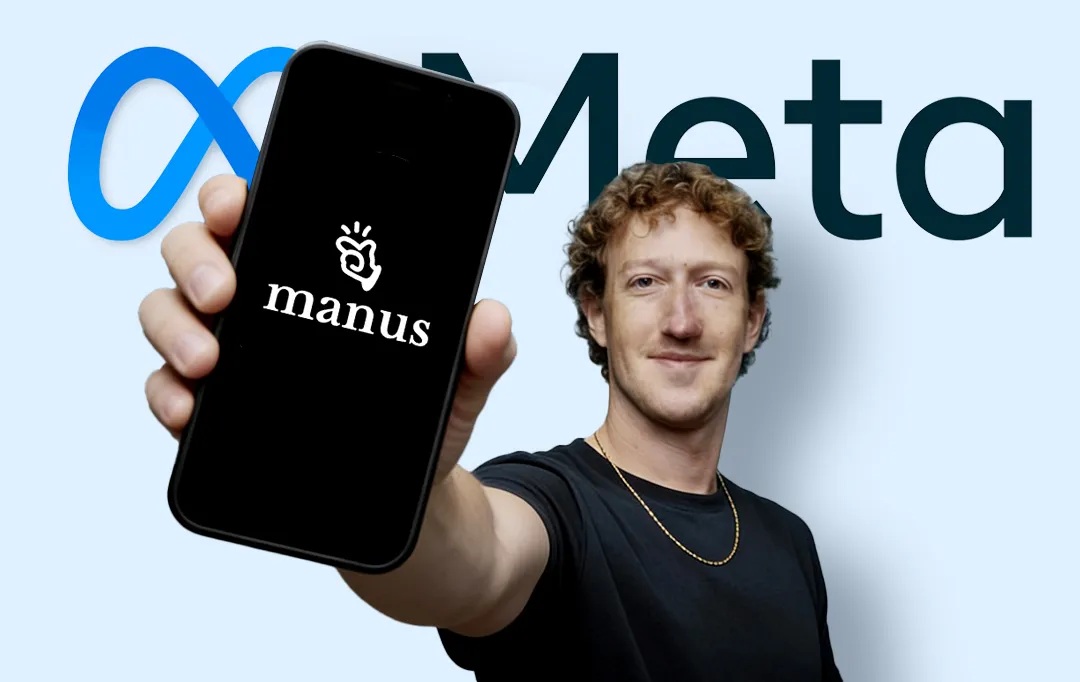
Meta Platforms has acquired Manus, a Singapore-based AI startup originally founded in China, specializing in general-purpose autonomous AI agents.

Reports indicate around $2 billion or slightly more, up to $3 billion in some sources, though Meta has not officially disclosed terms. This makes it one of Meta’s largest acquisitions in recent years, behind WhatsApp ($19B) and its investment in Scale AI up to $15B equivalent.

Manus was founded in 2022 in China (Beijing/Wuhan) by entrepreneur Xiao Hong as part of Butterfly Effect Technology also known as Monica.im. The company relocated headquarters to Singapore in mid-2025 amid US-China tech tensions.

It gained fame in early 2025 for launching what it called the world’s first fully autonomous general AI agent, capable of complex tasks like market research, coding, data analysis, vacation planning, and job screening with minimal prompting.

Manus quickly reached over $100 million in annual recurring revenue (ARR) just months after launch, with a run rate exceeding $125 million. It processed 147 trillion tokens and created over 80 million virtual computers, serving millions of users via subscription plans.

Meta plans to integrate Manus’s agent technology into its products like Meta AI, Facebook, Instagram, WhatsApp to enhance automation for consumers and businesses. Manus will continue operating independently as a subscription service from Singapore, with its team including CEO Xiao Hong, who becomes a Meta VP joining Meta.

Due to Manus’s Chinese origins and ongoing US scrutiny of China-linked AI prior reviews of US investments like Benchmark’s $75M round, Meta stated there will be no remaining Chinese ownership interests post-acquisition. Manus will discontinue operations and services in China.

This move caps Meta’s aggressive 2025 AI push, including other acquisitions like Limitless for AI wearables, PlayAI, WaveForms, Rivos and heavy investments in talent and infrastructure under CEO Mark Zuckerberg’s focus on “superintelligence” and agentic AI.

Meta’s acquisition of Manus accelerates its push toward agentic AI—autonomous systems that execute complex, multi-step tasks independently, beyond chatbots. Manus excels in market research, coding, data analysis, resume screening, and automation, processing over 147 trillion tokens and creating 80+ million virtual computers while serving millions of users.

Integration into Meta’s Ecosystem 

The technology will enhance Meta AI, WhatsApp, Instagram, Facebook, and business tools, enabling automation for billions of consumers and millions of SMBs like AI-driven ad optimization, content creation, customer service.

Meta has lagged in fully autonomous agents compared to OpenAI’s projects like Operator/Deep Research and Google’s tools. This deal provides a proven, revenue-generating product ~$100M+ ARR in months, fast-tracking Meta’s “personal superintelligence” vision under Mark Zuckerberg.

Manus’s ~100-person team, including CEO Xiao Hong, joins Meta, complementing recent hires like Alexandr Wang from Scale AI and open-source Llama efforts. This positions Meta more aggressively against leaders in the AI race: Vs. OpenAI and Anthropic ? Manus previously outperformed OpenAI’s Deep Research on benchmarks like GAIA; now scaled by Meta’s distribution, it could challenge ChatGPT’s dominance in consumer/enterprise agents.

Enhances Meta’s edge in user-facing automation, potentially disrupting Google’s search/tools and Microsoft’s Copilot integrations. Signals Big Tech’s shift to acquiring mature agent tech rather than building solely in-house, intensifying talent wars and M&A in AI.

Overall, it strengthens Meta’s transition from social media to a general-purpose AI platform. Manus’s subscription model, $20/month for businesses provides Meta its first direct AI revenue stream amid massive infrastructure spending ($60B+ planned). Premium features like advanced agents in WhatsApp/Instagram could drive new subscriptions/ads.

Acquiring a startup that hit $100M+ ARR in ~9 months highlights agentic AI’s commercial viability, potentially boosting investor confidence in Meta’s AI bets. Encourages AI-native workflows, reducing reliance on traditional software; businesses may shift to Meta’s ecosystem for automation.

Manus’s Chinese origins (founded in Beijing/Wuhan, relocated to Singapore in 2025) make this a rare US-China tech crossover amid tensions. National security scrutiny — Likely CFIUS review due to AI’s strategic importance; US lawmakers like Sen. John Cornyn have flagged China-linked investments.

Meta explicitly states: no remaining Chinese ownership, full discontinuation of China operations/services. This aims to preempt blocks but won’t eliminate oversight. Underscores AI innovation’s borderless nature, with Singapore emerging as a hub; could influence US policy on foreign AI acquisitions.

This ~$2-4B deal is a high-stakes bet that bolsters Meta’s AI leadership, delivers near-term revenue potential, and navigates geopolitical risks—potentially reshaping autonomous AI adoption in 2026 and beyond.