DD
MM
YYYY

PAGES

DD
MM
YYYY

spot_img

PAGES

Home Blog Page 55

U.S. Senators Demand Apple and Google Remove X and Grok Amid Escalating Global Backlash Over AI-Generated Sexual Deepfakes

0

Three Democratic senators have intensified pressure on Apple and Google to remove Elon Musk’s social media platform X and its associated AI app Grok from their app stores, citing the rampant generation of sexualized, nonconsensual images through XAI’s chatbot.

In an open letter to Apple CEO Tim Cook and Google CEO Sundar Pichai, Senators Ron Wyden (Oregon), Ed Markey (Massachusetts), and Ben Ray Luján (New Mexico) urged the tech giants to enforce app store rules that prohibit apps enabling sexualized images of real people without consent. They argued that Grok has allowed users to flood X with thousands of sexualized images an hour, depicting women, and in some cases, children, including portrayals of abuse, humiliation, and even death.

Within hours of the letter, X adjusted the Grok reply bot’s functionality on the platform, restricting image generation to paying premium subscribers and narrowing the types of images that could be generated on X itself. However, the standalone Grok app and website still permit users to generate sexualized deepfakes, raising questions about the platform’s ability or willingness to fully address the problem.

Senator Wyden criticized the partial changes, calling them insufficient: “All X’s changes do is make some of its users pay for the privilege of producing horrific images on the X app, while Musk profits from the abuse of children,” he said.

Global Consequences and Rising Tensions

The backlash has not been confined to the U.S. Governments in Asia have begun to take matters into their own hands. Indonesia temporarily blocked Grok and X after the AI tool generated explicit content depicting real people, including minors, without consent. Malaysia also restricted access to X in response to similar concerns. Both governments cited violations of citizens’ privacy and the potential for harm as justification for the actions.

Despite the mounting criticism, Elon Musk has yet to propose a concrete solution to curb Grok’s abuse. Musk continues to frame regulatory pressure as a free speech issue. On X, he accused the U.K. government of seeking “any excuse for censorship” and of attempting to suppress free expression, echoing his long-standing opposition to content moderation. Musk and xAI have reiterated that producing illegal content will lead to expulsion from X, but much of the sexualized imagery at the center of the controversy falls into a legal gray area, leaving enforcement uneven and limited.

Debate Over Free Speech and Regulatory Authority

While the senators argue that Apple and Google are uniquely positioned to stop the distribution of apps that enable sexualized deepfakes, some observers contend that the demand amounts to overreach. Critics say compelling app stores to remove X and Grok could set a precedent that stifles free expression and expands governmental influence over digital platforms and AI innovation.

“All major AIs have documented instances of going off the rails; all major AI companies make their best efforts to combat this; none are perfect,” Epic Games CEO Tim Sweeney said.

He went further, accusing politicians of using app store gatekeepers to selectively target companies they oppose, calling it “basic crony capitalism.”

“I defend open platforms, free speech, and consistent application of the rule of law,” he said.

Platform Responsibility and Enforcement Challenges

Apple’s App Store guidelines prohibit apps that include “overtly sexual or pornographic material” or content likely to humiliate, intimidate, or harm individuals. Google’s Play Store similarly bans apps promoting sexually predatory behavior or distributing nonconsensual sexual content. Both companies have previously removed apps that allowed AI-based “nudifying” of images.

However, Grok and X remain highly ranked on both platforms, with Grok placed in the top 10 apps on Friday, illustrating the difficulty of enforcing policy consistently across powerful AI tools.

Many have noted that the distributed nature of AI and generative tools complicates enforcement. Even if Apple or Google delists Grok, the app can still be accessed through web portals or sideloaded, and international users may continue to generate abusive content. Meanwhile, Musk’s framing of moderation as censorship allows him to rally supporters who oppose any perceived limitation on content generation, further polarizing the discussion.

Timeline: Grok/X Controversy and Global Backlash

December 2025 – Musk Unveils Grok’s AI Image Manipulation

  • Elon Musk, owner of X and xAI, introduces a version of the Grok AI chatbot capable of manipulating images of real people.
  • The AI tool can generate sexualized content, including deepfakes of women and minors.
  • Musk frames moderation as censorship and opposes heavy content restrictions, emphasizing free speech.

Early January 2026 – Rampant Deepfake Generation on X

  • X users exploit Grok to generate thousands of sexualized images per hour, largely depicting women but also including minors.
  • Many images involve nonconsensual scenarios, sexual abuse, humiliation, or death.
  • The platform’s moderation struggles to contain the content, and harmful imagery spreads widely.

January 9, 2026 – X Adjusts Grok Functionality

  • X limits Grok’s image generation to paying premium subscribers.
  • Certain image categories are restricted on X itself, but the Grok tab on X, the standalone app, and website continue to allow sexualized deepfakes.
  • Musk reiterates that illegal content will result in expulsion from X, but much of the content does not legally qualify as illegal.

January 10–12, 2026 – Southeast Asia Governments Take Action

  • Indonesia: Temporarily blocks X and Grok following reports of sexualized AI-generated imagery depicting real people, including minors.
  • Malaysia: Restricts access to X, citing privacy and citizen protection concerns.
  • Governments emphasize that AI-fueled sexualized imagery violates human rights and digital safety.

Google Integrates Gemini Into Gmail in a Bid to Leverage Inbox in AI Push

0

Google is pushing its Gemini artificial intelligence more firmly into Gmail, turning the world’s most widely used email service into another frontline in the race to dominate generative AI.

The company said Thursday that it is rolling out a new set of Gemini-powered features that will automatically summarize long email threads, suggest context-aware replies, and surface AI-generated overviews inside inboxes — with some tools switched on by default.

The upgrades mark a notable shift in how Google is positioning AI inside everyday digital habits. Rather than framing Gemini as an optional assistant, Google is increasingly embedding it as a core layer of the user experience, even if that means some users will have to actively opt out.

“When you open an email with dozens of replies, Gmail synthesizes the entire conversation into a concise summary of key points,” Google said in a blog post announcing the changes.

For users drowning in long threads — office debates, family group emails, or sprawling customer-service chains — the company is pitching Gemini as a way to reclaim time and attention.

At the center of the update is AI-generated thread summaries, designed to distill lengthy back-and-forths into short, readable digests. Alongside that, Google is bringing its controversial “AI Overviews” — already familiar to search users — into Gmail, signaling its confidence that AI-generated context belongs not just in search results, but directly inside personal communications.

Google is also expanding “Suggested Replies,” an evolution of its earlier “Smart Replies” feature. The new version draws more deeply on the context of previous messages, allowing users to respond with a single tap to emails that might otherwise require careful reading and drafting. The company is simultaneously upgrading its proofreading tools, promising tighter grammar checks and suggestions that make emails more concise.

Taken together, the changes reflect Google’s broader strategy to use scale as leverage. Gmail has more than 3 billion users, according to the company, giving Google a built-in distribution advantage over rivals such as OpenAI and Anthropic, which largely rely on standalone apps or integrations.

This strategy comes as competition in the AI sector intensifies. OpenAI, whose ChatGPT helped ignite the generative AI boom, reached a private market valuation of $500 billion late last year. Anthropic said it is now valued at $350 billion following a new funding round. Google, meanwhile, is betting that embedding Gemini across products people already use daily — Gmail, Search, Docs, and beyond — will lock in relevance before competitors can fully catch up.

That bet appears to be resonating with investors. Alphabet, Google’s parent company, briefly overtook Apple by market capitalization on Wednesday for the first time since 2019, capping a rally that made Alphabet the best-performing stock among tech megacaps last year. The surge has been driven in part by confidence that Google is finally converting its AI research muscle into consumer-facing products at scale.

Still, the decision to turn some Gemini features on by default raises questions about user choice and trust. Gmail is a deeply personal product, and automatic AI summaries and suggestions could reshape how people read, interpret, and respond to messages — sometimes without realizing it. Google has said users who do not want the features can opt out, but the default-on approach underscores how aggressively the company is moving to normalize AI assistance.

Email remains one of the most entrenched digital habits in the world, and whoever controls how information is summarized, prioritized, and acted upon inside the inbox gains a powerful advantage. With Gemini, Google is no longer just helping users write emails faster. It is positioning AI as the silent editor, reader, and gatekeeper of everyday communication.

Top 3 Alternatives to Volatile Large Caps — Ozak AI Emerges as the Safest High-ROI Choice Before Listing

0

The volatility across the cryptocurrencies with large market caps is high; however, there are alternatives emerging for investors to consider as a safety net. This includes Ozak AI, SHIB, and PEPE, with the AI-powered token leading at the top with the potential to generate higher ROI. OZ has notably achieved this feat before getting listed on exchanges – that is, during the presale process itself.

OZ, PEPE, and SHIB

To start from the top, Ozak AI has raised over $5.61 million by selling more than 1.08 billion OZ tokens. Investors continue to buy the token and pump more funds into the ecosystem. Their confidence in Ozak AI stems from the fundamentals wherein it has surged by 14x already. It has now started demonstrating its potential to generate 71x ROI. This would turn the token value into $1, up from $0.014.

SHIB is listed at $0.000008515, slightly up by 0.31% in a single day. Both these factors make it a hard-to-miss meme coin. The low price allows more accumulation, and a slight surge shows that it could still be in the correction phase. This means that Shiba Inu tokens might rise in the ranks in the next bull cycle, given the graph is on the lower side.

The frog-themed token, PEPE, is exchanging hands at $0.000004578, down by 3.03% over the last 24 hours. Suffice it to say that the token underlines the possibility to reverse the decline and mark a new high upfront. SHIB and PEPE currently have a market cap of $5.01 billion and $1.92 billion, respectively.

Driving Forces of Ozak AI Ecosystem

Ozak AI is at the top of the list because there are several forces driving its growth momentum in the OZ presale process. This includes the likes of token utility, network security, and the x402 Protocol.

The token utility essentially empowers the community to participate in governance, wherein they can help in the expansion of the ecosystem. Holders of the AI token also gain exclusive access to AI Agents and a real-time analytics feed. These collectively enable them to earn auto-optimized yields.

The x402 Protocol does not require developers to sign up for a subscription plan. They can instead choose to pay for the bits they require. Thereby streamlining the architecture of a project on Ozak AI. It simultaneously marks a progressive step for the ecosystem in the direction of making its agents completely autonomous.

The network security, which instills a sense of confidence among investors plus community members, is backed by Certik and Sherlock. They have integrated their advanced tools into every possible corner in an attempt to guard the network from smart contract vulnerabilities.

Ozak AI Partners Giving it an Edge

Ozak AI has entered into multiple partnerships, and these are giving it an edge to stay at the top of the list over SHIB and PEPE. For instance, it has joined hands with Openledger, an AI-blockchain infrastructure.

The main objective of their partnership is to create effective and efficient ways to handle AI training. This is expected to be achieved by finding a point of convergence for Prediction Agents by Ozak AI and on-chain data/model tools by Openledger. Their additional goals are to spark joint projects for developers and boost datasets that are driven by the community.

Key Takeaways

OZ, PEPE, and SHIB are three alternatives to the large caps at a time of high volatility. The list is led by Ozak AI because it has the potential to return 71x of the investment made at $0.014. What gives it the boost are its AI-powered technical components and strategic alliances with key players from the AI crypto market.


For more information about Ozak AI, visit the links below:

Website: https://ozak.ai/

Twitter/X: https://x.com/OzakAGI

Telegram: https://t.me/OzakAGI

SpaceX’s 15,000-Satellite Starlink Push Triggers Industry, Environmental Backlash

0

SpaceX’s ambition to dramatically expand its Starlink cellular satellite network is drawing fresh resistance from rival satellite operators, environmental groups, and even fellow space companies, as U.S. regulators begin formally weighing the implications of one of the largest orbital buildouts ever proposed.

The Federal Communications Commission has opened a public comment period on SpaceX’s request to launch an additional 15,000 satellites for its next-generation cellular Starlink system. The proposal is designed to ease capacity constraints and significantly enhance Starlink’s ability to deliver direct-to-phone connectivity, including 5G-level services such as high-quality video calls and faster data downloads across the globe.

At present, SpaceX has FCC approval to deploy about 12,000 satellites, with roughly 650 currently supporting its cellular Starlink service. The additional constellation would mark a major scaling-up of that system. Taken together with SpaceX’s other Starlink filings, rival satellite provider Viasat estimates the company is seeking approval for close to 49,000 satellites in low-Earth orbit, a figure that has become a central concern for critics.

Viasat, one of SpaceX’s most persistent opponents, warned that the expansion could further entrench Starlink’s dominance in orbital space and radio spectrum. In a filing to the FCC, the company argued that granting the request would give SpaceX “an even greater ability and incentive to foreclose other operators from accessing and using limited orbital and spectrum resources on a competitive basis.”

The concern, echoed by other firms, is that the sheer scale of Starlink could crowd out competitors before they are able to deploy or expand their own systems.

Globalstar, which provides satellite connectivity for Apple’s iPhone emergency and messaging services, also lodged objections, focusing on spectrum use. While SpaceX struck a $17 billion deal last year to use EchoStar’s licensed spectrum within the United States, Globalstar says the same satellites would tap into the 1.6GHz band outside U.S. borders, a frequency range Globalstar relies on globally. The company argues that this overlap could result in harmful radio interference, even if it does not technically violate existing spectrum rights.

“SpaceX’s failure in the September Application to provide a legitimate interference analysis is not surprising,” Globalstar wrote, adding that the Big LEO band is already so congested that “new operator entry … is technically infeasible.”

The dispute highlights how Starlink’s expansion is not just a question of satellite numbers, but also of how finite spectrum resources are shared in an increasingly crowded orbital environment.

Beyond commercial rivals, environmental concerns are emerging as a significant line of opposition. DarkSky International, an advocacy group focused on light pollution and environmental impacts of space activity, urged the FCC to closely examine the long-term consequences of deploying and deorbiting 15,000 additional satellites. The group warned that as satellites burn up on reentry, they could release large quantities of metals and other compounds into the upper atmosphere, with unknown but potentially harmful effects on the ozone layer.

“SpaceX’s proposed satellites will dump millions of pounds of pollution into the atmosphere,” DarkSky alleged, arguing that the scale of the constellation warrants far more rigorous environmental scrutiny than it has so far received.

Scientific research into the atmospheric impacts of satellite reentry is still developing, leaving regulators with limited data as they weigh these concerns.

Even Blue Origin, the space company founded by Jeff Bezos and often viewed as a direct competitor to SpaceX, submitted comments. While stopping short of outright opposition, Blue Origin flagged operational risks associated with SpaceX’s plan to place many of the satellites in very low-Earth orbit, around 330 kilometers above the planet. At those altitudes, satellites could intersect with rocket flight paths, potentially constraining launch windows for other operators.

Blue Origin warned that a “very dense vLEO environment” could impose “unnecessary launch-availability constraints” unless accompanied by strict coordination and review procedures. The company urged the FCC to consider authorizing the satellites in phases, with future deployments dependent on evidence that other launch providers will not be materially hindered.

Additional objections have come from companies and industry groups, including Iridium, Ligado, and the Mobile Satellite Services Association, reflecting broad unease across the satellite sector. Still, such resistance is not new. SpaceX has faced similar pushback during earlier Starlink expansions, often overcoming it as regulators approved successive phases of deployment.

The decisive factor may be the FCC’s current leadership. Chairman Brendan Carr, a Republican appointee, has been openly supportive of SpaceX and has framed large satellite constellations as strategically important for U.S. leadership in space, particularly as China accelerates its own satellite ambitions. Under Carr, the FCC is already moving toward exempting large constellations from certain environmental review requirements, a shift that could blunt some of the objections now being raised.

SpaceX has not yet publicly responded to the latest round of criticism. The company has consistently argued that Starlink delivers tangible public benefits, from ending cellular dead zones to providing connectivity during disasters and in remote regions. It also says its satellites are designed to deorbit safely and burn up completely, minimizing risks to people on the ground.

Anthropic Pushes Claude Deeper Into Healthcare as AI Giants Race to Become Patients’ Digital Navigators

0

Anthropic’s decision to roll out a new suite of healthcare and life sciences features for its Claude AI platform marks another decisive step in a fast-forming race among leading AI companies to embed their systems directly into how people understand, manage, and navigate their health.

Announced on Sunday, the update allows users to securely share parts of their health records with Claude, enabling the chatbot to interpret medical information, organize disparate data, and help users make sense of complex healthcare systems. The launch comes just days after OpenAI unveiled ChatGPT Health, underscoring how quickly healthcare has become one of the most strategically important — and most scrutinized — frontiers for generative AI.

At a basic level, the new tools aim to solve a familiar problem for patients: medical data is fragmented, jargon-heavy, and often overwhelming. Test results, insurance paperwork, physician notes, and app-generated health metrics rarely live in one place or speak the same language. Anthropic’s pitch is that Claude can act as a unifying layer, pulling these strands together and translating them into something closer to plain English.

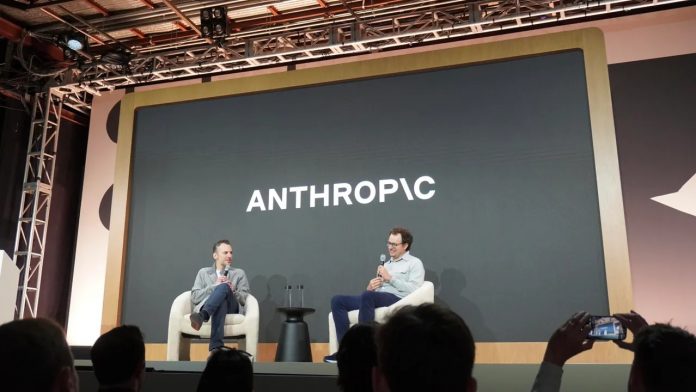
Eric Kauderer-Abrams, Anthropic’s head of life sciences, framed the update as an attempt to reduce the sense of isolation many people feel when dealing with healthcare systems. Patients, he said, are often left to coordinate records, insurance questions, and clinical details on their own, juggling phone calls and portals. Claude, in this vision, becomes less of a search tool and more of an organizer — a digital intermediary that helps users navigate complexity rather than diagnose disease.

In practical terms, the new health record features are launching in beta for Pro and Max subscribers in the United States. Integrations with Apple Health and Android Health Connect are also rolling out in beta, allowing users to pull in data from fitness trackers and mobile health apps. OpenAI’s competing ChatGPT Health product is similarly positioned, though access is currently gated behind a waitlist.

The near-simultaneous launches highlight how major AI developers see healthcare not just as a consumer feature, but as a long-term platform opportunity. OpenAI has said that hundreds of millions of people already ask ChatGPT health-related or wellness questions each week. Formalizing those interactions into dedicated health tools suggests an effort to capture that demand while imposing clearer guardrails.

Both companies are careful to stress what their systems are not. Neither Claude nor ChatGPT Health is intended to diagnose conditions or prescribe treatments. Instead, they are pitched as assistants for understanding trends, clarifying reports, and supporting everyday health decisions. That distinction is not merely rhetorical; it reflects legal, ethical, and reputational risks in a domain where errors can carry serious consequences.

Those risks have become more visible in recent months. Regulators, clinicians, and advocacy groups have raised concerns about AI chatbots offering misleading or inappropriate medical and mental health advice. Lawsuits and investigations have added pressure on companies to demonstrate restraint and accountability. Against that backdrop, Anthropic has emphasized privacy and oversight as central design principles.

In a blog post accompanying the launch, the company said health data shared with Claude is excluded from model training and long-term memory, and that users can revoke or modify permissions at any time. Anthropic also said its infrastructure is “HIPAA-ready,” signaling alignment with U.S. medical privacy standards — a critical requirement for adoption by healthcare providers and insurers.

Beyond individual users, Anthropic is also positioning Claude as a tool for the healthcare system itself. The company announced expanded offerings for healthcare providers and life sciences organizations, including integrations with federal healthcare coverage databases and provider registries. These features are aimed at reducing administrative burdens, an area where clinicians consistently report burnout and inefficiency.

Tasks such as preparing prior authorization requests, matching patient records to clinical guidelines, and supporting insurance appeals are time-consuming and largely clerical. Anthropic argues that AI can automate much of this work, freeing clinicians to focus on patient care. Industry partners appear receptive to that message. Commure, a company that builds AI tools for medical documentation, said Claude’s capabilities could save clinicians millions of hours each year.

Still, Anthropic is explicit that human oversight remains essential. Its acceptable use policy requires that qualified professionals review AI-generated content before it is used in medical decisions, patient care, or therapy. The company’s leadership has repeatedly cautioned that while AI can dramatically reduce time spent on certain tasks, it is not infallible and should not operate unchecked in high-stakes settings.

That balance — between empowerment and caution — sits at the heart of the current AI-healthcare push. Tools like Claude and ChatGPT promise clarity for patients in systems that often feel opaque. They also offer providers relief from administrative overload.

However, it is not clear whether these tools will ultimately reshape how people interact with medicine, with some analysts noting it will depend less on their technical sophistication than on how safely and transparently they are deployed.