
DD
MM
YYYY

PAGES

DD
MM
YYYY

spot_img

PAGES

Home Blog Page 5513

Trump is Launching Social Media Called “Truth”

0

Months after he was banned on social media, former US president Donald Trump has announced plans to launch a social media platform called TRUTH Social that will be rolled out early next year.

Trump has found it hard talking to his followers following the social media ban, and has been working to create a platform for himself. He says his goal is to rival the tech companies that have taken the megaphone out of his reach, making it hard for him to communicate with his audience in view of his 2024 presidential ambition.

“I’m excited to soon begin sharing my thoughts on TRUTH social and to fight back against big tech,” Trump said in a statement.

Trump announced the news in a press release on Wednesday, saying the platform will be open to “invited users” for a beta launch in November, with plans to make it available to the broader public in the beginning of next year. Truth social will be a product of a new venture called the Trump Media & Technology Group which was created through a merger with Digital World Acquisition Corp. The group said it seeks to become a publicly listed company.

It is not the first time Trump has made an attempt to return to social media. Last year, he launched an online communication platform called “From the Desk of Donald J Trump” previous efforts have included an online communication tool dubbed. It was described as a “glorified blog” and a “social media mockery.” The platform was prematurely shut down as Trump continued to fight for a way back to Twitter and Facebook.

In July, Trump sued Facebook, Twitter, and Google for allegedly censoring him. Trump was permanently banned on Twitter while Facebook said it will review its decision in two years. He has alleged censorship claiming that his social media ban is part of the political witch hunt that characterized his presidency.

“We live in a world where the Taliban has a huge presence on Twitter, yet your favorite American president has been silenced,” Trump said in a statement. “This is unacceptable.”

“Everyone asks me why doesn’t someone stand up to the Big Tech? Well, we will be soon,” he added.

The social media name Truth Social was trademarked by Trump Group Corp in July 2021, according to public filings. While Truth Social website is yet to be launched, a link to the platform has been set up to direct users to sign up for a wait list or pre-order the app via the Apple App Store. There, screenshots of the Truth Social app show a user profile that bears a striking resemblance to a Twitter profile.

Trump was shut out of social media following the Jan. 6 Capitol riot, where he was indicted for inciting mob violence against the US government using his social media posts. He had called the rioters “patriots.”

Prior to the incident, Trump used his social media to promote conspiracy theories that the election was characterized by widespread fraud, leading to his loss to Democratic candidate Joe Biden.

PayPal Planned $45 Billion Acquisition of Pinterest Reveals How Empires of the Future Will Win

0

The fundamental construct of the digital economy is that those who control demand will win the future. Because supply is unbounded, value now rests on companies who control demand. The best feature in Facebook is that it has users. The future winners in fintech will be those who control demand, not just the supply of APIs. If you fail to control demand, you have no future in the digital economy.

The Internet has normalized all digital properties. We begin all searches on Google because Google takes us to the best supply (the newspapers or websites). Magically, power has moved to Google which does not supply the contents but it does one critical thing well: it brings order in a world of too much supply. What happens is that Google has normalized all websites who are now competing to be discovered by Google!

On that construct, when Facebook enters any category, it has a chance because on the day of launch, it has millions of users already. PayPal understands that also – to win the future of finance, it needs users, not just relying on making the best financial tech products. 

That is the motivation for that planned $45 billion acquisition of Pinterest, a “buzzy digital pinning site that allows shoppers to save images to digital pinboards and at times purchase from sellers directly”. With this deal, PayPal has another platform to spread its codes and tax users and merchants on transaction fees.

In Harvard Business Review, I have called this a double play strategy, around a “one oasis”. Provided Pinterest grows, PayPal will capture value by processing all the transactions in the platform. Largely, PayPal is paying for a new market. It has to do so because the old model of fintech is now crowded with Stripe and other emergent startups like Afterpay which links directly to bank accounts, disintermediating companies like  PayPal.

Digital payments and online shopping go hand in hand. Now PayPal is trying to unite one with the other.

The Silicon Valley digital payments giant has offered to buy Pinterest, the digital pinboard company that enables e-commerce within its app, in a deal valued at about $45 billion, according to people with knowledge of the discussions. PayPal has offered around $70 a share for Pinterest, the people said, a 25 percent increase from Pinterest’s opening share price on Wednesday.

If completed, the deal would be the largest in the consumer internet industry over the past decade, topping Microsoft’s $26 billion purchase of LinkedIn in 2016 and Salesforce’s $27.7 billion acquisition of Slack last year, according to the data service firm Dealogic. It would also be among the largest deals for PayPal, which was spun off from eBay in 2015 and has snapped up payments companies globally.

Buying Pinterest would underline PayPal’s interest in moving further into e-commerce. In 2019, PayPal agreed to pay $4 billion for the coupon payment platform Honey, which shows people discounts while they shop online. Through Pinterest’s app, people can save images to digital pinboards and buy goods directly through what are known as “buyable pins.”

A Minor Delay On Product Launch – The Texas-Based Digital Bank for Immigrants

0

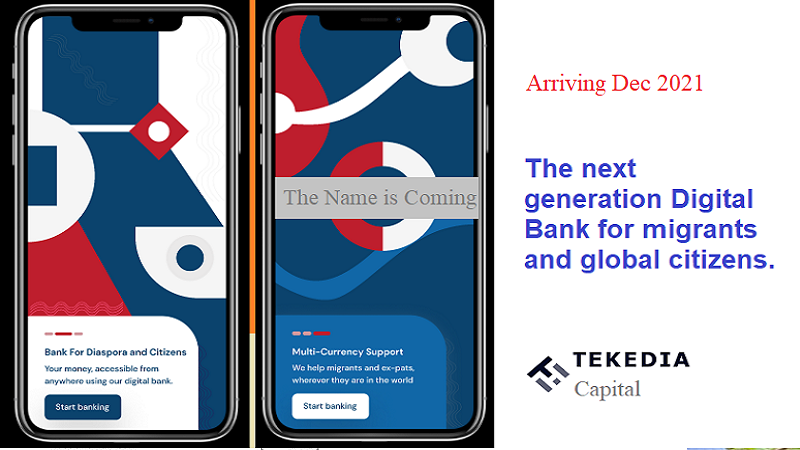
Good People, I noted here that we would be launching a digital bank with focus on immigrants in the US, Canada, Europe and Australia – and the same bank will support expatriates in all continents. Specifically for Africa, we will make it easier for you to sell to Africa’s  deepest market: African diaspora. When you open an account in our startup, you will get a US bank account which has been visualized within the US banking ordinance. 

The goal here is to reduce the frictions on receiving payment when those in diasporas cannot easily pay you while in Africa. You will like it because you can be paid in a US bank, open US fintech wallets (say Stripe, Paypal, etc), and that payment can also be moved in seconds to your nation. We are launching with support for at least 36 countries.

We are at the last phase of US regulatory approval to go live, and we hope we will do so before Dec 1. Largely, we need to make deposits (like the money you deposit with the Central Bank of Nigeria as it works on your license; the apex bank will return that money later) as the regulator requires. The regulator has approved but is asking for a deposit which must be equity (not loaned).

As I write, Tekedia Capital Syndicate members are reviewing this startup for further investment (you can join the Syndicate here). Once that money is raised, we will do as the US government wants and then go live. We have close to 30,000 users waiting.  

For all those asking, apologies for the delay. We are coming.

Bitcoin Hits $66k All-time High, Buoyed By ETF

0

The much anticipated new bitcoin all-time high was reached on Wednesday after the cryptocurrency hit a record $66,000, amplifying crypto market value.

Bitcoin rose 3.7% to hit as high as $66,477 on Tuesday, bringing its gain for the year to almost 130%. The largest digital currency by market value gained more than 300% last year and 95% in 2019 after tumbling 73% the previous year.

The new high came following the successful launch of the first US bitcoin futures exchange-traded fund.

“Clearly, the launch of a Bitcoin futures ETF in the U.S. has sent prices soaring to these levels,” said Leah Wald, chief executive at Valkyrie Investments, which has an application out for a futures-based fund. “Traders and investors perhaps see this is precursor to the holy grail — a spot Bitcoin ETF — and their optimism is pouring into the largest cryptocurrency at a furious pace, with all money FOMOing into the trade from all corners of the market.”

Ethereum also rose 7.4% to cross back over the $4,000 level. The world’s second-largest cryptocurrency reached 4,104,61 on Wednesday.

ETF, the ProShares Bitcoin Strategy, which tracks bitcoin futures contracts pegged to the future price of the cryptocurrency, rose about 5% on its first day of trading Tuesday.

Bitcoin has found a place in the hearts of many investors looking for an inflation hedge, and they are betting big wads of cash on it.

“Bitcoin would be a great hedge. There is a plan in place for crypto and clearly it’s winning the race against gold at the moment … I would think that would also be a very good inflation hedge. It would be my preferred one over gold at the moment,” billionaire investor, Paul Tudor Jones told CNBC’s Squawk Box.

Bitcoin’s biggest proponents back controversial arguments that the virtual currency is a store of wealth and a hedge against the most potent threat from inflation in many years.

However, not every crypto investor is impressed, as several people in the market would prefer ETF that tracks spot prices rather than futures. But the ETF was a brilliant idea to many others. Bloomberg reported on the enthusiasm of investors across institutions.

Wall Street

Bank of New York Mellon Corp., Goldman Sachs Group Inc. and Morgan Stanley are among firms offering crypto-related services. Dawn Fitzpatrick, chief investment officer of Soros Fund Management LLC, said her firm holds some coins and that crypto “has gone mainstream.”

At the same time, there is still a long way to go. For instance, SkyBridge Capital founder Anthony Scaramucci said that while there’s a “feeding frenzy” in crypto among about 10% of financial-services firms, the vast majority are hesitant about the asset class.

Over the past few years, a whole new crypto-economy has formed. Non-fungible tokens or NFTs — which allow holders of digital art and collectibles to track ownership — have surged into the limelight.

Decentralized Finance

So has the decentralized finance — DeFi — ecosystem, which allows people to lend, borrow, trade and take out insurance directly from each other, without use of intermediaries such as banks.

With turnover of almost $1 billion, the ProShares fund debut was behind only a BlackRock carbon fund for a first day of trading, the latter ranking higher due to pre-seed investments, according to Athanasios Psarofagis at Bloomberg Intelligence. The total market value of cryptocurrencies exceeds $2.5 trillion.

Bitcoin has come a long way this year, defying China’s crackdown and the apathy stemming from its carbon footprint to record its all-time high. It is expected to surge further in November, as investors seek strong support on $65,000.

African Development Bank, MTN sign $500,000 grant agreement to study women’s access to financial services

0

The African Development Bank (AfDB.org) has signed a grant agreement for $500,000 with Y’ello Digital Financial Services (YDFS), a fintech subsidiary of MTN Nigeria, to be used for a study into economic, religious, and social factors hampering access to finance for women in northern Nigeria.

The research, which includes a feasibility study, women-focused design and testing, will focus on both agents and customers to provide insights into women’s use of mobile money services, will be funded through the Africa Digital Financial Inclusion Facility (ADFI).

Despite being the continent’s largest economy, 55% of rural Nigerians still lack access to financial services [1]. The rate of mobile money adoption currently stands at 4% [2],  with an agent ratio of 228.8 agents per 1,000 adults [3]. Political instability and conservative cultural norms in parts of Northern Nigeria are thought to present barriers to women’s access to finance. Additionally, 80% of agents in the region are men.

“The African Development Bank, through the Africa Digital Financial Inclusion Facility (ADFI), is delighted to support this project, furthering our work to improve the quality of life for people in Nigeria and contribute to the Sustainable Development Goals, particularly as relates to poverty, and gender inclusion,” said Stefan Nalletamby, African Development Bank Director of Financial Sector Development.

On behalf of YDFS, Usoro Usoro, Chief Executive Officer, said, “We are truly excited about this partnership with the African Development Bank, and the possibilities for advancing financial inclusion in Nigeria, particularly for the traditionally excluded segment of women in Northern Nigeria.”