DD
MM
YYYY

PAGES

DD
MM
YYYY

spot_img

PAGES

Home Blog Page 5528

X-raying The Intrigues Of Internet Hacking

0

Internet/computer hacking constitutes the most recent cyber-crimes. The act, best described as a monster, has over the past decade been of great concern to the teeming cyber subscribers.

Prior to the invention of the internet, criminals had to dig through people’s trash or intercept their mails to steal their personal information. Now that all the required information is available online, criminals presently use the internet to steal people’s identities, either via trick or infecting their devices with malware.

Most cyber-crimes are committed by individuals or small groups, though large organized criminal groups also take advantage of the Internet. These so-called professional criminals find new ways to commit old or ancient crimes. They treat cyber-crimes like a business and form global criminal communities.

Criminal communities share strategies and tools and can combine forces to launch coordinated attacks. They even have an underground marketplace where cyber criminals can purchase and sell stolen information or identities.

It’s very difficult to track cyber criminals down, because the internet makes it easier for people to do things anonymously and from any location on the globe. Needless to say that many computers used in various destinations have actually been hacked and are being controlled by someone far away.

For hackers who want to come clean and turn away from crime out of pretence, one option is to work for the people they used to torment by becoming their security consultants or employees. These sets of hackers are referred to as “Grey-Hat hackers”.

In the past, they were addressed as “Black-Hat hackers” who used their computer expertise to break into systems and steal information illegally while posing as a friend or dedicated employee/consultant.

But presently, some of them are acting as “White-Hat hackers” who specialize in testing the security strength of their clients’ information systems. If the interest of this set of hackers is to be paid, they will attempt to hack into a company’s network and then present the affected company with a report detailing the existing security loopholes of the establishment and how those anomalies could be tackled.

The advantage of the white-hat pattern is that they can use their skills for a good cause and help stop other cyber criminals, since keeping up with security and cyber criminals is a full-time job and many companies can’t afford financially to have someone totally dedicated to it.

Another recent devastating aspect of internet hacking is the “social engineering” routine. Social engineering is a tactic used by cyber criminals that use lies and manipulations to trick people into revealing their personal information. The attackers under this pattern frequently involve very convincing fake stories to lure victims into their trap.

Some of these tricks include: sending victims an email that claims there’s problem with their account and has a link to a fake website, trying to convince victims to open email attachments that contain malware, pretending to be a network/account administrator and asking for the victim’s password to perform maintenance activity, as well as claiming that the victim has won a prize but must give their credit card information or bank account details in order to receive it, just to mention but a few.

The recent antics of cyber criminals, which are barbaric and inhumane, call for constant and consistent update of advanced anti-hacking computer software by software producers, and the adequate dissemination of the said software to the apt quarters.

Presently, most developing countries across the global community are less-privileged in regard to advanced anti-hacking or anti-malware software. In view of this, they are expected to act fast in this regard.

These mostly affected nations, such as Nigeria, could boast of world class experts on software programming. This set of professionals, especially the young ones, needs to be encouraged by the government by setting up an industry that would enable them to commercialize their expertise.

The Communication agency of the countries is supposed to have a thoroughly equipped internet-based communication unit comprising well experienced experts and consultants. Such a unit, meant to function as a spy, would help to checkmate activities being carried out by every internet user at all nooks and crannies of the country on a daily basis.

Legislation must equally be used to checkmate the daily ugly activities of the criminals. Hence, the legislators in the concerned nations are required to sit up towards doing the needful.

There would be a need to set up a special court to be made up of uncompromising judicial custodians to prosecute anyone accused of any form of cyber-crime, particularly internet hacking that has hitherto countless countries a colossal economic loss.

Most importantly, every computer/internet firm owner ought to endeavour to engage an expert on Ethical Hacking. Our various schools at all levels, the tertiary institutions in particular, should on their part take teachings on internet hacking more seriously in the ongoing general studies on Computer Literacy.

The fact remains that if the relevant authorities commence from the foundation level to educate the young ones on the needful as regards the lingering Information Technology (IT) menace, when they eventually become in-charge of any enterprise in the future, they wouldn’t be taken unawares.

Above all, people either as individuals or entities are advised to set strict passwords, change them regularly as well as never endeavour to share any of the passcodes with whosoever toward averting any form of regret or trauma. 
Facebook Research Leak Ignites Campaign for Private Data Legislation

0

It has been more than a week of adversarial events for Facebook, and not better days appear to be ahead. The social media giant has been caught in allegations of moral deficiency, after a leak revealed it deliberately chooses profit over public safety. Now there is an uprising that may mar its ad-based business empire.

Common Dreams reported on a new campaign calling for federal action to “shut down Facebook’s surveillance machine” including passing legislation to ensure strong data privacy protections.

“The best way to stop Facebook’s harms for the whole world is to cut off the fuel supply for its dangerous machine,” says the How to Stop Facebook campaign, launched Wednesday by a diverse coalition of over 40 organizations.

Frances Haugen, Facebook’s former product manager, recently leaked documents of the social media’s internal research that reveals it knows how much harm the platform causes but chooses to ignore it. She had testified before a Senate Committee and suggested tighter regulation as a way to keep the social media platform in check.

The How to Stop Facebook campaign is touting a tighter private data legislation, arguing that the fuel driving Facebook’s business model is the trove of user data the company amasses to power algorithms that generate ad revenue and corporate profits.

“The problem with companies like Facebook and YouTube is not that they host user-generated content, it’s that they use surveillance-driven algorithms to pick and choose what content goes viral and what content no one sees, in order to keep us all on the platform clicking and scrolling to maximize advertising revenue,” said Fight for the Future director Evan Greer.

Facebook did put out a rebuttal. CEO Mark Zuckerberg, in a statement issued last week, following Facebook’s recovery from its six-hour outage, refuted Haugen’s allegations.

“We care deeply about issues like safety, well-being and mental health. It’s difficult to see coverage that misrepresents our work and our motives. At the most basic level, I think most of us just don’t recognize the false picture of the company that is being painted,” he said.

However, this attempt to tell the Facebook side of the story has failed to calm the avalanche of criticism that has greeted the leak, forcing Facebook to take extra steps to address the matter.

Last year, a similar campaign against Facebook took off following the death of George Floyd in the hands of the US police. A coalition of rights groups and companies had started a movement, urging advertisers to boycott Facebook until it addresses the rising concerns that its platform is aiding racial injustice and is upholding moral decadence.

But the campaign failed as Facebook posted more revenue than expected. That means, even though many companies joined the calls to boycott Facebook by halting their ad purchases, Facebook was neither hurt nor deterred.

Now the new coalition whose members include Fight for the Future, Win Without War, Media Justice, Public Knowledge, and United We Dream are taking a different approach.

According to Sara Collins, policy counsel at Public Knowledge, “The harms described by Ms. Haugen are fueled by unrestrained data collection and data use.”

A petition linked to the campaign lays out a number of recommendations:

Congress must pass strong data privacy legislation, and the FTC should move forward with rule making that prohibits companies from collecting, purchasing, or otherwise acquiring user information beyond what is needed to provide the service requested by the user, and from using this information for another purpose or to transfer it to another company without the user’s explicit, opt-in consent. There should also be clear guardrails around what companies can do. People shouldn’t have to pay more if they assert their privacy rights, using a service shouldn’t be conditioned on turning over personal information that is not necessary, and technology companies should not be able to discriminate against people in ways that would be illegal in the physical world or that undermine the intent of existing civil rights laws.

A further recommendation is for lawmakers to use their subpoena power and begin a full investigation into “Facebook’s harms.”

As Myaisha Hayes, campaign strategies director of Media Justice, sees it, the need to address the sweeping harms is urgent.

“Facebook’s surveillance capitalist business model is fundamentally incompatible with basic human rights,” she said, “and disproportionately harms Black and brown communities by silencing our voices while artificially amplifying racist and harmful content.”

The company’s “surveillance machine,” she added, “is putting our communities and our democracy in danger. It’s time for lawmakers to cut off their fuel supply by passing a strong data privacy law.”

Besides issuing a rebuttal, Facebook has extended an invite to Haugen to speak with the content moderation Board. The Board said it hopes to “gather information that can help push for greater transparency and accountability from Facebook through our case decisions and recommendations.”

Advertising is Facebook’s major means of revenue. The company was deeply hurt earlier in the year, after Apple implemented a new iOS policy prohibiting it from harvesting private data for targeted ads from unconsenting users. A tighter private data legislation will likely see Facebook’s revenue plummet – a jeopardy for its growth.

The Fearful Africa’s Startup IP Drain

1

Tekedia has been publishing a dose of legal opinions. As I noted in the Boston College Law’s International IP Summit yesterday, IP will define the wealth of nations and will radically alter the architecture of market systems, in ways no one has seen in recorded history, over the next 30 years. This is a knowledge era and it would be powered by IP and broad property rights.

The domiciliation of Africa’s finest companies in this knowledge era will be outside Africa because Africa’s property rights remain weak. What that means is that by 2030 when the current class of African companies are expected to be hitting the stock markets, they will not show up in Africa because indeed Africa does not own them. Most will list outside the continent.

Imagine if GTBank* and Zenith Bank, using Nigerian banks as examples, are not Nigerians, and not available in the stock exchange, you will agree that the Nigerian Stock Exchange will be a mirror of itself. These companies founded in the 1990s have led the market for years now.

But the current new species of companies are not legally Nigerians or Africans, and what that means is that even though they are fixing our local frictions, Africa may not capture the second phase of value which typically happens when some of them list. Most of these firms are registered in London, Delaware state (United States), and Paris. 

I have called this Startup IP Drain (I originally used Startup Legal Drain but it is evident that Startup IP Drain is better), just as we have Brain Drain. Unless fixed, Africa will lose IPs and global positioning and could be diminished for centuries. Unlike the industrial age companies like cement, water boards, etc, the future will be governed by IPs and if we have none, it would mean that we cannot predict a future we have failed to create!

But note – this is not the fault of the startups or the countries they have chosen; this is a pure play failure of leadership by African leaders.

Comment on LinkedIn Feed

Comment: Africans are the most ridiculous species on earth, we know how to spot all the past, present and future problems troubling the continent, and it ends there.

Buck passing is our specialty, citizens blame political leaders, leaders blame their predecessors, their predecessors blame colonial masters, and it goes on and on, nobody ever takes responsibility; we are that irresponsible.

Africans gave up on Mother Africa long time ago, all we are left with are those pontificating and cataloguing the misdeeds of past and present leaders, you now wonder which generation will be saddled with the task of roaring Africa…

Politicians are never adept in jurisprudence, this continent produces all manner of legal scholars and luminaries, yet in the things that secure the future of a continent, where is the expertise? Of course it’s very easy to point to leadership, which unfortunately is nobody’s surname, so no one is ever held accountable.

A founder/entrepreneur has a responsibility for his continent, same for a lawyer, a politician, and all those whose actions or mistake can shape continental destiny, it’s not about shifting responsibility to one class of people, the person registering companies outside is as culpable as the politician.

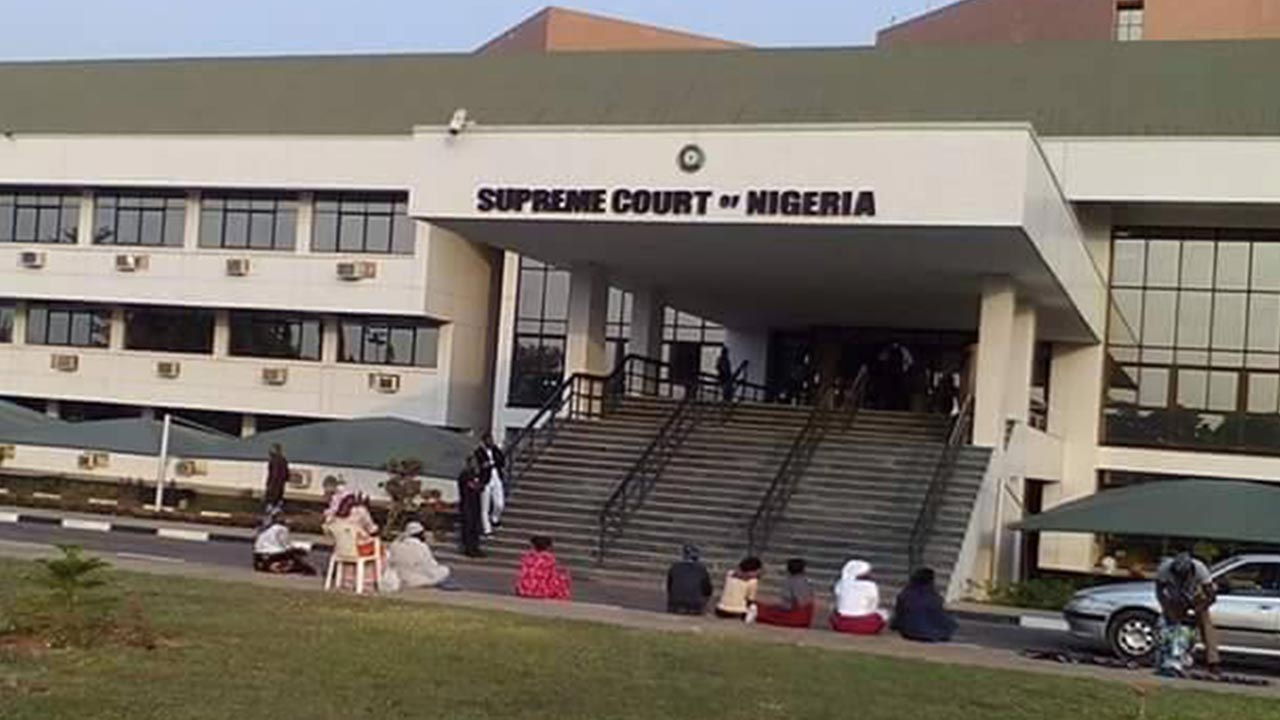
My Response: good points as always. But on IP related issues, a founder has limited leverage. If you have a case in the Supreme Court of Nigeria that is not political in nature, your first court date will be around 2024 and you hope that date, there is no failed generator that would cause a postponement. If you have that system, you can blame leadership. And where that is the case, no company will like to wait years for legal matters to be resolved. Consider this: court cases do not kill many Nigerian companies but DELAYs in the court system do. Savannah Bank would have “survived” if the court did all within weeks as they do in the US. But by the time Nigeria finished, everything was done.

Comment #1 extended: Ndubuisi, that is where you expect legal scholars and practitioners to lead the charge, just like child trafficking or slavery, people must make IP legal issues front and centre, so that there will always be judges available to handle them.

We spend a lot of manpower on political cases, because that’s what most Nigerians know about, politics remains the biggest market here, so all eyes, noses and ears face that direction.

Again, there is dearth of human capital in our judiciary, the NJC saddled with recommending judges, how many of those judges are well grounded in these new areas? Our laws still don’t recognise patenting of software codes! These things are not just political issues, the knowledge and expertise are also in short supply, we are off pace in so many areas of contemporary society.

If the legal community do its home work, politicians will be able to make sense of these things, nobody wants to lose, but we must first teach our people how to win, that knowledge is not available at scale yet.

Every aspect of our national life is underperforming, but we think political leadership has all the answers, it is not true, our so called professionals are not so professional in anything worthwhile.

Comment #2: I definitely disagree, IP rights are not lex domicili (I.e. where a company is registered), IP rights conferred regardless of where they are registered goes to the person who registered. So if a Nigerian has patent rights in an invention in Delaware, he can still transfer the invention to Nigeria or anywhere in the world. The fact that an invention is registered in Delaware and patent granted in US doesn’t mean the rights conferred stays in the US, the right conferred is in the owner — who can then utilise it as he likes.

Response #2: If I may ask as a lay person, why do you think the company will even register in US and move the IPs out of Nigeria? Why is that a necessity?

Also, what do you think companies are investing in? Your statement – “who can then utilise it as he likes” confuses me because as an investor, you are actually investing in the IPs. Could you explain why you will give someone $1m and that person can still use the IPs as he/she likes.

Also, as an investor, it is not the same on the patent that matters. What matter is the assignee. So, Ndubuisi holds a patent but that patent could be assigned to Company A. So, not being a lawyer, I do not agree that Ndubuisi can still do as he likes on that patent.

Exception To The General Rule That The Accused Must Not Prove His Innocence

0

Yesterday an old client called me and referred me to a fellow who according to him has been in the police detention for days now having been accused of culpable homicide. He (the old client) was suggesting to me that according to my write up which I titled ‘ The Accused Must Not Prove His Innocence’ (available on this platform) which he got to read, the accused, his friend who is in police detention should not be made to prove his innocence as he is still presumed innocent by law and it is the general principle as I postulated in my earlier article that the accused should not prove his innocence as it is the duty of his accusers to prove that he did committed the offense he is been accused of.

By this his premise, he asked me to do something about it.

Disclaimer

As it is said that in every general rule there will always be an exception or even exceptions, this is the case here as there is also an exception to this general rule of; ‘he who alleges must prove’ and to this effect, the accused must prove his innocence in some certain circumstances for him to be let off the hook and in this instance where he is to prove his innocence, he is no longer presumed innocent.

Sequel to my last piece where I vehemently argued that it is the legal and a long standing principle of law of evidence that when you are accused you don’t have to prove your innocence to your accusers as you are still very much presumed innocent at law and your accusers have the duty to pin the crime they are accusing you of to you but there’s an exception to this general rule is which called ‘the doctrine of last seen’.

This doctrine, last seen as an exception to the general rule of presumption of innocence, was given flesh in the recent case of Illiyasu v. The State (2015) LPELR -24403 where the court postulated that although it is the general principle of law of evidence that an accused is presumed innocent of the crime he is been accused of thereby making the onus of proof to be on the accusers to prove the accused’s guiltiness but not when he was last seen with the victim of the crime or last seen at the scene of the crime.

This is no doubt a total deviation from the presumption of innocence general rule as the accused if last seen with the victim of the crime or last seen at the crime seen is no longer presumed to be innocent and therefore, the evidential burden of prove, to prove his innocence shifts from the accusers (prosecution) to the accused. In this instance, the circumstances evidence outweighs the burden of proof casted in the prosecution.

It is essential to note that in criminal matters, the legal burden of proof is static as it is always on the prosecution while the evidential burden of proof swings and sways during trial. See generally S.135 and S.139 of the Evidence Act, 2011.

This doctrine of last seen as an exception to the general rule of presumption of innocence simply points to the fact that if an accused was last seen with the victim of the crime or last seen at the venue of the crime then the onus of proof is then on him to either prove his innocence as he is no longer presumed to be innocent at law.

In conclusion, it is the writer’s aim for the readers not to get misled and swallow the general rule of presumption of innocence hook-line and sinker and they should in all diligence also pay attention to exception of this general rule of presumption of innocence which is called ‘doctrine of last seen’, not just this but pay rapt attention to the exception or exceptions to every general rule that they can think of.

Effective Corporate Partnerships – Tekedia Live, Oct 14

0

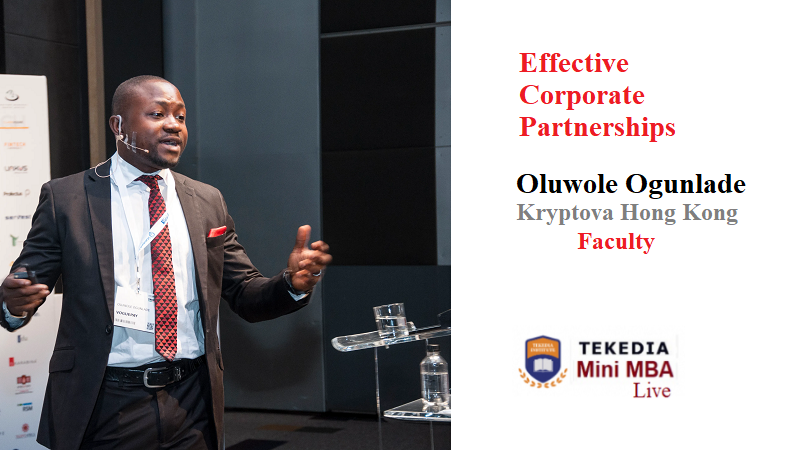
Join us today at Tekedia Live as we continue the conversation on the mechanics of markets and business systems. Our Faculty today is Oluwole Ogunlade and he will be teaching on Effective Corporate Partnerships. Wole is a zen-master on how companies can leverage strategic partnerships to advance their missions. A Director of Corporate Partnerships in Kryptova Hong Kong with deep connections in the startup ecosystems, he will explain the path today.

Thur, Oct 14 | 7pm-8pm WAT  – Effective Corporate Partnerships – Oluwole Ogunlade. Zoom link in the Board

Tekedia Mini-MBA >> learn from the best