DD
MM
YYYY

PAGES

DD
MM
YYYY

spot_img

PAGES

Home Blog Page 5531

Checking Endless Building Collapse In Nigeria

0

Over the last two decades, building collapse has remained a phenomenon that exhibits tremendous worry and concern in contemporary Nigerian society.

The aberration, which has claimed hundreds of innocent souls, maimed thousands as well as rendered scores of families homeless, has caused a colossal harm to not just the engineering-technology sector but Nigeria at large. In some quarters, it has made most residents to now sleep with one eye open on a daily basis.

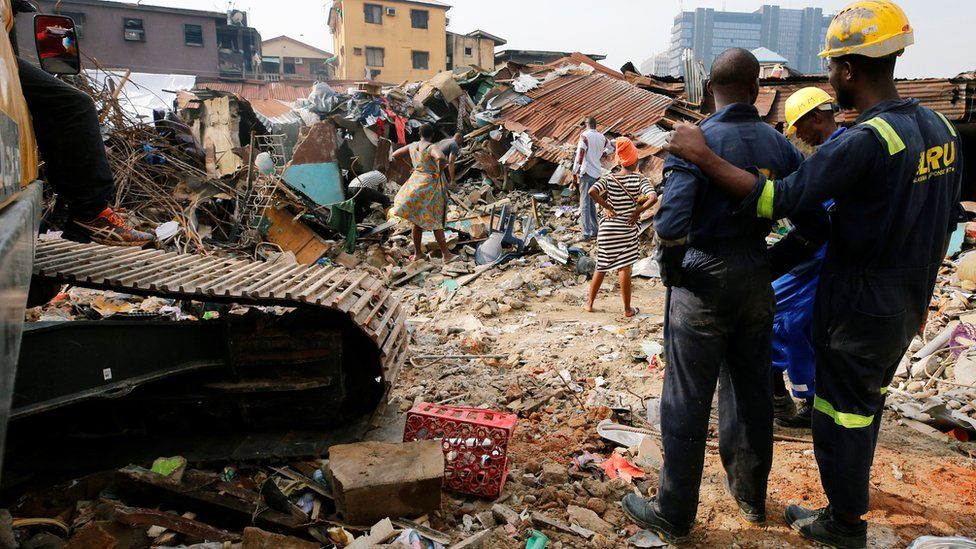
On 13th March 2019, Nigerians were shocked to their bone marrow when notified that a certain 3-storey building situated on the Victoria Island of Lagos State abruptly collapsed, thereby claiming about twenty lives and inflicting different degrees of injury on countless others.

It was consequently reported that the third floor of the collapsed structure was being occupied by primary school pupils who were already unfortunately present for their usual studies prior to the bad omen.

Barely forty-eight hours after the ugly and unspeakable incident, it was learnt that another 3-storey building in Ibadan, the Oyo State capital equally collapsed unannounced, injuring a lot of Nigerians, though no life was reportedly lost.

Statistics indicate that within the aforementioned period, countless buildings situated across Nigeria have collapsed unceremoniously as if a structure can be brought to the ground at any time by mere breeze or thunder storm.

In March 2006, the top nine floors of a 21-storey building belonging to the Bank of Industry, located on the famous Broad Street – still on the Lagos Island – caved in, killing two and injuring twenty-three others.

In August 2010, a 4-storey uncompleted building at Ikoli Street in Garki, Abuja brings the Federal Capital Territory’s name into the list, thus reportedly claiming not fewer than twenty-one lives and endangered nine.

Survey reveals that between 2012 and 2016 alone, Nigeria recorded about fifty-four building collapses. Though the unfortunate situation is not peculiar to the country, its recent alarming rate calls for an apt and urgent attention.

To duly tackle the societal menace, the concerned authorities must comprehend the rudimentary factors that invariably constitute the quagmire. Building collapse is mainly attributed to substandard products, quackery, mediocrity, cheating, and/or soil texture cum topography, coupled with other environmental factors, as the case may be.

The dangers inherent in the use of substandard building materials cannot be overemphasized. These materials such as brick blocks, cement, sand, and rods, are not in any way meant to be used in constructing mere boys’ quarters let alone deploying their services in storey building constructions.

Regarding blocks, it’s either the cements used in the moulding weren’t good enough, or the sand utilized was nothing to write home about. There are specified sands meant for moulding but most block industries don’t bother going for them, probably owing to the cost of conveying it to the moulding site.

Since people, especially those residing in cities are often in a hurry, they are invariably left with no option than to patronize such block firms as stipulated above, hence posing danger for the proposed structure.

Quackery and mediocrity cannot be left out. It’s worth noting, perhaps shocking, that most of those who claim to be structural engineers, architects, or what have you, never attended any engineering or architectural class even for a day let alone becoming professionals. These amateurs go about causing avoidable harm in their respective jurisdictions.

They are just mere quacks parading themselves as chartered technologists. Pathetically, some of them who had the privilege to pass through a higher institution didn’t obtain the required training or expertise, thereby constituting structural defects when contracted to handle a certain building project.

A sound and qualified contractor is expected to thoroughly inspect the site for the proposed building, adequately advise the prospective landlord, tactically implement the project, complete it within a stipulated period, as well as know what to do while converting a mere bungalow to a storey building. When any of these professional functions is missing, it becomes a burden to the affected building when purportedly completed.

Away from substandard products and quackery, soil texture or topography, as might be the case, has equally been a thing of great concern while discussing building collapse in Nigeria. Houses are usually built on swampy sites in reverie areas like Lagos and Port-Harcourt without carrying out the required preliminary design, thus leading to collapse in the nearest future.

The aforementioned type of land is not strong. They are sandy or loose, but contractors build on them using templates that are meant for better compacted lands. Sometimes the contractor would know what to do but rather than doing the needful, would be only interested in his money or what he stands to gain as long as the contract lasts. This aspect of cheating or insincerity is currently on the rampage in the present days’ Nigeria.

Similarly, an architect is expected to thoroughly ascertain the nature of the land where the proposed building is to be sited before putting up the required design. The kind of structure to be erected on a certain site is directly dependent on the type of soil or land topography. It’s even more appalling to realize that most of these structures are erected without a building plan.

There must be a plan before a proposed house or building is eventually built. An eligible civil engineer is needed to inspect the design or building plan before it would be implemented by the site contractor who should be a builder or structural engineer. These professionals are meant to work hand-in-hand towards erecting a formidable structure.

The Standards Organization of Nigeria (SON) in collaboration with the Nigeria Customs Service (NCS) must take a drastic and severe step toward ensuring that substandard materials are no longer smuggled into the country as it has reportedly been the case in recent times. Hence, the various borders need to be holistically strengthened headlong. The SON ought to also properly regulate the locally made ones.

On the other hand, relevant professional bodies, including the Council for the Regulation of Engineering in Nigeria (COREN), Nigerian Institute of Building (NIOB), Nigerian Society of Engineers (NSE), and Nigerian Institute of Architects (NIA), ought to respectively employ a stiff measure towards addressing the crisis.

When any building is under construction, they should in their, individual or collective, capacity endeavour to ascertain the contractor handling the project to ensure his credibility as well as inspect the site and plan being utilized.

If a building eventually falls, they must ascertain the root causes of the collapse and not hesitate to issue the apt sanction to the affected contractor if found guilty. They should equally go beyond sanctioning; any culpable individual ought to be arraigned without any fear or favour, so that he will squarely face the wrath of the law.

Inter alia, the authorities on physical planning or development control situated in the various states across the federation must be very proactive and professional in their respective dealings with prospective landlords and developers.

It has been reported in various quarters that most of these government agencies oftentimes pay attention to frivolities to the detriment of priorities. The concerned governments must therefore look inwards with a view to addressing this kind of illegitimate and uncalled for acts.

Intending landlords are also advised to consult aptly whenever they intend to erect a building. Don’t just jump to any so-called contractor you find on your way. If you succeeded in contracting any, endeavour to confirm his/her authenticity or background by enquiring from the relevant authorities.

Eligible structural contractors, on their part, ought to feel free to consult their colleagues for any professional assistance when need be. And, they should also regularly be research-oriented towards enhancing their expertise at all times.

All in all, every structural professional mustn’t be reminded that foundations and pillars, as well as decking in the case of storey building, remain the basic factors that determine the validity or wellbeing of any building, thus should be taken very seriously at all cost. 

US Dollar Scarcity Is Disconnecting Nigeria From The World

1

British Airways issues notice to travel agents: “I wish to inform you of British Airways intention to control their Global Distribution System inventory by removing all the lower classes from the GDS, leaving only the below classes to be sold and issued and we all know the cost implications to this: Economy Y, Premium Economy W; Business Class J; First Class F. This became necessary due to fluctuating and unstable exchange rate in Nigeria.” 

Simply, BA and other foreign airlines plan to reduce the “total number of tickets they sell on Nigerian routes amid worsening dollar scarcity that has made it difficult for them to repatriate billions of naira in ticket sale proceeds to their head offices abroad”.

If the world cuts off Nigeria, that would be fearful because what that means is that we may not even have the airlines to fly to go and borrow more money. There is also rumour that some airlines now want to be paid in US dollars or pounds sterling; the Central Bank of Nigeria promised to investigate  this planned “dollarization”.  According to IATA, an industry association in the airline sector, Nigeria holds $143.8m which foreign airlines are struggling to repatriate due to dollar scarcity.

“It is worrisome that airlines in Nigeria can’t repatriate about $144m. Imagine if this situation is applicable to other countries, the industry will be in jeopardy. The government should know that without this repatriation, the airlines won’t be able to fund maintenance, operations, aircraft purchases, salaries and other commitments. The government has to seriously look into this and find a solution as this is embarrassing for a country like Nigeria.”

People, do not be surprised if these airlines go on “strike” in two years and magically we will be disconnected from the world. Do not wish for that as everything will collapse including the ability to visit IMF, World Bank, etc for more loans.

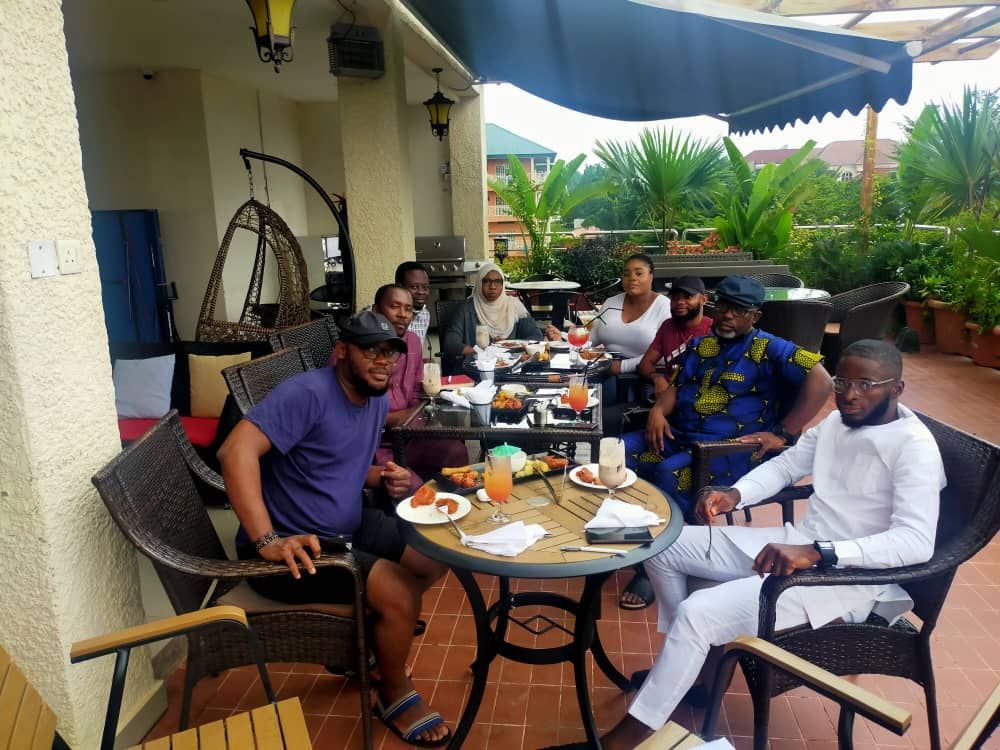
Let Us Know About Your Tekedia Institute Hangout and Meetup (Photo from Abuja Hangout)

0

Happy Sunday everyone and an amazing week ahead. Let me also thank all Tekedia Institute community members who are organizing hangouts and meetups across cities. This is the beauty of our shared vision: master the mechanics of business in our school and go into the real world and have impacts through partnerships. Tekedia will offer logistical support to our members who plan to organize physical meetups and hangouts.

Write to Admin with date, time and venue (as possible) along with the contact of the organizer(s), the team will help share the message; I will also share here and tag you.

I know that many take place in Lagos, Ilorin, etc regularly. I am aware that a Kaduna group has formed a joint company to export agro-products to Europe. This photo is from Abuja Tekedia Hangout which happened this weekend.  Thanks Emmanuel Bassey for sharing.

Nnamdi OdumodyEyitayo Adeleke and other Tekedia Institute team members are here to provide support. And note that if you invite me for a short Zoom/Whatsapp call in, I will honour it.

India’s Mukesh Ambani Joins the Centibillionaire’s Club with $100.6 Billion Net Worth

0

Mukesh Ambani, Asia’s richest person, has become the newest member of the centi-billionaires club, joining ranks with Jeff Bezos and Elon Musk in the elite league of billionaires whose fortune has crossed the $100 billion threshold.

Ambani, the Chairman of Reliance Industries Ltd. is India’s leading entrepreneur with investments in many sectors. According to Bloomberg, his conglomerate’s stock hit a new height on Friday, propelling his entry into the 11-men club. He’s now worth $100.6 billion, according to the Bloomberg Billionaires Index, after his wealth increased by $23.8 billion this year.

Bloomberg highlighted Ambani’s fortune, starting from about 15 years ago, how he transformed his late father’s business empire into one of the most lucrative conglomerates in the world.

Since inheriting the oil-refining and petrochemicals businesses of his late father’s empire in 2005, Ambani, 64, has been seeking to transform the energy giant into a retail, technology and e-commerce titan. His telecommunications unit, which started services in 2016, is now the dominant carrier in the Indian market. His retail and technology ventures raised about $27 billion last year, selling stakes to investors ranging from Facebook Inc. and Google to KKR & Co. and Silver Lake.

Ambani unveiled an ambitious push into green energy in June, with a planned investment of about $10 billion over three years. And last month, the mogul said his company would “aggressively” pursue production of cheaper green hydrogen. The plan aligns with Prime Minister Narendra Modi’s ambitions of turning India into a global manufacturing hub for the cleaner fuel to combat climate change and slash energy imports by the world’s third-biggest oil consumer.

While Ambani’s announcement has been viewed by some as an acknowledgment that his group needs to look beyond oil to cement its future, fossil fuel still plays a central role at Reliance, accounting for almost 60% of its $73 billion in annual revenue. The oil-to-chemicals business is now a separate unit, and talks are underway to get Saudi Arabian Oil Co. as an investor.

“Mukesh Ambani is at the forefront of creating new businesses with new emerging technologies,” said Chakri Lokapriya, chief investment officer at TCG Asset Management Co. in Mumbai. “Creating businesses of scale at speed brings execution challenges, but he has demonstrated his capabilities.”

The story of Reliance dates back to the late 1960s when Dhirubhai Ambani, who started out as a gas-station attendant in Yemen, began building his polyester business into a vast empire. When he died of a stroke in 2002 without leaving a will, a succession feud erupted between his two sons, Mukesh and Anil, 62, which was eventually settled by the siblings’ mother, Kokilaben, in 2005.

Under the truce agreement, Mukesh got control of the flagship oil refining and petrochemicals businesses, while his younger brother got newer areas such as power generation, financial services and telecommunications services. Anil — once a billionaire — told a London court last year that his net worth was “zero.”

India’s billionaires are some of the largest gainers on the world’s rich list, as Asia’s best-performing major stock market this year gets a boost from a surge in initial public offerings.

Gautam Adani, founder of coal-power and renewable energy conglomerate Adani Group, has added $39.5 billion to his fortune this year, while the country’s third-richest person, technology tycoon Azim Premji, saw his wealth grow by $12.8 billion.

With Modi’s push to make India a $1 trillion vibrant digital economy, Ambani’s Reliance has captured mouth-watering investment deals from tech giants such as Google, Facebook, Qualcomm and Amazon. Reliance’s recent spectrum trading agreement with Bharti Airtel, which the company sees as a vehicle to advance its digital investments, winning underserved India with free and affordable telecom services, is seen as major boost that will further increase Ambani’s wealth.

Nigeria Is Open For Business – Visa On Arrival Boosted

0

The economic minister invited me to his country, sending me all the necessary documents. I went to the Angolan embassy in New York for a visa. It was to be put in a US passport. But instead of even collecting the application, they told me to wait. Yes, they wanted to call the President’s Office in Luanda, the nation’s capital. When they finished, they came to me and told me: while the minister sent this letter, the President’s office has not signed off – and because of that, we cannot issue you a visa. I called the minister’s office and the consultant handling everything. In the end, I left without the visa. 

As I was there, many Americans were having the same issues: invitation letters from companies were meaningless because the President’s Office had not ratified. That was the time of the former leader of Angola: Dos Santos. Angola was the farthest country in Africa from Africa, I learnt. (They later got the approval but I felt if that was the mindset, the project I was going for has no chance.)

Where am I going? There is something amazing coming up in Nigeria: “The Nigerian government is adjusting its visa policy to attract foreign direct investment. The Nigeria Immigration Service (NIS) said that its decision to introduce the Visa on Arrival (VOA) facility was to attract foreign investments to the nation….Among many complaints against the ease of doing business in Nigeria, is the difficulty in securing visas for foreign investors.”

Congratulations to the Government. This is a good initiative.

Nigeria Introduces Visa on Arrival to Attract Foreign Investments