DD
MM
YYYY

PAGES

DD
MM
YYYY

spot_img

PAGES

Home Blog Page 5533

Checking Nigeria’s Unemployment Issues Via Tech Measures

0

The existence of joblessness or unemployment in Nigeria has eaten deep into the country’s bone marrow, that Nigerians as a people have endlessly lived to see it as a monster that has come to devour the human race in its entirety.

The dangers inherent in joblessness are so conspicuous and frightening in such a way that everyone has become very conscious of its presence, hence invariably making tremendous effort to avert the menace.

In spite of the frantic and tireless steps usually taken by the teeming citizens and successive governments to ensure they aren’t trapped in the pothole cruelly dug by unemployment, they still overtime encounter its ruthless scourge, apparently signifying that their effort isn’t good enough or that something is really wrong somewhere.

However, my last visit to one of the West African countries lately made me understand that Nigeria isn’t exceptional while discussing unemployment or that the term is not peculiar to the acclaimed giant of Africa.

But, it seems the degree at which it parades its tentacles and elbows in Nigeria is so enormous that the country is ostensibly taking the lead in the comity of nations. This is the sole reason many are deeply concerned and bothered over the anomaly, hence the need for drastic measures towards cushioning the excruciating effects.

It’s noteworthy that unemployment is not a personal plight but a general one, thus the essence of a societal approach in a bid to tackle it. This is why countless schools of thought have overtime shown great concern over the lingering nature of the cankerworm as well as aired their views on how best to tackle it.

Though unemployment isn’t a convincing excuse to indulge in any crime, hence no discerning mind encourages people to resort to it, it’s worth noting that its scourge remains one of the prime reasons all sorts of criminal activities have escalated in recent times.

Another disturbing occurrence that’s apropos of unemployment is the employability status of our present days’ graduates. It’s not anymore news that most of these youths are obviously unemployable, thus posing a threat to the labour market and their chances of being meaningfully employed.

The plight as stated in the above paragraph is mainly attributable to lack of adequate knowledge as acquired from their respective institutions of learning, or inability of our various undergraduates to stick to the needful while on campus.

Taking a painstaking study of all these issues, it’s needless to assert that the ongoing unemployment crisis in Nigeria is not unconnected with dilapidated learning environment cum facilities, decline in the country’s value system, and insufficient employers of labour, among others.

Though nepotism is highly condemnable and unacceptable, those who attribute unemployment to it might be making a big mistake because if there are sufficient firms or employment opportunities, such a practice like favouritism or what have you would hardly be detected by anyone.

Before now, or in the olden days, Nigerians were gainfully engaged with various works simply because the jobs were readily available and the population was conspicuously far lesser than what we could witness now.

But with the growing lack of sustainability of various government-owned establishments coupled with the astronomical growth of the country’s population, the job spaces abruptly became overwhelmed by the number of people in the labour market.

A lot has really gone wrong in the system, but the good news is that, we can once again get it right if the needful is done by the relevant authorities. This can only be actualized by revisiting the drawing board.

It would be very wonderful for the government to comprehend that the endless unemployment issues can aptly be addressed by truly embracing tech-driven measures. It’s worthy of note that only technological approach could significantly alleviate all crises that are apropos unemployment.

First, we need to revamp the country’s education sector. The current educational system of the Nigerian society has really deteriorated that an urgent, candid and apt measure is required towards its revitalization.

We must be ready to train our young ones with a view to becoming self-reliant in their respective abilities. Since the population is growing by the day and the firms aren’t increasing meaningfully, there’s a compelling need to prepare these Nigerians so they could emerge as entrepreneurs or employers of labour rather than seekers.

Our various technical colleges, which have apparently gone into moribund, must be revived in earnest to keep the ground running. Those days, graduates of these institutions – even without proceeding to a higher level of learning – could stand on their own as well as comfortably raise wonderful families with their earnings.

The governments at all levels ought to endeavour to equip the various tertiary schools in their respective jurisdictions, so that, the graduates can defend themselves in any setting and equally start up something meaningful without ‘giraffing’ for the availability of any form of white-collar job as it is currently the case.

In view of the above, the schools’ authorities must strengthen the value of the ongoing Students Industrial Work Experience Scheme (SIWES), which was primarily set up by the government to aid the technical upbringing of the learners irrespective of their disciplines.

Hence, it’s high time the Industrial Training Fund (ITF), the body imbued with the powers to service the SIWES and sustain its viability, started doing the needful. The authority must endeavour to face priorities squarely at the expense of frivolities, as I rightly mentioned in my previous works.

They must deploy a functional mechanism that would ensure thorough monitoring of the industrial trainees from time-to-time as long as the training lasts. This proposed task mustn’t be shortchanged for any reason whatsoever if we truly want the SIWES to be result-oriented.

Our engineering graduates, just as it’s being observed in the medical and law fields, ought to be mandated to undergo a compulsory one-year national programme strictly on further industrial workshop training. This should serve as a prerequisite to the ongoing National Youth Service.

Inter alia, the governments need to provide an enabling environment to enable all tech-driven talents to thrive as well as ensure that the available patents of the numerous institutions domiciled in their jurisdictions are duly commercialized. Research works in any quarter must also be given due attention since technology is strictly dependent on research.

Conclusively, it would be sacrilegious to beat about the bush while discussing tech-driven matters, because technology is all about facts. Hence, the government needs to acknowledge that the suggested measures can never yield significant and tangible results if we continue to relegate the power supply issue to the background.

We must understand that only uninterruptible electricity can encourage entrepreneurship to a great extent as desired by the people. Therefore, this technological factor requires the highest sincere attention.

This critique is targeted to express that Nigeria as a people can only aptly address unemployment-related cases if technological measures are duly deployed, hence the need not to shortchange realities.
The Lessons from Top 10 Nigerian Companies By Tax Payment

1

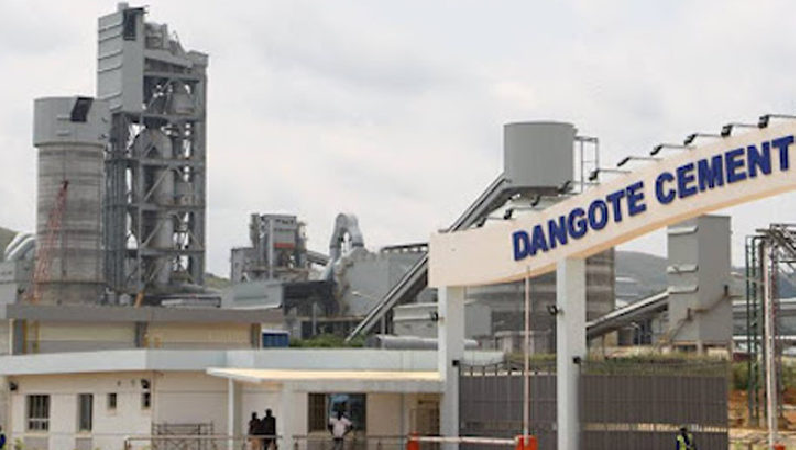
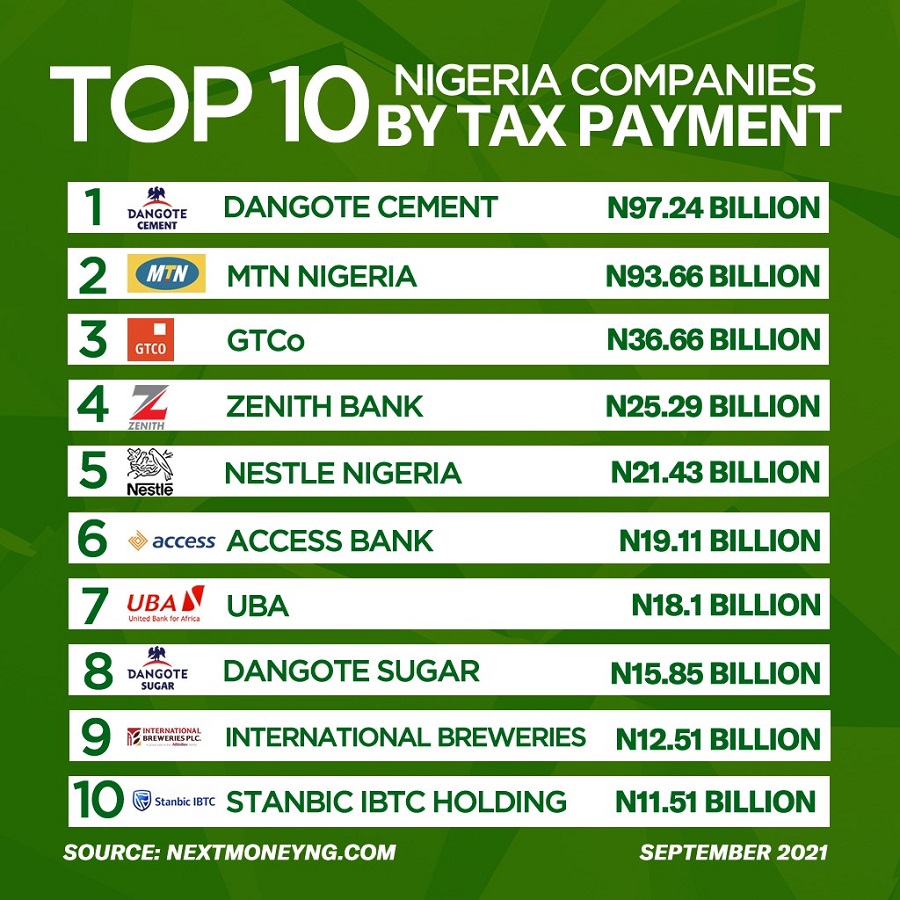
Imagine if, as Aliko Dangote was evolving from a mere trader to a Chairman of an industrialized conglomerate, that nine other people joined him. He picked cement; we still have electricity opportunities available. He picked sugar, we still have clean water yet to be fixed. In the Igbo nation, it takes the killing of one tiger to be called the killer of tigers! Look at the chart below, Nigerians should appreciate what it means to have big companies. We need to grow many Dangotes in other sectors.

And most importantly, if you look at what I am seeing there, excluding Dangote companies, MTN, and Nestle, and perhaps IB, all the companies there came out of the first cambrian moment of Nigerian entrepreneurial boost of the early 1990s. 

You can understand why Nigeria should be worried that most of our leading tech companies including fintechs are incorporated in America. Had GTBank*, Access, modern UBA, etc followed that trajectory, this chart would not be possible. Someone needs to lead to secure Nigeria’s future. 


I picked this from Nairametrics where it is possibly promoted by Dangote Cement. I am reposting it here as it is newsworthy. No one paid Tekedia anything please.

The press release

Dangote Cement Plc has emerged as the highest corporate income taxpayer and biggest employer of labour in the country for the year 2020.

The foremost indigenous cement manufacturer came first among top 100 elite companies listed on the Nigeria Exchange (NGX) posting into the coffer of the federal government a princely sum of N97.24billion in the year, while MTN Communication Nigeria Plc paid N93.6billion and Guaranty Trust Bank came third with an income tax of N36.66billion.

In the same breath, the Cement company with presence in other African countries also emerged as the company with the highest number of employees with a total number of 16,199 staffers on its payroll as at the time of performance review.

In the performance analyses of 100 top elite corporate bodies on the Nigeria Exchange carried out by the reputable business magazine, “Next Money”, Dangote Cement was ranked as the most capitalized company in the country with N4,173.22billion.

Speaking on the analysis, publisher of Next Money, Mr. Ray Echebiri said the performance index analysis of companies listed on the Exchange was carried out with a view to establishing the best-performing ones among the over 150 of them.

Echebiri, a renowned financial analyst, explained that the exercise is to provide existing and potential investors with information that they can rely on when they are taking investment decisions. “The first step we take in the analyses is to extract the Total Assets of each of the listed companies from their audited accounts.”

He said: “We sorted the total assets of the companies from the largest to the smallest and cut off at the 100th. We tagged the hundred companies that emerged from this exercise “Nigeria’s Top 100 Companies”. Any company that makes it to the corporate elite club of Nigeria’s Top 100 Companies is automatically a candidate for further ranking by Revenues, Profits, Market Capitalization, Number of Employees and Tax Payment.”

According to him, the rankings show how the listed companies stand on the corporate ladder with regard to the various performance indices. This edition of Nigeria’s Top 100 Companies covers the 2020 accounting year. It is therefore, a performance analyses of companies listed on the Nigerian Exchange (NGX) based on their audited accounts for the 2020 reporting year.”

“In other words, the information used in the analyses are extracted from the annual reports and accounts of the various companies published in 2020 irrespective of whether a company’s year-end is March, June, September, December, or any other month in 2020.”

Echebiri further pointed out that the analyses were restricted to publicly-held companies in the country and the reason being that the accounts of listed companies are easier to access than those of private companies. “Moreover, accounts of publicly-held companies are more believable because they are usually subjected to regulatory scrutiny and approval.”

He explained that his group had no doubt that there are many private companies that would easily count among the top 100 companies in the country given their huge balance sheet size, the sizeable revenue they post yearly and the mouth-watering profits they declare. However, he added that they were not a part of the performance review and analyses because their audited accounts do not go through the kind of regulatory examination and approval that the listed companies face and, are, therefore not as believable as those of the publicly-held companies.

The construction giant, Julius Berger trailed Dangote Cement as the highest employer of labour, albeit far behind, with staff strength of 12,217 and the United Bank for Africa Plc which had a total of 10,824 people on its payroll.

The analysis indicated that while Dangote cement with a market capitalization of N4,173.22 billion beat the rest of the companies listed on the NGX to emerge as the company with the largest capitalization, MTN Communications Nigeria Plc and Bua Cement Plc. as at December 31, 2020, followed as the second and third respectively with market capitalization of N3,458.23 billion and N2,619.41.

Dangote Cement paid the highest corporate income tax during the year under and was followed closely by MTN Communications Nigeria Plc which paid corporate income tax of N93.66 billion and Guaranty Trust Bank placed third with corporate income tax payment of N36.66 billion.

COVID-19 Exclusion: UK exempts fully vaccinated Nigerian travelers

0

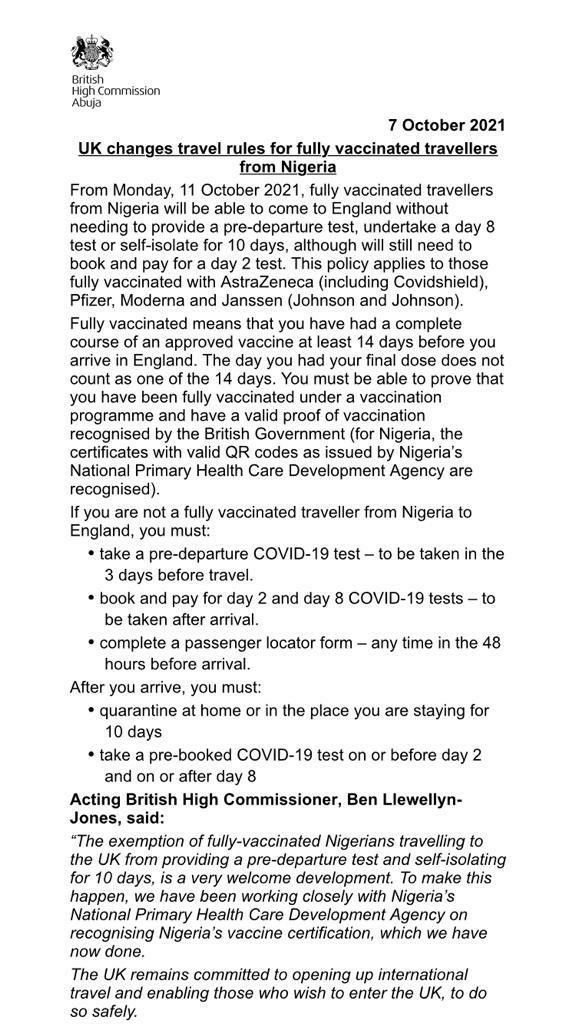
I commend the good people of the United Kingdom for doing the honourable thing and Nigerians appreciate it. Yes, the United Kingdom has announced that fully vaccinated travelers from Nigeria to the UK will not need to take protocols reserved for unvaccinated people, with effect from Monday, October 11.

As this debate moved on, I was surprised that many Nigerians justified the ban on the thesis that people fake vaccine records. For me, that is nonsense. That you cheated in an exam does not mean that my grade is not valid since I did not cheat. So, if educated people on LinkedIn and Facebook want the lowest denominator to define a people we have a problem.

People, vaccinate and you are FREE to travel and do business. Represent Naija very well.

UK Excluding Nigeria from List of Countries with Vaccine Certificate is Discriminatory

Buhari presents N16.39 trillion Nigeria’s 2022 National budget to National Assembly

0

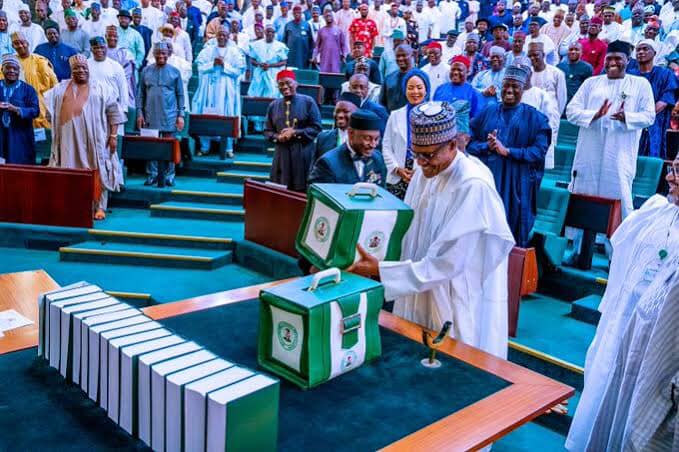
President Buhari presented Nigeria’s 2022 national budget of N16.39 trillion, about US$40 billion using the official exchange rate to the joint session of the National Assembly this week (the figure was updated from N13 trillion to include funds for election, health workers, security, etc),. The crude oil benchmark price used was $57 per barrel and daily oil production is estimated at 1.88 million barrels per day. The exchange rate is pegged at N410 per US dollar! And the total projected revenue is put at N17.7 trillion.

Full speech on click…

The full speech

2022 BUDGET SPEECH

Budget of Economic Growth and Sustainability

Delivered By:

His Excellency, President Muhammadu Buhari

President, Federal Republic of Nigeria

At the Joint Session of the National Assembly, Abuja

Thursday, October 7, 2021

PROTOCOLS

  1. It is my great pleasure to be here once again to present the 2022 Federal Budget Proposals to this distinguished Joint Session of the National Assembly.

  2. Distinguished and Honourable leaders, and members of the National Assembly, let me start by commending you for the expeditious consideration and passage of the Supplementary Appropriation Bill 2021. This further underscores your commitment to our collective efforts to contain the COVID-19 Pandemic and address the various security challenges facing our country.

  3. I will also take this opportunity to thank you for the quick consideration and approval of the 2022-2024 Medium-term Expenditure Framework and Fiscal Strategy Paper. Our hope is that National Assembly will continue to partner with the Executive by ensuring that deliberations on the 2022 Budget are completed before the end of this year so that the Appropriation Act can come into effect by the first of January 2022.

  4. The 2022 Budget will be the last full year budget to be implemented by this administration. We designed it to build on the achievements of previous budgets and to deliver on our goals and aspirations as will be reflected in our soon-to-be launched National Development Plan of 2021 to 2025.

  5. Distinguished Senators and Honourable Members, in normal times, I make use of this opportunity to provide an overview of global and domestic developments in the current year, a summary of our achievements, and our plans for the next fiscal year.

  6. However, these are exceptional times. The grim realities of COVID-19 and its lethal variants are still upon us. From President to Pauper, the virus does not discriminate.

  7. This is why our country still maintains its COVID -19 guidelines and protocols in place to protect its citizens and stop the spread of this disease.

  8. Over the past few days, we have consulted with the Presidential Steering Committee on COVID-19 and the leadership of the National Assembly on how best to present the 2022 budget proposal keeping in mind the deep-rooted traditions in place and the guidelines for safe mass gatherings.

  9. We ultimately decided that the most responsible and respectful approach was to hold a shorter than usual gathering while allowing the Honourable Minister of Finance, Budget and National Planning to provide fuller details of our proposals in a smaller event.

  10. I am sure many of you will be relieved as my last budget speech in October 2020 lasted over fifty minutes.

  11. Still, over the next few minutes, I will provide key highlights of our 2021 performance as well as our proposals for 2022.

PERFORMANCE OF THE 2021 BUDGET

  1. The 2021 ‘Budget of Economic Recovery and Resilience’ is based on a benchmark oil price of 40 US Dollars per barrel, oil production of 1.6m b/d, and exchange rate of 379 Naira to US Dollar. Furthermore, a Supplementary budget of 982.73 billion Naira was recently enacted to address exigent issues in the Security and Health sectors.
  2. Based on the 2021 Fiscal Framework, total revenue of 8.12 trillion Naira was projected to fund aggregate federal expenditure of 14.57 trillion Naira (inclusive of the supplementary budget). The projected fiscal deficit of 6.45 trillion Naira, or 4.52 percent of GDP, is expected to be financed mainly by domestic and external borrowings.

  3. By July 2021, Nigeria’s daily oil production averaged one 1.70million barrels (inclusive of condensates) and the market price of Bonny Light crude averaged 68.53 US Dollars per barrel.

  4. Accordingly, actual revenues were 34 percent below target as of July 2021, mainly due to the underperformance of oil and gas revenue sources. Federal Government’s retained revenues (excluding Government Owned Enterprises) amounted to 2.61 trillion Naira against the proportionate target of 3.95 trillion Naira for the period.

  5. The Federal Government’s share of Oil revenue totalled 570.23 billion Naira as of July 2021, which was 51 percent below target, while non-oil tax revenues totalled 964.13 billion Naira. The poor performance of oil revenue relative to the budget was largely due to the shortfall in production as well as significant cost recovery by NNPC to cover the shortfall between its cost of importing petrol and the pump price.

  6. The National Assembly will recall that in March 2020 the Petroleum Products Pricing Regulatory Agency announced that the price of petrol would henceforth be determined by market forces.

  7. However, as the combination of rising crude oil prices and exchange rate combined to push the price above the hitherto regulated price of 145 Naira per litre, opposition against the policy of price deregulation hardened on the part of Labour Unions in particular.

  8. Government had to suspend further upward price adjustments while engaging Labour on the subject. This petrol subsidy significantly eroded revenues that should have been available to fund the budget.

  9. On a positive note, we surpassed the non-oil taxes target by eleven (11) percent in aggregate. The sustained improvement in non-oil taxes indicates that some of our revenue reforms are yielding positive results. We expect further improvement in revenue collections later in the year as more corporate entities file their tax returns and we accelerate the implementation of our revenue reforms.

Improving Revenue Generation and Administration

  1. We have stepped up implementation of the strengthened framework for performance management of government owned enterprises (GOEs), with a view to improve their operational efficiencies, revenue generation and accountability. The 50% cost-to-income ratio imposed on the GOEs in the Finance Act 2020 has contributed significantly to rationalizing wasteful expenditures by several GOEs and enhanced the level of operating surpluses to be transferred to the Consolidated Revenue Fund (CRF). I solicit the cooperation of the National Assembly in enforcing the cost-to-income ratio and other prudential guidelines during your consideration of the budget proposals of the GOEs, which I am also laying before you today.
  2. On the expenditure side, as at end of July 2021, a total of six point seven-nine (6.79) trillion Naira had been spent as against the pro-rated expenditure of seven point nine-one (7.91) trillion Naira. Accordingly, a deficit of four point one-seven (4.17) trillion Naira was recorded as at end of July 2021. The deficit was financed through domestic borrowing.

  3. Despite our revenue challenges, we have consistently met our debt service commitments. We are also up to date on the payment of staff salaries, statutory transfers, and overhead costs. As at (4th of October 2021, a total of 1.732 trillion Naira had been released for capital expenditure.

  4. I am pleased to inform you that we expect to fund MDAs’ capital budget fully by the end of the fiscal year 2021.

  5. Capital releases thus far have been prioritised in favour of critical ongoing infrastructural projects in the power, roads, rail, agriculture, health and education sectors.

  6. We have made progress on the railway projects connecting different parts of the country. I am glad to report that the Lagos-Ibadan Line is now completed and operational. The Abuja-Kaduna Line is running efficiently. The Itakpe-Ajaokuta rail Line was finally completed and commissioned over thirty (30) years after its initiation.

  7. Arrangements are underway to complete the Ibadan-Kano Line. Also, work will soon commence on the Port Harcourt-Maiduguri Line and Calabar-Lagos Coastal Line, which will connect the Southern and Eastern States to themselves and to the North.

  8. Progress is also being made on several power generation, transmission, and distribution projects, as well as off-grid solutions, all aimed towards achieving the national goal of optimizing power supply by 2025.

  9. I am again happy to report that we continue to make visible progress in our strategic road construction projects like the Lagos – Ibadan expressway, Apapa – Oworonsoki expressway, Abuja – Kano expressway, East-West Road and the second Niger bridge. We hope to commission most of these projects before the end of our tenure in 2023.

  10. The Pandemic revealed the urgent need to strengthen our health system. Towards this end, we constructed 52 Molecular labs, 520 bed intensive care units, 52 Isolation centres and provision of Personal Protective equipment across 52 Federal Medical Centres and Teaching Hospitals.

  11. We continue to push our expenditure rationalization initiatives which we commenced in 2016. For example, on personnel costs, the number of MDAs captured on the Integrated Payroll and Personnel Information System increased from 459 in 2017 to 711 to date.

  12. The recent passage of the Petroleum Industry Act 2021, and consequent incorporation of the Nigeria National Petroleum Corporation should also result in rationalisation of expenditure, as well as increased investments and improved output in the oil and gas industry.

  13. Distinguished Senators and Honourable Members, you will agree with me that a lot has been accomplished over the last year but there is still much to be done. I will now proceed with a review of the 2022 Budget proposal.

THEME AND PRIORITIES OF THE 2022 BUDGET

  1. The allocations to MDAs were guided by the strategic objectives of the National Development Plan of 2021 to 2025, which are:

a. Diversifying the economy, with robust MSME growth;

b. Investing in critical infrastructure;

c. Strengthening security and ensuring good governance;

d. Enabling a vibrant, educated and healthy populace;

e. Reducing poverty; and

f. Minimizing regional, economic and social disparities.

  1. The 2022 Appropriation therefore is a Budget of Economic Growth and Sustainability.
  2. Defence and internal security will continue to be our top priority. We remain firmly committed to the security of life, property and investment nationwide. We will continue to ensure that our gallant men and women in the armed forces, police and paramilitary units are properly equipped, remunerated and well-motivated.

  3. The 2022 budget is also the first in our history, where MDAs were clearly advised on gender responsive budgeting. These are part of critical steps in our efforts to distribute resources fairly and reach vulnerable groups of our society.

PARAMETERS AND FISCAL ASSUMPTIONS

  1. Distinguished Members of the National Assembly, the 2022 to 2024 Medium Term Expenditure Framework and Fiscal Strategy Paper sets out the parameters for the 2022 Budget as follows:

a. Conservative oil price benchmark of 57 US Dollars per barrel;

b. Daily oil production estimate of 1.88 million barrels (inclusive of Condensates of 300,000 to 400,000 barrels per day);

c. Exchange rate of four 410.15 per US Dollar; and

d. Projected GDP growth rate of 4.2 percent and 13 percent inflation rate.

2022 REVENUE ESTIMATES

  1. Based on these fiscal assumptions and parameters, total federally-collectible revenue is estimated at 17.70 trillion Naira in 2022.
  2. Total federally distributable revenue is estimated at 12.72 trillion Naira in 2022 while total revenue available to fund the 2022 Federal Budget is estimated at 10.13 trillion Naira. This includes Grants and Aid of 63.38 billion Naira, as well as the revenues of 63 Government-Owned Enterprises.

  3. Oil revenue is projected at 3.16 trillion, Non-oil taxes are estimated at 2.13 trillion Naira and FGN Independent revenues are projected to be 1.82 trillion Naira.

PLANNED 2022 EXPENDITURE

  1. A total expenditure of sixteen point three-nine (16.39) trillion Naira is proposed for the Federal Government in 2022. The proposed expenditure comprises:

a. Statutory Transfers of 768.28 billion Naira;

b. Non-debt Recurrent Costs of 6.83 trillion;

c. Personnel Costs of 4.11 trillion Naira;

d. Pensions, Gratuities and Retirees’ Benefits 577.0 billion Naira;

e. Overheads of 792.39 billion Naira;

f. Capital Expenditure of 5.35 trillion Naira, including the capital component of Statutory Transfers;

g. Debt Service of 3.61 trillion Naira; and

h. Sinking Fund of 292.71 billion Naira to retire certain maturing bonds.

Fiscal Balance

  1. We expect the total fiscal operations of the Federal Government to result in a deficit of 6.26 trillion Naira. This represents 3.39 percent of estimated GDP, slightly above the 3 percent threshold set by the Fiscal Responsibility Act 2007. Countries around the world have to of necessity over-shoot their fiscal thresholds for the economies to survive and thrive
  2. We need to exceed this threshold considering our collective desire to continue tackling the existential security challenges facing our country.

  3. We plan to finance the deficit mainly by new borrowings totalling 5.01 trillion Naira, 90.73 billion Naira from Privatization Proceeds and 1.16 trillion Naira drawdowns on loans secured for specific development projects.

  4. Some have expressed concern over our resort to borrowing to finance our fiscal gaps. They are right to be concerned. However, we believe that the debt level of the Federal Government is still within sustainable limits. Borrowings are to specific strategic projects and can be verified publicly.

  5. As you are aware, we have witnessed two economic recessions within the period of this Administration. In both cases, we had to spend our way out of recession, which necessitated a resort to growing the public debt. It is unlikely that our recovery from each of the two recessions would have grown as fast without the sustained government expenditure funded by debt.

  6. Our target over the medium term is to grow our Revenue-to-GDP ratio from about 8 percent currently to 15 percent by 2025. At that level of revenues, the Debt-Service-to-Revenue ratio will cease to be worrying. Put simply, we do not have a debt sustainability problem, but a revenue challenge which we are determined to tackle to ensure our debts remain sustainable.

  7. Very importantly, we have endeavoured to use the loans to finance critical development projects and programmes aimed at improving our economic environment and ensuring effective delivery of public services to our people. We focused on;

a. the completion of major road and rail projects;

b. the effective implementation of Power sector projects;

c. the provision of potable water;

d. construction of irrigation infrastructure and dams across the country; and

e. critical health projects such as the strengthening of national emergency medical services and ambulance system, procurement of vaccines, polio eradication and upgrading Primary Health Care Centres across the six geopolitical zones.

Innovations in Infrastructure Financing

  1. In 2022, Government will further strengthen the frameworks for concessions and public private partnerships (PPPs). Capital projects that are good candidates for PPP by their nature will be developed for private sector participation.
  2. We will also explore available opportunities in the existing ecosystem of green finance including the implementation of our Sovereign Green Bond Programme and leveraging debt-for-climate swap mechanisms.

Enhancing Revenue Mobilisation

  1. Our strategies to improve revenue mobilisation will be sustained in 2022 with the goal of achieving the following objectives:

a. Enhance tax and excise revenues through policy reforms and tax administration measures;

b. Review the policy effectiveness of tax waivers and concessions;

c. Boost customs revenue through the e-Customs and Single Window initiatives; and

d. Safeguard revenues from the oil and gas sector.


  1. Distinguished Senators and Honourable Members, I commend you for the passage of the Petroleum Industry Act 2021. It is my hope that the implementation of the law will boost confidence in our economy and attract substantial investments in the sector.

Finance Bill 2022

  1. In line with our plan to accompany annual budgets with Finance Bills, partly to support the realization of fiscal projections, current tax and fiscal laws are being reviewed to produce a draft Finance Bill 2022.
  2. It is our intention that once ongoing consultations are completed, the Finance Bill would be submitted to the National Assembly to be considered alongside the 2022 Appropriation Bill.

CONCLUSION

  1. Mr. Senate President, Mr. Speaker, Distinguished and Honourable Members of the National Assembly, this speech would be incomplete without commending the immense, patriotic, and collaborative support of the National Assembly in the effort to deliver socio-economic development and democracy dividends for our people.

  2. I wish to assure you of the strong commitment of the Executive to strengthen the relationship with the National Assembly.

  3. Nigeria is currently emerging from a very difficult economic challenge. We must continue to cooperate and ensure that our actions are aimed at accelerating the pace of economic recovery so that we can achieve economic prosperity and deliver on our promises to the Nigerian people.

  4. The fiscal year 2022 is very crucial in our efforts to ensure that critical projects are completed, put to use and improve the general living conditions of our people.

  5. It is with great pleasure therefore, that I lay before this distinguished Joint Session of the National Assembly, the 2022 Budget Proposals of the Federal Government of Nigeria.

  6. I thank you most sincerely for your attention.

  7. May God bless the Federal Republic of Nigeria.

Google is Investing $1 Billion in Africa

0

Web search giant, Google, is doling out $1 billion for multi-faceted investment in Africa, CEO Sundar Pichai announced Tuesday.

The fund will cover a range of initiatives; from improved connectivity to investments in startups for a period of five years. It will focus on four key areas; enabling affordable access and building products for every kind of African user, helping businesses with their digital transformation, investing in entrepreneurs to spur next-generation technologies and supporting nonprofits working to improve lives across Africa.

“There is so much momentum happening across Africa, and we’re excited to showcase it at our first Google for Africa event,” Pichai said. He explained that the fund will be utilized building on an existing foundation that Google has laid in Africa.

Google has enabled 100 million Africans to access the internet for the first time and empowered millions of businesses and creators with digital tools, including digital skills, since it opened offices in Africa.

“In 2017, we committed to help 10 million Africans get the digital skills they need to grow their careers and businesses. So far, we’ve trained six million people. We’ve also trained 80,000 developers from every country in Africa and supported more than 80 startups to raise global venture capital funding, creating thousands of jobs,” Pichai said.

Going beyond digital skills, the tech giant opened an artificial intelligence center in 2018, in Accra Ghana. It was the first AI center in Africa. Google said the focus of the AI center is solving challenges relevant to Africa and the world, like “using AI to map buildings that are hard to detect using traditional tools and adding 200,000 kilometers of roads on Google Maps.”

Google also plans to invest up to $50 million in African early and growth stage startups via African Investment Fund. So far, 50 startups have been selected to participate in the African program starting October 13. Each will receive up to $100,000 in equity-free capital along with credits from Google Cloud, Google.org ads grants and additional support.

Google said the 50 startups will be 40% women-led, representing nine countries and 12 sectors.

“There is a significant gap in terms of access to funding. Some groups do not have access to funding as much as other groups. We’ve seen that with lack and female-founded startups. And our effort with the Black Founders Fund is to help close that gap to some extent,” said Nitin Gajiria, the managing director of Sub-Saharan Africa, Google.

The pandemic exposed hidden digital opportunities in Africa, as people shifted and adapted rapidly to digital life. From edtech to ‘work from home,’ which has gradually become the new normal, online activities have opened digital skills opportunities like never before.

Google believes these opportunities abound more in Africa, a continent that has been greatly disadvantaged when it comes to using technology to solve problems.

“One thing we’ve seen is how technology can be a lifeline, whether you are a parent seeking information to keep your family healthy, a student learning virtually or an entrepreneur connecting with new customers and markets. Being helpful in these moments is at the core of our mission: to organize the world’s information and make it universally accessible and useful,” Pichai said.

Pichai grew up without much access to technology, but witnessed the impact it could make on people’s lives. “Every new technology — from the rotary phone to the television — changed my family’s life for the better,” he said, adding that it’s the reason why he’s a technology optimist. “I believe in how people can harness it for good.”

With people like him everywhere in Africa, Pichai sees more innovation of African origin spreading throughout the world in the near future.

For example, people in Africa were among the first to access the internet through a phone rather than a computer. And mobile money was ubiquitous in Kenya before it was adopted by the world.

“This momentum will only increase as 300 million people come online in Africa over the next five years. Many of them are young, creative and entrepreneurial, and they’re ready to drive new innovation and opportunity across the region,” he said.