DD
MM
YYYY

PAGES

DD
MM
YYYY

spot_img

PAGES

Home Blog Page 5542

Modern Education And The Role of Technology

0
Nigeria needs stronger education systems

Education can be described as the imparting and acquiring of knowledge via teaching and learning, respectively, especially at a school or similar institution.

In the words of G. K. Chesterton ‘Education is simply the soul of a society as it passes from one generation to another.’ No wonder every sane and rational society treats it as the fundamental factor required toward any meaningful development.

The earliest educational processes involved sharing information about gathering food and providing shelter; making weapons and other tools; learning language; and acquiring the values, behaviour, as well as religious rites or practices of a given culture.

Prior to the invention of writing and reading, people lived in an environment in which they struggled to survive against natural forces, animals, and other humans. At the time, to survive, preliterate individuals developed skills that grew into cultural and educational patterns.

Education, therefore, emanated from the human struggle for survival and enlightenment. It may be formal or informal. The latter refers to the general social process by which human beings acquire the knowledge and skills needed to function in their culture. Whilst, formal education refers to the process through which teachers instruct pupils or students, as might be the case, in subjects of study within institutions.

Modern day education makes one feel proud that s/he is truly educated, though formally or informally, everyone is educated. Real education, which is the overall development of mind, body and soul, can be acquired via any means. According to Carter Woodson, education means to ‘inspire people to live more abundantly, to learn to begin with life as they find it and make it better.’

It’s noteworthy that modern education is aided with a variety of technology comprising computers, projectors, internet, and calculators, among others. This fact forms the basis of this discussion, hence shall take time to do justice to it.

Everything that can be simplified has been made simpler by the introduction of the aforementioned gadgets into modern day education. Science has obviously explored every aspect of human life. It suffices to say that there is now much to learn as well as more to assimilate. The Internet alone provides abysmal knowledge, meaning literally that there’s no end to it.

Skill development and vocational education has added a new feather to the modern system of learning. Everyone has something to learn. Even an infant these days goes to a kindergarten; and a little grown, mentally and physically, is promoted to a nursery.

The most fascinating part is that everything is being categorized ranging from kindergarten, nursery, primary, secondary, to tertiary; and each of these stages has a certain set of technical acquaintances.

The truth is, the modern pattern of education is a never-ending process. Aristotle Nicomachus, in his usual way, stated that education is an ‘ornament in prosperity and a refugee in adversity.’ This is exactly what modern education represents.

However, it’s pertinent to acknowledge that the existing technical intricacy of modern education has caused colossal harm to the present days’ children, thereby posing threat in their respective ambitions and future endeavours.

For instance, before now, devices such as abacus were used during Mathematics classes. Such an approach helped tremendously to educate the kids – ranging from ages 6 to 14 – on mental arithmetic, a knowledge that enables them to face any form of Mathematics problem in the future.

But now, except in nations such as India, Russia, China, Ghana, and what have you, that still use counting frames or abacus, calculators have suddenly overtaken its use in countries like Nigeria. Worse still, even primary school pupils are now exposed to scientific calculators.

Modern education has deprived most learners the opportunity of seeing the real events or scenes. Engineering students, for example, only see pictures of what is being taught, or what is expected to be produced by them.

Final year undergraduates, and perhaps postgraduate students, presently do their projects or theses by merely downloading the required materials from the net. Most students don’t even know where the fabric they are wearing came from. The word ‘how’ is currently missing in our world, which causes severe ignorance.

Modern education has succeeded in spreading more ignorance than knowledge. It has produced a vast population able to read but unable to distinguish what is worth reading. Learners do more of cramming rather than memorizing, which can only be achieved by getting close to facts or the actual pictures. Albert Einstein once said education is ‘that which remains if one has forgotten everything learned in school.’

For the technical intricacies involved in modern education to be advantageous to the learners, they must serve as supplements. In other words, they ought to be used for reference purposes, and not as fundamental devices as they are presently utilized in various institutions of learning.

The pupils or students must get used to the real pictures or sites before introducing the use of tech gadgets to them. Their brains shouldn’t be complicated with those things at an early stage. Those brains are still fragile, thus ought not to be juxtaposed with tech intricacies. More so, endeavour to let the practical segment be preceded by theory.

We must note that every invention was made for a purpose, and to be applied at a particular time. So, if we end up misusing them, it becomes a problem when they are meant to serve as blessings. 

African Development Partners III Fund Closes US$1.15 Billion To Invest in Africa

0

It is raining money in Africa’s cambrian season of deep entrepreneurial capitalism. Despite the paralysis due to political stasis, innovators and their investing high priests who are taking them to the altar of unlocking abundance, continue to see massive promises in the beautiful continent.  

DPI today just announced that it has closed a  war chest  of US$1.15 billion for the continent: “Development Partners International (DPI)  a premier investment firm focused on Africa, today announced that African Development Partners III Fund (ADP III), has exceeded its US$800 million target, and is set to hold a final close at US$900 million, with an additional US$250m of dedicated co-investment capital. This brings a total of US$1.15 billion for investments on the continent.”

Who will not invest in Africa this time around?


Full Press Release

Development Partners International (DPI)  a premier investment firm focused on Africa, today announced that African Development Partners III Fund (ADP III), has exceeded its US$800 million target, and is set to hold a final close at US$900 million, with an additional US$250m of dedicated co-investment capital. This brings a total of US$1.15 billion for investments on the continent. The fundraising establishes ADP III as one of the largest funds dedicated to investing global capital in Africa.

ADP III will invest in established and growing companies in industries that benefit from Africa’s fast-growing middle class and the increasing digital transformation of the continent. All investments have the highest standards of impact and environmental, social and governance (“ESG”) work. In doing this work DPI is using its proprietary DPI Management System (“DPIMS”) toolkit to deliver impact in line with 10 of the UN Sustainable Development goals, as well as driving the highest standards of ESG.

Runa Alam, co-founder and Chief Executive of DPI commented: “Africa remains an exciting investment destination with positive demographics, rising adoption of technology, and rising consumer and business spending. Against this backdrop, DPI has continued to generate top quartile returns by leveraging our team’s deep-rooted local expertise across the African continent.

“As we look towards the future with our ADP III fund, we will focus on innovation-driven companies leading the digital transformation of the economies in which they operate. In addition, our deep integration of impact and ESG initiatives in the investment life cycle has been widely recognised and ensures we are known as a trusted partner.”

ADP III secured capital from a broad range of leading pension and sovereign wealth funds, development finance institutions, endowment and foundations, insurance companies, fund-of-funds, asset managers, and impact investors. The global investor base represents 20 countries across North America, Europe, Middle East and Africa. In addition to strong support from existing investors, DPI welcomed over 25 new LPs into its investor base. This is testament to DPI’s track record and ability to create institutional-grade investment opportunities in Africa, while continuing to deliver sustained environmental and economic impact.

Joanne Yoo, Managing Director at DPI, said, “The strong support for ADP III validates our strategic focus, creative approach and investment discipline. We are grateful for the trust that our investors have placed in DPI, and we are confident that our talented team will continue to deliver competitive returns and impact.”

ADP III has made four investments to date, including:

  • Channel VAS, a leading global fintech business providing mobile financial services;
  • SICAM, a leading Tunisian tomato producer, in one of the largest private equity transactions undertaken in the country;
  • Kelix Bio, a biopharmaceutical platform broadening access to speciality generic drugs across Africa; and
  • MNT-Halan, Egypt’s leading fintech ecosystem.

Additionally, DPI has a significant pipeline of investment opportunities across the continent, focused on key sectors of the economy such as financial services, healthcare, agri-business, education, and telecom infrastructure.

DPI places an emphasis on promoting best in class standards in ESG through its investments, with the aim of creating institutionalised high-performing companies at exit. Working with its portfolio companies, DPI seeks to contribute to the UN Sustainable Development Goals by implementing its proprietary Impact and ESG Management System based on three key impact themes: Job Quality, Climate Change, and Gender Balance.

ADP III was the first African fund signatory to the Operating Principles for Impact Management (“Impact Principles”), an international market standard for impact investing and the first to be granted 2x Flagship Fund status, as part of the 2x Challenge, a gender-lens initiative.

Nigerian Fintech Startup, VertoFX, Raises $10m in Series A to Expand B2B Payment

0

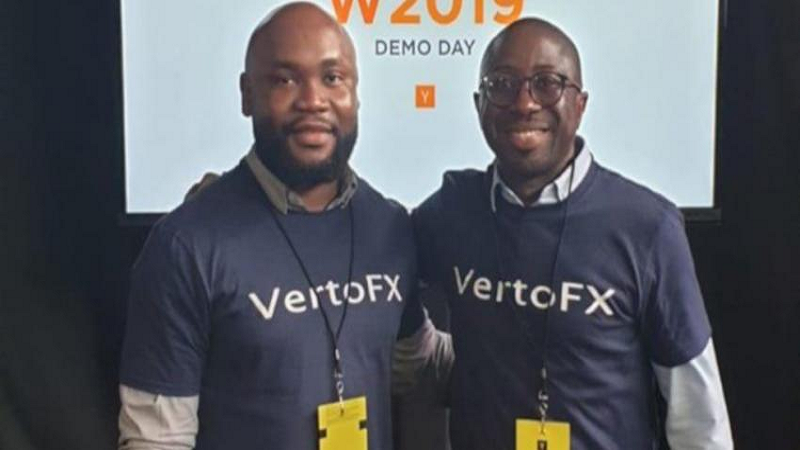
VertoFX, a Nigerian fintech startup, has raised $10 million in a Series A round of funding, two years after it raised $2.1 million in seed funding.

The fund was led by leading fintech investor Quona Capital. Participating investors are the Treasury, Middle East Venture Partners (MEVP), TMT Investments, Unicorn Growth Capital, Zrosk Investments and P1 Ventures. Previous investors include Y Combinator, Accelerated Digital Ventures, and Ace & Company.

With the newly raised fund, the startup has joined the growing number of fintech startups in Africa, attracting lucrative investments from around the world. Nigeria, South Africa and Kenya lead the pack, but others like Egypt have been remarkably securing investments recently.

VertoFX which focuses on businesses in emerging markets, will use the investment to continue building its platform to enable businesses to facilitate swift cross-border payments, solving important pain points in the B2B global payments industry, which is expected to grow to nearly USD 200 trillion by 2028, over six times the size of the retail payments market.

The company also plans to accelerate its geographical expansion into emerging markets such as Africa, a region where SMEs cross-border payment needs are currently significantly under-addressed.

VertoFX’s fast and frictionless global payments platform uses its “marketplace” solution to match businesses efficiently, especially where one of the currency pairs is an illiquid currency.

“Using Verto’s three main products (Payments, Exchange & Multi-Currency account), business owners can now send cross-border B2B payments at FX rates up to 9 times cheaper than they could through traditional banks, and with Verto wallets businesses can hold money with us in 39 currencies and make instant cross-border payments to other companies on the VertoFX network in real-time,” said Ola Oyetayo, co-founder and CEO of VertoFX.

VertoFX was launched in 2018 by Nigerians, Ola Oyetayo and Anthony Oduwole. In their previous experience at top-tier UK banks, the two saw firsthand that while trade and supply chains are increasingly global, international payments remain a complicated and expensive proposition, especially in emerging markets where local currencies are less familiar and less liquid than those of more developed economies.

And while the proliferation of peer-to-peer and remittance companies have started to address this pain point for consumers in emerging markets, the B2B market—which serves the SME sector and accounts for nearly 30% of global imports and 45% of total employment in emerging markets—has remained largely untouched.

Anthony Oduwole, the company’s co-founder and CTO Said while traditional peer-to-peer payment platforms often have transaction limits, the VertoFX platform facilitates payment volumes that are appropriate for MSMEs.

“We plan to expand our presence in emerging markets with this fund through a suite of top-class tech stacks. Geographically, this is an essential step towards our mission of making international payments simple, fast and cheap.

“Our purposefully built tech infrastructure and payment rails enable instant cross-border payments in a way that is really exciting for businesses,” he said.

Monica Brand Engel, co-founder and Managing Partner at Quona Capital, said the vacuum in international payments, immobilizing growth for SMEs, presents VertoFX with the opportunity to offer innovative solutions.

“Low visibility and traceability, slow speeds and the high costs of cross-border payments all inhibit SME growth across global and emerging markets.

“VertoFX’s innovative platform addresses these pain points, removing friction to make international payments fast, simple, and reliable—a key component of SME growth. We are proud to support VertoFX in this important and impactful work,” she said.

VertoFX is carving out a niche in the fintech market, targeting SMEs to drive a B2B-focused payment system. Raising additional $10 million two years after its seed fund shows the startup has amazing growth potential.

Be unbounded, and do not be limited by anything

0

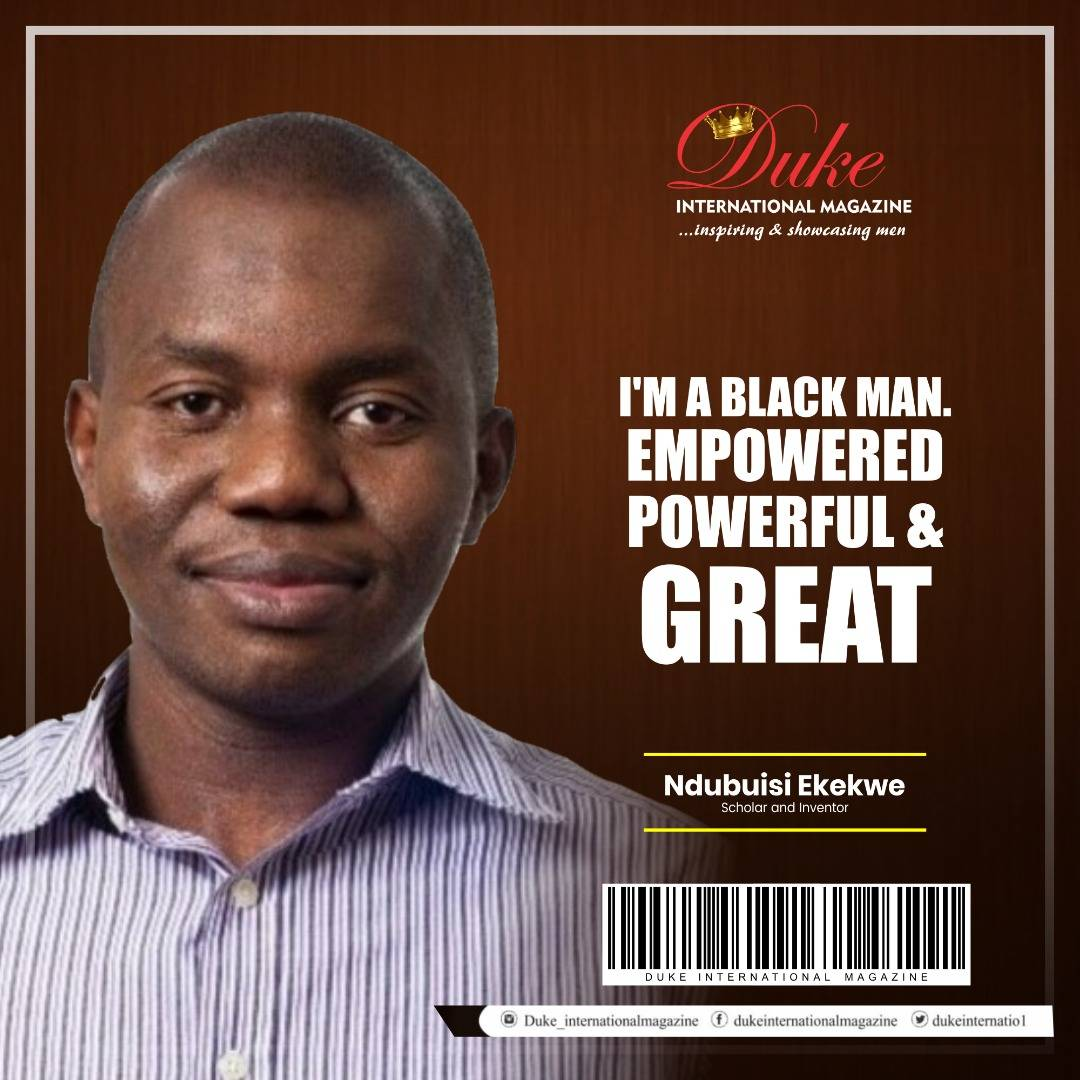
Thank you Duke Magazine United Kingdom. Personally, I would have gone with “I am a global citizen. Confident, Respectful and Hardworking”.  With those three attributes, I have dined with the world’s greats, and hope one day I will be elevated to their levels.

People, if they ask you “have you ever seen a village boy on the cover of a UK magazine”, you have an answer: “Ndubuisi Ekekwe”. Be unbounded, and do not be limited by anything. Put in effort and the world will elevate you. One of the most memorable presentations I have ever given was speaking before Bill Gates.

I had one concern: would they stop me after 60 seconds because I was wasting a billionaire’s time. But gracious heavens, I finished and he praised me – and extended a handshake. Doubts exist because we are humans but check, we are making progress.

Be on the cover of a magazine!


Aim Higher On Your Mission

0

In business, it is always easier to execute a new, hard and great mission than a marginal one. Men and women easily sign up for things which are GREAT than things which are ephemeral. Yes, it would be easier to execute Tesla mission than another typical car company like Ford or Peugeot. While great people will line up for Tesla, many would be unresponsive for another Ford or Peugeot company!

When Mark Zuckerberg says he wants to “bring the world closer together“, via Facebook, he has put a great vision. It is certainly new and it is worthwhile. The newness and hardness are not necessarily a function of technology, but rather the aspirational quality of the mission at hand. When Google says it wants to organize the world’s information, it has something many people, across generations, would commit to help it execute.

In our age, you can sign up a whole village if you say you are going to the moon. But if you say you want to dig the ground, many will not show up. Going to the moon is new and harder; men and women would be inspired by that possibility. Digging the ground is easier and stale; few people would want that. The best talent would congregate for the moon business while the digging ground one will struggle.

Do hard but great things, and the best will like to work for you!

Communicate A Greater Purpose