DD
MM
YYYY

PAGES

DD
MM
YYYY

spot_img

PAGES

Home Blog Page 5547

The Unicorns And Wealth of Africa

0

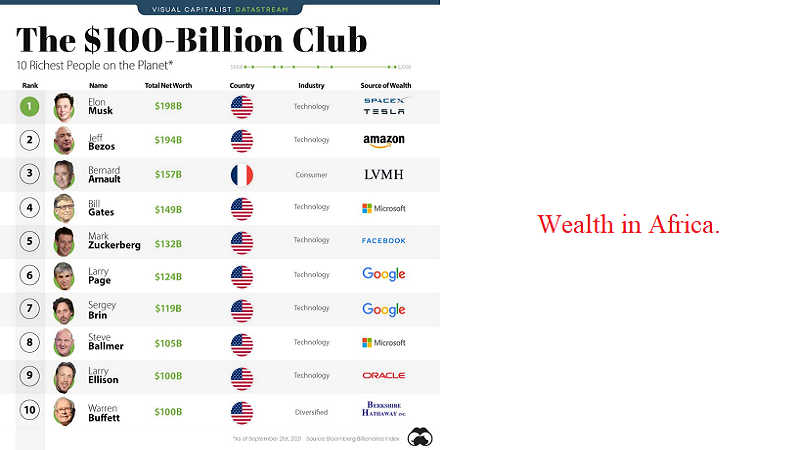
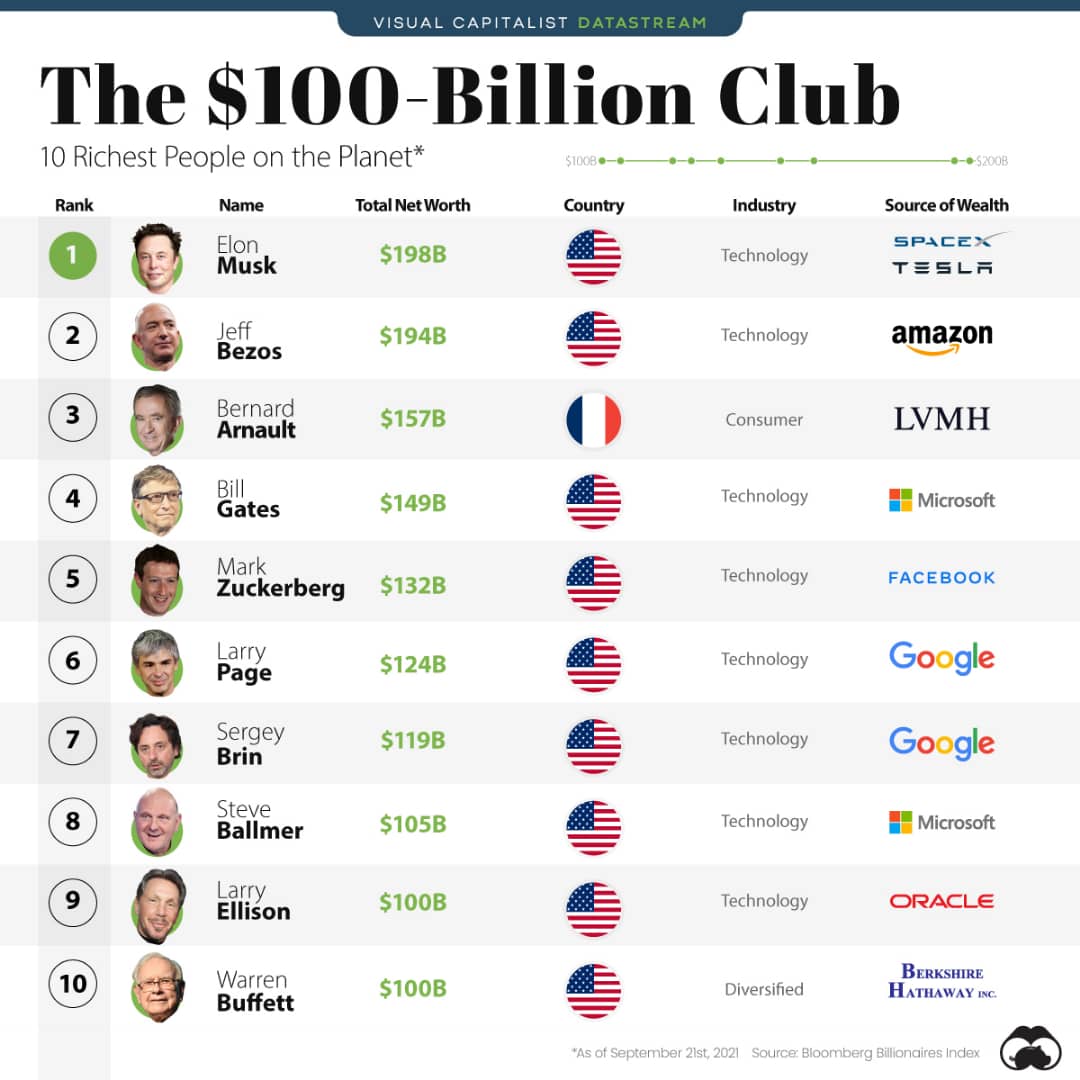
This is the global roll call and the reason why we started Tekedia Capital. Technology is the accelerant that will advance all industrial sectors because every business is increasingly a technology business. Africa* has five unicorns as I write: Interswitch, Andela,  Flutterwave, OPay, and Wave.

I expect this number to hit 15 by the end of 2023 (India has minted 28 so far in 2021). Andela is another non-fintech in that list after Jumia, an ecommerce, until it exited the private club. MENA’s Careem which Uber acquired was also in that club. Largely, by 2030, some of these founders will become the new $100 million club owners just as the people on this list.

Learn what we are doing at Tekedia Capital here.

Tekedia Capital offers a specialty investment vehicle (or investment syndicate) which makes it possible for citizens, groups and organizations to co-invest in innovative startups and young companies in Africa and around the world. Capital from these investing entities are pooled together and then invested in a specific company or companies.

We invest in mainly technology-anchored companies and are sector-agnostic which means those companies could be operating in any industry, including finance, real estate, education, health, logistics, etc. The opportunity is open for individuals in Africa, Africans in diasporas, global citizens in any place in the world, investment groups and organizations around the world.

The Message from ex-Central Bank Governor on Nigeria’s Economic Readiness

0

The ex-governor of the Central Bank of Nigeria, Alhaji Muhammad Sanusi, delivered this message during the closing ceremony of the Kaduna Investment Summit, according to Daily Trust.

Only eight of every 100 Nigerians who start primary school complete university.

“Globally, work is being redefined; 30 to 40 per cent of workers in developed economies will need to significantly upgrade their skills by 2030. And what are the major drivers of this redefinition? ICT and remote working, which we have seen even here with COVID-19.

“There is increased automation and artificial intelligence. Very soon, robot will take over work in most countries and those who would have job are those who operate the robots, manufacture the robots or service the robots.”

Alternative energy sources

“A few months ago, Germany was able to produce enough renewable energy for the entire country’s need. Today, we are having difficulties selling Nigerian oil. So, not only are we having problems producing, even when we produce, the market is not there.

“So, this is forcing a change, and for us a country that depends on oil, things need to change.”

Skill creation for the young people

“Data is one of the most crucial support that can be given to entrepreneurs for innovation,”

While calling on government to encourage market access, he said, “If Kaduna state government continues with its e-government plan, it will be a big market itself and it will encourage investment which are all knowledge economy aspiration and a shift in government spending to match the priority.”

Solving Electronic Frauds In The Nigeria’s Banking Sector

0

Penultimate week, I rigorously engaged one of my experienced colleagues in an all-inclusive talk as regards the banks, financial institutions generally.

It’s noteworthy that, as tech experts, we were more concerned about how much and far the key players of the said sector had thus far fared while trying to inculcate tech-driven measures into their extant policies. As a policy analyst, I took time to x-ray the banking policies.

As some individuals in a certain quarter would – albeit ignorantly – strongly dispute the ‘goodness’ and remarkable activity of the banking sector, some others will ceaselessly defend the ‘inevitable role’ of the industry even with the last drop of their blood.

The above argument was the basis of my discussion with the colleague. In our individual understandings, we tried to examine the merits and demerits of the financial institutions at large, especially with the advent of the digital age.

Bank as an institution has indeed tremendously enabled mankind to jettison the archaic pattern of saving money and other valuables, thereby averting a whole lot of troubles usually characterized by the said method.

The bank as a sector has in recent times obviously contributed to countless economic growth recorded by both individuals and entities, particularly a given country or bloc as might be the case.

Regarding savings, the bank creates an unquantifiable opportunity for the human race, businessmen and traders in particular, to on a daily basis safe-keep their monies and assets towards experiencing a better ease of doing business or trading.

The bank has thus far arguably saved people from a lot of tensions, because it has created and maintained an avenue where anyone, regardless of status, can easily deposit his/her money without exercising any element of fear concerning safety.

With the introduction of the ongoing Consolidation Policy of the Central Bank of Nigeria (CBN) as ably initiated during the reign of Prof. Charles Soludo, it is now certain that any amount of money/asset kept, or deposit made, in any commercial bank domiciled within the country is certainly safe.

The reliability of commercial banks are presently well guaranteed, and such can at any time be proven by any financial or policy analyst. This is the sole reason people from all walks of life can be seen currently trooping into banks to make deposits of valuables.

And with the existence of the newly introduced Cashless Policy by the apex bank, people can now make transactions from the comfort of their respective bedrooms, with ease.

The cashless policy, with the aid of tech-driven measures, has really assisted the banking sector in curtailing several inconveniences and stresses faced by their personnel as well as the clients.

The aforementioned policy has equally hitherto helped the sector to alleviate all sorts of physical social ills usually experienced by the banking industry, such but not limited to as armed robbery, to a reasonable extent.

Before now, with much cash flow in circulation, armed robbers had greater opportunity to physically invade people’s privacies, be it offices, shops, residences, or on the roads, thereby forcefully making away with their hard-earned money.

However, it’s very imperative to acknowledge that – on the contrary – the advent of the Information Technology (IT) mechanism in the banking sector has constituted tremendous unbearable non-physical ills popularly known as electronic/cyber frauds. These crimes aren’t physically perpetrated like in the case of armed robbery.

Electronic fraud, as the name implies, pertains to all kinds of ills emanating from the use of electronic gadgets or equipment to include computer and cell phones, among others.

The IT remains the major aid of the ongoing modern system of banking. It’s worthy of note that the said mode of technology cannot be possible without the use of electronic devices and mechanisms such as computer and the internet, as well as networking.

This electronic methodology, since inception in the banking sector, has profusely been characterized by countless frauds. It’s worth noting that the electronic ills can only be possible via a manipulation called hacking.

It’s only when one’s electronic belonging – including personal and bank accounts – is hacked, that the criminal would have the opportunity to perpetrate any type of intended crime that could cost the unsuspecting person a fortune. We must come into terms that anybody can fall victim of this dastardly act.

So, we can at this point wholly comprehend that though the advent and sustenance of the IT in the banking sector has majorly assisted in solving a whole lot of plights and crises, it has made millions of people victims.

In various fora and platforms, I’ve extensively analyzed several issues and ills pertaining to electronic (internet) hacking. In my candid words (analyses), I’ve taken time to advise that, for us to enjoy or appreciate the use of electronics, we must be well and aptly prepared to make, introduce and maintain sound policies, either as separate individuals or entities.

As a group of people called Nigeria, the corporate body that’s in charge of the country’s banking system in its entirety must at this digital age be more concerned on how to strategize with a view to ensuring that the existence of tech-driven measures doesn’t end up causing more harm than good to the entire system.

The above can only be duly achieved by introducing and maintaining a wholesome and reliable policy-making unit in the institution. Hence, the CBN mustn’t relent in making this happen within its jurisdiction.

As these merchants try to make profit in the lucrative banking business while helping the public safeguard their fortunes or treasures, they as an institution must equally create corporate guidelines that would help their clients avert various troubles liable to befall them.

On corporate policy, banks must be well tutored on the compelling need to create more secured online Apps or softwares by engaging reputable IT experts. Similarly, a standard IT unit ought to be maintained in their respective branches.

On individual policy, the users of the computer Apps must on the other hand be thoroughly sensitized on how best to protect their online transaction identities and details at all times. This measure must equally involve respected and reliable professionals.

The bitter fact remains that, as sophisticated technologies evolve, the criminally-minded persons or entities in the system would strive to take advantage of the development at the expense of the unsuspecting users.

This is the reason corporate bodies and individuals are regularly advised to endeavour to be wiser than the criminals just as mankind is being advised by the Holy writ to be smarter than the devil. Hence, the educational institutions, on their part, must invariably be ready to inculcate the required expertise into the IT learners or trainees.

Let’s be driven by the fact that though we are not anymore – or have left – where we used to be, we still have an enormous distance to cover towards arriving at the desired destination. 

CNN Quits Facebook in Australia Over Court Ruling

0

CNN has become the first American news outlet to stop using Facebook in Australia to share content. The decision is in response to the recent court ruling in Australia, which says that media companies will be held responsible for comments people post under articles on Facebook.

The news outlets said it had appealed a lower court ruling along with three major Australian news organizations, arguing that they could not be held responsible for what readers say under news articles, but it was dismissed.

In an effort to beat the ruling, CNN said it approached Facebook and asked if the tech firm would “support CNN and other publishers by disabling the comment functionality on their platform in Australia,” according to a statement issued by a CNN spokesperson, who said that Facebook “chose not to do so.”

“We are disappointed that Facebook, once again, has failed to ensure its platform is a place for credible journalism and productive dialogue around current events among its users,” the CNN spokesperson said, adding that the media outlet will continue to publish on its own platforms in Australia.

The turn of events leaves CNN with no option than to quit the social media platform entirely in Australia, choosing not to share news contents on Facebook anymore.

CNN said it asked Facebook to offer a Page-wide setting to turn off comments in Australia. Instead, Facebook provided instructions for how the media organization could disable comments post by post.

Facebook has a comment disabling tool it launched in March, which allows people and publishers with Pages to turn off comments to posts, or otherwise limit the ability for people to comment to selected Pages and profiles. But it is not applicable in this case.

According to CNN, a Facebook spokesperson said in a statement that the company supports the “ongoing reform of Australia’s defamation law framework” and looks forward to “greater clarity and certainty in this area.”

“While it’s not our place to provide legal guidance to CNN, we have provided them with the latest information on tools we make available to help publishers manage comments,” the spokesperson said.

Where it all started

In 2016, an Australian youth detained in the youth detention system, was maltreated. His abuse was scandalous and prompted the youngster to sue Fairfax Media Publications, Nationwide News and Australian News Channel because comments made on their Facebook pages accused him of crimes his attorney says he did not commit.

The turning point came with the ruling, which now makes it possible for media outlets to be held responsible over the comments of their followers on Facebook.

Although the media companies argued that they shouldn’t be held responsible for user comments, and appealed the ruling of the trial court, the appeal court dismissed it, ruling that “appellants’ attempt to portray themselves as passive and unwitting victims of Facebook’s functionality has an air of unreality.”

“Having taken action to secure the commercial benefit of the Facebook functionality, the appellants bear the legal consequences,” the High Court wrote, adding that the appeals court “was correct to hold that the acts of the appellants in facilitating, encouraging and thereby assisting the posting of comments by the third-party Facebook users rendered them publishers of those comments.”

CNN said the High Court’s ruling did not resolve the underlying defamation case against the publishers, and it has since returned to the Supreme Court of New South Wales.

This new development is the latest in the year, adding to the proposed legislation that saw Facebook at loggerheads with the Australian government early in the year. In February, the Australian government had proposed a legislation that force Facebook and Google to pay news publishers for their contents used on their platforms. After Australia passed the News Media Bargaining Code, Facebook immediately blocked people in Australia from seeing news contents. But the social media platform rescinded its decision after negotiating changes with the Australian government.

The High Court ruling means news outlets will only have to choose between taking responsibility for comments made under their posts and quitting Facebook in Australia. With the latter being the shortest way to avoid trouble, expect many more news outlets to follow the steps of CNN.

Welcome DMB Innovators To Tekedia Institute

0

Tekedia Institute rejoices with all the women accepted into DOCTOR MUHAMMAD BALOGUN FOUNDATION to spend 8 weeks in our Institute. DMB Foundation through its annual Women Enterprise Program supports small businesses to scale their missions. Recently, it selected Tekedia Institute as its training and development support partner. We thank Dr. MKO Balogun for the opportunity to serve these amazing women innovators through the advancement of entrepreneurial capitalism. Thank you.