DD
MM
YYYY

PAGES

DD
MM
YYYY

spot_img

PAGES

Home Blog Page 5556

Nigeria Records N2.293 Trillion Budget Deficit, As Debt Servicing Takes Toll

2
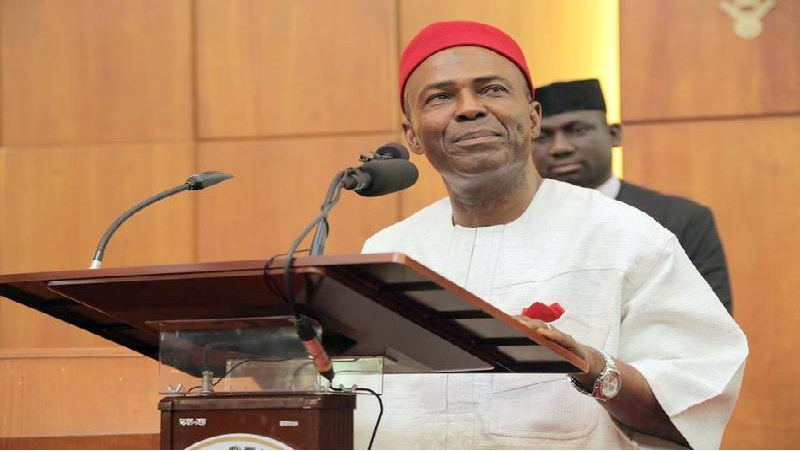
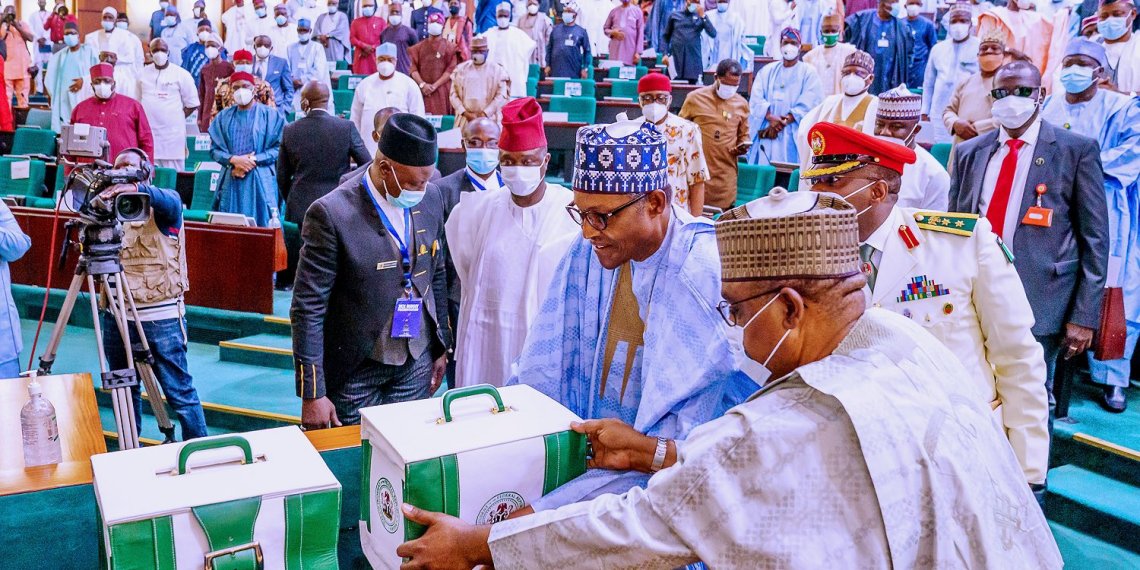
Presenting the budget proposal

Nigeria’s whirlwind of revenue misfortune, compounded by COVID-19-induced economic strains and rising debt profile,  keeps taking toll on its financial status and increasingly downsizing the country’s budget implementation.

For the first quarter of the year, the federal government of Nigeria recorded a budget deficit of N2. 293 trillion, Minister of Finance, Budget and National Planning, Mrs. Zainab Ahmed said in the First Quarter (Q1) Budget Implementation Report (BIR).

The BIR said: “The revenue and expenditure outturn of the Federal Government resulted in a fiscal deficit of N2.293 trillion during the quarter (6.43 percent of the 2021 quarterly GDP).

“The first quarter deficit was N1.070 trillion (87.51 percent) higher than the projected quarterly fiscal deficit of N1.222 trillion. The 2021 fiscal deficit was also higher than the N1.377 trillion deficit recorded in the first quarter of 2020. The deficit was partly-financed through domestic borrowing of N550.0 billion.”

N1.1 trn revenue

Vanguard highlighted the figures contained in the BIR as follows: The federal government total revenue stood at N1.091 trillion in the period under review.

This comprises N299.33 billion (27.43 percent) oil revenue and N792.09 billion (72.57 percent) non-oil revenue.

The amount received was N905.19 billion (45.34 percent) below the quarterly budget projection but N99.17 billion (9.99 percent) above the N992.25 billion reported in the first quarter of 2020

N3.4 trn expenditure

On the expenditure side,  the government  spent the sum of at N3.384 trillion, representing N502.29 billion (17.43 percent) and N1.014 trillion (42.80 percent) above the N2.882 trillion quarterly projection and N2.370 trillion reported in the corresponding quarter of 2020, respectively.

A breakdown of the expenditure indicated that a total of N1.096 trillion was spent on non-debt recurrent expenditure in the first quarter of 2021. This represents a decrease of N313.99 billion (22.26 percent) and N50.79 billion (4.43 percent) below the quarterly estimate of N1.410 trillion and N1.147 trillion recorded in the first quarter of 2020 respectively. Statutory Transfers was N124.13 billion during the review period.

A total of N384.52 billion was released and cash backed in the first quarter of 2021 for the implementation of 2021 capital projects and programmes of MDAs.

N813b Debt Service

Total Debt Service in the first quarter of 2021 stood at N813.10 billion, indicating an increase of N32.01 billion (4.10 percent) above the N781.10 billion projected for the quarter.

The sum of N581.27 billion was used for domestic debt servicing, while N231.83 billion was used for external debt service during the period under review.

The amount used for domestic debt servicing was N35.40 billion (6.48 percent) above the projection for the quarter.

Oil production

The BIR showed that average oil production and lifting (including Condensates) in the first quarter of 2021 was 1.72mbpd and 1.51mbpd respectively.

It said, “Oil production was 0.14mbpd (7.53 percent) below the 1.86mbpd benchmark for the 2021 Budget. The volume of oil production in the period was also 0.12mbpd (7.69 percent) above the 1.56m bpd reported in the fourth quarter of 2020 and 0.38mbpd (18.45 percent) below the 2.06mbpd recorded in the first quarter of 2020.”

N3.9b trade deficit

Nigeria’s total merchandise trade in the first quarter of 2021 stood at N9.757 trillion, representing 6.99 percent and 14.13 percent increase when compared to the values recorded in fourth and first quarters of 2020 respectively.

The export component of this trade stood at N2.907 trillion, representing 29.79 percent of the total trade, while import was valued at N6.850 trillion, representing 70.21 percent. The higher level of imports over exports resulted in a trade deficit (in goods) of N3.943 trillion.

Oil accounts for 66.38 % export

The value of crude oil export stood at N1.929 trillion (66.38 percent) of the total export while non–crude oil export accounted for 33.62 percent of the total export recorded in the review period.

Paying off Nigeria’s Public Debt Stock of N33.107 trillion has a price that infrastructural projects captured in annual budgets will have to pay. To cap it, the federal government is still making a move for fresh loan of $5.2 billion. Mrs. Ahmed said that the federal government spent 98% (N1.8 trillion) of the total revenue generated in the first five months of 2021 on debt servicing.

Going by this, a fresh loan will mean that Nigeria will need more revenue than it’s generating to service loans – that will guarantee higher deficit in future budgets.


“merchants must accept e-naira as a means of payment” – Central Bank of Nigeria

0

“Today, anywhere you present naira to pay, compulsorily it must be accepted because that is our fiat currency. So, the same way naira is accepted that you can’t reject it, is the same way e-naira must be accepted. Anywhere in this country where e-naira is presented, it must be accepted. So, merchants must accept e-naira as a means of payment.” 

“The liability of the e-naira money is directly on CBN which is similar to the cash you hold. The liability of the cash you hold today rests with the CBN. So, it gives Nigerians the opportunity to bank with CBN,”- Mr. Musa Jimoh, the CBN Director of Payment System Management

  On Oct 1, 2021, Nigeria will launch a digital currency called e-naira.

When Uber CEO, Dara Khosrowshahi, Prefers The Train

0

People, that is Uber CEO, Dara Khosrowshahi. He is on a train – and reading a book. Sure, it is possible that the UN General Assembly might have pushed all Uber drivers  out of New York (!) for the crusader of ride hailing to be advertising subways and trains. For me though, there is a message: America has a denominator for all humans.

Otherwise, how do you explain that a man who runs a company which can use just 40% of its value to buy all the stocks in the Nigerian Stock Exchange can touch the train? Nigeria needs to look at its sheer values as a nation!

I see CEOs of insurance companies which generate less than $8 million annual revenue flying first class on international flights, out of Lagos, and could not understand where the conviction came from.

A working society elevates humans. Nigeria certainly needs to work better.


Photo Source: Twitter

Comment on LinkedIn Feed

Poverty of the mind does so much damage on its host, it makes you see everything from the lens of desperation and unquenchable desires.

Those born into wealth whose ancestors were also wealthy, rarely waste money, because they were trained to understand wealth as fortune bestowed on them, so even when they work hard to maintain the family fortunes, they still see all their possessions as privileges, and they never brag about them.

The challenge is often from the new found riches, where you have concentration of rich fools, they were neither trained in the things of money nor understand its purpose. To this second group of people, it’s always about the fear of not wanting to return to poverty, and in that desperation, they steal, loot, acquire all manner of things they do not even understand their functions; they want to taste every food, drink every wine, visit everywhere, because their better life embodies lack.

It’s a long walk to freedom, because neither poverty nor wealth is defined by size of bank account, rather by richness of one’s mind; an eternal paradox of some sort.

A Holistic Scrutiny of Nigeria’s Science & Tech Sector

0

Nigerians were rightly informed, a few weeks back, that the country’s Science & Technology Ministry had been renamed to Science, Technology & Innovation. One might ask; was that really the remedy to the lingering lapses?

I have chosen to emphatically lay emphasis on the country’s technology sector, which is borne out of my quest to see a Nigeria where the citizenry wouldn’t depend on foreign products or services as they struggle for survival and greatness.

The current blurry outlook of Nigeria’s tech sector doesn’t need a flurry of activity, but holistic, from those who have been delegated to salvage it, or sieve the flour, if we must get it right. It’s on this premise I thought it wise to painstakingly observe and study the area in question.

It’s quite appalling – to assert the least – that at this age, our education sector as regards science and technology is still operating in the past. On a regular basis, countless of our engineering graduates could hardly design a device related to their field of study let alone constructing it.

The aforementioned educational lapse is not unconnected with the dilapidated learning environment found in our various higher institutions. These citadels can hardly boast of standard laboratories and workshops needed to inculcate the required technical skills into the students’ minds.

Pathetically, a few of the graduates who were privileged to acquire the necessary skills, perhaps owing to their individual talents and abilities, had been compelled to leave the country for elsewhere in search of a better accommodating environment suitable for their quest. The brain drain has continued unabated that it’s seriously telling on the system.

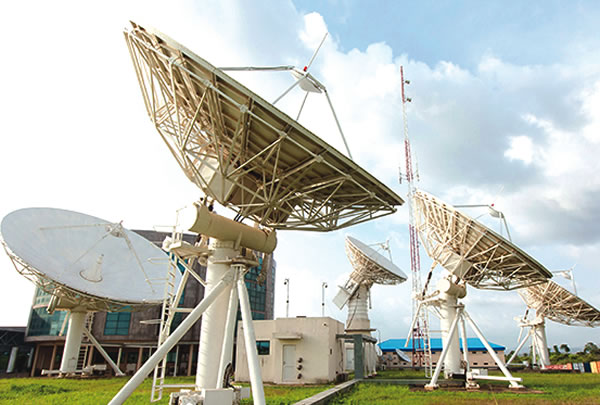
S&T initiative (NigComSat(

The ongoing lack of adequate facilities invariably witnessed in our schools is the reason many have overtime been forced to patronize foreign education, hence posing a severe threat to the economy of the acclaimed giant of Africa.

Aside from learning, the universities aren’t doing enough regarding research work. Basically, they were not to function as institutions meant solely for imparting knowledge, but equally a place where people or corporate bodies can seek services on all forms of research.

It’s bad that these citadels are not duly funded by the respective governments to enable them to commercialize their patents. It’s noteworthy that every technological invention is directly dependent on a certain research activity.

The health angle isn’t left out while dissecting the lingering ugly physiognomy of Nigeria’s tech sector at large. Nigerians quickly rush abroad when suffering from an ailment that ordinarily could easily be taken care of here, probably as a result of the unfriendly outlook of both private and public hospitals cum health centres domiciled across the country.

We have well-tested health/medical experts but occurrence of an uncalled environment deprives them the opportunity to practise favourably. This particular menace has also resulted in colossal brain drain, thereby making our tech sector cry woefully.

In the area of agriculture, the story isn’t different. The government has continually clamoured for improved farming activity, still the country dwells on a crude system of cultivation and harvest. It’s not anymore news that the Nigerian State is yet to get it right when it calls for mechanized farming despite the apparent willingness.

What about the manufacturing sector? It would candidly be an understatement if one opines that this area is really frowning at us. In spite of the outpouring promises coupled with seeming frantic effort to uplift it, the stakeholders involved are still seemingly marred by apathy. All our various ancient production firms have virtually gone into moribund, and till date, nothing tangible has been done to revive them.

As we collectively celebrate Nigeria amidst her 61st Independence Anniversary, it would be nice, wise and caring of us to as well urge her to embrace a sober reflection with a view to bringing a turnaround in the country’s system, particularly the tech sector.

It’s pertinent to acknowledge that to address a certain existing anomaly, you must be ready to fish out its rudimentary attributes or fundamental causes. This is the only way such a plight could be tactically tackled.

The truth is that we, as a people, have in recent times neglected as well as abused our collective tech prowess. We need to revisit it towards making amends. The governments at all levels must take drastic action to resuscitate our numerous technical colleges. There’s a compelling need to inject more life into these institutions, which bear the foundation of the nation’s tech sector.

We ought to equally reawaken the essence of the ongoing Students’ Industrial Work Experience Scheme (SIWES) being participated by the science-oriented learners in our various universities and polytechnics.

Similarly, the engineering students should be meant to undergo a one-year compulsory training section, which ought to serve as a prerequisite to the national youth service, just as it’s done by the medical cum pharmaceutical students.

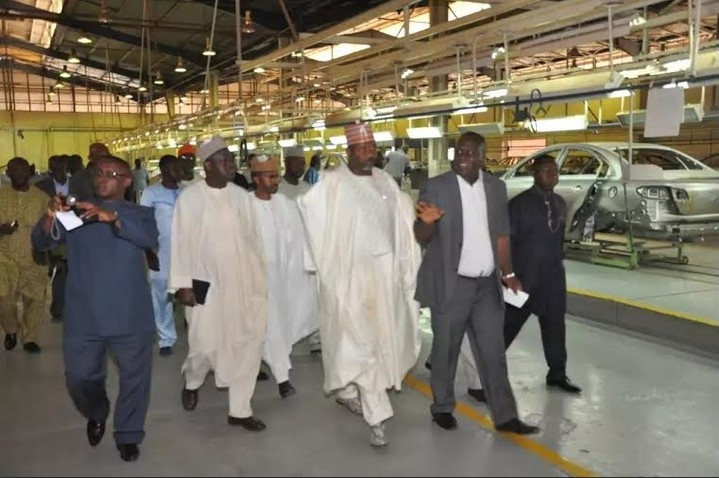
Innoson plan

Inter alia, we need to in earnest rejig the country’s extant policies to end the lingering mono-economy era. For instance, the desire to revive the country’s downstream sector in the petroleum industry requires a viable and strict policy.

It’s apparent that overtime policies concerning the anticipated revival of the downstream sector have profusely been compromised, perhaps owing to lack of political will and other related pranks being played by the government at the expense of the governed. This anomaly must be addressed in earnest if we, as a people, are truly concerned to get things right.

The recent signing of the Petroleum Industry Bill (PIB) into law, by President Muhammadu Buhari, is just a stepping stone. There must be a thorough implementation of the entire clauses therein.

We must, therefore, seriously learn to jettison all our old patterns of doing things as well as every obnoxious norm being upheld by those entrusted with public responsibilities, with a view to embracing an era of total positive turnaround.

Technology, particularly Information and Communications Technology (ICT), is already here with us. Hence, we mustn’t shy away from facing the realities squarely.

This is the prime reason the government is expected to throw every needed support behind the activities of the already existing indigenous tech manufacturers such as the likes of Innoson Motors Company, among others.

It’s disheartening that 61 years after, Nigeria isn’t yet self-reliant, technology wise, hence the need not to rebuff the above candid suggestions.

Changing or rebranding the name of the Science and Technology Ministry isn’t the answer, but an apt thought, policy direction and action.