DD
MM
YYYY

PAGES

DD
MM
YYYY

spot_img

PAGES

Home Blog Page 5558

11 Smart Devices That Will Ease Your Life

0

It’s amazing how many things modern technologies have brought to other lives. From entertainment services, like TonBet or Netflix, to education platforms, like Coursera. But with modern technologies new gadgets appear. These are the most useful devices that have just been released but have already changed our lives.

Smart Light Bulb

Now it’s time for the light bulbs to get smarter. With this device, you can not just turn on the light, it allows you to control the brightness and temperature of the light in the room. A huge number of light circuits can be configured with a smartphone – the bulb is connected via Wi-Fi. Advanced models have voice control, so you can simply say, “Turn on my light!” – and not have to get up off the couch.

Smart Socket

If you have a smart bulb, you also need a smart socket. This device, too, connects via Wi-Fi and is controlled via an app on your phone. Depending on the model, with a smart outlet you can control power and energy consumption, it has an on/off setting, automatically turns off in bad weather, supports voice messages, and is dust and moisture-proof.

Gyroscope Aerial Mouse

It sounds like science fiction, but in fact it’s a remote control for your TV. You can’t do without it if you have the latest smart TV with a thousand functions. The mouse can transmit hand movements to the TV cursor, just like a game console joystick. By the way, it also comes in handy as a remote control for gaming: the device can be connected to the TV, game console, or computer.

Wireless Charger

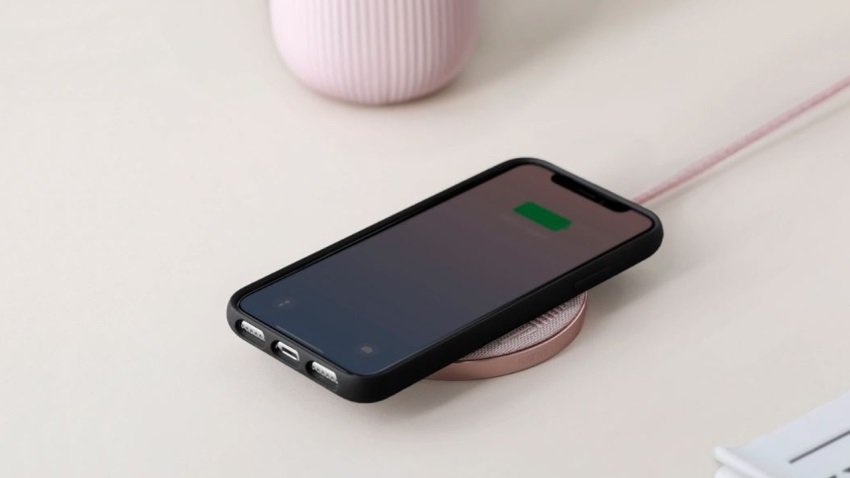
This device is a great choice for those who have a lot of gadgets and need to charge them all. Smartphone, smartwatch, wireless headphones, audio headset – with this device, you can charge everything at once without wires.

Robot Vacuum Cleaner

It’s time to finally say goodbye to the broom. Even the most budget-friendly version of the robot vacuum cleaner can clean most types of surfaces in the house. With the help of the gadget, you can schedule cleaning for any time and control it with your smartphone. The robot can even return to the recharging station on its own if the battery runs out.

Smart Lock

It’s a great gadget that will greatly simplify your life. This smart lock is installed on top of the usual one. This lock is controlled by a mobile device. Now you do not forget about whether you have closed the door or not. What’s more, another important function of this device is that you will immediately receive a notification on your phone in case of unauthorized opening of the door.

This lock can be installed on any door (house, shed, garage), it can also be installed on the barrier.

Compact Surveillance Cameras

Compact size, discreet surveillance, built-in smoke and gas detectors. Modern surveillance cameras are a full-fledged assistant who stays in charge of the house when the owner is away. With such a camera, you can remotely monitor what is happening in the apartment. The question of whether you forgot to turn off the iron or gas is now closed forever. You won’t forget or forget, while the “smart eye” gadget captures what is happening with FullHD resolution, gives unimaginable viewing angles and detail, recognizes faces, and – in case of the slightest alarm – reports the signal to your smartphone. It’s amazing how people used to live without such a thing.

Smart Kettle

Boil water for your kettle while still on your way home by pressing a button on your smartphone! This kettle is controlled by an app in your phone. The product has already managed to become one of the most purchased among modern people. Eh, it’s a pity that it doesn’t pour the tea itself and bring it to bed.

Window Sensors

The primary purpose of this system is to protect your home, but these sensors can also perform other functions. For example, if you link them to a smart home system, they can turn off the air conditioner when you open a window, they can turn on the lights when you come home. A thing that doesn’t burn out, but it’s useful.

Smart Tracker

Finally, the gadget that everyone has been waiting for, who wants to “call” a lost item to find it as soon as possible. This “beacon” will help track everything from your car to your baby or cat, not to mention your keys, wallet, passport, and so on. Thanks to the reminder function, you’ll never arrive at the airport without your documents.

Smart Button

This small button can be placed anywhere you need it. It can be used to start/continue the operation of an appliance, one or more at once. The button can also be used as an emergency call. If the child can’t reach the switch, if you need to turn on the air conditioner in the office, turn off the light before going to sleep, call someone in another room without shouting at the whole house. The button we’ve all been waiting for is here.
Combating entrepreneurial stereotypes through education

0
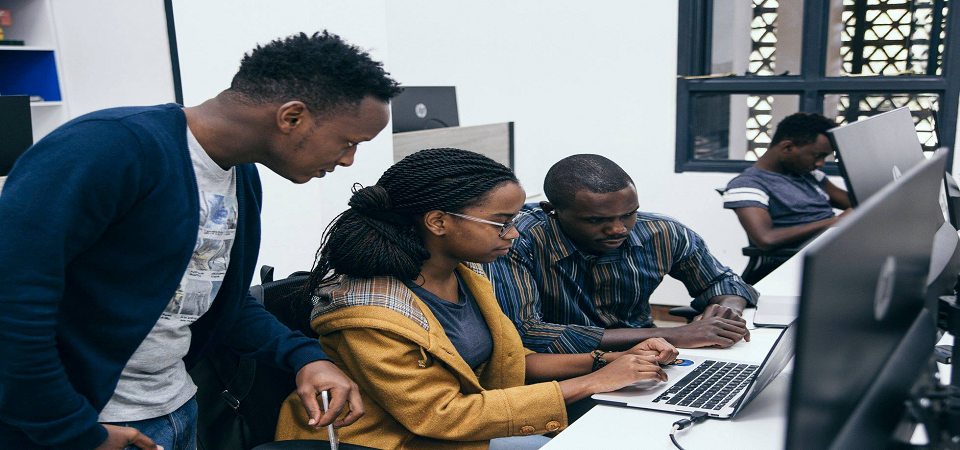
Team at work

The popular stereotype of entrepreneurs such as Steve Jobs or Elon Musk is of heroic individuals battling alone against the odds. These stereotypes are strongly embedded, but they are limiting, incorrectly framing entrepreneurship as attainable only through unique talent and exceptional skill. Recently published research from Chalmers University of Technology, Sweden, highlight how introducing questions of identity into entrepreneurial education can help break down these limitations and yield greater diversity in the field.

“Our research sheds light on the ongoing challenges associated with the prevailing stereotypes in entrepreneurship and its education. Addressing this issue is important for students and educators alike – to raise awareness of how easy it is to overemphasise the common examples of ‘Steve Jobs’ or ‘Elon Musk’, and how restricting these examples can be” explains Chalmers researcher Karen Williams-Middleton, who recently published the scientific article ‘The relatable entrepreneur: Combating stereotypes in entrepreneurship education’ in the scientific journal Industry and Higher Education, together with Stephanie E Raible at the University of Delaware.

“Stereotypes are prominent in entrepreneurship – and therefore entrepreneurial education – and brought into the classroom by both students and educators. They can be a significant limiting factor towards imagining oneself ‘becoming entrepreneurial’. Entrepreneurship educators should therefore aim to provide more and varied examples of entrepreneurship and entrepreneurial individuals. Key to this is training students how to practice ‘identity management’ – understanding and managing other identities they might aspire to, to learn how to ‘filter’ various social media and environmental influences for themselves,” says Karen Williams-Middleton.

Entrepreneurship is often stereotyped as attainable only through exceptional skill and talent, and often characterised exclusively by ostensibly ‘masculine’ qualities. The article raises discussion of stereotyping in entrepreneurship education, by using the stories of two current female entrepreneurs who themselves struggle with the issue. The two candidates were selected for the mixture of similarities and differences they shared, and because, importantly, both had only recently entered into entrepreneurship. Some of the factors investigated included whether they had co-founders, if they had children, if they received financial support from their spouse, and whether they themselves actually identified as entrepreneurs, or ‘small business owners’.

“The stories’ similarities and differences mirror the different perspectives and reactions to social media and other environmental inputs that students may experience themselves, thereby opening up for reflection and discussion. Identity management as an important tool in entrepreneurship pedagogy has previously received only limited research attention,” says Karen Williams-Middleton.

She continues, “the important thing is to be aware of stereotype use; and then to address it. Try to use a spectrum of examples and engage students in discussion about stereotypes and perceptions. It is surprising how easy and quickly we all fall into different stereotypical perspectives. We should – and do – know better, but it still happens, perhaps because of the lack of familiarity beyond the big names that are reified constantly in the media.”

The paper “The relatable entrepreneur: Combating stereotypes in entrepreneurship education” in scientific journal Industry and Higher Education is written by Stephanie E Raible, University of Delaware and Karen Williams-Middleton, Chalmers University of Technology.

Business Growth and Supply Chain, Tekedia Live, Sept 23

0

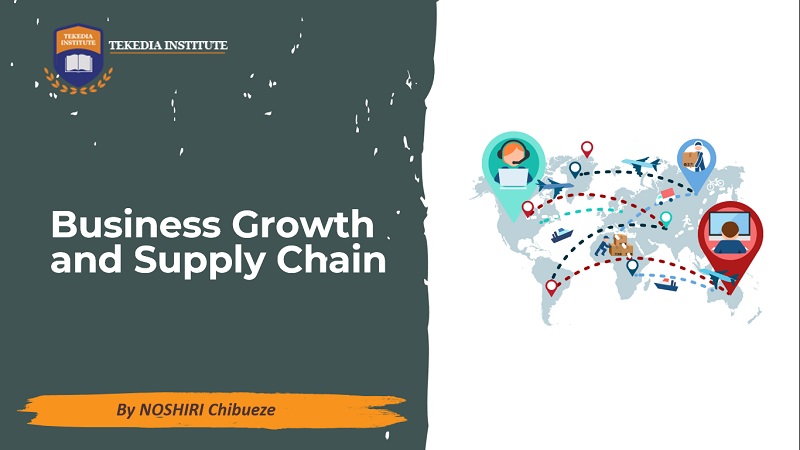
Commerce is supply chain because you cannot have an efficient allocation and utilization of factors of production without an optimal supply chain regime. At Tekedia Institute, we understand that mastering the constructs of supply chain is very catalytic in advancing productivity and growth. Today’s Tekedia Live, the live session of Tekedia Mini-MBA, is on Business Growth and Supply Chain, and would be anchored by an industry veteran of supply chain and logistics.

Thur, Sept 23 | 7pm-8pm WAT | Business Growth and Supply Chain – Chibueze Noshiri, Finance Partner, Barry Callebaut Group, Belgium.

Zoom link in the Board.

The Fate of Science Learners in Nigeria

0

As the days unfold, science and technology continue to gain momentum within the shores of the global community, signifying its inevitable role in contemporary society.

At such a time like this, every nation is required to completely scrutinize the prospects of her science sector. It’s therefore pertinent for Nigeria to, at this critical moment, look inwards in a bid to discover the existing encumbrances surrounding the said field with a view to eradicating them.

There has conspicuously been a tremendous decline in the rate of seriousness among most science students in various levels of learning on the African continent, particularly Nigeria. A scenario of such has over the years served as a nuisance in the area of science and technology.

It’s noteworthy that growth and development is required in every individual to every nation, in every aspect of human endeavor. For development to take place, science and tech must go hand in hand.

Science is fundamentally noted as the study of knowledge, which is made into a system, and depends on analyzing facts. Tech is the outright application of this scientific knowledge. In other words, tech transforms knowledge from science into reality.

The fact is, for any successful economy – especially in today’s quest for knowledge based economies – science and tech are the primary requisites. If any nation relegates the two recipes to the background, the chances of getting herself developed becomes far-fetched, thus stands to be classified as an undeveloped nation.

A country or society that’s not able to prosper on these grounds wouldn’t be able to sustain the lives in it, and might have to depend on other societies for survival alongside other life’s requirements.

Taking a close view of the above exegesis, it’s needless to reiterate that any nation is supposed to take sciences very seriously as if its whole life depends on it.

It, therefore, becomes so pathetic and mind-boggling when realized that Nigeria as a country is being taken aback by her trustees regarding acquiring of science knowledge, or its implementation.

The lingering anomaly, which calls for great concern, can be observed in virtually all existing citadels of learning across the federation regardless of level, ranging from primary to tertiary.

In our primary schools, the pupils are now invariably preoccupied with the notion that science subjects, such as Mathematics and Basic Science, are very difficult to understand owing to the orientation they met in the system. This appalling phenomenon is usually occasioned by the mode of teaching of the class teacher.

Sometimes, fear would be inculcated into the pupils’ mindset by their teacher who would, rather than participate in the actual teaching as expected, take much time to lay uncalled emphasis on why the pupils should see science subjects as tough and different from others. By doing so, the affected pupils would live to consider sciences as monsters, thus would prefer to pay more attention to arts or other available areas.

In the secondary schools, only a few students currently see subjects like Physics, Mathematics and Chemistry as friendly. Those who detest these subjects had nurtured their mentality or psyche with the view that sciences generally are only meant for a certain group of select individuals.

Those who mistakenly chose to be in the science department, in the long run, tend to lose interest in the field and would want to dissociate themselves from the circle.

Funnily enough, in most cases, students would choose to be in the science department when they got to the senior section simply because some of their intimate friends or classmates had chosen to be in that field. This set of persons or learners is often known and addressed as “follow, follow” in Nigeria’s local parlance, and often becomes dropout as a result of inability to cope with the studies when the journey emerges.

This aspect of influence, as highlighted above, remains one of the major attributes of apathy noticed among various science students in most Nigerian secondary schools. It has lingered unabated, yet seems not unlike an endless bedbug.

Nowadays, virtually none pay good attention to the teachings of Pure Mathematics let alone Additional (Further) Mathematics. It’s worthy of note that virtually all existing science-oriented disciplines such as engineering, in the tertiary institutions, basically depend on the knowledge of Further Mathematics on their day-to-day thrive.

This has caused an enormous decline in the number of persons seeking to study engineering and other related courses. The few that secured admission to study the aforementioned discipline, perhaps due to their family background, usually fumbles as the journey progresses. This is so, because the study of engineering and its likes requires people with great passion and zeal as well as strong academic antecedents.

The way out from this conundrum entails three prime approaches. One, the various primary and secondary schools ought to endeavour to engage qualified teachers that would imbibe the required mindset and knowledge into the pupils and students, as the case may be.

Furthermore, guidance and counseling – that has almost gone into extinction in the Nigeria’s school curriculum – ought to be revived. A functional and viable mentorship mechanism would enable the learners to go for only the needful, or what would be suitable for their respective futures.

Parents and guardians, on their part, are expected to pay more attention to whatever their wards do as regards academics. Learning begins at home, hence the needed parental support mustn’t be overlooked.

Inter alia, governments at all levels among other relevant stakeholders should endeavour to provide the required facilities that would enable the affected people to appreciate science teachings. The management of the private learning institutions must also be mandated to follow suit.

For this growing apathy to become a thing of the past, every concerned stakeholder, as mentioned herein, must take into cognizance that science is and shall remain the only tool that can fast-track the anticipated economic diversification.

Tekedia has a new contributor – Fred Nwaozor

0

Tekedia has a new contributor. He is Fred Nwaozor. This is his bio and he will be writing on this handle.

Fred Nwaozor – tech expert, author, policy analyst, blogger, public speaker and rights activist – has been a columnist with different national dailies in Nigeria for almost two decades now. He equally writes for the Federal Radio Corporation of Nigeria (FRCN). He’s well known for his multi-tasking prowess.

He’s an ace media strategist and voracious writer, and has thus far authored and published numerous articles, essays, papers and books. He’s a regular contributor and peer reviewer to various internationally-noted academic journals. He writes for Tekedia on issues bordering on Tech, Industry and Economy.

He’s popularly known as TheMediaAmbassador, and has hitherto been a celebrity consultant in the media industry, image making and Information & Communications Technology (ICT) for several years. He’s currently a researcher & analyst with the revered Federal University of Technology Owerri (FUTO), Nigeria. He lectures in other citadels of higher learning within the shores of the country.

He has degrees and certifications in various fields, including Industrial Physics, Electrical & Electronic Engineering, as well as Communication Engineering, and is an ardent researcher in Electronics & Telecommunications in many years standing.

The enigma is presently resident in Nigeria, Owerri precisely, and hails from Awo-Omamma in Imo State, Nigeria. He passionately relaxes with reading, travelling, playing Table Tennis, Scrabble, Snooker, as well as listening to good music.