DD
MM
YYYY

PAGES

DD
MM
YYYY

spot_img

PAGES

Home Blog Page 5571

Femi Fani-Kayode Joins APC As the Big Exodus Continues

1

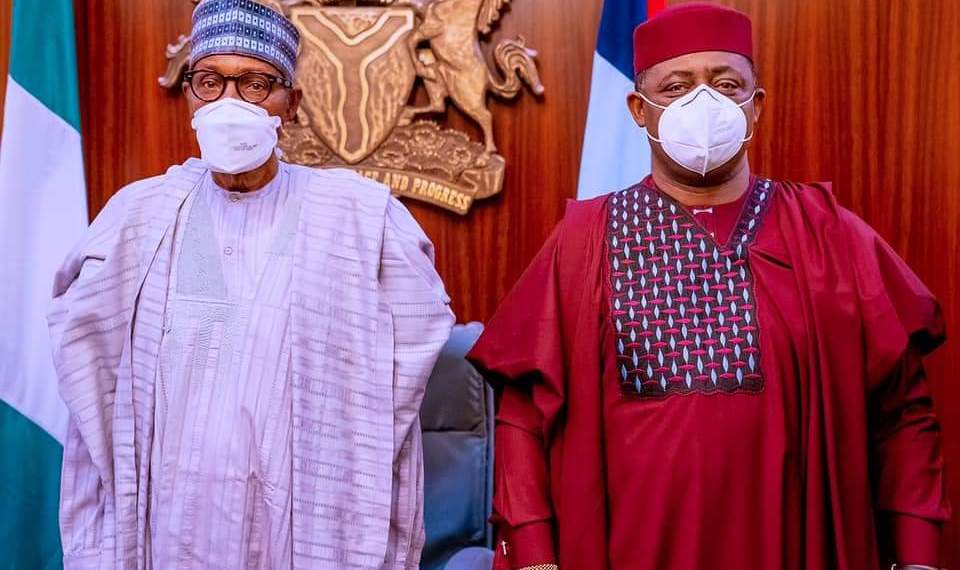
Politics in Nigeria – only fools and simpletons risk their lives to defend the words and ambitions of politicians. Today, former Aviation Minister, Femi Fani-Kayode, has officially dumped the Peoples Democratic Party (PDP) for the ruling All Progressives Congress (APC), Premium Times reports.

For FFK, if politics is an industry in Nigeria, APC holds the largest market share and the positioning is better therein. In the next 8 months,  expect many more to move. Mr. President welcomes the new convert.

We’re still waiting for the big masquerade to come out.


Buhari’s Legacy And Great Unification of Southern Nigerian Governors

2

President Buhari has an unusual legacy: his policies or lack thereof have accomplished the unthinkable – unification of Southern Nigeria on some generation-shaping issues. As I read through the lines of the communique issued by the governors of Southern Nigeria, I could not believe the words: 

“Expressed satisfaction with the rate at which the States in the Southern Nigeria are enacting or amending the Anti- Open Grazing Laws which align with the uniform template and aspiration of Southern Governors and encouraged the States that are yet to enact this law to do so expeditiously.”

… the meeting resolved to support the position that the collection of VAT falls within the powers of the States.”

Buhari is intriguing: it took only his efforts to get these things done! Sure, I am not sure he would appreciate the outcomes. Yes, he made open-grazing to become an issue, due to his siddon-look on conflicts in farming communities, pushing the matter all the way to enter into state laws. What happens next in Nigeria?

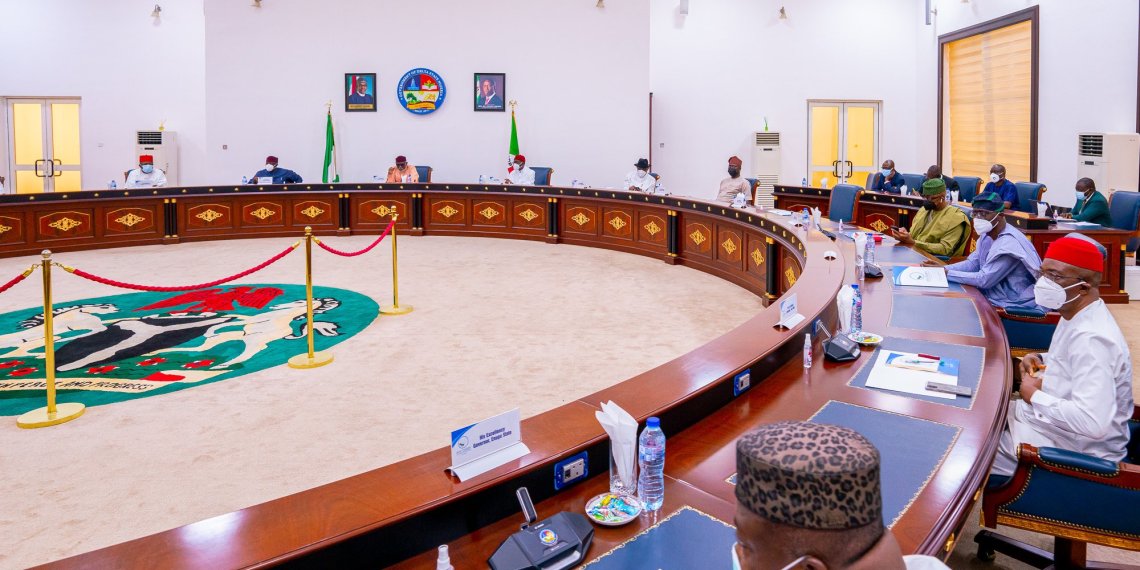
COMMUNIQUE ISSUED AT THE CONCLUSION OF THE MEETING OF THE GOVERNORS OF SOUTHERN NIGERIA IN THE GOVERNMENT HOUSE, ENUGU, ENUGU STATE, ON THURSDAY, 16TH SEPTEMBER 2021.

READ ALSO:  How we handled $227,000 Nigeria Women Journalists NAWOJ fund – President

The Nigerian Southern Governors’ Forum at its meeting of today, Thursday, 16th September 2021 held in the Government House, Enugu, Enugu State reviewed the state of the nation and the progress of implementation of the decisions reached in her previous meetings and further resolved as follows:

  1. Expressed satisfaction with the rate at which the States in the Southern Nigeria are enacting or amending the Anti- Open Grazing Laws which align with the uniform template and aspiration of Southern Governors and encouraged the States that are yet to enact this law to do so expeditiously.

  2. Encouraged the full operationalization of already agreed regional security outfits; which would meet, share intelligence and collaborate, to ensure the security and safety of the region.

  3. Reaffirmed its earlier commitment to fiscal federalism as resolved at the inaugural meeting of the Forum held on Tuesday, 11th May 2021 at Asaba, Delta State and emphasized the need for the Southern States to leverage the legislative competence of their respective State Houses of Assembly as well as representation in the National assembly to pursue its inclusion in the Nigerian Constitution through the ongoing constitutional amendment.

4. Following from paragraph “3” above, the meeting resolved to support the position that the collection of VAT falls within the powers of the States.
  1. Expressed satisfaction with the handling of issues around the Petroleum Industry Act (PIA) and ownership of Nigerian National Petroleum Corporation (NNPC) by the larger Nigerian Governors’ Forum.

6. Reiterated their earlier position that the next President of Nigeria must come from the Southern part of Nigeria in line with politics of equity, justice and fairness.

7. The Forum thanked the host Governor, Rt. Hon. Ifeanyi Ugwuanyi, and chose Rivers State as the next host for the Southern Governors’ Forum meeting in November 2021.

Arakunrin Oluwarotimi O. Akeredolu, SAN
Governor, Ondo State and Chairman, Southern Governors’ Forum

A Tekedia Capital portfolio firm will begin its global expansion via Canada

0

We got great news: a Tekedia Capital portfolio firm will begin its global expansion via Canada. One of the world’s finest builders of digital companies picked our firm. As the official news arrives next month, I want to congratulate the team for continuing to deepen the nativity of African business values within the tenets of global entrepreneurial capitalism. With those, we will win more markets and territories.

I love Canada – it is a very generous nation and it is rising. We’re truly honoured for the opportunity to be in the land of the red maple leaf.

Tekedia Capital – next cycle begins next month here.

Early stage investing in technology-anchored startups and companies. Our opportunity antenna and grassroot connections with innovators enable us to see patterns as they develop.  We invite you to partner with us as we nurture and build category-king companies in Africa and beyond, and in the process advance citizens, communities and nations. At Tekedia Capital, we fund the foundations of the NEXT African economy.

As Retail Credit Reshapes, Goldman Sachs Acquires Buy Now Pay Later GreenSky for $2.2 billion

3

In America, when you swipe your credit card, your bank has given you a loan which if you do not pay off at the end of the month, will attract an interest. Yes, that process of issuing a rolling loan via a credit card simplified what typically would have required going to a bank, filling a form, getting approval, etc.

The banks made tons of money through this business model. Until a generation of young people came. Yes, the millennials hate paying for interests: they are value seekers. And because of that, a new generation of innovators invented a new product which is called Buy Now, Pay Later. 

What this does is magical: you can buy most things and spread the payment over months and pay absolutely zero interest! Of course, the merchants do pay those interests, by playing on volume, through discounting with the startups. The Buy Now, Pay Later competes with credit cards.

Goldman Sachs understands this disintermediation as you can have those cards and no one will care to get them or if they do get them, use them, since someone is offering them zero-interests over 4 months. Without adoption and usage of the cards, interest revenue nosedives.

That is why GS is paying GreenSky to buy $2.2 billion. I will be explaining this more on Saturday during Tekedia Business Growth Playbook session.

This could work in Nigeria and Africa with a little flavouring.

The Goldman Sachs Group, Inc. (“Goldman Sachs”) and GreenSky, Inc. (“GreenSky”; NASDAQ: GSKY) today announced that they have entered into a definitive agreement pursuant to which Goldman Sachs will acquire GreenSky, the largest fintech platform for home improvement consumer loan originations, in an all-stock transaction valued at approximately $2.24 billion. GreenSky’s differentiated lending capabilities and market-leading merchant and consumer ecosystem will help accelerate the efforts of Goldman Sachs to create the consumer banking platform of the future, help tens of millions of customers take control of their financial lives and drive higher, more durable returns.

  • Goldman Sachs is acquiring fintech lender GreenSky for $2.24 billion as the investment bank pushes further into consumer finance.
  • The all-stock deal for GreenSky, called the biggest fintech platform for home improvement loans in a release announcing the deal, is expected to close by the first quarter of 2022, the companies said on Wednesday.
  • GreenSky shares jumped 44% in premarket trading before they were halted.

THE INTERNECINE WAR: Reconstructing and Rehabilitating Ife-Modakeke, Erin-Ile-Offa Using SRJ Model

0
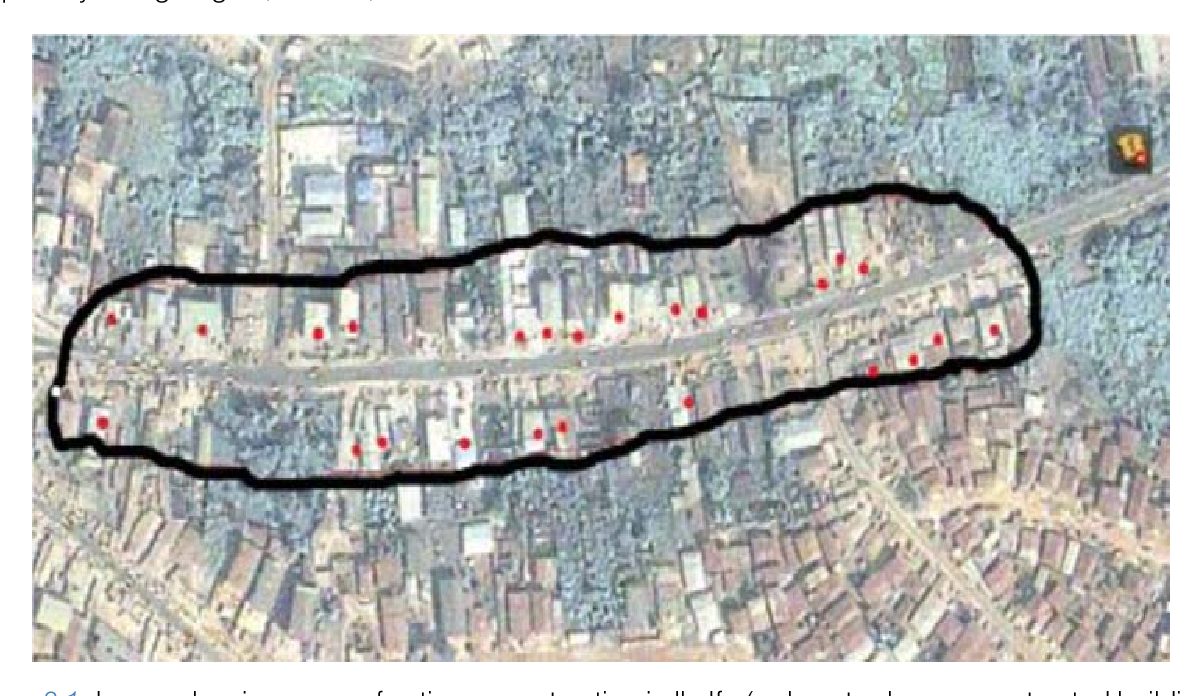
Ife and Modakeke Arial View

In language, culture, traditions and norms, Nigeria is one of the diverse countries in the world. It is a country that has hundreds of minority ethnicities within the major ethnic groups [Yoruba, Igbo and Hausa]. Each of the dominant ethnic group has over the years claimed to be the only group capable of solving socioeconomic and political challenges. However, recent activities showed that the minority ethnic groups have seen reasons for uplifting their specific traditions and norms within and beyond their domains in reference to the political and the economic domineering of the main ethnic groups.

In our experience, we have seen how it is difficult to determine the starting point of a particular town or city from another one. For example, Labaka-Ojo and Omi-Aro are two rural towns in Kwara State, a central Nigerian state. The population and number of houses in the two towns are not up to 15,000. Yet, the duo has different names and deriving solace in being independent towns, politically and economically. But in terms of culture and language they are the same. Over 1 years of staying in one of the towns by our analyst reveals that no significant differences in the land boundary. In spite of this, people and businesses always find it difficult to interact economically and politically.

Away from these towns, Ife and Modakeke are city and town in Osun State, a southern Nigerian state. Erin-Ile and Offa are city and town in Kwara State. Like the picture painted earlier, it is not really clear where a particular city boundary starts and end. This is also applicable to the town. In terms of language, culture and social activities, these towns and cities are not quite different. Despite that they have been engrossed and still being in varied wars over the years.

Information has it that the Erin Ile and Offa boundary crisis has caused over fifty years of recurring waves of violent clashes that have resulted in many human and material casualties. The first intra-community conflict between the Modakekes and the Ifes broke out in 1835. A recent research notes that “land issues, Ife East Local Government issue, debate about Modakeke’s sovereignty or staying with Ife, masquerade (Egungun) crossing into each other’s territory, boundary disagreement.”

According to our analyst, the feuds in the towns and cities remain chronic threats to sustainable peace because political, traditional and mediation institutions have not been able to find lasting solutions to the conflicts. Our analyst points out that the conflicts could be described as Abiku. In  2018, a report has it that Offa and Erin-Ile end age-long rift. Less than two years later, another report indicates violent activities of the two communities, which led to the deployment of the security operatives. In Ife, the traditional ruler of the city recently debunked news reports that the city and Modakeke are at war again.

From the reports on the conflicts analysed by our analyst it emerged that both the print and broadcast media are failing in their social responsibilities of ensuring sustainable mediation and peace in the towns and cities. It is, however, imperative that the media practitioners and owners consider solutions and restorative journalism practice more than sensationalism which has caused mayhems and impeding peace building processes and sustainability.

It is high time that the media see the need for reporting events that would foster hope, healing and resilience. The public have the right to know who among the actors making significant efforts towards peace restoration. They equally need to know categories of solutions being proffered by the actors, especially those at the communal level and political institutions. Restoring peace into the towns and cities, according our analyst, rests mostly on the media because selecting and framing certain aspects of any activity related to the conflicts have a propensity of increasing or decreasing tensions among the participants.