DD
MM
YYYY

PAGES

DD
MM
YYYY

spot_img

PAGES

Home Blog Page 5575

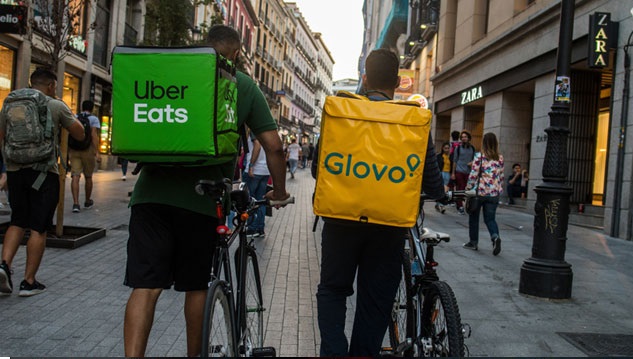
Uber Eats, Grubhub and DoorDash Sue New York City Over Attempt to Limit Their Charges

0

New York City’s attempt to stipulate how much food delivery companies can take from restaurants is facing a lawsuit from three of the biggest US food delivery outfits – DoorDash, Uber Eats, and Grubhub.

It has added to the culminating disputes between US states and gig economy companies hanging largely on workers welfare.

In May 2020, the city temporarily ordered food delivery apps to charge restaurants no more than about 20 per cent of each order total to deliver takeout – 15 per cent for the actual deliveries, five per cent for being listed in the app, plus payment processing fees. The city’s order was set to end in 90 days though it was later extended until February 2022, The Register reports.

A bill passed by the city in August this year, however, proposed making this cap permanent. It has yet to be signed into effect by Mayor Bill de Blasio. Now, in an attempt to block the bill, all three tech companies jointly filed a lawsuit against New York City in federal court on Thursday. The trio are seeking an injunction to stop the proposal from being passed.

New York City councilors believe the bill better supports restaurants and their patrons. But DoorDash, Uber Eats, and Grubhub believe it is unconstitutional and will harm businesses and their customers.

“The ordinance is unconstitutional because, among other things, it interferes with freely negotiated contracts between platforms and restaurants by changing and dictating the economic terms on which a dynamic industry operates,” according to the complaint.

Representatives from Grubhub and DoorDash told The Register the bill may lead to an increase in delivery fees for customers, making the whole experience more expensive for hungry New Yorkers.

Don’t forget: these app companies charge the restaurant and the customer for each order, so if the delivery giants can’t make the eateries pay more, the punters will have to cough up the difference. Those folks will then be less likely to order from restaurants, and, in turn, those businesses will make less money.

“Not only do price controls violate the US and New York Constitutions, but they will likely harm the very restaurants the city purports to support,” a spokesperson for DoorDash told The Register.

“In addition, price controls can lead to higher prices for consumers, which can reduce orders and earnings for Dashers. Imposing permanent price controls is an unprecedented and dangerous overreach by the government and will limit the options small businesses rely on to compete in an increasingly competitive market.”

“Grubhub has worked hard during the pandemic to support restaurants in New York City and across the country.

“Despite our best efforts, the city council recently passed an unprecedented and unconstitutional price control targeting the food delivery industry. Price controls increase delivery fees for consumers, and therefore lead to a reduction of orders for both restaurants and couriers. While Grubhub remains willing to engage with the city council, we unfortunately are left with no choice but to take legal action,” a Grubhub spokesperson told The Register.

A similar bill was passed in San Francisco, and the companies also sued that city in federal court in July, according to SF Chronicle. Mayor London Breed indicated she didn’t want to sign off on the law, and it passed without her signature.

US states are increasingly getting involved in how app-based businesses using the gig model treat their workers and now, other parties involved in their business. The state of California set the pace with its AB5 legislation that mandated ride-hailing app operators in the state to recognize drivers as employees.

It appears, other states are being inspired by that to tackle what they see as unjust treatment of parties involved with gig economy firms. However, there is always a solid line of defense from the firms based on the argument that the sustainability of their business is at stake – and that is usually left for the court to decide.

Become An Entrepreneurial Farmer with Tekedia Practice of Agribusiness

0

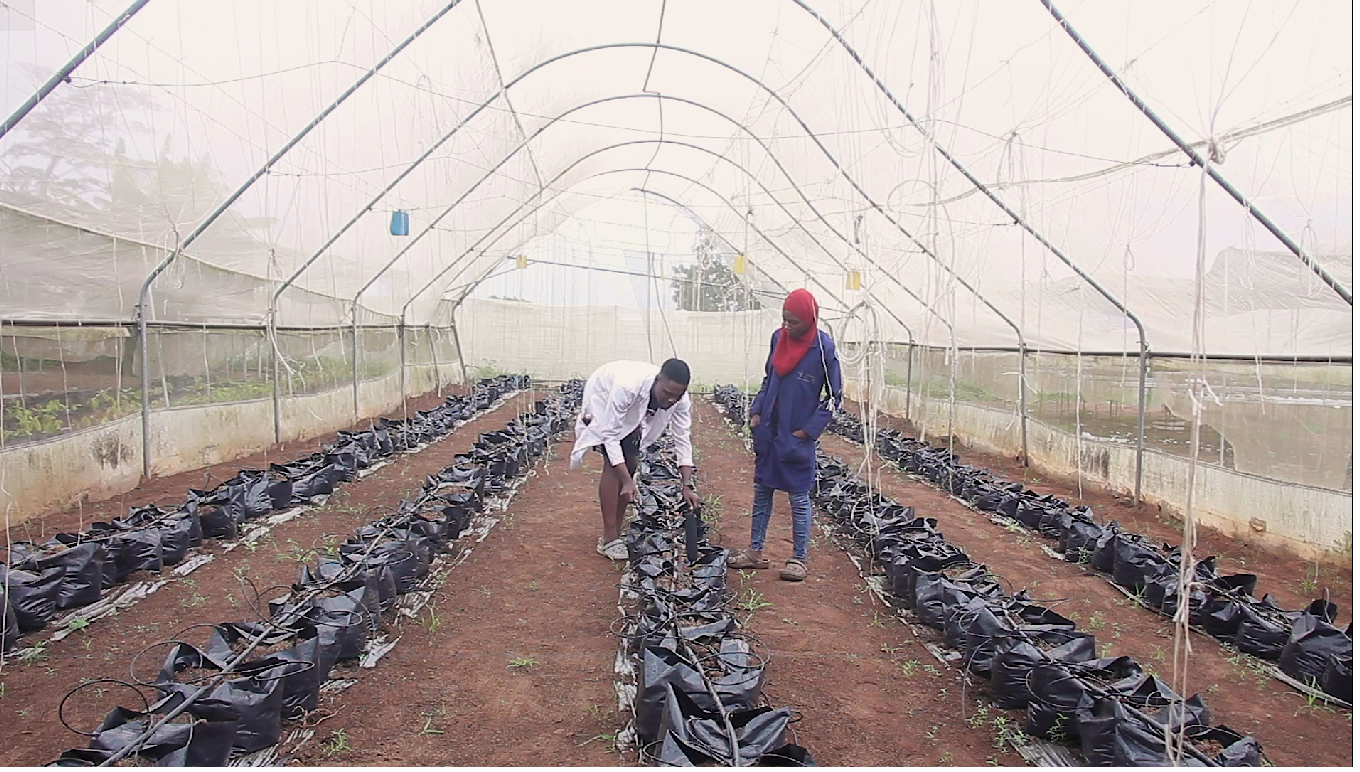
Practical farming. We have hours of videos from entrepreneurial farmers explaining how they do their work. Yes, from greenhouse farming  to soilless farming to more, Tekedia Practice of Agribusiness is raising a new generation of farmers. Special thanks to our partners – TAFS, Soilless Farm Lab, African Farmers Stories, etc.

At the end of the 2-month coursework, learners spend 4 months on internship, mastering practical things in the field. People, I think we are changing knowledge acquisition at Tekedia Institute.

Register for Tekedia Practice here.

The State of Nigerian Economy – Bismarck Rewane

0

This is the state of the nation according to the Chief Executive Officer of Financial Derivatives Company Limited, Mr Bismarck Rewane: GDP growth has not translated into a positive standard of living for the citizens. He spoke at September’s edition of the LBS Breakfast Session. Key points:

  • The National Bureau of Statistics stated recently that the country’s GDP grew by 5.01% in Q2 2021 of this year as against 0.51% in Q1 2021, while inflation dropped to 17.38% in July from 17.75% in June.
  • Rewane stated that in Q2 2021, out of 46 activities, 34 expanded, eight slowed and four contracted. He said, “Fastest growing sectors were the most impacted by the [COVID-19] shutdown. They are job-elastic and have the potential to boost productivity.
  • “Real GDP (2.7 per cent) still below potential GDP (8.3 per cent). Economy still in a recessionary gap. Population (3.2 per cent) growing faster than GDP.Nigeria still the poverty capital of the world: 93.9 million people now live below the poverty line.”
  • “Youth unemployment fast approaching 45%. Misery index, 50.68%. Nigeria [is] a hunger alert hotspot, according to FAO and WFP. Over 18,000 Nigerians seeking asylum. Health sector brain drain rising (e.g. about 500 doctors moving to Saudi Arabia).
  • “Positive GDP growth is yet to have a significant impact on socioeconomic conditions. Strategic investment and increased stimulus in job-elastic sectors and elimination of leakages (misaligned exchange rate and subsidies) necessary to achieve sustained economic recovery and inclusive growth,” he added.

Rewane noted that the special drawing rights allocation of $3.35 billion to the country from the International Monetary Fund would provide a 10% cushion to external reserves

  • He said, “Rising concerns on debt sustainability suggest Nigeria is quickly falling into a debt trap. Weak finance management practices and limited revenue to keep worsening debt problem. Domestic debt also on the rise.”

Rewane also noted that the Federal Government borrowing through Ways & Means advances had climbed by 595.5% to N15.51 trillion in five years.

FIRS Argues That Effective VAT Collection Can Only Be Centralized In Nigeria [Video]

0
FIRS signpost

As the controversy rages on value added tax (VAT) collection in Nigeria between states and the federal government, the Federal Inland Revenue Service (FIRS) has explained why it thinks VAT collection can only work at the federal level. Here is the point made by FIRS.

Muhammad Nami, Executive Chairman, FIRS, in a meeting with newsmen on Wednesday evening, made the point, according to Nairametrics.

FIRS Executive Chairman Comment

“VAT is practiced on an input, output mechanism. What it means for a business, either importing or buying products, that business will pay VAT, either at port if it is importing or to the manufacturer if it is buying from a local manufacturer.

“And when that business pays VAT, it is accounted for the business as input tax, such that when it begins to sell in any part of Nigeria and charges VAT to its own customers, it is able to recoup the input tax paid either at the port if it is an imported item or paid to the manufacturer if it is an item bought locally” he added.

He stated that VAT can only be operated at the national level and not at the subnational level, so as not to create confusion and have a consumer pay more than once.

He said, “It works only at the national level. VAT can not work at the sub-national level

“And there is no country in the world, where VAT works at the sub-national level and the reason is because VAT depends on input, output mechanism.”

“Just to illustrate this, for example, assuming a business person bought an item, let’s say in Osun state and paid VAT, and takes the good to sell in Sokoto state, remember he has paid VAT when purchasing the product in Osun state, and when the selling in Sokoto state, will charge VAT and by the operations of the input/output mechanism, the business person will deduct the input tax paid in Osun from the output tax charged in Sokoto and remit the difference to the relevant tax authority.

“In this case, because there is a single tax authority handling VAT, it is the same authority that receives the VAT in Osun State that will receive the additional VAT payable in Sokoto State.

“And so it is easy to work out the input/output mechanism, and there is no issue of a business person being shortchanged and there is no issue of any consumer having to pay VAT more than once.”

He added that the current system makes it it is easy to work out the mechanism and no issue of the business person being shortchanged and no issue of the consumer having to pay VAT more than once.

“However, if this is operated at the state level, it would mean that when the business person is paying that VAT at the state of the source, assuming at Osun, the state would have collected the money, and when this person is selling the item in Sokoto, they will charge VAT. 

“The dilemma here is, how does the business recoup VAT paid previously?

“Either of two things will happen. Either Osun state will have to refund the VAT collected, or Sokoto state will have to absorb that loss, and that in itself creates confusion.

He stated further that another issue that may arise is the difference in rates. “If Osun charges VAT at 10% and Sokoto at 5%, at the point of procuring the goods, the businessman would have paid VAT at 10% and when he is going to sell, will charge VAT at 5%.

“At such, the input suffered is greater than the output. Then the question is who bears the shortfall of 5%?” he asked.

Welcome, At 12 noon WAT on Monday Sept 13, 6th edition of Tekedia Mini-MBA will begin

0

At 12 noon WAT tomorrow (Monday, Sept 13), the 6th edition of Tekedia Mini-MBA will begin. It will run for 12 weeks, ending on Dec 6, 2021. I want to welcome our co-learners to this academic excursion into the mechanics of market systems. If for any reason you have not received your login, please contact Admin. This applies to members who paid via BusinessDay, AYS, FinQuest, partners in Kenya, Ghana, Cameroon and other countries.

I specifically welcome Sierra Leone members and the amazing scholars sponsored by a First Lady in a Nigerian state (more in the week). Thank you First Lady for providing knowledge besides other things for empowerment.

We’re Tekedia Institute, we know the physics of business, and we’re truly honoured for the opportunity to co-learn with you. WELCOME!

To join this academic festival, click and register here before we close registration soon