DD
MM
YYYY

PAGES

DD
MM
YYYY

spot_img

PAGES

Home Blog Page 5583

U.S. Sanctions Crypto Exchange, Suex, for Facilitating Ransomware Transactions

0

The Biden administration has announced new sanctions against cryptocurrency exchange Suex for using its platform to receive revenue for ransomware groups adding to the growing trend of cyberattacks targeting companies and government agencies.

It marks the first of such action against a virtual currency exchange. The Treasury said ransomware payments totaled more than $400 million in 2020 alone, four times more than it was in 2019, and it is taking new measures to see it stops.

The sanction means Suex’s access to US markets has been cut off. The department alleged that Suex “has facilitated transactions involving illicit proceeds from at least eight ransomware variants.” It also said that more than 40% of the company’s known transaction history is “associated with illicit actors.”

The Treasury Department has also updated guidance to US businesses on paying ransoms to cybercriminals, saying that it “strongly discourages” such action.

Cyberattacks targeting US companies were notably significant this year with the ransomware attack against Colonial Pipeline – the largest fuel pipeline in the United States – in May. Carried out by the Russian-linked Darkside ransomware group, the attack forced Colonial Pipeline to take systems offline and halt all pipeline operations. The height of the attack rattled the US government with the Biden administration issuing emergency waivers in response, lifting limits on the transportation of fuels by road as fears of shortages begin to put upward pressure on oil and gas prices.

Bloomberg reported that Colonial Pipeline handed over almost $5 million to the attackers for decryption of its data, some of which was subsequently recovered by the Justice Department in June. It took Colonial Pipeline several days to get operations back to normal.

CSO reported that earlier this week, New Cooperative, a grain distributor with 60 locations in Iowa, fell victim to a large ransomware attack by a Russian-speaking group known as BlackMatter. The attackers are believed to have requested almost $6 million for the release of the data, although this is unconfirmed by New Cooperative. An investigation into the incident is ongoing.

The new sanctions against Suex, a platform that offers an easy and often difficult to trace way to buy and exchange cryptocurrency, are an effort by the Biden administration to prevent ransomware payments that encourage actors to carry out further attacks against US companies.

Commenting to reporters ahead of the announcement, Treasury Deputy Secretary Wally Adeyemo said, “Exchanges like Suex are critical to attackers’ ability to extract profits from ransomware attackers,” adding that the action “is a signal of our intention to expose and disrupt the illicit infrastructure using these attacks.”

However, John Bambenek, principal threat hunter at Netenrich, questions whether the move will have any material impact on the proliferation of ransomware.

“Attempting to stop ransom payments didn’t help the kidnapping problem we saw in Sou a couple of decades ago, and it’s not likely to help much here either,” he tells CSO. “Sanctions against providers may make a degree of sense as long as the more honest providers are able, willing, and incentivized to report bad behavior on their platforms. What is more important in stopping ransomware is finding those involved and getting them brought to justice, and these kinds of actions actually could impair intelligence collection on those bad actors.”

This new line of action is expected to deter other crypto exchanges, making it difficult for them to facilitate transactions for ransomware criminals.

Fuel These Rocketships for Africa’s Future

0

We seeded one last year in Lagos and this year, it would have an office in Canada. Join us at Tekedia Capital Syndicate, to put fuel on new species of startups, and build the foundation of new species of entrepreneurial capitalism, globally.

Tekedia Capital offers a specialty investment vehicle (or investment syndicate) which makes it possible for citizens, groups and organizations to co-invest in innovative startups and young companies in Africa and around the world. Capital from these investing entities are pooled together and then invested in a specific company or companies. Click and register here.


Innovators and Project Champions, You’ve Found Your School At Tekedia Institute

0

If you are looking for a school for innovators and project champions, stop looking because you have found one! Yes, Tekedia Institute is here. We have courses in business education, renewable energy business, agribusiness, digital business, and more.

These courses come in many ways – mini-MBA, advanced diploma programs (7 tracks), certificate programs (12 tracks), live-only  session Zoom, etc.

By next month, we will launch Tekedia Startup Masterclass: from start-up to scale-up. Visit our website and see our courses and programs.

Innovative Response to Crisis Towards Sustainable Growth – A Case Study of 7UP Bottling Company Plc

1

With the permission of  Timothy Gbadeyan, I am happy to share the introduction of his Capstone for the award of Tekedia Certificate in Business Innovation, Growth and Sustainability. Our capstone is a research paper and it is one way we are co-learning with our learners to develop deeper capabilities on business communication, and writing investment briefs, proposals, etc.

We have a library of dozens of these works but unlike typical university projects and theses, our learners are examining core business matters with IPs. So, we do not make them public and have no plans to do so because some of them have become startups, and critical elements in companies.

Now, read Tim’s work:

Introduction

By an equation formula, Prof Ndubuisi Ekekwe[1] has described Innovation as a combination of invention and commercialization. He postulated that invention does not necessary translate to innovation, as invention in its raw form is limited in breadth as an idea. However, for an invention to translate to innovation, it must meet a societal need. By this, invention must be implemented and whisked away from its form as an idea with potential to fix a friction into homes, offices and hands of humans to actually fix the identified friction. In doing this, invention is essentially commercialized.

While innovation is critical to building the wealth of nations, it is actually the lifeblood of firms. For businesses, innovation is not desirable, it is mandatory. First, the mission of firms is to fix frictions in the society and/or societal units and in order to fix frictions, firms must innovate. Secondly, when sustainability is viewed from economic lens and not the lens of social impact or environment, one cannot but come to the conclusion that innovation and/or continuous innovation is the main factor of sustainability for businesses. Beneath this is the fact that “consumer loyalty” is a farce. In reality, what exist is “consumer satisfaction.”

Actually, consumer loyalty is a construct which Companies use to describe a group or “repeat customers” for the purpose of reward, feedback, product review, defining product base and such other data purposes. However, customers are neither to loyal to products or companies; they only continue to patronize either because they remain satisfied or because of the absence of better alternatives. In the wake of the emergence of better alternative, a company can lose 95% of its market share within one to three months. It’s simple- wholesalers will buy only the products which in Nigeria market parlance are “moving”.

In effect, wholesalers buy the goods which retailers want to quickly buy and retailers will buy the products which consumers will quickly buy- because no matter how profitable a business, the periodic profitability boils down to “turnover”. From the foregoing, it is obvious that the basis of consumer loyalty is continuous customer satisfaction and to keep customer satisfied, firms must meet emerging needs and perceptions and to do so, firms must innovate.

When firms innovate, one of the expected outcome is sustainable growth. By this we mean that firms continue to experience year-on-year, quarter-on-quarter and month-on-month profitability. This is because the market will always reward innovation. But the question is this- what guarantees that the trajectory of growth being experienced by a company will continue. Rapid growth will not attract Investors like Sustainable growth.

For a business to be healthy and sustainable, it must demonstrate that the rate of growth can be maintained. Innovation is a key influencer for maintenance of growth. Sometimes, consumers want the taste of a particular food product to remain the same over time as a mark of quality, but producers can innovate with access to product, ease of payment, ease of opening product carton, sachetization of product and so on. One thing is clear in the digital age, innovation and continuous innovation are keys to growth and sustainability.

[1] N. Ekekwe Ph.D, “The Innovation and Growth of Firms; P. 10 TEKEDIA INSTITUTE 2021

Cars24 Raises $450 Million to Hit $1.84 Billion Valuation

0

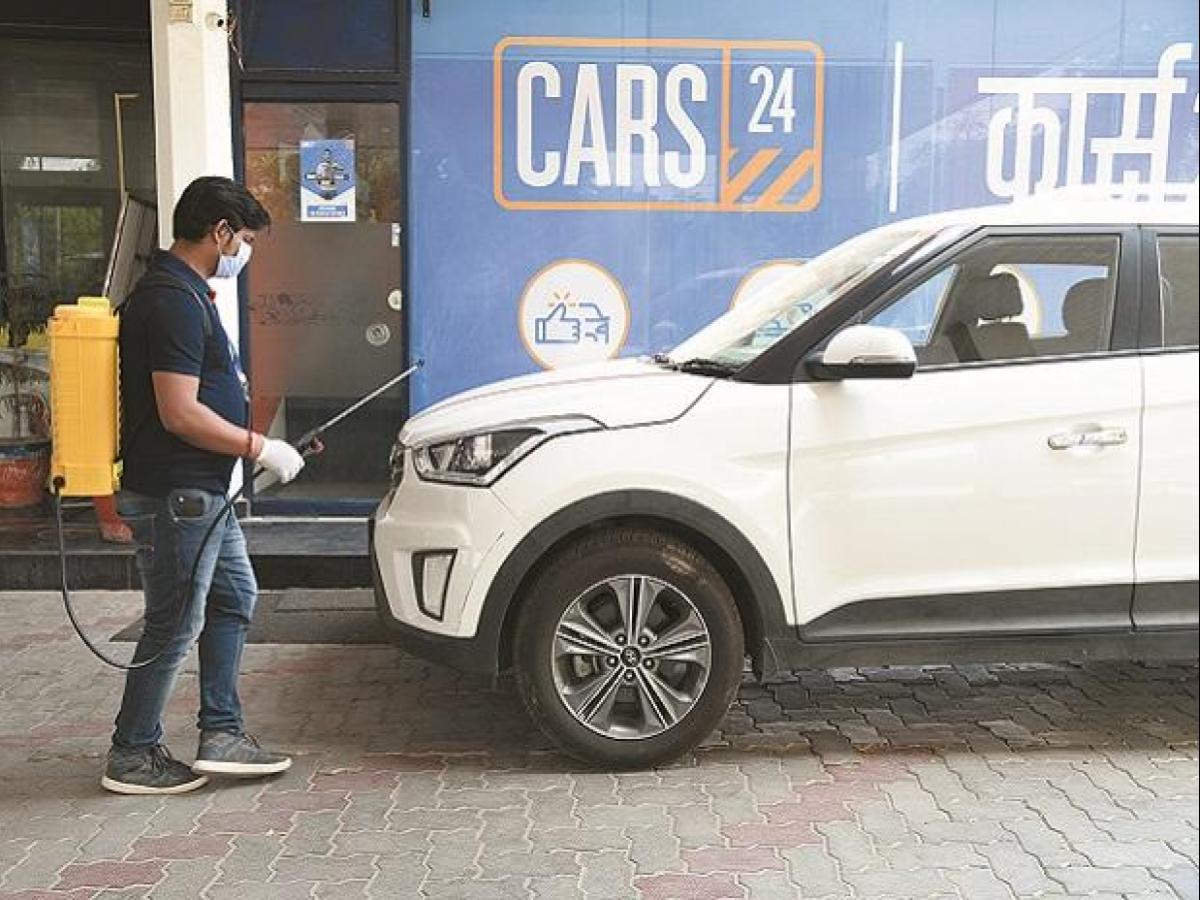
When consumers do make a purchase, they can keep and try out a vehicle for up to seven days “and return it if you don’t like it.”

This business play has helped Cars24, a site and app used vehicle selling company, to stay ahead of the game in the used car market, attracting mouthwatering investments shooting its value up.

The Indian startup announced it has raised $450 million, a Series F of $340 million and $110 million in debt, putting its value at $1.84 billion post-money. The newly raised funds makes cars24 one of the more valuable privately-held used car startups globally, TechCrunch tells the story.

DST Global, Falcon Edge and SoftBank Vision Fund 2 co-led the Series F, with Tencent and existing investors Moore Strategic Ventures and Exor Seeds also participating. The debt round came from a mix of financial institutions.

Vikram Chopra, the CEO who co-founded the company in Gurugram with Mehul Agrawal, Ruchit Agarwal and Gajendra Jangid, said that the plan will be to use the funds across a range of areas.

They include national and international expansion (it’s already operating in India, Australia and UAE, and has its eyes on more markets); technology (specifically areas like further expanding its virtual appraisal process, as well as more data science around pricing and other details related to sales and after-sales); and financing both to buy in vehicles, as well as to help consumers make purchasing a vehicle a viable economic option.

Cars24 is active more than 200 cities in India, and it has sold 400,000 vehicles to date (both cars and motorbikes) with upwards of 13 million monthly visitors on its site. All this gives it claim to being the largest platform of its kind in India. But its ambition is to improve the inefficiencies of selling a car, or buying a used car, in many parts of the globe, not just its home market.

“Buying or selling a car is hard anywhere in the world,” Chopra said in an interview. “It’s just a broken experience everywhere, so we are trying to solve for this.”

This is also where the financing and technology figure significantly. When Cars24 first started out in 2015 in India, Chopra said, it faced the added issue (or opportunity?) of a tricky economic landscape with very low car ownership penetration overall — just 2%, or 2 cars per 100 people, compared to typically between 50 and 80 cars per 100 people in Europe.

“But buying a used car in India is a way for a person to own any car,” Chopra said. In a country like India, “we want to take the penetration to 10 or 15.” He added that the car resale market today in India is around $25 billion, but is on track to soon get to $100 billion.

Cars24 has been built around a “buying-in, fixing up, and then reselling” model similar to that of the real-estate juggernaut Opendoor: it appraises vehicles from individuals looking to sell them; buys them up if an agreed price can be reached; reconditions them; and then re-sells and delivers them to new owners. This model, Chopra said, gives Cars24 an edge over some of the shortcomings that exist with traditional players (both on and offline).

First, it provides a centralized platform, cars24.com and its corresponding app, where users can browse a one-stop-shop inventory that goes beyond their local areas (and local dealers). That inventory is curated and made discoverable using a number of algorithms, and pricing is also determined by Cars24’s technology.

“Cars24 is building a data-enabled tech platform that is organizing the fragmented used car market in India,” said Munish Varma, managing partner, SoftBank Investment Advisers, in a statement. “We have been closely tracking its approach and efforts that have disrupted the used car retailing in India.”

“We believe Cars24 is enhancing the customer experience in the used car industry with its sharp focus on technology,” said Sumer Juneja, partner, SoftBank Investment Advisers, in a statement. “We will continue to support this growth given our expertise in e-commerce businesses across markets”.

Second, when consumers do make a purchase, they can keep and try out a vehicle for up to seven days “and return it if you don’t like it.”

This, Chopra continued, is in contrast to other used-car sales sites, as well as physical dealers: either they don’t offer trial runs, or (in the case of physical dealers or individual offline sellers), they might give a driver 10 or 15 minutes tops, with someone attending you as you drive the vehicle around: not a great way to discover what you like or don’t like about a vehicle.

It’s also a model that investors believe will give Cars24 an edge over competitors.

“We have studied used car platforms globally and are struck by the similarities we see between Cars24 and analogous businesses that have scaled successfully,” said Navroz D. Udwadia, co-founder of Falcon Edge Capital, in a statement. “Cars24 has cemented its first-mover advantage by building wide-ranging supply side moats, which in turn drive demand liquidity on the platform. In positioning itself as a buying and selling solution for consumers, Cars24 drives immense top-of-mind recall. It is rare to find a business as focused on the consumer experience and as driven to ensure it is outstanding via the use of data science and technology. Finally, we are deeply impressed by the founders’ leadership, and are thrilled to back them as they transform the used car industry in India and scale internationally across MENA and SE Asia.”

In an era of ride-hailing apps, where a growing number of car owners are ditching their cars for digitalized cabs, many have doubted there will be a prosperous future for the emerging market.

But using Uber can get pricey and is not the same as having your own wheels, and the desire to have your own vehicle is perhaps at a high-point right now because of Covid-19 and people concerned about spreading or catching the virus, Chopra said.

“It’s definitely not the case in India that less people want to own cars,” he said. “During the pandemic, we have seen a lot of demand, in India specifically.” On new, greener vehicle technology, this is also interesting and will simply present another class of vehicles on Cars24 as adoption of electric vehicles increases, he added. But it’s not all quite there, yet.

The strength of the current opportunity is partly why it seems that we’ve found ourselves crowded with startups and scale-ups hoping to define the new generation of used-car-sale platforms.

Others in the same space that have recently raised money include close competitors like Spinny, also out of India; Cazoo in the UK, which has now gone public; InstaCarro out of Brazil; Kavak out of Mexico; and Carsome from Malaysia, among many others. Carvana, one of the biggest used-car platforms, is also publicly listed and is now valued at nearly $28 billion.

“Cars24 is at the forefront of transforming the way consumers buy and sell cars by providing a unique end-to-end digital shopping and transaction experience,” said Rahul Mehta, managing partner at DST Global, in a statement. “They have emerged as the undisputed leader in the used car space in India and early traction in international markets is exceeding expectations. We love backing founders who are bold and ambitious thinkers and couldn’t be more excited to enter the second innings of our long-lasting partnership with Cars24.”