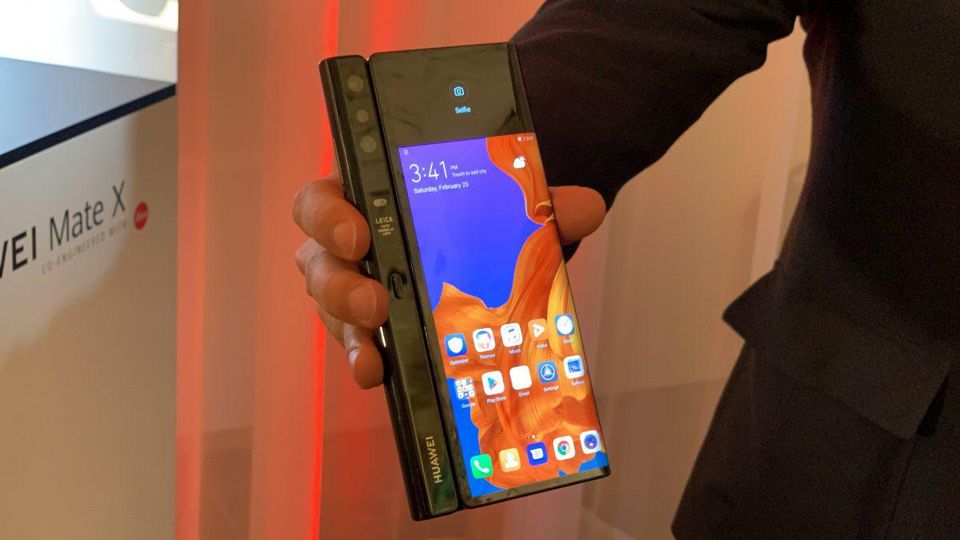
Huawei Technologies is increasingly defying US sanctions with increased use of made in China parts in its smartphones. The increase in Chinese components is most notable in Huawei’s latest Mate 40E smartphone.
Huawei was nearly crippled by US sanctions restricting it access to made in America telecom components, killing the Chinese company’s dream to lead the global 5G roll out. Now the embattled telecom vendor seems to be rising from the misfortune, independent of the United States.
The latest Huawei smartphone points to the possibility of total freedom from the shackles of US sanctions in the near future. Nikkei reports on the 40E smartphone.
Nikkei, working with Tokyo-based research specialist Fomalhaut Techno Solutions, took down Huawei’s Mate 40E, which is compatible with fifth-generation networks, and found that parts made in China accounted for around 60% of the total value of components – twice as much as the Mate 30, the previous model.
Huawei remains reliant on certain key semiconductors from the US-made chips it has in stock. This vulnerability makes it likely that the company will fall further behind its competitors over time.
Samsung captured the largest share of the global smartphone market in the first half of 2021, according to International Data Corporation, an American company. Huawei placed second but has since collapsed from the top five rankings.
The Mate 40E was released in China in March. Nikkei and Fomalhaut identified the origin of each component to perform their analysis.
Fomalhaut estimated the cost of manufacturing the Mate 40E at $ 367, which is practically the same as the Mate 30, which hit the market in September 2019. The value of Chinese components was 56.6% in the Mate 40E, compared to 30.0% previously.
The increase is mainly attributable to an organic electroluminescence display manufactured by the Chinese group BOE Technology which replaces a display from Samsung Electronics. The component represents almost 30% of the overall value of the smartphone.
“Although BOE is around two years behind Samsung in terms of technology, Huawei is actively increasing the use of BOE-made parts to compete with Samsung in the smartphone market,” said Yoshio Tamura, president of Asian operations at Display Supply Chain Consultants, an American research company told Nikkei.
Before, Huawei had no choice but to use Qualcomm chips as the “brain” of its smartphones. Disassembly found the performance of the Kirin 990E chip – designed by Huawei subsidiary HiSilicon and manufactured by Taiwan Semiconductor Manufacturing Co. – is equivalent to similar American chips. It was also used in the Mate 30.
HiSilicon is also the source of the Mate 40E’s antenna switch – a communications chip – as well as one of the power control chips. Other Chinese components include the fingerprint sensor and the battery.
Fomalhaut director Minatake Kashio said the teardown confirmed “further advances in self-production and in-house component sourcing” that Huawei had undertaken ahead of the US sanctions.
In early 2019, President Donald Trump’s administration banned Huawei from doing business with US companies. In the fall of 2020, the United States added an effective ban on the supply of semiconductors using American technology to the Chinese company. Huawei’s smartphone business continues to struggle under the administration of President Joe Biden, who kept the pressure on.
Huawei shifted its purchases to land as it reduced its U.S. inventory. US coins only made up 5.2% of the Mate 40E’s total value, but that figure was actually over 2.6% in the Mate 30. There are six types of US semiconductors in the new model versus two in the old one.
The teardown did not find any American components compatible with 5G networks. But the Mate 40E has Qualcomm chips for core functions, such as processing communication ciphers. The device also contains a 4G semiconductor from Qorvo, an American manufacturer. Kashio believes Huawei “may have used US-made chips that he bought and accumulated before the sanctions.”
Since US sanctions apply to TSMC’s Kirin chips, Huawei will have to decide how quickly it uses its stock and where to find another source.
The shortage of smartphone spare parts does not affect the quality but limits Huawei’s production capacity. Huawei’s 5G units, including the Mate 40E, are generally out of stock at outlets, according to people familiar with the situation.
Teardown revealed that 15.9% of the Mate 40E components by value are Japanese made. This was down from the Mate 30’s 24.5%, as a $ 15 memory device produced by Kioxia, formerly Toshiba Memory, was replaced by a Samsung product.
There are, however, a number of components that are produced only by Japanese companies, including sensors and signal processing devices. The Mate 40E has an image sensor in its Sony Group camera. The teardown identified components from other Japanese companies, including Murata, TDK, Taiyo Yuden and Asahi Kasei.
“Yes [Huawei] asks us to provide parts, we have to comply even under US sanctions, “an official at a Japanese supplier told Nikkei. “There are even cases where executives ask directly. We will ship within an allowable range.
South Korean components made up 37.2% of Mate 30, but dipped to 11.5% in Mate 40E, behind Chinese and Japanese components. With the Samsung screen replaced by a BOE product, only a storage unit and a few memory chips remain.
Like this:
Like Loading...