DD
MM
YYYY

PAGES

DD
MM
YYYY

spot_img

PAGES

Home Blog Page 561

Red Sea’s Role As A Chokepoint For 17 Major Cables Makes It A Persistent Risk Zone

0

Undersea cable cuts in the Red Sea, reported on September 7, 2025, disrupted internet connectivity across parts of Asia and the Middle East, affecting countries like India, Pakistan, Saudi Arabia, Kuwait, and the UAE.

The outages impacted major subsea systems, including the South East Asia–Middle East–Western Europe 4 (SMW4) and India-Middle East-Western Europe (IMEWE) cables near Jeddah, Saudi Arabia, as well as the FALCON GCX cable. Microsoft noted increased latency for its Azure cloud services in the region but rerouted traffic to minimize impact, with non-Middle East traffic unaffected. NetBlocks confirmed degraded connectivity, with UAE networks like Etisalat and Du experiencing slower speeds.

The cause of the cuts remains unclear, though speculation points to accidental damage from ship anchors or deliberate sabotage amid regional tensions.

Yemen’s Houthi rebels, linked to attacks on maritime traffic due to the Israel-Hamas conflict, were suspected, especially after Yemen’s government-in-exile alleged in early 2024 that the Houthis planned to target cables. The Houthis denied involvement, and their al-Masirah news channel acknowledged the cuts without claiming responsibility.

A similar incident in February 2024, potentially caused by a ship’s anchor dragging after a Houthi attack, affected cables like AAE-1, SEACOM, and EIG, disrupting 25% of Asia-Europe traffic. Undersea cables carry over 90% of Europe-Asia internet traffic through the Red Sea, a critical hub for global data.

Repairs are complex, often taking weeks due to the need for specialized vessels and permits, especially in conflict zones. While providers reroute traffic to maintain service, such disruptions highlight the vulnerability of global internet infrastructure.

The Red Sea is a critical corridor for over 90% of internet traffic between Europe and Asia, with cables like SMW4, IMEWE, and FALCON GCX handling massive data volumes. Cuts disrupt connectivity in regions like the Middle East, South Asia, and parts of Africa, causing slower internet speeds, increased latency, and potential service outages.

Businesses relying on cloud services (e.g., Microsoft Azure) face degraded performance, impacting sectors like finance, e-commerce, and remote work. For example, the September 2025 cuts caused noticeable latency in the UAE and Saudi Arabia.

Prolonged outages could disrupt global supply chains, financial transactions, and communication, especially in conflict-prone regions where alternative routes are limited.

Economic Impact

Affected countries (e.g., India, Pakistan, Saudi Arabia) may face economic losses due to slowed digital operations. For instance, India’s tech-heavy economy and the UAE’s role as a financial hub are particularly vulnerable.

Repair costs are significant, often reaching millions, with additional expenses for rerouting traffic and lost productivity. Suspected sabotage, potentially linked to groups like Yemen’s Houthi rebels amid the Israel-Hamas conflict, raises concerns about the security of critical infrastructure.

The Red Sea’s strategic location makes it a target for deliberate disruptions. Even accidental damage (e.g., from ship anchors) highlights vulnerabilities in global internet infrastructure, prompting calls for diversified cable routes and enhanced protection.

Repeated incidents, like those in 2024 and 2025, underscore the fragility of undersea cables in high-traffic, conflict-prone areas. This may push governments and companies to invest in alternative routes or satellite-based solutions, though these are costlier and less efficient for high-volume data.

Cable Repair Process

Operators use monitoring systems to detect signal loss or latency spikes, pinpointing the fault’s location via techniques like optical time-domain reflectometry (OTDR). Satellite and AIS (Automatic Identification System) data help identify nearby vessels or activities (e.g., fishing, anchoring) that may have caused the damage.

Specialized cable repair ships, equipped with remotely operated vehicles (ROVs) and grappling tools, are dispatched. These vessels are stationed globally but may take days to reach the Red Sea due to its remote location and geopolitical complexities.

Securing permits to operate in territorial waters, especially in conflict zones like Yemen, can delay the process. ROVs scan the seabed to locate the damaged section, often at depths of 1-2 km in the Red Sea. Grappling hooks drag the ocean floor to retrieve the cable, a delicate task to avoid further damage.

Precise navigation is critical, as cables are typically 17-20 mm thick (about the width of a garden hose) and buried in shallow waters. The damaged section is brought aboard the repair vessel, where technicians splice new cable segments to restore connectivity. This involves fusing optical fibers with precision to ensure minimal signal loss.

The repaired cable is tested for signal integrity before being redeployed to the seabed, often reburied in shallow areas to protect against future damage. Repairs typically take 2-8 weeks, depending on the damage’s extent, weather conditions, and regional security. In the Red Sea, ongoing conflicts (e.g., Houthi activities) may complicate access and extend timelines.

Harsh underwater environments, like strong currents or rocky seabeds, add technical difficulties. Spare cable must be carried onboard, and multiple cuts require repeated operations. Once repaired, traffic is rerouted back to the restored cable, and operators monitor performance to ensure stability.

Investigations into the cause (e.g., anchor damage, sabotage) may lead to enhanced security measures, such as rerouting cables or increasing surveillance in high-risk areas. Providers like Microsoft reroute traffic through unaffected cables (e.g., via the Pacific or terrestrial routes), but capacity constraints can still cause slowdowns.

Gold’s ATH At $3,652.76 Underscores Its Dominance As A Safe-Haven Asset

0

Spot gold hit a new all-time high of $3,652.76 per troy ounce up 0.47% from the previous day, driven by expectations of a Federal Reserve rate cut, a weaker U.S. dollar, and heightened geopolitical tensions. The price has surged 9.27% over the past month and 45.03% year-over-year, reflecting strong safe-haven demand and central bank accumulation.

Gold’s rally, driven by macroeconomic factors like expectations of Federal Reserve rate cuts, a weaker U.S. dollar, and geopolitical tensions, reinforces its role as a traditional safe-haven asset. Investors often turn to gold during economic uncertainty, as seen with recent U.S. policy shifts and global trade concerns.

This surge could divert capital from cryptocurrencies, which some investors view as a speculative alternative to gold. Bitcoin, often dubbed “digital gold,” competes for similar safe-haven or store-of-value narratives. When gold outperforms, as it has with a 36% year-to-date gain compared to Bitcoin’s retreat from recent highs, it may siphon investment away from crypto.

Impact of Macroeconomic Drivers

Lower interest rates reduce the opportunity cost of holding non-yielding assets like gold and Bitcoin. The anticipation of a Fed rate cut (87.8% probability for September 2025) supports gold’s appeal but could also benefit crypto if investors view it as a hedge against currency devaluation.

However, gold’s stronger historical safe-haven status may overshadow crypto in the short term. A weaker dollar, a key driver of gold’s rally, typically boosts both gold and Bitcoin prices, as both are priced in USD. However, gold’s current momentum suggests investors are prioritizing it over crypto during this period of uncertainty.

Tensions from U.S. trade policies, tariffs, and Fed independence concerns (e.g., Trump’s criticism of Fed Chair Jerome Powell) drive gold demand. These factors could also support crypto as a decentralized alternative, but gold’s established track record may limit crypto’s immediate upside.

Gold’s rally, fueled by central bank purchases (projected at 900 tonnes in 2025) and ETF inflows ($44B year-to-date), signals strong institutional demand. In contrast, crypto markets, while maturing, remain more retail-driven and volatile. Investors may shift allocations from crypto to gold, especially if Bitcoin’s recent pullback from its highs persists.

However, some investors view gold and crypto as complementary assets. A 2024 study noted that 23% of high-net-worth investors hold both, suggesting that a gold rally could coexist with crypto exposure in diversified portfolios. Historically, gold and Bitcoin have shown periods of both positive and negative correlation.

When gold rallies due to safe-haven demand, Bitcoin may lag if investors perceive it as riskier. For instance, gold’s 34% gain in 2025 has outpaced Bitcoin’s performance, with Bitcoin retreating from its highs. However, a sustained gold rally above $3,500 could attract momentum traders to gold ETFs (e.g., GLD, GLDM), potentially reducing speculative capital available for crypto markets.

How the Gold Rally Affects Crypto

Gold’s strong performance may lead investors to rotate capital away from cryptocurrencies, particularly Bitcoin, which has slipped from its recent highs. This is evident as gold hit $3,508.50 on September 2, 2025, while Bitcoin lost steam. Crypto’s higher volatility makes it less appealing during risk-off periods when gold thrives.

Investors seeking stability may favor gold, potentially capping Bitcoin’s near-term upside. If the Fed cuts rates, as anticipated, the lower opportunity cost of holding non-yielding assets could eventually lift Bitcoin alongside gold. A weaker dollar and persistent inflation concerns may also drive interest in crypto as a hedge against fiat devaluation.

The growing acceptance of crypto as a complementary asset to gold could sustain demand. Investors holding both assets may increase crypto exposure if macroeconomic conditions (e.g., prolonged low rates or dollar weakness) persist.

Unlike gold, Bitcoin is influenced by additional factors like regulatory developments, institutional adoption (e.g., spot Bitcoin ETFs), and technological advancements. While gold’s rally may draw attention, positive crypto-specific catalysts (e.g., ETF inflows or regulatory clarity) could counteract this.

For instance, estimates suggest $30B in demand for spot Bitcoin ETFs, which could buoy prices independently of gold’s performance. However, Bitcoin’s volatility (though declining) contrasts with gold’s stability, potentially limiting its appeal during gold’s surge.

As the primary “store-of-value” crypto, Bitcoin is most directly affected by gold’s rally due to their competing narratives. A sustained gold rally could delay Bitcoin’s recovery unless crypto-specific catalysts emerge.

Altcoins, being more speculative, may face greater downward pressure as investors prioritize safer assets like gold. However, altcoins tied to specific use cases may be less affected. Stablecoins, pegged to fiat, are largely insulated from gold’s rally but could see increased use if investors seek to park capital amid market uncertainty.

Bitcoin and other cryptos may face headwinds as investors favor gold’s stability, particularly as gold has outperformed with a 36% year-to-date gain. However, shared macroeconomic drivers like anticipated rate cuts and dollar weakness could eventually support crypto, especially if Bitcoin-specific catalysts like ETF inflows gain traction.

Quantum Threats and Crypto Security: How El?Salvador Is Protecting Its BTC Reserves

1

El?Salvador’s officials believe a future quantum hack could put the country’s crypto assets at risk. In late August?2025, the country that held roughly 6,274?BTC – about?$686?million considering the current price of Bitcoin – decided to split it up. Fourteen fresh addresses were made, each never to hold more than 500?BTC.

Officials think that spreading the coins should make a single hack less effective. The Salvadoran government promised a public dashboard where anyone could monitor the balances and any transfers in real time.

 Why are quantum computers a worry for Bitcoin?

Bitcoin uses a signature scheme based on ECDSA or Schnorr (secp256k1 curve). Quantum machines can run Shor’s algorithm and break the signatures that keep the coins safe.

When a holder initiates a transaction, their public key is exposed on-chain. If a quantum computer is powerful enough — which can happen sooner than we think — it could use that public key to “extract” the private key.

From there, the coins could be hijacked before the network confirms the transaction — known as a “race theft”. But at the moment, only the UTXOs that already have their public key exposed could be at risk.

Some studies say 25?% of all Bitcoins could be vulnerable, while others say as much as 50?%. A safe guess is probably around 30?%. A crypto heatmap performance overlay would make it easier to visualize which coins or UTXOs appear most exposed in practice. That means not every coin is in danger, even though this is already a huge amount of money. That justifies the Salvadoran government’s decision to fragment its Bitcoin portfolio.

Such a decision has its pluses and its downsides. The main advantage of this strategy is that no single address holds a huge sum, so an isolated hack would have a minimal impact.

Still, this trick does not seem to solve the anticipated quantum issue. When the coins finally move, the public key will appear on the chain, opening the door for quantum hacks to powerful machines.

The split?up approach then looks like a sensible short-term fix, but cannot, on its own, constitute a real defense against quantum cryptanalysis. That point leads to the need for a definitive solution, like quantum?resistant encryption.

What might El?Salvador or other nations do?

Bitcoin’s community seems to push a move toward post?quantum signatures — solutions like Dilithium, Falcon, SPHINCS+ — via a planned soft-fork in the future.

Therefore, the country could:

  • Continue to apply good address hygiene (no reuse, careful fragmentation).
  • Implement a proactive migration to post-quantum signature schemes before UTXOs (Unspent Transaction Output) become active.
  • Reduce exposure windows via strategies like batching and payment channels, to limit the time a public key remains visible.

El?Salvador’s plan to split its Bitcoin assets into many small addresses seems judicious from an operational point of view. But this remains a temporary measure, considering how fast the computing industries move. Projections indicate significant advances in quantum computers in the next 5 to 10 years.

Once El Salvador and other crypto holders manage to safeguard their assets by spreading them across several wallets, the real challenge will be to migrate to a quantum-resistant Bitcoin, via post-quantum signatures and a controlled soft-fork.

Everything you need to know about betting on the Stake platform

0

Stake Casino in Nigeria is a widely recognised online gaming platform that has gained popularity for its extensive selection of games, user-friendly interface, and integration of cryptocurrency for seamless transactions. Founded with a focus on transparency and innovation, Stake Casino provides a secure environment for players to enjoy games such as slots, table games, and live dealer experiences.

The platform caters to both seasoned gamblers and newcomers by offering a variety of betting options and generous promotions. By combining cutting-edge technology with a commitment to fairness, Stake Casino delivers a unique gaming experience that continues to attract players from around the globe.

Creating an Account on Stake

Getting started with Stake Casino is a quick and straightforward process, enabling players to access their extensive range of games and features. Follow these steps to create your account:

  1. Visit the Stake Casino Website: Navigate to the official Stake Casino website stake1.ng using a secure device and internet connection. Ensure you are accessing the legitimate site to protect your information.
  2. Click on the Sign-Up Button: On the homepage, locate and click on the “Register” button, found in the top-right corner of the screen.
  3. Fill in the Registration Form: Enter your personal details, including your username, email address, and a secure password. Make sure to use accurate information.
  4. Confirm Your Age and Agree to Terms: Verify that you meet the minimum age requirement for gambling in your jurisdiction and agree to Stake Casino’s Terms and Conditions.
  5. Complete the Captcha: Pass the CAPTCHA to confirm that you are not a robot.
  6. Submit the Registration Form: Click “Create Account” or the equivalent button to submit your details and finalise the registration process.
  7. Verify Your Email Address: Check your email inbox for a verification message from Stake Casino. Click the link provided to authenticate your email and activate your account.

Once your account is created and verified, you’ll be all set to explore Stake Casino’s platform and enjoy an engaging gaming experience.

Overview of the Betting Interface

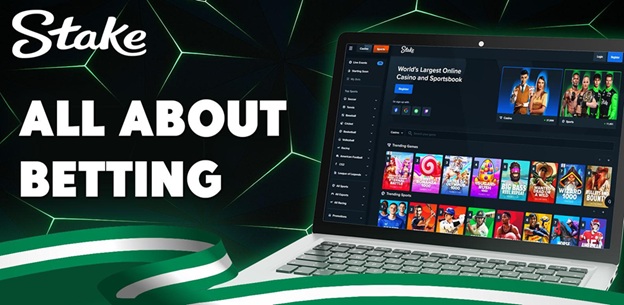
The Stake Casino betting interface is designed to be user-friendly, intuitive, and visually appealing. At the top of the screen, you’ll find the main navigation bar, which allows you to switch between different sections such as Casino, Sports, Promotions, and more. The betting area is central to the interface, where available games, matches, or bets are neatly categorised and displayed for easy browsing. There’s also a live betting section for real-time wagering, featuring dynamic updates and odds.

The sidebar includes filters and sorting options that help you refine your preferences, ensuring a smooth and customised experience. Finally, the bottom section often hosts your bet slip, transaction details, and useful links such as customer support or account settings. These features together make for a seamless and engaging betting experience.

Types of Games Available in Stake Nigeria

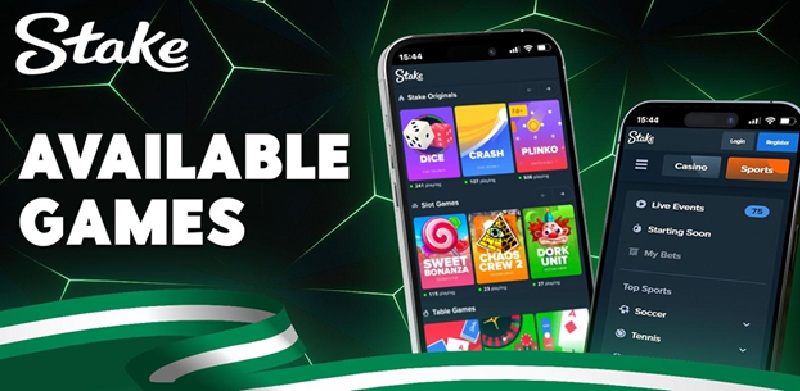
Stake Nigeria offers a wide range of games to cater to diverse preferences, ensuring there’s something exciting for every player. Sports betting enthusiasts can enjoy wagering on popular sports such as football, basketball, tennis, and more, with extensive markets and competitive odds. There’s also a robust selection of virtual sports, delivering quick results and immersive gameplay.

For casino fans, Stake provides a variety of classic and modern games, including slot machines, roulette, blackjack, and poker. Additionally, live casino games bring the atmosphere of a real casino to your screen, featuring live dealers and interactive elements. Beyond these categories, players can explore speciality games and eSports betting, adding even more variety to the platform’s offerings. With this extensive selection, Stake Nigeria ensures an entertaining experience for all users.

How to Place Bets

Placing bets is an easy and straightforward process, designed to ensure a seamless experience for all users. Follow these step-by-step instructions to get started:

  1. Create an Account: Sign up by providing the necessary details, such as your name, email address, and payment preferences. Ensure your account is verified to access all features.
  2. Deposit Funds: Add funds to your account using your preferred payment method. The platform supports a variety of payment options for your convenience.
  3. Browse Betting Markets: Explore the available betting markets and choose the category you are most interested in, such as sports, casino games, or virtual sports.
  4. Select Your Bet: Once you have decided on a market, review the odds and options. Pick the bet that aligns with your strategy or interests.
  5. Enter Your Stake: Input the amount of money you wish to wager. The system will display your potential winnings based on the odds selected.
  6. Confirm Your Bet: Double-check your selections and confirm your bet. Once placed, your Stake bet will be active, and you can monitor its progress in the ‘My Bets’ section.

By following these steps, you can begin enjoying the excitement of betting in no time while remaining in control of your experience.

Understanding Betting Odds on Stake

Betting odds are a crucial part of understanding how wagers work and determining potential winnings. Odds represent the likelihood of an event occurring and indicate the amount you could win relative to your stake. On Stake, there are three commonly used formats for odds:

  • Decimal Odds: This is the most straightforward format. It shows the total amount you will receive for every unit staked, including your original stake. For example, if the odds are 2.5, a bet of ?1,000 would result in ?2,500 total (?1,500 profit plus your ?1,000 stake).
  • Fractional Odds: Popular in traditional betting systems, fractional odds show your profit relative to your stake. For example, odds of 5/1 mean you would win ?5 for every ?1 you bet, plus your original stake.
  • American Odds: These are displayed as either positive or negative numbers. Positive odds (e.g., +200) indicate the profit from a ?100 stake, whereas negative odds (e.g., -150) show how much you need to stake to win ?100.

Understanding these odds helps you make more informed decisions when placing bets and identifying value in different markets. Most importantly, always bet responsibly and within your limits.

Bonus and Promotions for Sports Betting in Stake

Sports betting in Stake becomes even more exciting with the wide range of bonuses and promotions available. These offers are designed to give you extra value, whether you’re a new bettor or a seasoned player. Below are some of the key bonuses and Stake promo codes offered:

  • Welcome Bonus: New users can enjoy a 100% deposit match up to ?50,000. This allows you to double your initial deposit and have more funds to explore various betting markets.
  • Weekly Cashback Bonus: Stake rewards consistent players with a weekly cashback of up to 10% on all losses, giving you an opportunity to recuperate some of your funds.
  • Free Bet Offer: Place a bet of ?5,000 or more, and you’re eligible to receive a ?2,000 free bet as a reward.
  • Accumulator Boost: Increase your potential winnings with the accumulator boost, which offers a boost of up to 25% on multi-bets with four or more selections.
  • Loyalty Program: Stake values its loyal customers by offering exclusive bonuses and rewards through its tiered loyalty program, including additional free bets and personalised perks.

Take advantage of these exciting Stake promos to maximise your betting experience. Remember to always check the terms and conditions associated with each offer to make the most of your bonuses.

Conclusion

Stake Casino provides a comprehensive and engaging platform for both casino gaming and sports betting enthusiasts. With its intuitive interface, diverse Stake game selection, and seamless integration of cryptocurrency, the platform caters to a wide range of players—from beginners to seasoned bettors. By offering easy account creation, secure payment methods, and real-time betting options, Stake ensures that every user can enjoy a smooth and rewarding experience.

Understanding betting odds, exploring various game types, and placing wagers responsibly are key to making the most of Stake Casino. Combined with generous promotions and a commitment to fairness and security, Stake delivers an entertaining and trustworthy environment for online gaming. For anyone looking to enjoy modern, flexible, and exciting betting experiences, Stake Casino stands out as a top choice.

The Finest Freedoms in the Journey of Professional Life

0

One of the finest freedoms in the journey of professional life is this: when your identity is no longer chained to your job title, your employer, or the office you report to. True liberation comes when who you are rises above what you do in a workplace. At that point, you begin to understand that your essence is larger than your business card.

Many are imprisoned by borrowed symbols—Chief Executive Officer, Senior Manager, or Analyst. These are important labels, but they are temporary markers in the seasons of professional life. They can be given; they can be taken. But when your personality is anchored on YOU, no company can define you. You carry your own “equity” into every room.

In my experience, the most successful professionals are those whose relevance is not tied to job titles. When people respect you because of your title, the day the title changes, you vanish. But when respect comes because of YOU the person, no restructuring or economic downturn can erase you.

A lady deleted her profile here because she lost her CFO role in a popular fintech which was largely her life. Her life was this fintech and when the job disappeared, she literally could not continue without the associated “title”. That was unfortunate.

Good People, career liberation is resigning from dependence on job titles to shape your self-worth. It is about building depth so that, whether you are called “Intern” or “Chairman,” you remain the same person, delivering and commanding respect. That is the new wealth in this age—the wealth of identity, beyond the walls of companies and offices. When you attain this state, every organization becomes privileged to have you, not the other way round.

Become the definition of your career, not your job title, and through that have the greatest career liberation.