DD
MM
YYYY

PAGES

DD
MM
YYYY

spot_img

PAGES

Home Blog Page 5624

29% of SDGs Have Data Sources for Project Intervention and Progress Tracking in Nigeria

0

When Nigeria failed to achieve the Millennium Development Goals, various factors were cited and relevant stakeholders were equally referenced. The exponential growth of poverty rate, insecurity, social inequality, absence of inclusive growth and youth unemployment were largely considered as the factors.  As stakeholders in the industry and academia continue engaging and finding relevant and relatable projects that would help the country achieve the new Goals -Sustainable Development Goals, it has occurred that the challenges and others would likely impact the attainment of the Goals.

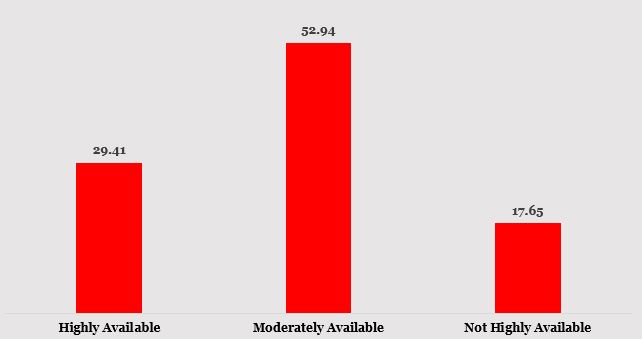
In one of the previous analyses, our analyst reported that Nigerian professionals are discussing suitable ideas for the realisation of the new goals. However, analysis of the country’s SDGs Indicators Baseline Report indicates that 29.41% of the SDGs indicators could be tracked successfully, as intervention projects and programmes are being developed and executed by various stakeholders, using existing data sources. These sources are largely from the national agencies, Ministries and global organisations such as the World Health Organisation, the Food and Agriculture Organisation among others.

Exhibit 1: Classifications of Data Source Availability for SDGs Programme Intervention and Tracking
Source: OSSAP-SDGs and National Bureau of Statistics, 2017; Infoprations Analysis, 2021

The availability of the data sources was classified into highly available, moderately available and not highly available by our analyst. These classifications were in line with the OSSAP-SDGs and National Bureau of Statistics’ results, discovered based on the number of data sources identified for each Goal’s tracking indicators. Highly available represents availability of data sources for all indicators Nigeria needs to track for a Goal. Moderately available means that Nigeria has some data sources for the indicators that need to be tracked and measured to determine progress and the possibility of meeting the Goal. Not highly available indicates absolute lack of data sources for the same purposes.

Highly Available

Goal 1: End poverty in all its forms everywhere; Goal 5: Achieve gender equality and empower all women and girls; Goal 7: Ensure access to affordable, reliable, sustainable and modern energy for all; Goal 12: Ensure sustainable consumption and production patterns; Goal 13: Take urgent action to combat climate change and its impacts.

Moderately Available

Goal 2: End hunger, achieve food security and improved nutrition and promote; Goal 3: Ensure healthy lives and promote wellbeing for all at all ages; Goal 9: Build resilient infrastructure, promote inclusive and sustainable industrialization and foster innovation; Goal 10: Reduce inequality within and among countries; Goal 11: Make cities and human settlements inclusive, safe, resilient and sustainable; Goal 14: Conserve and sustainably use the oceans, seas and marine resources for sustainable development; Goal 15: Protect, restore and promote sustainable use of terrestrial ecosystems, sustainably manage forests, combat desertification, and halt and reverse land degradation and biodiversity loss; Goal 16: Promote peaceful and inclusive societies for sustainable development, provide access to justice for all and build effective, accountable and inclusive institutions at all levels; Goal 17: Strengthen the means of implementation and revitalize the Global Partnership for Sustainable Development.

Not Highly Available

Goal 4: Ensure inclusive and equitable quality education and promote lifelong learning; Goal 6: Ensure availability and sustainable management of water and sanitation; Goal 8: Promote sustained, inclusive and sustainable economic growth, full and productive employment and decent work for all.

Strategic Options

These insights have further confirmed our earlier position that businesses and scholars need to help Nigeria in its quest of attaining the SDGs. It is equally important that citizens assist businesses, scholars and governments in their efforts of collecting and managing necessary data for project intervention and monitoring of the indicators of each Goal. This is essential as the country has less than 10 years for realising all the Goals.

Macro stakeholders such as the businesses, scholars and governments cannot have the needed data without the support of the micro stakeholders such as individuals, community leaders, association leaders among others at the community and group levels. There must be a change to the way citizens react to data collection projects. When researches are being done for development purposes, the studies should not be always seen as mere exercises. Political leaders at all levels also need to refine their political will, especially funding data collection projects across the country. This is highly essential for the SDGs that have moderately and not highly available status.
 

Lionel Messi Joins PSG After Leaving Barcelona

0

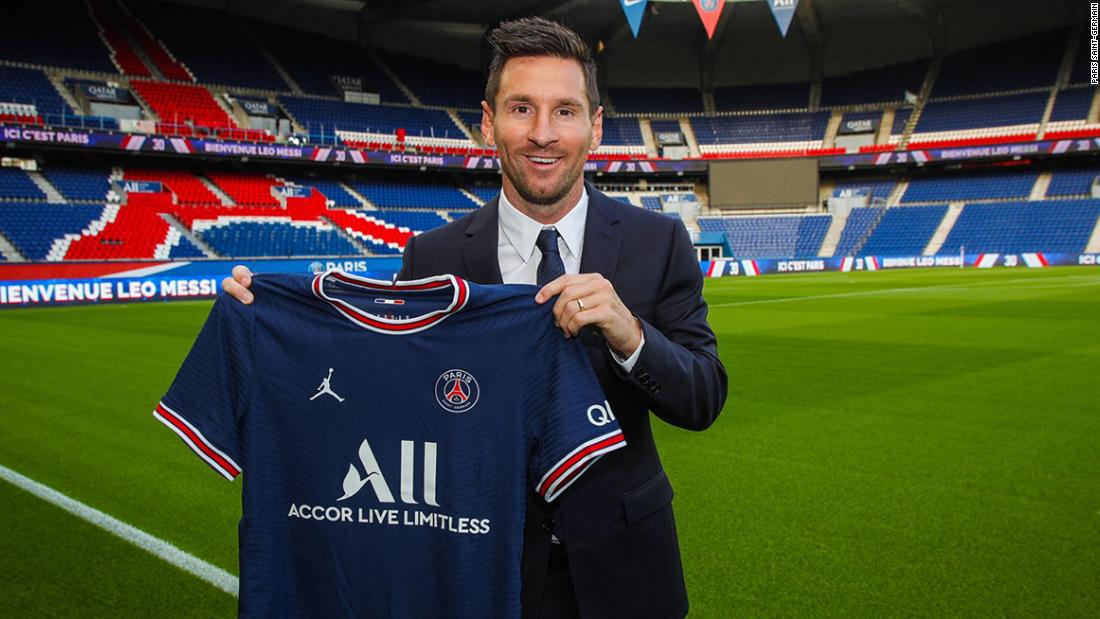
As his 21-year life in Barcelona ends, he sets on a new beginning in Paris. Lionel Messi will be presented as a Paris Saint-Germain player on Wednesday after signing a two-year contract to end the uncertainties that have followed his career since June last year.

The deal includes an option to extend by a year and gives the forward a net salary of about €35m (£29.6m) with bonuses factored in.

Messi left Barcelona Tuesday to the warm welcome of throng of fans in Paris. The excited crowd had gathered from Monday as anticipation built for the Argentine astro. Messi had emerged before the fans wearing a T-shirt with the club’s trademark “Ici c’est Paris” on the front. But more than that, he wants more than fans chanting his name in the streets of Paris.

“I am impatient to start a new chapter of my career in Paris,” Messi said. “The club and its vision are in perfect harmony with my ambitions. I know how talented the players and staff are here. I am determined to build, alongside them, something great for the club and for the fans. I can’t wait to set foot on the Parc des Princes pitch.”

Messi, his lawyers and his father, Jorge, had been in talks with PSG since Thursday, when the player’s plan to stay at Barcelona collapsed because of the club’s financial situation. The Catalan club is burdened by debts of more than 1.2 billion euros ($1.4 billion). Messi had agreed a five-year contract with Barcelona worth about €20m a season but couldn’t sign it because it conflicts with Spanish La Liga’s financial framework.

Messi will wear the No 30 shirt after reportedly turning down Neymar’s offer of the No 10 shirt. Neymar and Messi had been teammates in Barcelona before Neymar left for PSG in 2017 for a record €222 million deal. Now the Brazilian can’t hide his excitement at the opportunity to reunite with his former teammate and friend.

“Back together,” Neymar posted on Instagram over a video of them hugging, playing for Barcelona.

A press conference and presentation for Messi is planned for 11am Paris time on Wednesday.

PSG president Nasser al-Khelaifi expressed his pride at the deal: “I am delighted that Lionel Messi has chosen to join Paris St-Germain. He did not hide his desire to continue to evolve at the highest level and to win trophies. The ambition of the club is of course identical.

“The addition of Leo to our world-class team confirms the relevance and success of our recruitment. Together with our great coach and his staff, I look forward to seeing our team make history for all of our supporters around the world.”

Messi’s move will link him with the PSG attacking force made up of Neymar, Kylian Mbappé and Ángel di María.

It was an emotional weekend in Barcelona on Sunday when Messi bade farewell to the city and fans of his childhood club during a press conference. The tearful 34-year old had explained how much he wanted to stay at Barcelona, but was forced to join PSG by structural and regulatory obstacles from La Liga. On Tuesday images of Messi on the Camp Nou facade were taken down.

A statement on PSG’s official Twitter account said: “Paris Saint-Germain is delighted to announce the signing of Leo Messi on a two-year contract with an option of a third year. The six-time Ballon d’Or winner is justifiably considered a legend of the game and a true inspiration for those of all ages inside and outside football.

“The signing of Leo reinforces Paris Saint-Germain’s aspirations as well as providing the club’s loyal fans with not only an exceptionally talented squad, but also moments of incredible football in the coming years.”

PSG was beaten into second place in Ligue 1 by Lille last season and knocked out of the Champions League in the semi-finals by Manchester City, so Messi’s signing is a major boost to the French club as they hope to do better this season.

Messi will have the company of a host of fellow Argentines including PSG’s coach, Mauricio Pochettino, who was delighted to have the playmaker in his team.  PSG will be hoping not only that Messi helps the team regain the French title it lost to Lille last season, but finally win the Champions League.

Tekedia Institute: Subscribe To A Life-long Education With Tekedia Institute

0

In the University, I found something that changed my life. Once in every while, I hear the sad tale of the student who graduated top of his class but is unemployed or maybe even unemployable.

Whenever my heart flashbacks to this; it creates a dilemma: the society outside campus is changing very fast with no clarity on whether what I am learning now in school will even still be relevant by the time I become a graduate.

Personally, I started to have a rethink of education and what it is meant to serve -that led me to personal development.

As I resumed the ministry of personal development, it became clearer that to thrive in the redesign society I must go for knowledge, not just certificate if truly I wanted to outperform.

While formal qualifications and degrees aren’t likely to vanish any time soon, what will differentiate growth-makers from the rest is “lifelong learning.”

Dear college student, instead of graduating and waving goodbye to the university, why don’t you subscribe to a life-long education with Tekedia Institute to continue learning indefinitely.

Nigeria’s Fintech 2.0 And the Rise of New Species of Digital Challenger Banks

3

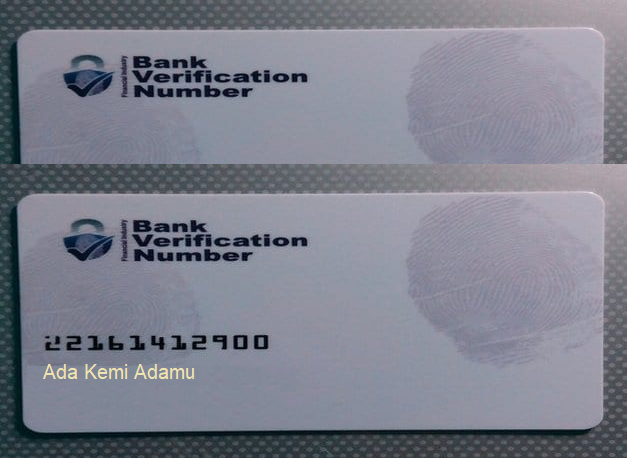
Nigeria’s fintech sector is growing. It is experiencing a cambrian moment of entrepreneurial capitalism, redesigning the architecture of the nation’s financial services. But when you look deeper, the foundation of everything the fintech players are doing is tethered to traditional banking. Yes, no fintech in Nigeria has the legal rights to enroll customers into the bank verification number (BVN) database – and that means every (formal) fintech customer to a large extent is already a bank customer! In other words, Nigeria’s fintech 1.0 is built wholly on the current banking ordinance.

That national playbook has both advantages and disadvantages. The main advantage is that we have stability which comes from the established banks. The disadvantage is that fintech users are bound by the growth of the traditional banks since only banks can initiate customers into the core (banking) financial database. If you extrapolate, the digital challenger banks in Nigeria are not going to be the apostles to bring new customers into the banking sector because they are not ordained by law to baptize users into the banking networks.

So, I see all the digital challenger banks to be transitioning until something happens, and when that thing happens, a new age will begin. That new age will be fintech 2.0. The national identity number (NIN) from NIMC must evolve, eliminating the need for BVNs. I am expecting that redesign to happen by 2024 when NIN could become what matters, and no one will need BVN to have a NUBAN bank account in Nigeria.

With NIN as the identification system, the digital banks will become unleashed to bring the unbanked through innovation, and not just waiting to lure already banked customers into their domains.

Where BVN Does Not Evolve to NIN

But where BVN does not transmute into NIN, I expect a massive change in strategy by the top digital banks: some will buy current traditional banks. Kuda is currently worth more than Wema, Sterling, Fidelity, Jaiz, Unity, and FCMB combined. If it wants to grow, unbounded by the limitation of capturing already banked with BVN, it could pick one of these banks to have the ability to do BVN since today it cannot enroll customers into BVN.

So, on that hypothesis, I expect one traditional bank to be acquired by an ambitious digital challenger bank in Nigeria. Typically, digital companies begin online, winning bytes and bits, and over time move to the physical space to compete on atoms. From Amazon to Google, no one stays forever online because the physical world is where humans live.

Nigeria’s fintech 2.0 will win physically.  By 2025, I expect massive redesigns because the digital natives will move from just bytes for atoms. So, expect massive battles in the physical domain.

Court Declares VAT Collection by Nigeria Unconstitutional

0

A federal high court sitting in Port Harcourt, Rivers State, has declared the collection of Value Added Tax (VAT) and Personal Income Tax by the federal government unconstitutional.

The judgment was delivered in the suit (FHC/PH/CS/149/2020) between the attorney general for Rivers state and Federal Inland Revenue Service (FIRS) as the first defendant and the attorney general of the federation, Abubakar Malami as the second defendant.

The Rivers State Government had last year, approached the court, seeking declaration that the constitutional power of the federal government to impose taxes and duties is only limited to the items listed in items 58 and 59 of Part 1 of the second schedule of the 1999 constitution as amended.

The court declared Rivers the rightful body to receive personal income tax and VAT emanating from the state.

Presiding judge Stephen Pam ruled that the federal government’s constitutional powers do not include VAT collection but those items in 58 and 59 of the Exclusive Legislative List.

Mr Pam issued an order of perpetual injunction restraining FIRS and the attorney general from coercing or intimidating residents of Rivers state to pay VAT and personal income tax to FIRS.

The court declared that FIRS is not entitled to receiving VAT, education tax, technology levy and withholding tax from any state in Nigeria and further dismissed the objections the defendant filed that hearing the case was not within the court’s jurisdiction.

The court granted all the 11 reliefs sought by the Rivers State Government on the basis that the federal government has no constitutional backing to collect VAT, Withholding Tax, Education Tax and Technology levy in Rivers State or any other state of the federation. According to the ruling, the constitutional powers and competence of the federal government was limited to taxation of incomes, profits and capital gains which does not include VAT or any other levy other than those specifically mentioned in items 58 and 59 of the Exclusive Legislative List of the constitution.

What it means for states and federal government.

In February 2020, the implementation of 7.5% VAT charges on consumption goods and services in Nigeria went into force, following the enactment of the Finance Act 2019. The federal government had directed businesses in Nigeria to ensure that the VAT increment is implemented in sales and remitted accordingly to the government’s coffers. VAT had been reviewed from 5% to 7.5%, and the federal government was poised to use the revenue generated from it to cushion the effect of plummeted oil revenue.

However, the development did not augur well with some state governments as it means relinquishing a large share of their tax revenue from businesses under their jurisdiction.

The court ruling means the federal government’s VAT revenue plan has been altered and the states will have to reap the benefits of the 7.5% VAT increase. It also means that the federal government will no longer have to collect VAT from businesses operating in states and share between states under the Federation Account Allocation Committee (FAAC), a practice that has fueled the call for restructure due to the injustice it portends. Many states in northern Nigeria, under sharia law, prohibit the sale of alcohol but share the revenue derived from VAT on alcoholic beverages sold in the south.

While the judgment empowers states to take control of tax from businesses within their territory, it also exposes them to the harsh realities that come with. It’s only a few states in Nigeria, including Lagos, Kaduna and Rivers, that can boast of financial independence from the federal government. Which means, many states will face the challenge of poor revenue generation.

The judge dismissed the defendant’s plea for the case to be transferred to the Court of Appeal for interpretation. The ruling has been hailed by many as a bold step in attaining true federalism in Nigeria, if every state will act upon the judgment and take control of their VAT and income tax revenue.