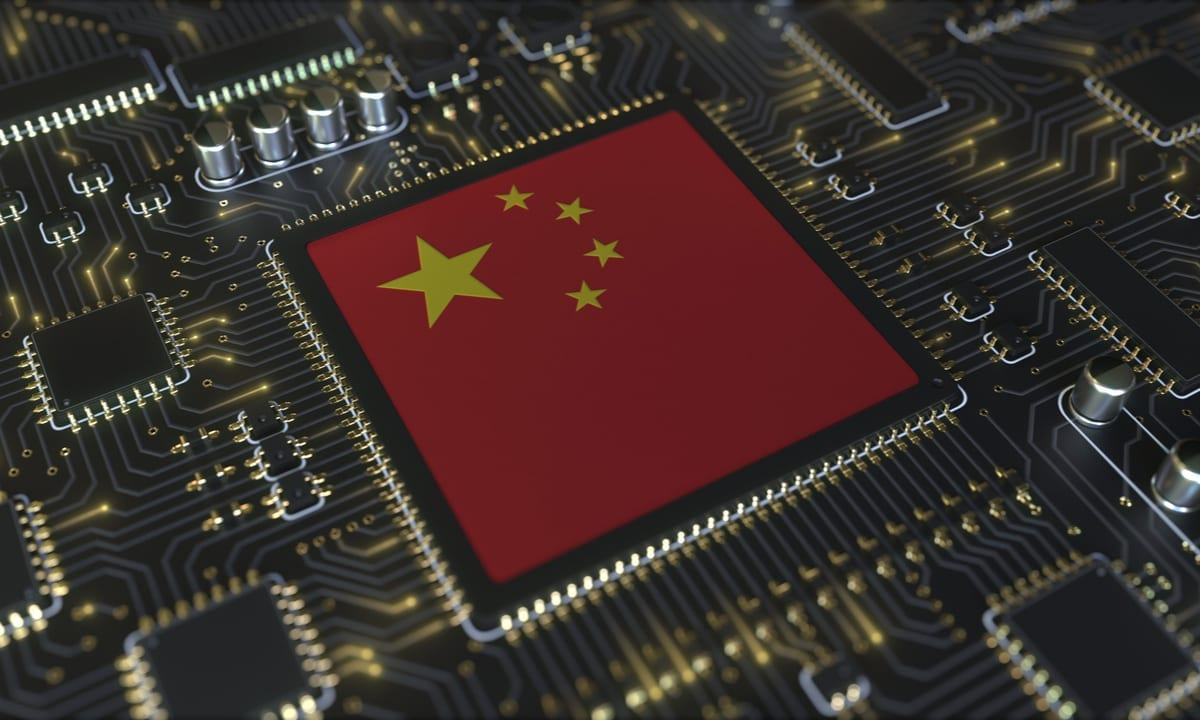
Months have passed since the Chinese government took the unprecedented step against its tech economy, clamping down on multibillion dollars economic ventures, and setting a precedent that has left investors in disarray about the future prospects of the second largest economy in the world.
It was a choice between China’s economic freedom and its political interest. With the former having been granted for decades, an array of political interests have come to stand in the way as its birthed multinationals battle political and economic interests cut across communism and democracy, to stay in business.
“After 40 years of allowing the market to play an expanding role in driving prosperity, China’s leaders have remembered something important — they’re Communists,” Bloomberg.
Outside China, its tech companies are beginning to reckon with the consequences of the country’s system of governance that has, over the last few years, spiked the hostility between China and United States. In the past, Chinese companies were worried about the wariness of US and its allies, who in the name national security, have targeted multinationals of Chinese origin.
The twist to the sequence came with China’s decision to curtail the freedom of its tech multinationals that have tremendously buoyed its economy in the last two decades, bringing it close to par with the US’. As the whirlwind of China’s crackdown sweeps across every sector of its internet industry, Bloomberg looks at the political interests behind it and the impact on China’s burgeoning economy.
Xi Jinping’s Capitalist Smackdown Sparks a $1 Trillion Reckoning
It was mid-June, and the most powerful Chinese Communist Party leader since Mao Zedong was holding court at an after-school club for elementary students in the remote city of Xining. Acknowledging the growing pressure on students and their parents to spend time and money on private tutoring, Xi promised to ease their burden.
“We must not have out-of-school tutors doing things in place of teachers,” he said. “Now, the education departments are rectifying this.”
While Xi’s comments went largely unnoticed by global investors at the time, the crackdown on tutoring companies that followed has become the starkest illustration yet of the Chinese president’s commitment to a sweeping new vision for the world’s second-largest economy — one where the interests of investors take a distant third place to ensuring social stability and national security.
Call it progressive authoritarianism. From exhausted couriers in the gig economy, to stressed parents struggling with ever-rising housing prices and tuition fees, to small businesses battling tech monopolies, Xi is swinging the cudgel of state power in support of the squeezed middle class. These challenges aren’t unique to China, but the policy response has been.
Weeks after Xi’s school visit, China said private education had been “hijacked by capital” and ordered tutoring companies to become non-profits, accelerating a selloff that at its most extreme erased $1.5 trillion from Chinese stocks and dented the portfolios of some of the biggest names in global finance.
Combined with new requirements for data security reviews ahead of overseas IPOs, directives for food-delivery firms to pay staff a living wage and escalating curbs on unaffordable housing, the tutoring crackdown has triggered a growing realization that the old rules of Chinese business no longer apply, and left investors wondering which sector will be the next target for regulators.
For decades, even as they kept strict control over strategic sectors like banking and oil, China’s leaders gave entrepreneurs and investors freedom to drive the adoption of new technologies and open up fresh opportunities for growth. Deng Xiaoping set the tone back in the mid-1980s when he said it was OK if some got rich first. Now, with growth slowing and relations with the U.S. increasingly hostile, they’re emphasizing different goals: common prosperity and national security.
“This marks a watershed shift in China’s policy priorities,” said Liao Ming, Beijing-based founder of Prospect Avenue Capital, which manages $500 million. “The government is going after industries that are creating the most social discontent.”
And, true to their Communist roots, China’s leaders have no problem trampling on the interests of venture capital, private equity or stock investors when they conflict with its long-term development plan. Liao said that focus is now on what has been dubbed the “three big mountains”: the crushing burden of payments for education, healthcare and property.
For now, tech is still the main target. In a flurry of action Friday, authorities summoned the country’s largest technology companies for a lecture on data security, vowed better oversight of overseas share listings and accused ride-hailing companies of stifling competition.
New Development Phase
China this year began a “new development phase,” according to Xi. It puts three priorities ahead of unfettered growth:
National security, which includes control of data and greater self-reliance in technology
Common prosperity, which aims to curb inequalities that have soared in recent decades
Stability, which means tamping down discontent among China’s middle class
If Xi executes on his vision — and that is still a big if — there will be important beneficiaries: stretched workers, stressed parents, and squeezed start-ups.
But so far, the losers have been more visible: tech billionaires and their backers in the stock market, highly leveraged property companies including China Evergrande Group, and foreign venture capital firms that had hoped to take Chinese companies public in the U.S.
For international investors, many of whom got burned by this year’s regulatory onslaught, the old rule was that to make money in China it was necessary to align with the Communist Party’s priorities. The dawning realization is that finding common ground may be increasingly hard to do.
Companies and investors have been “behind the curve” when it comes to anticipating regulation in China, Ren Yi, a Harvard-educated social media commentator known as Chairman Rabbit, wrote in an online commentary that has received more than 100,000 views. Education researcher Feng Siyuan says investors should have seen the education regulations coming: Xi had said more than two years ago the sector shouldn’t be profit driven.
Part of Xi’s motivation is desire for popular support ahead of the once-in-a-decade leadership transition next year, where he is expected to buck tradition and stay on as party chief for a third term. Growing discontent, including sporadic strikes among delivery workers, have rattled the stability-obsessed party.
Wearing the distinctive yellow shirt of Chinese delivery service Meituan, whose profits have boomed during the pandemic, 22-year-old motorbike courier Mr. Tang complains about the lack of medical insurance. “There’s nothing I can do about it if Meituan doesn’t pay for it,” he added. “The wealth gap between people in this society is too big”.
The downside for investors is that a bigger slice of the pie for workers like Mr. Tang has to come at the expense of the owners of capital. Meituan lost as much as $63 billion of market value last week after Beijing ordered it to improve worker protections.
China’s leaders won’t be shedding tears for the losses of foreign stock holders. The bigger risk for Beijing: Heavy state intervention might dampen the animal spirits that drive private investment and reverse an integration with the global economy that has helped drive growth in the last four decades.
Following the logic of the prison yard, Beijing signaled the start of the new era for entrepreneurs and investors by taking a swing at the biggest inmate: Alibaba Group Holding Ltd. founder Jack Ma. On Nov. 3, the initial public offering of Ant Group Co. — the finance arm of Ma’s empire, which was set to surpass Saudi Aramco as the biggest public listing of all time — was unceremoniously squashed.
The regulatory pace intensified after December, when a top economic planning meeting chaired by Xi vowed to rein in the “disorderly expansion of capital,” signaling the move against Alibaba was part of a wider campaign backed by the apex of Chinese power.
At first, investors thought the phrase referred to anti-monopoly efforts aimed at shrinking the power of tech giants, which had converted their vast profits into venture-capital investments spanning almost every sector. That narrative was bolstered by the 18.2 billion yuan fine slapped on Alibaba by anti-monopoly authorities in April.
But developments in recent weeks suggest the slogan goes further. In some sectors, private capital, especially foreign capital, may not be wanted at all.
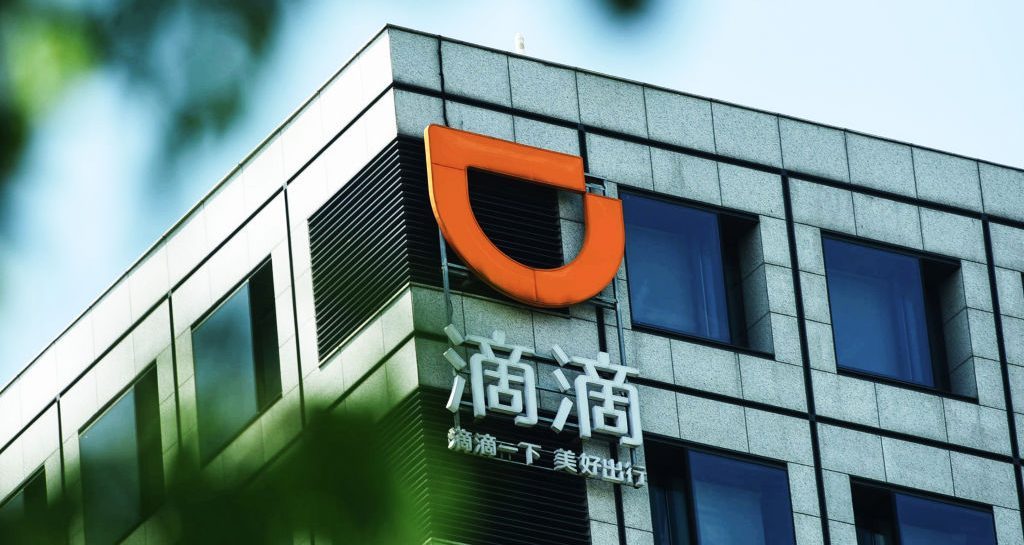
At the start of July, China’s cybersecurity regulator said tech firms with more than a million users would need to pass a review before listing overseas. Regulators made an example of Didi Global Inc — China’s answer to Uber — which had squeaked through a U.S. IPO just before the new regulations, removing it from app stores in the country and hammering its valuation.
Later that month, China’s top administrative body, the State Council, ordered companies teaching the school curriculum in the $100 billion after-school tutoring sector to become non-profits and banned them from pursuing IPOs or taking foreign capital. The semi-legal Variable Interest Entity, or VIE, structure adopted by the likes of Alibaba to go public abroad was singled out for top-level criticism for the first time.
In big cities, more than half of households report feeling “under pressure” from tutoring costs. One of the hottest online terms in China this year has been “involution”: the idea that parents are trapped in an endless cycle of educational one-upmanship, with the result not meritocratic progress but social stagnation.
Liu Shu, a 39-year-old manager at an insurance company in Beijing, says she and her husband spend 200,000 to 300,000 yuan (about $31,000 to $46,400) each year on their nine-year-old son’s after-school classes in Chinese, English, math and calligraphy. That is more than three times the average disposable income for denizens of China’s capital.
Those fees underscore the underlying logic behind the tutoring crackdown. The educational rat race risks burning out kids, draining parents’ bank balances, and — by keeping family sizes small — adding to the demographic drag revealed in China’s once-a-decade census earlier this year.
“This is why I don’t want to have a second child,” Liu lamented. “I just really don’t have more energy, on top of the issue of money. To me, raising a kid is too much stress.”
China’s other moves — whilst extreme — are also grounded in the logic of progressive economics, pushing back against the power of monopoly firms to crush competitors, squeeze workers and milk customers. Indeed, regulators in the U.S. are making tentative moves in the same direction as China.
“Capitalism without competition isn’t capitalism; it’s exploitation,” President Joe Biden said in July, signing a sweeping executive order that signaled the beginning of a move against monopoly power in the U.S.
But in contrast with America and Europe, where investors can generally keep pace with regulatory developments, China’s opaque political system makes decisions tougher to track. Xi, or his economy czar Liu He, may signal a new direction with a speech or by coining a new catch phrase, the meaning of which — like Xi’s comments at the Xining after-school club — might be lost on the markets. Officials scurrying to satisfy their superiors can often overdo things, causing wrenching corrections and policy reversals.
A recent example of that came in 2016, when officials suddenly slammed the door on cross-border capital flows following a botched attempt at yuan reform. This time around, there are also signs Beijing is shifting to damage-control mode. On a hastily arranged call with major investment banks, securities regulator Fang Xinghai attempted to restore a measure of calm to the markets, signaling that the education policies are targeted and not intended to hurt other industries.
East Vs West
Behind Beijing’s actions lies a political and economic philosophy that is fundamentally foreign to most modern Western politicians and investors. Communist rulers see the economy as something that can thrive through state planning, even if that rides roughshod over the rights of entrepreneurs and their backers.
Coming on top of mounting concerns about human rights abuses in Xinjiang, and the crackdown in Hong Kong, Beijing’s latest moves will add weight to voices in the U.S. and Europe who want to reduce ties with China. In the U.S., the Securities and Exchange Commission has already moved to put the brakes on IPOs for Chinese firms.
One lesson, though, is that China is not the passive victim of U.S.-led decoupling. In areas seen as essential to national security, Beijing is also willing to sever ties.
Efforts to boost self-sufficiency in crucial technologies — exemplified by the Made in China 2025 plan for cutting reliance on imports in everything from industrial robotics to electric vehicles — are already in train. The latest barriers to overseas IPOs and foreign capital in education flag a move toward selective decoupling in finance as well, with Beijing preferring inflows via stock markets in Hong Kong, Shanghai and Shenzhen where it has greater control over who gets to list.
Beijing is betting that the gravitational pull of an economy that will likely continue to generate more billions of dollars of growth opportunities than any other gives them leeway to throw their weight around, even if some global investors get whacked in the process.
At least some of the evidence suggests they might be right. Foreign investment continues to flow into China, including through domestic bond and stock markets which continue opening to overseas capital. For all the talk of decoupling, China’s exports to the U.S. keep rising.
Still, structural shifts in policy have a slow burn impact. The benefits of pro-market reforms culminating in China’s 2001 entry to WTO played out over the best part of a decade before the 2008 financial crisis halted the export boom. The costs of Beijing’s new turn away from the market will also take time to show. Even if the Communist Party continues to deliver on growth, the focus on common prosperity suggests investors will have to settle for a smaller share of the spoils.