DD
MM
YYYY

PAGES

DD
MM
YYYY

spot_img

PAGES

Home Blog Page 5640

Lagos Islands – The New Atlantis

1

This is the story of the flooding problem in Lagos, so naturally, I have to start with talking about designing native Nigerian attire! There is a story trajectory here, I promise, so please stick with me!

Traditional attire in Nigeria (‘natives’)

Not just in Africa, but many developing countries around the world, there are three ways of dressing – global casual, global business, and traditional/cultural dress, or as in Nigeria, a ‘native’.

I first became more sensitized to the business dynamic of this around the mid-late 2000’s in a company with 200+ office staff. They had a ‘dress down’ Friday culture and on Friday most of the Nigerians would come to work in native while the small number of foreigners would generally turn up in jeans and a tee shirt. I had taken up this job having left a job in UK. The UK job led to cultural events from time to time, and I already had about five natives but hadn’t ‘rocked’ them for a while, so from about the third Friday at work in Lagos, I started wearing native to work. I like them because in warm climbs they have a way of cooling you down. If I was a processor, they would be a passive heat sink. Much to the general bemusement of other foreigners, my new Friday attire met with rapturous approval by Nigerian staff (by far the majority).

This then got followed by some ‘me too’ efforts from some other foreigners. The one thing about bad taste and things that don’t work, is that ‘all wrong’ just looks ‘all wrong’ regardless of technically meeting a dress code. The result of these efforts were often this one token native that was the product of a wedding or event at some stage and looked like it had been mothballed for centuries. Some were very cheap quality cloth, ‘ankara’ with ‘riot’ colour that will blind your eyes unless you have some very dark shades. Makes a Nigerian look extra ajepako. Makes an oyibo look like a walking disaster.

My sensitivity around these issues was important, because Friday, or no Friday, my leadership position held a mixture of Technical, Shared Services and Business Development functions, and without warning, I could end up fronting a team on a visit to a client site at no notice. To represent my employer well, I had to understand the context I was visiting and I had to strike the right chord.

With daughter Niamh Sopuruchi Adeze 2009. Jacquard Fabric

Tailors

Just like someone can wear a business suit and tie that just doesn’t look right, so too, in context, a certain style of native might not look right. This seemed to be lost on the other foreigners who worked there, and for them, a native was a native period.

If a certain style or design notion is required, understanding the craft personality as much as the technical skillset of the tailor you use is important. I invested in seeking out many tailors and examining examples of their work.

Finally I settled with mostly three different tailors. One was a woman with a kiosk down an ‘apian way’ inside a prison guard residential compound off Awolowo Road in Ikoyi. She is very innovative at matching outfits across people of differing gender and sizes, such as a family or group that want to attend an event with a visible unified identity.

The second tailor was a young guy off the back of Yesufu Sanusi Street in Surelere. His results always impressed, though you could never come to him with an exact prescription for what you needed. He understood ‘instruction’ as a broad notion. You would always get something edgy and innovative. But that’s not what you always want.

Then comes to my third tailor – Solomon. Solomon designs natives only one way. It doesn’t matter what you say, or draw, or even give him a design. There is a fixed limit of designs that are all in his head, and there is an industrial strength firewall preventing anything else getting in and adding to, or displacing them. Solomon creates pristine, understated and yet impressive garments intended for the mature business statesman. He will work with any fabric but prefers guinea brocade or lace.

Solomon

I first met Solomon about fifteen years ago after eating lunch at a bar-restaurant called ‘Havana 2’ at the junction of Ahmadu Bello Way and Adetekumbo Ademola in VI. It was the second such venture by Ray Herrington and Dave Inglis, the original one having been on Ribadu Road in Ikoyi. Solomon was remonstrating with a man on the roadside just outside the compound. It seemed the man had got Solomon to tailor something for him, and was then trying to negotiate down from the agreed price after the job was done. As I drew a little closer I realised I knew who the other guy was, not well, but we had some shared business acquaintances. He tried to turn his face to one side in an effort to pretend he hadn’t noticed me. I’d describe the guy as Nigerian born of foreign extraction, but I don’t want to write more, because its unnecessary to link his despicable behaviour with an ethnicity shared by some upstanding people I know, who are nothing like him. Simply put, he is not short a few thousand Naira.

I interjected and told the guy I heard everything. ‘You know I am a guy that gets himself about… if you refuse to pay this man what’s owed, what I have seen and heard today is going to be my favorite party and business lunch story for months to come. On the other hand, you can just settle him, and this conversation never happened and we never met today. Your choice’.

After, Solomon was ever so gracious and wanted to buy me a beer. I told him I needed to get back to the office,  and had a lot of work to do, but I was interested in his tailoring and would take his phone number.

Solomon seemed around sixty years old when I met him. He didn’t have such an easy life. His father was Yoruba and his mother was Idoma. His father had a British Military administrative job posted in Benue State. After independence, his father got transferred to a Nigerian civil posting to Lagos State. Solomon was about a year and some months alone with his mother in Benue who then died of some disease. His mother’s family packed him to meet his father in Lagos. Shortly after this his father was made redundant from his civil job. Solomon lost the free schooling that came with his father’s job.

Solomon’s father apprenticed him to a truck driver who owned his own truck. Sometimes if the journey was running behind time, Solomon would have to drive to allow the owner to rest. He was not yet tall enough to reach the pedals and he had woodblocks to help. He related how the pedals were so stiff and hard to press. At some point the owner, who was old, passed away somehow. Unusually for a Nigerian man of that time, he had no children and Solomon got to collect the truck.  Solomon describes this as the only bit of luck in his life, although the truck was an old 1960’s FIAT which was always breaking down, and he knew nothing about haulage contracts or how to get business.
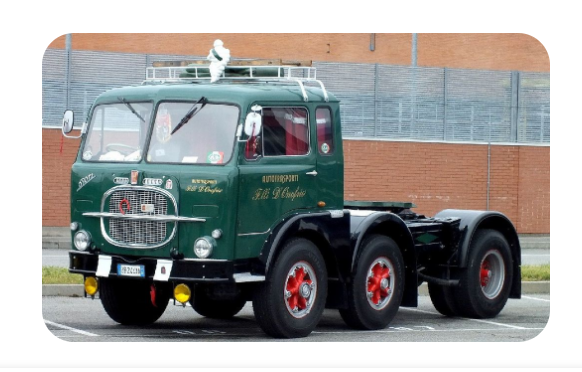
Illustration of cab of FIAT truck similar to which Solomon would have driven

Bad luck struck again at some unspecified time later. Solomon was in a crash in which his truck was totalled and he lost a leg. He was given a prosthetic limb, but with no truck of his own, the harsh haulage world of Nigeria was perceived too much of a risk by haulage managers to give Solomon a driving job. There were plenty of younger, fitter, able-bodied men equally anxious to get a chance.

A glimmer of hope came when Solomon visited some extended family of his father’s resident in Ikorodu. It seemed following his move from Benue to Lagos as a child decades earlier, personal effects of his mother had been sent to them unknown to him and had been there all this time.

One of the items was an old classic manual Singer sewing machine. Moreover, his family were in the ‘Beer Parlour’ business. Apart from several beer parlours around unremarkable parts of Lagos Mainland, they had three beer parlours side by side on Kuramo Beach.

Solomon was given a section of sheltered and fenced beach to the front of the middle beer parlour on which to site his sewing machine. He was also given a very basic but secure room inside. This was an excellent opportunity for him as he had a captive market with the transient inhabitants of Kuramo for ‘N100 here, N200 there’, repairs done in a few minutes, while stepping outside the Kuramo gateway he was on Adetekumbo Ademola, rubbing shoulders with the most privileged of Lagos. He became ‘The Kuramo Chairman Tailor’

Kuramo Beach

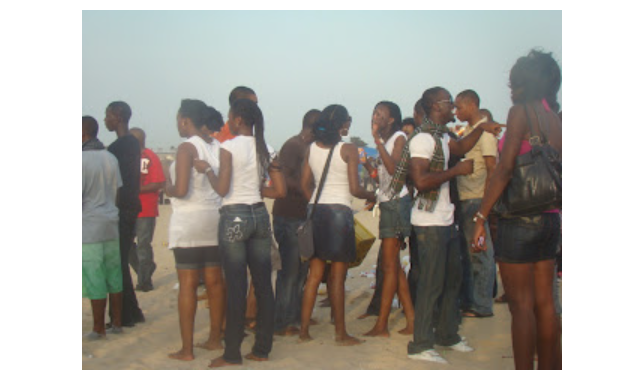
Kuramo Beach was one of the most dangerous places in Lagos to be at one point. An online story teller described the place at night…. ‘makeshift structures … commercial sex … no electricity or convenience. the entire atmosphere reeks of marijuana … fierce-looking boys give unfamiliar visitors the kind of look that would send shivers (down) their spines…. no light in the whole area’

Many of the ‘makeshift structures’ referred, were hastily constructed efforts to shelter by transients, but the best of the beer parlours, which included those of Solomon’s relatives, were builders quality wood raised platform built on foundationed structural concrete stilt pillars. Roofs were galvanized corrugated steel.

Police maintained a strong presence outside the Kuramo Gate, and ‘uneasy’ visitors with some legitimate business reason to be there generally stayed within police view, if they ventured in during darkness, requiring their contact to meet them close to the gate.

Up to around the middle of 2010, various security details randomly patrolled the beach. This was because of rumoured politicians and high profile individuals chilling out on the beach ‘incognito’, but as development plans for ‘Eko Atlantic’ started to progress, these random security efforts evaporated. The area inside the gate began to be self-policed (area boys and agbero).

Solomon was a man of considerable physical presence who had upper arms the size of many men’s thighs. But his size was a liability when it came to his prosthetic limb and moving around was visibly uncomfortable for him. So after the first ‘native’ I collected from Solomon, I began to enter Kuramo and collect from his spot.

He developed respect and loyalty on the beach, particularly among beach boys and agbero. If they walked past his spot they would semi-bow as they went, and say ‘Chairman’. The first time I walked to his spot, he instructed one of them to meet me at the gate and escort me to him, but after, it wasn’t necessary as they all knew I concerned him.

Nevertheless, I avoided going there in darkness. I generally collected from him during a gap in my working day, which wasn’t always strictly ‘lunch time’. I knew he was always waiting on the money, so if work made it impossible for me to arrive in the day, I would get there on close of work.

If it had to be evening, I would try to make it Friday, because the beach suya mallams started early on Friday. It was some of the best suya in the state. I could sit with Solomon, hear a great story or two, eat suya (my favourite is one called ‘assorted meats’) take two beers and be gone by 8pm.

I’m not fearful by nature, but if there is no business imperative to be somewhere of known risk, then there’s little point loitering where late hour brings increased risk.

Singer sewing machine like Solomon’s

The first signs of bad things to come.

Kuramo beach used to be a narrow sand ridge ranging between about 15m at the narrowest point at high tide, and 50m at the broadest point at low tide. It had two bodies of water each side of the ridge. The open Atlantic was on one side, while a stagnant saltwater body, the Kuramo Lagoon, lay at the other side. Twice a year, there were seasonal exceptional high tides. During this time, the highest tidal point would see water rush across the entire ridge, into the lagoon. The phenomenon wasn’t sufficiently high to reach the raised floor level of beer parlours and would pass underneath. This only lasted a few days.

‘Makeshift structures’ were at risk,  though the timing of these biannual events were a matter of meteorological prediction, and the public information generally filtered down to beach inhabitants well in advance. Beer parlour owners were generally helpful and would take transients most prized possessions for a few days  safe-keeping if asked. The worst likely to happen is a series of unexpected salt water baths!

Some point in 2010 things started to change. I was in a unique position to acknowledge this. This was because firstly, I had undisturbed access to the site of observation (due to Solomon) and secondly, because I understood what I was looking at.

The tidal currents were systematically eating into the sand ridge and carrying the sand out to sea.

By early 2011, the sand ridge as a permanent structure had been completely undermined. Then the inevitable happened. The next seasonal high tide that came washed even the most anchored of structures away, destroying livelihoods and even with some loss of life.

Solomon’s sewing machine was lost. I located some of his relatives a few days later, exiting the Kuramo Gate with what they could salvage. They ‘understood’ that he was personally safe, and speculated he was on his way to Ikorodu, though his phone was not going through.
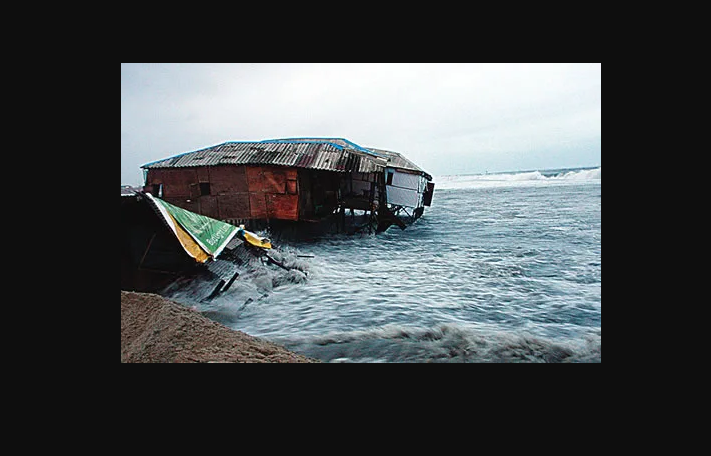
Tidal devastation on Kuramo

COASTAL EROSION

Coastal Erosion is a real phenomenon in the ‘islands’ area of Lagos

Throughout the second half of 2010 and forward,  the building of a breakwater structure, the precursor to the Eko Atlantic Development, could be seen out in the harbour, from either Kuramo or Bar Beach.

Managing Coastal Erosion (1990) National Academies of Sciences , Engineering Medicine, National Academies Press, US states:

‘A quantitative understanding of these short and long-term shoreline changes is essential for the establishment of rational policies to regulate development of the coastline zone. Shoreline changes can be due to natural causes or they can be human-induced. Several common causes of shoreline changes are:

  • construction or modification of inlets for navigational purposes
  • construction of harbors with breakwaters built in nearshore regions’
Boss Africa Blogspot makes its claim more direct in August 2012 with an article entitled: ‘Lagos State Proceeds With “Eko Atlantic” Project That Caused Deadly Ocean Surge’

The tripple whammy – Flooding, Rising Sea Level from Climate Change, and Coastal Erosion.

Much of the islands areas of Lagos is either at or below sea level.

This means a number of things:

  1. Drainage, driven by gravity has to find its way to the sea. If the land is below the level of the sea, there is nowhere for flood water to flow to. Water does not flow uphill. Human beings have known this ever since Isaac Newton got hit on the head with an apple.

  2. Climate change is causing sea levels to rise, and we can expect to see the rise rate continually accelerate. It took all of the 20th century to rise from 1.4mm  to 3.2mm PA.  Between 2000 and 2016 (16 years) the rate has risen 0.2mm to 3.4mm PA and then in just another 4 years it has reached 3.6mm PA.

  3. Land Reclamation around the islands, and in particular in respect to the Eko Atlantic program has served the purpose of displacing currents to cause erosion somewhere else and magnify the problems articulated in #1 and #2.

The islands are the wrong part of Lagos to upset the marine equilibrium through construction intervention. The area is on a submergence risk knife edge, and every effort to artificially constrain it, is just introducing a multiple of the problem somewhere close by.
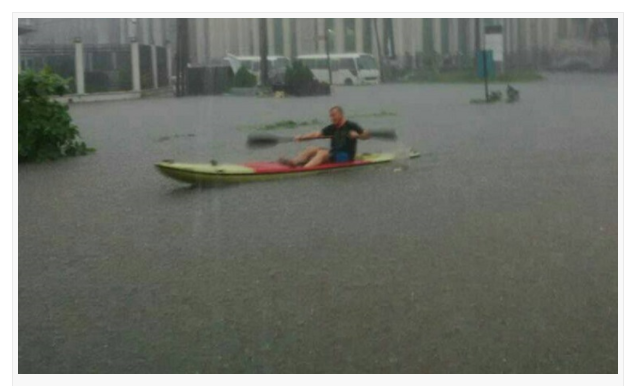
This is no river. This is outside the Silverbird Galleria in Victoria Island

“We need to look at our infrastructures — drainage systems, waste management facilities, housing structures … How resilient and adaptive are these infrastructures in the face of environmental pressures and when put side-by-side with our growing population?” said Seyifunmi Adebote, a Nigerian environmentalist, who advocates against Nigeria’s “largely poor” response to climate change.

I have always advocated that up near Badagry would be the ideal location to develop a modern Mega-City supported by a cutting edge port terminal. OK.. APM Maersk pulled out of it in 2016 for their own reasons.
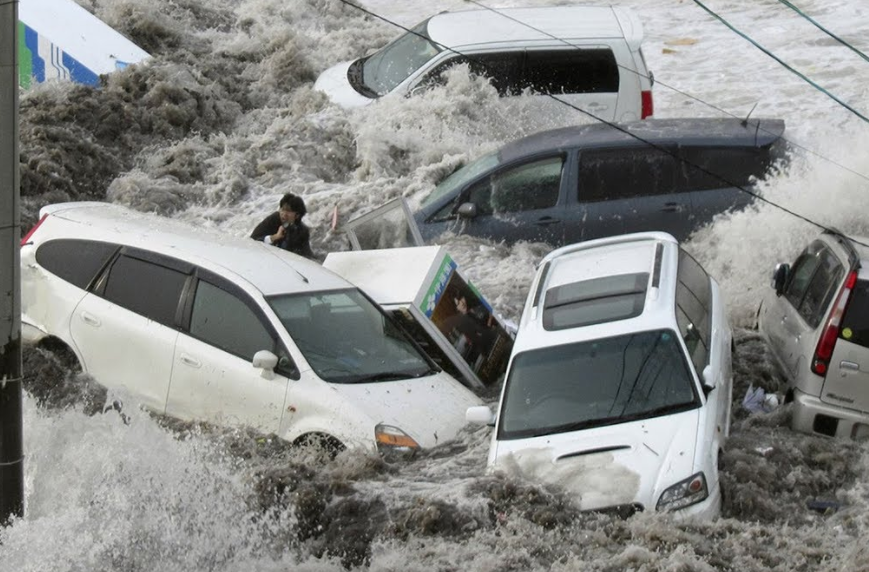
Vehicles tossed around like rag dolls in Island Torrent

This doesn’t mean other parties, supported by Lagos State, can’t make it happen. It’s got good potential for easy transport connectivity with major industrial activities in both Ogun and Oyo States, ease of access to Benin Republic, and no matter how much road transport demand increases, there is no need to build more expensive bridges… Did I mention no need for more bridges? Maybe I should write that three times!

There is plenty of land in the Badagry area over 8m above sea level.
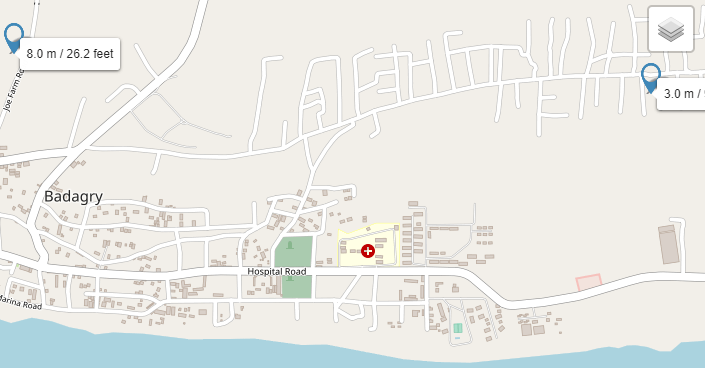
Elevation map shows 8m above sea level reading in Badagry

So where does Lagos need to go from here?

Well, anywhere except for more development, or more gerrymandering with coastal conditions anywhere near the islands, might be a good idea.

As it is they need to be anticipating the future and perhaps rename ‘Banana Island’ to ‘Coral Island’, because at some point, probably still in my lifetime, there will be a higher chance of sea corals growing there than bananas!

Perhaps Plato’s ideas about the lost city of Atlantis were not so much speculative as prophetic?

Morocco was a good guess but its just a bit too far north. It’s in Lagos, Nigeria, it just hasn’t submerged yet.

Oh and the development consortium spelled the name wrong… It’s not Eko Atlantic… It’s Eko Atlantis 

References and Acknowledgements (Not in main body text):

worldatlas.com/articles/where-is-atlantis-is-atlantis-real.html

ocean.si.edu/through-time/ancient-seas/sea-level-rise

www.climate.gov/news-features/understanding-climate/climate-change-global-sea-level

http://bossafrica.blogspot.com/2012/08/lagos-state-proceeds-with-eko-atlantic.html

dailypost.ng/2012/08/20/lagos-ocean-surge-more-bodies-recovered/

www.nap.edu/read/1446/chapter/4

www.cknnigeria.com/2012/06/goodthe-bad-and-ugly-side-of-kuramo.html

www.greenmatters.com/p/lagos-floods

therainbowonline.net/water-take-homes-roads-vi-lekki-hit-worst-flooding-recent-years/

www.freemaptools.com/elevation-finder.htm



Google Unveils Tensor Microprocessors To Better Bake AI Into Pixel Smartphones

4

Alphabet’s Google is now a microprocessor maker. The search giant has announced that it would begin to build its own smartphone processor called Google Tensor. In the past, Google had relied on Qualcomm, one of the finest mobile chipset makers in the world. So, as Google Pixel 6 and Pixel 6 Pro phones launch, Google Tensor will power them.

It is what it is, just as I noted a few days ago: “They taught us in the economics class that companies have to specialize and build core competencies.  They need to do things really well and be the best possible in their chosen domains. But today, especially in native tech companies, we think that does not overly make sense as technology has changed the cost of entering into new domains….People, build a technology stack and expand the stack into anything you want in future. Once the foundational stack is there, adding new things on top of it becomes easier and cost-efficient.” This redesign will reshape the future of technology competition.

Google announced Monday it will build its own smartphone processor, called Google Tensor, that will power its new Pixel 6 and Pixel 6 Pro phones this fall.

It’s another example of a company building its own chips to create what it felt wasn’t possible with those already on the market. In this case, Google is ditching Qualcomm. The move follows Apple, which is using its own processors in its new computers instead of Intel chips. And like Apple, Google is using an Arm-based architecture. Arm processors are lower power and are used across the industry for mobile devices, from phones to tablets and laptops.

Qualcomm said it will continue to work closely with Google on current and future products based on its Snapdragon platform.

In the past, if you were not Apple, Samsung and Huawei, your chipsets likely came from MediaTek and Flextronics. For those elite three, Intel and Qualcomm provided some core technologies. But over time, most have weaned themselves from these native chipmakers. Intel’s current paralysis began when Apple brought its chipmaking in-house. It has already caused another company to go bankrupt in Europe when it stopped working with the company on mobile chips.

Google wants unification of hardware and software to make it easier to bake AI in its phones by having the ability to control every aspect of the transistor. As that happens, I expect the rise of Pixel phones to begin. Google needs that in order to keep Android very relevant for the upper middle class. Yes, you do not want people to begin with your product only to graduate to iPhone.

Google wants to offer a compelling product which people can see as a brand to attain a stable equilibrium into. So, even if all Android products underperform, Google Pixel will be there for those who want quality, in the range of iPhone. That strategy will keep Android relevant.

With TSMC available, Google can assemble circuit designers and they can design for the company to fabricate. TSMC is equivalent to Google Cloud in the semiconductor industry; it manufactures designs from anyone, saving companies the need to invest in multi-billion dollar foundry business and associated domain capabilities.

People, the playbook has changed!

Nigeria’s Cambrian Moment And Age of Deep Entrepreneurial Capitalism

1

One became a $500 million business today, chronicling one of the fastest accumulation of wealth in Nigerian history. More than six are hovering around $100 million to $250 million valuations. The best days of Nigeria are well ahead. And the best way to respond to siddon-look do-nothing politicians and policymakers is to #build.

Forget the noise, and find the inner energy to advance. I have noticed one thing: the gravitational force in Nigeria is not even strong to keep you down, if you are determined to fly to the mountaintop.

This is a cambrian moment and this is the age of Nigeria’s entrepreneurial capitalism. Many will wait for the government until things are perfect but the FEW will sojourn, well ahead into the castle. I look into the horizon, I can see why the Igbo proverb says “uwa bu ahia”. Yes, the world is a market  – and all challenges in Nigeria are business opportunities.

Invent. Build.  Innovate. And Advance.

Major Trends in Business and Technology in 2021

0

Imagine a post-coronavirus world: the crisis has passed, but consumers and business models will no longer be the same. Once people got used to digital and remote technologies, got used to playing online casinos or betting using 22Bet login, using Internet services all the time, their expectations changed forever. The main themes of 2021 will be philanthropy and sustainability. People’s experiences during the pandemic will lead to rapid changes in technology and business.

Trend ?1. Pharma Revolution: Advanced Coronavirus Tests and Vaccines

The coronavirus has shaken up the pharmaceutical industry. Drug testing has become faster and easier. Traditional clinical trials are a thing of the past – they’ve moved to a virtual platform. Consultation and data collection have also moved online. Such transformations can take root and change pharma forever.

We saw the rapid emergence of Covid-19 tests around the world, and then vaccines from Pfizer, Moderna, and AstraZeneca.

Pfizer and Moderna developed matrix RNA-based vaccines for the first time ever. More new coronavirus test and vaccine production technologies await us in 2021.

Trend ?2. Telecommuting and Videoconferencing Will Stay With Us

The pandemic has led to an explosion in the popularity of telecommuting and videoconferencing. Whether we want it to or not, it will continue in 2021.

Zoom, founded in 2011, has become something of a symbol of the pandemic. Other video calling services also helped us stay in touch with reality: Cisco’s Webex, Microsoft’s Teams, Google Hangouts, GoToMeeting and Verizon’s BlueJeans.

There are a lot of newcomers in the field of telecommuting. Startups Bluescape, Eloops, Figma, Slab and Tandem offered collaboration solutions. They can be used to create and share content, communicate with colleagues, track project results, train employees, and organize virtual team building events. These tools help teams keep track of collaborative learning and documentation. And you can create a virtual office that mimics a normal office so colleagues can communicate and collaborate.

Trend ?3. Contactless Shipping Is the New Normal

In the U.S. the popularity of contactless delivery increased by 20%, people want to minimize physical contact – this is the new norm. DoorDash, Postmates and Instacart provide this service. Grubhub and Uber Eats have also expanded their contactless delivery capabilities and are not going to give it up in 2021.

Meituan is the first company in China to offer contactless delivery in Wuhan. It now uses drones to deliver products to customers. Meituan tested the technology last year, but it only recently launched the service.

China is not the only country that has turned its attention to drones. U.S. startups Manna, Starship Technologies and Nuro are tackling the problem with robotics and artificial intelligence applications.

Trend ?4. The Prosperity of Telemedicine

The healthcare industry is all trying to reduce the risk of their employees and patients contracting the coronavirus. Many private and public clinics have begun to offer telemedicine services. The doctor and patient communicate via video chat, artificial intelligence diagnoses through photos, and medications are delivered contactless.

The number of U.S. patients who have switched to telemedicine is up 50% over pre-pandemic levels. IHS Technology suggests that their number will soon reach 70 million. And Forrester Research predicted that in early 2021 the number of remote appointments will reach one billion.

Several public companies now provide this service: Teladoc Health, Amwell, Livongo Health, One Medical and Humana. Startups are not far behind – MDLive, MeMD, iCliniq, K Health, 98point6, Sense.ly and Eden Health offer telemedicine services.

In addition to telemedicine, in 2021 we expect news from biotechnology and artificial intelligence. Machine learning (e.g., Suki AI) will be used in diagnostics, administrative work, and building robots for healthcare.

Trend ?5. Distance Learning Is Part of the Education System

The coronavirus spurred the development of online education. During the pandemic, 190 countries closed schools and universities, sending pupils and students home. Some 1.6 billion people faced this new reality.

Schools, colleges and even sports centers organized classes via video conferencing. Many institutions have been advised to leave part of the remoting even after the reopening.

China’s 17zuoye, Yuanfudao, iTutorGroup and Hujiang, America’s Udacity, Coursera, Age of Learning and Outschool, and India’s Byju’s are among the best online learning platforms. They helped the world during the pandemic and will continue to do so in 2021.

Trend ?6. Massive 5g Infrastructure Development

The demand for high-speed Internet and the shift to smart home and city systems has spurred the development of 5G-6G technologies. In 2021, major corporations and startups will create new infrastructure based on them, as well as utilities and updated applications.

Many carriers are already deploying 5G, with Australia having built the entire infrastructure before the pandemic. The U.S. company Verizon announced a major expansion of its 5G network in October 2020. It will cover more than 200 million people. Technology is spreading fast in China, too. But the Swedish company Ericsson is leading the global market. More than 380 telecom operators are investing in 5G, and more than 35 countries already offer the service.

Among the startups in this area are Movandi – it allows 5G to transmit data over long distances – and Novalume (helps municipalities manage a network of public lighting and data through a smart city system). And Nido Robotics is using drones to explore the ocean floor.

With 5G, drones are improving navigation and using the Internet of Things (IoT) to communicate with on-board devices. For example, Seadronix, a startup from South Korea, uses 5G to fuel autonomous ships. The technology allows all devices to work together in real time so that unmanned vessels can move around without human intervention.

In 2021, the development of 5G and 6G will improve smart cities around the world and support the market for unmanned systems.

Trend ?7. Development of AI, Robotics, Internet of Things, and Industrial Automation

In 2021, the demand for artificial intelligence (AI) and industrial automation technology will be huge. As production and supplies return to their previous levels, labor shortages will become a serious problem. Automation through AI, robotics and the Internet of Things will become the main alternative for managing production.

Here are some of the leading technology companies that are providing industry automation through AI and robotics: UBTech Robotics (China), CloudMinds (USA), Bright Machines (USA), Roobo (China), Vicarious (USA), Preferred Networks (Japan), Fetch Robotics (USA), Covariant (USA), Locus Robotics (USA), Built Robotics (USA), Kindred Systems (Canada) and XYZ Robotics (China).

Trend ?8. Virtual and Augmented Reality Boom

VR and AR were actively used in 2020. These technologies have become part of everyday life and different spheres of life, from entertainment to business. Employees in many companies moved to remote work, and AR and VR helped them communicate and work together.

Immersive technologies offer incredible opportunities for transformation in all areas. AR avatars, AR indoor navigation, remote assistants, AI integration in augmented and virtual reality, mobile AR, AR in the cloud, virtual sports events, eye tracking and facial expression recognition technology will be more common in 2021, and 5G and broadband internet will accelerate the spread of technology.

Microsoft, Consagous, Quytech, RealWorld One, Chetu, Gramercy Tech, Scanta, IndiaNIC, Groove Jones and other companies will be the flagships in popularizing AR and VR.

Trend ?9. Micromobility Growth

The micro-mobility market slowed at the beginning of the year due to the pandemic, but by the end it had managed to recover to its previous pace. Electric bicycles and electric scooters are becoming increasingly popular; they are an alternative to conventional personal and public transportation. The market for private micro-mobility solutions is expected to grow by 9% compared to pre-soviet times, and the shoring economy is expected to grow by 12%.

Milan, Brussels, Seattle, Montreal, New York and San Francisco have built more than 30 km of dedicated bike lanes. The UK government has announced that sales of cars with diesel and gasoline engines will be banned after 2030, which has also increased interest in micro-mobility.

Startups are pushing innovation in this area. Bird, Lime, Dott, Skip, Tier and Voi have been the main ones in this field. There are a few companies in China, too, that have achieved excellent results: Ofo, Mobike, and Hellobike.

What Digital Marketing Trends Will We See in the Nearest Future

0

Let’s take a look at the current trends in marketing and find out which areas of digital are worth paying more attention to.

Each new year brings new trends in marketing, as well as in culture, economy and technology in general. 2020 was an interesting year in terms of changing consumer behavior and the active penetration of online technology into everyone’s life. For example, in 2020 alone, a huge amount of online entertainment has emerged and developed, with online casinos like PlayAmo standing out in particular.

Trends in digital marketing in 2021 prepare new challenges for marketers who want to improve the effectiveness of their projects. After all, the development of the digital world is not necessarily associated only with positive trends, many changes on the contrary make it difficult to work in the market and force a creative approach to solve problems. 

What are the digital marketing trends of 2021? Let’s get acquainted with the current tools.

Users’ Personal Information Is Becoming Less Open

While earlier users were looking for their own ways to maintain privacy, in 2020, IT giants like Apple and Google are standing up for people. The practice of using cookies to identify users and therefore using them to customize personalized advertising is becoming a thing of the past. 

Now it will be possible to advertise not to a specific user, but to the segment to which he belongs. On the one hand, this is an opportunity to reach new users who previously did not know about the products that the company offers in the market. On the other hand, non-personalized advertising should be expected to lead to lower conversion rates. Thus, in 2021, digital professionals should continue experimenting, testing, and measuring different types of campaigns and channels. As usual, the digital marketer needs to look for new solutions, measure their profitability and find the optimal balance between costs and results.

Social Media Shopping

People spend a lot of time on social media. In 2020, the average time spent scanning friends’ feeds and socially communicating online has risen to 3 hours a day. This is a good prerequisite for companies to increase their exposure to social media users to raise their chances of making a sale. Especially since social media platforms are trying to make the process of selecting and paying for goods more convenient and easier, without going to third-party resources.

In addition, social media is not just another sales channel for companies where brands meet with potential customers just because they spend most of their time there. Social e-commerce is a new way to personalize offers, where users expect brands to take into account previous interaction experiences. Most importantly, they hope it will help companies better identify a person’s buying options so they can make appropriate offers. 

Optimizing Promotion and Data-Driven Marketing

More and more sales are being made online. And it’s changing the way consumers interact with a brand: sometimes making purchases, sometimes just signing up for accounts to follow updates, sometimes buying right away and other times waiting a long time, etc. The year 2021 is a turning point when the relatively linear movement of users along the route to purchase is replaced by a diffuse, chaotic pattern of consumer contact with the brand. In this case, it is important for marketers to ensure that the brand is always present in the daily life of the customer.

When companies start collecting data about their customers and analyzing their behavior, they better understand the necessary actions on their part that have the desired impact on users to eventually lead them to purchase. Machine algorithms and machine learning help them do this. Artificial intelligence not only tells them how to maximize personalization of communication but also allows them to optimize channels, ad impressions, emails, and even the use of content in promotion, finding the type and look that is more effective.

Marketing Automation

The customer’s path to purchase has many touchpoints with the brand. That said, their journey can take place with varying degrees of intensity and using multiple devices. The broader the target audience of consumers, the more difficult it is for a company to track interactions, analyze and make timely adjustments. 

One of the key trends in modern digital promotion is to reduce the amount of manual work by the marketer to set up ads, reduce the time for this work and thereby achieve a super-personalized offer to users in promotion campaigns. Automation is the main tool of digital marketing strategies, as it ensures that the company reacts quickly to audience interest and maximizes the personalization of the offer. 

Video Is a Key Type of Content

Video offers the ability to share a large amount of content with users in a short period of time. At the same time, such communication has a relaxed, attractive, and dynamic nature. A person in an overloaded information space watching a short video is much easier and preferable than reading even a not very long text description. 

Social networks willingly support this format, giving it preference over other types of content. Especially since in 2020 many users have become so accustomed to this form of communication, watching a huge number of live events, video conferences, online courses, video stories, etc., that they are unlikely to want to give it up in the future. 

Virtual Events

Online events became popular in 2020 by necessity, but they’re obviously not going anywhere in 2021 and beyond. It’s not just that restrictions due to the threat of a pandemic persist. This format of events is attractive because of its audience expansion, its accessibility to users regardless of location, and its economic profitability. 

In virtual space, there is no need for visas, tickets, or hotel reservations, and it is not as important whether the borders are open for travel or not. For audiences and companies, this means a lower cost of participation with no limits on the number of participants. This gives the enormous potential for content sharing and an impetus for new ideas to emerge and develop. So, in 2021, virtual events will continue to be a relevant and popular format for interacting with a wide range of customers.

Optimization (SEO) For Voice Search

Voice search is a new challenge for traditional SEO. A variety of voice-centric devices and apps are provoking users to speak rather than type their search queries. In this case, the results are often different from traditional text-based searches. As this trend grows, companies need to start considering optimizing their content for voice queries. The first step in this direction is to create content that has a more conversational style that matches the way consumers spell out their questions. 

Omnichannel

The pandemic situation has shown the need for any company to have a presence in both offline and online environments. This is not only a business requirement, in order to ensure better sustainability in the market despite all kinds of external threats, but also to reach a different level of customer service. They are already in the habit of combining their purchases in different environments, depending on the circumstances. 

For companies, however, it’s important not only to provide the same quality of service online and offline but also to retain the privileges for loyal customers regardless of their choice of channel. And that means businesses must set up their marketing processes to put the customer at the center of their communications with them, ensure they are identified regardless of the medium, location, device used, etc. Seamless interaction is the main thing all digital marketers will be racking their brains about in 2021.

The Interactivity of Communications

Another trend that has emerged during the period of isolation is the dialogic form of interaction with the audience. All sorts of travel restrictions, the shift to a remote work format, are all reasons why people are more interested in human communication. It is important for them not only to be passive listeners but also to participate in the discussion, to be heard. This creates a demand for interactivity, discussion of any brand communications with its audience of consumers. 

Beginning of the End of A/B Testing

A/B testing was and still is an excellent tool for hypothesis testing, where the marketer does not have enough reliable knowledge and draws his conclusions mainly on intuition. But with the development and expansion of predictive analytics, this way of testing marketing decisions will become a waste of time and budget. The high accuracy of machine algorithm predictions will save marketers from having to verify them but will be a direct guide to action. In 2021, this trend will manifest itself noticeably. 

Video Streaming and Influencer Marketing 

Agents of influence aren’t just grabbing the audience’s attention in traditional areas by posting ads to their accounts. They actively appear on streaming platforms to create live content with human emotion. The integration of live-streaming, tips to use, and on-the-go shopping opportunities will grow strongly in 2021 and capture the attention of audiences, especially those who care about the recommendation of a person they trust. 

The Era of Stories

Stories content only lives for 24 hours. However, it hides a huge potential for including the audience and introducing interactive forms of interaction with it. Despite its short life cycle, users’ attention to such ephemeral content is enormous. It is not for nothing that literally all social media platforms are introducing the stories functionality. This is a new opportunity for digital marketers to be creative in order to keep users in a state of constant attention to the brand. 

The review should conclude with a major trend for 2021. Definitely, companies’ spending on digital promotion methods will continue to grow. Digital marketing plays a large and significant role in business development, even though marketing budgets, in general, may be undergoing optimization due to the difficult economic situation around the world.