DD
MM
YYYY

PAGES

DD
MM
YYYY

spot_img

PAGES

Home Blog Page 5640

Major Trends in Business and Technology in 2021

0

Imagine a post-coronavirus world: the crisis has passed, but consumers and business models will no longer be the same. Once people got used to digital and remote technologies, got used to playing online casinos or betting using 22Bet login, using Internet services all the time, their expectations changed forever. The main themes of 2021 will be philanthropy and sustainability. People’s experiences during the pandemic will lead to rapid changes in technology and business.

Trend ?1. Pharma Revolution: Advanced Coronavirus Tests and Vaccines

The coronavirus has shaken up the pharmaceutical industry. Drug testing has become faster and easier. Traditional clinical trials are a thing of the past – they’ve moved to a virtual platform. Consultation and data collection have also moved online. Such transformations can take root and change pharma forever.

We saw the rapid emergence of Covid-19 tests around the world, and then vaccines from Pfizer, Moderna, and AstraZeneca.

Pfizer and Moderna developed matrix RNA-based vaccines for the first time ever. More new coronavirus test and vaccine production technologies await us in 2021.

Trend ?2. Telecommuting and Videoconferencing Will Stay With Us

The pandemic has led to an explosion in the popularity of telecommuting and videoconferencing. Whether we want it to or not, it will continue in 2021.

Zoom, founded in 2011, has become something of a symbol of the pandemic. Other video calling services also helped us stay in touch with reality: Cisco’s Webex, Microsoft’s Teams, Google Hangouts, GoToMeeting and Verizon’s BlueJeans.

There are a lot of newcomers in the field of telecommuting. Startups Bluescape, Eloops, Figma, Slab and Tandem offered collaboration solutions. They can be used to create and share content, communicate with colleagues, track project results, train employees, and organize virtual team building events. These tools help teams keep track of collaborative learning and documentation. And you can create a virtual office that mimics a normal office so colleagues can communicate and collaborate.

Trend ?3. Contactless Shipping Is the New Normal

In the U.S. the popularity of contactless delivery increased by 20%, people want to minimize physical contact – this is the new norm. DoorDash, Postmates and Instacart provide this service. Grubhub and Uber Eats have also expanded their contactless delivery capabilities and are not going to give it up in 2021.

Meituan is the first company in China to offer contactless delivery in Wuhan. It now uses drones to deliver products to customers. Meituan tested the technology last year, but it only recently launched the service.

China is not the only country that has turned its attention to drones. U.S. startups Manna, Starship Technologies and Nuro are tackling the problem with robotics and artificial intelligence applications.

Trend ?4. The Prosperity of Telemedicine

The healthcare industry is all trying to reduce the risk of their employees and patients contracting the coronavirus. Many private and public clinics have begun to offer telemedicine services. The doctor and patient communicate via video chat, artificial intelligence diagnoses through photos, and medications are delivered contactless.

The number of U.S. patients who have switched to telemedicine is up 50% over pre-pandemic levels. IHS Technology suggests that their number will soon reach 70 million. And Forrester Research predicted that in early 2021 the number of remote appointments will reach one billion.

Several public companies now provide this service: Teladoc Health, Amwell, Livongo Health, One Medical and Humana. Startups are not far behind – MDLive, MeMD, iCliniq, K Health, 98point6, Sense.ly and Eden Health offer telemedicine services.

In addition to telemedicine, in 2021 we expect news from biotechnology and artificial intelligence. Machine learning (e.g., Suki AI) will be used in diagnostics, administrative work, and building robots for healthcare.

Trend ?5. Distance Learning Is Part of the Education System

The coronavirus spurred the development of online education. During the pandemic, 190 countries closed schools and universities, sending pupils and students home. Some 1.6 billion people faced this new reality.

Schools, colleges and even sports centers organized classes via video conferencing. Many institutions have been advised to leave part of the remoting even after the reopening.

China’s 17zuoye, Yuanfudao, iTutorGroup and Hujiang, America’s Udacity, Coursera, Age of Learning and Outschool, and India’s Byju’s are among the best online learning platforms. They helped the world during the pandemic and will continue to do so in 2021.

Trend ?6. Massive 5g Infrastructure Development

The demand for high-speed Internet and the shift to smart home and city systems has spurred the development of 5G-6G technologies. In 2021, major corporations and startups will create new infrastructure based on them, as well as utilities and updated applications.

Many carriers are already deploying 5G, with Australia having built the entire infrastructure before the pandemic. The U.S. company Verizon announced a major expansion of its 5G network in October 2020. It will cover more than 200 million people. Technology is spreading fast in China, too. But the Swedish company Ericsson is leading the global market. More than 380 telecom operators are investing in 5G, and more than 35 countries already offer the service.

Among the startups in this area are Movandi – it allows 5G to transmit data over long distances – and Novalume (helps municipalities manage a network of public lighting and data through a smart city system). And Nido Robotics is using drones to explore the ocean floor.

With 5G, drones are improving navigation and using the Internet of Things (IoT) to communicate with on-board devices. For example, Seadronix, a startup from South Korea, uses 5G to fuel autonomous ships. The technology allows all devices to work together in real time so that unmanned vessels can move around without human intervention.

In 2021, the development of 5G and 6G will improve smart cities around the world and support the market for unmanned systems.

Trend ?7. Development of AI, Robotics, Internet of Things, and Industrial Automation

In 2021, the demand for artificial intelligence (AI) and industrial automation technology will be huge. As production and supplies return to their previous levels, labor shortages will become a serious problem. Automation through AI, robotics and the Internet of Things will become the main alternative for managing production.

Here are some of the leading technology companies that are providing industry automation through AI and robotics: UBTech Robotics (China), CloudMinds (USA), Bright Machines (USA), Roobo (China), Vicarious (USA), Preferred Networks (Japan), Fetch Robotics (USA), Covariant (USA), Locus Robotics (USA), Built Robotics (USA), Kindred Systems (Canada) and XYZ Robotics (China).

Trend ?8. Virtual and Augmented Reality Boom

VR and AR were actively used in 2020. These technologies have become part of everyday life and different spheres of life, from entertainment to business. Employees in many companies moved to remote work, and AR and VR helped them communicate and work together.

Immersive technologies offer incredible opportunities for transformation in all areas. AR avatars, AR indoor navigation, remote assistants, AI integration in augmented and virtual reality, mobile AR, AR in the cloud, virtual sports events, eye tracking and facial expression recognition technology will be more common in 2021, and 5G and broadband internet will accelerate the spread of technology.

Microsoft, Consagous, Quytech, RealWorld One, Chetu, Gramercy Tech, Scanta, IndiaNIC, Groove Jones and other companies will be the flagships in popularizing AR and VR.

Trend ?9. Micromobility Growth

The micro-mobility market slowed at the beginning of the year due to the pandemic, but by the end it had managed to recover to its previous pace. Electric bicycles and electric scooters are becoming increasingly popular; they are an alternative to conventional personal and public transportation. The market for private micro-mobility solutions is expected to grow by 9% compared to pre-soviet times, and the shoring economy is expected to grow by 12%.

Milan, Brussels, Seattle, Montreal, New York and San Francisco have built more than 30 km of dedicated bike lanes. The UK government has announced that sales of cars with diesel and gasoline engines will be banned after 2030, which has also increased interest in micro-mobility.

Startups are pushing innovation in this area. Bird, Lime, Dott, Skip, Tier and Voi have been the main ones in this field. There are a few companies in China, too, that have achieved excellent results: Ofo, Mobike, and Hellobike.


What Digital Marketing Trends Will We See in the Nearest Future

0

Let’s take a look at the current trends in marketing and find out which areas of digital are worth paying more attention to.

Each new year brings new trends in marketing, as well as in culture, economy and technology in general. 2020 was an interesting year in terms of changing consumer behavior and the active penetration of online technology into everyone’s life. For example, in 2020 alone, a huge amount of online entertainment has emerged and developed, with online casinos like PlayAmo standing out in particular.

Trends in digital marketing in 2021 prepare new challenges for marketers who want to improve the effectiveness of their projects. After all, the development of the digital world is not necessarily associated only with positive trends, many changes on the contrary make it difficult to work in the market and force a creative approach to solve problems. 

What are the digital marketing trends of 2021? Let’s get acquainted with the current tools.

Users’ Personal Information Is Becoming Less Open

While earlier users were looking for their own ways to maintain privacy, in 2020, IT giants like Apple and Google are standing up for people. The practice of using cookies to identify users and therefore using them to customize personalized advertising is becoming a thing of the past. 

Now it will be possible to advertise not to a specific user, but to the segment to which he belongs. On the one hand, this is an opportunity to reach new users who previously did not know about the products that the company offers in the market. On the other hand, non-personalized advertising should be expected to lead to lower conversion rates. Thus, in 2021, digital professionals should continue experimenting, testing, and measuring different types of campaigns and channels. As usual, the digital marketer needs to look for new solutions, measure their profitability and find the optimal balance between costs and results.

Social Media Shopping

People spend a lot of time on social media. In 2020, the average time spent scanning friends’ feeds and socially communicating online has risen to 3 hours a day. This is a good prerequisite for companies to increase their exposure to social media users to raise their chances of making a sale. Especially since social media platforms are trying to make the process of selecting and paying for goods more convenient and easier, without going to third-party resources.

In addition, social media is not just another sales channel for companies where brands meet with potential customers just because they spend most of their time there. Social e-commerce is a new way to personalize offers, where users expect brands to take into account previous interaction experiences. Most importantly, they hope it will help companies better identify a person’s buying options so they can make appropriate offers. 

Optimizing Promotion and Data-Driven Marketing

More and more sales are being made online. And it’s changing the way consumers interact with a brand: sometimes making purchases, sometimes just signing up for accounts to follow updates, sometimes buying right away and other times waiting a long time, etc. The year 2021 is a turning point when the relatively linear movement of users along the route to purchase is replaced by a diffuse, chaotic pattern of consumer contact with the brand. In this case, it is important for marketers to ensure that the brand is always present in the daily life of the customer.

When companies start collecting data about their customers and analyzing their behavior, they better understand the necessary actions on their part that have the desired impact on users to eventually lead them to purchase. Machine algorithms and machine learning help them do this. Artificial intelligence not only tells them how to maximize personalization of communication but also allows them to optimize channels, ad impressions, emails, and even the use of content in promotion, finding the type and look that is more effective.

Marketing Automation

The customer’s path to purchase has many touchpoints with the brand. That said, their journey can take place with varying degrees of intensity and using multiple devices. The broader the target audience of consumers, the more difficult it is for a company to track interactions, analyze and make timely adjustments. 

One of the key trends in modern digital promotion is to reduce the amount of manual work by the marketer to set up ads, reduce the time for this work and thereby achieve a super-personalized offer to users in promotion campaigns. Automation is the main tool of digital marketing strategies, as it ensures that the company reacts quickly to audience interest and maximizes the personalization of the offer. 

Video Is a Key Type of Content

Video offers the ability to share a large amount of content with users in a short period of time. At the same time, such communication has a relaxed, attractive, and dynamic nature. A person in an overloaded information space watching a short video is much easier and preferable than reading even a not very long text description. 

Social networks willingly support this format, giving it preference over other types of content. Especially since in 2020 many users have become so accustomed to this form of communication, watching a huge number of live events, video conferences, online courses, video stories, etc., that they are unlikely to want to give it up in the future. 

Virtual Events

Online events became popular in 2020 by necessity, but they’re obviously not going anywhere in 2021 and beyond. It’s not just that restrictions due to the threat of a pandemic persist. This format of events is attractive because of its audience expansion, its accessibility to users regardless of location, and its economic profitability. 

In virtual space, there is no need for visas, tickets, or hotel reservations, and it is not as important whether the borders are open for travel or not. For audiences and companies, this means a lower cost of participation with no limits on the number of participants. This gives the enormous potential for content sharing and an impetus for new ideas to emerge and develop. So, in 2021, virtual events will continue to be a relevant and popular format for interacting with a wide range of customers.

Optimization (SEO) For Voice Search

Voice search is a new challenge for traditional SEO. A variety of voice-centric devices and apps are provoking users to speak rather than type their search queries. In this case, the results are often different from traditional text-based searches. As this trend grows, companies need to start considering optimizing their content for voice queries. The first step in this direction is to create content that has a more conversational style that matches the way consumers spell out their questions. 

Omnichannel

The pandemic situation has shown the need for any company to have a presence in both offline and online environments. This is not only a business requirement, in order to ensure better sustainability in the market despite all kinds of external threats, but also to reach a different level of customer service. They are already in the habit of combining their purchases in different environments, depending on the circumstances. 

For companies, however, it’s important not only to provide the same quality of service online and offline but also to retain the privileges for loyal customers regardless of their choice of channel. And that means businesses must set up their marketing processes to put the customer at the center of their communications with them, ensure they are identified regardless of the medium, location, device used, etc. Seamless interaction is the main thing all digital marketers will be racking their brains about in 2021.

The Interactivity of Communications

Another trend that has emerged during the period of isolation is the dialogic form of interaction with the audience. All sorts of travel restrictions, the shift to a remote work format, are all reasons why people are more interested in human communication. It is important for them not only to be passive listeners but also to participate in the discussion, to be heard. This creates a demand for interactivity, discussion of any brand communications with its audience of consumers. 

Beginning of the End of A/B Testing

A/B testing was and still is an excellent tool for hypothesis testing, where the marketer does not have enough reliable knowledge and draws his conclusions mainly on intuition. But with the development and expansion of predictive analytics, this way of testing marketing decisions will become a waste of time and budget. The high accuracy of machine algorithm predictions will save marketers from having to verify them but will be a direct guide to action. In 2021, this trend will manifest itself noticeably. 

Video Streaming and Influencer Marketing 

Agents of influence aren’t just grabbing the audience’s attention in traditional areas by posting ads to their accounts. They actively appear on streaming platforms to create live content with human emotion. The integration of live-streaming, tips to use, and on-the-go shopping opportunities will grow strongly in 2021 and capture the attention of audiences, especially those who care about the recommendation of a person they trust. 

The Era of Stories

Stories content only lives for 24 hours. However, it hides a huge potential for including the audience and introducing interactive forms of interaction with it. Despite its short life cycle, users’ attention to such ephemeral content is enormous. It is not for nothing that literally all social media platforms are introducing the stories functionality. This is a new opportunity for digital marketers to be creative in order to keep users in a state of constant attention to the brand. 

The review should conclude with a major trend for 2021. Definitely, companies’ spending on digital promotion methods will continue to grow. Digital marketing plays a large and significant role in business development, even though marketing budgets, in general, may be undergoing optimization due to the difficult economic situation around the world. 

Tekedia Live: Logistics & Supply Chain Management, Ayodele Adenaike, Aug 3

0

The ex-Chief Operating Officer of GIG Logistics and now CEO of his logistics consulting firm, Ayodele Adenaike, CPSM , C.P.M. , SCMP, will be on Tekedia Live tomorrow to discuss supply chain management and #logistics. He spent 11 years in DHL before he moved to GIG Logistics. Mr Adenaike understands logistics and supply chain management including the elements for the new and modern economy.

Tue, Aug 3 | 7pm-8pm WAT | Logistics & Supply Chain Management, Ayodele Adenaike.

Come and ask questions on your supply chain issues and Mr. Logistics will be around to answer.

Tekedia Institute Mini-MBA >> learn from the best 

The Buy Now, Pay Later Era Accelerates As Square Acquires Afterpay; Expect Nigerian Fintechs To Modulate

3

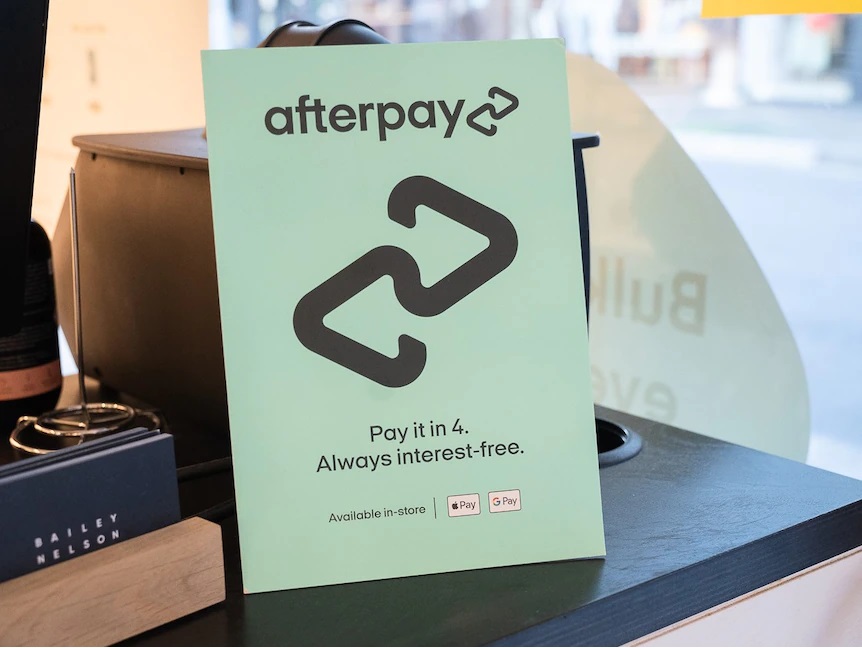
Square, the digital-payments company led by Twitter founder Jack Dorsey,  has agreed to buy Australian buy-now, pay-later company Afterpay for $29 billion. People, this is what it is: we are now in the new age of Buy Now, Pay Later, reshaping the whole credit economy. In other words, many young people are not interested in the old credit system, and have shown through the evolution of the Buy Now, Pay Later systems that they prefer this evolving model. I expect more exits in this space as Apple Pay joins the fray and most want to get out before the ecosystem is reshaped.

In the age of fintech boom, every payment company appears to have a goal to expand to new markets. For some, it means raising funds in new rounds; while for others, it means acquisition or using a different playbook. From Stripe’s acquisition of Nigerian startup Paystack to Flutterwave, another Nigerian payment firm, attaining unicorn status, the uptick has been remarkable. Now Square, a payments company cofounded by Twitter CEO Jack Dorsey, is joining the race.

Square plans to buy Australian fintech company Afterpay as it looks to expand further into the booming installment loan market.

In some cases, you may not even have to pay interest (the merchant pays the interest for you)!

In Nigeria, expect agile fintechs to begin to redesign their lending products with BNPL since BNPL is more optimized as the interest rate is activated after you have identified and acquired the products, instead of borrowing money and warehousing in a bank account, and yet paying interest when you have not deployed it.

This shift is massive as repayment uses bank account ACH (minimal fees), not credit cards. So, if this BNPL picks up at scale, card companies like Visa and Mastercard could be in the crosshairs of a major shift.

Square Buys Afterpay In A $29 Billion Deal

Square Buys Afterpay In A $29 Billion Deal

0

In the age of fintech boom, every payment company appears to have a goal to expand to new markets. For some, it means raising funds in new rounds; while for others, it means acquisition or using a different playbook. From Stripe’s acquisition of Nigerian startup Paystack to Flutterwave, another Nigerian payment firm, attaining unicorn status, the uptick has been remarkable. Now Square, a payments company cofounded by Twitter CEO Jack Dorsey, is joining the race.

Square plans to buy Australian fintech company Afterpay as it looks to expand further into the booming installment loan market.

The company announced the $29 billion, all-stock deal on Sunday evening. The price tag marks a roughly 30% premium to Afterpay’s last closing price.

“Square and Afterpay have a shared purpose,” said Square’s CEO Dorsey in a statement. “We built our business to make the financial system more fair, accessible, and inclusive, and Afterpay has built a trusted brand aligned with those principles.”

Shares of Afterpay in Australia surged on that news, and closed nearly 19% higher on Monday.

Founded in 2015, Afterpay offers buy-now-pay-later services to millions of its users cut across Australia, US, Canada, UK (where it is called Clearpay) and New Zealand. The company allows customers to access the things they want and need, while still allowing them to maintain financial wellness and control, by splitting payments in four, for both online and in-store purchase.

Square pointed to consumers eschewing traditional credit, especially younger buyers. The San Francisco-based payments company already offers installment loans, which said it has been a “powerful growth tool” for Square’s core seller business. It plans to integrate Afterpay into both its seller and Cash App ecosystems.

Afterpay lets customers pay in four interest-free installments and pay a fee if they miss an automated payment. Its 16 million customers will eventually be able to manage installment payments directly through Cash App. The deal is expected to close in the first quarter of 2022.

Per CNBC, installment loans have been around for decades, and were historically used for big-ticket purchases such as furniture. Online payment players and fintechs have been competing to launch their own version of “pay later” products for online items in the low hundreds of dollars.

Affirm is one of the better-known public companies offering the option to finance items in smaller, monthly payments. PayPal, Klarna, Mastercard and Fiserv, American Express, Citi and J.P. Morgan Chase are all offering similar loan products. Apple is planning to launch installment lending in a partnership with Goldman Sachs, Bloomberg reported last month.

Square also announced its second-quarter results on Sunday, ahead of the previously planned release on Wednesday.

Gross profit increased 91% from a year ago, which marked a record quarterly growth rate for the payments company. Cash App profit was up 94%, while seller jumped 85% from a year ago. Net revenue excluding bitcoin came in at $1.96 billion for the quarter, an 87% rise year over year.

The company’s Venmo competitor, Cash App now has 40 million monthly transacting active customers.

Afterpay derives its revenue from merchants rather than customers. The company believes its pattern of play will encourage a more accessible and sustainable world in which people are rewarded for doing the right thing, thereby powering an economy where everyone wins.