DD
MM
YYYY

PAGES

DD
MM
YYYY

spot_img

PAGES

Home Blog Page 5650

The Rainmakers of United Arab Emirates

0

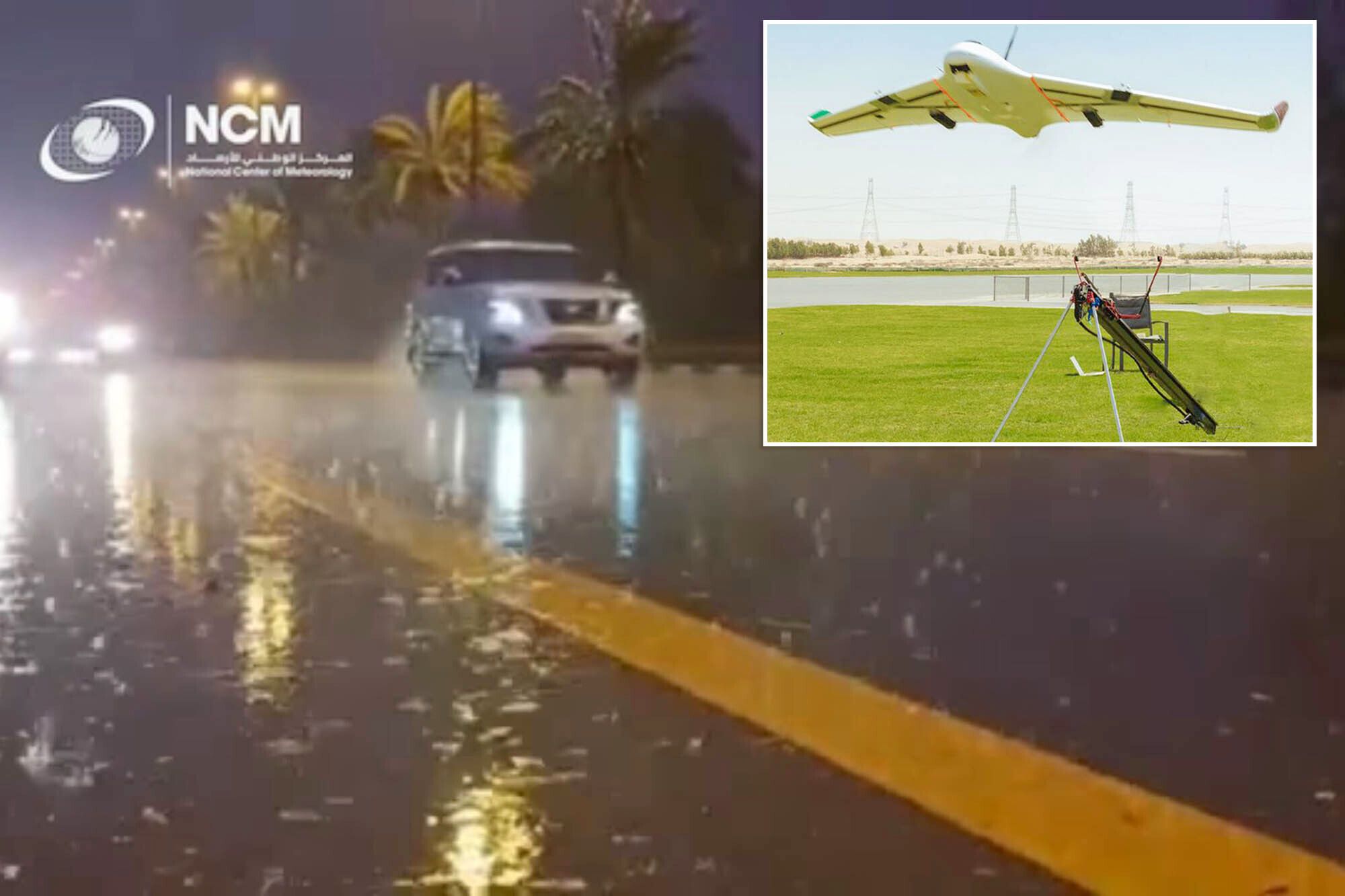
You may or may not have heard that some days ago, the United Arab Emirates successfully caused an artificial rainfall by releasing drones to shock the cloud.

How possible is this?

The UAE’s National Center of Meteorology had announced that the rain was caused through cloud seeding operations, as reported by MSN.

In recent years, millions of dollars had been invested to experiment on innovative methods that would help to create an artificial rainfall, as part of efforts geared towards reducing the excess heat of the Arid climate of Dubai and it’s environs.

Dubai has witnessed upto a temperature of 50°c in recent times.

The UAE has a rapidly growing population and very little water to support it.

According to the NCMS, with an average of 550 litres of water consumed every day by each man, woman and child, the country has the fourth highest demand for fresh water in the world. As a result, the government is aggressively pursuing alternative solutions like cloud seeding, which is said to be up to 30 times cheaper than desalination.

What is Cloud seeding?

As explained by Kondala Murali Mohan, a scientist with Krishi Vigyan Kendra (Medak), Cloud seeding is a process for creating artificial rain.

In cloud seeding, chemicals like silver iodide, potassium iodide and dry ice are sent to the atmosphere through helicopters or planes. These particles thereafter attract the water vapour in the air, leading to the formation of cumulonimbus clouds and finally rain.

It generally takes half-an-hour to produce rainfall by this method. The time taken to generate rain depends on which portion of the cloud the chemicals are being injected into. Zapping the top layers gives the fastest results.

Environmental Concerns

Although, there are justifiable reasons for conducting these kind of experiments, there are still some underlying sustainability issues. Apart from cost, some of these environmental concerns and dangers which Cloud seeding poses include:

  • Acidification of the oceans
  • Ozone layer depletion
  • Increase in the levels of Atmospheric Carbon dioxide
  • Possible danger to the health of plants, humans and animals.

In his words, the scientist continued

“The method can lead to acidification of the oceans, ozone layer depletion and an increase in the levels of atmospheric carbon dioxide. Silver is a heavy, toxic metal and it harms the health of plants, humans and animals. Cloud seeding is also a costly method. A foot of rainfall costs around USD 200.”

Magic, Miracle or Science?

In some traditional African societies such as Nigeria, we have some people known as the Rainmakers. These people are seen to possess the ability to conjure rainfall.

To many non- traditional believers, this is magic or even superstition. Some of these non-traditional believers believe that the ability to cause rainfall is vested in God alone. They believe in miracle, not magic.

For scientists, they neither support any of these schools of thought. Scientists only talk about what they can prove by science. To scientists, they don’t call it rainmaking, but artificial precipitation, artificial rainfall, or pluviculture. They invest in various research geared towards providing lasting solution to their current predicaments. To them, they don’t have to invoke the gods or the god of rain, by making incantations. With science, they can shock the clouds, and cause the cloud to shed tears.

The difference between these scientists and the traditionalists is the approach they have chosen to address the same issue ~ ©Godswill Ekwughaonu

The eventual outcome everyone wants to see is the rain.

Beat The Early Bird and Register for Tekedia Mini-MBA Immediately

0
Tekedia Mini-MBA certificate sample

Join us for a great excursion on the mechanics of business systems. Tekedia Mini-MBA is excellence in value. We have brought extremely brilliant 140 business executives from the companies you admire, to teach what they do. Cost remains N50,000 or $140. It is online, self-faced and runs for 12 weeks, beginning Sept 13. You know what? We have thrice weekly Zoom sessions which I personally coordinate as we rotate our faculty members.

Beat the early bird  and register today.

Be part of the best school.  Everyone gets a certificate at the end, and that certificate is auto-verifiable on our site.

Tekedia Mini-MBA >> learn from the best.

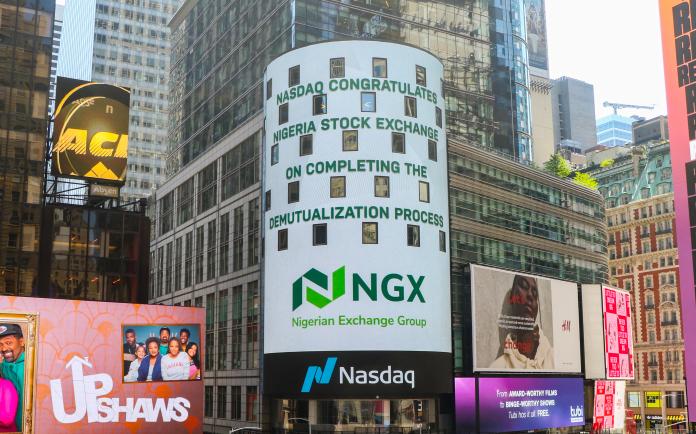
Nigerian Exchange Group: Investible Distribution And A Roadmap Into The Future

1

For Stock exchanges globally, the recovery is digital. Today’s stock exchanges should innovatively leverage data to hyper-personalize the value they offer to ecosystem partners, embracing the potential of platforms and bespoke digital infrastructures to become evolutionary attuned to the changing needs of their divergent market stakeholders. Artificial intelligence and machine learning are driving the morphing world of exchanges. Both technologies are delivering a richer client experience, predicting market trends or enabling sophisticated market surveillance.

This means that stock exchanges can now have a faster, smarter and smart monitoring capabilities as a result, securing and maintaining our market integrity.

A recent survey conducted for the World Economic Forum (2020) has shown that a large majority of players in finance worldwide (85%) already use some form of AI and a large group (65%) expects to become an adopter of AI for mass financial operations. A joint survey of the Bank of England and Financial Conduct Authority (FCA, 2019) shows that most financial firms are currently building the infrastructure to deploy large-scale AI, with 80% already using AI in some form.

In the race to bring efficiency into Nigerian Exchange Group (ngxgroup.com), it is critical we exploit AI as an efficiency-enhancing technology. Understanding that AI is helpful in front-office activities that directly involve financial service customers (e.g., User Utilization Platform using Social Media APIs- investment management, and payment systems) as well as back-office activities (e.g., capital optimisation, risk management, and market analysis).

For user Utilization platform, Virtual assistants or chatbots are assisting customers to interact and operate with their financial institutions smoothly, even to extent substituting human interaction. Chatbots, in particular, are ML algorithms relying on NLP that provide financial service users with updated information, solicited but also they are also a relevant source of additional data for AI systems, thanks to their direct interactions with customers.

A fraud palaver

Sadly, anti-money laundering has proven difficult in tackling because of scanty data available to train ML algorithms to detect illegal activities. That’s changing. There are successful applications of AI algorithms (in particular artificial neural networks (ANN), support vector machines, and random forests) that outperform classical logistic regression models (traditional models), at least when training data contains a relatively high frequency of illegal activities. With this, ML helps predict fraud by managers, for example, stock market manipulations. Totally, AI can significantly improve financial market integrity and strengthen trust, a vital ingredient of the financial sector.

Innovations in the regtech space means that NGX can standardized information collection into prespecified templates that financial institutions can populate over time with automated routines and that supervisors could access through befittingly designed API interfaces. A machine-readable regulatory handbook could enable NGX’s clients to interpret and execute regulations automatically.

However, The ascent of AI has led to the possibility to design ”screening algorithms” that systematically and continuously monitor financial markets identifying risks and manipulations, with a better balance between false positive and false negative than humans. The Netherlands Bank, for example, uses automated analysis of orders and executions of banks to identify funds transferred to the same recipients via different routes in high-risk jurisdictions.

NGX’s collaboration with other Monetary jurisdictions could open new possibilities. “AI screens” helps detect misconduct and frauds in stock markets. It works like this, unsupervised AI algorithms scan markets looking for general patterns. Once anomalous patterns are flagged out, supervised ML algorithms step in to predict actual risks.

Financialization of market

Emerging technologies have enabled the financial markets to becoming more international and integrated. That’s because technology and related organisational innovations are driving these changes; making stock exchanges to be technologically competitive through economy of scale or by redefining markets as seen by international consolidation of the securities exchanges business. This has led to the integration of settlements systems across national boundaries powered by the diffusion of ICT innovations in different areas of global and local economies.

A Retail revolution

In our post-pandemic world, our economic recovery will be digital and it demands bold leadership to dive into a digital future. We saw it with the arrival of bitcoin in 2008 and that same year the US Fed reinvented QE. it is time for NGX to lead us into the future: a borderless, tamperproof, and inflation resistant age. Stock exchanges are being upended by this paradigm shift. We are witnessing a seismic shift in the architecture of financial settlements as trading floors get connected to bitcoin and Ether/ERC20 nodes. The future is rapidly happening before our eyes. NGX would need a response to these seismic changes.

Hidden behind Bitcoin, looms large the boom in Decentralized Finance, payment/settlement networks outside our banking system powered by smart contracts on the Ethereum network. We have seen its staggering growth, from Nov 2020 to now, these networks have grown, staked and traded assets from less than $2b to $43b+ bolstered by rise in institutional staking (buying and holding) and trading of derivatives (unusually CME and Binance). Platforms such as Maker, Aave, Compound and Uniswap pay interest to stakers and settle trades and coupons.

AI is reshaping retailing as traders globally have joined the stock and crypto party in large population in an unprecedented manner. This is also aided by social influencers and Youtube and Reddit, with enormous impact. Day trading is the new social media network and apps are open 24/7, enabling rich interactions-trade, chat, post and trade.

We should see DF as “investible” disruptions. We believe DeFi revolution has a more structural and measurable disruptive potential for Nigeria’s financial industry. Smart contracts built on public blockchains like Ethereum, have the potential to push NGX, our clearing houses, and all forms of financial instrument trading into the realm of instant settlement bringing dramatically lower costs to our financial services industry. But regulatory-policy innovations will have to meet DeFi in a way that advances our collective prosperity.

In all, for NGX, the key focus should be to drive Africa’s digital revolution. More importantly, it must explore AI-enabled reporting metrics that relate to our talent, culture, ESG, supply chains, cyber-attacks, and eerily- data breaches. Leveraging exponential technologies in it NGX’s reporting around deepening liquidity measures and its green credentials will strengthen NGX, making her an attractive partner for visionaries in investible disruptions.

When Pioneering Entrepreneurs Rise In Nations

0

Nations rise when pioneering entrepreneurs emerge. Without those pioneers, the capacity to combine factors of production to redesign economic structures and fix market frictions stall. As America begins to debate the SPACE Tax Act structured to make sure billionaires and millionaires who sojourn to space pay taxes for the experiences, it becomes evident that America has created another sector. 

Before the American steel industry, Carnegie had to emerge. Before the US energy sector, Rockefeller existed. From JP Morgan to BY Mellon, men were ahead of the government in setting the ordinance of  US banking.  And in this era, Jeff Bezos, Elon Musk and Richard Branson are unlocking the broad space tourism.

Space tourism, which in recent months has witnessed a frenzy as billionaire-enthusiasts take turns to fly miles above the earth’s surface, has unveiled a multi-billion dollar economy. From SpaceX to Blue Origin to Virgin Galactic, the space transport companies have seen burgeoning demands for their high cost seats by wannabe astronauts in what has been described as “billionaires’ luxury trips.”

But as budding space tourism takes shape, and more people show interest in experiencing the full force of gravity through orbital and suborbital space flights, the United States Congress is seeing an opportunity to make more revenue for the government.

U.S. Rep. Earl Blumenauer (D-Oregon) plans to introduce legislation called the Securing Protections Against Carbon Emissions (SPACE) Tax Act, which would impose new excise taxes on space tourism trips. The exercise is targeted on commercial space flights carrying human passengers for purposes other than scientific research.

There is a lesson here:  Nigeria cannot have it the other way around: the government has never led anything and we cannot expect everything to be anchored by bureaucrats.

Like Nollywood, Nigeria’s movie industry, which emerged without any memo to the government, our pioneering innovators must do the same in other sectors. Sure, when you do it, they will come with a tax bill. And that is the beauty of it. By 2040, space tourism is projected to be a $1.1 trillion business. Yes, more tax revenue for America!

Africa needs PIONEERING entrepreneurs – they are the high priests to shared prosperity and future abundance in nations. They redesign economies and unlock latent opportunities, driving optimist exuberance for national political leaders because they expand economies and tax dollars.


As Space Tourism Takes Shape, US Congressman Proposes ‘Space Tourism Tax’

0

Space tourism, which in recent months has witnessed a frenzy as billionaire-enthusiasts take turns to fly miles above the earth’s surface, has unveiled a multi-billion dollar economy. From SpaceX to Blue Origin to Virgin Galactic, the space transport companies have seen burgeoning demands for their high cost seats by wannabe astronauts in what has been described as “billionaires’ luxury trips.”

But as budding space tourism takes shape, and more people show interest in experiencing the full force of gravity through orbital and suborbital space flights, the United States Congress is seeing an opportunity to make more revenue for the government.

U.S. Rep. Earl Blumenauer (D-Oregon) plans to introduce legislation called the Securing Protections Against Carbon Emissions (SPACE) Tax Act, which would impose new excise taxes on space tourism trips. The exercise is targeted on commercial space flights carrying human passengers for purposes other than scientific research.

“Space exploration isn’t a tax-free holiday for the wealthy. Just as normal Americans pay taxes when they buy airline tickets, billionaires who fly into space to produce nothing of scientific value should do the same, and then some,” Blumenauer said in a statement issued by his office.

“I’m not opposed to this type of space innovation,” added Blumenauer, a senior member of the House of Representatives’ Ways and Means Committee. “However, things that are done purely for tourism or entertainment, and that don’t have a scientific purpose, should in turn support the public good.”

Following a breakthrough in commercial space trips that was spearheaded by Elon Musk’s founded SpaceX last year, Virgin Galactic owned by British billionaire Sir Richard Branson and Blue Origin, owned by Amazon founder Jeff Bezos, have all registered successful flights carrying non-scientific travelers.

Last year, SpaceX successfully launched the Crew Dragon mission to mark a new era of commercial space transportation.

Over a year later, on July 20, Blue Origin launched its first crewed spaceflight, which coincided with Blumenauer’s unveiling of the SPACE Tax Act. Bezos’ Blue Origin’s New Shepard vehicle carried Bezos, his brother Mark, aviation pioneer Wally Funk and Dutch physics student Oliver Daemen to a suborbital space mission and back.

SpaceX offers orbital space flights while Virgin Galactic and Blue Origin do suborbital.

Branson had beaten Bezos to the space adventure following a surprise announcement about the first fully crewed spaceflight of Virgin Galactic’s VSS Unity suborbital spaceliner mission. It was scheduled nine days earlier than Bezos’.

But the spaceflight companies are all offering commercial services that are already attracting huge interest.

Blue Origin has already begun commercial operations that had passengers like Daemen – he was a paying customer. And Virgin Galactic aims to do so early next year, after performing a few more test flights this fall.

Virgin Galactic’s said its ticket sells for $250,000 for now. Blue Origin is yet to name its price although analysts expect it to be around $500,000. The company’s online auction ended on $28 million for a New Shepard seat last month. The anonymous auction winner, who was reportedly so busy to fly the mission with Bezos, was replaced by Daemen. SpaceX charges as much as $55 million for orbital flights. 

In his statement, Blumenauer said the tax proposal is borne out of concern about the environmental impact of sending humans into space, especially when there is no scientific value associated with the launch. The number of trips to space are expected to increase, with Virgin Galactic planning to eventually launch a shuttle of passengers into space, on average, 32 hours, the statement said.

“While proponents of suborbital space flights point to transatlantic flights as having similar carbon footprints, these flights carry significantly more passengers and travel much farther. The result is space launches accounting for an estimated 60-times greater emissions than transatlantic flights on a per-passenger basis, enough to drive a car around the earth and more than twice the carbon budget recommended in the Paris Climate Agreement,” the statement added.

It explains that exemptions would be made available for NASA spaceflights for scientific research purposes, and in the case of flights where some passengers are working on behalf of NASA for scientific research purposes and others are not, the launch excise tax shall be the pro rata share of the non-NASA researchers.

There would be two taxation tiers, one for suborbital flights and another for missions that reach orbit. The statement did not reveal how much the tax would be in either case but said orbital flights will have more to pay in taxes.

Space tourism is expected to yield a $1.1 trillion economy in 2040, and by the SPACE Tax Act, the US government is already taking a position for its tax value.