DD
MM
YYYY

PAGES

DD
MM
YYYY

spot_img

PAGES

Home Blog Page 5652

The Intel’s Massive Evolution

2

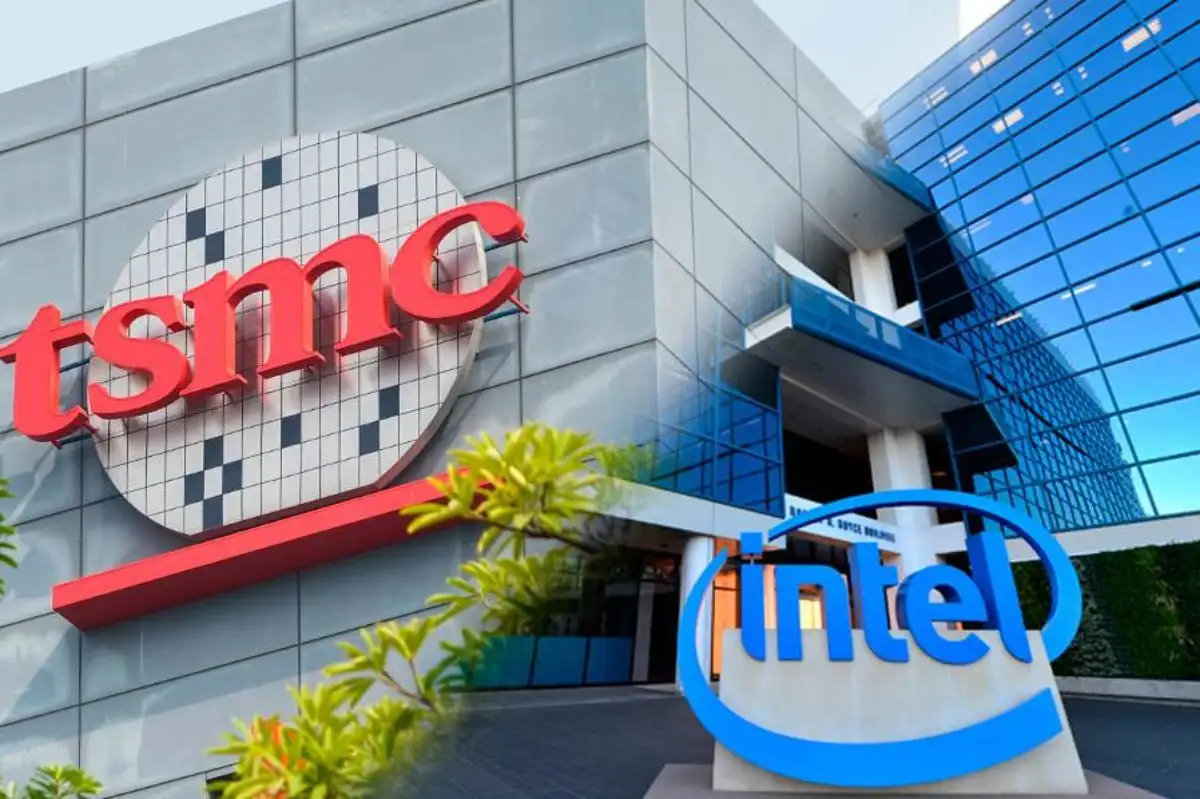
Intel wants to become like TSMC when it comes to manufacturing chips. TSMC is the world’s largest contract manufacturer for integrated circuits. With it, all you need to do is to design your circuit, send to it and it will manufacture it, and send the chips back to you. You can call it Amazon AWS as in cloud computing where the cloud infrastructure which anyone can rent with a debit or credit card is equivalent to foundries worth $billions which TSMC has built to turn sands into smart systems for the world.

So, just as cloud computing has done well, TSMC has also done really very well. And Intel wants to copy that business model as it looks for ways to get out of the paralysis it has found itself. So, Intel is opening its foundries for friends and enemies, provided you are open to pay: “Buffeted by the success of Samsung, TSMC, and Apple’s new M1 chip, Intel is announcing a new business strategy to compete in the next era of semiconductors. It will start to make chips for Qualcomm, one of the world’s biggest chip designers — the first time it’s opened its foundry to a rival.”

Earlier this year, Intel got a new CEO and kicked off a new business plan that would open its foundries to other chip-design firms, the same way TSMC and Samsung Semiconductor operate. At its “Intel Accelerated” event today, the company laid out a roadmap for its future as a for-hire foundry. Besides the future of ever-smaller process nodes, the company also announced it has scored one of the world’s biggest chip designers, Qualcomm, as a future foundry customer.

As part of entering the foundry market, Intel will start naming its process nodes more like its rivals. The process-node numbers used for chips like “5nm” started out life as a measurement of transistor size, but eventually the marketers got hold of them and companies started cheating down their numbers to look more advanced. Intel says its new naming scheme will better align with how TSMC and Samsung talk about their foundry technologies. Gone are the days of “Intel 10nm Enhanced Super Fin”—instead, the node is called “Intel 7.” It should have a comparable density to the TSMC and Samsung 7 nm nodes and will be ready for production in Q1 2022 (TSMC and Samsung are currently shipping “5nm” products). “Intel 4″—which Intel previously called “7nm”—is now said to be equivalent to TSMC and Samsung’s 4 nm node, and it will begin manufacturing products in 2023.

This is a very great strategy, and statistically it makes sense for Intel. I have written on this many times and my argument is like this: building foundries costs $billions of dollars making the business risky when Intel has to fab for only its products. If it does not have a product winner in the market, the foundry will become highly underutilized. That risk of usage efficiency affects its capacity to modernize its factories, and because of that inertia, it has lost ground to Samsung and TSMC which fab for anyone that can pay. 

Samsung serves Apple while TSMC serves everyone. For those companies, they do not have to depend on internal design wins to fill foundry capacities since those winners could come from any of their many customers. If Samsung Galaxy does not do well in the market but Apple iPhone does well, Samsung Electronics will be fine since it helps Apple to manufacture the core microprocessor in iPhone. That is at the heart of the One Oasis Strategy which I wrote in Harvard a few months ago.

With that confidence that even outside clients can have the winner, companies like TSMC and Samsung can invest in new fabs since statistically one of their many customers will win the next evolution. But the old Intel was tethered to its internal success which is not always guaranteed. If a processor series does not do well, the foundry investment will struggle.

But today, this new strategy will unlock massive opportunities in Intel and I think it is a great win. Intel will serve Amazon AWS, Qualcomm and who knows companies like Nvidia and AMD in the near future, freeing the foundry from pure dependence on its internal designs. If you look at it, that is a massive evolution for the semiconductor giant. And it is a great one.

Comment on LinkedIn Feed

Comment: I’d like to view this from the point of national security. If conflict starts around Taiwan today and very close to Asia, the US will be cut off from critical and cutting edge manufacturing capabilities. The China – Taiwan – US feud isn’t going anywhere soon. There is need for a backup.

My Response: I made that point here but note that TSMC is building a factory in US to deal with that – https://www.tekedia.com/tmsc-to-build-a-12bn-semiconductor-factory-in-the-u-s/

Comment: It was always clear that Intel has to start thinking like a startup to be competitive in today’s fast paced semiconductor industry. Closed source business models will not survive in the next couple of years and the early effects are what we can clearly witness with Intel losing relevance in this sector.

The cost of computing power is already past Moore’s law where all manufacturing has fast caught up with design metrics with more and more people having access to latest tech. The producers rather than then architects are clearly winning in this regard. Collaboration is Intel’s best bet in surviving the onslaught of manufacturing over architecturing.

More and more open source chip architectures such as RISC-V will play a huge role stealing market share from the big players in the years to come.

Comment: In the long run nations, businesses and organizations must learn to live, interoperate and interact with rivals to keep the numbers good, to remain relevant, the current world architecture calls for more openness than reclusiveness, we must embrace the challenge while we build requisite capacity to compete.

The China’s BIG Pause!

1

China is causing massive redesigns in the online technology space. Across all domains, the Asian nation is rewiring the architectural structures of popular digital firms like Didi, Alibaba and Meituan. And the most troubling part: no one knows what the final playbook would be.

China has paused edtech firms from going public or raising new capital. It has also asked a ride hailing company to stop adding new users. Honestly, when it comes to things like this, you will at least appreciate that we have something better than China: ability to rant in Nigeria – and keep going.

According to the New York Times, this high voltage searchlight which has been used to wage regulatory cleaning on these firms have wiped out more than $80 billion from the coffers of American investors like BlackRock and Sequoia: “These kinds of startups had attracted American investors like Sequoia and BlackRock, and previously earned a valuation from JPMorgan of more than $100 billion. That estimate was revised to $24 billion on Monday.” Most expect that $24 billion to hit below $10 billion by next month as China will turn some properties into pure non-profits!

These new rules targeted some of China’s hottest software sectors — especially those with large American investment. The educational regulations, for instance, essentially bans tutoring companies from making profits, raising money, and listing on stock exchanges. The Chinese government said the move was due to the education sector being “hijacked by capital.” These kinds of startups had attracted American investors like Sequoia and BlackRock, and previously earned a valuation from JPMorgan of more than $100 billion. That estimate was revised to $24 billion on Monday, according toThe New York Times.

“The worst-case became a reality,” JPMorgan analysts wrote. “It’s unclear what level of restructuring the companies should undergo with a new regime and, in our view, this makes these stocks virtually uninvestable.”

The news has also wiped billions from publicly-traded companies like Chinese e-commerce giant Meituan, which offers ride sharing, food delivery, and travel booking. The company’s stock dropped 14% on Monday, following the news of regulations.

Regulations for delivery companies cover a broad range of labor issues, including a mandate that workers are paid at least the minimum wage according to where they’re working. The new rules also require less stringent algorithmic management to allow more time for deliveries, as well as access to social security and insurance.(Fortune newsletter)

When you talk of geopolitical risk, I am not sure the smarts in BlackRock had modelled what is happening in China now with its big tech. That explains why American firms must consider Africa where we treat investors better. I mean, there is no way any nation that is not China would destroy assets like this without an American ambassador raising an alarm on the need to preserve  investments. But so far, no one is talking because China reports to none!

South Africa’s Payment Startup Yoco Raises $83m in Series C

0

South African fintech Yoco announced Monday that it has secured $83 million in Series C funding to scale offline and online offerings and expand to new markets. Launched in 2013, the payment company is positioning itself to become the leading platform in offline payment in the country.

Per TechCrunch, South Africa has over 70% wide gap in card and mobile penetration rates, as the country’s SMEs still struggle to accept cards. Yoco sees an opportunity to grow its customer-base using its portable card machines to fill the gap. Since three years ago, when Yoco raised $16 million in Series B, its customer-base has quintupled from 30,000 merchants.

TechCrunch noted other factors that contributed to Yoco’s growth and the potential this funding offers it.

As Yoco grew exponentially in providing offline payments, it built an online offering. After being in beta for a while, the rollout came right on time some days into South Africa’s lockdown in March last year. This way, South African merchants could continue accepting payments on the platform.

“We want to offer whatever payment methods our merchants need. And we did start in the in-person payment space, focusing on terminals, which was where the biggest demand was,” chief business officer Carl Wazen said. “But the pandemic, which had a devastating effect on so many businesses that relied on in-person trade, accelerated the need for businesses to accept payments online.”

During the height of the lockdowns in South Africa, sentiment across SMEs owners on a scale of -100 to 100 dropped to an all-time low of -12 in Q2 2020, according to Yoco’s small business pulse monitor. It has since improved following the easing of the lockdowns, allowing businesses to move more freely and continue in-person payments. As a result, Yoco’s online payments account for a minute part of the transactions made on the platform.

But that’s not to say people are transacting with cash. In fact, it’s the opposite, according to Wazen. Wazen says one post-pandemic behavior he noticed was that once the lockdown was lifted, people came back to make in-person payments in an accelerated way because they stopped using cash. “Recent consumer behavior shows a shift away from cash, and businesses have to rapidly adapt to this change. This presents a huge opportunity, and it is our mission to support that transition,” he added.

Earlier this year, chief executive Katlego Maphai said Yoco was looking to expand its services into other aspects of digital payments. He listed mobile money, QR payments and electronic funds transfer (ETF) as offerings in its pipeline. Wazen corroborated this, but didn’t provide an update about where the company is with these offerings. He did mention, however, that the company is still very much a card-focused payment provider.

Yoco’s strategy as the foremost card payments provider in South Africa lies in creating access and removing barriers to adopting digital financial services. The company does that by focusing on product capabilities that Wazen claims are the most comprehensive for small and medium businesses. He adds that in terms of market presence, Yoco is also the easiest for merchants to access services through different channels seamlessly.

“We’ve got a brand that is recognized now. That’s how we win and it’s about staying as focused as possible on that part of the market that, in our opinion, people like other competitors are not focused on enough.”

South Africa has over 6 million small businesses that still transact only in cash; this provides a huge opportunity for Yoco. According to the company, the number of small businesses that were fully cashless jumped 300% from March to July 2020. Yoco currently serves 150,000 of these businesses and adds over 500 merchants per day. The company claims to be processing more than $1 billion in card payments per year, and in its six years of existence, it has processed over $2 billion in card payments.

Yoco has raised a total of $107 million. The company’s Series C investment is the largest of its kind in South Africa and one of the largest for any African fintech (third only to Flutterwave and Chipper Cash). Wazen also claims it is the largest by any small business-focused payments platform in the Middle East and Africa.

Yoco is currently one of the most valuable startups on the continent, and as a fintech startup, it comes as no surprise. The sector continues to dominate startup venture capital funding in Africa while its heavy hitters bring first-time investors to the continent.

In Yoco’s case, it’s Dragoneer Investment Group. The fund has famously backed fintech giants like Chime, Klarna, Nubank, Mercado Libre and Square.

Other investors that participated include new investors Breyer Capital, HOF Capital, The Raba Partnership, 4DX Ventures and TO Ventures; and existing investors Partech, Velocity Capital Fintech Ventures, Orange Ventures and Quona Capital. Current and former executives from global tech companies such as Coinbase, Revolut, Spotify and Gojek took part as well.

There are three core enablers to Yoco’s thriving business, Wazen pointed out. First is its product capabilities, second is its platform and third is its market presence. This investment will be there to accelerate all three. Yoco is transitioning from a pure payment acceptance play into a full financial ecosystem on the product side. The platform play will see Yoco continue to integrate and take advantage of regulatory easing vertically, and Yoco is deepening its market presence in South Africa.

While Wazen believes Yoco has barely scratched the surface in South Africa, he’s looking forward to replicating its growth in other parts of Africa and the Middle East. With over 100 million SMEs transacting in cash across both regions, Yoco plans to reach at least a million within the next four years.

To accomplish this, Yoco is increasing its team by 200 people remotely and across its offices in Cape Town and Amsterdam within the next year. The company is also tapping into a current trend that has seen African soonicorns and unicorns hire former top employees from global companies to scale theirs to new heights. While it doesn’t mention names, some of Yoco’s new hires include a former VP of product at Monzo, a former product marketing director at Paypal and a former head of communications at Uber. The company has also brought on board a new chairman, Juan Fuentes, the former managing director of fintech unicorn Pagseguro.

The CBN’s Bureau De Change Abolition And Nigeria’s Own-Goals

2
Central Bank Governor, Nigeria

The Central Bank of Nigeria is ending the mindless sales of foreign currencies to Bureau De Change operators. The reason according to the apex bank is that BDCs have become conduits for illicit flows of money: “We are concerned that BDCs have allowed themselves to be used for graft”. You may wonder if that is a revelation? Yes, every Nigerian knows that BDCs are largely parasitic entities with marginal productivity value if indeed Nigeria is a serious country. What is the productive economic value of getting dollars cheap from a central bank, and then resell to citizens at a premium?

Yet, there is no reason to blame BDCs because Nigeria is very great at scoring own-goals. Nigeria is the only big nation that would pick oil wells, sign documents with connected people, and then watch for those people to  move those assets to actual players. Magically, these artificially created intermediaries insert themselves between the commonwealth and actual players, capturing massive financial value for doing largely nothing. You may ask: why can’t Nigeria sign those deals with the actual operators directly? 

Nothing is more painful when I read that Nigeria is allocating oil wells to men and women who should not go to sacred places. Ridiculously, that corruption has been institutionalized.

It is that mindset that created BDCs. Even though the apex bank said it would no longer process applications for BDCs, I can assure you that it would reverse itself in months. Nigeria is designed to score own-goals, shifting the wealth of the commonwealth to select few with contacts. It is a shame!

CBN expects banks to do the job of making foreign currency available and it hopes they play by the rules with high transparency: “We will deal with them ruthlessly and we will report the international bodies.” But do not celebrate, this policy will not move anything because the faith of Naira is not tethered to what they do in commercial banks and CBN headquarters but what happens in warehouses and factories, including old and modern ones.

Nonetheless, I commend CBN for making BDCs history even for a few weeks before they return with another “classification” in the books. Sure, they are not going away because it is through BDCs that politicians win elections. They will not lose that important tool!

Comment on LinkedIn Feed

Comment: Prof. Ndubuisi Ekekwe it is interesting to hear this. It’s a positive move with respect to the introduction of our Digital currency(Nigeria’s). My fear is that, 9 months is not enough to put in place the necessary apparatus for a thriving Crypto society except if the project had been in progress before the ban of BTC and announcement of creating Nigeria’s digital currency. There are worries of hijacking, inefficiency of the new exchange platforms, and also the tactics of monopoly.

After banning BTC and abolishing BDCs in the country, it’d be a disaster if the new FX is faulty. It can send us to an economic standstill with overbloated exchange rates. Trust me, if we can have a successful launching of digital FX, it’d save us the trauma of taking one step forward and ending up taking 5 steps backwards.

Hence, it’s strongly adviced that before launching series of beta testings be done, authentication necessary cyber-security apparatus are been put in place and lastly implementing sustainable policies which would give room for various players and not monopoly. There’s no need for rush. The future can only be bright if there’s a source of light.

Comment: This is the step in the right direction, however as Ndubuisi Ekekwe said we should not rejoice yet because in a matter of months BDC might be back to enable political wins.

I have consistently asked why CBN sales foreign currencies to largely supervised intermediary called BDC who does nothing but accumulate wealth without creating value when we have banks.

I agree that the greatest move for valuation of naira currency will come when local industries are enabled to function effectively, however this move by CBN if sustained will bring new sanity to naira. Let’s watch and see how it goes.

Tekedia Growth Hour Begins

0

As always, I want to thank all our members. And I also want to thank Group and Corporate members. Since this is my preferred way to get information out, this is a reminder that the Growth Hour has started. If you joined the ongoing Tekedia Mini-MBA in a group (corporate, club, alumni, association, etc), your team ought to have received an email to schedule. More details here .

Scheduling Tekedia Growth Hour for Your Firm/ Group