DD
MM
YYYY

PAGES

DD
MM
YYYY

spot_img

PAGES

Home Blog Page 566

Experts Just Revealed the 4 Best Cryptos to Invest in This Month, and One Still Costs Less Than a Cent!

1

As Q4 of 2025 rolls in, investors are on the lookout for the best crypto to invest in now. While many projects are battling for attention with flashy partnerships or unpredictable rallies, a few are building a case backed by real progress, reduced risk, and strategic pricing. Here’s a curated list of four top contenders, with BlockDAG leading the pack thanks to its technical maturity and rare presale setup that locks in investor-friendly pricing.

1. BlockDAG: Everyone Is Buying In Before October 1!

BlockDAG is setting the tone for September with a rare value window: a fixed presale price of $0.0013 despite growing network maturity. With the Awakening Testnet now set to launch on September 25, systems like vesting contracts, miner integration, account abstraction, and real-time tooling are already running. This isn’t theoretical progress; it’s actual execution. As every component will be deployed and verified, the tech risk decreases, but unlike most coins, the price will remain unchanged during this stage.

That’s what makes BlockDAG’s current position so compelling. It’s in batch 30, where the displayed price is $0.03, yet buyers can still access tokens at the locked $0.0013 rate until October 1st. With over $405 million raised and more than 26.2 billion coins sold, momentum is undeniable. Early buyers have seen an ROI of 2,900% since batch 1, and that figure may only climb once the mainnet is live.

In an ecosystem where risk often grows with reward, BlockDAG flips the equation. It offers lower risk through proven deployment while keeping the price low. That combination is extremely rare, and it’s why many view it as the best crypto to invest in now before the door shuts.
2. Dogecoin: Holding Ground With Social Power

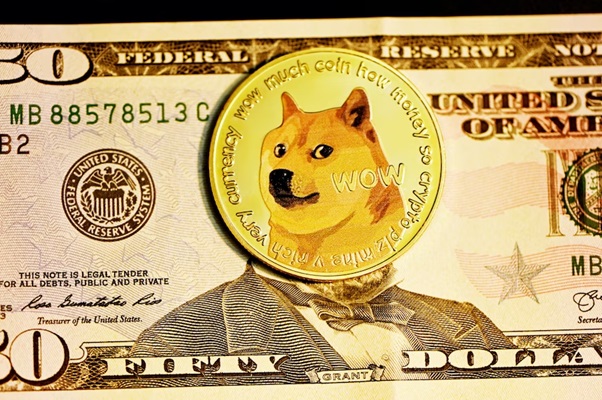
Dogecoin continues to defy expectations. Initially viewed as a meme token, DOGE has steadily built practical traction, especially with Tesla’s continued mention of integrating DOGE payments for merchandise and future services. As of early September, Dogecoin is trading around $0.081, holding strong in the top 10 by market cap.

The biggest strength of DOGE remains its community-driven support and social media buzz. While it may not be the most technically advanced, the coin consistently garners real-world attention, a factor that matters in crypto cycles.

There are also growing talks about DOGE’s integration into X’s payment infrastructure, which could lead to a fresh wave of adoption. Dogecoin isn’t for the risk-averse, but for those banking on cultural momentum with hints of mainstream use, it still makes a case as one of the best cryptos to invest in now.

3. Solana: Speed and Value Make It a Top Runner

Solana has worked hard to repair its image after facing network issues in previous years, and it’s showing results. With significantly fewer outages reported in 2025 and improved validator support, SOL has bounced back to $36.85, backed by an increase in daily active users and Total Value Locked (TVL) on its DeFi protocols.

Its success lies in speed and affordability. Solana’s processing capability continues to make it a favorite for NFTs and DeFi apps, with platforms like Magic Eden and Jupiter thriving. In addition, new Solana phones are shipping soon, expanding its mobile-first crypto strategy.

As institutional and retail investors look for scalability and real-world use, Solana stands as a reliable choice, not just as a recovery token but as a continuously improving infrastructure project. It’s a strong pick among the best cryptos to invest in now for those wanting a blend of speed, usage, and value.

4. Ethereum: Quiet Strength, Loud Fundamentals

Ethereum remains a foundational layer in the crypto space, and it’s entering September with quiet strength. Currently trading at $1,968, ETH has gained from increased staking participation and major ETF approvals across several regions. Its move to Proof of Stake has not only improved energy efficiency but also sparked the development of Layer-2 rollups that reduce gas fees and boost throughput.

This month, Ethereum is also seeing new developer traction with enhanced tooling for smart contracts and zk-rollup scaling efforts. Moreover, institutional interest is growing, with asset managers including ETH in their digital portfolios.

While it may not offer 10x short-term potential like newer coins, Ethereum offers security, liquidity, and ecosystem stability. It’s a long-term hold that still earns its spot as one of the best cryptos to invest in now, especially for those who prioritize infrastructure and institutional confidence.
Final Thoughts

When evaluating the best crypto to invest in now, it’s not just about hype or short-term momentum. It’s about entry timing, technical strength, and pricing logic. BlockDAG stands out by offering a locked-in price even when its tech is set to go live this month and risk is actively dropping. That’s a formula that rarely aligns, and one that savvy investors recognize instantly.

Dogecoin, Solana, and Ethereum continue to build in their own lanes, each offering distinct advantages, from cultural power to technical execution and institutional trust. But in terms of risk-adjusted opportunity, BlockDAG is currently in a class of its own. October 1st is the deadline, and that makes now the time to act.

Klarna Gives Employees Rare Chance to Cash Out Equity Amid IPO Surge

0

Klarna’s Wall Street debut has not only revived the fintech’s long-awaited IPO ambitions but also delivered a rare windfall opportunity for its employees.

In a move seldom seen in the tech industry, the Swedish buy now, pay later giant is allowing staff to cash out some of their holdings during the IPO window, sidestepping the usual six-month lockup that restrains insiders from selling shares.

In an internal email sent on Wednesday and reviewed by Business Insider, Klarna told current and former employees that it is converting vested restricted stock units (RSUs) into tradable shares, exempting them from the post-IPO lockup. The converted shares can begin trading just days after Klarna’s $15 billion listing, offering workers immediate liquidity. The email noted that “roughly four RSUs will equal one publicly tradable share.”

Klarna’s filing with the Securities and Exchange Commission does not specify how many of the ordinary shares offered will come from employees. However, the company said staff will be able to sell shares during the initial window until September 30, with subsequent trading limited to quarterly windows.

Such exemptions are uncommon but not without precedent. Airbnb, when it went public in 2020, allowed employees to sell up to 15% of their holdings within the first week of trading. Traditionally, lockup periods are imposed to protect new investors from a flood of insider sales, which can weigh down a stock in its early days. By bending that norm, Klarna is signaling an effort to reward its workforce, many of whom have seen the company’s valuation swing dramatically in recent years.

Stock-based compensation has long been a staple of tech employment packages, with RSUs serving as a way to align employee incentives with company performance. But for many staffers, the IPO represents the first tangible opportunity to realize cash from those paper awards.

IPO Market Return

Klarna’s shares opened at $52 on the New York Stock Exchange—30% above the IPO price of $40—before retreating to close at just under $46, still up 15% on the day. The debut valued the company at $15 billion, far below its $45.6 billion peak in 2021 but still a remarkable rebound from the $6.7 billion trough it hit just a year later.

The IPO, delayed from April after U.S. tariff announcements rattled markets, now sits among the year’s marquee offerings. It has already generated massive paper wealth for longtime backers Sequoia Capital and Heartland A/S, each reaping more than $1 billion. Cofounders Sebastian Siemiatkowski and Victor Jacobsson also saw their stakes climb above the billion-dollar mark by Wednesday’s close.

What Next for Klarna?

Some analysts believe that Klarna’s decision to let employees sell early could build loyalty at a critical moment, offering relief to staff who endured years of delayed IPO plans and fluctuating valuations. If shares stabilize above the $40 listing price, the company may establish itself as the bellwether of a resurgent IPO market, encouraging other fintechs and tech startups to follow suit.

However, the exemption could carry risks, they note. A wave of insider selling in the coming weeks might pressure Klarna’s share price, undermining confidence in its long-term prospects. If shares drift significantly below their debut levels, critics may question whether the company’s $15 billion valuation was sustainable—or whether early insider liquidity came at the expense of new investors.

Overall, the IPO is more than a listing—it is a carefully choreographed balancing act for Klarna. The fintech is attempting to satisfy both insiders and public shareholders in a volatile market that has not forgotten the bruising valuation resets of the last two years, by rewarding staff while courting Wall Street.

Alibaba to Raise $3.2bn via Zero-Coupon Convertible Bond, Fueling Global Cloud and AI Push

0

Alibaba Group has announced plans to raise $3.2 billion through a zero-coupon convertible bond, the largest such offering this year, according to Dealogic data.

The move underscores the Chinese e-commerce and technology giant’s drive to fund international expansion and strengthen its cloud computing arm, as artificial intelligence becomes increasingly central to its growth ambitions.

The offering will eclipse DoorDash’s $2.75 billion convertible bond sale in May, taking the top spot for 2025. Alibaba said in its filing that nearly 80% of proceeds will be allocated to cloud infrastructure investments, including new data centers, technology upgrades, and enhanced services to meet growing demand for AI-driven solutions. The remainder will go into expanding its e-commerce ventures, aimed at improving market presence and operational efficiency abroad.

According to a term sheet seen by Reuters, the bond will carry a 27.5% to 32.5% conversion premium above Alibaba’s U.S.-listed share price. It will mature on September 15, 2032, and is structured to convert into Alibaba’s American depositary shares (ADS) traded in New York. Unlike traditional bonds, the instrument carries no coupon, reflecting investor confidence in Alibaba’s equity trajectory as well as its broader role in the AI and cloud boom.

The announcement initially triggered volatility. Alibaba’s Hong Kong-listed shares fell as much as 2.6% in morning trading but quickly reversed course, climbing 2.3% to HK$146.1 as the broader Hang Seng Index rebounded. In the United States, Alibaba’s stock slipped 2.2% on Wednesday, tracking sector-wide tech weakness. Despite the swings, Alibaba’s shares have surged in 2025—71.6% year-to-date in Hong Kong and 71.1% in New York—reflecting investor optimism about its AI strategy.

This is not Alibaba’s first foray into convertible financing. The company raised $1.5 billion in July through an exchangeable bond and $5 billion in May 2023 with another convertible issue. Taken together, these deals suggest Alibaba is leaning heavily on hybrid instruments to finance its multi-year technology overhaul while keeping traditional debt levels under control.

The approach also comes at a time when Hong Kong’s equity capital markets have been surging, with convertibles emerging as a popular tool. Asia-Pacific issuers have floated $27.8 billion worth of convertible bonds so far this year, nearly matching last year’s $28.7 billion total over the same period, which marked the strongest stretch in three years.

Focus on Cloud and AI

Alibaba has committed 380 billion yuan ($53.37 billion) in AI-related investment over three years, one of the largest pledges by any Chinese company. During its latest earnings call, CEO Eddie Wu highlighted how these commitments are already reshaping the company’s cloud division.

“Our investments in AI have begun to yield tangible results,” Wu told analysts. “We are seeing an increasingly clear path for AI to drive Alibaba’s robust growth.”

The company reported strong growth in cloud revenues last quarter, even though group revenues fell short of analyst estimates. Executives made clear that cloud—and the AI services underpinning it—will remain the strategic centerpiece of Alibaba’s transformation.

Industry Backdrop and Comparables

The popularity of convertible bonds has grown in part because they offer dual appeal: potential equity upside if share prices rise and capital protection with principal repayment if they do not. On the same day as Alibaba’s announcement, China Pacific Insurance revealed plans to raise HK$15.55 billion ($2.0 billion) through its own zero-coupon convertible bond, reinforcing the trend.

Globally, technology majors are also leaning into convertible debt to fund AI and data infrastructure. Alibaba’s move places it squarely among global peers racing to secure cloud capacity as generative AI reshapes demand for computing power.

This means the $3.2 billion bond issuance is more than a financial transaction for Alibaba, with some analysts calling it a strategic signal. The company is betting that an aggressive push into cloud computing and AI services can offset slowing growth in its traditional e-commerce business and re-establish its dominance internationally.

The proceeds will enable Alibaba to build out large-scale data centers, a critical requirement as AI workloads become increasingly compute-intensive. At the same time, targeted reinvestment into international e-commerce could help it compete in Southeast Asia and other fast-growing markets where rivals like Sea Ltd. and Amazon are vying for market share.

For investors, the transaction presents a balanced risk-reward scenario. The zero-coupon structure reduces immediate financing costs, while the long maturity gives Alibaba flexibility to deploy capital across multiple strategic cycles. The embedded equity option, meanwhile, offers investors participation in Alibaba’s rally if its cloud transformation succeeds.

As the Hang Seng Index recovers and Hong Kong’s capital markets remain buoyant, Alibaba’s timing appears well-calibrated. Analysts believe that the real test will be whether its AI-driven cloud strategy translates into sustainable earnings growth—a challenge it shares with global peers like Amazon, Microsoft, and Google.

Upbit Lists PUMP and HOLO Amid Binance Partnering With Franklin Templeton

0

Upbit Lists PUMP and HOLO

South Korea’s dominant crypto exchange, Upbit, has officially listed two emerging tokens today: Pumpfun (PUMP), the utility token tied to the popular Solana-based meme coin launchpad, and Holoworld AI (HOLO), an AI-powered Web3 platform for creating intelligent digital agents and avatars.

These listings went live on September 11, 2025, expanding access for Upbit’s massive user base—known for driving significant price action in altcoins.

Bithumb, Upbit’s rival, is also adding a KRW pair for PUMP soon, potentially amplifying regional trading flows. Historically, Upbit listings have triggered pumps (e.g., CYBER surged 133% in August 2025), but PUMP’s dip highlights short-term sell-offs—watch for rebound as Korean retail piles in.

Binance Partners with Franklin Templeton

In a major TradFi-crypto crossover, Binance—the world’s largest exchange by volume—announced a strategic partnership with Franklin Templeton, to co-develop “tailored digital asset initiatives.”

The collaboration merges Franklin Templeton’s $1.6 trillion in assets under management (AUM) and tokenization expertise with Binance’s 280 million users and $36.6 billion daily volume, aiming to mainstream blockchain-based products like tokenized securities.

Tokenized funds for yield generation, faster settlements, and collateral management; builds on Franklin Templeton’s Benji platform (launched 2021 for on-chain U.S. government money funds) and Binance’s global infrastructure.

This collaboration enhances efficiency, transparency, and accessibility in capital markets—e.g., real-time blockchain settlements vs. T+2 delays in TradFi. The product launches expected later in 2025, pending regulations; responds to surging institutional demand for compliant digital assets.

BNB hit a new all-time high near $900, up ~15% in 24 hours, as the news underscores Binance’s push into regulated tokenization post its 2023 U.S. settlement.

Blockchain isn’t a threat—it’s an opportunity to reimagine legacy systems,” said Sandy Kaul, Franklin Templeton’s Head of Innovation. Catherine Chen of Binance added, “This bridges crypto with traditional markets, unlocking greater possibilities.

Historically, Upbit listings spark short-term price surges, but PUMP’s initial 5% dip suggests profit-taking. The upcoming Bithumb KRW pair could drive further volatility, potentially pushing PUMP higher if Korean retail FOMO kicks in.

As a newer AI-Web3 project, HOLO benefits from Upbit’s KRW and USDT pairs, plus Binance’s HODLer airdrop exposure. This dual-exchange momentum could stabilize early trading, but thin order books may lead to sharp swings if whale activity spikes.

Its tie to Pump.fun, a Solana-based meme coin generator, positions it as a speculative favorite among retail traders. Upbit’s listing validates its ecosystem, potentially drawing more developers to Pump.fun, boosting token utility and long-term demand.

The AI-Web3 narrative aligns with 2025’s hot trends (AI, tokenized assets). Upbit’s listing, combined with Binance’s airdrop, signals strong institutional and retail interest, which could accelerate Holoworld AI’s adoption for digital agents and avatars.

South Korea’s crypto market is retail-driven and highly influential (e.g., XRP’s 2017-18 Korea-led rally). Upbit’s listings could make PUMP and HOLO focal points for Korean traders, potentially creating a “Korea premium” where local prices outpace global ones.

Implications of Binance-Franklin Templeton Partnership

Combining Franklin Templeton’s $1.6T AUM and tokenization expertise (via Benji platform) with Binance’s 280M users and $36.6B daily volume creates a powerhouse for tokenized securities. This could mainstream assets like real estate, bonds, or funds on-chain, targeting a $2T market by 2030.

Faster settlements (real-time vs. T+2) and yield-generating products could attract institutional investors, bridging TradFi and DeFi. BNB’s ~15% surge to a $900 ATH reflects market excitement. The partnership enhances Binance’s credibility post-2023 U.S. settlement, positioning it as a compliant crypto-TradFi hub.

Binance’s infrastructure will likely underpin these initiatives, strengthening its market dominance. Success hinges on navigating global regulations. The partnership’s focus on compliance could set a precedent for other TradFi-crypto tie-ups, pressuring competitors like Coinbase or Kraken to accelerate their own tokenization efforts.

Risks include regulatory delays or pushback, which could slow product rollouts past 2025. The partnership validates crypto’s role in reshaping capital markets, potentially driving institutional inflows into Bitcoin, Ethereum, and altcoins tied to tokenization. This could fuel a broader 2025 bull run.

Retail investors may gain easier access to tokenized assets via Binance’s platform, democratizing high-yield opportunities traditionally reserved for accredited investors. HOLO’s Binance airdrop and Upbit listing tie into the broader tokenization trend, as AI-driven Web3 platforms could integrate with tokenized ecosystems.

PUMP’s meme-driven narrative might ride the speculative wave if Binance’s partnership boosts overall crypto sentiment. Overhyped listings (PUMP/HOLO) could face corrections if fundamentals lag, while Binance-Franklin Templeton’s success depends on regulatory clarity and execution.

This duo could accelerate tokenization’s growth (projected $2T market by 2030), blending DeFi speed with TradFi trust. Both stories signal bullish momentum for altcoins and infrastructure plays—eyes on PUMP/HOLO volumes and BNB’s ATH chase.

Musk Reclaims World’s Richest Title as Ellison Surges on AI Boom — A Tale of Tesla Volatility vs Oracle’s Cloud Momentum

0

Elon Musk has reclaimed his perch as the world’s richest man, but his grip on the title is far from secure. The Tesla and SpaceX boss edged back ahead of Oracle cofounder Larry Ellison on Wednesday evening after a dramatic swing in fortunes driven by a stock market frenzy.

Oracle shares had surged as much as 43% to a record intraday high of about $346, briefly propelling Ellison past Musk on the Bloomberg Billionaires Index. Investors piled into the enterprise-software giant after it projected massive revenue growth in its cloud infrastructure division, powered by surging demand from AI clients. The rally sent Oracle’s market capitalization soaring to $970 billion intraday, before settling at $922 billion by the close.

For Ellison, who owns a 41% stake in Oracle, the rally added nearly $89 billion to his net worth in a single day. At one point, his fortune stood at nearly $400 billion, eclipsing Musk’s $383 billion tally from Tuesday. However, by market close Wednesday, Oracle stock had cooled to around $328, trimming Ellison’s gains and leaving him level with Musk at $383 billion. A marginal 0.2% uptick in Tesla’s shares pushed Musk’s fortune to $384 billion, allowing him to reclaim the top slot.

The shifting leaderboard underscores a fundamental contrast in how their fortunes are built. Musk’s wealth is tethered tightly to Tesla’s stock, which has been on a volatile ride this year — sliding 14% and wiping $48 billion from his net worth in the process. Ellison, meanwhile, has ridden the momentum of Oracle’s cloud business, which has surged 97% year-to-date thanks to the AI boom, cementing his status as the biggest wealth gainer of 2024 with a staggering $191 billion increase.

The race between the two tycoons has left rivals trailing. Meta CEO Mark Zuckerberg holds third place at $264 billion, followed by Amazon founder Jeff Bezos at $252 billion, according to Bloomberg’s index.

With Oracle and Tesla both trading higher in Thursday’s premarket — up 1.6% and 1% respectively as of 6:55 a.m. ET — the tug-of-war for the wealth crown could flip again before the day is out.

But the rivalry between Musk and Ellison carries a longer backstory. Musk has commanded the number one spot for much of the past two years, largely due to Tesla’s explosive growth and his personal stakes in SpaceX and X (formerly Twitter). Yet his outspoken political involvement — from frequent clashes with regulators to public endorsements of controversial policies — has coincided with a slowdown in Tesla sales, particularly in key markets where consumers have pushed back against his political persona. That slowdown has sharpened the volatility of Tesla’s stock, leaving Musk more exposed to swings in investor sentiment.

Ellison, by contrast, has seen his fortune rise on a steadier footing. Long known as one of Silicon Valley’s most aggressive competitors, the Oracle founder has reinvented his company from an aging database provider into a serious player in cloud infrastructure, now buoyed by AI-driven demand. His fortune is increasingly anchored in Oracle’s ability to capture a slice of the generative AI wave — a growth story viewed by Wall Street as more sustainable than Musk’s Tesla, which faces rising competition in electric vehicles from China and legacy automakers.

This current shift in their wealth rankings, therefore, is more than a fleeting number. It is believed to reflect a turning point of Musk’s reliance on a volatile EV market complicated by politics, versus Ellison’s newfound momentum in a sector where AI demand is rewriting the rules of tech wealth.