DD
MM
YYYY

PAGES

DD
MM
YYYY

spot_img

PAGES

Home Blog Page 5660

Nigeria Is Changing; Own A Piece of the Empires of the Future With Tekedia Capital

0

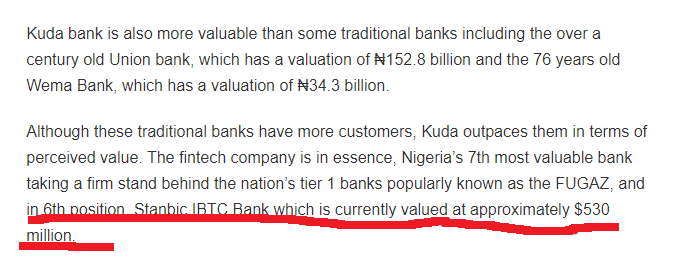
First, this is it: the Kuda team waited for me for 3 hours in Lagos for a possible small investment in Kuda. In the end, I did not. I had arrived from the US to run a program for some CEOs and they waited patiently for me.  Today, Kuda is worth $500 million. If I had invested $100k, that money would have produced at least $7.5 million within less than two years! Kuda has raised at least $80 million in the last 6 months, and now is priced at $500 million.

Do not pity me (I am fine…lol); pity the 99.99% who are disconnected from this new dimension of value creation and capture. It is because of that anomaly that I created Tekedia Capital, to provide opportunities for We The People to co-own the empires of the future.

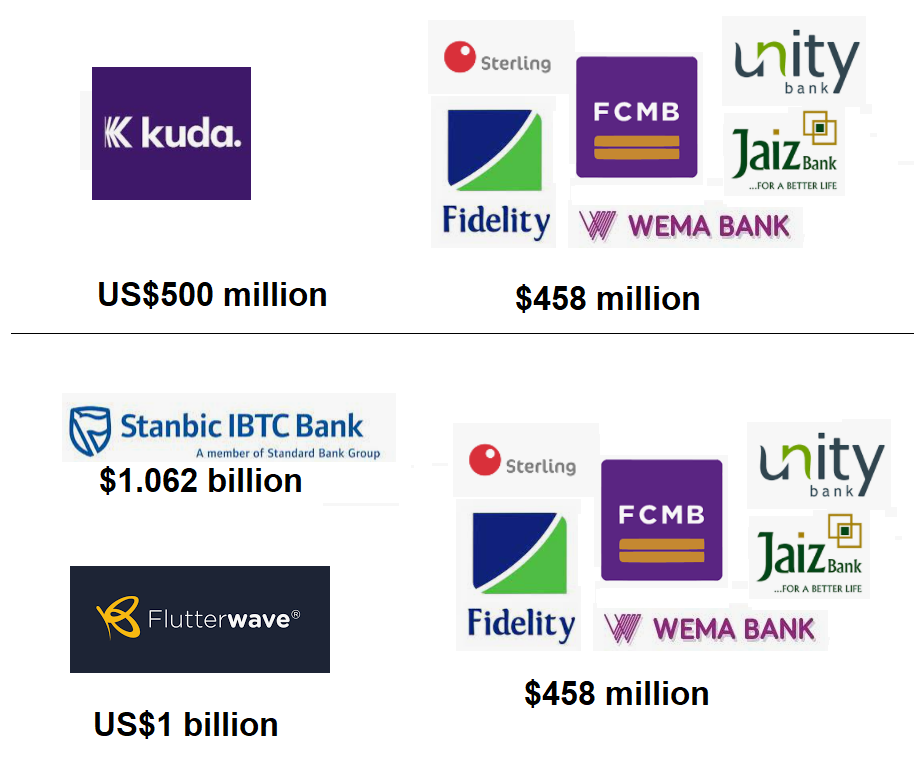
Interswitch and Flutterwave jointly hold the 3rd position, behind GTBank and Zenith, as Nigeria’s most valuable financial institutions*. I predict that by 2025, Flutterwave will be worth more than GTBank and Zenith bank combined! Kuda today is bigger than many banks in Nigeria!

I missed Kuda but what Kuda could have given me in 24 months, one startup produced the same multiples in 6 months. That one is also from Lagos. People, open your playbook because by 2025, Nigeria would be radically transformed if you check what is happening in these new species of firms.

I am now loaded in close to 40 of them globally; very soon, Forbes will be invited … hahaha. Join me at Tekedia Capital Syndicate and own a part of the new future.

*N500/$

Update: I just noticed that my calculation was wrong. I had used Nairametrics data where it quoted that Stanbic IBTC Bank Plc was worth “$530 million“. But working on a Brief for a client now where I had to compute all the Nigerian bank growth trajectories, perception value, etc, and pulling data from Bloomberg, I noticed that Stanbic IBTC was actually worth N531 billion which is clearly above $1 billion. So, Nairametrics has a big typo there. I have updated the plot accordingly and apologize for the confusion.
Nairametrics data is wrong
Comment on LinkedIn Feed

Comment #1: Well, prof. The takeaway I have from this is to invest in small promising firms. However, let’s not be beclouded with the sentiment of the current fintech valuations and use that as a premise for comparing listed entities such as banks. I sometimes wonder how we value fintechs based on the volume of seed funding they receive. Who uses loan as a yardstick for valuation. I disagree with all these fintech valuation amounts.

We can’t compare a company that is not listed and whose books have not been audited by quality audit firms with banks. Let’s compare apple to apple and if we want to use loan capital as valuation methodology, trust me these fintechs are a far cry from the kind of Tier 2 capital banks receive.

You use the stock exchange shares trading price to value banks and now use loan capital for fintech. That’s misrepresentation of facts. We need to change this current narrative that’s trending in order not to becloud an investors judgement.

My Response: “I disagree with all these fintech valuation amounts.” – that is your right but those sending them money AGREE. I think that is what matters here.

“We need to change this current narrative that’s trending in order not to becloud an investors judgement.” – many said that about Tesla until it went public and many are still confused why Tesla is bigger than all the major car companies combined. Let me say this – people are using expired tools to value empires of the future.

Comment #1b: Ndubuisi Ekekwe “People are using expired tools to value empires of the future” – Banks are valued with stocks while fintechs are valued based on seed capital. The conclusion I can draw from this your statement is that stock exchange is the expired tools. However, I’m aware that the ultimate goal of a private equity is to raise IPO and go public.

“That’s is your right but those sending them money agree” Maybe you can check the balance sheet of banks and see the volume of Tier 2 &3 capital they receive from firms (way higher than fintechs), so I’ll say those sending banks those cash also agree.

I still maintain that we are using different parameters to compares firms and that is not a good yardstick for measurement. Until the auditors show us the true nature of fintechs books, there is an element of bias in those valuations.

Elon Musk company in your example is an outlier as Tesla offered the public renewable energy at a time the world is clamoring for climate sustainability.

Most of these fintechs pretty do same things banks do which is payments and retail lending. Let’s wait till their IPO before we can start doing firm comparisons as you have done.

Comment #2: These valuations of Fintech companies, are they based on current Assets or Potentials of future growth..?
I almost fell into a “hole. “ of selling my Tangible Assets in preference to investing the proceeds into intangible shares and stocks of “ Fancy” companies!
Shortly after, bubbles bursted!
Some of us are traditional investors who belief wholly in Solid Stocks and Barrels! Caution is the Word!

My Response: The challenge is this: it confuses if you use old and expired tools to value these companies. Check the NYSE, all the “fake companies” pop up once they list. So, the problem is not from the companies but lack of people understanding the new economy. Do you know that Facebook can buy close to 8 pieces of IBM, and Paypal can buy 2.5 copies of Goldman Sachs? Instead of caution, ask people to attend modern schools like Tekedia Mini-MBA where we educate people correctly! Yes, I said so. Lol.
The Airtime Credit (Borrow Now, Pay Later) Playbook Is Winning Markets for Nigerian Telcos

1

The Nigerian telcos are doing great in their airtime credit playbooks, just as category-king fintech companies in most parts of the industrialized world are milking it on Buy Now Pay Later redesign. The latter has seen new generation financial companies like Afterpay become very valuable as young people shift from the construct of credit cards to instantaneous credit systems, with the benefits that in some cases the merchants pay for interests fees!

If you have not noticed, the most impactful innovation in the telecom space in Nigeria in the last 12 months is the pricing model. Data from MTN and Airtel, both publicly traded, show that selling airtime on credit (borrow now, pay later) is a great business in Nigeria.

The message is clear: there is value in the credit economy in Nigeria if you can develop a way to mitigate risk.

Telecommunication giants MTN and Airtel Nigeria reported massive growth in their airtime credit businesses otherwise termed ‘borrow now, pay later” services. This is contained in the annual report of the GSM giants for the quarter ended June 2021.

MTN, Nigeria’s largest telecommunication company reported a massive 69.6% growth in its Fintech segment which comprises its MoMo Agency business and its Xtratime airtime credit service business. According to the company, its FinTech segment was the fastest growing business rising 69.5% to N31.6 billion in the first half of 2021.

MTN’s FinTech business includes Xtratime, its use now pay later business, and MoMo its agency business.

MTN also reported that revenue from Xtratime makes up about 95% of revenue from its FinTech segment. Airtel reported strong numbers during the quarter with its airtime credit services revenue from Nigeria rising by a whopping 70.9% year on year. Both companies lead in the airtime credit services space.

Meanwhile, MTN has noted that it makes 70% of its money from 30% of its customers: “Nigeria’s largest telecommunications company, MTN, has revealed that it earns 70% of its revenue from about 30% of its customers. This was mentioned by the company in an investor call with analysts and investors, held after the publication of financial reports. MTN relies heavily on salary and wage earners to keep boosting revenues.”

As noted earlier, the telcos made tons of money last year in Nigeria: “According to the Nigerian Communications Commission’s recently released 2020 Subscribers/Network Data Report, the telecoms industry reported a collective revenue of ?2.889 trillion ($7.05 billion) compared to ?2.516 trillion ($6.14 billion) made in 2019. The report further disclosed that revenue generated by GSM operators increased by 12.33%, from the ?2.02 trillion ($4.93 billion) recorded in the previous year to ?2.27 trillion ($5.54 billion).”

A New Report Reveals Implications of Reporting and Reading Non-Economic News in Nigeria

0

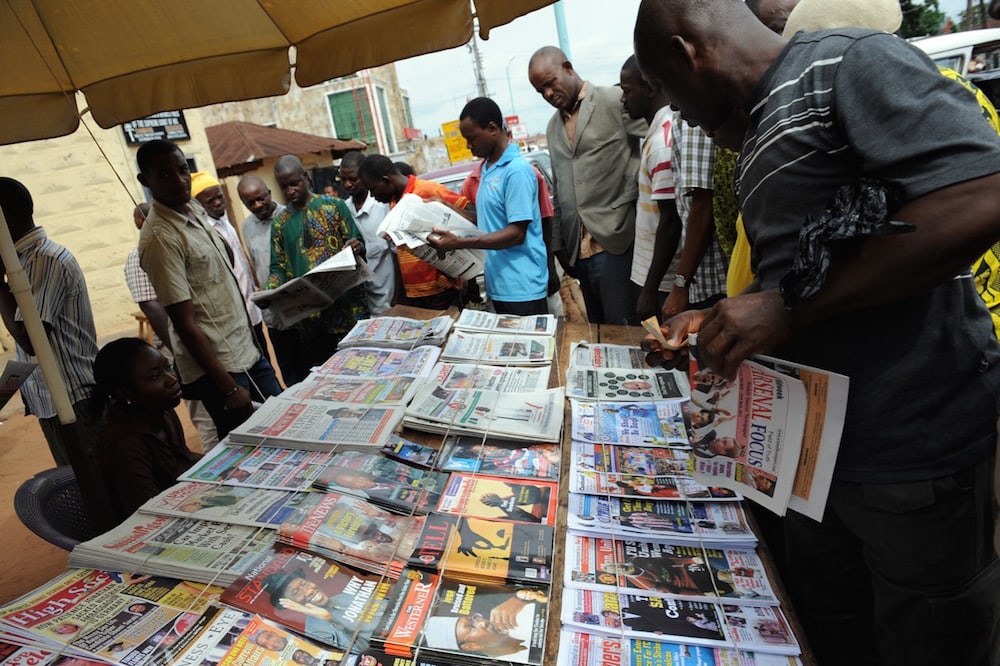
One of the products of the media people consume most is the news. It is not surprising news makes the most because it is essential that they have an understanding of happenings around them. Not only this, they want the media to report happenings that cut across all aspects of their life. When this happens, the belief has always been that making informed decision regarding personal, corporate and societal needs or challenges would not be difficult.

It is imperative to note that like other people in the world, Nigerians and other residents in the country also consume news beyond the digital space. They are reading, watching and listening to sports, education, politics, health, crime, business, lifestyle and other news categories through conventional news media such as radio, television and newspapers. Therefore, Infoprations’ Digital News Consumption 2021 Half Year Report, the first of its kind in Nigeria and sub-Saharan Africa, explores Nigerian public interest in searching and reading news reports of different categories between January and June, 2021.

The findings indicate that foreign news reports were more searched and read by the public than national news reports. Month-on-month and Quarter-on-Quarter analyses indicate that the consumption of national news grew positively despite the public low interest in searching and reading them over the foreign news reports.

The lack of high interest in reading education, health and business news indicates low level of priority given to the news categories by the public. This is also applicable to the news media because when the media pay attention to specific categories more than other news categories, it means those categories that received high attention are what the media want the public to pay attention to as well and think about. In this regard, it is imperative that the news media deploy their resources more to education, health and business events for the public to make decisions that would improve their education, health and economic status more than social status or finding a balance among the status.

Download the report

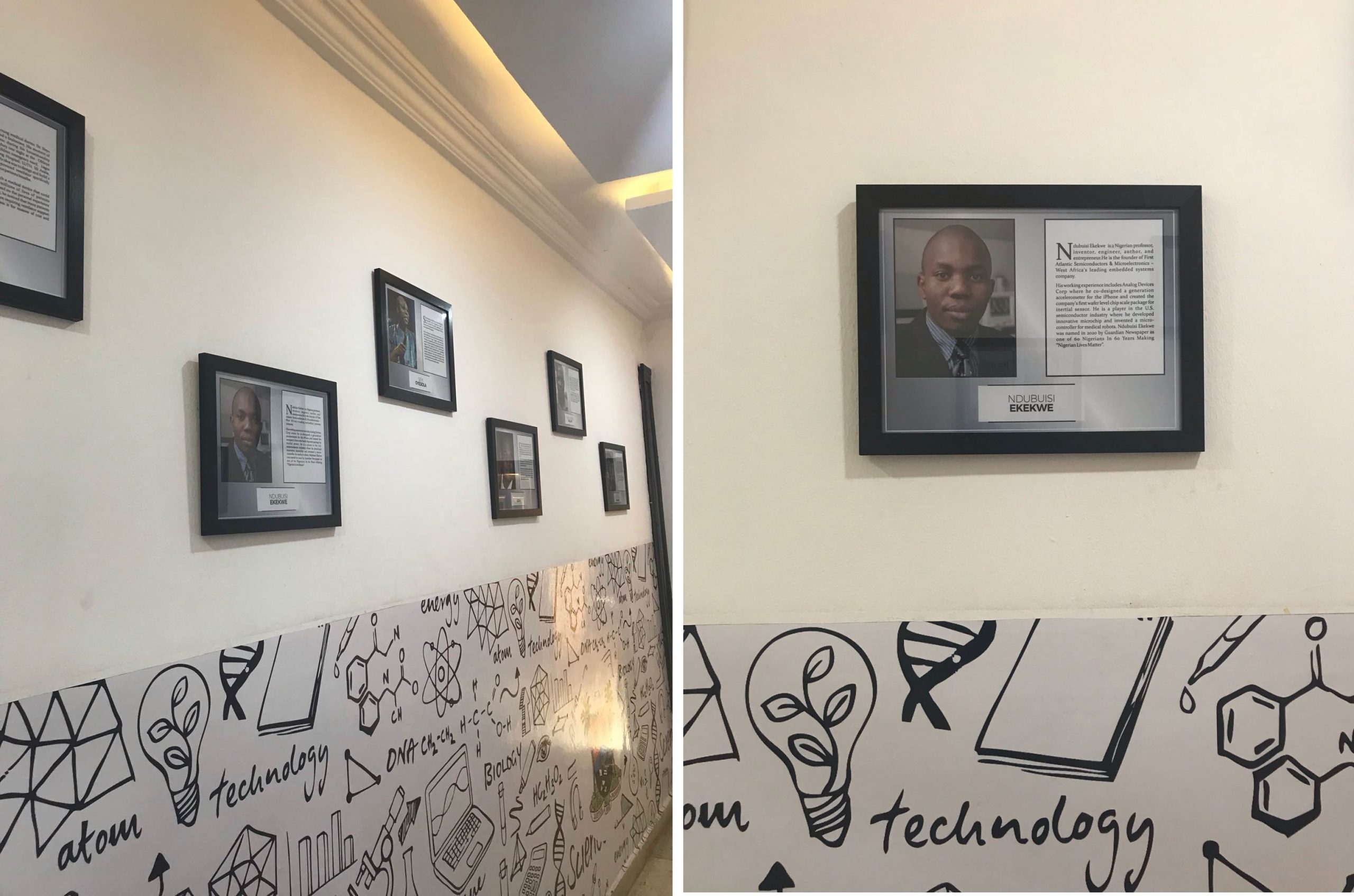
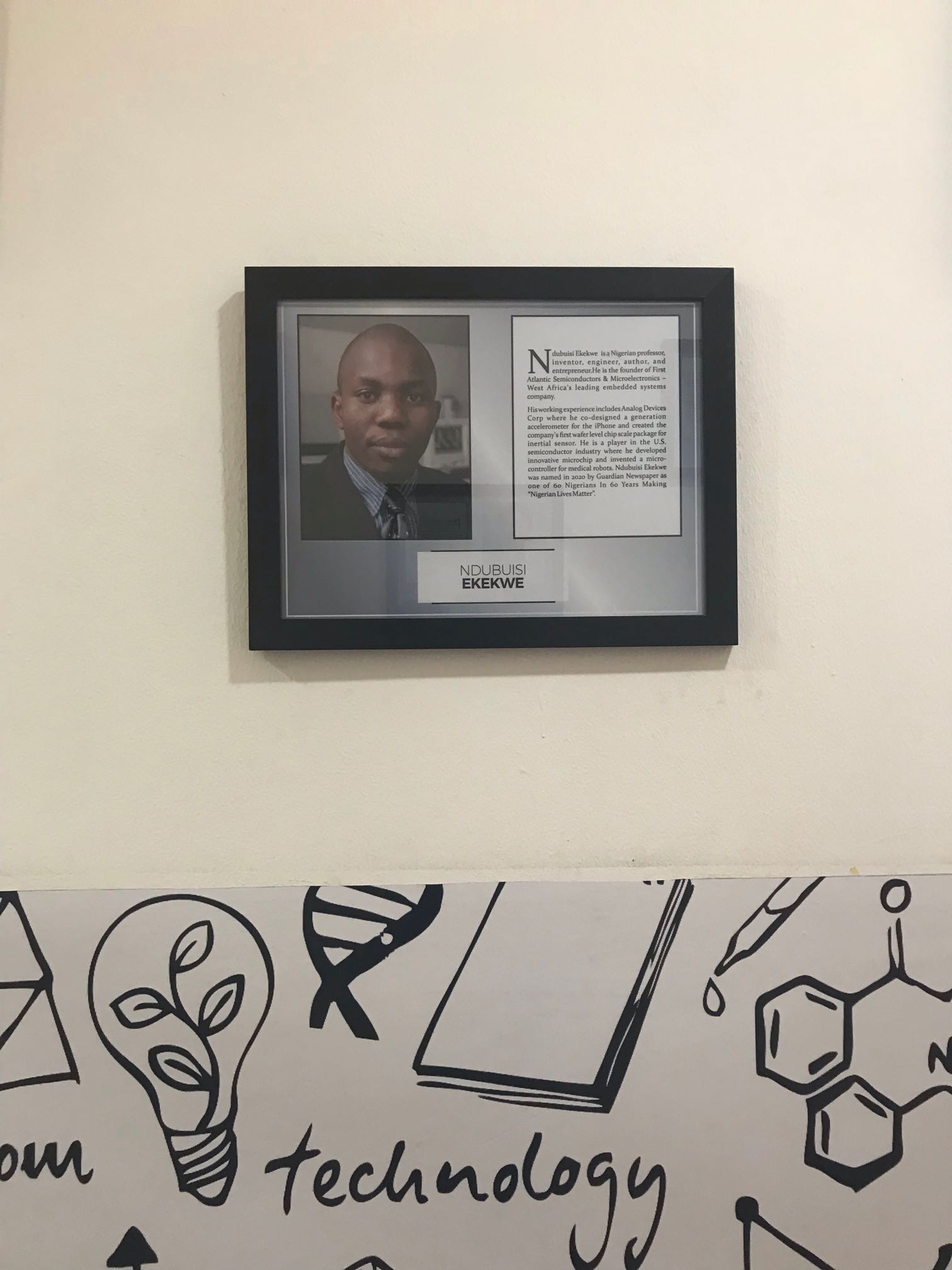
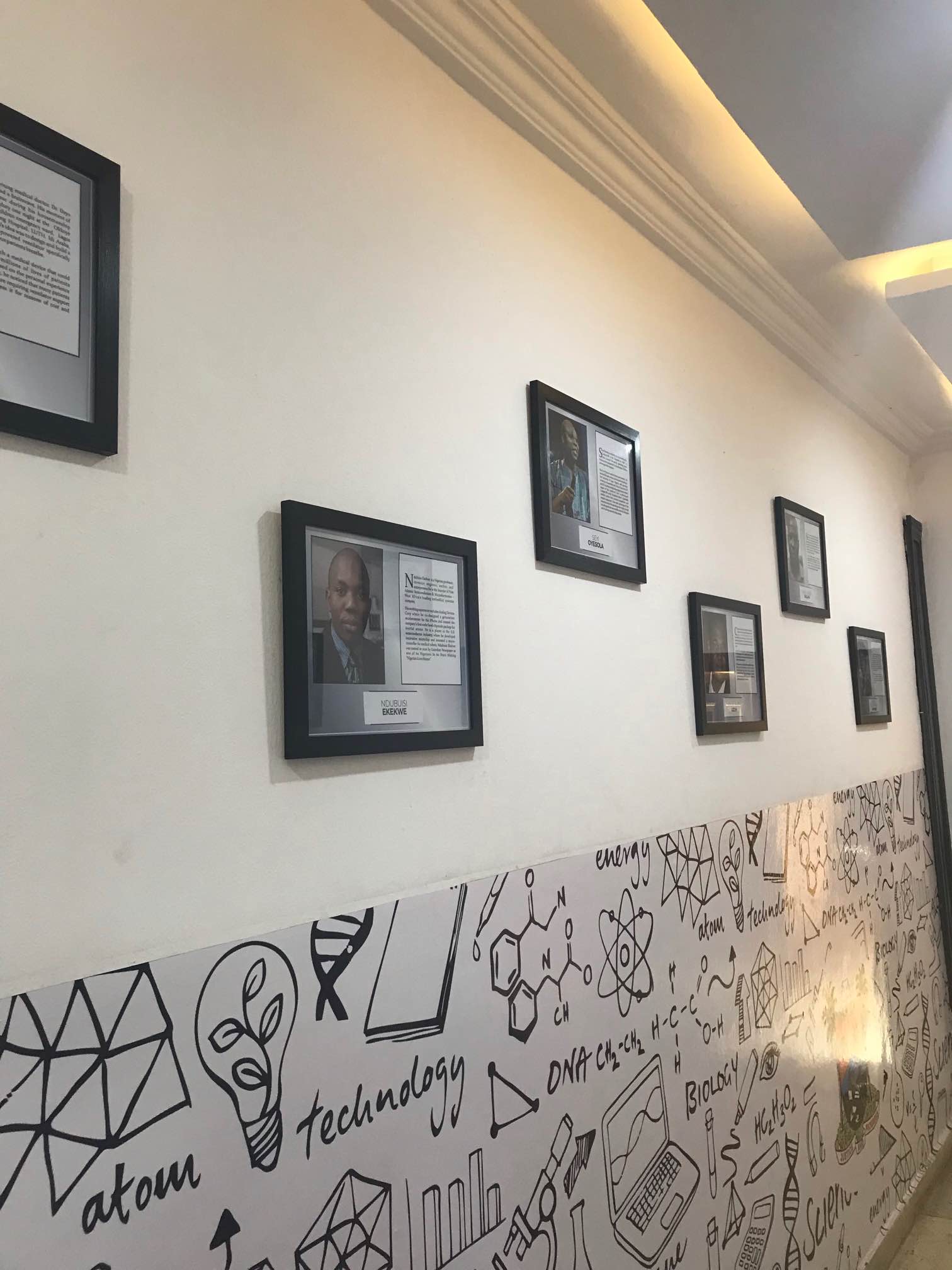
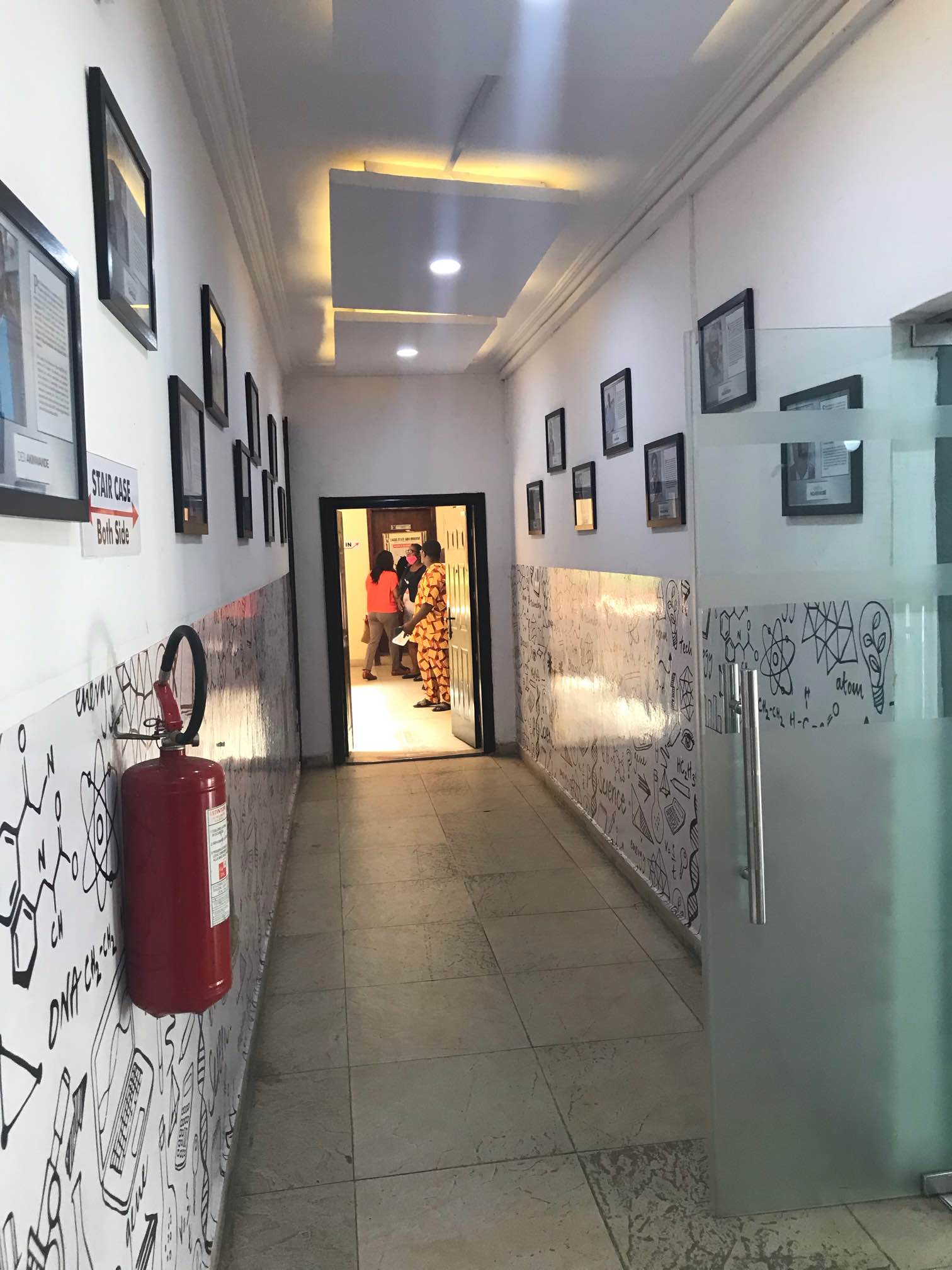
Lagos State Ministry of Science & Technology Includes Ndubuisi Ekekwe Portrait In Building

1

Thank you to the good people of Lagos State, our nation’s centre of excellence, for honouring this village boy, by including my portrait in Lagos State Ministry of Science & Technology main building. From universities like Covenant University to Boardrooms, I am grateful for the generosity, of considering my face worthy, to grace boardrooms, auditoriums, etc.

As always, I pray that the favour which I receive  from Nigeria and the Nigerian people will extend to everyone. This Nation has been kind to me and I have never struggled for the best of Nigeria. And that is the reason for my tough love for Nigeria.

Young People, remember this: the greatest moment in a career is to attain a position when people can recommend you in your absence.

To Lagos State, thank you for including me in that history!


Nigeria’s Central Bank Issues New Guidelines for Mobile Money Operators

0
The apex regulator of banking activities in Nigeria has released new guidelines to further regulate the services provided by mobile money operators (MMOs) in Nigeria (“the new guidelines”). Since 2015, when the last regulatory changes were made using the old guidelines, mobile money operators have evolved to some extent with the surge in financial solutions driven by technology. The new guidelines released on 9 July 2021 have made some additions to the 2015 framework which are highlighted below:

Scope

The new guidelines provide a robust coverage of the MMO value chain from service providers to subscribers and agents. Two major types of operations governed by these guidelines include:

  1. The Bank Led Model: These are deposit money banks offering MMO services alone or with other banks, essentially commercial banks operating disruptively in the MMO space.
  2. The Non-Bank Led Models: These are non-banking organisations that have obtained a license from the CBN to carry on MMO services. Note that they also use deposit money banks and settlement banks.

Permissible and Non-Permissible Activities

The new Guidelines have made additions to the permissible activities that were listed out under the old guidelines. The additions include MMOs being operational, wallet creation, e-money issuance, agent recruitment and management, pool account management, non-bank acquiring services and card-acquiring services.

However, even with the additions made, MMOs are still prohibited from carrying on the following types of businesses; direct or indirect loans or guarantees, insurance underwriting, subsidiaries’ establishment, foreign currency deposit services and other forex activities that save the facilitation of cross-border remittances to personal accounts subject to the applicable regulatory framework.

Savings Wallets

The new guidelines allow MMOs to offer savings wallets to be operated with settlement banks and the funds held in these wallets are insured with the Nigerian Deposit Insurance Corporation (NDIC) using a pass-through insurance arrangement subject to specific requirements in relation to investment operations and interest distribution.

The savings wallets funds are subject to a maximum management rate of 10% but must also ensure that the principal sum is not affected by charges and fees. The wallets are also insulated from offsets by the settlement banks with whom the MMOs operate the accounts. Note that customers can use the funds in these wallets to invest ONLY in government treasury bills.

Consumer Protection and Sanctions

MMOs are now required to resolve customer complaints within 48 hours. In addition, they must ensure that customers understand the transactions being concluded, provide robust frameworks against loss of service, proper communication channels and offer adequate disclosures to customers.

Where for instance, there is a new capitalisation requirement by the CBN and a settlement bank is unable to meet up, such could have its license withdrawn. In such an event, the NDIC’s maximum deposit coverage level kicks in at N500,000.00 (Five Hundred Thousand Naira Only) for each subscriber.

Where an MMO has its license withdrawn or activities banned, the CBN ensures that the deposit liabilities of the subscribers are assumed by another MMO, or some other financial institution as defined under the Banking and Other Financial Institutions Act (“the BOFIA”). The CBN also reserves the right to take sanctions against an MMO, its board of directors, officers or agents, withhold corporate approvals as well as suspend or revoke licenses.

Limits for Transactions

The balance limits for wallet holders have been increased from N50,000.00 (Fifty Thousand Naira Only) to N5,000,000.00 (Five Million Naira Only) for daily activities. For cumulative balance, the N300,000.00 (Three Hundred Thousand Naira Only) cap has been removed and is now unlimited, depending on the Know-Your-Customer (KYC) tier.

Reporting and Compliance

The new guidelines also stipulate that all risk mitigation techniques adopted by the MMOs must be within the scope of the relevant code of corporate governance, for example, the Code of Corporate Governance for Finance Companies 2018 (the Code). While MMOs have not been listed as financial institutions as such in the Code, it appears that the CBN has expanded the definition in the Code to cover MMOs by virtue of the fact that MMOs are listed as “other financial institutions” in the BOFIA.

Furthermore, all MMOs are to file annual audited reports and mandatory continuity business plans to the CBN within the first three months of the following year or no later than 31 March of the following year.

Conclusion

MMOs have definitely simplified financial transactions and services in Nigeria by increasing the number of banked individuals. Banks no longer need to have physical presences to provide financial services to residents of rural areas. This further promotes the CBN’s “cash-lite” agenda and has also made commercial transactions easier.

While the guidelines are a commendable development, we hope that in the editions to come, the CBN can involve Telco-Led models as they appear to be more common and easily accessible to the average Nigerian.

The Centurion Law Group provides unsurpassed legal services to its local and international clients. With offices in Nigeria as well as a dedicated team on the ground, reach out to us today.

Author: Ibrahim Moshood, Associate, Centurion Law Group