DD
MM
YYYY

PAGES

DD
MM
YYYY

spot_img

PAGES

Home Blog Page 5664

Tiger Global and SoftBank Combine To Blitz The World – Nigeria Needs That DNA

4

These two companies – Softbank and Tiger Global – are bold, and are increasingly peerless on their radical massive capital injection, without certainty, towards accelerating growth in digital companies. Great things happen when both combine: “The British fintech firm Revolut has raised $800 million in a new round that values it at a whopping $33 billion, or six times its valuation last year. Revolut is now Europe’s second-biggest fintech unicorn after Klarna, and the biggest in the U.K. The latest round was led by SoftBank and Tiger Global”, notes Fortune.

The new money will be used to fund London-based Revolut’s expansion into new products and markets including the U.S. and India, according to a statement Thursday.

The funding increases Revolut’s valuation six-fold from a fundraising round in 2020 and makes Revolut the U.K.’s most valuable startup, surpassing Checkout.com’s $15 billion mark.

  • British fintech firm Revolut said it has raised $800 million in a new funding round led by SoftBank and Tiger Global.
  • The round values Revolut at $33 billion, a sixfold increase on the $5.5 billion the company was worth last year.
  • Fintech start-ups have been on a funding spree lately, raising a record $33.7 billion in the second quarter of 2021.

Africa needs a firm with DNA like that of SoftBank and Tiger Global. Tell me something: I admire SoftBank and Tiger Global because they blitz, a defensive strategy in American football which pushes all available players against an offense (the quarterback) at a high risk, high reward play. If they miss it, they will likely get beaten by a touchdown but if they succeed, they freeze the offense.

Africa needs that playbook.

Xiaomi Dethrones Apple, Becomes the Second-largest Smartphone Maker

0

Chinese smartphone maker Xiaomi was the second-largest smartphone maker in the second quarter, overtaking Apple, according to a report from analyst firm Canalys.

Samsung was the leading vendor with a 19% share of smartphones shipped. Apple was third with 14%, while Vivo and Oppo took the fourth and fifth positions respectively.

Xiaomi had a 17% share of global smartphone shipments, ahead of Apple’s 14% and behind Samsung’s 19%. Oppo and Vivo share 10%.

“Xiaomi is growing its overseas business rapidly,” Canalys Research Manager Ben Stanton said in a press release, noting shipments increased 300% year-on-year in Latin America and 50% in Western Europe.

The Chinese smartphone maker posted year-on-year smartphone shipment growth of 83% versus 15% for Samsung and 1% for Apple.

Stanton noted, however, that Xiaomi phones are still skewed toward the mass market with the average selling price of its handsets 75% cheaper than Apple’s.

But the Beijing-headquartered company is now looking to push into the high-end market. Earlier this year it launched the Mi 11 Ultra, a premium smartphone that starts at 5,999 yuan ($928). It also launched the 9,999 yuan Mi Mix Fold, its first foldable phone.

That price range pits Xiaomi against Apple and Samsung in the premium segment. But its domestic rivals Oppo and Vivo are also trying to break through into the high-end market.

“It will be a tough battle, with Oppo and Vivo sharing the same objective, and both willing to spend big on above-the-line marketing to build their brands in a way that Xiaomi is not,” Stanton said.

“All vendors are fighting hard to secure component supply amid global shortages, but Xiaomi already has its sights set on the next prize: displacing Samsung to become the world’s largest vendor.”

Xiaomi has benefitted from Huawei’s struggles. Huawei was once the largest smartphone player in the world, but U.S. sanctions cut the Chinese company off from critical supplies including software and chips, causing its sales to plunge.

While smartphones still account for the majority of Xiaomi’s revenue, it is looking to get into new business areas. In March, the technology firm announced plans to launch an electric vehicle business and invest $10 billion over the next 10 years.

Apple being pushed behind Samsung and now Xiaomi signals potential regression to fourth position for the American company.

Global chip shortage has seriously impacted the tech industry, cutting production capacity of many companies including smartphone makers. Stanton noted that “all vendors are fighting hard to secure component supply amid global shortages.”

While Apple is now developing its own chips, which seemingly gives it an advantage over its competitors, Xiaomi is increasingly winning more market shares with cheaper devices and aims to dethrone Samsung soon.

“Xiaomi already has its sights set on the next price: displacing Samsung to become the world’s largest vendor,” Stanton said.

Xiaomi’s growth is also attributed to the quick recovery of China’s economy from the shocks of COVID-19 pandemic. With almost every of China’s economic sectors fully open, the smartphone maker has a huge buoyant market to cash in on.

Why Intel Needs To Acquire GlobalFoundries

1
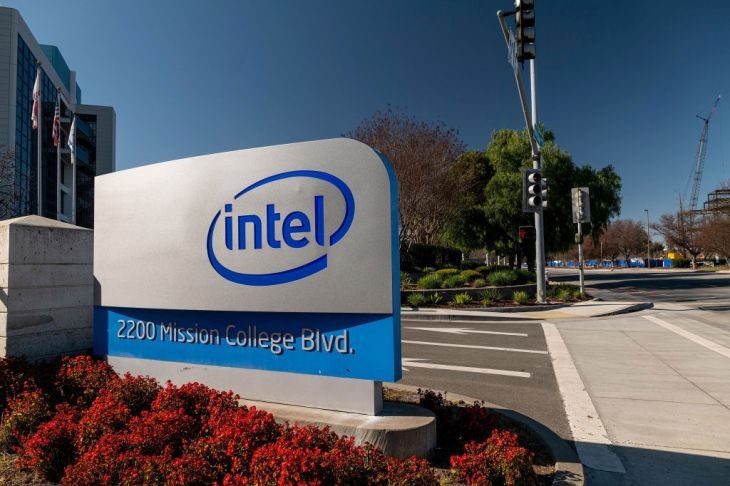
Signage at the entrance to Intel headquarters in Santa Clara, California, U.S., on Wednesday, Jan. 20, 2021. Investors want to know if the world's largest chipmaker will outsource more production when Intel Corp. reports results Thursday. Photographer: David Paul Morris/Bloomberg via Getty Images

Intel Corp was legendary for decades as it pursued its strategy of designing microprocessors and manufacturing them in-house, with no space for allowing others to use its manufacturing facilities. That integration served well and Intel became the category-king, winning over competitors like AMD. But Intel has faced a double whammy: losing the edge on design to Nvidia (and Qualcomm, AMD, etc) on GPU and mobile chipsets, and lagging on manufacturing to TSMC and Samsung.  There was a frontal attack from TSMC when its contract chip making was bent to disintermediate Intel.

Today, anyone with access to a credit card can design chips and send them to TSMC to fabricate (yes, TSMC is the equivalent of Amazon Web Services (AWS) of chipmaking; AWS is a leader in public cloud computing). Intel’s  moat on manufacturing has been challenged and its  castle lays bay. The ability to fabricate  via TSMC without investing in foundries is a new level of disruption for Intel.

The Business Model of Today

In our contemporary technology business world, one business model has emerged to become very dominant: aggregation construct. Indeed, if you check the top 20 technology companies in the world, more than 80% run an element of aggregation construct. So, when the news flew that Intel was planning to acquire GlobalFoundries, a contract  semiconductor manufacturer, for $30 billion, I felt it was the right playbook. (GlobalFoundries has noted that Intel did not speak with it for an acquisition.)

Intel may buy an unsuspecting chipmaker. The rumor mill is churning that Intel is considering a deal to buy semiconductor manufacturer GlobalFoundries, valuing the company at $30 billion. When reached by the Wall Street Journal for comment, a spokesperson for GlobalFoundries said they weren’t in discussions with Intel at all. If the deal were to happen it could have huge impact on the industry; the manufacturer is one of the biggest suppliers for AMD, Intel’s biggest competitor. (Fortune newsletter)

That aside, Intel picking GlobalFoundries would have been a good move. The reason is this: Intel has continued to lag behind on the global chip manufacturing business. Samsung has some of the most advanced foundries in the world, serving its ace enemies like Apple. TSMC fabs for some of the finest chip designers in the world in an open contract-model. The implication is this: their foundries are always busy because they do not just rely on getting internal hits, unlike Intel which kept all inside, making asset utilization challenging in cases where their brands are not moving well. 

So, for TSMC, for example, it has a statistical advantage that by servicing hundreds of customers, one of those will have great products that will give it confidence to keep investing in its foundries. That virtuoso circle has enabled it to accelerate and to a large extent that it is now better than Intel foundries.

With GlobalFoundries as part of Intel, Intel can provide a huge challenge to TSMC, running the same contract business it does while making sure that it can modernize its foundries and support its product lines. Yet, there is also a challenge: not many companies will like to send their designs to GlobalFoundries knowing that it will be both a designer and a fab provider under Intel since IPs can leak or be stolen.

But I do think since Samsung makes chips for Apple, Intel can handle those concerns easily. In the industry, I worked on many chip fabrications, and it was night and day at the foundry, making sure IPs are not violated.

So, Intel needs to be a fabrication aggregator to have the capacity to bring in resources to actually help it build products of the future with the right process technologies. Working with others is a strategic thing today and I recommend Intel to pursue the purchase of GlobalFoundries.

Block Production in Nigerian Building Industry in an Era of Construction Analytics

1

One of the key materials for building construction and other structure is block. It is significant to the extent that stakeholders who understand the failure of having durable blocks don’t leave any stone unturned in ensuring availability and use of quality blocks. However, in recent times, it seems that prospective homeowners and developers complain about the rising cost of cement and other finishing materials than quality of blocks across the country.

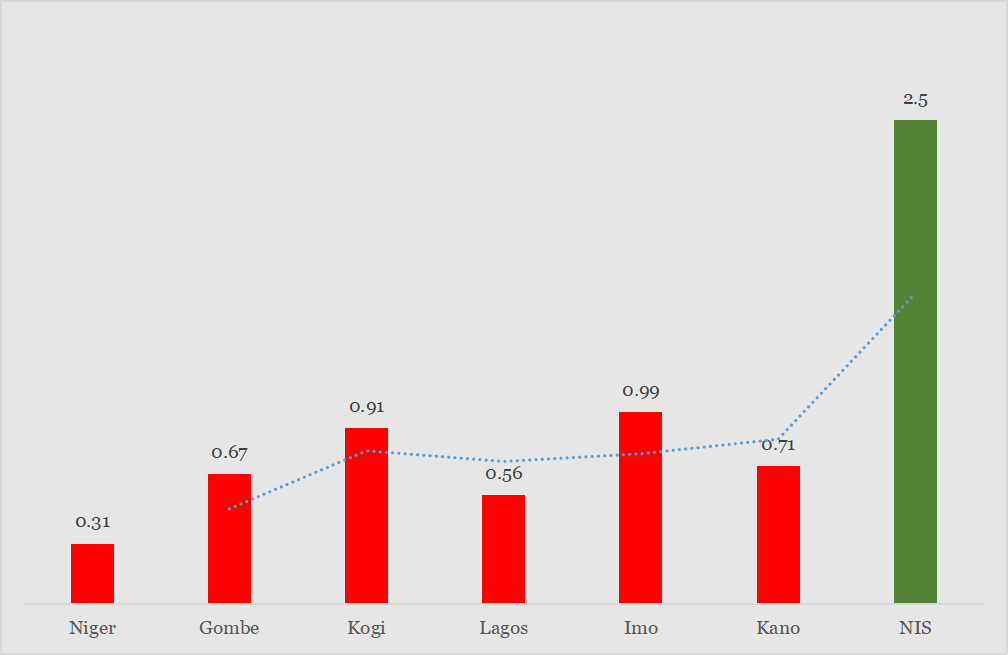
According to builders and structural engineers who spoke with our analyst, there are a number of tests which need to be carried out at the production and finishing stages of block manufacturing before it could be used. Out of these tests, water absorption and compressive strength tests are essential. To the Nigerian Industrial Standards, carrying out compressive strength test requires deployment of a compressive strength testing machine, which is not readily available in most cities and towns where blocks are being produced daily.

With the non-availability of the machine and others, our sources note that having resilient cities and towns would remain elusive in the country if urgent steps are not taken by the concerned stakeholders. Our analyst had earlier analysed the factors and implications of building collapse in Ibadan, Lagos, Kano and other places. From Abuja to Ota and Umuahia, our checks reveal low compressive strength of blocks. The story is not different in Ilorin, Idah, Osogbo, Ilesha, Ibadan, Ogbomosho, Aramoko, and Ado-Ekiti. In Owerri, in addition to low compressive strength, water absorption rate is also at the lowest ebb of the required standard.

Exhibit 1: Average Compressive Strength Test in select States

Source: Multiple Academics, 2021; Infoprations Analysis, 2021

Over the years, academics have been providing solutions to the non-compliance to the requirements of the NIS and the Standards Organisation of Nigeria. These ranges from having strict compliance monitoring by the concerned regulatory agencies to prosecution of block manufacturers that supplied blocks to homeowners and developers. Manufacturers have also been advised and still being informed of the essence of producing quality blocks. The advice has been mainly hinged on the importance of embracing best practices and processes while making their blocks. For instance, inappropriate mix ratio and method of curing have largely been linked with the poor quality of blocks. Hence, the need for constant upskilling and reskilling of production crew.

Recently, the Standards Organisation of Nigeria noted that manufacturers test all required quality parameters of sandcrete blocks at its laboratory located in Ikeja. According to our analyst, this is laudable and came at a time the stakeholders are clamouring for resilient cities and towns towards sustainable habitation. In addition to this, our analyst expects the agency and others to shift towards deployment of construction analytics, which has been helping prospective homeowners and developers in developed countries to understand the quality of building materials over the years. Using the analytics requires that the agencies collaborate with companies that have the capabilities of creating and sustaining construction analytics architecture and system across the country.

Got an invitation to join the Board of a public liability company today

1

I got a special note today – an invitation to join the Board of a public liability company! Young people, never doubt the days of humble beginnings; the world has a promise. Yes, work hard so that in your absence, men and women will recommend you. Indeed, the greatest moment in a career is when people make a case for you in your absence.

For this position, who nominated me? I have no clue. But I am happy that my emails and Whatsapp are set (default setting) to receive  “good news”.

“Good morning Sir, it’s my pleasure to inform you that you have been nominated to be an Non Executive Director of [ ] plc,….”

Keep them coming.