DD
MM
YYYY

PAGES

DD
MM
YYYY

spot_img

PAGES

Home Blog Page 567

4 Best Long-Term Cryptos to Buy Now: Future-Proof Your Portfolio With These Picks

0

If there is one thing investors are chasing right now, it is future-proof assets. The crypto market has always been noisy with meme tokens rising and falling in hours, yet every cycle produces a few names that stand out for the long run. One of those names making waves today is Little Pepe (LILPEPE), a presale coin already up by 110% since its first stage and signaling what traders suggest could be a 21,209% breakout from $0.0021 to $0.44 in the coming year.  Alongside it, Ethena, Mantle, and Aptos are drawing serious attention from retail buyers and larger institutions. Together, these four coins may form a long-term mix that protects and grows portfolios in a rapidly changing digital economy.

Little Pepe (LILPEPE): The Meme Coin That Means Business

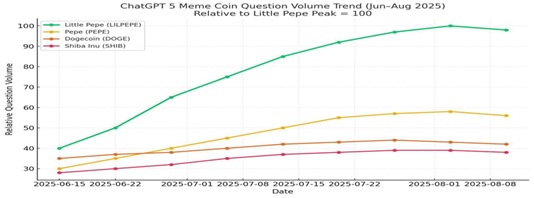
Every bull cycle has a token that becomes a cultural force. Right now, that looks like Little Pepe (LILPEPE), trading at $0.0021 in its Stage 12 presale. Over $22.3 million has already been raised with more than 14 billion tokens sold, and the stage is now more than 95% filled. Early buyers from Stage 1 are already sitting on 110% gains, and those buying in Stage 12 still have a clear 45% potential upside before the official launch price of $0.0030. Unlike many meme tokens that rely on hype alone, Little Pepe has real infrastructure on a Layer 2 chain with lightning-fast transactions, staking tools, and bot defense systems. It has already been listed on CoinMarketCap and has a completed Certik audit, which adds another layer of credibility.  Investors often compare it with Dogecoin, SHIB, and PEPE, yet it has already surpassed them in community buzz, peaking above them on ChatGPT 5 memecoin question volume between June and August 2025. That peak speaks volumes about cultural traction, often driving long-term staying power in this sector.
Ethena (ENA): The Yield Machine

Ethena trades around $0.66 today, and its strength lies in powering a synthetic stablecoin called USDe. Instead of being backed by traditional reserves, USDe is fueled by yield-based strategies. This is both bold and risky.  Recent reports from the Financial Times pointed to concerns over sustainability as yields decline, yet many DeFi believers see ENA as one of the most innovative experiments in stable liquidity. Analysts project that ENA could climb to around $0.90 before the year’s end if bullish momentum continues.

Mantle (MNT): Scaling Ethereum with Style

Mantle is priced at about $1.15 today after rallying 103% in August. While profit-taking cooled the run, it has held strong thanks to partnerships and incentives. Its collaboration with Bybit now offers users discounted fees, staking rewards at 36% APR, and regulatory alignment under MiCA.  On-chain activity has been climbing, with whale wallets and retail participation increasing. If Mantle can push past the $1.35 mark, analysts believe a bigger breakout may follow in Q4.

Aptos (APT): The Steady Layer One

Aptos trades around $4.20 with a market cap close to $2.9 billion. Known for its origins from former Meta engineers, Aptos struggled at launch but has since built a loyal developer base. Forecasts remain mixed.  Some place it in the $3 to $5 range through 2025, while more optimistic takes see $9 and above if conditions align. Aptos may not move with the explosive pace of a meme coin, but it represents stability with gradual growth potential.

Final Word

The crypto market never lacks speculation, but it is rare to see a token like Little Pepe balance meme culture with real-world features and audited infrastructure. With early investors already up 110% and a 21,209% breakout projection of $0.44, it is hard to ignore the opportunity. Ethena, Mantle, and Aptos may all serve as intelligent long-term companions, but Little Pepe could be the one that defines this cycle. For those who want to future-proof their portfolio, the timing may never be better to explore the ongoing Little Pepe presale before Stage 12 sells out completely.

For more information about Little Pepe (LILPEPE) visit the links below:

Website: https://littlepepe.com

Whitepaper: https://littlepepe.com/whitepaper.pdf

Telegram: https://t.me/littlepepetoken

Twitter/X: https://x.com/littlepepetoken

Union Bank Seeks New Core Investor as TitanTrust Merger Closes, but Faces Tough Recapitalization Race Against Peers

0

Union Bank of Nigeria Plc is preparing to seek a new core investor following the completion of its long-awaited merger with TitanTrust Bank Limited.

According to multiple sources who spoke to Nairametrics, the move is part of a broader effort to reposition the century-old lender after a turbulent two years under the control of the Central Bank of Nigeria (CBN).

The bank confirmed in a statement that it had secured final regulatory approval from the apex bank, officially completing the merger that integrates TitanTrust into Union Bank’s operations.

The merger, which had been in the works since 2022, was delayed by governance and ownership challenges that eventually drew in the CBN.

Regulatory takeover reshapes the deal

Union Bank and TitanTrust were both placed under CBN control in 2023 after questions were raised about ownership structures and regulatory compliance.

The intervention cleared the path for a regulatory-driven merger, effectively resetting the bank’s shareholder base.

Nairametrics also reports that Tropical General Investments (TGI) Group, the original shareholder of TitanTrust Bank, is not part of the newly merged entity following the regulatory takeover. This marks a major shift in the ownership structure and underscores the CBN’s influence in shaping the outcome of the deal.

The absence of TGI means that Union Bank must now seek a credible core investor to provide long-term stability, strategic direction, and capital support. Insiders note that discussions with potential investors are already underway.

Search for capital amid recapitalization push

The hunt for a new investor comes against the backdrop of the CBN’s recapitalization directive, which requires banks to shore up their capital bases within 24 months.

The target for the industry is estimated at about N4.1 trillion, and so far, banks have raised around N2.8 trillion, leaving a gap of more than N1.3 trillion with just six months left to the deadline.

Union Bank’s quest for a core investor is therefore not just about replacing old shareholders — it is also about survival and competitiveness in an increasingly consolidated industry. Analysts have noted that only banks with deep-pocketed investors and strong governance will emerge stronger after the recapitalization exercise.

Union Bank’s uphill task

Founded in 1917, Union Bank remains one of Nigeria’s oldest financial institutions, with over a century of service to individuals, corporates, and government entities.

However, in recent decades, it has faced recurring challenges: declining market share, ownership tussles, and stiff competition from newer, more agile rivals.

TitanTrust Bank, by contrast, was one of Nigeria’s youngest lenders, having obtained its banking license in 2019. Backed initially by TGI Group, it made a bold move in 2021 to acquire a majority stake in Union Bank, a transaction that surprised many industry watchers given its relatively small size.

But the acquisition quickly ran into regulatory headwinds, setting the stage for the CBN’s intervention in 2023 and eventually leading to the just-concluded merger.

Contrasts with peers: Zenith, Access, and UBA chart different paths

While Union Bank is still searching for a new anchor investor, peers such as Zenith Bank, Access Holdings, and United Bank for Africa (UBA) are already far ahead in their recapitalization plans, each employing distinct strategies that highlight Union Bank’s precarious position.

  • Zenith Bank, long regarded as one of Nigeria’s most profitable lenders, has leaned on its strong balance sheet and robust earnings to execute an aggressive rights issue and private placements, ensuring it stays well-capitalized ahead of the deadline. Its dominance in profitability and investor confidence has allowed it to take a position of strength.
  • Access Holdings, on the other hand, has pursued a multi-pronged strategy, combining equity raises with plans to attract foreign investors as part of its broader expansion across Africa. For Access, recapitalization is not only a regulatory compliance issue but also a strategic lever for continental growth, consolidating its footprint in multiple African markets.
  • UBA has adopted yet another approach, leveraging its reputation as a pan-African banking giant with operations in more than 20 countries. It has focused on a rights issue to tap into existing shareholder loyalty while also leaning on its diversified earnings across Africa to assure investors of long-term stability. This measured but confident strategy reflects UBA’s ability to raise funds internally and externally, without the governance uncertainties currently dogging Union Bank.

Compared with these peers, Union Bank faces a dual challenge: it is not only racing to meet regulatory capital requirements but also trying to restore credibility after years of turbulence. Where Zenith and Access are leveraging strong earnings and expansion, and UBA is tapping continental scale and shareholder trust, Union Bank seems to be in survival mode, betting on the appeal of its wide branch network and legacy customer base to attract a new core backer.

Why this matters

The significance of Union Bank’s next steps cannot be overstated. Without a core investor, the bank risks being left behind in a market where its peers are aggressively raising capital through rights issues, public offers, and private placements.

A credible investor could help:

  • Inject fresh capital to meet recapitalization requirements,
  • restore confidence among depositors and shareholders,
  • provide strategic expertise in digital banking and risk management,
  • position the bank for growth in an increasingly competitive financial system.

Financial experts note that Union Bank’s wide branch network and legacy customer base remain valuable assets. These strengths could appeal to both domestic institutional investors and foreign banking groups seeking to expand their footprint in Africa’s largest economy.

State of Banking Recapitalization

The merger and investor search come at a time of intense activity in Nigeria’s banking sector.

While Access Holdings, Zenith Bank, and GTCO are completing their capital raise, UBA and FirstBank are all in various stages of recapitalization, with some already raising billions through rights issues and private placements.

Mid-tier banks such as Fidelity, FCMB, and Stanbic IBTC are also pursuing aggressive capital-raising strategies. So far, the industry has collectively raised about N2.8 trillion, largely through equity and debt issuances. With six months remaining before the deadline, the race is on to cover the remaining N1.3 trillion shortfall.

Union Bank has yet to announce the structure of its investor search, whether it will prioritize domestic institutional investors, foreign banking groups, or private equity firms.

Analysts believe that Union Bank’s ability to attract a strong core investor will not only determine its place in this new era of Nigerian banking but could also send signals about investor confidence in the wider financial system.

Job Market Weakens as Economic Uncertainty Overshadows AI’s Role in Hiring Slowdown

0

The American labor market is in a strange moment where artificial intelligence dominates the headlines, with the debate centered around job security as its adoption grows.

But experts quoted by CNBC believe that it is economic turbulence—not algorithms—that is driving the slowdown in hiring.

The evidence, they argue, shows that the shockwaves from AI remain limited to a few industries, while broader uncertainty about the Trump administration’s economic direction is weighing far more heavily on job creation.

“As we look across the broader labor market, we see that AI’s impact on the labor market has still been fairly small,” said Cory Stahle, a senior economist at job search platform Indeed. “The important asterisk is that that doesn’t mean that it has been zero.”

Mandi Woodruff-Santos, a career coach, echoed the point: “I don’t think AI is to blame, I think the economic uncertainty is to blame.”

The state of the job market

The strain is visible in the numbers. The U.S. economy added only about 22,000 jobs in August, far below the 75,000 expected by economists surveyed by Dow Jones, while the unemployment rate ticked up to 4.3%, according to Friday’s Bureau of Labor Statistics report.

For those still employed, the mood is jittery. Some are “job hugging”—clinging tightly to their current roles for fear of instability—according to an August study by organizational consulting firm Korn Ferry. Others are caught in what cloud learning platform TalentLMS calls “quiet cracking,” a persistent unhappiness at work that erodes performance and heightens the desire to quit.

Yet many workers are not moving. The hesitancy reflects the bigger picture: businesses are slowing hiring, and employees are avoiding risky career jumps in a climate of unpredictability.

“No business knows what the heck the Trump administration is going to do next with the economy,” Woodruff-Santos said. “And in this kind of economic climate, companies are not sure of anything, and so they’re being very conservative with the way that they’re hiring.”

How AI is shaping the workforce

Where AI does come into play, the disruption is mostly contained within the technology sector. Some firms have announced layoffs in order to accelerate their AI adoption. Salesforce, for example, cut about 4,000 customer support roles, citing advances in artificial intelligence software.

But even here, economists note the effect is far from universal. Studies suggest the brunt of AI’s disruption is falling on younger workers. A Stanford University report in August found that early-career employees aged 22 to 25 in AI-exposed occupations saw a 13% drop in employment. By contrast, more experienced professionals and those in less AI-affected roles have maintained or even expanded employment.

The Stanford report stressed that job losses cluster in fields “where AI is more likely to automate rather than augment human labor.”

Still, the tech industry is relatively small in the grand scheme. According to nonprofit trade association CompTIA, “net tech employment”—a category spanning cybersecurity specialists, IT professionals, and self-employed tech workers—accounted for just 5.8% of the overall workforce as of March 2025.

For AI to become a truly broad threat, Stahle argued, it would need to spread disruption into mainstream industries such as retail, marketing, or manufacturing.

AI versus the economy

The contrast is stark when viewed globally. In Europe, layoffs linked to AI remain isolated to tech hubs, while economic uncertainty tied to sluggish growth and energy costs has been the dominant labor market issue. In Asia, where countries like Japan and South Korea have embraced AI in manufacturing, employment has held steady, suggesting that retraining and workforce adaptation can cushion automation’s effects.

This comparison reinforces Stahle’s point: “AI’s footprint in the labor market is real but still narrow. What’s driving the broader slowdown is economic conservatism.”

A shift toward retraining

A Brookings Institution report suggests employers may prefer retraining over mass layoffs. “AI may be more likely to augment rather than fully replace human workers,” the authors wrote.

That possibility is already evident in hiring patterns. “We’re seeing more and more demand for AI skills,” Stahle said.

Woodruff-Santos advises employees to prepare.

“You’d be foolish not to do the research into your own field,” she said.

Training programs, webinars, and even free trials of AI tools can give workers a competitive edge in a shifting economy.

Best Crypto for Long Term in 2025: BlockDAG Surges Ahead of SOL, LTC & BNB

0

The crypto market in 2025 is no longer just about hype, it’s about who is proving traction before the next cycle kicks in. While Solana, Litecoin, and Binance Coin continue to hold relevance through consistent upgrades and utility, BlockDAG is rewriting the conversation altogether.

With nearly $400M raised, whale buys exceeding $4.4M, and 3 million users already mining through its X1 app, BlockDAG is showing that execution matters as much as price action. For those asking which projects truly rank among the best crypto for long term, the comparison is clearer than ever.

BlockDAG (BDAG): Where Infrastructure Meets Whale Activity

BlockDAG has moved far beyond presale hype to establish itself as a true contender for the best crypto for long term growth. In August 2025, two whales executed buys of $4.4M and $4.3M, surpassing the long-standing $3.8M leaderboard entry. The leaderboard, once a gamified feature, now acts as a signal of conviction, highlighting how major buyers view BlockDAG’s progress with urgency.

What’s fueling this surge? Delivery. The launch of TRADEBDAG, rollout of Dashboard V4, and the X1 Miner App crossing 3 million users show that the ecosystem is not just theoretical, it’s live and expanding. Add to this a testnet nearing release, and BlockDAG’s infrastructure milestones are aligning perfectly with capital inflows.

The presale has now raised nearly $400M with 25.5B BDAG sold, positioning it among the largest raises in recent memory. Batch 30 pricing stands at $0.03, with early participants from $0.001 already up 2,900% ROI. At $0.0013, BlockDAG now offers a flat-rate presale price introduced at the BDAG Deployment Event, replacing bonus tiers with a fair, equal-access system for the final 30 days before launch. This gives every participant the same entry point while keeping urgency high before the $0.05 listing price.

For those evaluating the best crypto for long term, BlockDAG offers the rare combination of user adoption, whale backing, and working products ahead of launch.

Solana (SOL): Consistency Anchored by DeFi and NFT Growth

Solana continues to prove why it belongs in conversations about the best crypto for long term. Trading at $184 in August 2025, SOL has found strong support in the $170–$180 range. After enduring the volatility of 2024, Solana has become one of the most resilient Layer-1s, particularly for DeFi and NFT activity.

Reports highlight surging stablecoin volumes on Solana’s network, reinforced by partnerships with fintech platforms pushing mobile-first wallets into broader markets. At the same time, Solana is improving scalability with NFT compression features, which cut on-chain storage costs and widen adoption.

While SOL isn’t making headlines daily, its fundamentals remain solid. Those watching the best crypto for long term still view Solana as one of the more balanced plays, supported by both infrastructure improvements and consistent user traction.

Litecoin (LTC): Renewed Attention Through ETF Speculation

Litecoin has re-entered the spotlight after months of muted activity. Currently trading just under $110, LTC rebounded quickly after rumors spread of a potential Litecoin ETF under review by U.S. financial institutions. Although no official filing has been confirmed, speculation alone has breathed life into this long-standing project.

LTC’s edge lies in utility. With Bitcoin facing fee spikes during congestion, Litecoin is once again becoming a preferred option for low-fee, fast-settlement payments, particularly in cross-border use cases. This has always been one of LTC’s strengths, and in 2025, it is regaining relevance.

While some view it as overshadowed by newer chains, the possibility of an ETF could cement LTC’s role in the best crypto for long term debate, especially if institutions decide to reintroduce it as a complement to Bitcoin.

Binance Coin (BNB): Resilience Under Pressure

Binance Coin is holding its ground despite regulatory scrutiny. Trading around $382 after bouncing from July’s dip below $350, BNB continues to benefit from Binance’s vast user base and deep integration within its own ecosystem.

The BNB Chain has been expanding with fresh GameFi projects and metaverse initiatives, ensuring that adoption isn’t slowing down. Binance has also updated its Launchpad and introduced new staking pools, fueling user engagement.

While regulatory overhang persists, BNB’s role as the backbone of the world’s largest exchange ensures it remains firmly in conversations around the best crypto for long term. Its resilience highlights its ability to adapt under pressure while maintaining liquidity and relevance.

Final Take: Why BlockDAG Leads the Best Crypto for Long Term List

August 2025 shows a split between projects relying on speculation and those proving adoption. Solana, Litecoin, and Binance Coin all offer clear strengths, whether it’s Solana’s network traction, Litecoin’s payment efficiency, or BNB’s exchange utility. Each has earned its place among the best crypto for long term strategies.

But BlockDAG is operating differently. With nearly $400M raised, 3M users on the X1 Miner App, whale buys topping $4.4M, and visible rollout of tools like Dashboard V4 and TRADEBDAG, it is proving that growth doesn’t need to wait for mainnet. The flat-rate $0.0013 presale pricing introduced at the BDAG Deployment Event ensures fairness for all participants in the final stretch before launch.

For those scanning the market for the best crypto for long term, BlockDAG isn’t just keeping up with established names; it’s redefining what momentum and delivery look like in 2025.

Stellar Hits $0.37, Monero at $272, But BullZilla Raises Over $250K as the Best 1000x Crypto Presale in 2025

0

The crypto market in 2025 is filled with opportunities, but only a handful of projects truly stand out as the best 1000x crypto presales. Investors today are looking for both long-term stability and short-term explosive potential. This is where Stellar, Monero, and BullZilla come into the spotlight.

Stellar (XLM) has been strengthening its role in cross-border payments. Monero (XMR) continues to dominate as the leading privacy coin. However, the most aggressive play right now is clearly the BullZilla Presale, which is designed to achieve exponential ROI through its stage-based model.

Let’s break down each project, its current position in the market, and why these three make up some of the best 1000x crypto presales in 2025.

Stellar (XLM): Building Bridges for Global Finance

Stellar (XLM) is currently trading around $0.36–$0.37 USD (as of Sept 8, 2025), with a modest 2–3% gain in the last 24 hours. This puts Stellar in a strong position after a year of consistent growth, backed by robust trading volumes of over $200 million daily. Its price trajectory reflects investor confidence in its real-world applications.

Year-over-year, Stellar has delivered an impressive 295% growth, underlining its strength as a blockchain for cross-border transactions and tokenized assets. Partnerships with financial institutions and fintech startups continue to validate its mission of bridging traditional and decentralized finance.

Analysts believe Stellar’s growth is less about hype and more about steady, reliable expansion. For investors seeking a balance of security and upside, Stellar earns its place among the best 1000x crypto presales in 2025. While not explosive in the short term, it remains a cornerstone in blockchain infrastructure.

Monero (XMR): The Champion of Privacy

Monero (XMR) is currently valued around $271–$273 USD, showing a small but steady 0.5–1% gain over the past 24 hours. With a market cap of $5 billion+, Monero continues to cement its dominance in the privacy sector. Daily liquidity and strong community backing ensure its relevance even amid regulatory challenges.

Over the past year, Monero has maintained a consistent trajectory, with modest yet stable gains. It remains resilient against volatility thanks to its unique focus on secure, private transactions that shield users from tracking and surveillance. For many, this makes Monero not just a coin, but a necessity in the crypto ecosystem.

Market analysts consider Monero a safe bet for investors who prioritize privacy and utility over hype. While it may not skyrocket overnight, its steady growth keeps it in contention among the best 1000x crypto presales in 2025, particularly for long-term, privacy-conscious portfolios.

BullZilla (BZIL) Presale: Explosive Start, Exponential Potential

Bull Zilla Presale is in Stage 2A, with tokens priced at $0.00003241 USD. The project has already raised over $250,000, attracted 900+ holders, and sold 21.88 billion tokens. With stages changing every 48 hours or at each $100,000 milestone, the pace is aggressive and creates urgency for investors.

Early participants have already secured ROI figures above 463.65%, with projections targeting an incredible 16,000% at listing. Such figures put BullZilla in direct comparison with viral tokens of the past, leading many to call it the BullZilla ($BZIL) next 1000x opportunity. This presale’s design ensures early movers reap the largest rewards.

Among the best 1000x crypto presales in 2025, BullZilla stands out as the most ambitious. Dubbed by some as the best crypto to buy today, it blends hype, strong tokenomics, and explosive growth mechanics. For investors chasing fast, exponential returns, BullZilla Presale is the standout choice.

Conclusion

Stellar provides stability and a global payment utility. Monero secures privacy and remains a cornerstone in the fight for decentralized financial freedom. Yet it is BullZilla Presale that commands the spotlight right now. With rapid stage progression, proven ROI, and the potential to become the next 1000x, it is easily one of the best 1000x crypto presales in 2025.

For investors ready to balance long-term growth with short-term explosive potential, Stellar, Monero, and BullZilla together present a compelling trio, yet BullZilla is clearly the most aggressive play of the three.

For More Information:

BZIL Official Website

Join BZIL Telegram Channel

Follow BZIL on X  (Formerly Twitter)

FAQs

  1. What makes BullZilla one of the best 1000x crypto presales in 2025?

BullZilla’s presale is structured with rapid stage-based pricing that changes every 48 hours or upon raising $100,000. This creates urgency, rewards early investors with huge ROI, and positions it as a next 1000x candidate.

  1. How is Stellar (XLM) performing right now?

Stellar trades around $0.36–$0.37 as of September 8, 2025, showing nearly 295% yearly growth. Its utility in global cross-border transactions makes it a steady option among the best 1000x crypto presales in 2025.

  1. Why is Monero (XMR) still relevant in 2025?

Monero remains the most dominant privacy coin, valued near $272, with a market cap exceeding $5 billion. Its ability to protect transaction data ensures demand, keeping it in discussions around the best 1000x crypto presales in 2025.

  1. What is the current stage of BullZilla Presale?

BullZilla is in Stage 2A, priced at $0.00003241, with over $250,000 raised and 21.88 billion tokens sold. ROI for early adopters already exceeds 463.65%, with projections of up to 16,000%.

  1. 5. Is BullZilla the best crypto to buy today?

For investors seeking explosive short-term ROI, BullZilla Presale stands out as the best crypto to buy today. While Stellar and Monero offer reliability, BullZilla offers exponential growth potential.

Summary

Stellar (XLM) is trading near $0.37, up nearly 300% in a year, backed by global finance utilities. Monero (XMR), at $272, continues to dominate the privacy niche with resilience and demand. BullZilla Presale, priced at $0.00003241, has raised over $250K with massive ROI already secured for early investors. Among the best 1000x crypto presales in 2025, BullZilla is the headline act for those chasing exponential returns.

Disclaimer

This article is for informational purposes only and does not constitute financial advice. Cryptocurrency investments are volatile and can lead to significant losses. Past performance is not indicative of future results. Always conduct thorough research and consult with a licensed financial advisor before making investment decisions.