DD
MM
YYYY

PAGES

DD
MM
YYYY

spot_img

PAGES

Home Blog Page 5687

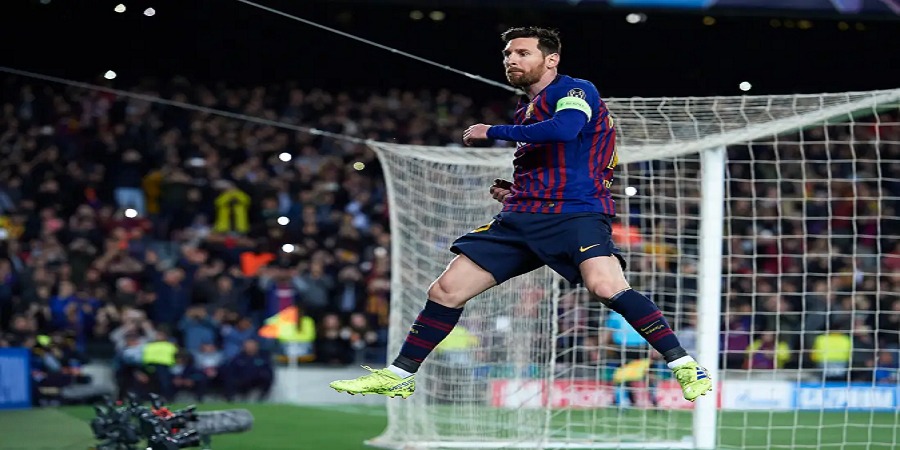
Messi is No Longer a Barcelona Player, And the Club Faces Hurdles Re-signing Him

0
Stars like Messi are the attraction

Lionel Messi’s contract with FC Barcelona expired in the midnight of June 30, making him a free agent and further hyping the speculations that have surrounded his future.

Since last year when the Argentine astro sent a burofax to the then club’s president, Josep Bartomeu and his board, saying he wants to leave Barcelona, one of the greatest tasks of Barca has been how to keep Messi at Camp Nou beyond June 30 2021. While the brouhaha that followed his decision to leave his childhood club has died down, Messi’s future remains unsettled and Barcelona doesn’t seem to have a grip on it yet.

A lot of changes have followed Messi’s decision to quit Barcelona. The Catalan side, in a bid to appease its greatest asset, has called for election, elected a new president following the resignation of Bartomeu, orchestrated by Messi throwing in the towel.

The new president, Joan Laporta has vowed to offer Messi a new contract he can’t resist, but there have been obstacles. Barcelona, like every other club in Europe has been dealt a financial blow by the pandemic, limiting its financial capability to retain Messi with a mouth-watering new contract. Messi’s agent and father, Jorge Messi has been communicating with Barcelona with the aim of getting the six-time Ballon D’or winner to sign a new contract, but the inability of the parties to reach an agreement before the expiration of Messi’s contract has further compounded the situation.

Messi becoming a free agent means that Barcelona will have to re-sign him, and he will have to register with La Liga as a new player with the club. That increases the chances of other clubs wooing him over. Also as a new signing, Messi, whose wages are far above average, will have to be fit into the framework of La Liga’s financial regulations by Barcelona.

The Spanish football authorities have been working to tame high financial spending by clubs jeopardizing fair play. Earlier, La Liga president Javier Tebas had warned Barca to reduce its wages or they won’t be able to register Messi ahead of the 2021-22 season.

In addition, Messi said last year in a tell-all interview with Goal, that he tried to leave Barcelona because there is no project, which has resulted in the club losing its form and many trophies, (Champions League and La Liga) among other competitions. Though Laporta promised that Barca will embark on projects that will see a new team built around Messi, the club’s financial status is posing a challenge to his ability to fulfill the promise and Messi needs assurance that there will be projects.

The 34 years old is currently with Albiceleste, Argentine’s national team in Brazil, where the 2020 Copa America is taking place whilst his future in Barcelona is being negotiated. There is optimism that Messi will commit his future to Barcelona by signing a new contract, but the complexities surrounding the new contract opens him up to other possibilities.

Tekedia Congratulates Our Faculty For Winning Microsoft MVP – Business Applications

0

The category-king enterprise software maker with a market cap of $2 trillion has honoured him as the 2021 MVP Global Administrator. Yes, Microsoft does not do that easily. You must be really brilliant to receive that honour.

He is extremely amazing at the mechanics of automating businesses. When you talk about the zen-masters of modern productivity and automation in the world, within the Microsoft ecosystem, Tekedia Institute faculty Olanrewaju Oyinbooke, MCT, mMBA is the king.

A first class graduate of statistics of the University of Ilorin, he brings uncommon perspectives to basic simple things.  From all of us at Tekedia Institute, we congratulate Olanrewaju,the best.

Congratulations Faculty. Many college students appreciate the course you developed on workplace productivity and automation.

Beyond The World Bank’s Alarm on Nigeria – Lost Decade of Economic Growth

2

It is a very tough call by the World Bank: “The international bank made it known that the country’s gross domestic product is likely to approach its 2010 level by the end of the year thus reversing a full decade of economic growth.” But that is not the full story before you begin to blame Buhari.

Two things: (1) there is no need for finger pointing on the World Bank’s latest Nigeria Development Update (2) while President Buhari has a partial blame for driving Nigeria into a mild recession due to his exceedingly and unnecessarily delays to appoint ministers in 2015/2016, he cannot be held responsible for all the paralyses. 

The fact is this: Nigeria is at war and during wars, especially when fought in your homeland, you struggle.  While our researchers are yet to do the needful, my layman’s estimate is that Boko Haram insurgency has, through its cumulative effects, subtracted at least 3% per year in Nigeria’s GDP since 2014. That 3% comes via opportunity cost, moving money from education and infrastructure to fighting wars, and also through massive displacement of farming communities. Agriculture remains the mainstay of our economy and accounts for the largest share of the GDP. So anything which distorts farming will affect the economy.

If our near-term GDP suddenly falls back to 2010 number, in US dollars of course, it means poverty will be scaled since our population has grown over the same period. So, if economic opportunities are growing or shrinking when the population is growing, we will suddenly find ourselves in the Rev Malthus quagmire (remember you secondary school economics).

My suggestion is this: Nigeria needs to refresh its economy through investment in the future, and if we do that, we can ignite growth. From my angle, there are many ways we can do this. But I will simply share one: commit to purchase military and other necessary things from Nigerian companies. If we commit to that, we can develop new industries and magically as we fight these wars and insecurity, we can capture “value” by seeding companies of the future which can serve Nigeria and Africa in general. Today, the opportunities which the war has offered us to innovate and think differently are not being utilized. That is a bigger war we are losing!

The Nigeria Development Update (NDU) report by the World Bank estimated that despite the country’s gradual recovery from the 2020 recession, Nigerian masses will continue to suffer the adverse effect of the economic downturn.

A new report authored by the World Bank says a full decade of economic growth in Nigeria is likely to be lost by the end of 2021 under President Muhammadu Buhari’s administration.

The international bank made it known that the country’s gross domestic product is likely to approach its 2010 level by the end of the year thus reversing a full decade of economic growth.

The bank in its bi-annual Nigeria Development Update (NDU) report series said that there will be a constant decline in the country’s GDP per capita despite recovery from recession, projecting the country’s population to grow faster than its economy.

The NDU report by the World Bank estimated that despite the country’s gradual recovery from the 2020 recession, Nigerian masses will continue to suffer the adverse effect of the economic downturn.

Cambrian Moment is Here for Digital Entrepreneurial Capitalism in Rural Africa

1

‘On Wednesday, during a keynote speech Elon Musk gave at the Mobile World Congress (MWC) in Barcelona, the SpaceX founder and CEO, Elon Musk announced a major update on the rollout timeline for his low-Earth orbit high-speed broadband internet service, Starlink: “In August we should have global connectivity in everywhere except the poles”’, reports Samuel Nwite

Ladies and gentlemen, a new cambrian moment is here for digital entrepreneurial capitalism and rural Africa is going to benefit. Reading the report from Samuel, you can see that he is cutting prices in multiples. Please if you are not building because there is no internet connectivity, I am telling you to begin to build. This is going to change the market and bring a new basis of competition.

From state monopolies (land lines) to CDMA, from CDMA to GSM, and possibly, we will move from GSM to satellite broadband. If that happens, the market cap of most telcos in Africa would be recalibrated. I am not telling you to call your stock broker to dump your holdings, but watch the price point Starlink  arrives at, because as he noted in that statement, he wants to unleash $30 billion into the sector.

If he does, that would be an asymmetric playbook in the likes of Jio, with global flavours! Yet, the execution goes beyond technology: national regulators could even decide how all plays out. Be watching for GSM-led satellite last mile argument over what many would desire which is unbounded agency module, with or without GSM license.

Elon Musk Announces August for Starlink Launch

German Ministries to Quit Facebook Over Privacy Concerns

0

The relationship between governments and social media keeps deteriorating around the world. From Nigeria to India to Russia, the brawl is taking different turns daily. While the bone of contention has been governments’ desire to control what people post on social media for some countries, it has been centered on privacy concerns for others.

Last month, Nigerian government announced its decision to outlaw the use of Twitter following the microblogging app’s removal of president Muhammadu Buhari tweet that violated its policy. Russia also passed a legislation mandating social media platforms to register in the country by January 2022 or face punitive measures. In India, the government introduced new rules governing social media platforms, requiring them to appoint an India-based grievance officer, who would be responsible for acknowledging the complaints or requests from the government, or from ordinary users, within 24 hours. Failing to comply could result in criminal prosecution.

In the US and Europe, the squabble has been how the social media companies handle users private information. It has resulted in increasing antitrust probes, and now some of the affected countries are taking new steps to register their displeasure.

Reuters reported that German government organizations have until the end of the year to close their Facebook pages after the data protection commissioner found the social network had failed to change its practices to comply with German and European privacy laws.

In a letter to government departments and agencies earlier this month, commissioner Ulrich Kelber said Facebook had provided no way to run pages for institutions, whose feed users can subscribe to by clicking “like”, in an EU-compliant way.

Kelber added that partyline app Clubhouse, video clip app TikTok and Facebook’s Instagram site also appeared to have similar shortcomings, and recommended government organizations stop using them too until his inquiry was concluded.

“We updated our Page Insights supplement and clarified the responsibility of Facebook and website operators at the end of 2019,” a spokesman for Facebook wrote in an email. “Questions related to the transparency of data processing were taken into consideration.”

The German government’s official Facebook page has over a million followers, and the platform has become an increasingly important tool for reaching citizens who are less likely than in the past to follow the mass media where governments advertise.

Kelber said it was impossible to run a fan page in such a way that followers’ personal data was not transmitted to the United States. Under EU law, personal data can only leave the EU for a jurisdiction with equivalently strict data protection rules, something that is not the case for the United States.

The government press office had attempted to get added guarantees from Facebook, but the U.S. company had failed to provide them, he added.

“Given the continuing violation of personal data protection, there is no time to waste,” Kelber wrote to the government organizations. “If you have a fan page, I strongly recommend you switch it off by the end of the year.”