
DD
MM
YYYY

PAGES

DD
MM
YYYY

spot_img

PAGES

Home Blog Page 571

Top 10 Nigeria’s States to Migrate to for Better Salaries and Career Growth in 2026

0

Nigeria’s labour market is shifting quickly as states implement industrial policies, attract private investment and reposition for a post-subsidy economy. From the examination of gross state product, sectoral hiring, and the credibility of government initiatives between January 1 and September 8, 2025, Infoprations identifies 10 states Nigerians and other nationals could migrate to for better opportunities and career advancement in 2026.  Our analyst notes that professionals weighing relocation need a clear view of which states combine real earning power, sector diversity, and policy follow-through.

Understanding the 2025 Signals

Three indicators define the opportunity landscape: employer density, policy implementation, and sector wage potential. Lagos posted the country’s strongest technology and finance signals in 2025 with record venture activity and a steady flow of product, fintech, and creative industry roles. Abuja maintained steady recruitment in public service, NGOs, and consulting, while oil-producing regions recorded renewed upstream and service contracts following federal security interventions in the Niger Delta. Manufacturing corridors in Ogun, Anambra, and Kano benefited from state-level industrial incentives and a revival of garment and agro-processing clusters.
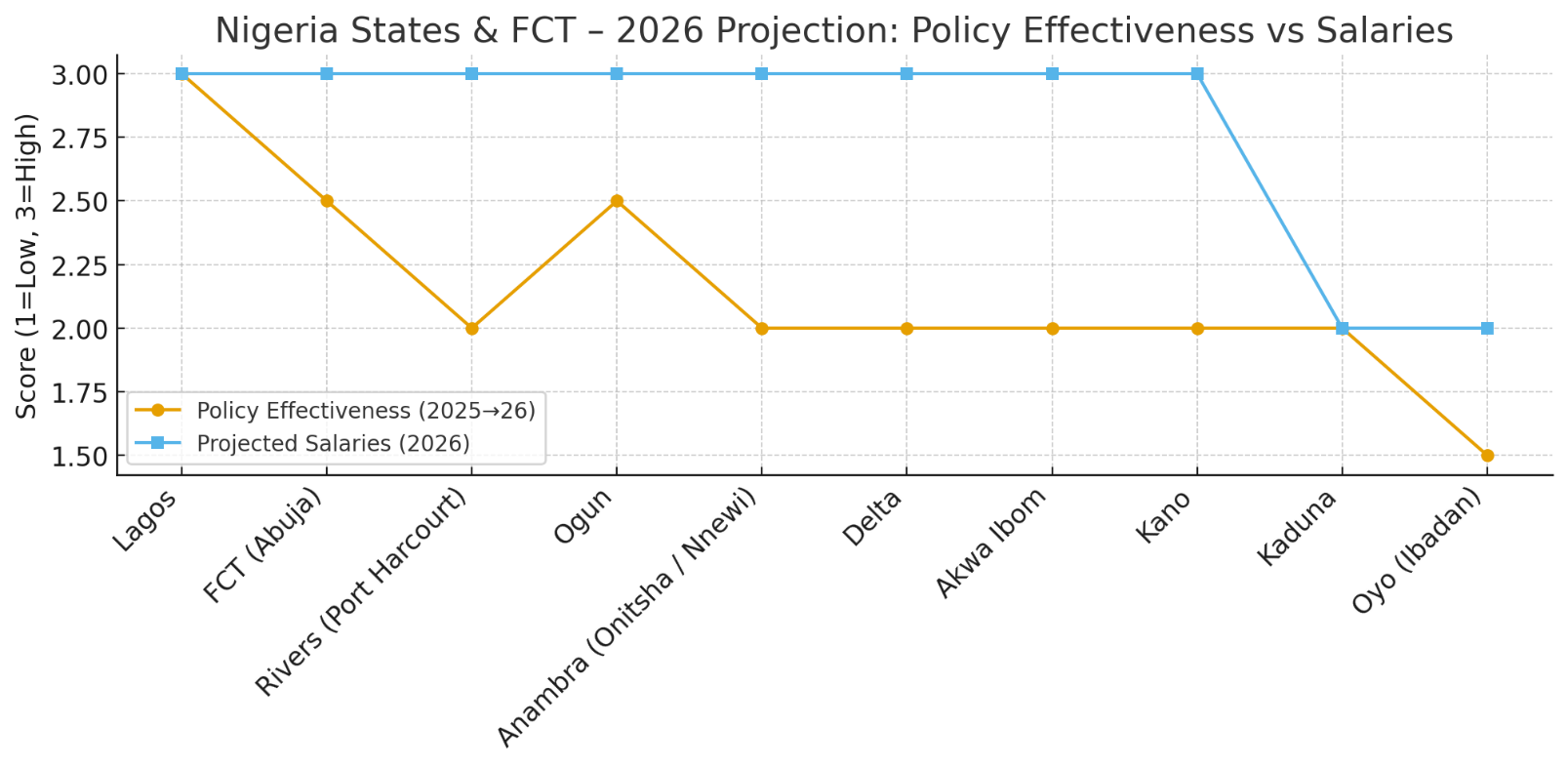
Source: Multiple, 2025; Infoprations Analysis, 2025

Policy intent alone does not guarantee jobs. Analysts focused on concrete developments such as new factory openings, export-zone licensing, or funded infrastructure projects. These signs, alongside wage benchmarks and cost-of-living data, offer the clearest clues to 2026 conditions.

States Leading on Salaries and Sector Depth

Lagos remains the undisputed economic capital. Its fintech, logistics, and media ecosystems reward skilled labour with the country’s highest private-sector wages. Hiring remains brisk due to continuous inflows of capital and talent. Professionals in engineering, software, and business development find abundant roles despite premium housing and heavy commuting.

The Federal Capital Territory, anchored by Abuja, provides stable middle to senior-level income streams through ministries, multilateral agencies, and development projects. Consultants and policy specialists see consistent contract renewals. Though salaries are less explosive than Lagos, the relative predictability and access to decision-makers make Abuja attractive to professionals in governance and NGO operations.

Oil hubs continue to deliver exceptional wages for technical experts. Rivers State, particularly Port Harcourt, benefits from renewed government attention to pipeline security and investment in service facilities. Delta and Akwa Ibom share similar advantages, pairing upstream activity with new downstream and energy transition projects. These states carry sector-specific risk, yet the remuneration for geologists, engineers, and project managers often surpasses national averages by a large margin.

Rising Industrial and Commercial Frontiers

Manufacturing growth is shifting the conversation beyond the coast. Ogun’s industrial parks, supported by tax incentives and its logistical proximity to Lagos, create fertile ground for plant managers, supply chain officers, and quality control professionals. Mid-level salaries are improving as foreign and local firms scale operations. Anambra, with its legacy in trading and light industry, is accelerating market modernization and attracting logistics and SME investment. Business owners and experienced supervisors will see wider opportunity here than in previous cycles.

Source: Multiple, 2025; Infoprations Analysis, 2025

Northern industrial centers are also staging a comeback. Kano launched a garment industry expansion targeting tens of thousands of new roles, signalling serious intent to rebuild its once-dominant textile base. While starting wages remain moderate, the breadth of hiring opens pathways for supervisory staff and operational leads. Kaduna complements this with agro-processing and defense-linked manufacturing, appealing to professionals comfortable with steady but incremental progression. Both states offer lower living costs and room for entrepreneurship.

Oyo, particularly Ibadan, leverages its large educational base to expand service, healthcare, and light manufacturing sectors. Growth here is slower in absolute terms but attractive to those prioritising affordable housing and a strong academic environment. Steady hiring in education and public health, coupled with private SME expansion, produces moderate wages with sustainable career ladders.

Planning for a Competitive 2026

Migration decisions should be anchored in sector fit. A fintech analyst or cloud engineer thrives in Lagos due to network effects and salary competition. A development economist or policy adviser positions strongly in Abuja. Petroleum engineers weigh Port Harcourt, Delta, or Akwa Ibom where projects sustain lucrative pay packages. Industrial engineers and factory supervisors should examine Ogun, Anambra, or Kano for advancement without the Lagos cost burden.

Cost of living, security, and lifestyle considerations remain important. Lagos offers income premiums but also steep rents and congestion. Niger Delta cities provide elite compensation yet carry environmental and security risks. Interior states trade lower pay ceilings for calmer living and affordable housing. Verifying claims from state investment agencies, reviewing company announcements, and networking with industry insiders will prevent unrealistic expectations.

Professionals targeting 2026 should also invest in upskilling. Certifications in project management, data analytics, or sector-specific software can turn a relocation into a genuine promotion. Connecting with alumni networks, attending state-sponsored career fairs, and aligning with chambers of commerce increases visibility in emerging hubs.
UBA Extends Rights Issue Deadline, Seeks Stronger Shareholder Uptake Ahead of CBN Recapitalization

0

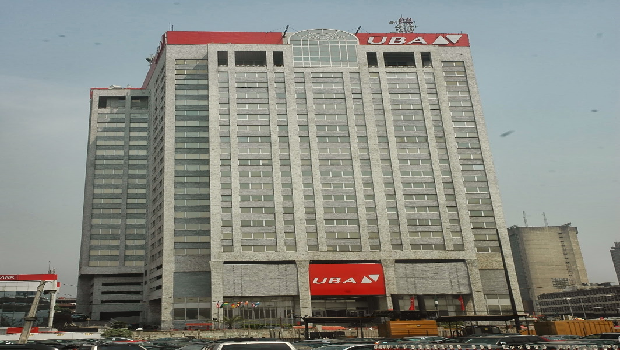
United Bank for Africa (UBA) Plc has extended the application period for its ongoing rights issue, shifting the deadline from Friday, 5th September 2025, to 19th September 2025.

The disclosure, published on the Nigerian Exchange (NGX) and signed by Group Company Secretary Bili Odum, confirmed that the Securities and Exchange Commission (SEC) had approved the revised timeline.

In a note explaining the adjustment, UBA said the extension is aimed at giving shareholders “additional time to fully exercise their rights and participate in the Rights Issue.”

A Key Step in Meeting CBN’s Recapitalization Mandate

UBA’s fundraising effort is directly tied to the Central Bank of Nigeria’s (CBN) recapitalization directive, which requires commercial banks with international authorization to increase their capital base to N500 billion.

The bank’s ongoing offer covers 3,156,869,665 ordinary shares of 50 kobo each, priced at N50 per share, and is expected to raise over N157 billion. The structure of the issue allows shareholders to take up one new share for every thirteen ordinary shares held as of the qualification date of 16th July 2025.

Backstory: UBA’s Rights Issue History

This is not UBA’s first major capital-raising exercise. In November 2024, the bank launched a N239 billion rights issue priced at N35 per share. Investor appetite proved strong, with subscriptions reaching N251 billion. After adhering to the offer terms, the bank accepted N240 billion, boosting its capital base to N355.2 billion.

That earlier success provides confidence that the current extension to 19th September could drive further shareholder participation and put UBA firmly on track to meet — or even surpass — the recapitalization threshold.

UBA’s Q1 2025 Performance Underscores Growth Momentum

The extension comes against the backdrop of strong financial results. In the first quarter of 2025, UBA posted a pre-tax profit of N204.27 billion, marking a 30.65% increase year-on-year.

Net profit also surged 33.15%, hitting N189.84 billion compared to N142.58 billion in Q1 2024.

  • A breakdown of its income drivers shows:
  • Interest income rose 36.09% to N599.83 billion.
  • Loans and advances generated N260.56 billion (+31%), contributing 43.44% of the total.
  • Investment securities earned N291.86 billion (+44.96%), making up 48.66%.
  • Income from cash balances climbed 17% to N47.42 billion, representing 7.9%.
  • Non-interest income also showed resilience, with strong performance in transaction-based revenues:
  • Electronic banking income: N47.84 billion (+7.86%)
  • Account maintenance fees: N10.39 billion (+11.09%)

Investor Angle: Why This Rights Issue Matters

Some analysts believe that UBA’s decision to extend the application window is not just procedural but strategic. With Nigerian banks racing against time to meet the CBN’s capital requirements, maximizing shareholder participation is crucial to avoid reliance on expensive alternatives.

The pricing at N50 per share signals management’s confidence in the bank’s valuation, especially given that the previous rights issue in 2024 was priced at N35 per share and still oversubscribed.

If fully subscribed, the combined effect of the 2024 and 2025 rights issues will significantly lift UBA’s capital buffer, positioning it competitively against peers like Zenith Bank, Access Holdings, and GTCO, who are also actively raising fresh equity.

How Zenith and Access played the recapitalization game

Two of UBA’s peers moved earlier and by slightly different routes.

• Access Holdings / Access Bank ran a large rights programme that closed successfully and was cleared by regulators, raising roughly ?351 billion via the issuance of 17.77 billion shares at about ?19.75 per share — a transaction that lifted its capital well above the CBN minimum and made Access one of the first to cross the line under the new rules.

• Zenith Bank combined a rights issue with a public offer (a hybrid approach) and reported raising about ?350.4 billion under that programme. The hybrid structure allowed Zenith to tap both existing shareholders and new public investors in a single exercise.

What the choices tell you

Three practical differences stand out:

  • Timing and market appetite. Access and Zenith moved earlier and posted large raises that exceeded the CBN threshold, freeing them from near-term recapitalization pressure. UBA is following with a second tranche; it is leaning on seasoned investor appetite and a history of oversubscription to reach the target.
  • Structure and pricing. Access priced low per share but issued many shares, producing a large absolute rise. Zenith used a rights + public offer mix to widen distribution. UBA’s ?50 price point is higher than those earlier offers, signaling management’s confidence in valuation after solid quarterly results and prior shareholder support.
  • Balance-sheet and funding mix. Banks that closed early (Access, Zenith) now have the regulatory headroom to pursue growth or M&A without the immediate distraction of further equity raises. UBA’s staggered approach — a prior rights round in 2024 followed by the current tranche — spreads dilution and gives management an option to absorb capital in stages rather than all at once.

Goldman Sachs Warns AI Stock Rally Hinges on Big Tech Spending

0
The logo for Goldman Sachs is seen on the trading floor at the New York Stock Exchange (NYSE) in New York City, New York, U.S., November 17, 2021. REUTERS/Andrew Kelly/Files

A sharp surge in artificial intelligence spending by America’s largest technology companies has propelled U.S. equities to fresh records. Still, Goldman Sachs analysts caution that a dramatic pullback in investment could wipe out much of those gains.

In a research note released this week, strategists led by Ryan Hammond highlighted how capital expenditures from hyperscalers such as Microsoft, Amazon, Alphabet, Meta, and Oracle have fueled revenue growth across the AI supply chain — from semiconductor giants like Nvidia to cloud infrastructure and hardware providers.

Record Spending, Record Valuations

Goldman estimates that hyperscaler capital spending has already reached $368 billion in 2025, surpassing earlier forecasts. These outlays, primarily for data centers, GPUs, and cloud capacity, have translated directly into real revenues for chipmakers and service providers, powering the boom in AI-linked stocks.

The five largest companies in the S&P 500 — Nvidia, Microsoft, Apple, Alphabet, and Amazon — currently trade at a price-to-earnings multiple of 28, lofty by historical standards but still well below the peaks of 40 in 2021 and 50 during the 2000 dot-com bubble. Goldman stresses that, unlike past speculative manias, today’s valuations are supported by tangible revenue growth.

The Risk of a Spending Slowdown

Even so, analysts warn that the market is vulnerable to a sudden shift. Should hyperscaler investment revert to 2022 levels, AI hardware and services providers could lose out on 30 percent of the projected $1 trillion in S&P 500 sales growth expected in 2026. In such an “extreme scenario,” Goldman’s model suggests the S&P 500’s overall multiple could fall by 15 to 20 percent.

“The durability of this rally is tied directly to capex momentum,” Hammond and his team wrote, noting that investor enthusiasm is highly dependent on hyperscalers maintaining their aggressive pace of investment.

Echoes of Past Tech Booms — But With a Difference

Goldman stops short of labeling the current rally a bubble. Unlike the dot-com era, the revenues generated by AI demand are immediate and measurable. Nvidia, for example, has booked record-breaking quarterly sales from data center chips, while cloud providers have reported accelerating customer adoption of AI services.

The historical parallel, however, is instructive. In the early 2000s, telecom carriers poured hundreds of billions of dollars into network buildouts, only to abruptly cut spending when revenues failed to match projections — a collapse that left equipment suppliers with excess capacity and stock prices in freefall. Similarly, the cloud-computing boom of the 2010s saw an arms race in data center investment, though in that case, demand ultimately caught up and reshaped the enterprise software industry.

Today’s AI spending wave shares elements of both: a massive upfront infrastructure buildout with uncertain long-term demand curves, but also faster near-term monetization than earlier cycles.

Momentum Still Upward — For Now

Despite concerns about sustainability, the rally continues. AI-related stocks rose 32 percent in 2024 and have added another 17 percent so far in 2025. Analysts broadly expect spending growth to slow toward the end of 2025 or into 2026, but leading tech firms have consistently revised guidance higher, suggesting the inflection point may be further away than feared.

Currently, Wall Street remains split. Bulls argue that AI is a transformative technology still in the early innings, while skeptics warn that markets are pricing in perfection. Goldman’s message to investors lands somewhere in between: the upside is real, but so are the risks.

Nigeria Customs Introduces $300 Duty-Free Threshold to Boost E-Commerce and Trade

0

The Nigeria Customs Service (NCS) has announced a new De Minimis policy that will allow duty-free clearance for imported goods valued at $300 or less, effective Monday, September 8, 2025.

The policy is designed to simplify customs procedures, support cross-border trade, and strengthen Nigeria’s position as a regional hub for e-commerce.

Announcing the decision in a press release issued Sunday, September 7, 2025, Abdullahi Maiwada, PhD, Assistant Comptroller of Customs and National Public Relations Officer for the Comptroller-General of Customs, said the new framework will cover low-value consignments, e-commerce shipments, and passenger baggage. He noted that the initiative brings Nigeria in line with global benchmarks under the World Trade Organization Trade Facilitation Agreement and the World Customs Organization’s Revised Kyoto Convention.

“The Nigeria Customs Service Board (NCSB), at its 63rd regular meeting held on Tuesday, September 2, 2025, chaired by the Honourable Minister of Finance and Coordinating Minister of the Economy, Mr. Wale Edun, has approved a De Minimis Threshold Value for low-value consignments imported through express shipments or by passenger baggage,” the statement read.

It continued: “This decision, which takes effect on Monday, 8th September 2025, aligns with the best global practices that aim to simplify clearance processes for low-value consignments, enhance trade facilitation, and provide clarity for e-commerce stakeholders and travelers. After a comprehensive review of similar practices across continents, the Board approved $300 as Nigeria’s official De Minimis threshold. This exemption will apply to low-value imports, e-commerce consignments, and passenger baggage.”

How the policy works

Each individual will be allowed to benefit from the exemption for up to four importations per year, provided the items are not prohibited or restricted. Eligible consignments will be released immediately at ports or entry points without the need for post-clearance documentation, significantly reducing delays that have long frustrated importers and travelers.

The NCS also announced the creation of multi-channel helpdesk platforms to guide stakeholders, address inquiries, and resolve complaints. However, the agency cautioned against abuse of the new framework, warning that attempts to manipulate invoices or evade duties will attract strict penalties, including forfeiture of goods or arrest.

Comparative context

Nigeria’s $300 threshold is significant, but it also highlights how countries balance revenue protection with trade facilitation. In the United States, before the Trump administration axed it, the De Minimis threshold stood at $800 — one of the most generous in the world — a policy credited with fueling the country’s booming e-commerce market by encouraging imports of small packages. The European Union operates a much lower limit, at €150, while in the United Kingdom the threshold is £135.

Within Africa, thresholds vary widely. South Africa does not operate a clear De Minimis framework, often applying duties even on very small imports. Kenya allows exemptions up to $50, while Ghana’s level is $200. Nigeria positions itself above many regional peers by setting its limit at $300, signaling an openness to e-commerce-driven trade while still being more conservative than the U.S. or some advanced economies.

Trade experts suggest that this move could help Nigeria capture a larger share of cross-border retail transactions in West Africa, especially as Lagos continues to emerge as a logistics hub for international delivery firms.

Some analysts believe that the $300 threshold could serve as a catalyst for Nigeria’s fast-growing e-commerce sector, where small merchants and individual shoppers often face bottlenecks due to complex and costly customs procedures. The policy is expected to improve supply chain efficiency, reduce costs for online retailers, and encourage more Nigerians to engage in cross-border e-commerce by easing clearance for lower-value items.

It also positions Nigeria closer to regional peers that already operate with De Minimis thresholds, boosting competitiveness and investor confidence in its trade infrastructure.

The new policy is expected to reduce clearance delays, lower trade transaction costs, and make Nigeria more attractive as a hub for logistics and retail. However, many believe that its success will depend on consistent enforcement and transparency, as stakeholders warn that any abuse or uneven application could undermine the gains.

Don’t Miss BullZilla – The Best Meme Coin Presale in September 2025, While Stellar and Snek Gain Momentum

0

The crypto markets of September 2025 feel less like financial exchanges and more like a coliseum, where narrative, innovation, and conviction battle for supremacy. Early believers are no longer satisfied with small percentage gains. They seek the assets that can define this era, the projects that don’t just join the cycle but bend it in their favor.

At the center of this spectacle stands BullZilla ($BZIL), a cinematic presale engineered with deflationary mechanics and one of the highest staking incentives ever seen. On its flank is Stellar, a blockchain infrastructure giant bridging institutional finance and decentralized ecosystems. And joining them is Snek, the meme coin rising from Cardano’s ecosystem with relentless community-driven energy. Together, they form the shortlist of the best meme coin presales in September 2025, where long-term ROI potential meets cultural momentum.

BullZilla: The Roar Burn Era Has Begun

BullZilla’s presale is more than a funding round. It is a staged awakening built to reward early conviction. BullZilla’s Mutation Mechanism increases its price every $100,000 raised or every 48 hours. This progressive model doesn’t just create scarcity it creates urgency, ensuring later entrants fund the growth of earlier believers. BullZilla’s presale progress is undeniable. Entering Stage 2 – Dead Wallets Don’t Lie, currently in its 1st Phase, tokens are valued at $0.00003241. The campaign has already brought in over $200,000 and welcomed 700+ investors.

At the heart of Bull Zilla lies the Roar Burn Mechanism, a supply-reducing system triggered with each milestone in its 24-chapter lore. With every activation, tokens are permanently removed from circulation, reducing supply while intensifying scarcity. According to BullZilla’s whitepaper, these burns are synchronized with narrative events, blending story with economics in a way that transforms holding into a shared experience.

The staking ecosystem cements BullZilla’s long-term strategy. The HODL Furnace rewards participants with a 70% APY, a rate among the highest in decentralized finance. Unlike typical staking pools, rewards are vested, strengthening payouts for those who remain loyal. This transforms casual holders into committed investors, aligning financial incentives with narrative conviction.

BullZilla’s staking philosophy is built on loyalty. Weak hands are weeded out as they sell early, while committed holders forge what the project calls “diamond claws.” In practice, this loyalty reduces circulating supply, heightening demand pressure as the presale evolves toward listing.

Stellar: The Infrastructure Powering Global Payments

While meme coins command cultural attention, Stellar continues to command institutional relevance. Launched to bridge the gap between traditional finance and blockchain, Stellar has positioned itself as a settlement layer for cross-border payments and digital asset tokenization.

Reports from CoinDesk and Messari highlight Stellar’s expanding role in tokenized assets. Institutional players are increasingly leveraging Stellar to tokenize currencies and commodities, positioning it as a competitor in the race toward global asset tokenization.

For analysts evaluating the best meme coin presales in September 2025, Stellar serves as the reminder that infrastructure remains essential. Meme coins thrive on hype, but without networks like Stellar, adoption would struggle. Its presence on this list underscores the need to evaluate both culture-driven and utility-driven assets when mapping potential 100x opportunities.

Snek: The Meme Coin Awakening on Cardano

Born in the Cardano ecosystem, Snek has become one of the breakout meme coins of 2025. Unlike short-lived tokens that vanish after their viral moment, Snek has cultivated a growing community fueled by Cardano’s reputation for scalability and sustainability.

Snek’s growth lies in its community-first approach. Social campaigns, grassroots development, and liquidity-building have transformed it from a novelty into one of the top Cardano-native assets. According to Cardano blockchain explorers, Snek’s trading volumes continue to climb steadily, supported by pools integrated into decentalized exchanges across the network.

Snek’s liquidity growth demonstrates the power of memes when attached to a blockchain with real technical strength. By tying itself to Cardano’s ecosystem, Snek benefits from the broader adoption of ADA while leveraging meme coin virality. Reports from Chainalysis note that community-driven assets like Snek now account for measurable portions of market activity, influencing sentiment beyond their immediate holder base.

Among the best meme coin presales in September 2025, Snek’s trajectory shows how meme coins can evolve into long-term ecosystem players. It blends meme energy with blockchain credibility, making it a serious contender for those looking at diversification across cultural and infrastructural plays.

Conclusion

The landscape of September 2025 proves one thing: crypto thrives where narrative, infrastructure, and community intersect. BullZilla commands the stage with its Mutation Mechanism, Roar Burn supply model, and HODL Furnace staking. Stellar delivers institutional strength, enabling global payments and tokenization. And Snek represents meme energy powered by one of blockchain’s most sustainable ecosystems.

Together, they illustrate why the best meme coin presales in September 2025 are not just about hype but about alignment between vision and execution. For investors, the question is not which of these assets will succeed, it is how early conviction will be rewarded when they do.

For More Information:

BZIL Official Website

Join BZIL Telegram Channel

Follow BZIL on X  (Formerly Twitter)


Frequently Asked Questions

What stage is BullZilla’s presale in?

Stage 2, Phase 1, with a current price of $0.00003241.

What is the Roar Burn Mechanism?

It permanently removes tokens from circulation during presale milestones, reducing supply and increasing scarcity.

How does the HODL Furnace benefit BullZilla holders?

It offers 70% APY for staked tokens, rewarding loyalty with vested returns.

What role does Stellar play in crypto?

It enables cross-border payments and asset tokenization with low fees and high throughput.

Why is Snek gaining traction?

It leverages Cardano’s ecosystem while thriving on meme-driven community growth.

What risks should investors consider?

Volatility, regulatory challenges, and smart contract vulnerabilities remain significant factors.

Glossary

  • APY: Annual Percentage Yield, showing return on staked tokens.
  • Presale: Early token sale before public exchange listings.
  • Mutation Mechanism: BullZilla’s progressive pricing model tied to milestones.
  • Burn Mechanism: Permanent removal of tokens from circulation.
  • Vesting: Gradual release of staked rewards over time.
  • Liquidity: Ease of buying or selling an asset without affecting price.
  • Tokenization: Conversion of real-world assets into digital tokens.
  • Blockchain Explorer: Tool for tracking on-chain data and transactions.
  • Community Token: Asset driven by social and cultural momentum.
  • Market Cap: Total value of a cryptocurrency’s circulating supply.

Disclaimer

This article is for informational purposes only and does not constitute financial advice. Cryptocurrency investments carry risks, including volatility, regulatory changes, and smart contract vulnerabilities. Readers should conduct independent research before investing.