DD
MM
YYYY

PAGES

DD
MM
YYYY

spot_img

PAGES

Home Blog Page 5724

Less Than 12 Hours To Go – Tekedia Mini-MBA

0

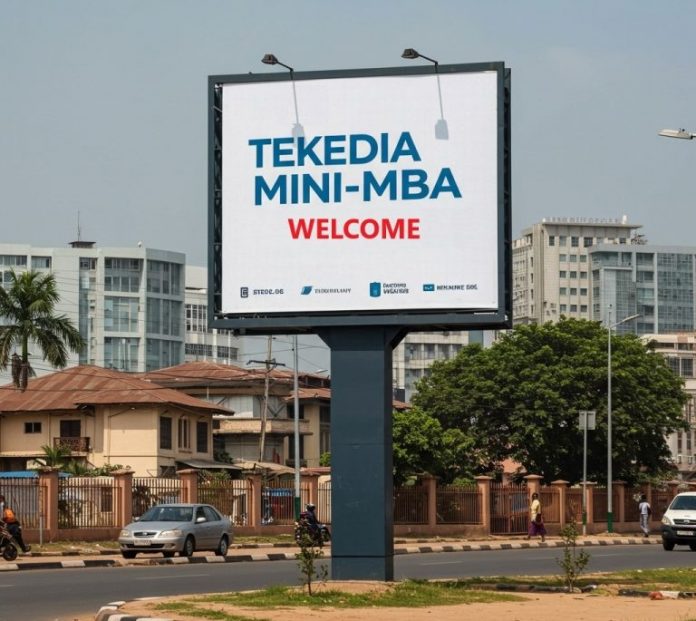
We will begin in less than 12 hours from now! It would be one of the finest academic festivals you will partake in business education. Fresh, deep and current. I welcome you to Tekedia Institute Mini-MBA. Registration continues here.

Tekedia Mini-MBA Edition 5 (June 7 – Sept 1, 2021): Self-paced, Online, 12 weeks, $140 or N50,000.


G7 Leaders Reach Deal to Force Big Tech to Pay More Tax

0

G7 leaders have struck a “historic agreement” to force internet giants to pay more tax, including in the UK, Rishi Sunak has announced. Independent has the story.

The agreement will “make sure the right companies pay the right tax in the right places”, the chancellor pledged.

The breakthrough – the result of a major push by US president Joe Biden – follows years of largely futile attempts to end massive tax avoidance by major tech firms.

Now they will be forced to pay a corporation tax rate of at least 15 per cent, though the rate will be allowed to rise in future. Mr Biden originally proposed 21 per cent.

More importantly, 20 percent of the profits of around 100 of the biggest firms – likely to include Google, Facebook, Amazon and Microsoft – will be reallocated to the countries where sales have taken place.

The move is designed to end “offshoring”, where companies set up legal entities in low-tax countries – regardless of where their revenues are actually earned.

Mr Sunak said the agreement would tackle the problems of tax havens and tax-dodging digital companies, vowing: “We are going to level the playing field.”

Speaking after a meeting of G7 finance ministers in London, he said the new measures would make the tax system “fit for the global digital age”, adding: “That’s a huge prize for British taxpayers.”

The euphoria at the announcement is tempered by the fact that Mr Biden’s pitch of 21 per cent has been dropped. Only three developed countries – including Ireland – have corporation tax rates below 15 per cent.

Also, only the G7 countries have currently reached agreement, ahead of a meeting of the larger G20 grouping which includes the likes of China and India.

Labour criticised the 15 per cent figure, accusing the government of “actively watering down” hopes for a more ambitious pact.

“That would have brought £131m extra a week to Britain for our NHS and other public services, while also stopping our high streets being aggressively undercut,” said Rachel Reeves, the shadow chancellor.

Nevertheless, Mr Sunak hailed “a very proud moment” and praised fellow leaders’ “willingness to work together to seize this moment to reach a historic agreement that finally brings our global tax system into the 21st century”.

He defended the decision not to push for 21 per cent, telling Sky News: “First of all, the agreement reached here today says at least 15 per cent.

“And secondly, it is worth taking a step back. This is something that has been talked about for almost a decade.”

The British public wanted to know that “there is a level-playing field”, in regard to “whether people are operating in tax havens, or whether large, particularly online businesses, are able to not pay tax in the right places”, said the chancellor.

“That’s what this agreement gives us the ability to do, and it has been agreed among G7 colleagues, and once we broaden it out and implement it globally, it is a huge prize for British taxpayers.”

In response, Facebook said it welcomes the decision even though it could mean the social network pays more tax.

“Facebook has long called for reform of the global tax rules and we welcome the important progress made at the G7,” head of global affairs Nick Clegg said on Saturday. “Today’s agreement is a significant first step towards certainty for businesses and strengthening public confidence in the global tax system.

“We want the international tax reform process to succeed and recognize this could mean Facebook paying more tax, and in different places.”

Welcome 38 Countries To Tekedia Mini-MBA Edition 5

0

Thank you for joining us at Tekedia Mini-MBA edition 5. We begin tomorrow (June 7). If you’ve paid, directly or via our Country Partners, in any location or country, by now, you must have received a login for the 5th edition of Tekedia Mini-MBA. If not, email the contact here immediately . We have 38 countries represented, using Paypal data.

Agro-related companies outperformed on corporate registrations. Accordingly, we are working to bring practical components in the agro-space including information on how to plan for exports, necessary permits, data analysis to aid extension services, indoor farming – greenhouse, cold storage – fabrication design and development, etc. An expert in this space is leading us on this.

I welcome ALL to Tekedia Institute. Registration continues here.

Edves Catalyst 2021 Keynote – Discovering A New Path In The Business of Education

1

Thank you Edves for inviting me to deliver the Keynote for Edves Catalyst 2021 yesterday. I had prepared a speech but quickly changed everything when I woke up for the presentation at 4.30am in the US; I’d considered the current paralysis in the nation. Virtual presentation is always a challenge as you cannot read your audience on the fly.

My #1 goal was to make sure the educators (from across the nation) remain united for the conference, and I made sure that cases from social media (especially Twitter and Facebook) were removed.

But yet, we must discover A New Path in the business of education where we can produce graduates with capacities to solve problems in our communities through products and services.

Yes, education which liberates the minds of men and women.

The GREAT Powers of the Future – And the Challenge to Nations

0

How can a company ban a president in an ecosystem? How can a company delete contents put by a president? How can a company wipe out digital histories? Interestingly, we are just beginning a new dawn in how future economies would be wired; I explained some elements here. Pure and simple, the great empires of the future will be those which control DEMAND. Those empires will shape policies and how nations relate with their citizens. 

It comes down to the near-marginal cost of digital technologies and the compounding accelerating returns of network effects which super-aggregators have used to link nations and continents around them. And in doing that, they become very powerful. Investors who understand that playbook have made tons of money. Yes, the techno-gene in these aggregators does not just deliver alpha but also political imbalances where big voices could be muted overnight!

Why? The raw materials are the users because those users provide the critical factor of production which is now used to produce the final products. For any tweet on Twitter, a user is adding in the production system, feeding Twitter algorithms, to engage everyone. Anything that can break that supply chain, from the angle of the platforms, must be immediately managed.

It comes down to a virtuoso circle of network effects with its accelerating returns, generating a positive loop that keeping many users will favor a platform rather than pandering to bullies who will scare everyone. This differs from the industrial age firms like Shell where governments control access to the raw materials (crude oil deposits). They will fold to politicians!

If you want to win in the 21st century digital economy, you must control or influence demand, not supply. In the industrial age economy, power went to gatekeepers of supply. Today, the empire builders are those that control demand. This is possible because digital supply is unbounded and unconstrained, making it largely not a factor. Digital utilities like Google, Facebook, and Twitter which control demand become the new gatekeepers.

In the digital age, what matters is not who controls supply, but who controls demand. Supply is largely infinite as there are many ways to get to the web, and because it is infinite, users congregate to platforms to help them navigate and make sense of the web.

In 1980, before the digital age as we have it today, the most powerful people in media were newspaper publishers. They were the people you needed to reach to get your message to the world. They decided what everyone read on the dailies and they were powerful. They controlled supply and by controlling supply, they shaped everything including advertising.

And because their raw materials which are used for production are provided and supplied by their users, presidents and nations have limited influence. Leaders must understand that in the Facebook-Twitter-Google age, the old advantage – only them could be heard via government newspapers, radio and tv stations – has been calibrated out by the unbounded digital distribution channels.

What needs to happen? Industrial age styled political leadership must evolve because new empires (mainly American) are in charge!