DD
MM
YYYY

PAGES

DD
MM
YYYY

spot_img

PAGES

Home Blog Page 5743

How Lori Iro Awakes Back-Present-Forward Thinking Traces in Relationship Mistrust Among Nigerians

0

In February 2021, a popular pastor who have been preaching sermons that stress why people should avoid relationships embedded with lies from partners for more than 6 years got the attention of many Nigerians after a video of him gone viral on social media. For several days, individuals and businesses used his Lori Iro parlance for varied communication and conversation purposes.

Our analyst notes that Lori Iro as a cognitive metaphor redefined metaphorical marketing strategy in Nigeria during the trending days. A number of businesses employed the parlance for advertising and marketing of their products and services, telling established and prospective clients the need to continue patronizing them and discard whatever competitors are telling them.  Our analyst also found that people who have had negative experiences in their marital and pre-marital relationships used the parlance to chide their partners regarding fake promises.

Our analyst further notes that Lori Iro as an example of cognitive metaphor takes people back to the past events or activities that impacted them negatively. The consequences of the events or activities are expected to shape how they would respond in the future. It has enhanced people’s ability to seek calculus-based trust, identification-based trust and knowledge-based trust, which are necessary for developing and repairing fruitful relationships.

Age-Long Civic and Relationship Mistrust

Our analysis of 151 tweets which contain the parlance, 113 [74.8%] was the main tweets initiated by individuals and businesses while 25.2% were retweets. Examination of the contexts where the parlance is used indicates that it was more associated with lifestyle, especially love or marital relationships than politics and business [see Exhibit 1].

Within the lifestyle, analysis also reveals that people significantly made reference to fake promises in preacher-to-follower relationship and member-to-member relationship. “This is not #Lori-Iro and it’s beyond a mere wish of God When? Since the inception of the REVIVAL HOUR at #MASS6, we’ve seen God grant: Foreign/Local Scholarships without application. Healing of Protracted illnesses. Resident Permits,” one of the tweets said. “I cover you with the blood of Jesus [Musician and entertainment industry reference] “Lori Iro,” another tweet said.

The Twitter Community was also replete with the tweets that chided businesses and their products during the trending days. For instance, a tweet pointing out that “Let’s look at this from an unbiased point of view. I create a product and tell you it’s good for you and will save your life but I am not liable for any damage it might cause Lori Iro.”

Popular musicians who used the parlance to create more engagement with their fans were not spared from lashes dished out to the people perceived to be indulging in constant fake promises.  Davido, a prominent pop culture musician, was predominantly attacked, our analysis reveals. “You Were Never Broke!” – Fans Blast Davido for Saying He Was Once BROKE,” a tweet posted by a news medium said.

In political contexts, the parlance gave Nigerians, most importantly social commentators and political analysts and activists opportunity to express their distrust and mistrust in the government-citizen relationship over the years. Majority of the political narrative driven tweets analysed indicate that Nigerians want better governance, accountability and transparency in all institutions. Their positions are not quite different from the view of Alhaji Tanko Yakasai, a founding member of the Arewa Consultative Forum and elder statesman, who says during a forum that “the mistrust among major sub-regional groups remained a threat to the democratic process despite an end to the Civil War more than 50 years ago.”

Exhibit 1: Dominant Contexts of Lori Iro Application

Source: Nigerian Twitter Community, 2021; Infoprations Analysis, 2021

Analysis clearly indicates that people are ready to repair their relationship as a significant number of the tweets suggest constant tracing to the previous, present and future promises with the possible intent of having tactics for spotting out the likely impacts of fake promises. Our analyst discovered 295 thinking traces, which entail back, present and forward categories from the tweets.

When Lori Iro was used within the political contexts, users were more than 17 times remembering previous promises of politicians, political parties and governments. Less than 1 time remembering previous promises of businesses, sporting women and men, and organisations when it is employed within business and sports respectively. The frequency of remembering the promises is the same for education context while the remembrance is more than 20 times when the parlance is used within lifestyle context.

The consideration of remembering the promises using present thinking trace reveals that people are more than 3 times remembered fake promises in their marital and interpersonal relationship while it was more than 2 times when they used the parlance in politics, sports and education contexts.

Concerning the future dealings, our analysis establishes that people are more likely to be wary of promises from politicians, political office holders and parties because they were more than 10 times ready to remember previous promises made by the stakeholders in political institutions. Despite the significant use of the parlance in the lifestyle context, people are less likely to be wary of fake promises in the future because analysis reveals that they were more than 5 times prepared to remember the previous promises.

Exhibit 2: Thinking Traces [back, present and forward]

Source: Nigerian Twitter Community, 2021; Infoprations Analysis, 2021

Winning Formulas for Deploying Lori Iro

Two strategies predominantly determined how people employed the parlance in the contexts and thinking traces. Valence and arousal were significantly found in texts. For instance, a tweet usually represents distress and depress when the person who tweeted it remembered how previous fake promises impacted his or her negatively. On the other hand, tweets sometimes make a jest of the previous promises by being relaxed and excited that one of the partners failed to realise the fake promises.

For the arousal strategy, tweets indicate that the users of the analysed handles were aroused and sometimes miserable when they remembered previous promises. At the same time, some were pleased that one of the partners was sluggish to know that fake promises are being pushed to him or her.  Our analysis shows that one unit of deploying valence strategy increases the use of arousal strategy by 1.3%, indicating people’s ability to add pie of previous experiences for the demystification of the parlance towards regulation of their consciousness to fake promises [see Exhibit 3 and Exhibit 4 for the strategies’ reflections across the contexts and thinking traces].

Exhibit 3: Dominant Psychological Orientations in the Contexts

Source: Nigerian Twitter Community, 2021; Infoprations Analysis, 2021

Exhibit 4: Dominant Psychological Orientations through Thinking Traces

Source: Nigerian Twitter Community, 2021; Infoprations Analysis, 2021
Congrats Elwin Group for Your Non Oil Export to Europe from Nigeria

1

In the midst of the national paralysis, I want to commend a young man who joined Tekedia Mini-MBA with no clarity on how to execute an idea he has nurtured over the years: exporting agro products to Europe from Nigeria. Today, Elwin Mubba just sent me a note that “ElwinGroup has successfully completed her NonOilExport of one of her Agro Products (Turmeric) to the EU. ..Thank you for the Tekedia MBA course”. Congratulations.

I also want to thank our Faculty Victoria Madedor for her course on alternative funding. That course opened avenues and Elwin was able to get necessary support.

In the video as they boxed the products into containers, you will notice one thing: a big “Proudly Nigerian” on the boxes. That proudly Nigerian is absolute because Elwin and his team designed, constructed and commissioned the factory in Awka with all materials sourced locally. As I reported last year when he sent updates to me, he used “export” and  “99.5 purity guaranteed” to describe his playbook. Today, he has delivered. Well done Elwin Group.

Join the next edition of Tekedia edition which begins June 7.

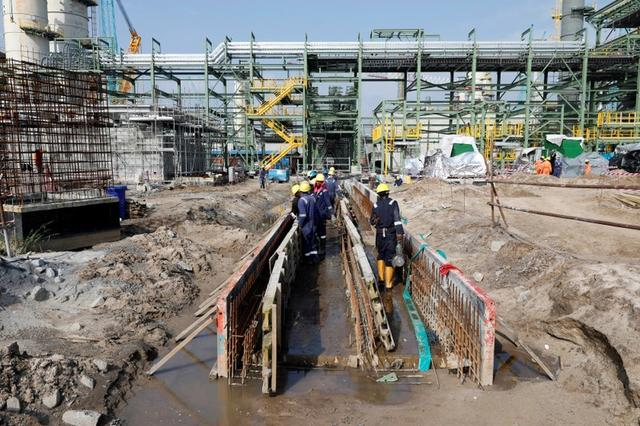
Elwin Agro-Processing Plant is Ready To Serve in Awka Nigeria

The World Converges for Dangote Refinery As 3 Global Players Join NNPC for Stakes

0

This is looking great for Dangote Refinery after Nigeria indicated that it would take 20% equity in the refinery: ‘Yes, the Nigerian government through NNPC, the national oil corporation, is planning to acquire 20% of equity in Dangote Refinery: “I can tell you today that we are seeking to have a 20 per cent minority stake in Dangote Refinery as part of our collaboration and you know that there’s a huge quantity of crude for that refinery.”’ Now, other entities around the world are coming.

Four oil firms including Nigeria’s state-oil company have approached Dangote Industries to acquire a stake in Africa’s largest oil refinery, a senior executive told Reuters on Friday.

Devakumar Edwin, group executive director, said the firms from Western and Middle East countries and involved in trading and crude production were looking to secure crude supply agreements, a similar objective to that pursued by the Nigerian National Petroleum Corporation (NNPC).

“They are seeking to have 20% minority stake in Dangote refinery as part of collaboration … so that they can sell their crude,” Edwin told Reuters by telephone.

He said Dangote refinery is not looking for equity and the company wants to be able to secure crude from the market.

Nigeria, Africa’s biggest crude oil exporter, imports virtually all of its fuel due to moribund state refineries, which has prompted the state oil company’s interest in the 650,000 barrel per day (bpd) Dangote refinery.

NNPC’s spokesman, speaking to Reuters in a phone interview, said the corporation had considered the idea of acquiring a stake in the $19.5 billion oil refinery project owned by Africa’s richest man, Aliko Dangote.

Edwin said the refinery is scheduled for mechanical completion this year with commissioning by January 2022.

When you solve major challenges in markets, most times, opportunities come. As many oil refiners close shops, entities like Dangote Refinery will have transient opportunities before the world moves into the post-petroleum era.

The Big Bailout – Nigeria To Buy 20% of Dangote Refinery Via NNPC

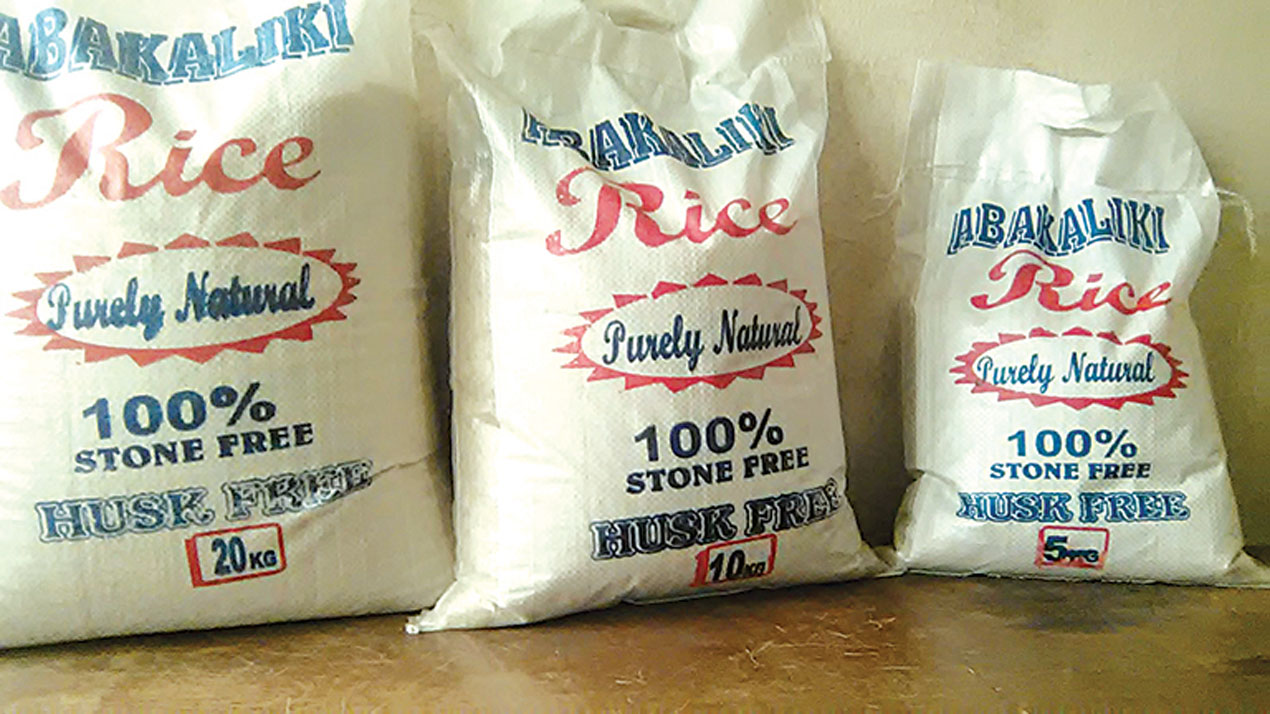
Hope as Nigeria Local Rice Production Increases

0

The saying that nothing good comes easy is true. But it is uneasy to wait for that good to occur. The pains, stress, and tribulations you pass through as you work and wait for things to turn out well can make you the essence of the efforts. However, in the end, like the patient dog that eats the fattest bone, you will smile home, bearing your bountiful harvest. This is exactly what is unfolding in Nigeria, regarding the rice importation restriction.

In August 2019, the Nigerian Government stopped granting foreign exchange requests by rice importers. As far as we were concerned, foreign rice was banned in the country. This did not go down well with many of us because we saw a gloomy future with that single policy. Many believed the federal government was out to cause more hardships for the citizens because rice, one of Nigerians’ staple foods, besides cassava and maize, will be placed out of the reach of a poor man. Did we call the President and the CBN Governor names? Oh yes, we insulted life out of them. But, from what is happening now, it is obvious that the decision to restrict the importation of rice will favour us in the long run.

The major reason Nigerians were uncomfortable with the ban on rice importation was that local rice production could not sustain the country’s heavy demands for the food grain. Many of us believed that rice scarcity was imminent because local rice farmers cannot feed the more than 200 million Nigerians. But from what we can see, rice has never been scarce in our markets even though the increase in demand for our local rice has led to its price increase.

Judging from what is happening right now, it is obvious that our local farmers can feed the nation if they are given a little push in the right direction. The truth is that, initially, many Nigerians preferred imported rice to the local ones, thereby discouraging farmers from cultivating more rice. Add this to the high level of insecurities and destruction of crops through open grazing, you will understand why local rice was scarce before. Apart from these, local farmers lost most of their grains to improper storage and wrong processing. Rice mills were not much so that a lot of paddies got spoiled before they were milled. Since their rice farming was not considered profitable then, people did not bother investing much in it. But all these are gradually changing.

The quantity of rice consumed in Nigeria is estimated at 7million tonnes in 2019 but only 4.3 million tonnes were produced by local farmers that year. This may sound like a failure but when compared to the 3.7 million tonnes produced in 2017, you will notice that the efforts are paying off. This year alone, the FG has launched three rice pyramids in Gombe State (North-East), Kebbi State (North-West), and Ekiti State (South-West). It has also promised more intervention programmes for rice farmers, which will improve yields and encourage more individuals and organisations to invest in rice farming. National and international organizations, including USAID, have partnered with rice farmers because they saw prospects in the business. More grants, soft loans, and other forms of funding and incentives have also been made available for rice farmers. Considering how things are going now, Nigeria may produce more than enough rice for its citizens in no distant time. However, a lot more has to be done to encourage that.

One of the challenges Nigerian farmers face today is non-mechanized farming. The land may be there for cultivation but it will be too expensive for farmers to do so without machines. As a result, machines should be made available and kept in good conditions for farmers to rent. Government and private individuals can partner to make this possible.

The high rate of insecurities in the rural areas is also affecting farming. Though the government is doing its best to battle this, more efforts should be made, especially by state governments, to provide security for citizens. When farms become safe for farmers, food will be available to all. But all in all, there is hope for Nigeria because we can produce the foods we eat. However, more people should endeavour to invest in agriculture because that is the next major source of revenue and foreign exchange for the country.

Uber Agreeing to Drivers Union Sets its Gig Business Model Up for A change

0

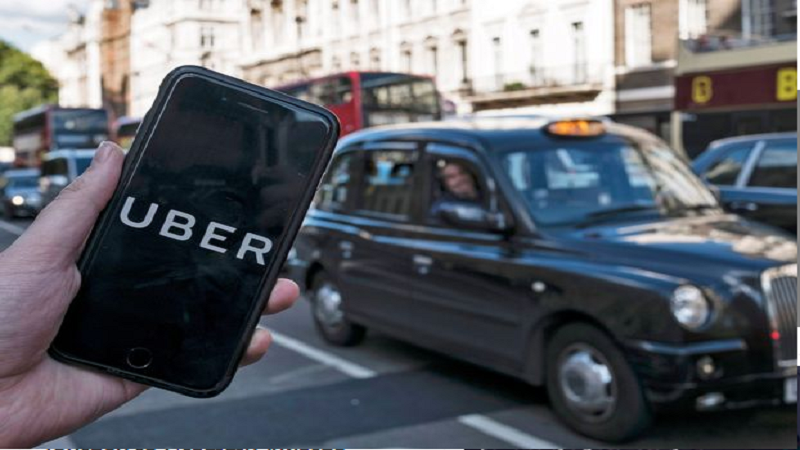
For the first time in its ride-hailing history, Uber is recognizing a trade union. Following a landmark ruling in London in February, classifying its drivers as employees, the California-based taxi app has been forced to grant employment status to its drivers.

This means about 70,000 of its ride-hailing drivers will for the first time, be accorded minimum wage earnings, pensions, other work benefits and their health and wellbeing.

UK’s workers union, GMB is negotiating on behalf of the drivers and Uber said the development shows it is committed to the workers’ welfare.

“While Uber and GMB may not seem like obvious allies, we’ve always agreed that drivers must come first, and today we have struck this important deal to improve workers’ protections,” said Jamie Heywood, regional general manager for Northern and Eastern Europe.

Uber faced the heated challenge to declassify its drivers as private contractors for years. With lawsuits spanning across London and California, its biggest markets. The ride-hailing giant eventually lost the fight in the UK.

Now the development leaves it open to further court rulings and changes that may go in favor of the drivers who want out of the “independent contractor” status.

In the United States, Massachusetts is the second state to sue Uber and Lyft over the misclassification of drivers. In May 2020, California Attorney General Xavier Becerra, along with city attorneys of Los Angeles, San Francisco, and San Diego, sued the companies, arguing that their drivers were misclassified as independent contractors when they should be employees under the state’s AB5 law that went into effect on January 1st.

While Uber has maintained that the gig economy business model grants drivers the flexibility they need, and it’s their wish to keep it that way, labor unions and governments are seeing the practice as unfair treatment of workers.

“The bottom line is Uber and Lyft have gotten a free ride for far too long,” Maura Healey, Massachusetts’ Attorney General said last year. “For years these companies have systematically denied their drivers basic workplace protections and benefits, and profited greatly from it. This business is unfair and it’s also illegal under Massachusetts law.”

Uber survived the California legal battle by invoking the prop. 22 ballot provision that allows the people to decide what they want through votes. The company had argued that classifying drivers as employees would mean a hike in ride-hailing fares, inciting the people to vote yes to the gig business model. However, the war seems far from over.

In the wake of the lawsuits in California and London, Uber drivers in unexpected places in Africa, like Johannesburg and Lagos, caught wind and moved to seek improved welfare and workers’ benefits.

The trajectory set by the development in London will likely spur further action in more cities especially in the US. Uber had frowned at unionism, but by recognizing GMB, the ride-hailing giant has opened doors for it, giving a union the right to negotiate on behalf of drivers for the first time.

The UK is the only country in which Uber has recognized a union, but it seems to be the beginning.

GMB has urged other operators to fight to be recognized as employees, saying the deal offered a golden opportunity to improve workers’ rights.

“This agreement shows gig economy companies don’t have to be a Wild West on the untamed frontier of employment rights,” said Mr. Rix.

Uber and GMB will have to negotiate work benefits on behalf of the drivers. Under the agreement, GMB and Uber will discuss topics such as Uber’s National Living Wage guarantee, pensions and holiday pay. Drivers won’t automatically become members, and to be represented by the union, they will have to sign up.