DD
MM
YYYY

PAGES

DD
MM
YYYY

spot_img

PAGES

Home Blog Page 578

The Disconnect Between Incarceration and Public Curiosity in Africa

0

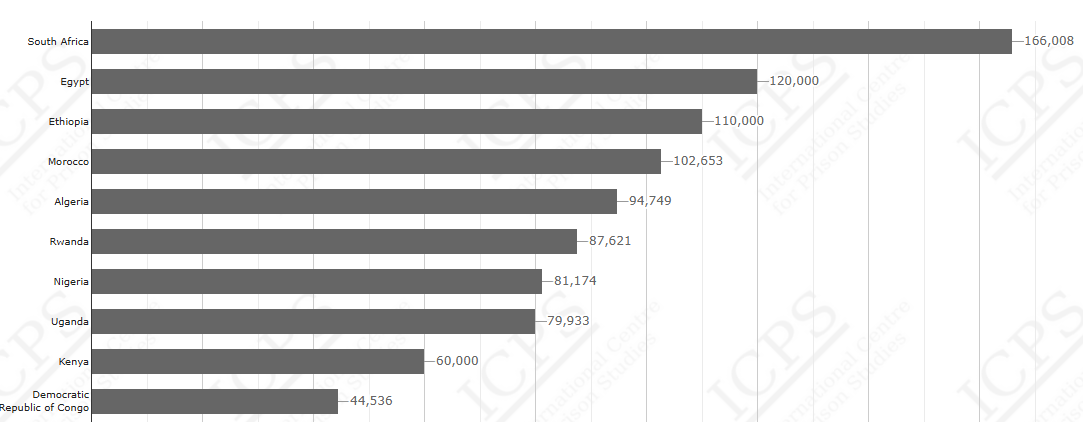
Across Africa, the way people think and talk about crime and justice is changing. Not just in government offices or courtrooms, but online, where search engines have become a window into public concern. Analysis of top 10 African countries with the highest number of people in prison by Infoprations indicates that the number of people in prison doesn’t always match how much people are searching for information about crime or prisons.

Take South Africa, for example. It has the highest prison population on the list, with over 166,000 people behind bars. But Nigeria, with less than half that number, shows the most online interest in both crime and prisons. That tells us something important: people’s curiosity and concern about justice aren’t just shaped by how many people are locked up. They’re shaped by what’s happening in society, what’s being reported in the news, and how free people feel to ask questions.

This gap between prison numbers and public interest challenges the idea that bigger problems always get more attention. In reality, attention is driven by awareness—and awareness is often driven by access, freedom, and a desire for change.

What the Numbers Are Really Saying

When we compare the data, a few patterns stand out. Countries with more people in prison don’t always have more people searching about prisons or crime. In fact, some countries with smaller prison populations, like Nigeria and Morocco, have much higher search interest than expected. That means people in those places are actively thinking about justice, even if the prison system isn’t the largest.

Exhibit 1: African countries with the highest number of people in prison
Source: World Prison Brief, 2025

On the other hand, countries like Rwanda and the Democratic Republic of Congo have relatively high prison populations but very low search interest. That could be due to limited internet access, fewer news stories about justice, or cultural factors that make people less likely to search for these topics.

One thing is clear: when people search for information about crime, they often also search about prisons. These two topics go hand in hand. It shows that people aren’t just curious about what’s happening on the streets, they’re also thinking about what happens afterward, in the justice system.

Why This Matters for Leaders and Citizens

Search behavior might seem like a small thing, but it reflects what people care about, what they worry about, and what they want to understand. In countries where search interest is high, it’s a sign that people are engaged. They’re asking questions, seeking answers, and trying to make sense of the world around them.

That’s an opportunity. Governments, journalists, and civil society groups should pay attention to where curiosity is growing. These are the places where public education can make a difference, where reform efforts might gain support, and where transparency can build trust.

In places where search interest is low, it’s worth asking why. Is it because people don’t care or because they don’t feel safe asking? Is it because they lack access to information, or because the topic feels too distant from their daily lives? These questions matter, especially for those working to make justice systems more fair and responsive.

Turning Curiosity Into Change

The data shows that people are thinking about crime and justice. They’re searching, reading, and trying to understand. That’s not just a trend, it’s a signal. It means the public is ready to be part of the conversation. Leaders should respond by making justice systems more open and easier to understand. That includes sharing data, explaining policies, and listening to public concerns. It also means investing in digital access and civic education, so more people can join the conversation.

Researchers and journalists have a role too. They can turn numbers into stories, highlight what’s working and what’s not, and give voice to those who are often left out. When curiosity meets good information, change becomes possible.


OpenAI Hires Team Behind AI-Powered Xcode Tool Alex in Latest Acqui-Hire Move

0

Acqui-hires are fast becoming a staple of Silicon Valley’s AI arms race. The latest example came Friday, when the small team behind Alex — a Y Combinator–backed tool that integrated AI models into Apple’s Xcode development suite — announced they are joining OpenAI.

In a post on X, Alex founder Daniel Edrisian said the group will move to OpenAI’s Codex division, which is working on the company’s AI coding agent.

“When we started out, Xcode had no AI. Building a ‘Cursor for Xcode’ sounded crazy, but we managed to do it anyway,” Edrisian wrote. “And, over time, we built the best coding agent for iOS & MacOS apps.”

From Independent Tool to OpenAI Fold

Founded in 2024, Alex aimed to fill a gap by letting developers use AI models directly within Xcode. Its pitch — essentially a coding copilot for Apple developers — attracted early adopters and a spot in Y Combinator’s accelerator program.

However, momentum shifted when Apple itself introduced AI integrations for Xcode earlier this year, including support for ChatGPT and other third-party models. While Edrisian didn’t cite that as a reason for joining OpenAI, Apple’s move clearly narrowed Alex’s differentiation.

According to a blog post from the startup, Alex will continue supporting existing users but will no longer be available for download after October 1. No new features will be added, though the team pledged to keep maintaining the product for as long as users remain active.

A Three-Person Team, Now Part of Codex

Alex’s Y Combinator listing shows the startup employed three people, though it remains unclear if all of them are moving to OpenAI. What is clear is that OpenAI is scooping up specialized talent rather than the company itself — a classic acqui-hire move.

OpenAI did not immediately comment on the news.

Acqui-Hires as Strategy

The deal follows a familiar pattern: rather than acquire whole startups, OpenAI has increasingly focused on bringing in small, specialized teams to accelerate development. Just this week, it announced the $1.1 billion acquisition of Statsig, a product testing startup, in what it called an effort to strengthen its infrastructure for rapid experimentation.

The Alex acqui-hire highlights a complementary play: absorbing niche technical expertise in coding tools. With Codex at the center of OpenAI’s push into developer assistants, integrating a team that has already built an Xcode-native agent could give it an edge with Apple’s massive developer ecosystem.

Echoes of Past Silicon Valley Playbooks

Silicon Valley giants have a pattern of using acqui-hires to secure scarce technical talent and cement their position. Companies like Facebook (now Meta) routinely bought small startups whose products were often shelved, while their engineering teams were absorbed into core projects.

The trend has resurfaced amid the AI arms race. Meta and Google in particular made a string of team-driven acquisitions, some involving startups like Scale AI’s alumni-led ventures, as a way to bring in machine learning talent quickly before rivals could. OpenAI’s moves mirror this strategy, balancing billion-dollar infrastructure acquisitions like Statsig with leaner acqui-hires such as Alex.

For Alex’s founders, the shift underscores how quickly the ground can move in AI. In less than a year, a scrappy tool seen as “crazy” became mainstream enough for Apple itself to build in-house, and valuable enough for OpenAI to bring its team on board.

For OpenAI, it shows a dual-track strategy that echoes past consolidation waves in tech: deep-pocketed buys for scale, and acqui-hires for speed and expertise. If history is any guide, these kinds of moves tend to reshape not just product roadmaps, but the competitive balance of the industry itself.

Gold Reaching $3560 Reflects Its Appeal As A Safe-Haven

0

Gold reaching $3,560 reflects its appeal as a safe-haven asset amid economic uncertainty, likely driven by factors like geopolitical tensions or inflation fears, as seen in recent market trends.

The retreat in global government bond yields from recent highs, such as the U.S. 10-year Treasury yield easing to 4.22% on September 3, 2025, suggests a pause in the bond market sell-off, possibly due to expectations of central bank rate cuts or stabilizing economic data.

Central bank policies, such as interest rate decisions, quantitative easing, or tightening, have profound implications for economies, markets, and individuals. Given your mention of gold prices at $3,560 and retreating global bond yields.

Implications of Central Bank Policies

When central banks like the Federal Reserve or ECB raise rates to combat inflation, borrowing costs increase, slowing economic activity. This typically strengthens currencies (e.g., USD) but pressures equities and non-yielding assets like gold, as seen in gold’s recent pullback from $3,560. Higher rates also push bond yields up, as observed earlier this week before the retreat.

Rate cuts, often used to stimulate growth during slowdowns, reduce bond yields, making non-yielding assets like gold more attractive. The recent easing of global bond yields (e.g., U.S. 10-year at 4.22% on September 3) suggests markets anticipate looser policy, potentially from expected Fed rate cuts in 2025, boosting gold’s appeal.

Tight policy curbs inflation but risks recession, while loose policy fuels growth but may reignite inflation. For example, markets expect a 25-50 basis point Fed cut by late 2025, per recent analyses, influencing asset prices. Central banks purchasing bonds injects liquidity, lowering yields and supporting equities and commodities like gold. This was evident during post-2020 recovery phases, driving gold to highs.

Selling bonds or reducing balance sheets, as the Fed has done since 2022, tightens liquidity, raising yields and pressuring risk assets. The recent bond yield retreat may reflect pauses in aggressive tightening. QE supports asset bubbles, while QT can trigger market corrections, affecting investor confidence and portfolio allocations.

Tightening strengthens currencies (e.g., USD under Fed hikes), making gold, priced in dollars, cheaper for non-USD holders, potentially increasing demand. Conversely, rate cuts weaken currencies, raising gold prices, as seen in its $3,560 peak.

Currency fluctuations influence trade balances and global investment flows, with emerging markets sensitive to USD strength. Tight policies aim to curb inflation, which remains a concern with U.S. CPI at 2.9% in July 2025. This reduces purchasing power but supports gold as an inflation hedge.

Loose policies risk overheating economies, spurring inflation, which further drives gold demand. Persistent inflation erodes real wages, while deflationary pressures from overtightening could trigger economic stagnation.

Impacts on Key Stakeholders

High rates increase borrowing costs for firms, compressing valuations, especially for tech stocks. Rate cuts could spark rallies, as seen in 2023 post-Fed pauses. Rising rates lower bond prices, while falling yields (as recently observed) boost bond values, benefiting fixed-income investors.

Gold thrives in low-yield, high-uncertainty environments. Its $3,560 peak reflects bets on rate cuts or geopolitical risks, per recent X posts. Tight policy often hurts speculative assets like Bitcoin, while easing supports them, though volatility persists.

Higher rates raise borrowing costs, squeezing margins for debt-heavy firms, especially in real estate or tech. Rate cuts would ease financing, spurring investment. Tightening reduces consumer spending, hitting retail and discretionary sectors, while loose policy boosts demand.

High rates increase mortgage and loan costs, reducing disposable income. U.S. 30-year mortgage rates near 7% in 2025 strain housing affordability. Rate cuts lower borrowing costs but may fuel inflation, eroding savings unless wages keep pace (U.S. wage growth ~3.5% in 2025).

Rising yields increase debt servicing costs for governments. The U.S. debt-to-GDP ratio, over 120% in 2025, faces pressure from high yields. Loose policy allows cheaper borrowing but risks currency depreciation and imported inflation for smaller economies.

Divergent policies (e.g., Fed tightening vs. ECB/BoJ easing) create currency volatility, impacting trade. Emerging markets face capital outflows during USD strength. Synchronized rate cuts, as hinted by recent yield retreats, could stabilize global growth but risk coordinated inflation spikes.

Gold and Bond Yields

Central bank signals of potential rate cuts (e.g., Fed’s 50% chance of a 50-bp cut by Q4 2025, per market data) and geopolitical risks (e.g., Middle East tensions) drive gold’s rally. Its pullback aligns with short-term yield spikes or profit-taking.

The drop from recent highs (e.g., U.S. 10-year at 4.22%) suggests markets pricing in slower growth or policy easing. This supports gold’s safe-haven status and reflects expectations of central banks like the Fed or ECB pausing aggressive hikes.

Central bank policies shape asset prices, economic growth, and inflation dynamics. The recent gold surge and bond yield retreat reflect market bets on looser policy amid slowing growth signals. Investors should monitor central bank statements, jobs data, and geopolitical developments, as these will drive gold, bonds, and broader markets.

Gold’s pullback could be tied to profit-taking or rising yields earlier in the week, which often pressure non-yielding assets like gold. Keep an eye on upcoming U.S. jobs data and Federal Reserve signals, as they could further influence both gold prices and bond yields.

It’s Tekedia Mini-MBA Graduation Day – Executing A Winning AI Product Strategy in Africa

0

It is Tekedia Mini-MBA Graduation Day, and my Graduation Lecture is titled “Executing A Winning AI Product Strategy in Africa”. The rapid evolution of artificial intelligence (A) has ushered in a new era of product development that operates under a distinct and unforgiving set of rules which do not align with the conventional SaaS business model where digital products benefit from near-zero marginal costs and network effects.

At the heart of this new paradigm lies the brutal economic reality of AI. Unlike traditional software, AI products are built on a foundation of real marginal costs driven by token usage and GPU compute, like what you see in physical products. Simply, the SaaS’ near-zero marginal cost as you grow is replaced by an unpredictable and potentially exorbitant cost of inference. Every prompt is a cost, even as you scale!

My Co-learners, this necessitates an upfront, strategic approach to unit economics and scalable advantages, where profitability must be meticulously designed into the product from its inception. This economic model also dictates a more sophisticated approach to pricing. The Graduation lecture will examine four key pricing frameworks. These are not just pricing options but strategic levers for survival and competitive differentiation.

  • Usage-Based: Users pay per action (e.g., per token, per image generated). This aligns cost with value but can lead to unpredictable expenses for users.
  • Outcome-Based: Users pay only for a successful result (e.g., a perfect output). This is a strong value proposition but can be difficult to implement and measure.
  • Value-Based: Users pay based on the perceived value they receive. This is highly profitable but requires deep understanding of customer needs.
  • Subscription with Soft Cap: A hybrid model where users pay a flat fee for a certain level of usage, with additional charges for going over the limit. This provides cost predictability for both the user and the company.

More so, beyond economics, the defining challenge in the AI space is the illusion of moat, something we have discussed extensively in this program. I have provided cases of how ancestral communities were built with the clan holding the kinship living in strategic locations (hills, etc).

In the past, proprietary technology was the key to a defensible position. However, with powerful foundation models now widely accessible, the AI itself is rapidly becoming a commodity. Yes, the true competitive advantage, or moat, is not the AI model but the system built around it.

This AI redesign demands visionaries who can fluidly bridge the worlds of product strategy, AI economics, and technical fluency. Yes, people who can architect a defensible product system, understand the intricate financial models of AI, and possess a foundational understanding of the technology’s capabilities and limitations. With that, whether it is Oriendu Market Ovim or Wall Street trading desk, AI can help companies to deliver alpha.

Sat, Sept 6 | 7pm – 8.30pm WAT | It’s Graduation Day – Executing A Winning AI Product Strategy in Africa – Ndubuisi Ekekwe | Zoom Link 

Avalon X Price Prediction 2025–2030: Can It Outperform XRP?

0

Avalon X (AVLX) has been making waves lately, its presale has gained major traction as well as its giveaways, one million dollars’ worth of tokens and even a townhouse.

Meanwhile XRP has been rising after a long legal battle finally ended. Now everyone’s watching both and asking the same question: where will prices be by 2030 and which one is the best crypto to buy in 2025?

XRP Price Prediction: What’s Going On With XRP?

XRP has had a rough ride the past few years, mostly due to its legal battle with the U.S. Securities and Exchange Commission. But now that’s all behind them and the case is settled, XRP is rising again.

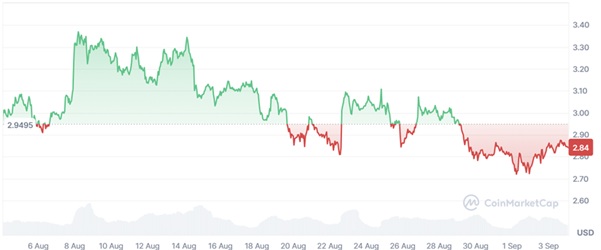
Just recently, XRP price is hovering around the $2.80 level and some are saying it will hit $3 soon. Others are even calling for $5 or more by 2025 if it sees more adoption in the payment space.

There’s been talk of an XRP exchange-traded fund being approved, which could bring more attention from traditional investors. XRP has always positioned itself as a fast, low-cost option for cross-border payments, and with the legal hurdles now out of the way, the project finally has room to grow again.

Still, XRP isn’t a new player. It’s been around for over a decade, and a lot of its future depends on how much traction it can gain with banks and payment platforms over the next few years.

Avalon X Turns Heads With Lifestyle Prizes

While XRP has the benefit of being well-established, Avalon X is going in a different direction. It’s early, yes, but it’s already doing something bold. Instead of waiting to build hype, it’s using massive real-world giveaways to bring people in.

The first giveaway is simple. Avalon X is handing out one million dollars’ worth of its token, AVLX. Ten people will each win $100,000 in tokens. To enter, you just connect your wallet to the dashboard and buy at least $100 worth of AVLX. You can also earn ten bonus entries for every friend you refer.

The second giveaway is even more eye-catching. Avalon X is giving away a townhouse in the gated Eco Avalon, its own sustainable development. To enter, you buy at least $250 worth of AVLX and connect your wallet the same way. Again, referrals give you more chances to win.

Eco Valley Townhouse Giveaway

These aren’t abstract benefits. These are things you can picture. One prize boosts your wallet, the other could change your life. That’s part of what’s helping Avalon X catch people’s attention so early.

Where Could Avalon X Go In 2025?

Avalon X is starting at just $0.005 per token in Stage 1 so it has a lot of room to run if demand picks up. The giveaways are already creating buzz and that will carry through 2025. If the project keeps getting attention and people keep being interested in the rewards then it can build a steady base over time.

2025 is when most early buyers will be watching closely. By then we’ll see the token listed on more exchanges. If it hits the right milestones and stays active with the community a slow and steady climb is possible.

What About 2026 Through 2030?

For Avalon X the years after 2025 will be all about keeping people engaged. That could mean launching new lifestyle campaigns, partnering with travel or home brands or even expanding the Eco Avalon concept.

If the team keeps delivering on experiences that are easy to understand and genuinely appealing then AVLX will hold its ground.

Some are already speculating that if Avalon X keeps its pace the Avalon X token could reach ten or twenty cents by 2030. Of course that depends on a lot of things – market conditions, community support and continued utility. But with the right momentum Avalon X has room to grow.

Avalon X Vs XRP: What’s the Difference?

It’s hard to compare a new token with a veteran like XRP, but it really depends on what kind of investor you are. XRP is tried and tested. It has a specific use case in payments, and many people trust its long-term potential now that the legal uncertainty is gone.

Avalon X, on the other hand, is fresh. It’s offering something more tangible and is a crypto backed by real world assets. You’re not just hoping the price goes up. You’re actually getting the chance to win a house, earn bonuses, and be part of something that feels like a lifestyle brand as much as a crypto project.

Some might choose XRP for its stability. Others might be drawn to Avalon X for its imagination and being able to invest in real estate crypto. Plus, plenty of people may hold both, hoping to benefit from each in different ways.

Why Avalon X’s Approach Is Unique

Avalon X is cutting through the noise. While many projects bury people in whitepapers, Avalon X keeps it simple. You buy a token. You might win a prize. You feel like part of something bigger. It’s an easy concept to understand and that’s what makes it powerful.

The giveaways work as tools to help people connect emotionally to the project. When you imagine yourself living in a modern townhouse or waking up with $100,000 in tokens, it creates a sense of possibility that most tokens never even try to deliver.

Final Thoughts

As XRP builds momentum with legal clarity and growing adoption, Avalon X is going its own way with lifestyle giveaways and a clear, visual story, making it one of the best altcoins to invest in 2025. Over the next 5 years, both will take very different routes, but both have their own appeal.


Join the Community

Website: https://avalonx.io/

$1M Giveaway: https://avalonx.io/giveaway

Telegram: https://t.me/avlxofficial

X: https://x.com/AvalonXOfficial