DD
MM
YYYY

PAGES

DD
MM
YYYY

spot_img

PAGES

Home Blog Page 579

EU Slaps Google With $3.45bn Antitrust Fine Over Adtech Practices, Trump Threatens Trade Retaliation

0
The US is after Google also

The European Union has fined Google €2.95 billion ($3.45 billion) for antitrust violations in its advertising technology business, escalating long-standing tensions between Brussels and Silicon Valley’s most powerful firms.

The European Commission, the bloc’s executive body, said Google distorted competition in the digital advertising supply chain by unfairly favoring its own display ad services over rival providers, harming advertisers, publishers, and ultimately consumers. Regulators ordered the company to end what they called “self-preferencing practices” and take steps to address “inherent conflicts of interest along the adtech supply chain.”

“Today’s decision shows that Google abused its dominant position in adtech harming publishers, advertisers, and consumers. This behavior is illegal under EU antitrust rules,” said EU competition chief Teresa Ribera in a statement on Friday. “Google must now come forward with a serious remedy to address its conflicts of interest, and if it fails to do so, we will not hesitate to impose strong remedies.”

The decision follows a probe first launched in 2021, which examined whether Google had tilted the playing field in favor of its own ad products in Europe’s multi-billion-euro online advertising market. The fine had been expected earlier this week but was delayed, Reuters reported, as EU regulators held back while awaiting progress on a U.S.-EU trade deal involving tariffs on European cars.

Google Pushes Back

Google’s global head of regulatory affairs, Lee-Anne Mulholland, rejected the Commission’s findings and confirmed the company will appeal.

“It imposes an unjustified fine and requires changes that will hurt thousands of European businesses by making it harder for them to make money,” Mulholland said in an emailed statement to The Verge. “There’s nothing anticompetitive in providing services for ad buyers and sellers, and there are more alternatives to our services than ever before.”

Transatlantic Tensions Rise

The ruling added to Washington’s ire over growing antitrust fines against American tech companies, which President Donald Trump has blasted as part of what he described as Europe’s systematic campaign against U.S. tech companies and threatened to launch a Section 301 trade investigation in retaliation.

Trump referenced Apple, which has faced multiple disputes with the EU over taxation and competition issues. He pointed to a 2024 court ruling that ordered Apple to pay more than $14 billion in back taxes, bringing total penalties and disputes to about $17 billion by his estimate.

“Apple should get their money back!” he declared.

“We cannot let this happen to brilliant and unprecedented American Ingenuity and, if it does, I will be forced to start a Section 301 proceeding to nullify the unfair penalties being charged to these Taxpaying American Companies,” Trump posted on Truth Social Friday.

The president said Europe was “effectively taking money that would otherwise go to American Investments and Jobs,” adding: “This is on top of the many other Fines and Taxes that have been issued against Google and other American Tech Companies, in particular. Very unfair, and the American Taxpayer will not stand for it!”

The fine is among the largest antitrust penalties the EU has levied against Google, adding to a string of cases over the past decade involving its search, shopping, and Android businesses.

For Washington, the case is less about market competition and more about economic sovereignty. Trump’s threat to launch a Section 301 investigation — the same legal tool once used to confront China on trade — signals that U.S.-EU disputes over digital taxation and regulation may escalate into a wider trade confrontation.

The clash underscores the EU’s determination to curb the power of Big Tech through antitrust enforcement and new laws such as the Digital Markets Act, even as U.S. policymakers increasingly see those fines as discriminatory against American companies.

Google’s appeal means the legal battle could drag on for years, but the Commission’s move signals that Brussels is intent on forcing structural changes in the adtech industry. Meanwhile, Trump’s reaction raises the possibility that what began as a competition ruling in Europe could soon spill over into a transatlantic trade fight.


Telegram’s 2025 Update Allows You To Send Collectibles In Chats

0

Telegram’s 2025 update introduced a feature allowing users to send digital collectibles in chats.

These collectible gifts, such as the Homemade Cake or Jelly Bunny, can be upgraded using Telegram Stars to become unique digital assets with custom designs and traits like background color or icons. Users can send these collectibles directly in chats, where recipients can unwrap them, display them on their profiles, or trade them.

They can also be transferred or auctioned on the TON blockchain, ensuring permanent ownership even if a user loses their Telegram account. This feature enhances engagement by combining gifting with blockchain-backed collectibles, with over 1,400 unique designs available and more planned.

TON’s integration into Telegram’s platform, with over 950 million users, makes digital collectibles accessible within a familiar messaging app. Users can send, trade, or display NFTs (like collectible gifts, usernames, and stickers) without needing external wallets or complex blockchain knowledge. This lowers barriers to entry, potentially onboarding millions to Web3.

By embedding NFT trading and management in Telegram’s Mini Apps ecosystem, TON enables users of all technical levels to engage with digital assets. This contrasts with traditional NFT platforms requiring separate wallets and exchanges, making Telegram a gateway for mainstream adoption.

TON facilitates new revenue streams for creators through NFT sales, tokenized usernames, and ad revenue sharing (50% paid in Toncoin). For example, high-profile NFT drops like Snoop Dogg’s Telegram Gifts collection, which sold nearly 1 million units for $12 million, show the platform’s potential to merge entertainment and economics.

The ability to trade collectibles (e.g., usernames, stickers, and virtual phone numbers) on TON creates a self-sustaining in-app economy. Users can earn, spend, or trade Telegram Stars and NFTs, fostering financial inclusion, especially in regions with limited banking access.

Decentralized Ownership and Control

TON’s blockchain ensures that collectibles, such as upgraded gifts or tokenized usernames, are verifiably unique and permanently owned by users, even if they lose their Telegram account. This enhances user trust and asset value, as ownership is recorded on an immutable ledger.

Features like tokenized anonymous phone numbers as NFTs allow users to maintain privacy while owning verifiable digital assets, aligning with Telegram’s privacy-focused ethos. TON’s growth faces scrutiny, as seen in Telegram’s 2020 SEC lawsuit, which halted its initial Gram token project.

While TON operates independently, its deep integration with Telegram raises concerns about compliance with global regulations, particularly in decentralized finance (DeFi) and NFT trading. Telegram’s exclusive focus on TON (e.g., requiring Mini Apps to transition to TON by February 2025) limits interoperability with other blockchains like Ethereum or Solana. This could alienate developers and users who value Web3’s open, multi-chain ethos.

While collectibles like usernames and gifts have seen high demand (e.g., $36 million in sales from 184K+ wallets), their value can be unpredictable, driven by social sentiment and market trends. This volatility poses risks for investors and casual users.

TON’s memecoin ecosystem (e.g., DOGS, FISH) adds a speculative, playful layer to its collectibles, boosting engagement but also risking instability if speculative bubbles form. Users can send animated gifts (e.g., Homemade Cake, Jelly Bunny) in chats, which can be upgraded into NFTs with unique traits and serial numbers using Telegram Stars.

These NFTs can be displayed on profiles, traded, or auctioned on TON, blending social interaction with digital ownership. TON enables trading of tokenized usernames and sticker packs via platforms like Fragment and GetGems. These assets combine utility (e.g., linking a username to an account) with collectible value, appealing to both casual users and collectors.

TON’s multi-blockchain architecture and infinite sharding ensure high transaction speeds and low costs, ideal for handling the volume of collectible transactions from Telegram’s massive user base. This scalability supports seamless minting and trading of NFTs within the app.

The TON Wallet (e.g., TON Space) allows users to manage Toncoin, USDT, and NFTs directly in Telegram, with over 100 million global activations by 2024. Mini Apps integrate gaming, DeFi, and collectible trading, making TON a hub for Web3 interactions. TON uses airdrops and tap-to-earn games like Notcoin and Hamster Kombat to introduce users to crypto and collectibles.

These gamified mechanics convert in-game points into tradeable tokens, bridging Web2 and Web3 experiences. TON’s developer-friendly tools and upgradable smart contracts encourage creators to build NFT-based applications, from collectible stickers to in-game assets, expanding the ecosystem.

The TON Foundation supports equitable access for developers, fostering innovation. Initiatives like TON Strategy Co.’s $558 million raise for a Toncoin treasury signal growing institutional confidence in TON’s utility for collectibles and DeFi. This stabilizes Toncoin’s price and supports ecosystem growth.

TON’s collectibles have driven significant trading volume, with $120 million in username and identifier sales on Fragment and a $25 billion Toncoin market cap by 2024, reflecting strong market interest. While TON’s integration with Telegram is a game-changer for digital collectibles, its exclusivity to TON raises concerns about centralization within a supposedly decentralized Web3 space.

Critics argue that limiting Mini Apps to TON could stifle innovation and fragment the broader blockchain ecosystem. Additionally, the speculative nature of some collectibles (e.g., memecoins, high-profile NFT drops) risks creating bubbles, as seen in past NFT market cycles. Regulatory pressures remain a wildcard, given Telegram’s history with the SEC.

However, TON’s focus on user-friendly, scalable infrastructure and its leveraging of Telegram’s vast user base position it as a leader in mainstreaming digital assets. TON is pushing collectibles and digital assets by embedding them into Telegram’s social platform, leveraging scalable blockchain technology, and fostering creator and community engagement.

U.S. Tariffs Are Significantly Impacting Global Trade and Markets

0

The appeal of President Donald Trump’s tariffs, following a federal appeals court ruling on August 29, 2025, that deemed most of his “reciprocal” and fentanyl-related tariffs illegal, has introduced significant uncertainty into global markets.

US tariffs are significantly impacting global trade, causing uncertainty and volatility in the market. The current effective US tariff rate stands at 15.8%, with expectations to approach 18-20% due to sectoral tariffs imposed later this year. This increase in tariffs affects not only bilateral trade but also global supply chains, leading to higher costs and slower growth.

Key Effects of US Tariffs

Companies are carrying excess inventory, hedging against losses, and reconfiguring supply chains, which raises costs and discourages investment. Trade policy uncertainty weighs on the global economy, potentially leading to financial instability and erosion of trust among trading partners.

Firms are front-loading shipments before tariff deadlines, often switching to faster and more costly forms of transport, like air shipments, which jumped nearly 10% in the first quarter of 2025 compared to the same period in 2024. The new average effective tariff rate is estimated to be 13.5%, which may lead to a negative income effect but won’t significantly alter GDP growth forecasts.

A trade agreement with the US could support Japanese stocks and the yen, potentially lifting corporate earnings by 3 percentage points or GDP by 0.3 percentage points. A 15% tariff on most EU goods entering the US, except for certain products like aircraft and semiconductor equipment.

Countries with multiple markets can redirect shipments when one closes, cushioning losses. Trade agreements provide rules and dispute settlement mechanisms, reducing shocks and encouraging long-term investment. Advance notice of policy changes, clear data-driven trade measures, and stronger trade agreements can help restore stability and strengthen resilience.

The tariffs, imposed under the International Emergency Economic Powers Act (IEEPA), include a 10% baseline on nearly all U.S. imports, 25% on Canada and Mexico, and 10% on China, with some countries facing rates up to 50%. Despite the court ruling, the tariffs remain in effect pending a potential Supreme Court review, with a deadline for appeal set for mid-October 2025. This legal uncertainty has spooked markets, contributing to volatility and cautious investor sentiment.

The initial tariff announcements in April 2025 triggered a sharp sell-off, with the S&P 500 dropping nearly 5% on April 3, its worst day since June 2020, and the Nasdaq falling 5.97%. Asian markets, like Japan’s Nikkei 225 and South Korea’s Kospi, also declined by 2% and 1%, respectively, in early trading.

By August 2025, markets showed some resilience, with European and Asian shares mostly higher on August 7, as investors began analyzing the tariffs’ impacts after months of uncertainty. However, U.S. stocks closed mixed, with the Dow down 0.51% and the S&P 500 slightly lower, reflecting ongoing concerns.

The tariffs initially boosted the U.S. dollar and safe-haven assets like the yen, but agreements to delay tariffs on Mexico and Canada reversed some currency moves. Long-term risks include a potential weakening of the dollar if confidence in U.S. economic policy wanes.

Economists warn that tariffs will likely increase U.S. consumer prices, with Yale’s Budget Lab estimating an average cost of $2,400 per household in 2025, particularly impacting clothing (up 38-40%). The Penn Wharton Budget Model projects a 6-8% GDP reduction and 5-7% wage drop long-term.

The IMF and OECD downgraded 2025 global growth forecasts to 3.0% and below 2%, respectively, citing tariffs as a drag on economic activity. Retaliatory tariffs, like China’s 34% levy on U.S. imports, could escalate trade wars, further slowing growth.

Export-dependent nations like India face severe losses, with potential $37 billion export cuts due to 50% tariffs. Japan’s auto sector and Ireland’s pharmaceutical exports are also vulnerable, though some countries secured lower rates through trade deals.

Posts on X reflect mixed sentiment, with some praising tariffs for reducing U.S. deficits by $4 trillion over 10 years, while others highlight job losses in countries like India. Analysts note that the ongoing legal battle and Trump’s threat to “unwind” trade deals with the EU, Japan, and South Korea if the Supreme Court rules against him add to global uncertainty.

The appeal’s outcome, potentially decided by the Supreme Court, will be critical. If upheld, the ruling could force tariff refunds and disrupt trade deals, further unsettling markets. If overturned, tariffs could persist, intensifying trade wars and inflationary pressures. For now, businesses and investors face a turbulent landscape, with many countries seeking to diversify markets to mitigate reliance on the U.S.

Looking for the Best Crypto Presales to Join Now? These Projects Are Attracting the Smart Money!

0

Crypto presales are heating up in 2025, and this cycle’s winners are already taking shape. With Bitcoin breaking past $124,000, institutions are finally treating digital assets as long-term plays. That’s triggered a massive wave of interest in the best presale crypto opportunities, where early entries could mean exponential returns.

Amid all the noise, four names have carved out serious attention: BlockDAG (BDAG), Cold Wallet (CWT), Remittix (RTX), and Bitcoin Hyper (HYPER). Each serves a unique purpose, from core infrastructure to real-world payments, but what they all share is momentum, community buzz, and growing numbers. These aren’t just promises. They’re projects turning ideas into traction before launch.

1. BlockDAG: The $396M Giant With 2,900% Gains!

BlockDAG (BDAG) is dominating the best presale crypto scene with real numbers and real momentum. It’s already pulled in $396 million, sold 25.9 billion coins, and sits at $0.0013 until October 1. As the BlockDAG Deployment Event approaches, the presale price has been finalized at $0.0013, marking the end of tier-based bonuses and the start of equal access for all.

What’s fueling the hype? For starters, BlockDAG’s X1 mobile miner app has hit 3 million users, while over 200,000 holders and 19,500+ ASIC miners have joined the network. Its hybrid DAG–Proof-of-Work architecture enables up to 10 blocks per second, blending scalability and decentralization in one system.

The project’s developer base is just as strong, 4,500+ devs are already building more than 300 dApps, gearing up for mainnet. Add global sports partnerships like Inter Milan and U.S. teams into the mix, and the exposure is huge. With a confirmed $0.05 launch price, many see BDAG as a top candidate to hit $1+, and with this kind of momentum, it’s easy to see why.

2. Cold Wallet: Where Gas Fees Turn into Free Crypto

Cold Wallet (CWT) is proving that people want more than promises; they want utility now. Backed by over 2 million users and $6.8 million raised, the wallet rewards users instead of draining them. Every gas fee paid, every token swap, and every ramp transaction earns cashback in CWT tokens, flipping the traditional model.

Currently priced at $0.00998 in Stage 17, the project has set its sights on a $0.3517 listing, translating to 3,632% potential returns for early buyers. But this isn’t just hype. Cold Wallet recently acquired Plus Wallet in a $270M deal, instantly adding a massive user base to its ecosystem.

With a unique cashback engine, real traction, and a focus on sustainable token flows, Cold Wallet is emerging as one of the best presale crypto projects of the year, especially for those looking beyond empty narratives.

3. Remittix: Transfer Money in Seconds, Not Days

The global remittance market sees over $1.5 trillion move annually, and Remittix (RTX) wants to streamline every bit of it. With a presale price under $0.10, RTX has already raised millions and positioned itself as a low-cost, instant alternative to transfer giants like Western Union.

Its system is straightforward: transfer money across borders in seconds, and at a fraction of the cost. Users can also stake RTX for passive income, creating a dual-use case that’s both practical and rewarding. While short-term targets sit around $0.20, long-term projections suggest it could push past $1.50 if adoption scales.

While it may not have the layered ecosystem of BlockDAG or the cashback appeal of Cold Wallet, Remittix has one massive advantage: a clear use case in a trillion-dollar industry. That alone earns it a spot among the best presale crypto contenders of 2025.

4. Bitcoin Hyper: The Layer 2 That Fixes Bitcoin

Bitcoin Hyper (HYPER) wants to speed up Bitcoin, and it’s doing that by layering in modern tech. As a layer-2 solution built for Bitcoin, it uses the Solana Virtual Machine (SVM) for faster throughput, while ZK proofs ensure privacy and finality before transactions settle on Bitcoin’s main chain. With $11.2 million raised so far, the project is gaining steam. HYPER supports staking (up to 98% APY), community governance, and even dApp development.

As Bitcoin continues to dominate headlines, tools like Hyper could become crucial, giving it the chance to ride Bitcoin’s momentum while offering higher upside due to its small cap. If Bitcoin needs a faster engine, HYPER wants to be the turbocharger. That’s a bold play, and one that makes it a serious name in the best presale crypto arena.

The Bottom Line

In a sea of promises and whitepapers, most presales fall short. But BlockDAG, Cold Wallet, Remittix, and Bitcoin Hyper are proving they’ve got more than just hype; they’ve got progress, purpose, and growing numbers to back it up.

BlockDAG is already a force, racking up $396M, 25.9B coins sold, and nearly 3 million miners on its app. Cold Wallet is turning wallet fees into income streams through cashback rewards.

Remittix is gunning for a slice of the $1.5T remittance market with fast and low-cost transfers. And Bitcoin Hyper is optimizing BTC’s future through high-speed scaling solutions. For anyone eyeing the best presale crypto in 2025, these four aren’t just early-stage bets; they’re front-runners with real potential to stick around well beyond launch.

Bitcoin Treasury Companies Stocks Underperform Relative to Bitcoin

0

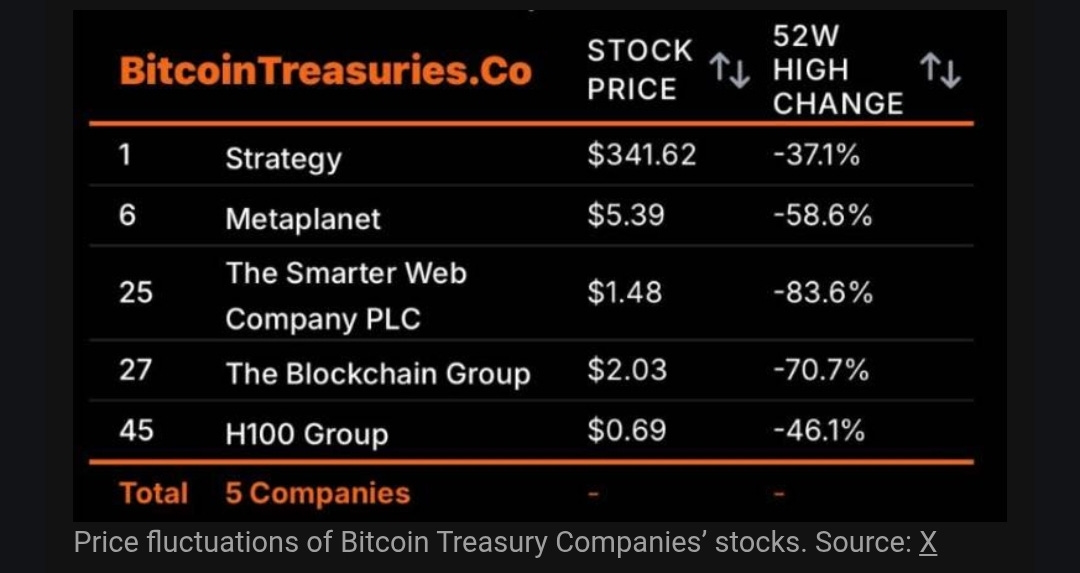
Some Bitcoin treasury companies, like Strategy (formerly MicroStrategy), have seen their stock prices underperform relative to Bitcoin’s price, which hit all-time highs above $120,000 in 2025.

For instance, Strategy’s share price has not kept pace with Bitcoin’s rally, partly due to share dilution from issuing new equity to fund Bitcoin purchases. This has led to a reduced net asset value (NAV) premium, with investors paying less of a premium compared to earlier years when Strategy was a first-mover.

Market Concerns and Risks: Analysts have raised concerns about the sustainability of the Bitcoin treasury model, particularly for newer entrants. A July 2025 report from Cointelegraph warned that only a few companies with strong leadership and disciplined strategies are likely to survive a potential Bitcoin bear market.

The report outlined a “death spiral” scenario where a drop in Bitcoin’s price could erode share prices close to NAV, triggering financial distress. Additionally, a Financial Times article from August 2025 cautioned that a crypto winter could lead to painful consequences for investors, especially for companies relying on debt to fund Bitcoin purchases.

Critics, including a former Wall Street regulator, have suggested that debt-fueled treasury strategies could precipitate a broader crypto crash. Some companies have faced challenges due to Bitcoin’s price volatility.

A CryptoBreaking report from August 29, 2025, noted that several major corporations, including those in tech and finance, encountered setbacks as Bitcoin’s value fluctuated, impacting their treasury holdings.

While specific company names weren’t always detailed, the report highlighted the complexities and risks of holding large Bitcoin reserves. For example, Strategy’s stock was down 16% in August 2025, and CEA Industries, a Canadian vape company, saw a 28% drop after a brief surge.

Counterpoints and Growth: Despite these concerns, the sector isn’t uniformly in decline. Corporate Bitcoin adoption has surged, with 152 publicly traded companies holding over 950,000 BTC worth $110 billion as of August 2025. Strategy remains the largest holder, with over 630,000 BTC, and its market cap hit new highs in July 2025, reflecting Bitcoin’s price rise.

New entrants like Trump Media & Technology Group, which raised $2.5 billion for a Bitcoin treasury, and Treasury B.V., backed by the Winklevoss brothers, indicate ongoing investor enthusiasm. Posts on X also reflect bullish sentiment, with claims that “eventually all companies will be Bitcoin treasury companies”.

Systemic Risks: Critics warn of systemic risks if Bitcoin’s price crashes, as companies with significant debt or over-leveraged positions could become forced sellers, exacerbating market downturns. This concern is amplified by the rapid rise of new treasury companies, with 51 debuting in the first half of 2025 alone.

However, some analysts note that equity-based financing (common among these firms) may limit broader market fallout compared to debt-heavy strategies. While some Bitcoin treasury companies are experiencing stock price declines and facing volatility-related challenges, the sector as a whole isn’t crashing.

The trend of corporate Bitcoin adoption continues to grow, driven by regulatory clarity and macroeconomic factors, but risks like price volatility, debt financing, and dilution are real. Investors should approach these companies cautiously, as their performance is closely tied to Bitcoin’s price and their ability to manage financial engineering effectively.