DD
MM
YYYY

PAGES

DD
MM
YYYY

spot_img

PAGES

Home Blog Page 58

BNP Paribas Moves to Lift Stake in Ageas to 22.5% in €3bn Deal, Tightening Grip on Belgium’s Insurance Market

0

BNP Paribas is preparing a major reshuffle of its insurance footprint in Belgium, announcing a €3 billion two-part transaction that will lift its stake in Ageas — the country’s largest insurer — to 22.5% from 14.9%.

The move, confirmed by both companies on Monday, positions Europe’s biggest bank by assets as the dominant anchor shareholder in one of Belgium’s most influential financial firms.

At the center of the deal is a swap that effectively consolidates Ageas’ control over its core insurance engine while giving BNP Paribas a firmer hold on the parent company. BNP Paribas will sell its 25% stake in AG Insurance to Ageas for €1.9 billion. To simultaneously deepen its influence at the group level, the French bank — acting through its insurance arm, BNP Paribas Cardif — will invest €1.1 billion into Ageas at an agreed price of €60 per share.

Ageas’ stock closed at €56.9 on Friday, giving BNP a slight premium but also securing its position with enough heft to shape the company’s future.

For Ageas, this is a transformative moment. AG Insurance is the beating heart of its Belgian operations, and full control of the unit gives it maximum autonomy to push ahead with long-term strategic plans, particularly in life insurance, pensions, and corporate risk. The transaction also allows Ageas to reorganize capital allocation across the group, which it signaled by raising its 2027 free cash flow target from €2.3 billion to €2.6 billion and lifting its shareholder distribution goal from €2 billion to €2.2 billion.

BNP Paribas, meanwhile, is betting on the long runway of bancassurance growth in Belgium — a segment that combines banking and insurance products under a single distribution umbrella and has been a profitable pillar for the group for years through BNP Paribas Fortis.

“We see significant potential in the growth prospects of BNP Paribas Fortis’ bancassurance business through the partnership with AG Insurance,” CEO Jean-Laurent Bonnafé said, casting the deal as a pivot toward influence rather than direct operational ownership.

The pivot includes a renewed exclusive bancassurance agreement between BNP Paribas Fortis and AG Insurance, locking in future distribution and revenue streams. On top of that, AG Insurance and BNP Paribas Asset Management will form a new investment partnership, extending the collaboration deeper into the group’s asset-gathering machinery. Ageas also confirmed the bank will gain the right to nominate one director to its board.

A Strategic Reset Years in the Making

This transaction caps years of repositioning by BNP Paribas in Belgium. The bank has steadily strengthened its influence in Ageas, becoming the largest shareholder last year after acquiring a 9% stake from China’s Fosun Group — a divestment that reflected Beijing’s tightening capital controls and Fosun’s global retrenchment.

For Ageas, the journey back to full control of AG Insurance is equally significant as the company has spent more than a decade rebuilding its global footprint after the collapse of its predecessor, Fortis Group, during the 2008 financial crisis — an event that eventually led to the breakup of the Fortis banking and insurance businesses. Ageas emerged from that restructuring carrying strong Belgian roots but with a need to stretch beyond its home market.

Monday’s deals show Ageas refocusing and strengthening at home, even as it continues running major businesses in Asia and Europe.

Financial Impact and Long-Term Implications

BNP Paribas expects the transaction to deliver a net capital gain after tax of €820 million in 2026, along with €40 million in additional recurring net income annually. Though modest in the context of a banking giant that posts several billion euros in yearly profit, the move deepens the bank’s long-term insurance profitability and secures a strategic position in one of Europe’s most robust insurance markets.

Ageas’ new cash flow targets signal confidence that greater control of AG Insurance will drive stronger returns across the group. The Belgian firm has traditionally been conservative in its forward guidance, so the upward revisions underscore how central AG Insurance is to its earnings engine.

However, the deal still needs regulatory approval and is expected to close in the second quarter of 2026. If completed, it will formalize a new era in the long-running relationship between Belgium’s dominant bank and its dominant insurer — a partnership reshaped to give both sides more focus, more flexibility, and a firmer footing in a shifting European financial industry.

BNP Paribas will sit deeper inside Ageas’ shareholding structure, Ageas will fully command its core insurance subsidiary, and both will tighten their alliance in bancassurance and asset management — a structure that could influence Belgian financial services for years.

Automakers Face Harsh AI Reality Check as New Study Warns Only a Small Elite Will Sustain Investment by 2029

0

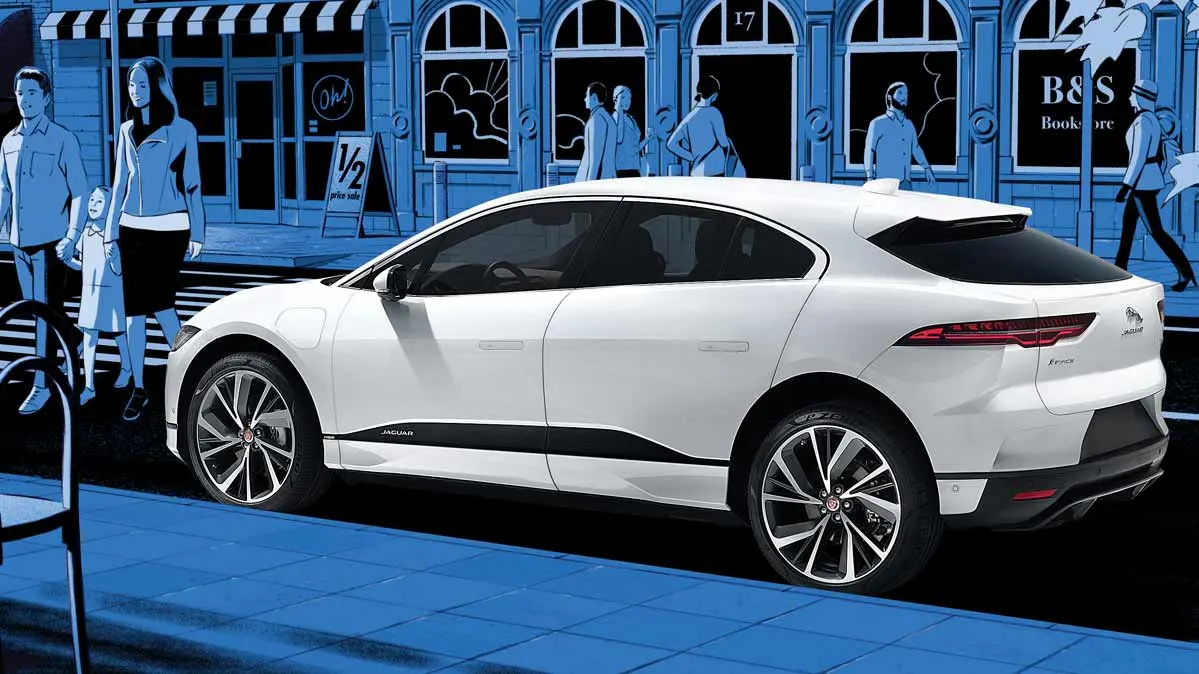
A new study has cast a sharp beam of cold light onto the auto industry’s runaway enthusiasm for artificial intelligence, warning that almost all of today’s aggressive spending will fade long before the end of the decade.

The report, released Monday by technology research firm Gartner, says only a handful of manufacturers have the structure, leadership, and long-term discipline needed to keep pushing deep into AI through 2029. It challenges the optimism that has fueled boardroom strategies, investor narratives, and headline-grabbing claims about self-driving ambitions, in-car intelligence, and automated factories.

According to Gartner, over 95% of automakers today describe themselves as being in a phase of strong AI investment growth. By 2029, that number collapses to just 5%.

The research is part of Gartner’s predictions for 2026 and suggests that the industry’s current surge of spending is not built on stable foundations. The firm concludes that only companies with strong software cores, tech-oriented leadership structures, and a clear long-term commitment to AI will keep moving forward. Everyone else risks slipping into stagnation.

This widening divide reflects a basic structural problem within the industry. Traditional carmakers such as Volkswagen were built on engineering muscle, decades of mechanical innovation, and manufacturing discipline. They grew into sprawling organizations optimized for hardware, supply-chain mastery, and incremental upgrades to combustion engines. That foundation is now a disadvantage in a world where intelligence, code, and automation increasingly determine who wins.

Gartner’s report argues that the leadership model inside legacy companies is one of the biggest obstacles. Many of these manufacturers adopted software teams only reluctantly, and too often placed them deep within the hierarchy where they lacked influence. Gartner analyst Pedro Pacheco said many firms are still dealing with internal resistance, slow decision cycles, and outdated cultural habits that treat software as an accessory rather than the engine of competitiveness.

He told Reuters that success requires turning these organizations into digital-first companies and clearing away internal roadblocks that slow innovation. That includes giving software leaders a direct line to the CEO and putting technology at the very top of strategic planning. Without that shift, he said, firms will struggle to compete with players like Tesla and BYD, which were built around software from the start.

“A company that is not great at software … is going inevitably to struggle,” Pacheco said, summing up what has become an increasingly accepted truth across the global auto landscape.

The divide is not just about who writes code well. It is about who can sustain the enormous spending required to build industry-leading AI systems. As automakers roll out advanced driver assistance, predictive maintenance, in-car voice systems, automated production lines, and next-generation battery management, their costs increasingly resemble those of the world’s tech giants. That level of spending is difficult to maintain for firms still carrying legacy manufacturing costs, debt burdens, and the weight of combustion-era supply chains.

The industry’s internal structure is colliding with another challenge: a rapidly cooling investor appetite for speculative AI projects. While AI remains the hottest narrative in global markets, investors are no longer impressed by slogans about “software-defined vehicles” unless companies can produce genuine revenue improvements. Many automakers who rushed into grand AI announcements now face pressure to justify the billions they have already committed.

The risk heading into 2026 is that companies trapped between rising costs, slow cultural change, and shifting investor sentiment may pull back from ambitious projects before they yield results. That could stall unfinished automation systems, slow the rollout of next-generation EV capabilities, and weaken attempts to develop in-house operating systems. Companies that hesitate now will only widen the gap with Tesla, BYD, and the small group of tech-forward newcomers who view AI as their native territory rather than a strategic add-on.

This trend also affects long-term competitiveness. If only 5% of the industry maintains strong AI investment growth by 2029, the rest may find themselves dependent on external suppliers for critical vehicle intelligence. That would push them closer to becoming low-margin hardware assemblers in a market where the value sits inside the software stack. Carmakers who cannot build or control their own AI systems risk losing pricing power, market influence, and brand authority.

These pressures are reshaping the competitive environment faster than expected. Tesla continues to treat software as its core operating system, using continuous over-the-air updates and integrated data loops to make each vehicle smarter over time. BYD is expanding this model at an enormous scale, blending advanced electronics with aggressive production growth in China and beyond. Their momentum amplifies the urgency felt by legacy manufacturers struggling through internal reform.

The “euphoria” described in the Gartner report has driven carmakers to announce sweeping AI ambitions. But the coming years will test whether they can pay for those promises, reorganize their cultures, and compete with companies forged in the language of code. The report’s numbers suggest the vast majority will fall short.

The auto sector enters 2026 with two realities pulling in opposite directions. One is the growing expectation that vehicles will soon operate with meaningful autonomy, predictive intelligence, and self-improving software. The other is the industry’s internal difficulty in transforming itself fast enough to deliver that future. If Gartner’s forecast holds true, the next three years will be decisive—and only a tiny fraction of automakers will emerge with the strength, vision, and long-term discipline to remain competitive in the AI race.

The rest may find themselves watching from the sidelines as a new hierarchy takes shape.

Netflix Leans on Trump Alignment as $82.7bn Warner Bros. Bid Collides With Paramount’s Hostile Counteroffer

0

Netflix’s sweeping bid for Warner Bros. Discovery has taken on an unmistakable political undertone, after co-CEO Ted Sarandos revealed he personally pitched President Donald Trump on the deal before it was announced.

Sarandos, speaking Monday at the UBS media conference, said Netflix and the White House had found unusual alignment, even as analysts warn that the streaming giant still faces a bruising regulatory test.

Sarandos said their conversations went beyond courtesy calls, noting that he had spoken with Trump “many times since the election about the different challenges facing the entertainment industry.” He framed the administration’s view as practical and centered on employment.

“The president’s interests in this are the same as ours, which is to create and protect jobs,” he said, presenting Netflix as a stabilizing force at a time when Hollywood remains uneasy over consolidation.

Trump reinforced that cordiality on Sunday, calling Sarandos a “great person” who had done “one of the greatest jobs in the history of movies.” At the same time, he signaled that Netflix’s enormous footprint could still trigger antitrust scrutiny, saying the platform’s “big market share” might be “a problem” as it tries to acquire one of Hollywood’s oldest studios.

The deal, valued at $82.7 billion including $72 billion in equity, covers Warner Bros.’ film and streaming assets but leaves out WBD’s declining cable networks like CNN and HGTV.

Those networks are precisely what Netflix avoided, and Paramount Skydance embraced. On Monday, Paramount fired back with a hostile $30-per-share, all-cash offer to buy the entirety of WBD, including the legacy networks that investors have increasingly treated as liabilities. Netflix’s $27.75-per-share proposal mixes cash with some stock and hinges on the idea that Warner Bros.’ core studio and Max streaming service are the crown jewels worth salvaging.

Sarandos shrugged off Paramount’s counter, saying the move “was entirely expected.” Yet the fight escalated quickly, with Paramount CEO David Ellison taking to CNBC hours after the market opened to call his company’s offer “pro-consumer, pro-creative talent,” and “pro-competition.” He insisted that Paramount’s bid would breeze through regulatory review faster than Netflix’s, which he implied would face more skepticism given Netflix’s scale.

Ellison’s confidence also reflects a degree of political cover. His father, Oracle cofounder Larry Ellison, is one of Trump’s closest allies, and that relationship has been noted in market circles since the moment Paramount entered the bidding war.

Still, Netflix appears to be building a channel of goodwill with Trump as well. Co-CEO Greg Peters said he is “very confident that regulators should, and will, approve” the transaction, pointing to Netflix’s commitment to keep Warner Bros.’ theatrical pipeline intact. Sarandos went even further, insisting Netflix would handle Warner Bros.’ movies “exactly the way they’ve released those movies today,” an assurance that appears aimed partly at the White House and partly at unions still nursing resentment from the last round of industry consolidation.

Sarandos also sought to cast Netflix as the protector of Hollywood employment, a sensitive issue in an industry rattled by recent strikes, studio cutbacks, and a historic contraction in cable advertising. He contrasted Netflix’s approach directly with Ellison’s. Paramount has promised roughly $6 billion in “synergies” from any merger with WBD. Sarandos interpreted that as a coded guarantee of massive layoffs.

“Where do you think synergies come from? Cutting jobs,” he said. “We’re not cutting jobs — we’re making jobs.”

What Sarandos did not highlight is that Netflix itself has pledged between $2 billion and $3 billion in cost savings tied to its own offer for Warner Bros. Discovery. Investors expect those reductions to come from overlapping marketing, tech, back-office functions, and real estate. Sarandos argued that any restructuring Netflix undertakes would not jeopardize the creative workforce, though analysts say the distinction may be difficult to sustain if the merger closes.

Warner Bros. Discovery, a company born from a previous megamerger, remains weighed down by heavy debt, a struggling cable portfolio, and a streaming division that has been retooled repeatedly. The battle now underway — Netflix’s cleaner, asset-focused bid versus Paramount’s all-in sweep — will shape the future of one of Hollywood’s most storied studios, determine which streaming platform holds the next wave of bargaining power, and test how the Trump administration approaches the entertainment industry during a period of rapid upheaval.

Tata’s $14bn Semiconductor Bet Wins Intel Interest, Raising India’s Hopes for a Bigger Slice of the Global Chip Market

0

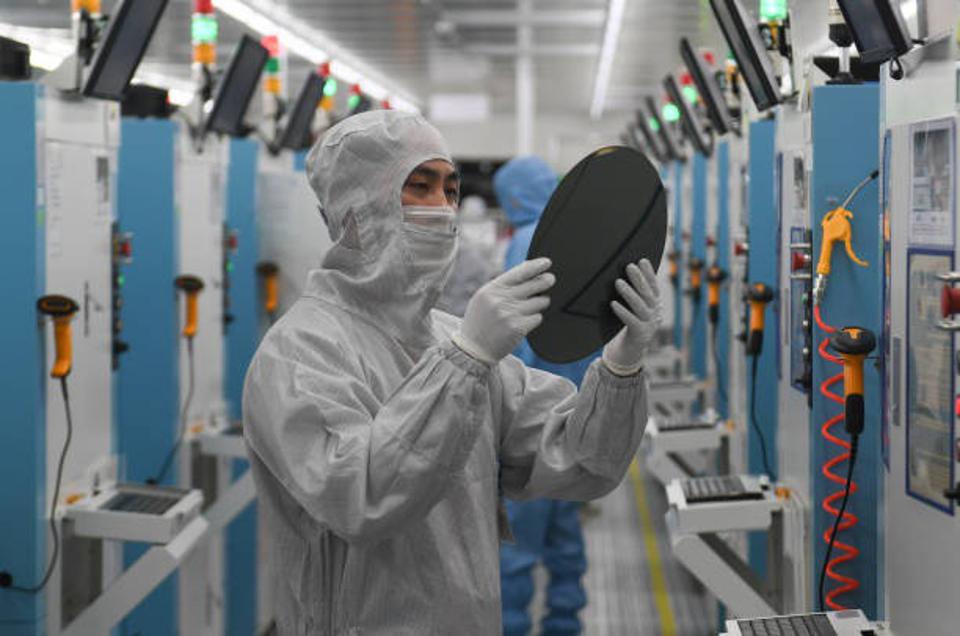
India’s push to become a serious semiconductor force gained a major boost as Tata Electronics secured Intel as a prospective customer for its upcoming chip facilities, a development that suggests the U.S. chipmaker sees potential in India’s attempt to build a large-scale manufacturing base.

The electronics-manufacturing arm of the 156-year-old Tata Group is investing about $14 billion to build India’s first semiconductor fabrication plant in Gujarat and a chip assembly and testing facility in Assam. The move marks one of the most ambitious industrial undertakings in the country’s modern history, stretching from upstream chip production to downstream packaging.

Prime Minister Narendra Modi has spent the past several years pushing to position India as an alternative node in the global semiconductor chain, aiming to stand beside established giants like Taiwan. The effort has been difficult, dogged by early setbacks, geopolitics, cost concerns, and the sheer technical challenge of building a modern chip ecosystem from scratch. But Intel’s willingness to engage with Tata Electronics hints that India’s nascent progress is beginning to register with global players who are scouting safer, more diversified supply chains.

Intel and Tata Electronics said they will also explore the opportunity to rapidly scale AI PC solutions for India’s consumer and enterprise markets, which they describe as a market expected to become one of the world’s top five by 2030. This is a key point because both companies are betting on the next wave of personal computing, driven by AI-powered systems that require new chip architectures, faster on-device inference, and more specialized accelerators.

Growing demand in India provides Intel with a reason to cultivate hardware partners within the country, while Tata aims to ensure that its new fabs serve strategic segments beyond traditional processors.

The announcement comes at a time when global chipmakers are rethinking their supply-chain exposure and looking for expansion opportunities outside East Asia. The U.S. CHIPS Act has spurred a build-out in America, while Japan and Europe are also investing heavily in local capacity. India has been attempting to insert itself into that realignment, arguing that its mix of market size, political stability, engineering talent, and strategic location could support a manufacturing ecosystem that complements — rather than replaces — established global hubs.

Tata’s fabrication facility in Gujarat is the centerpiece of this effort. A fully functional fab requires extraordinary engineering discipline, extremely pure industrial inputs, and sustained investment over many years. The companion plant in Assam will handle assembly and testing, critical steps in making chips commercially usable. If both plants come online successfully, they could form the backbone of an end-to-end semiconductor value chain inside the country.

Intel’s role as a prospective customer would be significant in symbolic and practical terms. It signals that the company is open to purchasing chips made or packaged in India, giving Tata a credible anchor client as it enters a hyper-competitive sector where yields, reliability, and delivery timelines make or break new entrants. It also gives India something it has long lacked: a marquee partnership that strengthens its pitch to the broader global semiconductor community.

The AI PC collaboration adds another layer of relevance because the category is becoming a battleground for chip designers, hardware manufacturers, and AI service providers. As more tasks shift to on-device inference rather than cloud-only processing, companies like Intel are trying to secure regional hardware partners that can help them deliver systems at scale. India’s consumer base and enterprise sector make it a natural target for such an expansion, and Tata’s new capabilities offer a domestic platform to support that push.

If Tata’s facilities achieve commercial readiness, the long-term payoff could reshape India’s industrial landscape. It would broaden domestic supply chains, attract additional technology partners, and deepen the country’s involvement in strategic sectors where it has long wanted a foothold. For Intel, it offers a diversified production environment at a time when supply-chain resilience has become a boardroom priority.

India’s semiconductor dream remains a marathon rather than a sprint, but Intel’s early interest gives the project a more credible foundation as global technology firms reassess where and how the next generation of chips will be made.

Why the $5tn Humanoid Robot Race Is Accelerating and 25 Companies Likely to Succeed – Per Morgan Stanley

0

The global dash toward humanoid robots is moving from sci-fi fantasy to a corporate arms race, and the heat around it keeps rising. A new research note from Morgan Stanley earlier this month placed a spotlight on the companies that stand to shape — and profit from — what it says could become a market worth more than $5 trillion by 2050.

The analysts did not limit their attention to flashy robot manufacturers. They focused instead on firms that build the core components that make humanoid machines function, including advanced AI chips, cameras, perception systems, sensors, movement hardware, and semiconductor architectures. According to them, these foundational suppliers are poised to be the true winners as humanoid robots eventually enter mainstream use.

Morgan Stanley’s analysts compiled a list of the twenty-five companies they believe are best positioned. The list spans a mix of American, European, and Asian giants such as Nvidia, Samsung, AMD, and Sony, alongside fast-rising players like Hesai, the Chinese lidar manufacturer whose sensing technology could help future robots better orient themselves in complex environments. Semiconductor design firm Synopsys also made the list, and analysts gave it special mention, noting the growing importance of chip-design platforms for building reliable humanoid “brains.” Nvidia underscored that potential by announcing a $2 billion investment in Synopsys on December 1.

The researchers estimate that more than a billion humanoid robots could be deployed worldwide by 2050, a staggering figure that helps explain the current investor frenzy. Yet they also caution that adoption will take time, particularly through the next decade. In their assessment, the curve will stay slow until at least 2035 as engineering challenges continue to demand enormous research and development spending. Even so, long-term expectations remain high.

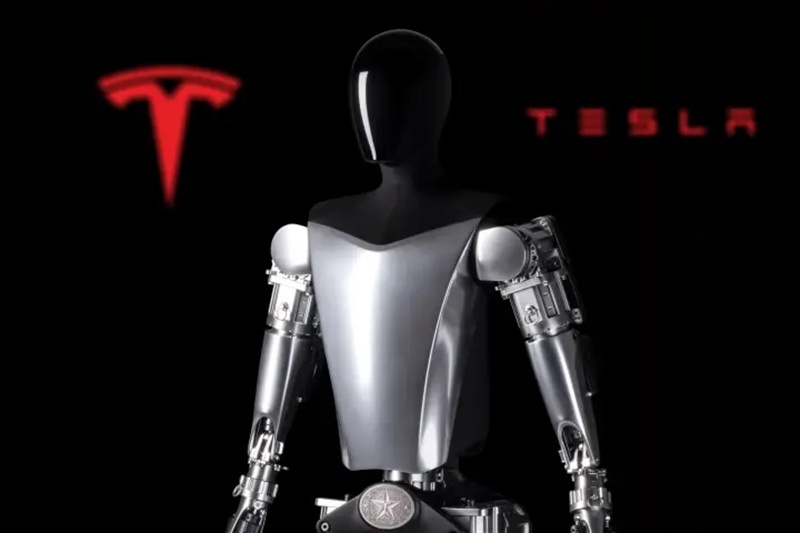
Enthusiasm is not limited to Wall Street. Elon Musk has been one of the most vocal advocates of a humanoid future. Last month, he said Tesla’s Optimus robot has the potential to “eliminate poverty” and boost global economic output tenfold. Tesla plans to begin mass production of Optimus by the end of next year, although it has not provided targets on how many units it intends to build.

Musk’s comments helped intensify attention around the sector, even as most experts agree that consistent breakthroughs in balance, agility, autonomy, safety, and cost will determine how soon humanoids begin to appear broadly in factories, logistics hubs, warehouses, and home environments.

Tesla is far from alone in this race. Chinese automaker Xpeng recently unveiled its eerily lifelike “Iron” humanoid robot, signaling that competition is widening and becoming more international. China itself is already showing signs of overheating, with authorities issuing a warning last week about a possible bubble forming in the domestic robotics industry. More than 150 Chinese companies are now working on humanoid robotics, a number that has raised concern inside the country’s own tech policy circles.

The broader landscape hints at a mix of promise and peril. Legacy industrial robots are already common in automotive factories, semiconductor plants, and logistics centers, but humanoid robots are far more complex. They need to navigate unpredictable spaces, process visual and spatial data on the fly, and execute tasks that require dexterity rather than repetitive motion. That means the companies supplying chips, sensors, and computational systems are becoming central to the next phase of robotics. This explains why Morgan Stanley’s list includes companies operating at nearly every layer of the hardware stack, from Baidu and iFlytek on the AI side, to ARM, Texas Instruments, Onsemi, Microchip, STMicroelectronics, Infineon, Melexis, ROHM, NXP, Ambarella, Renesas, Cadence, Desay, Horizon Robotics, and Joyson.

The growing energy around humanoids also feeds into a larger transformation in global AI markets. Massive investments in generative AI have pushed chipmakers and sensor firms into new levels of relevance, and the same technologies powering AI assistants, autonomous driving systems, and large language models are becoming essential to the mechanical coordination of humanoid robots. This overlap is leading analysts to treat the humanoid boom as an extension of the AI-chip boom rather than a standalone trend.

Even with the excitement, there are clear operational challenges ahead. Companies that want to bring humanoids into commercial environments will face steep barriers such as durability, battery limitations, safety certification, repairability, and workforce integration. Investors are betting that component suppliers, rather than robot manufacturers, will generate the early gains because their technologies can serve multiple markets, including autonomous vehicles, mobile devices, and traditional robotics. In that sense, the humanoid surge is already reshaping corporate strategy across sectors that historically had little overlap.

Below is Morgan Stanley’s list of the 25 companies at the forefront of the humanoid robot boom:

  1. Baidu
  2. iFlytek
  3. Desay
  4. Horizon Robotics
  5. Alibaba
  6. Samsung Electronics
  7. NVIDIA
  8. Cadence
  9. Synopsys
  10. ARM
  11. AMD
  12. Texas Instruments
  13. Samsung Electro-Mechanics
  14. Onsemi
  15. Microchip
  16. Sony
  17. Ambarella
  18. NXP
  19. ROHM Semiconductor
  20. Melexis
  21. STMicroelectronics
  22. Infineon
  23. Renesas
  24. Joyson
  25. Hesai

The next several years will determine whether these companies mature into a genuinely transformative humanoid robot industry or settle into a more modest role within automation.