DD
MM
YYYY

PAGES

DD
MM
YYYY

spot_img

PAGES

Home Blog Page 581

American Bitcoin Corp’s Nasdaq Debut Signals a New Era For Institutional Bitcoin Exposure

0
NASDAQ

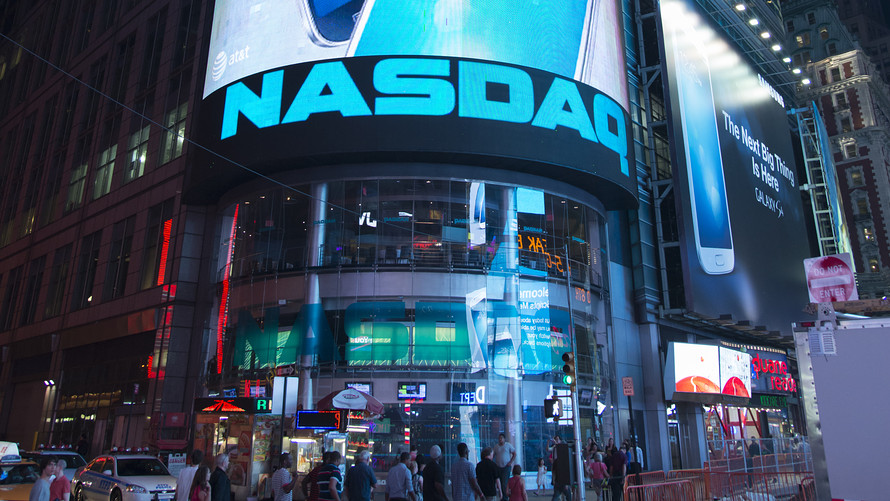
American Bitcoin Corp. (ABTC), a Bitcoin mining company backed by Eric and Donald Trump Jr., debuted on the Nasdaq on September 3, 2025, following a merger with Gryphon Digital Mining.

The stock experienced extreme volatility, surging up to 91% to a high of $14 per share before dropping to a low of $6.72, ultimately closing at $8.05, up 16.5% for the day. Trading was halted five times due to sharp price swings, with pauses occurring at 3:09:35 UTC, 3:20:11 UTC, 3:30:54 UTC, 3:40:12 UTC, and 3:47:58 UTC.

These halts were triggered by Nasdaq’s circuit breaker mechanisms to manage volatility. The company, valued at roughly $5 billion, holds 2,443 BTC worth approximately $273 million. The debut reflects growing institutional interest in crypto firms, though critics, including Sen. Elizabeth Warren, raised concerns about potential conflicts of interest due to the Trump family’s involvement and pro-Bitcoin policies.

Implications of ABTC’s Nasdaq Debut

ABTC’s listing provides a regulated, publicly traded vehicle for institutional investors to gain exposure to Bitcoin without directly holding the asset. Its hybrid model—combining Bitcoin mining with opportunistic market purchases—offers a unique blend of operational and speculative exposure, distinct from spot ETFs or traditional miners.

This democratizes access to Bitcoin’s price dynamics and mining economics, appealing to investors wary of crypto’s volatility or technical barriers. Scalability enhances this implication by enabling ABTC to increase Bitcoin per share through efficient mining and strategic purchases.

Leveraging Hut 8’s low-cost infrastructure and ASIC technology, ABTC can scale mining operations without heavy capital expenditure, potentially increasing its Bitcoin treasury (currently 2,443 BTC worth $273M). Expansion into markets like Hong Kong and Japan could further diversify revenue streams, making ABTC a more attractive vehicle for institutional investors seeking global exposure.

However, scaling too rapidly could strain operational efficiency if energy costs or mining difficulty rise significantly. ABTC benefits from a favorable regulatory environment under the Trump administration’s pro-crypto policies, including the Strategic Bitcoin Reserve and the SEC’s “Project Crypto” initiative, which treats Bitcoin as a cash equivalent for SPACs.

These policies reduce compliance burdens and enhance investor confidence. However, political affiliations with the Trump family raise concerns about conflicts of interest, as critics like Sen. Elizabeth Warren argue that ABTC may benefit from regulatory favoritism. Scalability strengthens ABTC’s ability to capitalize on these tailwinds by expanding mining capacity and Bitcoin accumulation, aligning with policies that treat Bitcoin as a strategic asset.

However, rapid scaling could amplify scrutiny if political ties are perceived to influence regulatory leniency. International expansion may mitigate domestic regulatory risks but introduces new compliance challenges in foreign markets, potentially complicating governance. ABTC’s debut was marked by extreme volatility, with a 91% surge followed by a 49% drop, closing up 16.5% at $8.05. This reflects speculative fervor and the inherent risks of crypto-linked equities.

The stock’s five trading halts underscore market sensitivity to ABTC’s valuation ($5B) and its Bitcoin treasury. Investors must weigh the potential for high returns against Bitcoin price swings and operational risks. Scalability could stabilize investor sentiment by increasing Bitcoin accumulation efficiency, reducing reliance on volatile market purchases.

However, scaling mining operations increases exposure to rising network difficulty and energy costs, which could erode margins and exacerbate stock volatility if not managed carefully. Transparent production data and disciplined capital allocation will be critical to maintaining investor trust as ABTC scales.

ABTC’s concentrated ownership (80% Hut 8, 20% American Data Centers, with Trump family involvement) ensures strategic alignment but raises governance concerns. Critics highlight the risk of political influence or insider control, which could deter some investors despite the operational stability provided by Hut 8’s expertise.

Scalability could amplify governance risks if rapid expansion dilutes operational oversight or invites regulatory pushback. However, concentrated ownership allows ABTC to execute its growth roadmap swiftly, leveraging Hut 8’s $41.3M Q2 2025 revenue and $137.5M net income to fund scaling without shareholder friction. Balancing transparency with growth will be key to mitigating governance concerns.

ABTC’s merger with Gryphon Digital Mining reflects a broader trend of consolidation in the crypto mining sector, where firms combine to achieve economies of scale and operational efficiency. ABTC’s hybrid model positions it to compete with traditional miners like CleanSpark and corporate Bitcoin holders like MicroStrategy, challenging the latter’s dominance with its 215 BTC treasury.

Scalability is central to ABTC’s competitive edge, as its hybrid model allows it to adapt to market conditions by shifting between mining and purchases. Scaling mining capacity through Hut 8’s infrastructure and expanding internationally could position ABTC as a top Bitcoin holder, but it must navigate rising competition and network difficulty. Failure to optimize energy costs or mining efficiency could weaken its position relative to leaner competitors.

ABTC’s ability to scale hinges on Hut 8’s energy-efficient infrastructure and shared services, which reduce SG&A expenses and capital costs. For example, Hut 8’s Q2 2025 revenue grew 17% to $41.3M, driven by infrastructure upgrades. Scaling mining operations with next-generation ASICs and expanding into low-cost energy markets could lower Bitcoin production costs, enhancing profitability and investor appeal.

However, rising energy prices or supply chain disruptions for ASIC hardware could offset these gains, impacting margins. ABTC’s dual strategy of self-mining and opportunistic purchases aims to maximize Bitcoin per share. Scalability enables ABTC to increase its 2,443 BTC treasury through efficient mining and strategic market buys, potentially rivaling MicroStrategy’s holdings.

The $2.1B at-the-market offering announced post-debut will fund further accumulation and equipment upgrades, but scaling too aggressively could expose ABTC to Bitcoin price volatility if market conditions sour. ABTC’s plans to expand into Hong Kong and Japan diversify its operational footprint, reducing reliance on U.S. energy markets and regulatory risks.

Scalability here could unlock new revenue streams and attract global investors, but it introduces currency risks, compliance challenges, and geopolitical tensions in mining hubs. Effective scalability requires robust local partnerships and regulatory navigation. Scaling ABTC’s operations aligns with the Trump administration’s pro-crypto policies, such as the Strategic Bitcoin Reserve and the GENIUS Act, which normalize digital assets.

However, rapid growth could draw scrutiny, especially given the Trump family’s involvement. Transparent reporting and adherence to international regulations will be critical to sustaining scalability without triggering regulatory backlash. Scalability strengthens ABTC’s positioning as a hybrid crypto equity, blending mining’s operational upside with treasury accumulation’s speculative appeal.

Integration of Apex Fusion’s Nexus Blockchain with Tenderly’s Infrastructure and Dev Toolkit

0

Apex Fusion’s Nexus, an EVM-compatible Layer-2 blockchain, has launched to bridge the gap between UTXO and EVM ecosystems, enabling seamless interoperability and enhanced developer capabilities.

Integrated with Tenderly’s full-stack infrastructure and development tools, Nexus provides enterprise-grade resources for building and scaling decentralized applications (dApps) within Apex Fusion’s tri-chain architecture, which includes Prime (Layer-1 backbone), Vector (UTXO-based Layer-2), and Nexus itself.

Built on Polygon Edge, Nexus offers high-performance, low-cost transactions while maintaining compatibility with Ethereum’s tools and ecosystems. The Reactor Bridge facilitates fluid asset transfers between Prime, Vector, and Nexus, leveraging the security of Prime’s Ouroboros proof-of-stake consensus.

This launch strengthens Apex Fusion’s mission to defragment Web3, fostering collaboration across blockchain networks with support from partners like Tenderly, Ethernal, Zeeve, and Charli3. Nexus, as an EVM-compatible Layer-2 blockchain, facilitates interoperability between Ethereum’s account-based model and UTXO-based systems (e.g., Bitcoin, Cardano).

This addresses the long-standing challenge of blockchain fragmentation, enabling seamless asset transfers and collaboration across diverse protocols. By uniting these ecosystems, Nexus creates a more cohesive Web3 environment, fostering innovation in decentralized applications (dApps) for sectors like DeFi, gaming, and finance, where cross-chain compatibility is critical.

The integration with Tenderly provides developers with enterprise-grade tools to build, test, and scale dApps efficiently. This lowers barriers to entry, making Nexus accessible to developers of varying skill levels and accelerating the development of omnichain dApps.

Tenderly’s tools streamline the dApp lifecycle, from development to deployment, enabling faster iteration and innovation. This positions Nexus as a developer-friendly platform, attracting projects from Ethereum, Cardano, and beyond.

Built on Polygon Edge, Nexus offers high-performance, low-cost transactions, making it suitable for enterprise-grade applications. Tenderly’s infrastructure enhances this by optimizing node performance and transaction simulations, ensuring cost-effective and reliable dApp operations.

This scalability is crucial for real-world applications in finance, supply chain, and gaming, where high throughput and low fees are essential. The partnership with Tenderly, alongside other launch partners like Charli3, Eternl, and TxPipe, signals strong industry support for Apex Fusion’s vision.

This early adoption by over 30 projects post-testnet launch underscores Nexus’s potential to drive Web3 adoption. Tenderly’s reputation as a leading Ethereum infrastructure provider enhances Nexus’s credibility, attracting more developers and projects to the Apex Fusion ecosystem.

Apex Fusion’s focus on regulatory compliance, with the AP3X token classified as a utility token, aligns with Tenderly’s infrastructure, which supports transparent and secure dApp development. This ensures Nexus appeals to enterprises requiring legally sound solutions.

The planned on-chain reputation system, supported by Tenderly’s monitoring and debugging tools, will foster trust by rewarding verifiable contributions, further enhancing Nexus’s appeal for decentralized ecosystems.

How Tenderly Enhances Nexus as a Product

Tenderly’s full-stack Web3 infrastructure and developer toolkit significantly enhance Nexus’s capabilities, making it a more robust and attractive platform for developers and enterprises. Tenderly’s Virtual TestNets allow developers to build and test dApps with mainnet data locally, using an unlimited faucet and state manipulation features.

Tenderly’s shared infrastructure eliminates development silos, enabling seamless collaboration between smart contract, frontend, and backend teams. This is particularly valuable for Nexus, which supports complex, multichain dApps. Tenderly’s real-time transaction monitoring and debugging tools, used by major projects like Uniswap and OpenSea.

Features like transaction previews and simulations let developers test outcomes before on-chain deployment, reducing errors and costs—a critical advantage for Nexus’s DeFi and gaming applications. Tenderly’s extensible node RPC and serverless backend capabilities allow developers to create custom logic and endpoints, tailoring Nexus dApps for optimal performance.

By integrating with Tenderly’s infrastructure, Nexus benefits from managed environments that streamline CI/CD processes, speeding up build and release cycles without additional overhead. Tenderly supports multiple blockchains (e.g., Ethereum, Avalanche, Optimism), making it a perfect fit for Nexus’s EVM-compatible architecture.

This ensures developers can leverage familiar Ethereum tools while building on Nexus, enhancing its interoperability with Ethereum’s ecosystem. The integration allows Nexus to tap into Tenderly’s multichain explorer, providing decoded, human-readable insights for dApp development, further simplifying the developer experience.

Support for Next-Generation dApps

Tenderly’s tools empower developers to build sophisticated dApps that leverage Nexus’s unique position as a bridge between UTXO and EVM ecosystems. For example, DeFi applications can combine Ethereum’s smart contract capabilities with the security of Apex Fusion’s Prime chain.

The integration supports Nexus’s vision of enabling omnichain dApps, reducing barriers to development and fostering innovation across Web3. Relying on Tenderly’s tools could introduce risks if Tenderly faces outages or shifts priorities. Apex Fusion should ensure redundancy and maintain control over critical infrastructure.

Despite Tenderly’s user-friendly tools, developers unfamiliar with its platform may face a learning curve, potentially slowing initial adoption. Other Layer-2 solutions like Arbitrum and Optimism also integrate with Tenderly, so Nexus must differentiate itself through unique features like its UTXO-EVM bridge and reputation system.

The integration of Apex Fusion’s Nexus with Tenderly’s infrastructure significantly enhances its value proposition as an EVM-compatible Layer-2 blockchain. By providing developers with advanced tools for building, testing, and scaling dApps, Tenderly empowers Nexus to deliver high-performance, low-cost, and interoperable solutions.

Kenya’s Raise Winds Down Operation as Founder Joins Carta

0

Raise, a Kenyan fintech company specializing in digitizing private equity and cap table management, has announced that it is winding down operations, after seven years of building innovative solutions for Africa’s venture ecosystem.

The company launched with the goal of streamlining the way African companies handle cap tables, issue equity, and conduct due diligence.

However, after years of operation, the fintech has decided to close shop. This development marks the next chapter for its founder, who will be joining Carta to lead product for Asia, the Middle East, and Africa as private equity continues to grow rapidly as an asset class.

Speaking on the shutdown via a Linkedin post, Raise co-founder Marvin Coleby wrote,

“Raise’s mission is now complete and will be carried forward through my time at Carta. As part of this, Raise is winding down, and customers can migrate to Carta. As part of this, I’m really excited to see our principles across the African venture capital system get written into capital markets software.

“Because, for too long, African startups, funds, and investors have been disconnected from the world’s capital flows. This isn’t just about better software. It’s about finally bridging the gap between Africa and global capital markets, because financial infrastructure is the foundation that everything else is built on.”

The founder expressed deep gratitude to the Raise team, whose perseverance and innovation built a platform that supported thousands of African startups, as well as to the founders, funds, and shareholders who entrusted Raise with their most important financial decisions.

“Sometimes finishing your mission means finding a path that takes it further than you ever could alone,” the founder added, emphasizing the exciting opportunity ahead to scale these efforts globally with Carta.

Founded in 2017, Marvin Coleby, Tina Nyamache, and Eugene Mutai, Raise started as a simple idea sketched on a napkin. By 2018, it gained momentum when global players Consensys and Binanceagreed to incubate the ambitious concept of creating real-world asset infrastructure for emerging markets.

The company went on to achieve significant milestones, including helping thousands of startups fix their cap tables, onboarding billions of dollars’ worth of equity, and enabling investors and employees to liquidate shares across more than 18 African jurisdictions — a feat previously considered impossible.

Despite these achievements, Raise struggled to find a sustainable business model within the venture space. While private equity showed the most promise, scaling the model independently proved challenging. This turning point led to Raise’s strategic alignment with Carta, a leading global equity management platform.

In 2021, Carta became Raise’s first international investor in Africa, marking the start of a partnership rooted in a shared vision to create equity access for all, everywhere. In 2023, Raise took a major step forward when it secured funding from Carta. The investment was seen as a way to bridge Raise’s regional expertise with Carta’s global infrastructure. Today, that partnership has evolved into a full integration, with Raise’s learnings and technology set to be embedded directly into Carta’s global ecosystem.

As part of this transition, Raise customers will be migrated to Carta, ensuring continuity of services while gaining access to a broader suite of global equity tools. The company’s impact has been profound. From its early days digitizing its first $700 million in African equity, to eventually managing $5 billion, and providing critical infrastructure for Africa’s startup ecosystem, Raise has been a pioneer in transforming how venture capital operates on the continent.

Raise’s journey reflects the evolution of Africa’s tech ecosystem, where local innovations are increasingly integrated into global financial infrastructure, setting the stage for a more connected and inclusive future for startups and investors alike.

Warner Bros Discovery Sues Midjourney in Latest Clash Over AI and Copyright

0

Warner Bros Discovery has launched a major lawsuit against Midjourney, accusing the fast-growing AI photo generation company of unlawfully exploiting its vast library of characters to train its systems and produce images for paying users.

The complaint, filed Thursday in Los Angeles federal court, claims Midjourney “brazenly stole” works featuring Superman, Batman, Wonder Woman, Bugs Bunny, Scooby-Doo, and other icons to generate downloadable depictions of them “in every imaginable scene.”

The case, Warner Bros Entertainment Inc et al v Midjourney Inc (No. 25-08376), is the latest in a growing wave of legal battles over how AI firms are sourcing their training data—and who ultimately profits from it.

According to the complaint, Midjourney not only knew its conduct was wrongful but had previously blocked subscribers from generating videos from infringing images. The company later lifted that safeguard last month, promoting it as an “improvement.”

“Midjourney has made a calculated and profit-driven decision to offer zero protection for copyright owners even though Midjourney knows about the breathtaking scope of its piracy and copyright infringement,” Warner Bros alleged.

The studio is seeking unspecified damages, disgorgement of profits, and a halt to further infringements.

A Warner Bros Discovery spokesperson framed the lawsuit as a defense of its creative foundation: “The heart of what we do is develop stories and characters to entertain our audiences, bringing to life the vision and passion of our creative partners. We filed this suit to protect our content, our partners and our investments.”

Warner Bros Discovery’s operations include Warner Bros Entertainment, Turner Entertainment, DC Comics, Hanna-Barbera, and The Cartoon Network.

Hollywood Studios Closing Ranks

This legal action follows a June lawsuit against Midjourney by Walt Disney and Comcast’s Universal, which accused the platform of enabling unauthorized depictions of Darth Vader, Bart Simpson, Shrek, and Ariel from The Little Mermaid.

Taken together, these lawsuits show Hollywood’s largest studios closing ranks against AI firms they see as siphoning off the value of decades-old franchises without permission or compensation.

Midjourney’s Growth and Defense

Founded in 2022 by David Holz, San Francisco-based Midjourney has become one of the most prominent generative AI startups. By September 2024, it had attracted nearly 21 million users and, according to Warner Bros’ complaint, generated around $300 million in annual revenue.

In an August 6 filing in the Disney-Universal case, Midjourney insisted that copyright law “does not confer absolute control” over how works are used. The company argued that training generative AI on copyrighted material qualifies as fair use, a legal doctrine it said ensures “the free flow of ideas and information.”

This defense mirrors the strategy adopted by other AI players under legal fire. OpenAI, Stability AI, and Anthropic are all facing lawsuits from authors, publishers, and record labels alleging that their works were ingested without consent to fuel AI systems. The outcomes of these cases could set precedents that determine how far AI firms can go in using copyrighted content.

The Warner Bros suit also lands just weeks after Meta struck a high-profile partnership with Midjourney, highlighting the company’s growing influence in Silicon Valley. That deal drew attention because it linked one of the world’s biggest social media companies to an AI platform now at the center of copyright battles with Hollywood’s most powerful studios.

With AI partnerships gaining mainstream legitimacy, studios fear their characters could be replicated endlessly in new forms with little regard for ownership rights.

Beyond Batman and Bugs Bunny

The lawsuit underscores the broader anxiety sweeping the creative industries. Characters such as Batman, Superman, and Bugs Bunny are not just beloved cultural figures—they are pillars of billion-dollar franchises that fuel films, merchandise, and television programming worldwide. Allowing unlicensed use, Warner Bros argues, undermines both its financial investments and its creative control.

The Warner Bros complaint now adds to a rising tide of copyright challenges that could reshape the AI industry. If courts reject the fair use claims of AI companies, firms like Midjourney may be forced to radically alter their business models—potentially paying massive licensing fees or rebuilding datasets from scratch.

As it stands, Warner Bros’ case against Midjourney will now proceed in California, where judges will weigh whether training and generating with copyrighted characters constitutes fair use or wholesale infringement.

Warner Bros. Discovery has filed a lawsuit against AI image-generation startup Midjourney, accusing the company of “blatantly and purposefully” infringing on its intellectual property. According to the complaint, Midjourney has generated “countless” images of WB-owned IP like Bugs Bunny, Wonder Woman and “Rick and Morty,” sometimes even in response to user prompts that don’t mention the characters by name. Midjourney now finds itself in the legal crosshairs of three media giants, after Disney and Universal sued the company for copyright infringement this summer.

Tesla Shareholders to Vote on Investing in Musk’s xAI as Company Seeks to Anchor Its AI Future

0

Tesla shareholders are preparing for a pivotal vote that could determine how closely Elon Musk’s ventures intertwine. On November 6, investors will decide whether to let the electric vehicle maker invest directly in Musk’s artificial intelligence startup, xAI — a proposal pitched as a way to accelerate Tesla’s transition into an AI, robotics, and energy powerhouse.

The vote comes at a critical juncture for Tesla, which is trying to reassure Wall Street after a stretch of weakening EV sales and a stumbling rollout of its long-promised robotaxi program. Management has increasingly emphasized AI as the company’s true growth engine, with ambitions centered on Full Self-Driving (FSD) technology and Optimus, its humanoid robot.

The xAI proposal, put forward by Florida shareholder Stephen Hawk, who owns $2,000 worth of Tesla stock, was included in Tesla’s latest proxy statement. In his supporting statement, Hawk argued that Tesla’s integration of Grok — xAI’s chatbot into its vehicles demonstrates the clear upside of collaboration.

“As Tesla pivots toward AI-driven technologies, including Full Self-Driving and robotics, a strategic investment in xAI would secure access to advanced AI capabilities, enhance product innovation, and drive shareholder value,” he wrote.

Notably, the Tesla board has taken a neutral stance, a rare departure from its usual practice of advising against shareholder-led proposals. If approved, Tesla would become the second of Musk’s companies to back xAI financially. SpaceX, his aerospace firm, has already pledged $2 billion as part of a broader $5 billion equity raise. That heavy lift by SpaceX has fueled speculation that xAI is struggling to draw outside investors — raising questions about whether Tesla shareholders might end up subsidizing another Musk-led venture.

Musk also folded X, the company formerly known as Twitter, into xAI earlier this year, cementing his bet on the startup as the centerpiece of his AI empire.

Some investors, however, see risks of conflict. Musk has long described Tesla as an AI company in its own right, and a group of shareholders sued him last year for launching a rival AI firm. Though that case was dismissed, it underscored the lingering unease that Musk’s attention could be split. In response, Musk has argued that he needs more direct control of Tesla to fully lead its AI future and avoid distractions posed by xAI.

That argument dovetails with another high-stakes item on the ballot: a Tesla-backed, 10-year compensation plan for Musk that could be worth up to $1 trillion. The package, designed to give Musk more than 25% ownership of the company, would tie his payout to extreme growth targets, including lifting Tesla’s market capitalization from about $1 trillion today to more than $8 trillion.

Tesla is still appealing a Delaware court’s decision earlier this year to strike down Musk’s prior $56 billion pay package, with the judge ruling that it was unfairly structured. The new $1 trillion plan is being positioned not just as a replacement but as a mechanism to lock Musk’s focus squarely on Tesla at a time when he is stretched across multiple ventures.

“The point of this package is to keep Musk engaged,” Gene Munster, managing partner at Deepwater Asset Management, told TechCrunch. He noted that Tesla cannot realistically reach an $8 trillion valuation on FSD and robotaxis alone.

“To get to those numbers, we need things to happen that are inconceivable right now. And one of them is humanoid robots everywhere; that’s probably the biggest lever.”

Munster added that xAI could play a decisive role in helping Tesla get there — not only by providing compute and advanced AI resources, but also by fueling investor excitement around the integration of the two companies.

“Just the excitement around xAI and Tesla together is going to move Tesla’s valuation higher,” he said.

The shareholder meeting is scheduled for November 6 at 3 p.m. Central Time at Tesla’s Gigafactory Texas, with a livestream planned. With Tesla facing pressure from slowing EV demand, rising competition in China, and questions about Musk’s bandwidth, the votes on xAI and Musk’s $1 trillion package will test how much faith investors still have in his vision — and how far they are willing to go to keep him focused on Tesla’s future.