DD
MM
YYYY

PAGES

DD
MM
YYYY

spot_img

PAGES

Home Blog Page 5815

The Governor Obaseki’s N60 Billion Revelation – And Nigeria’s Challenge [with Video]

2

Nigeria is in financial trouble, and the Federal Government of Nigeria printed N60bn to share in March, according to a hard to watch video (below) by Edo State governor, Godwin Obaseki. This is not really news because we know that Nigeria has been printing money recklessly. After the freeze on bank dormant accounts, and unclaimed dividends, the only option was printing since the lenders are getting stricter.

Everyone prints, including the United States. But the difference here is that the US has a roadmap on how to cover the flanks while Nigeria is still digging. As the governor noted in the video, you are like a family which keeps expanding spending even when your source of income has diminished, pretending that everything is fine. Certainly, that playbook will not work in the long-term as one day the system will collapse.

Nigeria’s biggest challenge today is that our government is not communicating very well to the citizens. We continue to create the impression of abundance when scarcity has hit the land. In the days of Sam Mbakwe, ex-governor of Imo State, he might have printed a document and showed the citizens on the state TV, making a case why he needed help. He did those things many times and the citizens responded. 

As primary school kids, we contributed money to help him on building palm plantations, poultry, power plants, etc for the state. He never borrowed money from any foreign government. Mbakwe was like: if you need it, you have to fund it – and from the sincerity of his heart, Imolites responded. You pay school fees for your kids and you also send government money to fund developments.

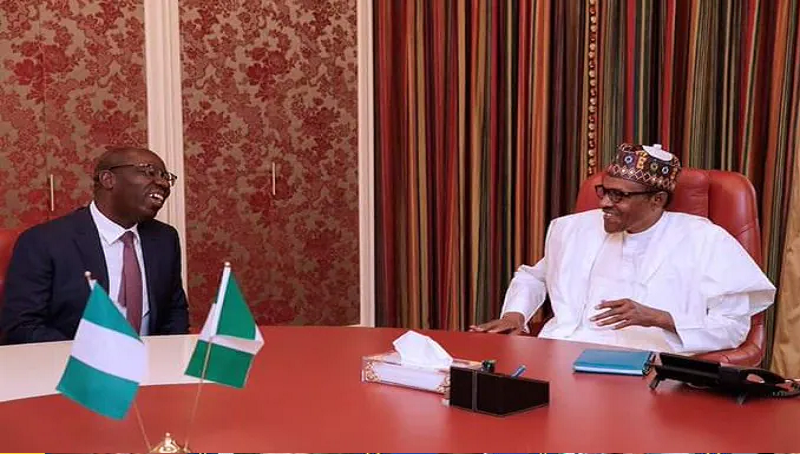
I am still expecting President Buhari to come out clean and speak to his fellow citizens on the way forward. He needs help and now is the time to ask for it. 

In a speech last week, with eminent Northern Nigeria leaders, I presented a template on how Southeast leaders, post-war, rebuilt and positioned the region,  that 40 years after the war, from real estate holding to business to education, not many would remember that every family in Southeast began to rebuild with 20 pounds, from 1970. 

Yes, that Imo state records more than 96% literacy rate today, and a former FCT Minister noting that Southeast real estate investors control more than 70% of Abuja’s real estate, are strong data points to show that Nigeria has winning models. Across all domains, Southeast from the zero-ing which happened in 1970 should be exceedingly poor,  but they turned it around.

In 2007, the Minister for FCT,Mallam Nasir el-Rufai declared that “Igbos have acquired about 73 percent of landed property in Abuja”. He was addressing a gathering of South East elected officials, he also revealed how the National Chairman of the Peoples Democratic Party, PDP, Senator Ahmadu Ali abused him for demolishing his house in Asokoro District in Abuja.On a lighter mood, el-Rufai called on the Igbos to take Abuja as the sixth state of the South East in view of their dominance of the real estate sector of the FCT.

People write of Bitcoin wealth, but I tell them that the fastest accumulation of wealth in human history was done by Southeast Nigeria where in less than 40 years, men and women turned 20 pounds into empires! That is a Nigerian story and one we need to scale!

I have taken time to understand what happened and how they did it – Nigeria needs to use it to rebuild the nation. In a document I have titled “Readiness for Fly of the Eagle”, I have articulated everything in case the moment comes.

People, be hopeful – Nigeria will be fine.

Daily Trust has a piece on it  and I am producing below. 

 Speaking at a programme in the state on Thursday, the governor said the federal allocation for March was insufficient, forcing the Federal Government to print between N50 billion and N60 billion for states to share.

“When we got FAAC for March, the federal government printed additional N50-N60 billion to top-up for us to share.

“This April, we will go to Abuja and share. By the end of this year, our total borrowings is going to be within N15-N16 trillion. Imagine a family that is just borrowing without any means to pay back and nobody is looking at that, everybody is looking at 2023, everybody is blaming Mr. President as if he is a magician,” he said.

Lamenting the overdependence on crude oil, Obaseki said the rising debt profile is worrisome.

He said oil companies are shutting down in the country, challenging the government to come up with other means of revenue generation.

“Nigeria has changed. The economy of Nigeria is not the same again whether we like it or not. Since the civil war, we have been managing, saying money is not our problem as long as we are pumping crude oil everyday.

“So we have run a very strange economy and strange presidential system where the local, state and federal government, at the end of the month, go and earn salary. We are the only country in the world that does that.

“Everywhere else, government rely on the people to produce taxes and that is what they use to run the local government, state and the federation.

“But with the way we run Nigeria, the country can go to sleep. At the end of the month, we just go to Abuja, collect money and we come back to spend. We are in trouble, huge financial trouble.

“The current price of crude oil is only a mirage. The major oil companies who are the ones producing are no longer investing much in oil. Shell is pulling out of Nigeria and Chevron is now one of the world’s largest investors in alternative fuel, so in another year or so, where will we find this money that we go to share in Abuja?” he asked.

 

China Fines Alibaba $2.8 Billion for Anti-competition Practices

1
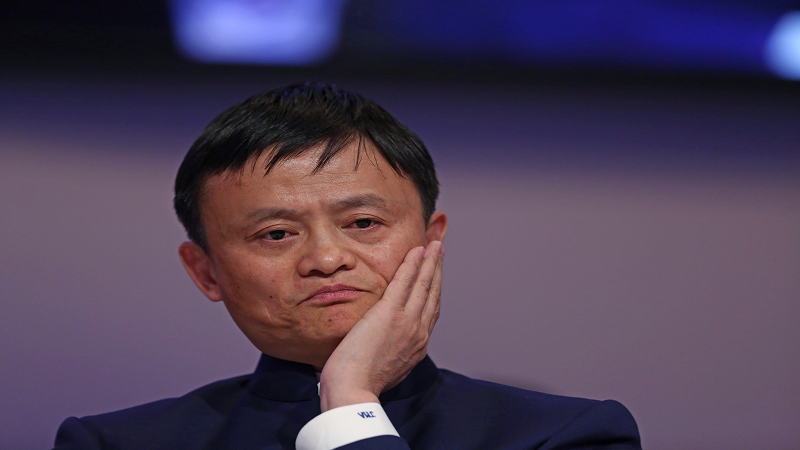
Alibaba Jack Ma

Chinese authorities have hit e-commerce giant Alibaba with a 18.23 billion yuan ($2.8 billion) fine for abusing its market dominance.

Alibaba has been under the radar of Chinese regulators since last year. In December, the State Administration for Market Regulation (SAMR), launched an investigation into the practices of China tech giants. The e-commerce platform was found guilty of forcing merchants to choose one of two platforms rather than being able to work with both.

SAMR said on Saturday it had determined that Alibaba had been “abusing market dominance” since 2015 by forcing its Chinese merchants to sell exclusively on one e-commerce platform instead of letting them choose freely among different services. Vendors are often pressured to side with Alibaba to take advantage of its enormous user base.

Late last year, the Chinese authorities launched a regulatory clampdown on China’s online industry, in a first shakeup that had Ant’s $34 billion proposed IPO suspended.

“Today, we received the Administrative Penalty Decision issued by the State Administration for Market Regulation of the People’s Republic of China,” Alibaba said in a statement. “We accept the penalty with sincerity and will ensure our compliance with determination. To serve our responsibility to society, we will operate in accordance with the law with utmost diligence, continue to strengthen our compliance systems and build on growth through innovation.”

Jack Ma, Alibaba became a person of interest in China’s regulatory clampdown for being critical of the authorities.

Ma accused the institutions last year of having a “pawnship” mentality of using collateral instead of advanced credit ratings and watchdogs of not knowing the difference between regulation and supervision.

His outburst attracted further attention from the authorities who wanted to make a lesson statement to the online industry and individuals heading them. Ma went into hiding for weeks.

A barrage of regulations rolled out by SAMR in the following months means that things will never go back to the old ways, when there was a lax oversight function, in the tech industry.

SAMR said Alibaba’s actions stifles competition in China’s online retail market and “infringes on the businesses of merchants on the platforms and the legitimate rights and interests of consumers.”

The fine amounts to about 4% of the company’s 2019 revenue. Experts say it will spur a positive change in China’s tech industry.

“There has been weakness in China’s big tech stocks and I think this fine will be seen as a benchmark for any other penalties which could be applied to the other companies,” said Louis Tse, managing director at Wealthy Securities in Hong Kong.

It is believed that Alibaba’s fine is a kickoff of a ton of sledge hammers that the government has in store for big players in the tech industry caught in monopolistic and anticompetitive practices.

“What comes after Alibaba’s fine is the likelihood that there will be damage to China’s other internet giants,” said Francis Lun, CEO of GEO Securities, Hong Kong.

“Their growth has been enormous and the government has turned a blind eye and allowed them to carry out uncompetitive practices. They can no longer do that.”

Reuters reported in February that China’s big technology firms have been stepping up hiring of legal and compliance experts and setting aside funds for potential fines, amid the antitrust and data privacy crackdown by regulators.

Wium Malan, an analyst at Propitious Research, Cape Town, who publishes on the Smartkarma platform, echoed the sentiment describing the fine as a “clear statement of intent”.

For Alibaba, Malan said, the fine was “affordable” but that the market was still “waiting to see what the ultimate impact would be from the Ant Group restructuring, which still leaves a lot of uncertainty”.

Alibaba, which has been forced to learn obedience, said it fully cooperated with the investigation, conducted a self-assessment and already implemented improvements to its internal systems.

Alibaba office

“Alibaba would not have achieved our growth without sound government regulation and service, and the critical oversight, tolerance and support from all of our constituencies have been crucial to our development,” the company said.

Meanwhile, in Nigeria, Dangote Group and Flour Mills have filed a petition to have a competitor, the BUA Group, shut down its sugar refinery, as its function will mean disrupting their monopoly in the sugar industry.

It’s a tale of contrasting government approach to economic growth. While China harps on fiscal policies that allow competition, Nigeria fosters monopolistic practices by giving selected companies a preferential treatment. Experts said it is sad that while other countries are building economies where prices are determined by market forces, the largest economy in Africa does not even have anti monopoly watchdog.

Banking Vs Telecoms War: Poverty and Startups Dominance

0

When the National Bureau of Statistics (NBS) recently released the “2019 Poverty and Inequality in Nigeria” report, which highlights that 40 percent of the total population, or almost 83 million people, live below the country’s poverty line of 137,430 nairas ($381.75) per year, so many people who were undeniably pro-Nigerians took to the media to claim it was all lies. How can it be such lies, when President Buhari’s administration is fighting poverty and empowering everyone with all sorts of empowerment. I was watching from afar, as a spectator than I was. Oh yes, far away, I was smiling because I knew that sooner than later the harsh reality will descend on the folks who claimed the statistics were a Hoax.

What was more baffling, is the fact that despite the World Bank coordinating the study many still did not believe that Nigerians are living below the poverty level. Probably, because the Pro-Nigerian folks could eat two square meals per day and load mobile data on their outdated device, they never realized that they themselves were subjected to poverty.

The NBS report is based on data from the latest round of the Nigerian Living Standards Survey, conducted in 2018-2019 with support from the World Bank’s Poverty Global Practice and technical assistance from the LSMS program.

The Nigerian Living Standards Survey (NLSS) is the official survey that is the basis for measuring poverty and living standards in the country and is used to estimate a wide range of socio-economic indicators including benchmarking of the Sustainable Development Goals. Between September of 2018 and October of 2019, the National Bureau of Statistics conducted the latest round of the NLSS, a decade after the previous one.

The World Bank provided technical support to the NBS throughout the entire survey implementation, introducing several methodological improvements that led to the availability of reliable data for the poverty estimates.

All Hell Broke Loose

It didn’t take too long for the reality to happen and it did happen, even though it was a test of wars that would soon come to the baking and the telecommunications sector of the economy. What war am I referring to? Lol, the BankTelcos War. The great war experimentation would usher in a new phase of decorum in the system of banking in Nigeria, the same way banks are scared of cryptocurrency. This war lasted just for a few days before it was called off.

So what really happened in this demo war?

After MTN, the West African nation’s biggest telecom services provider, reduced a commission charged on airtime purchases through banking channels by almost half to 2.5%, Nigerian banks early on Good Friday of April 2021 barred the Johannesburg-based firm from using their USSD platform to conduct business as both sides scuffled over airtime sales fees. The three-day-long feud started after MTN, which has the biggest share of Nigeria’s telecoms market, reduced the rate it pays banks for each transaction from 4.5 percent to 2.5 percent.

The lenders removed the telecom giant from their platforms, disallowing MTN users from accessing their bank accounts to recharge their phones. As subscribers expressed their frustration, MTN advised them to seek alternative ways of recharging. On Saturday, the firm announced alternative channels for its airtime sales, including a host of fintech platforms led by Flutterwave.

Service resumed later on Sunday afternoon after MTN agreed to revert to “status quo” at the request of the Minister of Communications, the Nigerian Communications Commission, and the Central Bank of Nigeria while a permanent solution is being worked out.

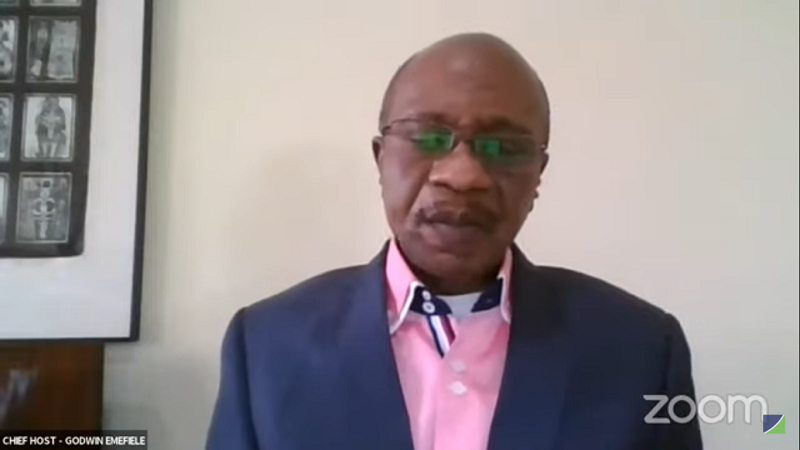
Central Bank Governor of Nigeria

“Nigerian banks are not indebted to MTN Nigeria and other phone companies for using telecommunication platforms to provide payment services” this was opined by Herbert Wigwe, the CEO of Access Bank. It sounds funny when you read it in your inner woke voice. As Bloomberg reports; The action against MTN was an escalation of an ongoing dispute between lenders and telcos in Africa’s largest economy over fees chargeable on services carried out on each others’ platforms.

Telecom operators through their umbrella union, the Association of Licensed Telecommunications Operators of Nigeria, threatened last month to disconnect banks from providing payment services on telco platforms until they paid a 42 billion naira ($103 million) debt allegedly due to its members from end-user billing.

The telecom companies are asking the banks to remit money to them even for transactions that did not take place, Wigwe said. “It is true that they continue to provide this service but this service has nothing to do with the banks,” he said.

Access Bank’s transaction value on telco platforms more than doubled to 1.9 Trillion Naira in 2020 from 891 billion Naira a year earlier, according to an emailed presentation. The volume of transactions rose 80% to 590 million as more customers adopted the technology for payments.

The Importance of USSD contrary to the Lies of Citizen Sufficiency

As Borgen Magazine report; Nigeria, a third-world country in Africa, is known as the poverty capital of the world. The nation just exceeded India with the largest rate of people living in extreme poverty. In Nigeria, about 86.9 million people live in severe poverty, which is about 50% of its entire population. While the nation is smaller both geographically and in terms of population, it is failing at lowering the rates of poverty. This is partly due to the mismanagement of the oil business and the presence of corruption. Along with this, the nation is going through a “population boom,” which will make managing poverty rates more difficult. One of the U.N.’s Sustainable Development Goals is to end extreme poverty by 2050. However, Nigeria’s poverty rates are currently going in the wrong direction.

But despite the whole world knowing about our poverty status, Pro-Nigerians keep denying it. Here comes the fact question: If we are truly rich, why did the Banks to MTN affect over a million people? Why are banks reporting their financial strength from the use and adoption of USSD services? Why do people in rural villages not have nor make use of banking apps to power their day-to-day activities? Why is there the emergence of POS in rural areas?

There are more questions, but we must not let the hype financial reporting done by the banks enable us to lose our guard. There is the sound fact that Nigeria in the next 10 years cannot do without the use of USSD and other mobile messaging platforms for banking. Even OTPs are sent by phone, and do you expect a trader in Ariaria or Ijebode to leave his small business and head to the bank to acquire a hardware device token to enable them to do transactions? Not likely.

This demo war by the banks against the Telcos proved a vital point, which is Nigerians are living in poverty. The majority of Nigerians felt the impact. Despite the lies peddled by the media that Nigerians are doing well and living in affluence, Nigerians couldn’t do with the USSD and SMS services. There are still people in Nigeria who don’t have an email address and who won’t have an email till they expire from the earth’s surface.

Another point to examine is the fact that Nigerian banks are outliving their purpose. Oh yes, if a bank’s aim is to sell data and airtime, it gets to you that the banks are not innovating and they are dying off, thus they need MTN to survive because MTN controls the huge market segment of telecommunications in Nigeria.

How many Nigerians can afford to buy hardware tokens and how many can rely on baking without the use of USSD? You know the answer.

Starts Will Dominate Forever

During this demo war, when MTN announced that they’d be switching to alternative channels for customers to buy airtime, it was when the big boys stepped in – and in 2021 fashion – on Twitter. Dr. Isa Ali Pantami, the Minister of Comms and Digital Economy says he’s going to have it fixed.

What alternative channels were available for MTN customers?

Flutterwave, Kuda, Carbon, and the rest of the gang were among the alternative channels available for MTN customers

What does this tell you?

MTN has about 77 million subscribers – 45% of the total telco market in Nigeria. Imagine how bad it’d have been if people everywhere couldn’t recharge and connect with loved ones over the four-day weekend. It would have been a tragic development.

It is worth mentioning that the startups that stood up to the rescue – Flutterwave, Kuda, Carbon, and the rest of the gang are forced to be reckoned with it. Further proving that fintech startups and companies will dominate the economy in years to come. I know what you are thinking, you are thinking will the fintech startups and companies survive with all the embargo?

Despite me stating that these are dark times in Nigeria, I believe it will not last forever (**stays from a safe distance***).

Conclusion: Wahala Be Like Bicycle

On a serious note, the reality that MTN and other Telcos will and can survive without the banks is a sad reality for the banking ecosystem in Nigeria. I’ll spell it out, the banks will lose because they also use MTN to power their services. Now, that’s what we call “double wahala”.

MTN is the largest telecommunication operator in the country, with about 77 million subscribers, making up about 45% of the total telecommunication market share in Nigeria. This recent feud with Nigerian banks left millions of MTN subscribers stranded and frustrated as they are unable to recharge airtime through USSD and bank apps amid the Easter celebrations.

Even though the banks cowardly have lifted their ban on MTN subscribers, and they can now recharge via USSD. The swords have been sheathed, but for how long? First of all, you (if you’re an MTN user) can now recharge your line via any of your preferred means. Beyond that, there’s the debate over the long-term importance of USSD, but from the outlook of events, its importance to the populace can’t be overestimated.

I stand to opine that if the SEC and CBN can frustrate the efforts of youngsters in the startup ecosystem by hastily implementing laws to clamp down on startups, then the NCC and other agencies can find a workable ground for banks and telcos.

One thing is clear from the Demo Wars – banks are in shock, and if I were to be them, I should be.

Africa’s Vaccine Concern Increases as African Union Drops AstraZeneca

0

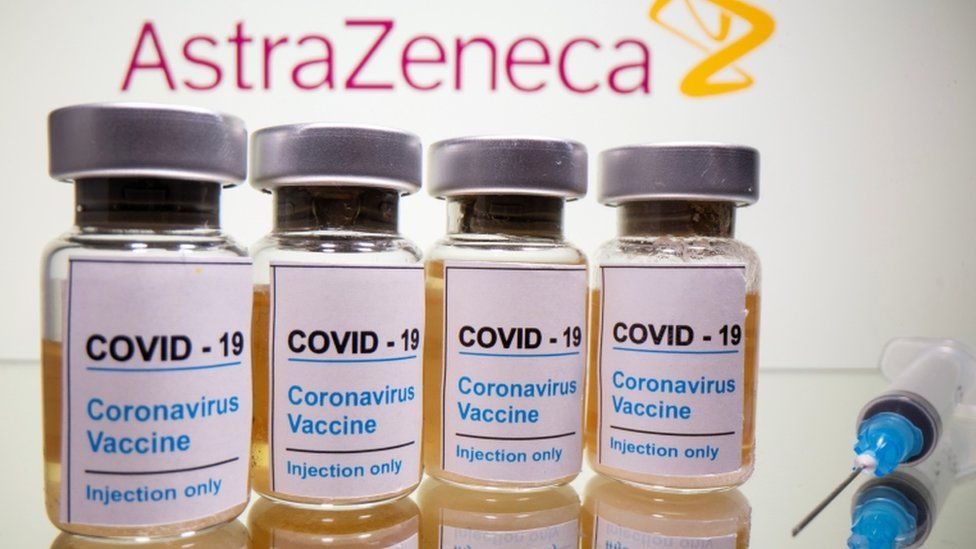
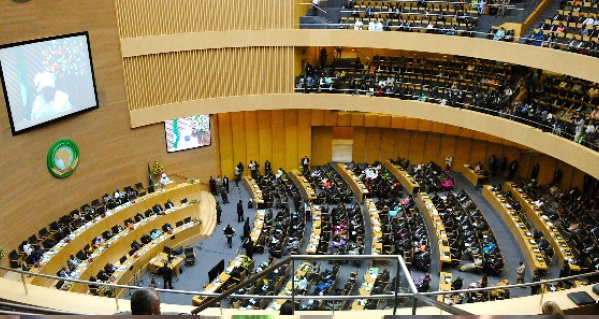
The African Union (AU) said it has halted plans to secure Oxford/AstraZeneca coronavirus vaccines because of supply concerns from India’s Serum Institute.

This comes at the heels of AstraZeneca vaccine blood clot concerns and vaccine shortage that has kept African countries at the bottom of global vaccination effort.

The Financial Times reported John Nkengasong, the Africa Centres for Disease Control and Prevention unit’s director, saying that the body will instead focus on the single-shot vaccine from Johnson & Johnson.

According to him, the decision not to buy AstraZeneca is so as “not to duplicate efforts.” African countries will still receive the AstraZeneca jab through the World Health Organization’s global vaccine-sharing facility Covax.

“We didn’t want to compete with Covax,” he told the Financial Times. “[AstraZeneca] vaccines from the Serum Institute of India are coming to the continent, anyway.” Nkengasong stressed that the decision had “nothing to do” with concerns in Europe about blood clots, insisting that “we recommend the use of the [AstraZeneca] vaccine”.

While there are reasons to believe that AU’s decision has nothing to do AstraZeneca’s blood clot concerns, the timing has the capacity to trigger a new wave of vaccine apathy in Africa.

“The announcement happening around the same time the European medical authority shared concerns over blood clots gives people more reason to amplify misinformation,” said Gregory Rockson, founder of Africa-wide healthcare provider mPharma, which is based in Ghana.

“We need strong political leadership and clear messaging to fight growing vaccine scepticism,” he added.

On Wednesday, UK and European regulators ruling found a link between the jab and very rare blood clots, justifying the decision of many countries to suspend its use. Spain and Italy have moved to limit the use of the AstraZeneca vaccine to people aged above 60, and the UK to those aged over 30.

Before the ruling on Wednesday, calls for Africa to join other countries to suspend AstraZeneca vaccine had been on high.

South Africa was selling the AstraZeneca vaccine to other AU member states following concern it would be less effective in fighting the local variant.

But amidst the jab’s efficacy concern is also the challenge of production and distribution.

Nkengasong said delays in deliveries of AstraZeneca doses were hampering vaccination drives across Africa, and the ability to forecast when doses will be available is vital when planning those efforts.

“This latest decision was just a clear understanding of how not to duplicate efforts with the Serum Institute, so that we complement each other rather than duplicate efforts,” he said during a press briefing.

Since it was agreed “Covax would get those [AstraZeneca] doses and start with the vaccination programme, we now shifted our efforts to the Johnson & Johnson arrangement and that is what led to the agreement of last week, so that the Serum Institute of India was enabled to be able to supply doses to the Covax mechanism”, he added.

Last week, J&J announced an agreement to supply the AU with up to 400m doses of the jab by the third quarter of the year.

African Union

But there is also concern that uncertainties emanating from new waves and new variants of the virus. may get in the way of J&J.

In January, Nkengasong said the Africa CDC was planning to receive another 400m shots of AstraZeneca from the Serum Institute, in addition to 270m previously discussed. These vaccines have not arrived.

Last month India, one of the world’s biggest vaccine producers, froze all major exports of jabs to prioritize local vaccinations as its second wave of coronavirus infections accelerated.

Apart from the fear that this development will fuel misinformation, Africa’s narrowed vaccine choices may be jeopardized.

Ayoade Alakija, co-chair of the AU’s Africa Vaccine Delivery Alliance for Covid-19, said he is concerned that people may end up missing second doses and it will be a “catastrophic failure of vaccine efforts if we have to restart the clock.”

The WHO has said the aim of Covax is to vaccinate at least 20 per cent of Africans with 600m doses of the AstraZeneca jab by the end of the year.

With the first quarter of the year gone, more than 700 million vaccine doses have been administered globally, yet Africa accounts for less than 2% of the total compared to North America’s 27% and Europe’s 20% share, according to the latest data.

“Our goal is to get to 60 per cent. If Covax gets to 20 per cent, then we can go and find additional doses to get to 60. If Covax goes to AstraZeneca to get those doses, we can then go to Johnson & Johnson to find the remaining vaccines,” Nkengasong said.

There is no guarantee that Africa’s vaccine target will be met as it is increasingly getting altered by unforeseen events and decisions such as this by the AU.

To Read My Book, “The Dangote System”, Register for Tekedia Mini-MBA

0

Understand the power of Conglomerate Tax and how entrepreneurial capitalism with pioneering upstream capabilities change the ordinance of market systems. In The Dangote System, I explained how empires are built and how the greatests of the greats become the states, from old GE to Amazon, from old IBM to Dangote Group. Critics like it…read exclusively at Tekedia Institute.

“This book is a worthy read to all aspiring, low-fly and high-flying entrepreneurs, including those envious of the privileges that Dangote Empire has enjoyed. Noteworthy to say, I doubt Mr Aliko Dangote himself understands these privileges as a Conglomerate Tax (reward for helping Government out on high-pains by moving upstream) and not benefits of tribalism, feudalism, and/or Northern Nigeria cabalism.”

“Though relatively new in the core business world, this is the best business book I have read …I have taken numerous courses on Coursera and the like, but this platform is down to our business climate.”

“This book is a very amazing piece. It presents concise, well thought-out and very clear insights on how to build companies with focus on solving problems not many people can solve and consequently, have government’s attention and support. ”

BEGIN reading here.