DD
MM
YYYY

PAGES

DD
MM
YYYY

spot_img

PAGES

Home Blog Page 5817

Resurgent Partitioning of Africa by the Global North for Scholars Hunt

1

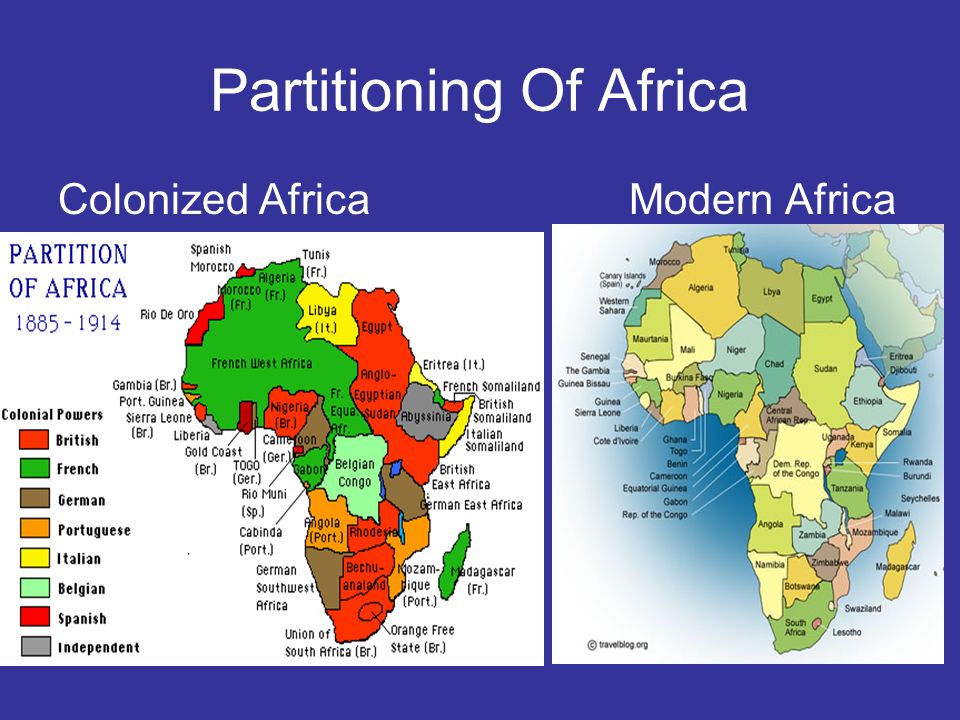
Western Sahara was the last colonised African country. Like Spain, which colonised it, Britain, France, Portugal, Belgium and a number of other countries in the global north scrambled for the partitioning of Africa during the colonial period. The partitioning was largely driven by natural resources that abound on the continent, which colonial masters believe would help them in their industrial growth and development agenda. 

The exit of the colonialists meant that Africans are free to lead and govern themselves. But, they are not totally free when one looks at varying foreign policies being implemented in the last 61 years. The policies cut across socioeconomic and political spheres of every African country. During the colonial era, the scrambling, as argued earlier, was on exploration of natural resources and possible importation of the finished products into the continent. 

Then, foreign direct investment as an international trade instrument known today was not in existence. Export of raw materials and import of finished products by the colonial traders and few African business people dominated. In our check, there is no evidence that China colonised any African country. Yet, the country leads the United States of America, France, United Arab Emirates and the United Kingdom in the area of foreign direct investment flow into Africa. Between 2014 and 2018, 16% of FDI into Africa came from China

As countries in the global north pull their resources together and singlehanded towards capturing emerging markets in Africa, they are not relenting about getting intellectuals to their side. A number of the countries have centres, institutes and courses that are related to African culture, norms, traditions and knowledge in their higher institutions. 

Since 2000, the United States of America, the United Kingdom, France, Canada and other countries in the global north have increased their graduate and postgraduate scholarships including grants to African scholars and professionals. In its bid of having significant influence on Africa, apart from its ‘loan-giving dominance’ China [ despite being in the global south] has recently pursued China-Africa education policy agenda that promotes its sociocultural interest in relation to economy agenda. 

Africans are moving to the global north in throes, according to our analyst, because of the various challenges facing the higher education sector. A number of countries on the continent are still struggling in the area of adequate infrastructure provision and funding, the loopholes the countries in the global north are using to attract intellectuals from the continent. 

From Erasmus Mundus to Fulbright Visiting Scholarship and DAAD – Deutscher Akademischer Austauschdienst, a significant number of African scholars have been scouted by the countries that established these organisations in the last 10 years. “Each year roughly 850 faculty and professionals from around the world receive Fulbright Scholar awards for advanced research and university lecturing in the United States. Individual awards are available to scholars from over 100 countries. Since its inception in 1946, over 400,000 Fulbrighters have participated from over 160 countries.”

Apart from scholarships, African scholars are being attracted with visiting scholar programmes and postgraduate research fellowships to boost their career by providing full funding, stipend for personal maintenance during research, extra knowledge from senior researchers and others. 

According to a 2015 data,  926 scholars have benefited from the Fulbright Visiting Scholars Programme. Over 3% of the scholars are from Africa. More than 23% from East Asia and the Pacific, 41.9% are from the Europe and Eurasia. North Africa and the Middle East had 7.1%, while South and Central Asia and  Western Hemisphere had 13.7% and 9.9% respectively. Though Africa had a small share of the figure, analysis indicates that organisation usually targets Africa in its research agenda. 

In their continued socioeconomic war, the United States and China are not relenting in dishing out scholarship and research funding opportunities to Africa. For example, as of April 7, 2021 [starting from 2016], academic institutions and private organisations have 383 opportunities for scholars and professionals across the world. Again, analysis reveals that Africa is in the hearts of the funders. Already, for Q1 and Q2 of 2021, the United States has released 106 research fellowships including visiting scholar grants, small grants for doctoral research students. Out of these opportunities, 29 are postdoctoral research fellowships. 

Indeed, the global north wants African scholars. But, hardly, scholars of the global north visit for residential research purposes despite the need for collaboration on global issues. African scholars, who were attracted to the global north, also hardly return to Africa due to issues previously identified. 

Exhibit 1: Number of Opportunities by Fellowship Category
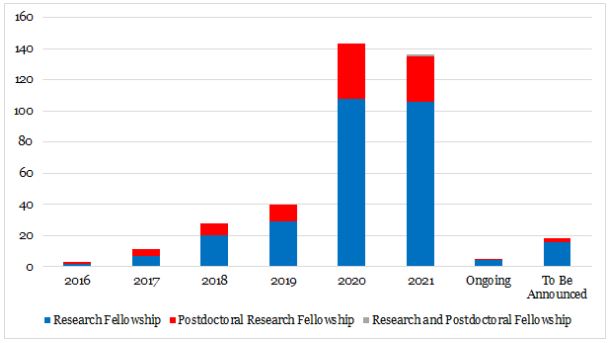
Source: John Hopkins University, 2021; Infoprations Analysis, 2021

How Pre-Recruitment Medical Tests Infringes on Candidates’ Rights

0

Many employers demand their employees’ fitness test results before their recruitment processes are completed. This is found in both private and public sectors and it is usually requested from all candidates irrespective of who they are or where they come from. In most cases, candidates that go for medical tests are sure of receiving their appointment letters because it is the last stage in recruitment procedures (even though it is never publicised). But that is not always the case because a question mark on the candidate’s medical result can cost him the job. This explains why some people do not hear from recruiters again after undergoing medical examinations.

There is nothing wrong with an employer trying to make sure that he recruited employees that are fit to work. Employing a person, whose health condition can prevent from putting his best, does not only put a strain on the company but also on the other staff members. For instance, I have found myself in an organisation, where a colleague always visited the hospital every other week for medical check-ups. To date, the nature of her illness is unknown because the management did its best to conceal that from us. But we were unhappy because of the strain caused by this person’s periodic absence. At a stage, many of us began to feel cheated because we were not given the same “freehand” given to this colleague. This will be the same case with other organisations, where a staff member could not do his or her job because of ill-health. So, employers should not be blamed for seeking fit staff.

However, there are some recruitment practices, regarding medical examinations, which should be discouraged. The first one, as implied above, is that some hospitals send candidates’ medical reports directly to recruiters. This is made worse by the fact that these recruiters may not contact the candidates to discuss their medical reports. They just contact the candidates with ‘good’ medical results and ignore the others. This means that recruiters have access to applicants’ medical history even though they are not medical practitioners. To crown it all, they leave candidates in the dark, especially those whose results deemed unfit to work. I know that these recruiters may argue that they wanted to prevent mutilations and forgery by asking hospitals to send results directly to them, but they can still find a way around it if they want to. From what I understand, people’s medical conditions are private. But because there is job scarcity, recruiters have field days intruding into these privacies.

Another thing that should be addressed is the content of the medical report. Some employers demand details of medical results, which I believe should not be so. For instance, some of them request candidates’ HIV, hepatitis, and STI status. They may have reasons for this (especially if the candidates will have direct contact with minors and invalids if recruited) but demanding for all these, I believe, infringes on the candidates’ rights. These employers can demand these candidates to carry out these tests but they should not expect to see the results in detail. What should be given to them are summaries of the test results.

Employers should understand job seekers have the right to privacy. As recruiters search for the right employees, they should desist from infringing on applicants’ rights in the process. Requesting for applicants’ medical tests is necessary; however, care should be taken to avoid abusing it.

Lol, Amazon Is The New “Right” Party

1

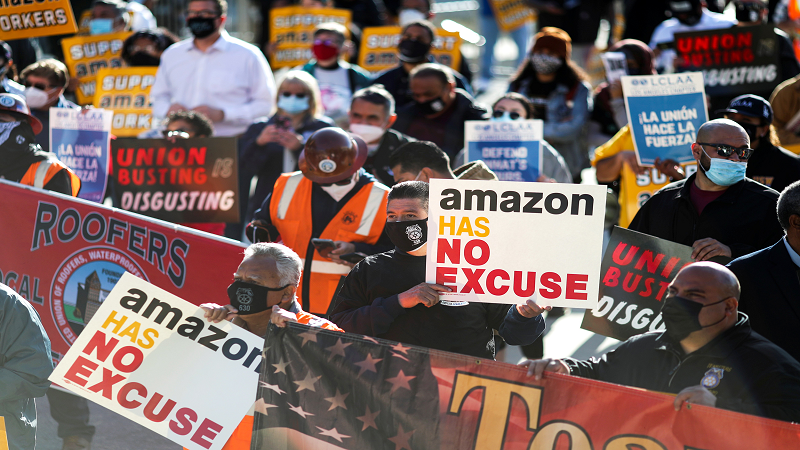
These things happen, from Uber to Amazon, most times, what you expect is NOT what typically  happens. Yes, “Amazon has defeated a union drive that would have established the company’s first US union. The vote count against unionization totaled 1,798, surpassing the simple majority of 1,608 needed for either side to prevail, on Friday. The Retail, Wholesale and Department Store Union, which is behind the Bessemer union drive, announced it plans to file objections and unfair labor practice charges with the labor board.”

So, the Labour union will make it look this way: the reason we failed was because Amazon became another yoyo political party that does not play fair.

From my small angle here, if markets are very efficient, with demand and supply of labour attaining fair equilibrium, the perturbations from union may not be necessary. So, to empower workers, markets need to be designed to be competitive. 

You can unionize all you want and if Amazon is the dominant player in a region, the unionization gain would be marginal. But if there are many Amazons, suddenly, wages and benefits will improve. Go and ask Starbucks which offers university scholarships to people making coffee. It began that move when it realized that it could not retain its workers.

I salute unions, but increasingly, the challenge of the 21st century labour market is not the one unions can fix. Even the workers understand that fact – and that is why unions are losing elections!

Dangote Sugar, Flour Mills, BUA Sugar – And Problems with Nigeria

12

Nollywood makes nice movies but they have not been making ones which go to the heart. Why? Corporate Nigeria makes better movies. The latest episode is that Dangote Sugar and Flour Mills are suing BUA Sugar to get out of the business of running a sugar refinery in Nigeria: “Backed by the Chairman of Flour Mills of Nigeria Plc, Mr. John Coumantaros, Dangote said in a letter sent to the Trade Ministry that the establishment of a new sugar refinery plant in the country poses a threat to the attainment of the National Sugar Master Plan (NSMP) as well as sustainability of the country’s local sugar industry.” You read it well – more supply of sugar will destroy Nigeria!

The BUA Group said the Dangote Group and Flour Mill have not been involved in any backward integration project, rather, they depend on 80% raw sugar allocation which is detrimental to the Nigerian economy in long term. The company said unlike the petitioners, it has been working on backward integration project with BUA’s Lafiagi Sugar BIP, a $250 million sugar refinery set to be completed in 2022.

This Day reported Rabiu, specifically assuring that its sugar export focused project in Port Harcourt, will not affect in any way, the backward integration programme adding that “the only way it will affect Nigerians is that Nigerians will pay lower prices for sugar”.

As a village boy, it was always a happy moment when you put your St. Louis sugar inside your Lipton tea with Ezioma bread ready by the side. It was not luxury because everyone had his or her own big loaf. Ezioma bread was made in Ovim as our industrialists always find a way to take care of home. Then on the big Oriendu Market (every 8 days), Our Society Bread would come from Enugu. That one was always softer – and made by Chief FOC Umunna, the Udo I of Ovum, and one of the men who built Enugu industries. Life was great – yafuyafu even for village kids.

But today, from sugar to bread, everything is a luxury. And yet people are filing court cases to keep it that way.  I don’t care whatever any Nigerian government had offered Dangote Sugar and Flour Mills. The deal today is this: we need affordable sugar, and if BUA can bring that, let it be. 

My principle remains thus: allow everyone to compete on the same terms. Give BUA the same rights given to Dangote and Flour Mills. There is no need for  exemptions. 

Finally, Dangote Refinery had made a claim that only those with refinery license should be allowed to import petrol into Nigeria. If the government buys into that, over time, the refinery can even stop production, and focus on imports. That is why exemptions are bad: everyone needs to have the same rules. 

Punch had reported that Dangote Group has desired  for inclusion in the Petroleum Industry Bill a requirement that the license to import petroleum products should be given only to companies with active refining licenses. The company does think that by having that requirement, companies will invest in local refining business.

So, on this sugar, Nigerian government should allow BUA Sugar to run its show. Possibly, kids in Ovim can enjoy nice tea again.

Yes, they import and it is the same playbook Dangote Refinery is pushing in the PIB bill to make importation of petrol to be exclusive to others running refineries. They always have this: license to refine, and that gives you rights to import, exclusively!

Dangote Group, Flour Mills, File A Petition to Stop BUA from Running A Sugar Refinery

Dangote Group, Flour Mills, File A Petition to Stop BUA from Running A Sugar Refinery

7

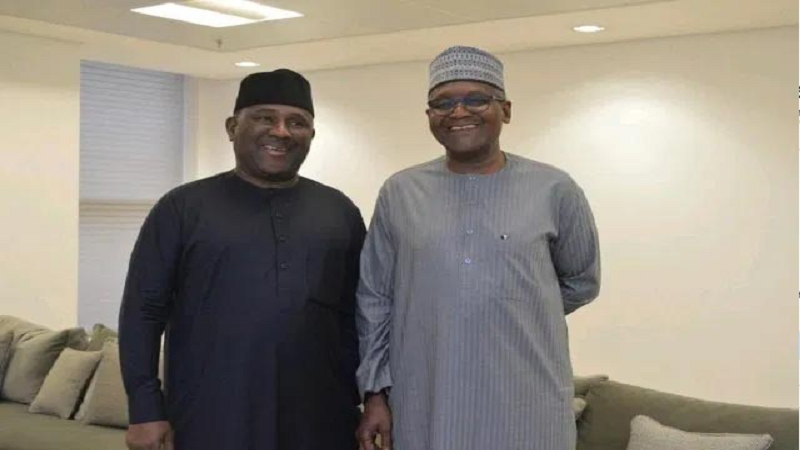
The Chairman of Dangote Group, Aliko Dangote, has moved to stop the BUA Group from running a sugar refinery in Nigeria.

Backed by the Chairman of Flour Mills of Nigeria Plc, Mr. John Coumantaros, Dangote said in a letter sent to the Trade Ministry that the establishment of a new sugar refinery plant in the country poses a threat to the attainment of the National Sugar Master Plan (NSMP) as well as sustainability of the country’s local sugar industry.

The letter dated 28 January argued that the country currently had enough refining capacity to meet national demand, demanding that BUA Group’s Sugar Refinery be shut down.

“The mid-term review conducted by the NSDC (National Sugar Development Council) was clear in its conclusions – BUA has failed to invest substantively in local production or comply with its undertakings under its BIP,” Mr Dangote said in a petition jointly signed with John Coumantaros.

“BUA intend only on importing and refining raw sugar whilst claiming to be investing in developing sugar plantations in order to qualify for quotas to import raw sugar,” the petition added.

Dangote said that when the BUA Sugar refinery was opened, he warned the government about the company contravening the rules of the National Sugar Policy, which forbids BUA from selling locally, giving it right to produce for export only.

In reaction, BUA said in a rejoinder to the sugar policy contravention indictment: “BUA takes serious exception to the ludicrous claims by its two major competitors that it aims to circumvent the BIP of the sugar industry – an initiative in which it has invested billions of Naira and is almost nearing completion.

“To thus claim that the BUA PH export focused refinery in an Export Zone will amount to an undermining of the NSMP (National Sugar Master Plan) is false,” it said.

The squabble is more like a continuation of what started in their cement division back in June 2020, over ownership of cement site, when BUA Cement got a restraining order against Dangote Cement, after the police invaded its three sites in Obu Okpella, Edo State.

While it appears to be about infringement on NSMP, BUA said it’s actually more about who controls the Nigerian sugar market.

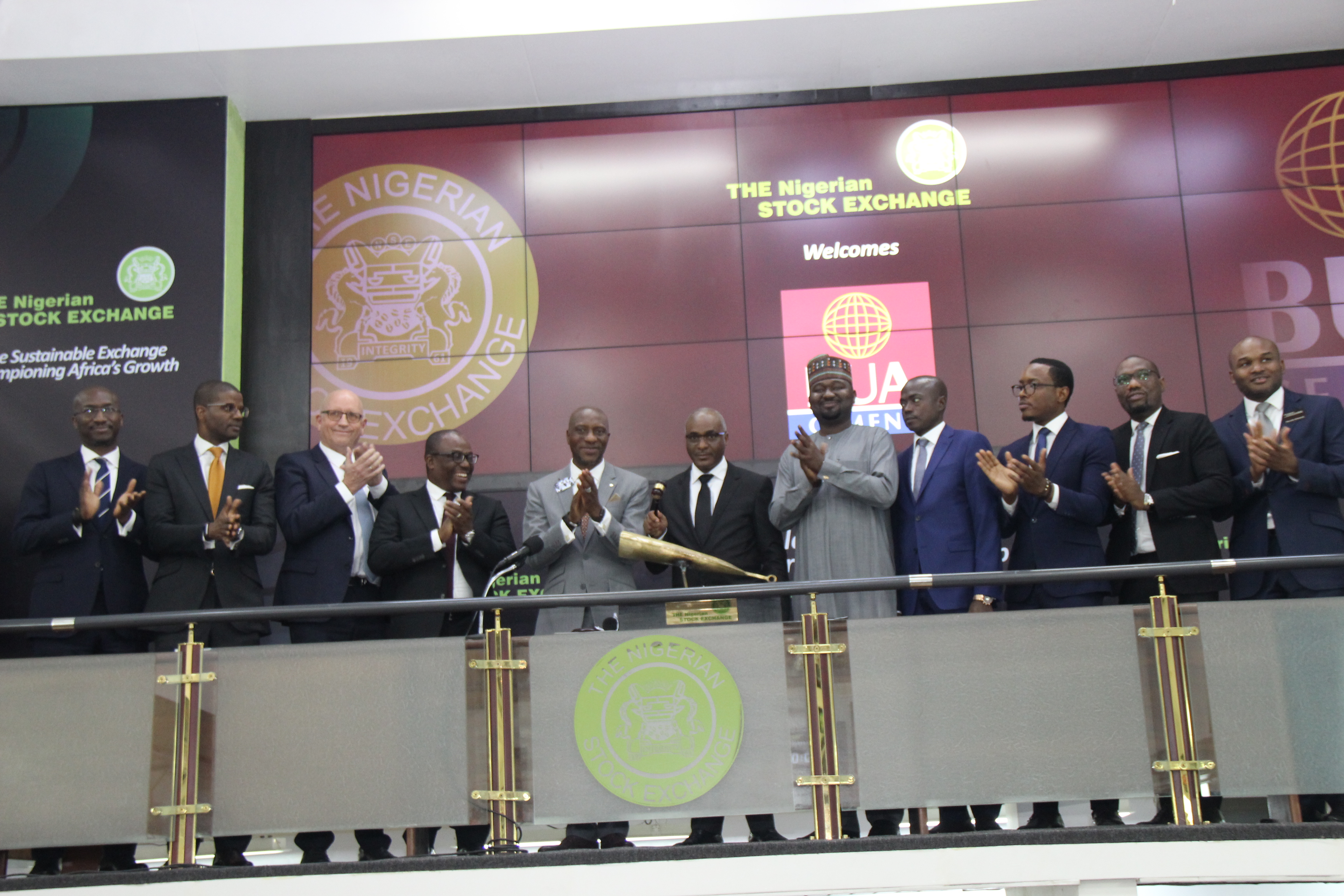
BUA at NSE

Chairman, BUA Group, Alhaji Abdulsamad Rabiu, said his investment in Port Harcourt did not in any way pose a threat to the country’s sugar policy, adding that it will rather checkmate arbitrary price increase by the major players among other benefits to the country.

A typical example of arbitrary price increase cited by BUA happened last year, during Ramadan, when the price for a bag of sugar shot up to N30,000 from N18,000 before Ramadan. All due to monopoly, even though Dangote Group and Flour Mill claim that Nigeria’s refining capacity, due to NSMP, had increased to 3.4 million metric tons per annum from 2.75 million metric tons per annum, enough to serve the country.

In their petition, the duo are demanding that BUA Port Harcourt sugar plant be shut down in order for the country to realize the sugar master plan.

“We are particularly surprised by the brazenness as we believe that the choice of location and the publicity campaign behind the investment has been deliberately engineered to provoke public sentiment and pit the federal government against its people,” the petition said.

It said unless the ministry of industry, trade and investment plays an effective policing role of the NSMP, the country’s dream of becoming self-sufficient and indeed a net exporter of sugar would be defeated.

“The impunity with which BUA has contravened the provisions of the NSMP has placed the other players who are abiding by the regulations, not only at a significant disadvantage but has discouraged them from undertaking the huge investments that would deliver the desired objective of 100 per cent local production of sugar, unless, of course, the ministry wades in and addresses the situation,” it added.

They specifically urged the Minister of Industry, Trade and Investment, Mr. Niyi Adebayo, to prevail on the Nigeria Customs Service (NCS) and the Central Bank of Nigeria (CBN) to ensure that the provisions of the NSMP were enforced and that no additional allocation of quota should be given for raw, VHP, or refined sugar for the sugar refinery in Port Harcourt for local market production.

Among other recommendations, they said no allocations should be issued or applications considered for quota intended for re-export of sugar as this would be difficult to monitor and may be open to abuse.

The BUA Group said the Dangote Group and Flour Mill have not been involved in any backward integration project, rather, they depend on 80% raw sugar allocation which is detrimental to the Nigerian economy in long term. The company said unlike the petitioners, it has been working on backward integration project with BUA’s Lafiagi Sugar BIP, a $250 million sugar refinery set to be completed in 2022.

This Day reported Rabiu, specifically assuring that its sugar export focused project in Port Harcourt, will not affect in any way, the backward integration programme adding that “the only way it will affect Nigerians is that Nigerians will pay lower prices for sugar”.

He explained that though the Port Harcourt refinery is mainly for exports, BUA is allowed under the Nigeria Export Processing Zones Authority (NEPZA)

Act and current approvals/rules to intervene locally in order to stabilize sugar price, “where it is absolutely necessary- in the face of arbitrary price increases and collusion to force scarcity of the product locally”.

He said: “The same NEPZA Act upon which this project is based, gives the permission to process, add value, and export at the same time. Companies under this act are allowed to process and if they so wish, sell 100 per cent of their production in Nigeria with payment of duties based on the current raw materials tariff.”

Nigerians are buying BUA’s side of the story. They said the whole plan by the Dangote Group is to implement in the sugar industry, its “price maker monopoly” that has pushed the price of cement high in Nigeria.

Dangote cement reportedly sells for 55 Kwatcha (N1150) in Zambia, but in Nigeria, the same bag of cement sells for N3,000 to N5,000.

Compared to other countries where governments take serious actions against monopolistic practices, Nigerian government has been accused of enabling monopoly and anticompetition by giving preferential treatment to the Dangote Group.

It could be recalled that during the period that Nigeria closed its borders, only Dangote Cement was given the license to export cement. All eyes are on the federal government this time to change the status quo, as the high cost of goods produced by the Dangote Group has riled the people against further government’s attempt to put the company first.