DD
MM
YYYY

PAGES

DD
MM
YYYY

spot_img

PAGES

Home Blog Page 5818

Your Facyber Bonus for Early Bird Registration of Tekedia Mini-MBA

0

If you have paid for Tekedia Mini-MBA, ask Admin to give you access to a Certificate module at First Atlantic Cybersecurity Institute. You can start taking that course while we wait for the Tekedia Mini-MBA program.

There are four tracks in Facyber  for you to select, and each module takes 12 weeks. All programs are self-paced with a brilliant portal designed for geeks.  The course syllabus and Table of Contents are provided in Facyber.com. Here are the tracks:

  • Certificate in Cybersecurity Policy (CCYP)
  • Certificate in Cybersecurity Technology (CCYT)
  • Certificate in Cybersecurity Management (CCYM)
  • Certificate in Cybersecurity Intelligence & Digital Forensics (CCDF)

To register for Tekedia Mini-MBA, go here. Once done, Admin will register you for Tekedia Mini-MBA. Then follow the instruction below with the exact email you used to register at Mini-MBA.

What To Do (after Mini-MBA Registration):

  1. Visit Facyber and create your account (use the same email used for Tekedia Mini-MBA).
  2. Activate the account in your email
  3. Email team with the certificate course of interest, and confirm that you have done #1 and #2 steps by writing “I have done steps #1 and #2”.
  4. Admin will respond after setup & activation
  5. Login back to Facyber, you will see the course


Tekedia Capital Launches April 12, 2021

0

It is launched – visit this page for Tekedia Capital


On January 1, 2021, I wrote thus: “Happy New Year again. In 2021, I want to set up Tekedia Capital – a very early stage venture ecosystem. I have seen a trajectory and the validation is there: the new species of companies called startups are bringing an economic-Cambrian moment like never before, in Africa’s markets. Our goal is to become a feeder, and a pipeline, for the world of investing and venture business. We have done well, and I hope to institutionalize what we have learnt so far, at the next level.”

Today, I am happy to share that we have just done that. By next week, Tekedia Capital will invest in 3 startups – all are Africa-facing though one operates from the United States. It is a fund for all citizens, as with a min of $10k, you can join to be part of the future, and take stakes in the empires of the future. We will be hiring some team members to work on this mission also. For your questions or interests, click here 

That reminds me – do you struggle to get things done? You want to master how to launch a new product, new unit, new subsidiary, new company, new Vision? At Tekedia Live tomorrow, I will lead a session on HOW TO LAUNCH.

Saturday at 7pm WAT; Zoom link in the Board

Auto-Verification for All Tekedia Certificates Launched

0
Tekedia Diploma program certificate sample

Good People, we have deployed the automatic verification of certificates issued by Tekedia Institute. When we started this mission, we did not expect this level of support. We truly thank the community for responding positively. Thank you. So, for your support and kindness, we also want to reciprocate by fixing this verification friction.

With this automatic verification, writing to the Institute is no longer necessary for certificate verification; we were getting many of those letters. Any employer, institution or stakeholder can use the code and verify at tekedia.com/verify.

We issued a batch to a South African company last week. If you finished from our Institute and want the upgraded version, email Admin and you will get the coded one which can be digitally verified. Use the email you were admitted with.

Meanwhile, early bird ends soon for the next edition of Tekedia Mini-MBA which begins June 7: 12 weeks, thrice weekly live sessions, 100% online, self-paced and costs $140 or N50k.

Tekedia Advanced Diploma programs are on-demand; it is on a rolling basis – get access immediately you pay.

Click and register, and join our school 

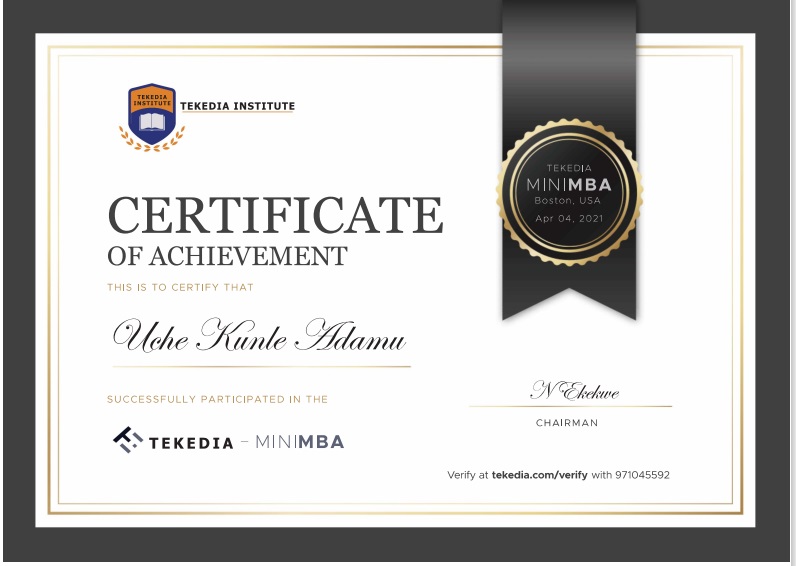
Tekedia Mini-MBA certificate sample


Tekedia Diploma program certificate sample


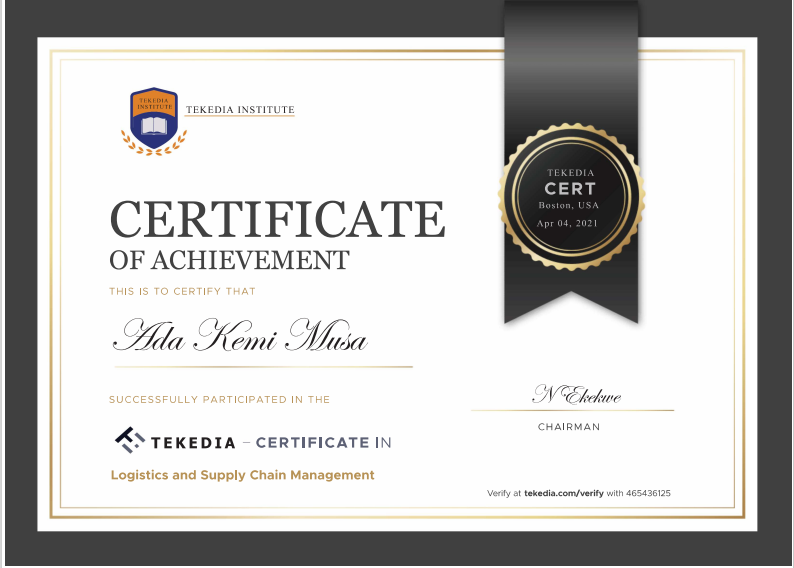
Tekedia Certificate program certificate sample

Your Nigeria’s Missing Power

1

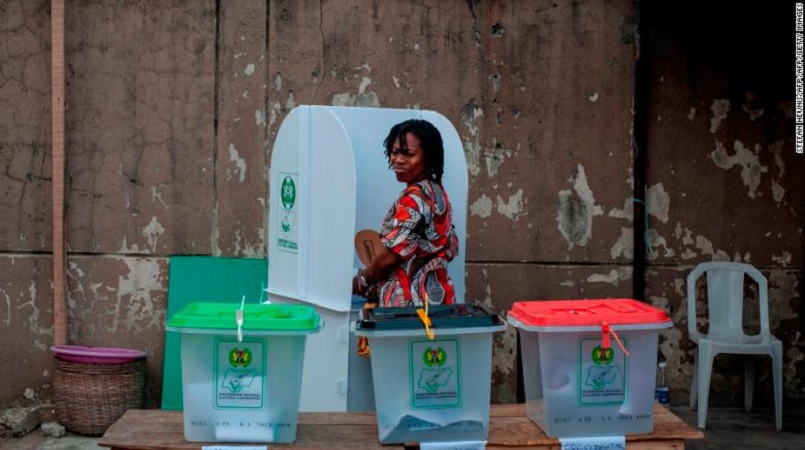
It is not rocket science and data does not lie: if all registered voters who refuse to go and vote in Nigeria are lumped under a political party, Good People Party (GPP), all candidates of GPP would have won all the presidential elections since 1999. Yes, the power remains with the citizens despite the rigging: GPP would have won over PDP, APC, or whatever  party incarnation. The politicians know this, and do everything to ensure you do not vote, because if you do not vote, the party faithfuls will anoint one of their own.

The number of registered voters for Lagos and Kano States were 6.5 million and 5.4 million respectively for the 2019 presidential election. Out of those, about 1.1 million  voted in Lagos while Kano had 1.9 million.  Simply, 5.4 million voters in Lagos sat out. Those votes belonged to the GPP, and if the GPP had received them, it would have won Lagos, over APC!

Note that having only 6.4 million people as registered voters (with only 1.1 million voting)  is also a concern as Lagos has at least 10 million people who are eligible to vote. The implication is this: about 10% of eligible voters actually vote in the nation’s largest city.

Why am I making this post? I am responding to those who think Nigeria’s problems are so unique that you must be living in Nigeria to understand them. America wanted change and they went out to vote. Yes, as I noted here, I voted against Trump because I hated his education policy which failed to understand one thing: in a class of 40 students, 4 black and 4 latinos might have needed affirmative action to get in, but on graduation day, 8 of them possibly would not have ended the bottom of the class.

So, that they needed help to get in was due to the system not being fair to them. If that is the case, you cannot abolish affirmative action without fixing first the systemic discrimination the black and latino kids face in America. It has nothing to do with lack of merits: it is simply this: even the “merit system” is tainted.

In Nigeria, we want change, and yet no one goes out to vote. That is why the “minority” of party faithfuls who always show up will continue to decide the destiny of all.

Your vote remains the missing power Nigeria needs to be transformed. Learn to use that power if you want a different nation.

How African Economies can Achieve higher incomes under the AfCFTA

0

One of the objectives of the African Continental Free Trade Agreement (AfCFTA) is to “create a single market, deepening the economic integration of the continent” There is empirical evidence that the attainment of economic integration among a group of nations brings about a closing up of income gaps among the poor and richer nations participating in such an arrangement.

The majority of countries in Africa are classified as low-income countries and few in the middle-income group, hence, the successful implementation of the  AfCFTA could lead to convergence to higher national incomes among the participating countries. The success of the European Economic Community in attaining a convergence at a higher GDP per capita among its country members is evidence that AfCFTA could replicate similar success.

An Example of Economic integration and Income Convergence: The European Economic Community

An example of income convergence in a regional common market is the European Economic community created in 1957. The goal of attaining economic and social cohesion in the EEC is contained in Article 130a of the Single European Act of 1986 which reads “To promote its overall harmonious development the community shall develop and pursue its actions leading to the strengthening of its economic cohesion”. A Study by Cinzia Alcidi- Director Center for European Policy Studies- reveals that there has been commendable income convergence at higher income per capita among the EEC member countries. For instance, member countries from Central Eastern Europe such as Romania, Estonia, Latvia, and Slovakia witnessed income growths of up to 30% and 40%  in 2000 (compared to their pre membership incomes). However, countries along Southern Europe such as Greece, Spain, Cyprus, and Portugal witnessed a decrease in income growth rates. While the North-western member states also grew in incomes. Overall, data reveals good economic cohesion in the EEC.

How African Nations can achieve convergence at higher income under the AfCFTA

While the  creation of a Common market in Africa presents     an opportunity for economic integration which could help the poorer countries in Africa to catch up  with the richer countries, certain structures must be built to make this objective a reality:

Reducing the barrier to the movement of goods and people

Although the AfCFTA seeks to eliminate tariffs on over 90% of traded goods with pending negotiations for trade in services, tariffs are not the only barrier to trade. There are several non-tariff barriers that include the high cost of transport of goods across Africa. Although these costs are sometimes lower for intra-regional trade where road transport is an option, they are higher for inter-regional trade. Also, the fact that not all African countries provide visa-free or visa-on-arrival access to travellers means that the movement of people is restricted. There is however a pending Protocol on the Free Movement of People by the African Union.

 Enhanced Access to Capital

Capital is needed to build the economy, by providing physical and social infrastructure which will support the creation of new businesses as well as sustaining economic activities. The African Union should be committed to providing financial support for poorer countries to develop critical infrastructure in the areas of transport and power. The presence of infrastructure will improve the chances of attaining economic integration in the continent and consequently stimulating growth among all countries.

Reduced protectionism

Protectionism may hurt the attainment of economic integration in the continent.

While protectionism may protect infant firms and preserve jobs, it prevents firms from attaining efficiencies made available only through competition. Protectionism can also encourage retaliation from other countries which could lead to economic loss to the countries involved. As such governments should support the growth of firms by providing grants and access to technical support which will enable their growth in the market.