DD
MM
YYYY

PAGES

DD
MM
YYYY

spot_img

PAGES

Home Blog Page 5820

The Strength and Beauty in Nigeria’s Diversity

0

The Igbo culture believes that the home of a great man, a dike, is filled with people of all sorts. In such a home, you can find the hardworking, the lazy, church-goers, traditionalists, thieves, businessmen, the sane and the insane… All kinds of individuals – the good, the bad, the ugly – are found there. It is expected that such a home should be a complete one by being diverse. It needs no outsiders to solve its internal issues because all the help it needs is obtained from within. Outsiders also stay out of their way because finding its trouble means seeking the troubles of the “bad” members of the family. Such a home has everything it wanted. So long as the members don’t destroy themselves from inside, that home grows to become great. Look around you, think of the big names you hear today, trace the family history and you will find out they are connected to the house of a great man, a dike.

A country that is self-sufficient grows and expands the same way a self-sufficient home does. In such a country, the citizens, like the members of the great man’s home, have all it takes to move the country to greater heights. People of different characters, talents, skills, knowledge, and aspirations are found there. In addition to those, several cultures, ethnicities, religions, and languages exist in such a country. You can also speak of several climates, resources, and topographies as the features of the country. This means that whatever the country wants, it can obtain it from within. Even if it needs external help, it will not be as much as that of those that lack diversity. This is the beauty of diversity. That is the strength and beauty of Nigeria.

Many have heard “our strength lies in our diversity” but do not really understand every bit and piece of it. When Nigerians talk of diversity in the country, they only envision its multicultural, multiethnic, multi-tribal, multi-religious, and multilingual nature. These aspects make Nigeria an exotic place to visit and live in but they are not the only things diverse in Nigeria. Many people do not realise how exciting it is to discover new cultures – foods, songs, dances, languages, dressing, etc. – within the country. Nigeria would have been boring if all the citizens have the same religion, language, and culture. But here we are, enjoying what people pay dearly to see but failing to value it.

Anyway, this essay isn’t centred on the above-mentioned features of Nigeria; they have been overanalyzed that everyone must have known about them by now. This piece will consider how diversity in the country’s mineral resources, climate, and citizens’ occupation benefits the country and its citizens.

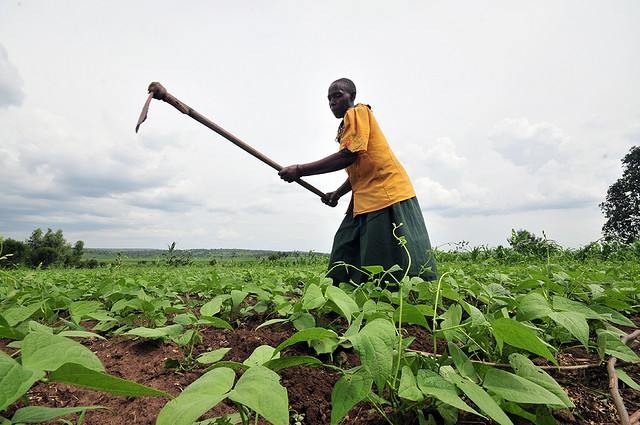
Some weeks ago, the prices of food items suddenly went up in the southern part of Nigeria because farmers in the northern parts stopped moving their food crops south. It took that act to make many Nigerians realise the parts of the country that provide the majority of the staple foods in the country. The differences in soil textures and structures, landmass, mineral resources, occupational preferences, and climates have made different areas of the country produce different types of food. This means that if more interest is given to farming, Nigeria will have enough food for its citizens, and they will come in different varieties.

Speaking of occupation, have you noticed that different regions of the country specialise in different types of occupations and businesses? For instance, you can go to Aba for your clothes and shoes, Ibadan for further education, Onitsha for trading, and Benue for yam farming. Furthermore, within a town, people from different regions partake in different specialised occupations. For instance, Suya business belongs to the north, motor spare parts shops belong to the Igbos, and ‘agbo’ selling is for the Yorubas. This does not mean other tribes cannot handle these jobs but it feels out of place because there is an accepted code on the jobs for different persons based on tribe.

Furthermore, Nigeria is blessed with many mineral resources because different states have their own resources. These resources make Nigeria look like a big supermarket with varieties of wares displayed on its shelves. Supermarkets like this attract lots of customers, just the way Nigeria should attract a lot of local and foreign investments.

It is unfortunate that many Nigerians fail to see the beauty in the composition of the country. Hate for people of different cultures, religions, and languages has become the greatest threat to the country. Cases of tribal clashes, religious killings, and segregation are witnessed daily in the country because hate for diversity is preached daily. Well, it’s high time Nigerians understand what it truly means to find strength and beauty in diversity.

Tekedia Live On Exponential Technologies, Singularity and Opportunities

0

We have posted the schedule for Tekedia Institute Mini-MBA Live for the week of April 5. It begins  with the team from Transdisciplinary Agora for Future Discussions Inc. ( TAFFD’s ), Georgia, United States on Tuesday. Four eminent thought-leaders will discuss exponential technologies, singularity and opportunities, over two hours.

Date: Tue, April 6

Time: 7 – 9 pm WAT

Broad topic: Exponential Technologies, Singularity and Opportunities

  • – Exponential Technologies & Business Opportunities in the Age of Singularity – Edward Hudgins, PH.D
  • – Singularities, Transhumanism, and Entrepreneurship – Gennady Stolyarov II
  • -Singularity, Exponential Growth and Technology – Chogwu Abdul, PhD
  • – Futurism, Malleability, and Category King Companies – Brent Ellman
  • Zoom link is in the Board.

Tekedia Mini-MBA Week 9: Law, Contracting & Globalization

0

Tekedia Mini-MBA Week 9: Law, Contracting & Globalization

  • -Business & Commercial Law – Chukwuemeka Mbah (LLB, BL, LLM) Law, Manager, Sherwin Williams
  • -Contracting, Negotiation and IP – Jeff Chineme Maduka (LLB, BL, LLM), Snr Legal Manager, American Tower
  • -Tax Law, Policy and Dispute Resolution – Jerome Okoro PhD, Partner, Tetralex
  • -Supply Chain Management, Global Partnership & Contracting – Adebayo Adeleke, ex-Chief of Contracting and Deputy Chief, Business Operations Division, US Army
  • -Business Relationship Management & Negotiation Skills – Charles Okeibunor, CEO IRMP

The Perils When Banks Become Vendors of Airtime and Data Plans

4

A big business war broke out in Nigeria a few days ago: the nation’s largest telecom operator, and legions of its banks, were fighting for percentages. You could be mistaken to think that there was one big infrastructure project going on. But hello, the percentages are on commissions for selling airtime and data plans to enable  people make calls, do Facebook, do emails, and the usual online things. Sure, nothing bad about that – it is free enterprise. 

But look deeper, was it really an important fight for the Nigerian government to mediate? It seems it was, since the central bank governor and the minister of digital economy intervened to help manage the fee paralysis! What a nation!

After 48 hours of disconnecting MTN customers from banking channels including the Unstructured Supplementary Service Data and banking apps, commercial banks on Sunday have reconnected MTN customers to banking channels, The PUNCH can confirm.

Our correspondent gathered that the development followed the intervention of the Minister of Communications and Digital Economy, Isa Pantami; and the Governor of the Central Bank of Nigeria, Godwin Emefiele.

But we are back to the status quo – and over time, that would be the normal state. MTN had delivered a great Easter gift to amalgam of fintech startups when it brought Carbon, Flutterwave, OPay, etc into the fold. But that has been largely frozen as we are back to the beginning: banks have restored MTN’s channels for purchase of airtime and data plans.

Service resumed Sunday afternoon after MTN agreed to revert to “status quo” at the request of the Minister of Communications, the Nigerian Communications Commission and the Central Bank of Nigeria while a permanent solution is being worked out, PREMIUM TIMES learnt.

“The CBN Governor’s intervention is in line with our core values. We acceded to his request and that of our Minister. We will continue to live our values that ‘everyone deserves the benefits of a modern connected life’,” Carl Toriola, MTN Nigeria chief executive, said Sunday.

It is a slam dunk because any day MTN channels remain disconnected, the digits will look bad in their bank accounts! Pure and simple, you will call it an own-goal. MTN failed to understand that Nigeria is now entwined in our banking system, as many keep money in digits, nothing like cash anymore!

In 2010, MTN had a big chance to cause this change. But today, Nigerians keep their money in the banks. So, if the banks have the money, you need to find ways to work with them if you want people to pay you.

As we digitize our payment system with money moving digital, the godzillas of the future would be payment systems and banks, because if you do not play along, even your customers will not notice you! MTN’s challenge is not the percentage of the commission but the fact that banks are selling airtime, and data plans which typically should be left for other minor sectors of the economy! I mean what do you expect those small SMEs to do if banks sell software, school portals, airtime, training bundles, etc?

They should support those elements but they are not expected to be compensated. What MTN is paying them should be paid to smaller companies in the economy. I do not expect my bank (Bank of America) to get commissions anytime I pay AT&T for my data. AT&T works with integrators and small vendors, expanding opportunities in the economy.

I tell you one thing: a community where one man extracts all the values will struggle one day because a tree does not make a forest. Banks should focus on banking and leave these other works for other players in Nigeria’s economy! That is what I expect the minister and the apex bank governor to intervene on, and not help banks and MTN to fix commissions on airtime and data payments.

Bank Disconnection – The MTN Easter Present To Nigerian Fintech Companies! [Updated]

Honing and Going Pythagorean in Africa’s Agriculture Industry

0

As the world continues finding the right strategies and techniques for producing what people need to eat and use to produce products, experts on several occasions have hinted that numbers are crucial in understanding what to produce, how to produce and where the produce is highly needed. Without strategic collection and application of numbers, experts believe that the number of people who are likely to die due to hunger would be more than the expected figures in the next two decades and beyond. 

At its recent Quarterly Webinar Series, the Farmkonnect Institute for Data and Agribusiness (FIDAS) walked farmers, investors and other stakeholders through the nitty-gritty of collecting structured, unstructured and semi-structured data for farming practices in Africa. Our analyst, who attended the Webinar, notes that with the QWS, FIDAS Africa is set to feed farmers and other stakeholders in Africa’s agriculture industry relevant and related data including data-driven publications towards smart decisions making and data conscious people as employees. 

Our analyst adds that the Webinar Series had Professor Ndubuisi Ekekwe as the keynote speaker. Professor Ekekwe, who created Zenvus that helps farmers to understand happenings on their farms and use the data to make smart decisions in the context of planting and crop management, stressed the place of numbers in modern day farming practice. 

The Video of the Webinar

Data becomes the major element to build a system of food security and farmers need to understand what the market and consumers want before going into production. He further reinforced the importance of data in agriculture and mentioned that “if data in the form of numbers are available, then, it will be easier for farmers to make meaningful decisions. 

While reinforcing the specific place of numbers, Professor Ekekwe noted that Pythagoras, through his invented theorem, has actually made us understand that numbers are essential in making crucial decisions. Therefore, small, medium and large-scale farmers in Africa need to develop interest in data collection, analysis and application towards better understanding of the squares in the industry; production, harvesting, marketing and transportation, our analyst reports.

In his presentation, Mr Adeiza Sulaiman, the Chief Executive Officer 10analytics, pointed out that big data will drive technological revolution in the agricultural sector. According to him, the main concern remains a wide gap between supply and demand of the data, which requires urgent intervention from stakeholders.