I ended up writing this article from an experience I had with organising myself for authoring work, and for promotion on LinkedIn. I produce content for Tekedia Institute periodically, and this content may result in a LinkedIn post. If so, it is generally also pushed by Prof Ndubuisi Ekekwe.
Should I need to later introduce a piece of content individually to a specific person, I generally have three ways – I can reference my own LinkedIn post that has the article embedded, I can reference Prof’s ‘push’ of the article, or I can simply reference the article on Tekedia Institute completely bypassing LinkedIn. Circumstances where I want to draw my content to someone’s attention vary, and it’s always useful to have the three slightly different tools in the toolbox.
Now the great thing about Prof. is that he is a really prolific content producer, but when a LinkedIn visitor needs to browse his ‘back catalogue’ after something specific, the sheer volume of it can be a problem!
There is a part of memory in a device I call the ‘TSR block’. That’s a throw back to years ago when some smaller programs were TSR’s (Temporary Stay Resident) on ‘x86’ Computers. But anything that is storing a temporary status, cache, such as temporary cookies, or saved drafts of Office Programs such as Word, or the record of your live browsing history so you can back up a browser, a lot of this stays in the ‘TSR block’. How memory is used is different depending on architecture, and new ways of manipulating and leveraging memory is being discovered all the time, so my phrase ‘TSR block’ is more conceptual than technical. When this fills up, an app can freeze, a browser can freeze, or sometimes it can even cause your device to restart.
So there I am… scrolling and scrolling through tons of Profs content to once and for all document his pushes of my articles… and it’s getting slower and slower. So I start thinking to myself, ‘well, this is going to take some time.. Is there any way I can get another ‘return’ out of my effort?’
So what I started doing is looking at Profs. articles to try to get a ‘data driven’ sense of what ‘sells’ and what doesn’t. What can I learn from it?
It’s dangerous to compare data from different LinkedIn users. Members have different objectives for their LinkedIn networks and they build them differently. Some indiscriminately value all contacts equally.. some want to build networks with the intention of creating impact with decision makers or recruiters within clearly defined industries or segments…. others are more focused on ‘ripple effect’ and want to maximise downstream network impact by prioritizing connections with close to maxed out members who will soon be rapidly attracting ‘followers’.
Prof’s ‘back catalogue’ is a great study target because of its size. Drawing conclusions from a smaller data pool could be misleading and the study being confined to a single source of content, shields the study from data incompatibility caused by selecting multiple members who have built networks in different ways.
The first thing Tekedians should know is Prof generally authors posts in three distinct formats. Those are: 1. A post that references his own article on Tekedia Institute. 2. A post that references third party content outside Tekedia Institute or references no content at all. 3. An post that references somebody else’s article on Tekedia Institute – usually Faculty, Fellow/Alum, Co-learner (those active in a current live program of the Institute) or Staff Writer. These are titles that have been associated with those with a profile in the Tekedia Community.
Some Observations:
The first thing is that in general, the most successful articles on LinkedIn (on reaction volume) were the ones where Prof. involved no other person from the Tekedia Community besides himself.
Though on LinkedIn various self proclaimed ‘experts’ ‘gurus’ and addicts have claimed that a comment is worth 50x a reaction. On average, a Tekedia Community article ‘pushed’ by Prof to LinkedIn achieves a much higher engagement-to-reaction ratio than his own content.
This may be because Tekedia Community comprise a significant component of Profs network and may be reluctant to offer alternative perspective to that of the Lead Faculty, though anybody from experience will bear witness that Prof welcomes all debate as long as the approach is civil.
As an aside: I recently made a response to a post on LinkedIn sharing an article claiming Finland to be the ‘happiest country’ in Europe. My opening comment drew attention to the fact that Finland currently has the tenth highest suicide rate per capita from 44 countries considered to be in Europe. ‘Cause of Death’ is hard data because it needs to be stood over by a specialist physician called a coroner/mortician. Happiness of a civilian population however is fairly subjective… how is the data obtained? If it involves street surveys, then those out and about, whether commuting to work, shopping, or at entertainment, social or hospitality venues as segments of the population have best reason to agree they are ‘happy’. Depressed or suicidal individuals are more likely to be insular, recluse or participating in some form of outpatient or residential care.
If the consultation is conducted online, the divide is even more stark with the way the algorithms in online mechanisms like Youtube and various social media work. Certain segments of the online community are disappearing down increasingly obscure ‘rabbit holes’ of their own making, that became increasingly more detached in an ever more specific niche interest, that began being defined by viewing choices they made several years earlier. While the consultation may be open access in principle.. it is in its own lane preaching to the converted.
I didn’t want to get into all this for two reasons, one because I didn’t want to appear too adversarial, and secondly, because I wanted to pivot from the dangers of subjectively acquired data, to even more damaging ones, such as deliberate misuse. To illustrate the point, I referred to two posts which had been doing the rounds.. one was about the (pending) retirement of Angela Merkel, the other about the appointment of Ngozi Okonjo-Iweala as WTO Director. The problem with the Merkel post is it claimed she had retired already, when in fact she has merely announced she would not be seeking a further term of office. She came into office on 22 November 2005. The German electoral system goes to great lengths to ensure the country always has an active Chancellor, and with the exception of unforeseen death, a sitting Chancellor remains in power until a new one is sworn in and replaced. Technically, there isn’t even such thing as ‘impeachment’. Instead, a process needs to be put in train where the ‘Bundestag’ votes an alternative Chancellor into office, who then seamlessly replaces the sitting Chancellor. This process is called a ‘Constructive vote of no confidence’. Assuming all goes to plan, Angela Merkel will hand over to her successor on 26 September this year, being slightly short of 16 years in office. While the misleading article claiming this to be 18 years could merely be considered ‘oversight’, what was completely unforgiveable was the post also perpetuated the lie of office cessation with footage. It provided media of supposed ‘farewell applause’ which was in fact the Chancellor in a completely unrelated context.
The transgression on Ngozi Okonjo-Iweala was quite similar, where a Nigerian content author posted a video of her supposedly dancing to celebrate her new appointment. In fact the content was a clip from a TEDx talk the WTO head had done in 2014.
My comment rounded up with a signpost to the dangers of data misuse in the future with the advent and successive maturing of ‘deep fake’ technologies. My comment was one of only five responses, the rest all being bland twitter-like one liners. In a few minutes my response picked up five reactions – it began to outpace the main post! I was confident that by morning it would have developed a sub-thread, which is the ‘holy grail’ of content support, and is a goldmine to the original post author in terms of reach and impact. I logged out.
When I logged in the next day, however, the post author had deleted it!
Often the problem with social and other online engagement media is not always that the format is broken but the tool is either being misused, or not used to best effect. We are quickly evolving to become disparate online sub-communities with a destructive bipolar approach to interaction. Only ‘sheeplike’ effortless agreement that offer no departure or additional insights are accepted, else the bringer of anything else gets labelled as a ‘hater’. Peoples content is sometimes managed in such a way to ‘talk at’ rather than ‘talk to’ and stifling valuable engagement. ‘Old Skool’ ‘Debating Society’ skills are desperately in need where conflicting perspectives can be shared civilly. This is also a basic pillar of the type of brainstorming that has led to the discovery of many risk management assets.
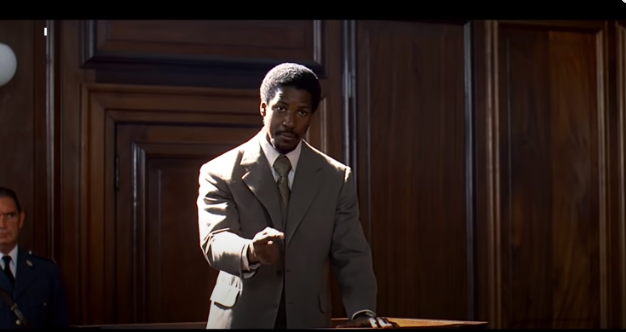
I see a parallel here in the 1987 film ‘Cry Freedom’ , based on true events in apartheid South Africa… In a court scene with a group of anti-apartheid activists on trial, State Procecutor (Ian Richardson) aims to paint opposition to an ideology as ‘violent’. Rounding upon Steve Biko (Denzel Washington) the prosecutor says: … ‘Isn’t that (confrontation) a demand for violence?’ to which Biko replies:
‘You and I are now in confrontation, but I see no violence’.
Findings –
I went back through all of his posts over a six month period, looking at the type of posts they were and the traction that they were receiving in different ways. The first thing to acknowledge is the size of the network, as this creates a limit on reach, so activity needs to be viewed in context. Prof has 87,706 followers.
The most popular post by far was a personal one where Prof. shared a picture of his wife Ifeoma, and a story of how 25 December is a double celebration in Ovim – Christmas and Ifeoma’s birthday. This really resonated with me because my late father was born on Christmas Day. So at a personal level, I get that whole situation of trying to acknowledge the special day of someone really close to you, on a day of huge importance to the wider community for different reasons. This achieved 5514 reactions, but moreover, encouraged 706 comments, so about 13% of reaction rate, which is excellent. It dwarfed the impact of any other posts over the six month period, the next closest being ‘Launching a digital bank in Texas’ achieving 1247 reactions.
The least impactful post for the period was about different types of ‘crowd funding’ which only drew 28 reactions which is miniscule as a return from a following of 87,706.
This is probably a good point for a story departure…
One of my early childhood memories was being sat with siblings and cousins in front of a monochrome TV on festive occasions. There was only one TV channel from the national provider, and at such times, they would broadcast loads of movies, mostly old stuff they had shown before, and often musicals.
Parents patted themselves on the back for this. To them, they were giving their children an experience they never had. It was like the modern day equivalent of Elon Musk making a civilian spaceship that does a tour of the galaxy, you are a VIP voyager, and you have been assigned the late Stephen Hawking as your personal tour guide explaining all the cosmic phenomena along the way!
I just recall being really bored having to watch re-runs, especially musicals. I particularly recall Julie Andrews musicals. Coincidentally, many Nigerians I have met between the ages of about thirty-five and retirement have similar childhood memories, if not of a Julie Andrews musical specifically, then something else.
One of the songs in the musical is entitled : ‘A spoon full of sugar makes the medicine go down’.

But there is a lesson here.. When we look at Profs. best performing and worst performing posts, the key to the success of best performer was the humanity aspect. As a festive celebration post, it would have that anyway, but the unique perspective involving his wife Ifeoma nailed it.
For Prof and Tekedia, traction is more homogenized and any type of traction is useful. This is not necessarily true for those looking for career movement or looking to promote products or services, particularly B2B or C2B.
When we look at the ‘crowdfunding’ post, I find myself compelled to mention a video session of a recently arrived Tekedia Faculty for the most recently completed edition of Tekedia Mini MBA – Dr. Henry Chan. In his session on E Commerce in China, Dr. Chan emphasised the importance of a successful and efficient Chinese SME business community, and its ability to affordably and rapidly provide a wide array of goods to a required specification and quality. He highlighted this as a key factor that underpinned the success of Jack Ma’s Alibaba.
Recorded Tekedia session of Dr. Henry Chan bringing interesting insights into what emerging markets, Africa, and Nigeria in particular, need to learn from the E Commerce successes in China.
‘crowdfunding’ is a huge tool for potential new ventures in markets with venture capital challenges and for the development of SME businesses. It should be popular with the network of a LinkedIn member with a maxed connection list, and a largely Nigerian additional ‘fan base’ approaching the 100k mark. Twenty eight reactions from a network my size is a good result but for a network this size is a ‘tank’. So why the disconnect?
Was it that Prof on this occasion decided he was sweet enough, so held back on the sugar? One thing his posts never fail to do is provide the medicine – something that can’t be said for many other LinkedIn contributors.
I frequently come across posts where the author has gone to lengths to achieve a picture of themselves which is physically appealing and/or stately. Then they simply say ‘Happy Birthday to me’… and for a fraction of a second I am thinking … Err.. is that it? before I have moved on to something more informative and have completely forgotten it. Unmemorable with a capital U.
On LinkedIn, a persons birthday would serve them better if they could see it as an individual milestone in a very different way. Try to see it the same way the calendar year end is a general milestone and a company financial year is a corporate one. There is a huge opportunity here to reflect on personal career or business achievements in the last year, coupled with aspirations and vision for the future. Many of us had a poor year due to the pandemic, so some may have to place more emphasis on the ‘looking forward’. Posting a photo without this is an opportunity squandered.
If the photo is sufficiently appealing, and the network is large, it may get a lot of traction and the post owner may feel they nailed it…
Not much point in having comprehensively nailed it, if the only thing that stuck to the wall of influence, is the nail!
The sugar is all good, but don’t forget the medicine!
10 honourable mentions and highlights in Profs six month back catalogue (reaction level followed in bold):
Launching a digital bank in Texas. https://www.linkedin.com/posts/ndubuisi-ekekwe-36068210_it-is-a-big-one-we-are-launching-a-digital-activity-6779794367780593664-KwjM 1247
Forbes Africa Business List. https://www.linkedin.com/posts/ndubuisi-ekekwe-36068210_the-velocity-of-wealth-in-africa-is-very-activity-6758946663408181248-cv2d 1152
Storming of US Capitol Building. https://www.linkedin.com/posts/ndubuisi-ekekwe-36068210_whenever-you-see-the-word-civilized-do-activity-6752745896791863296-Pvp3 1057
Vetify. https://www.linkedin.com/posts/ndubuisi-ekekwe-36068210_vetifly-fly-over-traffic-bad-roads-etc-activity-6752281210279522305-7jdq 883
Respect First Bank. https://www.linkedin.com/posts/ndubuisi-ekekwe-36068210_please-respect-this-institution-first-bank-activity-6753412543097692160-NGMF 807
Dormant/Unclaimed bank account policy. https://www.linkedin.com/posts/ndubuisi-ekekwe-36068210_the-nigerias-dormant-bank-account-and-unclaimed-activity-6752642667714265089-hfTp 801
Celebrant in Nigeria collects ‘sprays’ via QR code printed on a placard https://www.linkedin.com/posts/ndubuisi-ekekwe-36068210_this-is-innovation-point-your-phone-on-activity-6777970154685927424-nhfo 773
Soulmate industries. https://www.linkedin.com/posts/ndubuisi-ekekwe-36068210_good-people-africas-largest-indigenous-activity-6753326672285638656-ZUkC 726
Musk/Bezos net-worth comparison. https://www.linkedin.com/posts/ndubuisi-ekekwe-36068210_elon-musk-is-now-the-richest-person-on-the-activity-6753004669355778049-mjLZ 700
By 2030, 80%+ of richest Nigerians will have found success through technology. https://www.linkedin.com/posts/ndubuisi-ekekwe-36068210_by-2030-i-expect-80-of-richest-nigerians-activity-6776962515118161920-9woY 698