DD
MM
YYYY

PAGES

DD
MM
YYYY

spot_img

PAGES

Home Blog Page 584

Amazon Bets on Agentic AI With “Quick Suite” to Revive Enterprise Software Push

0

Amazon is preparing a major leap into the artificial intelligence agent race, a move that could reshape both its standing in enterprise software and its role in the fast-emerging world of AI-driven automation.

The Seattle-based giant is quietly testing Quick Suite, an agentic AI-powered workspace software designed to unify business insights, deep research, and automation into a single platform. Internal documents seen by Business Insider describe it as a tool to help “every business user make better decisions, faster, and act on them swiftly.”

Agentic AI—systems capable not just of generating text but of acting independently to complete tasks—has become the newest frontier in the AI race. Google, Microsoft, OpenAI, Salesforce, and a range of startups are all building platforms around the concept, betting it will become as central to the workplace as cloud computing or mobile apps.

By pushing Quick Suite, Amazon Web Services is signaling that it wants to be among the front-runners. The company has already sent invitations for an internal beta test while giving a private preview to at least 50 companies.

Several testers, including BMW, Intuit, and Koch Industries, have been experimenting with the system. Early feedback has been mixed: companies praised its intuitive setup, simpler design compared to Amazon’s earlier Q Business tool, and its “compelling” deep research feature that can generate reports from both company and external data. They also liked its ability to connect with popular external tools such as Atlassian’s Jira.

But others reported frustrations with networking limitations in virtual cloud environments and complex permission requirements when linking data sources.

Building on Familiar Tools

Quick Suite will merge and expand several AWS products. It brings together QuickSight, Amazon’s data analysis platform, and Q Business, its generative AI chatbot for workplaces. On top of that, it introduces a new product called Quick Flows, which offers pre-built workflows that can be triggered through simple natural language prompts.

The platform also promises the ability to create custom AI agents for team-specific or function-specific needs—agents that can be shared across an organization.

A Second Chance at SaaS

For Amazon, the initiative is more than just another AI experiment. It’s also a fresh chance to finally make headway in software-as-a-service (SaaS), the massive enterprise software market where rivals like Microsoft, Salesforce, and Google dominate.

Despite pioneering cloud infrastructure through AWS, Amazon has struggled to make the same mark with business applications that run on top of it. Q Business was once meant to be its flagship workplace AI product, but now Quick Suite has overtaken it as AWS’s strategic priority.

Amazon is framing Quick Suite as part of a broader wave of AI-enhanced work environments. In its beta invitations, the company pointed to industry projections that over 40% of business users will soon adopt AI-augmented workflows, arguing that AWS is well-positioned to lead the shift.

An Amazon spokesperson confirmed that customers such as Remitly, Nasdaq, and Smartsheet are already using Q Business, while BMW and GoDaddy rely on QuickSight for data-driven decision-making.

“We’re building on this strong response with even more innovation to help customers realize the benefits of agentic AI in the workplace,” the spokesperson said.

Timing and Market Stakes

Amazon had initially targeted a mid-July rollout for Quick Suite but has since delayed the tentative launch to September, according to internal documents. The timeline underscores the company’s urgency to get its offering right before rivals consolidate their positions in the agentic AI market.

The global SaaS market is now measured in the low-to-mid hundreds of billions of dollars annually; reputable market trackers put 2025 SaaS revenue estimates in the $300–$410 billion range and project sustained double-digit CAGR through the decade.

Public cloud spending (IaaS/PaaS/SaaS together) is forecast by industry analysts to reach roughly $700+ billion in 2025, underpinning a large addressable base for cloud-native apps and agentic services.

The enterprise AI market — where agentic tools live — is expanding even faster: multiple research houses put the near-term enterprise AI market at tens of billions today with forecasts into the low hundreds of billions by 2030, reflecting high double-digit CAGRs as firms deploy automation, model hosting, and AI software.

With the enterprise AI race accelerating, Quick Suite could either mark a turning point in AWS’s AI application strategy or risk becoming another missed opportunity in SaaS.

Avride to Launch Robotaxis on Uber in Dallas, Expanding Autonomous Mobility Push

0

Autonomous driving startup Avride said Thursday it is scaling up vehicle testing in Dallas as it prepares to launch robotaxis on Uber’s ride-hailing platform by the end of the year, marking a significant milestone in its partnership with the global mobility giant.

The move comes nearly a year after Avride and Uber announced a broader partnership in October 2024. That deal first saw Avride’s delivery robots deployed on Uber Eats in Austin in November, with the program later expanded to Dallas and Jersey City. Avride will bring both of its flagship products — autonomous vehicles and delivery robots — under the same platform by integrating robotaxis into Uber’s core ride-hailing service.

“Soon, Uber riders will have a new way to move around the city, marking another step toward making autonomous transportation part of everyday life,” said Sarfraz Maredia, Uber’s head of autonomous mobility and delivery.

Hyundai Partnership Underpins Expansion

The Dallas robotaxi fleet will leverage Hyundai Motor’s IONIQ 5 electric vehicle platform, which Avride has integrated with its autonomous driving technology. In March this year, Avride and Hyundai deepened their relationship by signing a deal to jointly develop and operate self-driving vehicles, expanding the startup’s access to cutting-edge EV hardware.

The partnership with Hyundai aligns with Uber’s broader strategy of incorporating multiple autonomous technology providers into its network, allowing riders to access rides through the app without needing to distinguish between human-driven cars and robotaxis.

Avride has also been building partnerships outside of Uber. The startup teamed up with Grubhub to deploy delivery robots across college campuses in the United States, part of a growing trend of autonomous food delivery services on controlled campuses before scaling into more complex urban environments.

The Dallas rollout will put Avride into direct competition with other companies piloting robotaxis, such as Alphabet’s Waymo and General Motors-backed Cruise, both of which have faced regulatory and safety challenges as they attempt to scale up their fleets in U.S. cities. Unlike its rivals, Avride is anchoring its growth on strategic partnerships — Uber for ride-hailing and Grubhub for food delivery — rather than trying to build a standalone consumer-facing brand.

Industry analysts say this strategy could help Avride bypass some of the adoption hurdles faced by competitors. Uber, with its hundreds of millions of global users, provides an instant distribution channel for the technology.

The Financial Implications

For Uber, integrating Avride’s robotaxis marks a strategic return to autonomous mobility without the heavy R&D costs that once burdened its balance sheet. Uber abandoned its own costly self-driving unit in 2020, opting instead to pivot toward a platform model that relies on partners such as Avride, Waymo, and Aurora. This reduces capital expenditure while positioning Uber to capture a share of future autonomous ride revenues.

From Avride’s perspective, access to Uber’s global network could be transformative. Unlike Waymo, which is backed by Alphabet and has poured billions into developing its own service, or Cruise, which is majority-owned by GM and has been hit by mounting losses and regulatory scrutiny, Avride can scale without burning cash on consumer acquisition. Tapping into Uber’s vast rider base gives it immediate market access and the potential for faster unit economics improvement, provided regulatory approval continues to progress.

Financially, robotaxis could reshape profitability for Uber in the long run. Analysts estimate that driver costs account for up to 70% of a traditional ride-hailing fare. Removing or reducing that cost through autonomous fleets could eventually turn Uber’s low-margin ridesharing business into a more profitable model, though large-scale deployment remains years away. For Avride, the model provides a clearer commercialization path, moving beyond pilot programs toward revenue-generating deployment at the city scale.

The move underscores how autonomous vehicle startups are increasingly linking up with ride-hailing and delivery giants to accelerate commercialization. While fully self-driving cars have faced regulatory scrutiny, high costs, and technical setbacks, the partnerships are seen as critical steps toward making autonomous services part of daily life in U.S. cities.

The Avride deal continues its gradual shift away from developing self-driving technology in-house toward being the central marketplace where multiple autonomous providers plug in. The partnership represents a strategic shortcut to scale — one that could help it stand out in an industry where most players are still burning billions with limited commercial return.

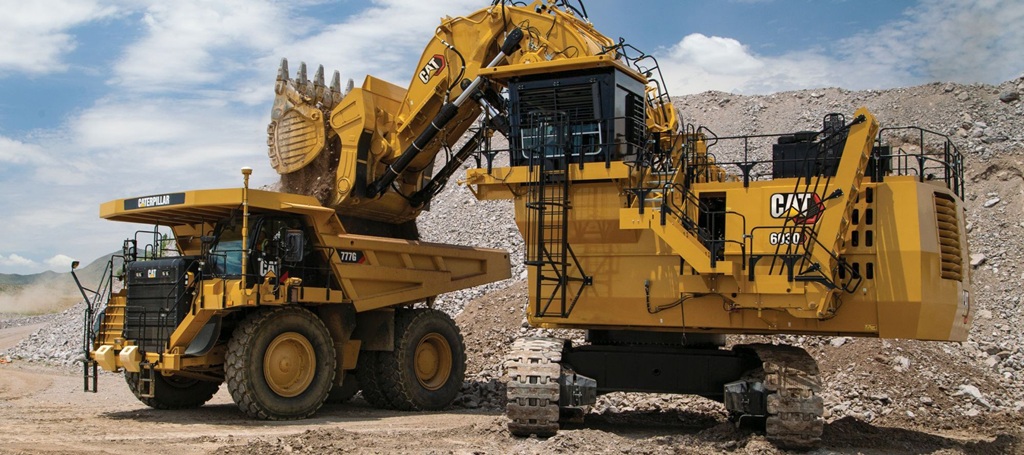
U.S. Slams Norway’s $2tn Sovereign Wealth Fund Over Caterpillar Divestment

0

The Trump administration has sharply criticized Norway’s $2 trillion sovereign wealth fund after it announced plans to sell its stake in U.S. machinery giant Caterpillar, linking the move to the conflict in Gaza.

In an emailed statement Thursday, a State Department spokesperson said Washington was “very troubled” by the decision, describing it as based on “illegitimate claims against Caterpillar and the Israeli government.” The spokesperson added that the U.S. is “engaging directly with the Norwegian government on this matter,” signaling Washington’s discomfort with what it views as the politicization of corporate investments.

Norges Bank Investment Management (NBIM), which oversees the wealth fund on behalf of the Norwegian population, said last week it would cut its exposure to Caterpillar and five Israeli banks. The fund cited “unacceptable risk that the companies contribute to serious violations of the rights of individuals in situations of war and conflict.”

Specifically, NBIM pointed to Caterpillar’s bulldozers, which it said were being used by Israeli authorities in “widespread unlawful destruction of Palestinian property.” At the end of last year, NBIM held a 1.2% stake in the New York-listed company.

The decision follows earlier announcements by the fund to offload Israeli holdings not included in its equity benchmark index and to terminate contracts with Israeli asset managers. By June, the fund held 61 Israeli equities; today, it retains just six.

U.S. Political Pushback

The divestment has stirred anger among U.S. lawmakers. Republican Senator Lindsey Graham, a close Trump ally, denounced the move in a series of posts on X, calling it “shortsighted” and “beyond offensive.”

“To Norway’s sovereign wealth fund… Your decision to punish Caterpillar, an American company, because Israel uses their product is beyond offensive,” Graham wrote.

He went further, suggesting retaliation: “Maybe it’s time to put tariffs on countries who refuse to do business with great American companies. Or maybe we shouldn’t give visas to individuals who run organizations that attempt to punish American companies for geopolitical differences.”

The State Department’s statement, while more measured, reflects similar unease about the precedent such divestments could set for U.S. companies tied to controversial regions.

Norwegian Finance Minister Jens Stoltenberg pushed back against the criticism, stressing that the government does not influence the fund’s investment decisions.

“The government is not involved in assessing individual companies,” Stoltenberg said Thursday. “The decision to exclude companies is an independent decision made by the Executive Board of Norges Bank, in accordance with the established framework. It is not a political decision.”

Stoltenberg noted that he had been part of a Norwegian delegation in Washington earlier in the week for talks with Trump’s economic adviser, Kevin Hassett, but emphasized that the pension fund “was not a topic of discussion.” Instead, conversations focused on trade, tariffs, sanctions against Russia, and support for Ukraine.

NBIM’s deputy CEO Trond Grande also defended the divestment strategy in a CNBC interview, saying the decision reflected heightened scrutiny in Norway over the fund’s Israeli holdings as the conflict in the West Bank escalated.

“Due to the conflict and due to opinion here in Norway, I should say there’s a lot of scrutiny around specifically our holdings in Israeli companies,” Grande said. “What we’re doing now is really not down-weighing… but we are trying to simplify our portfolio in Israeli equities, because we have ethical guidelines.”

Norway’s sovereign wealth fund — the world’s largest, valued at about 20 trillion kroner ($1.98 trillion) — is built on the country’s oil and gas revenues and is widely regarded as a global benchmark for ethical investing. Its independent ethics council has long taken positions that place human rights and conflict risks at the center of its portfolio decisions, sometimes clashing with governments and corporations.

Over many years, the fund has excluded companies for producing certain weapons, and for contributing to serious human-rights violations or abuses. NBIM currently notes that a set of companies is excluded on product grounds, such as weapons, tobacco, cannabis, and coal.

NBIM is reinforcing that stance by distancing itself from Caterpillar and Israeli financial institutions. But the move has now thrust it into a geopolitical crossfire between U.S. officials determined to defend an American industrial icon and a European institution that insists its mandate is governed by ethical rules, not political favoritism.

Toncoin Aims for $4, SUI Stays at $3.5, While BlockDAG’s $4.4M Whale Frenzy Drives Presale Past $396M

0

The market is alive with speculation as Toncoin (TON) Price Prediction and the SUI Market Outlook dominate analysis, yet BlockDAG has stolen the spotlight. Toncoin trades around $3.13–$3.16, testing support near $2.6, while SUI holds steady at $3.5, teasing a breakout to $4. Both continue to draw traders and institutions, keeping them on the list of top crypto assets.

But while TON and SUI are holding levels, BlockDAG (BDAG) presale has erupted into a battleground where whales are setting the tone. Multi-million-dollar wallets have toppled the leaderboard and fueled one of the fastest-selling presales of 2025. This isn’t accumulation, it’s a frenzy, and the rush is only intensifying.

BlockDAG Whale Battles Ignite the Presale Rush

Whales are driving BlockDAG’s momentum, and the figures tell the story. Two major wallets, with $4.4M and $4.3M entries, stormed the leaderboard, knocking off the previous $3.8M leader. Each new move from these giants sets off a chain reaction, pulling in smaller buyers desperate to secure their share before the next batch closes.

Moreover, BlockDAG is ready to host a major Deployment Event in Singapore. After withdrawing from Token2049 due to local restrictions on presale promotions, the team opted to launch its own flagship event. Additionally, BlockDAG has introduced a new special presale price of $0.0013 per BDAG until October 1. This rate will remain in effect for the final 30 days leading up to deployment. With more than $396M raised and over 26B coins sold, this presale has become one of 2025’s biggest stories.

Beyond numbers, BlockDAG boasts more than 3M miners using the X1 app and thousands of X10 devices already distributed worldwide. Yet, the narrative is dominated by the whale battles, with batches selling out faster and the entry window closing by the day. The message is clear: whales have chosen their winner, and the rest of the market is scrambling to catch up.

Toncoin (TON) Price Prediction: Consolidation Before Recovery

The Toncoin (TON) Price Prediction has traders watching closely as TON holds near $3.13–$3.16. Analysts expect a possible dip to the $2.48–$2.61 support band before a rebound takes shape. If that floor holds, TON could climb toward $3.50–$4.50, with near-term highs projected at $4.16.

Looking further out, forecasts show a wide range. Conservative calls place TON between $5 and $7 by late 2025, while bullish outlooks stretch to $19–$20 within five years. While risks remain on the downside, TON’s liquidity and whale monitoring make it hard to ignore. For now, TON balances risk with opportunity, keeping it in the conversation as one of the top crypto assets with long-term appeal.

SUI Market Outlook: Neutral Now, Bullish Later

The SUI Market Outlook shows a token under watch. Trading around $3.45–$3.49, SUI is testing resistance at $3.50, a level that analysts see as key. A breakout could clear the path to $4.00, while a failure may drag it back toward $3.20.

Institutional presence is adding weight. Grayscale recently introduced trusts that include SUI, while Wells Fargo assigned it an “Equal-Weight” rating. On the ecosystem side, a partnership with Alibaba Cloud to build AI tools for Move developers shows real progress.

Mid-term projections are ambitious, with targets of $6 to $10 if conditions improve. Even with a neutral short-term stance, the setup suggests SUI could strengthen in the next cycle.

The Bottom Line

Toncoin (TON) Price Prediction highlights consolidation near $3.1 with recovery targets up to $4, while the SUI Market Outlook shows potential beyond $3.5 with institutional recognition and ecosystem growth. Both are recognized as top crypto assets, but neither carries the heat of BlockDAG right now.

With $4.4M and $4.3M whale buys rewriting the leaderboard, more than $396M raised, and batch 30 priced originally at $0.03, now cut to $0.0013 ahead of a $0.05 launch, BlockDAG has become the true market spectacle. Add in over 3M miners, and it’s no wonder the presale is being called the hottest race of 2025. The whales have made their move, and the clock is ticking for everyone else to follow.

Presale: https://purchase.blockdag.network

Website: https://blockdag.network

Telegram: https://t.me/blockDAGnetworkOfficial

Discord: https://discord.gg/Q7BxghMVyu


JPMorgan Sees Gold’s Record Run Stretching to $5,000 an Ounce as Trump–Fed Feud deepens

0
JP Morgan Chase puts contents through its CEO account, it goes viral. But the same content via JPMC account, no one cares (WSJ)

Gold’s meteoric rally has caught the attention of the world’s biggest banks, with JPMorgan and Goldman Sachs now predicting the bull run is far from over. The metal smashed through $3,600 an ounce on Wednesday, a record high, capping a 36% surge this year—more than triple the S&P 500’s 10% return over the same period.

JPMorgan strategists say the forces propelling the rally—market unease, political volatility, and a growing lack of faith in U.S. institutions—show no signs of fading. Goldman Sachs goes further, floating a bold scenario in which gold could hit $5,000 an ounce, about 40% above current levels.

At the heart of these bullish calls is a breakdown of trust in U.S. policy. Analysts warn that President Donald Trump’s unrelenting attacks on the Federal Reserve are sowing doubts about the independence of America’s central bank, long seen as the anchor of global financial stability.

Goldman argues that if Trump’s interference revives the once-dormant “sell America” trade—where investors dump U.S. Treasurys—the shift could spark a massive migration into gold. The firm estimates that if even 1% of the privately owned Treasury market were reallocated into bullion, it would be enough to propel the metal to $5,000.

“Gold remains our highest-conviction long recommendation in the commodities space,” said Goldman analyst Samantha Dart.

The warning lands at a delicate moment. Trump has demanded immediate and aggressive rate cuts, berating Fed Chair Jerome Powell for his handling of monetary policy. For investors, the spectacle has raised fears that the central bank’s ability to act independently—and therefore its credibility in fighting inflation—is slipping.

That fear is now being compounded by a courtroom drama inside the Fed itself. Governor Lisa Cook has filed suit against the Trump administration after the president sought to remove her from her post on the back of mortgage fraud allegations.

The U.S. Justice Department has opened a criminal probe, issuing grand jury subpoenas in both Georgia and Michigan, according to court documents and sources familiar with the matter. The investigation, referred by Trump-appointed Federal Housing Finance Agency Director Bill Pulte, alleges that Cook improperly claimed more than one property as a primary residence on mortgage applications—potentially securing more favorable interest rates. Cook owns homes in Michigan, Georgia, and Massachusetts.

Trump moved to fire her following Pulte’s claims, triggering Cook’s lawsuit to block her removal. Her attorney, veteran Washington lawyer Abbe Lowell, blasted the DOJ’s actions as politically motivated.

“He wants cover, and they are providing it,” Lowell said. “The questions over how Governor Cook described her properties from time to time… are not fraud, but it takes nothing for this DOJ to undertake a new politicized investigation, and they appear to have just done it again.”

Cook insists that she disclosed all three mortgages during the 2022 Senate confirmation process and that any inconsistencies were already reviewed. She argues they cannot now be retroactively used to justify her ouster.

The case—likely to make its way to the U.S. Supreme Court—could set a precedent for how insulated the Fed truly is from presidential power.

Meanwhile, the man leading the probe, Ed Martin, a special assistant U.S. attorney appointed by Attorney General Pam Bondi, wears several other hats. He also chairs the “Weaponization Working Group” and serves as pardon attorney. Martin is simultaneously pursuing probes into Democratic Senator Adam Schiff and New York Attorney General Letitia “Tish” James, both of which have already seen grand juries convened.

For markets, the overlap of politics, law, and central banking is deeply unsettling. Analysts warn that the U.S. could be entering an era not unlike the 1970s, when President Richard Nixon pressured the Fed into keeping rates low, fueling runaway inflation—and sparking one of history’s most dramatic gold booms.

It is believed that the parallels are clear, with a Fed under siege, a president bent on bending monetary policy to his will, and investors fleeing to gold as the ultimate insurance.

That helps explain why JPMorgan and Goldman both see room for this rally to continue. Analysts believe that as long as faith in Treasurys wavers, the precious metal’s allure as a hedge against both inflation and political instability is likely to keep shining.