DD
MM
YYYY

PAGES

DD
MM
YYYY

spot_img

PAGES

Home Blog Page 5855

As Ant Group Evolves To A Financial Institution, From A Tech Firm, Its CEO Resigns

2

Coupang – the Amazon of South Korea – went public in a traditional IPO and its shares jumped 40%. The revenue of the firm almost doubled to $12 billion last year. The CEO, Bom Kim, is bullish: “we’re just scratching at the surface”. SoftBank made $33 billion off the South Korean e-commerce firm’s debut in New York.

While South Korea’s population may pale in size to that of the U.S. or China, where e-commerce titan Alibaba roosts, Coupang’s focus still remains on its home front, Coupang CEO Bom Kim said in an interview with Fortune on Thursday.

“If you look at the size of the Korea market, the commerce market is just over $540 billion just in the next three years,” Kim said when asked about any expansion outside of South Korea. “It’s a huge opportunity. We believe we were just three to four percent of the commerce market last year, which is such a small percentage. We’re just scratching at the surface.”

 As that happens, another ecommerce conglomerate (Alibaba) is still trying to fix its core double play in Ant Group. Ant Group CEO Simon Hu resigned and has been replaced by chairman Eric Jing.

China’s Ant Group Chief Executive Officer Simon Hu has unexpectedly resigned amid a regulatory-driven overhaul of the financial technology giant’s business, the first top management exit since a scuppered $37 billion initial public offering.

Hu, who was named chief executive of the Alibaba Group Holding affiliate in 2019, will be replaced by company veteran and Executive Chairman Eric Jing, Ant said in a statement on Friday.

Hu’s exit from the company comes as Ant is working on plans to shift to a financial holding company structure following intense regulatory pressure to subject it to rules and capital requirements similar to those for banks.

That pressure abruptly scuttled Ant’s IPO last year, which would have been the world’s biggest

What is happening here is evident: Ant Group will restructure and become to a large extent a financial institution, not a technology company, and if that happens, it loses gains on leverageable factors which will cause its multiples to drop. With that, valuation will follow, going south.

Personally, I do expect many staff of Ant Group to depart as most will not be comfortable running a financial institution which uses technology, over a technology company which offers financial services. But China prefers the former as it fears over-heating the sector with these new species of companies which do not have breaks in their scaling-cars of execution. As Reuters noted, from valuation to compensation, Ant Group will be radically different after this regulatory metamorphosis. 

China is building for e-yuan and Alipay cannot be on the way: ‘China is going around the world, creating a network for E-yuan, the digital version of their currency: “China has taken a step further in its quest to boost yuan through its sovereign digital currency. SCMP reported that Beijing has joined Hong Kong, Thailand and the United Arab Emirates (UAE), along with the Bank of International Settlements (BIS), to explore cross-border payments for digital currencies.”‘

Ant will face regulatory pressures from multiple angles in the next phase of its existence. In addition to this redesign forced on them by the government. The Chinese government will be introducing its digital yuan which might all but eliminate the need for consumers to opt for Alipay or Tencent pay. Will be interesting to watch how these evolve. (a LinkedIn commenter here)

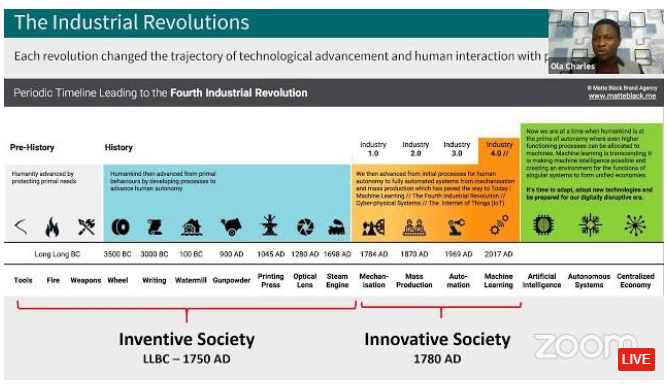
In the light of this redesign, we are making this Tekedia Live session video public. It was recorded this month on Tekedia Mini-MBA Live session on ecommerce in China, anchored by Dr. Henry Chan, from Beijing. 
Our New Book from Tekedia Institute Now In Lagos – “Seizing Our Singularity Future”

0

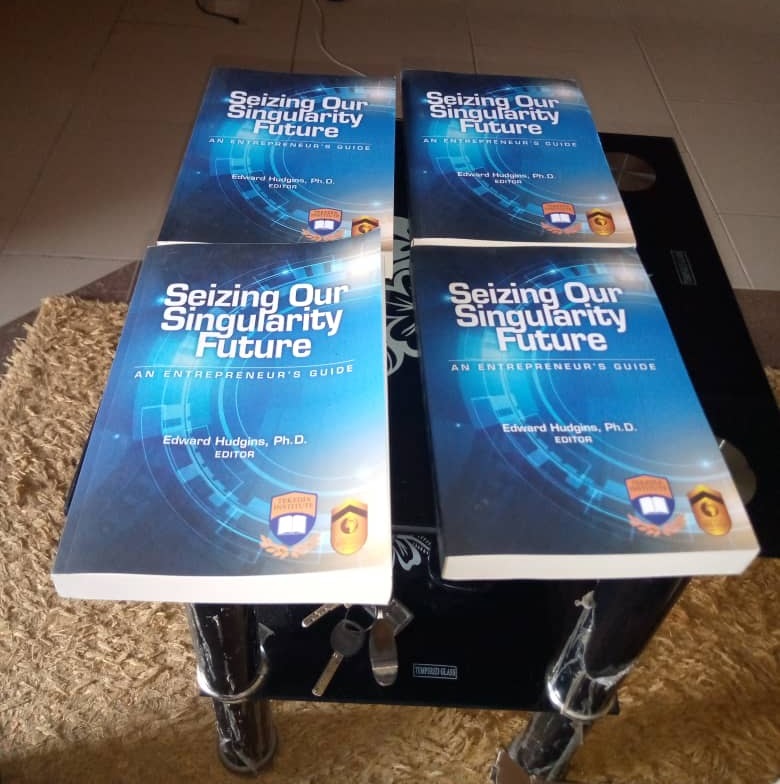
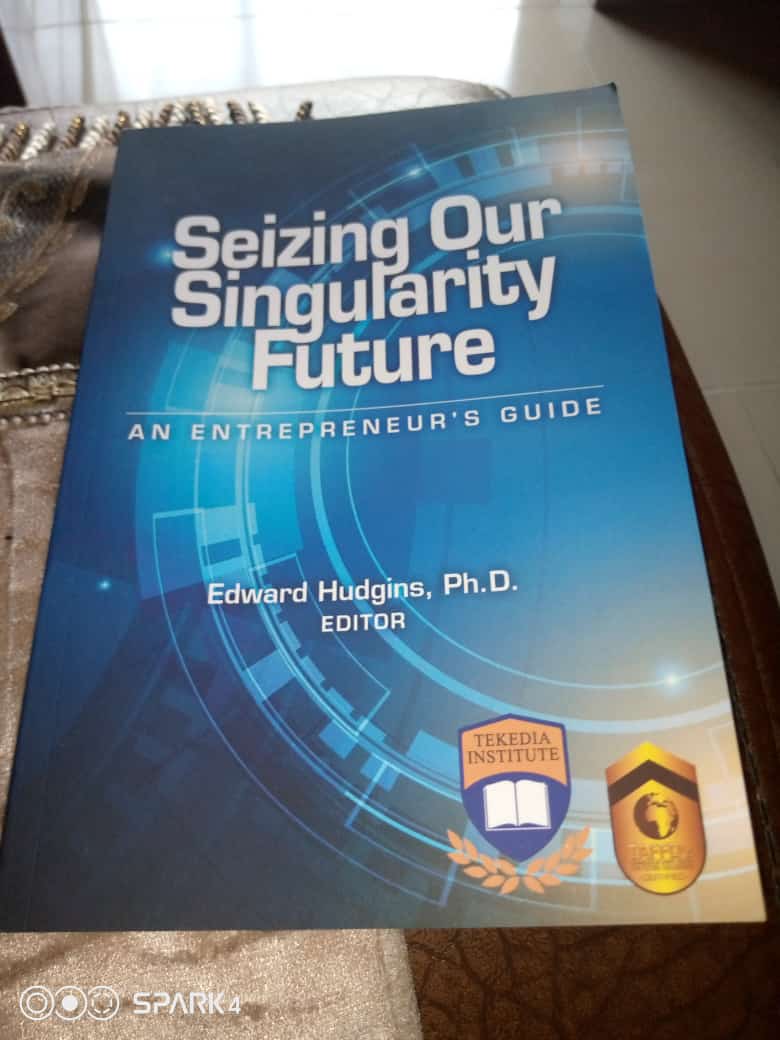
Tekedia Institute is happy to share that copies of our new book are now in Lagos. Yes, “SEIZING OUR SINGULARITY FUTURE: An Entrepreneur’s Guide” is now in Lagos.  Four of our faculty members turned their course in Tekedia Mini-MBA into an amazing book. Edward Hudgins, PH.D Brent Ellman, Gennady Stolyarov II Chogwu Abdul, PhD . In April, they will return to the Institute for another Live session on “Exponential Technologies and Business Opportunities in the Age of Singularities” for our members.

Book summary: “The essays on this volume were developed for a course on “Exponential Technologies and Business Opportunities in the Age of Singularities” by Transdisciplinary Agora For Future Discussions Inc., (TAFFD’s), for the Tekedia Institute as part of a Mini Masters of Business Administration program (mini MBA).This volume offers insights that will benefit any individual who comes about their lives and the future of their families, friends, neighbours and countries.”

The reviews are 5 stars on Amazon. Our team is batching the next shipping. But you can buy directly at Amazon.

Tekedia Mini-MBA is registering for the next edition – learn from the best here.

Spain’s New Law Classifying Gig Workers As Employees Deepens Threat to Gig Economy

0

When the Supreme Court ruled that Uber drivers in London should be classified as workers in February, many knew it has set a trajectory that will hunt the gig economy.

On Thursday, the Spanish government announced legislation that classifies food delivery riders as employees of the digital platforms they work for, AP reported.

The legislation is as a result of Spain’s Supreme Court ruling last September that classified delivery drivers as employees not independent contractors, following a case brought by a former Glovo driver.

The new law also requires the companies, such as Glovo and Deliveroo, operating the delivery platforms, to hand over to their workers’ legal representatives information about how their algorithms and artificial intelligence system function in assigning jobs and assessing performance, among other aspects, the report said.

The Spanish government, together with the country’s main business groups and trade union confederations agreed on the new law.

But it has ignited a fresh controversy, not only between the authorities and the digital platforms, but also some delivery men who want to remain self-employed because they like the flexibility it accords them.

The Minister for Labor, Yolanda Diaz described the law as pioneering and part of modernization of the labor market in Spain, updating regulations in accordance with technological developments to ensure workers’ rights are upheld.

She said the rule on disclosing how the digital system works is “epic” as it “neutralizes algorithmic punishments.”

There have been allegations by drivers that operators of ride-hailing apps, including Uber have been manipulating the system algorithmically to cheat on the gig workers.

Diaz and other concerned voices hope disclosing how the digital system works will help to protect drivers from algorithmic malpractice by the platforms.

But a statement issued by the Association of Service Platform said the new law is an attack on Spanish digital economy.

The statement said “the rule on disclosing algorithms is a measure which undoubtedly will have a very negative effect on the development of the digital economy in Spain”.

It added that “the rule is an assault on the most basic principles of the freedom to do business and intellectual property rights.”

Deliveroo has urged the authorities in Spain to reconsider the law as it would affect the food sector. Statement issued by the London-based food deliverer said “the measure will lead to less work for riders, will hurt the restaurant sector and will restrict the areas where platforms can operate.”

The law appears complicated as it means forcing drivers who want to remain under the gig economy model to become employees, taking their rights to control their time away.

California failed where London and now Spain succeeded in classifying gig workers as employees who deserve labor rights and benefits. With this development, the gig economy in Europe has come under threat as more countries in the EU bloc will likely follow the trajectory.

Uber, which runs UberEats has been in fight with the authorities both in the US and Europe to keep its drivers independent. The proposition 22 ballots, which allowed people to decide if they want Uber to continue with the gig model through vote, helped Uber and others win the challenge against the state of California in November, but the gig economy doesn’t have such a lifeline outside the United States.

In an apparent effort to take the attention of the authorities off its business model, Jamie Heywood, Uber’s regional general manager for northern and eastern Europe said the company “have made some significant changes to our business, guided by drivers every step of the way. These include giving even more control over how they earn and providing new protections like free insurance in case of sickness or injury.”

The new Spanish law indicates that authorities in Europe are not impressed by such efforts by Uber and other digital platforms to uplift the livelihood of their drivers.

Tekedia Live On Consumer Marketing In The FMCGs Sector

0

Tomorrow is the day – Marketing in the FMCGs sector. They have called him the oracle of consumer marketing for his ability to create brands quickly. Emmanuel Agu, the Group Marketing Director of Jotna (the LaCasera Company) will lead Tekedia Live tomorrow as follows: Sat, March 13 | 7pm – 8.30pm WAT | Consumer Marketing in FMCG. The Zoom link in the Board.

More so, I am confirming that Transdisciplinary Agora for Future Discussions Inc. ( TAFFD’s )’s Georgia USA will be leading our session on April 6 to discuss exponential technologies and entrepreneurship. Four of their Fellows will be live and the session will run for two hours.

Meanwhile, we’ve opened a new edition of Tekedia Institute Mini-MBA; register today and get immediate access to my books . Learn from the best; join us today.