There was a deep conversation during Tekedia Live today on Category-King – a company which has built or acquired leverageable factors to dominate a business category within its sector. For example, Facebook is a category-king in human social connection within the broad social media sector. Google is a category-king in web search.
Dangote Cement is a category-king in Nigeria’s cement sector. Indomie Noodles is a category-king in the noodles sector. I have also used sector-king when a company becomes dominant within its sector when the category equates to a sector.
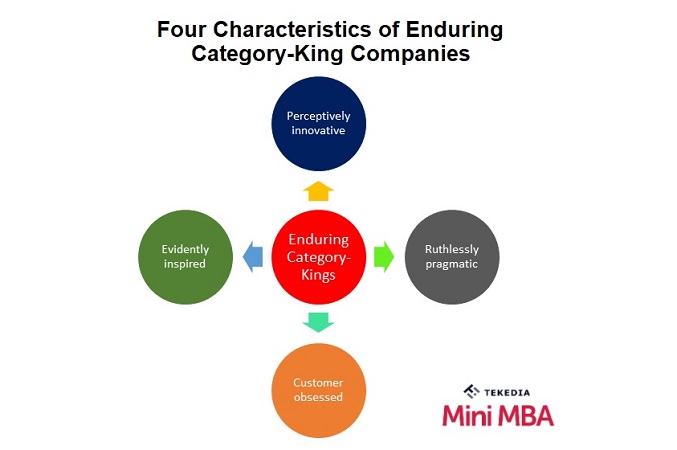
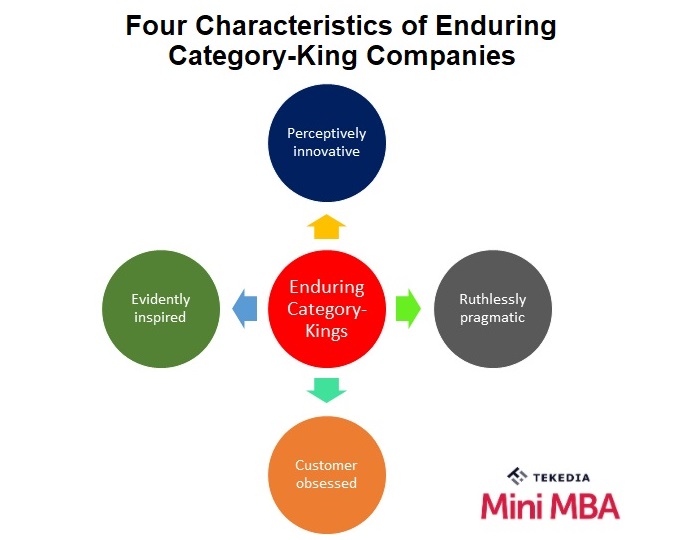
To become an enduring category-king in your business sector, you must possess these four characteristics. With these four features, the firms build moats to protect their castles.
Perceptively innovative: you are always innovating. You never rest, always pushing for better products, services and experiences. You outperform competitors with new solutions for unmet needs.
Evidently inspired: you inspire your users. You are modern, trustworthy and inspirational, you have a larger purpose, helping people live out their own values and beliefs.
Ruthlessly pragmatic: your customers depend on you and you have their backs, making life easier by delivering consistent experiences. You make good on your promises.
Customer obsessed: customers cannot imagine living without you. You know what matters to customers, finding new ways to meet their most important needs.
The Nigerian Naira falls to N410 per US dollar, officially. The Central Bank of Nigeria (CBN) governor noted: “In order to adjust for the decrease in supply of foreign exchange, the naira depreciated at the official window from N305/$ to N360/$ and now hovers around N410/$.”
If you look at that statement, you will agree that Nigeria is in a vicious circle. Yes, our inability to reform our economic structures has muted the comparative advantages within the nation. So, just like that, a nation of extremely brilliant people, is lost, with no national vision to galvanize economic vibrancy and growth towards a hopeful future.
With political stasis evident everywhere, Nigeria is at a crossroads, and nothing can fix this paralysis until Nigeria decides to produce things it could sell internationally or substitute some it currently imports. But with the banks not lending at scale (not entirely their fault), and economic restructuring that will bring intra-state competition, to boost productivity and efficiency, not happening anytime, Nigeria’s only core hope is that Aliko Dangote’s refinery business will rise.
Yes, Nigeria waits for Dangote because only him has a credible roadmap to change the economic trajectory of his nation. His position today is very vital and critical because he could be the only cousin to make Naira stronger. Naira looks like an orphan with no one helping it to compete globally. Dangote will come to assist it to find its space in the league of global currencies. Across human history, nations rise when pioneering entrepreneurs emerge. The moment of truth is here – and Naira needs pioneers in markets to save it from the ruins of the scale of Mexico, Venezuela, Argentina and even Zimbabwe, at different times of their histories.
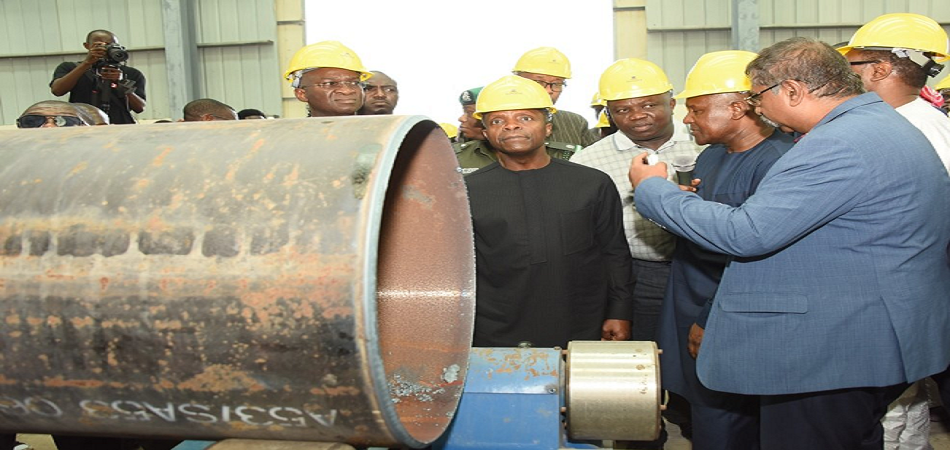
Dangote refinery
I have written extensively on Dangote’s positioning in my book – The Dangote System. I have also accepted an invitation to meet the business legend in Nigeria anytime I make it home. Certainly, it may be a while since I have no plan to fly until they have solved the last case of Covid-19!
Saving the Nigeria
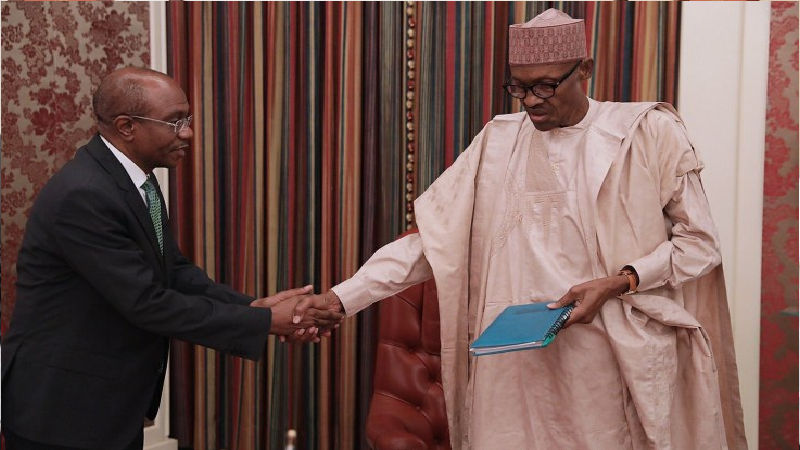
According to the News Agency of Nigeria, the Governor of the Central Bank of Nigeria (CBN), Godwin Emefiele, has noted that Dangote Refinery will possibly sell refined crude to Nigeria in naira when it begins operations. When that happens, Nigeria will save about 41% of its foreign exchange, currently expended on the importation of crude oil products. That 41% will give a breathing space for Naira and that could be a turning point for the nation.
Emefiele said, ”Based on agreement and discussions with the Nigerian National Petroleum Corporation and the oil companies, the Dangote Refinery can buy its crude in naira, refine it, and produce it for Nigerians’ use in naira.
“That is the element where foreign exchange is saved for the country becomes very clear. We are also very optimistic that by refining this product here in Nigeria, all those costs associated with either demurrage from import, costs associated with the freight will be totally eliminated.
“This will make the price of our petroleum products cheaper in naira. If we are lucky that what the refinery produces is more than we need locally you will see Nigerian businessmen buying small vessels to take them to our West African neighbours to sell to them in naira.
“This will increase our volume in naira and help to push it into the Economic Community of West African States as a currency.”
Emefiele was confident that the refinery would be completed by the first quarter of 2022, adding that this would put an end to the issue of petrol subsidy in the country.
He said, “I am saying that by this time next year, our cost of import of petroleum products for petrochemicals or fertiliser will be able to save that which will save Nigeria’s reserve. It will help us so that we can begin to focus on more important items that we cannot produce in Nigeria today.’’
For years, Nigeria has approached strengthening the naira through financial engineering at CBN headquarters; Dangote Refinery will help to strengthen Naira through technical innovation, at international markets through products and services, shifting equilibrium points to improve the balance of payment for Nigeria. The latter has always worked! Nigeria waits for that day because that refinery could be the most important national asset for a long time. Then, we will note that the N100 billion intervention to the projects, from the apex bank, is a good deal for the nation.
Palmary Consult,one of our partners on blockchain technologies at the Institute, is holding a masterclass on blockchain masternode. The program is scheduled on the 6th of March at the Radisson Blu Hotel Victoria Island, Lagos. There is a major redesign in finance and technology and the opportunities are huge. Fintech, for example, has revolutionized the way people get financial services, transforming the ordinance of finance along the way.
This nonlinear paradigm shifts from Card Payments, to Online Payment Systems, to USSD payment, to blockchain-anchored Decentralized Finance, have created the need to be adept with the necessary knowledge for future markets.
This Executive Business Luncheon offers you a Covid19 compliant meeting space with major players in this space, to acquire the necessary skill and information, co-learn and c-share, and win. There will be practical sessions on MASTERNODES Proof of Stakes Technology. MASTERNODE is a Decentralized Protocol that verifies and resolves the Integrity of transfers on Blockchain.
How to register
It costs N50,000, covering one -on -one consultative session on how to begin, certificate of attendance, lunch (buffet), etc. Payment should be made to:
Palmary Global Services Ltd. 0018469207.
GTBank.
Kindly send payment proof to reservations@palmaryconsult.com
For enquiries call/message : +234 (0)8090653767 or email enquiries@palmaryconsult.com
There will be a rebate for companies /group sending a minimum of 5 persons for the event.
Very painful indeed: the Central Bank of Nigeria (CBN) has made it official – Naira has lost more grounds to the US dollars.According to the Vanguard, Godwin Emefiele, the apex bank governor, “who spoke at a summit on the economy by Bank CEOs on Friday, said the drop in crude oil earnings and the associated reduction in foreign portfolio inflows significantly affected the supply of foreign exchange into Nigeria”.
His words: “In order to adjust for the decrease in supply of foreign exchange, the naira depreciated at the official window from N305/$ to N360/$ and now hovers around N410/$.”
Meanwhile, the Vice President, Prof Yemi Osinbajo, noted within the week that Nigeria would be vigorously pursuing export-focused initiatives to improve our balance of trade and payment which will help the Naira. Call that a cosmetics solution: Mr. Vice President knows the real solution but somehow his party does not want to do the needful. Yes, Nigeria needs to make states competitive by restructuring our economic architectures. If we do that, we will see more organic innovations across states.
The VP #Osinbajo also commended the DMBs for their patriotic contributions to sustain growth but called for the need to further deepen the provision of capital that would allow businesses to grow over the long term.
Today, a governor can camp in Abuja for six months without any interest in the affairs of his state, since he is aware that at the end of the month, Abuja will credit his state’s bank account with billions of naira to spend. He will spend that money and then wait for the next month. But if we restructure, that governor will have incentives to think and innovate because if he does not do so, he will not have resources to pay his workers and run the state. Until Nigeria does that, even the exports-oriented initiatives will not work at scale.
It is because of our outdated economic formulation that a nation like Nigeria would have 26 states not recording a singleforeign direct investment dollar in a year, according to the National Bureau of Statistics.
Twenty-six Nigerian states recorded zero foreign investment in the whole of 2020, figures released by the National Bureau of Statistics show.
The report on capital importation into the country, compiled by the Central Bank of Nigeria, was released on Friday by the NBS.
It captures the total Foreign Direct Investment (FDI), portfolio investment and other types of investments into the country in a year the global economy suffered a terrible battering as a result of the coronavirus pandemic.
Those on the list like my home state, Abia, really did not do much: “By destination, Lagos emerged as the top destination of capital investment in Nigeria with $8.3 billion, followed by Abuja, which received $1.3 billion. The others on the list are Abia State with relatively lower $56 million, Niger with $16.4 million, and Ogun with $13.4 million. Anambra State recorded $10.2 million, Kaduna State recorded $4.03 million, Sokoto got $2.5 million and Kano got $2.4 million. Akwa Ibom received $1.05 million ahead of Adamawa, which received just $20,000.” Yes, Adamawa’s FDI for a whole year was $20,000, and that effort added it to the list of Nigerian states with FDI in 2020! Simply, no incentive to leverage on comparative advantages across the nation.
Nigeria needs to fix its weakest point: fix the structure of its economy, and unleash the ingenuity of its people, to use their comparative advantages to advance the commonwealth. If we do not do that, those export-oriented initiatives will fail, primarily because there is no incentive for the states to think. Yes, if oil continues to run, and the credits continue to flow into the bank accounts, why think when at the end of the day, everyone gets his or her portion?
People, Nigeria’s economic restructuring to add intra-state competition is the way forward! Do it for Naira.
My son’s Social Studies textbook listed a number of Nigerian cultural practices that should be retained and those that shouldn’t. I was surprised when I saw cultism, ritual killings, and bloodletting as some of the Nigerian customs and traditions that should be discouraged. I made a mental note of telling their school headmistress to be mindful of the publishers they patronize but on second thought, I realized this writer is saying what she feels about the country. I believe she thinks those mentioned vices are elements of Nigerian culture. It appears she might be right because, somehow, these vices have found their way into our society and are not planning to leave anytime soon.
Day in day out, we receive bad news about this country. Even though most of them are exaggerated, a lot are true. Just recently a woman was arrested for killing children, pounding them in a mortar, and using their mashed remains to perform rituals for her customers. This sounds insane and out of this world but it is true. She is not the only person arrested for engaging in money and blood rituals. It is becoming a norm, gradually, for people to make money through magic. The age-old tradition of becoming rich through hard work, resilience, diligence, and smartness is gradually giving way to the abracadabra method. The worst thing is that many people no longer believe anyone can become rich without doing these rituals. This is something worrisome and we need to uproot it from our communities before they become fully indoctrinated into our culture.
How about other crimes going on in Nigeria? Of course, every country of the world has crimes it is battling with but we need to talk about ours. Today, Nigeria’s foreign PR is shaky because of fraudsters, especially those that engage in cybercrime. Nowadays, many Nigerians find it hard to get foreign remote works because many international employers are wary of cybercrime. Yes, they know how intelligent Nigerians are but many of them are not comfortable trusting us.
Even we Nigerians don’t really trust one another. This is simply because we have allowed the culture of lies to find its way into our society and we gave it a seat among the elders. Today, traders uphold the ideology that honesty doesn’t pay. You hear things like, “You have to learn how to lie if you want to become a successful businessman.” So what then are we complaining about when the country breeds more fraudsters and crooks since we all encouraged it?
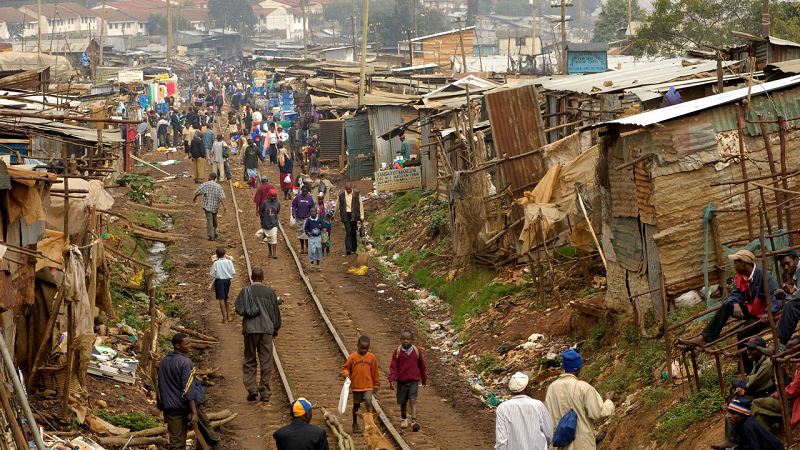
Nigeria poverty
Let us look at the ones currently eating up the whole country: insurgency, banditry, kidnapping, herdsmen-farmers clash and the rest of them. As outrageous as this might sound, know that none of these vices started overnight; they were birthed, nurtured, and groomed into the monster they have become by us. Insurgency in the Northeast didn’t start all of a sudden. If you don’t know how Boko Haram started, I suggest you research that and see how it was enabled and used by the community and political leaders, respectfully. What about kidnapping as a source of income? Do you remember how the Niger-Delta militants introduced that culture and how it was ignored until it got out of hand? Then we thought they were dealing with expatriates, later with oil companies, and then with the government. We never knew the monster would grow to haunt us all. We didn’t condemn the act then because we felt it was “not our business.” So now that the bandits in the Northwest have discovered this wicked act as a better way of (making money?) banditry, what has been done about it besides a governor throwing amnesty at them and a religious leader demanding for their “blanket amnesty”? Or will this become a tradition also?
There is no need to point out all the vices that are overlooked in this country for it to be understood that they are being accepted into our culture. The only fearful thing is that the younger generation may come up to see them as norms. And when something becomes a norm, it is already part and parcel of that community. Then, it becomes difficult to uproot because the people will identify with and claim it is their way of life. This is why you should do the much you can to make positive changes in your community.