DD
MM
YYYY

PAGES

DD
MM
YYYY

spot_img

PAGES

Home Blog Page 587

Improving Your Knowledge on Human Body & Performance: 6 Points to Consider

0

The human body is a complex machine that operates through an intricate system of interrelated components. Understanding how these systems work can dramatically impact physical performance, health, and overall well-being. Knowledge about the body enhances athletic ability and contributes to better lifestyle choices and injury prevention. To delve deeper into this fascinating subject, here are six key points to consider.

Understanding Anatomy and Physiology

A comprehensive knowledge of anatomy and physiology is fundamental to maximizing human performance. Anatomy refers to the structure of the body, including muscles, bones, joints, and organs. Conversely, physiology explores how these anatomical components function and interact during physical activity. Gaining insights into muscle fiber types can inform training decisions. Slow-twitch fibers are tailored for endurance, while fast-twitch fibers are designed for explosive strength. Learning about these variations can help individuals tailor their training programs for desired outcomes.

A thorough grasp of joint mechanics can aid in identifying proper movement patterns, leading to more effective and safer exercise. Those who study or work within the fitness industry, such as trainers or coaches, will find this knowledge invaluable. Resources available through options like Brookbush Institute can provide exploration into these crucial aspects of human performance. Without a robust understanding of these concepts, individuals may struggle to progress in their fitness journey.

The Role of Nutrition in Performance

Nutrition plays an important role in enhancing physical performance and recovery. The body requires a variety of nutrients to function optimally, including carbohydrates, proteins, fats, vitamins, and minerals. Carbohydrates serve as the primary fuel source during high-intensity exercise, while proteins are important for muscle repair and growth. Proper hydration is important, as even mild dehydration can lead to decreased performance and increased risk of injury.

Identifying the right balance of macronutrients to support specific training regimens can significantly affect performance. Individuals may benefit from consulting with nutritionists or dieticians to develop personalized meal plans optimized for their goals. Understanding how the timing and composition of meals affect energy levels can enhance performance. Eating strategically before and after workouts can lead to improved recovery and muscle synthesis.

The Importance of Recovery

Recovery is just as crucial as the training itself for optimal performance. During exercise, muscles undergo stress and micro-tears that need time to heal. Failure to allow adequate recovery can lead to overtraining, diminishing returns, and potential injury. Various recovery methods can enhance muscle repair, including sleep, active recovery, and mobility work. Quality sleep supports the body’s natural recovery processes by promoting hormone regulation and muscle repair.

Incorporating techniques such as stretching, foam rolling, and active recovery workouts can facilitate circulation and alleviate muscle soreness. Psychological recovery is another key aspect often overlooked. Stress management techniques, such as mindfulness or meditation, can help athletes maintain a healthy mindset amidst the pressures of performance.

The Impact of Biomechanics

Biomechanics involves the study of movement and the mechanics of body parts. Understanding principles of biomechanics can greatly aid individuals in improving their performance while minimizing the risk of injury. Analyzing running technique can help identify inefficient movement patterns that may lead to injuries. Knowledge of proper body alignment and biomechanics is critical for activities involving complex movements, such as weightlifting or gymnastics.

Comprehensive assessments can pinpoint areas of improvement and provide tailored training programs focusing on effective movement patterns. Engaging in practices that promote efficient biomechanics can enhance power and endurance while safeguarding against common injuries.

The Significance of Mental Training

Mental training plays a monumental role in enhancing performance. Psychological resilience, focus, and motivation are integral components that can sway performance outcomes. Strategies like visualization, goal-setting, and positive self-talk can strengthen an athlete’s mental fortitude and determination. Practicing mental strategies consistently can help athletes cope with competition pressures and stay committed to their training goals.

Acknowledging the interplay between mental and physical aspects of performance leads to more comprehensive training experiences. The ability to shut out distractions and maintain concentration during competitions is often what separates successful athletes from their less accomplished counterparts. The journey toward peak performance clearly recognizes the intertwining of body and mind.

Staying Informed and Continuous Learning

To continuously improve performance, staying informed about the latest research, techniques, and technologies is important. The fitness landscape is ever-evolving, with new insights emerging consistently and informing better training practices. Workshops, seminars, and online courses offer educational opportunities for athletes and trainers alike.

Embracing continuous learning equips individuals with tools and knowledge to adapt and modify their programs based on research findings. Following credible sources, like specialized fitness organizations and institutions, can enhance understanding of best practices and cutting-edge methods.

Understanding the human body and its performance factors is a multifaceted approach that requires commitment and ongoing education. This knowledge empowers individuals to design well-rounded training programs, optimize nutrition, prioritize recovery, and remain mentally resilient. By embracing each of these components at a fundamental level, athletes and fitness enthusiasts alike can enhance their performance and enjoy a healthier lifestyle.

CFTC Greenlights Polymarket to Relaunch U.S. Operations

0

The U.S. Commodity Futures Trading Commission (CFTC) issued a no-action letter, allowing Polymarket to relaunch its crypto-based prediction market operations in the United States after a three-year hiatus.

This approval marks a significant regulatory milestone for the decentralized finance (DeFi) sector, enabling Polymarket to operate under the regulatory framework of QCX, a CFTC-licensed derivatives exchange acquired by Polymarket for $112 million in July 2025. The no-action letter exempts Polymarket from certain swap data reporting and recordkeeping requirements, facilitating its return to the U.S. market without facing enforcement actions for non-compliance with these specific obligations.

This development follows Polymarket’s earlier challenges, including a $1.4 million fine and a cease-and-desist order from the CFTC in January 2022 for operating unregistered event-based binary options contracts. The platform had been barred from offering services to U.S. customers since then.

The recent approval reflects a broader shift in U.S. regulatory attitudes toward crypto and prediction markets, with the CFTC and Securities and Exchange Commission (SEC) showing increased openness to digital asset trading. Polymarket’s CEO, Shayne Coplan, praised the CFTC for its swift action, noting the process was completed in “record timing.”

The relaunch is bolstered by strategic moves, including an investment from 1789 Capital, a venture fund backed by Donald Trump Jr., who also joined Polymarket as an advisor. This approval positions Polymarket to compete with platforms like Kalshi and capitalize on growing interest in prediction markets for political, economic, and cultural events, potentially reshaping the DeFi and fintech landscapes in the U.S.

However, the no-action relief is conditional and does not exempt Polymarket from other regulatory requirements, such as anti-money laundering (AML) or know-your-customer (KYC) obligations, and state-level regulations may pose additional challenges.

The no-action letter signals a more permissive regulatory stance toward decentralized finance (DeFi) platforms, potentially paving the way for other crypto-based prediction markets to gain approval. This could encourage innovation in the DeFi sector, as platforms see a clearer path to compliance within the U.S.

Polymarket’s return to the U.S. market, facilitated by its acquisition of the CFTC-licensed QCX exchange, allows it to tap into a large user base interested in prediction markets for events like elections, economic indicators, and cultural outcomes. This could drive significant user growth and trading volume, positioning Polymarket as a leader in the sector.

The approval intensifies competition with other prediction market platforms like Kalshi, which also recently received CFTC approval for similar activities. This could lead to innovation, better user experiences, and potentially lower costs for participants, but it may also spark pricing wars or market saturation.

Prediction markets, often seen as more accurate than polls for forecasting events like elections, could gain mainstream traction in the U.S. With Polymarket’s high-profile backing, including from figures like Donald Trump Jr., these platforms might influence public discourse or be leveraged for political and economic insights, raising concerns about manipulation or bias.

While the no-action letter exempts Polymarket from certain reporting requirements, it must still navigate other federal regulations (e.g., AML/KYC) and varying state-level rules. This could limit its operational flexibility or increase compliance costs, potentially affecting smaller players in the market differently.

The CFTC’s decision reflects growing acceptance of crypto-based financial products, which could boost investor confidence and mainstream adoption of cryptocurrencies. It may also encourage other regulators, like the SEC, to clarify their stance on similar platforms, reducing uncertainty in the crypto space.

As a decentralized platform built on Polygon, Polymarket’s U.S. approval could set a benchmark for other jurisdictions, influencing global regulatory approaches to prediction markets and DeFi. However, it may also prompt stricter oversight in regions wary of crypto’s unregulated nature.

The conditional nature of the no-action relief means Polymarket must adhere strictly to CFTC terms. Any misstep could lead to regulatory backlash, as seen in its 2022 fine, potentially undermining confidence in the platform or the broader DeFi sector.

Overall, this move strengthens Polymarket’s position, fosters DeFi innovation, and enhances the role of prediction markets in the U.S., but it also underscores the complex regulatory landscape that crypto platforms must navigate.

Public Interest and Truck Crash Deaths Show Divergent Patterns in Nigeria

0

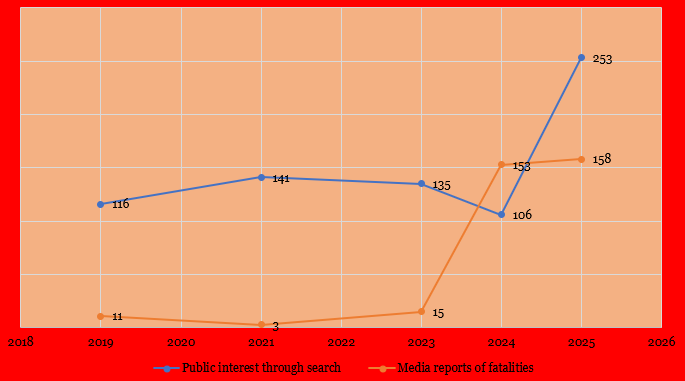
A review of truck-related accident data by Infoprations reveals a striking gap between public attention and the real toll on Nigerian roads. Records from 2019 to 2025 show that while fatalities surged into triple digits in the last two years, online search interest only spiked after repeated disasters. According to the analyst this indicates that public concern rises unevenly despite mounting deaths.

A Mixed Picture Across Six Years

Numbers compiled from major media reports and public search metrics chart a turbulent safety record. Reported deaths from heavy-duty vehicle crashes stood at 11 in 2019, dipped to just three in 2021, then began climbing again. By 2023, fatalities reached 15 as Lagos and Ogun corridors saw a string of container and trailer incidents.

The real inflection point came in 2024. Tanker explosions and multiple expressway collisions pushed the death toll to 153, eclipsing the cumulative total of the preceding four years. In October 2024 alone, more than 140 lives were lost in a single tanker inferno in Jigawa after residents rushed to scoop petrol from an overturned vehicle. Yet search interest for the year was measured at 106, lower than levels seen in both 2019 and 2021.

In 2025, reported fatalities edged even higher to 158 as disasters continued in Niger, Enugu and along the Zaria–Kano corridor. This time, search activity surged to 253, more than doubling any prior year, reflecting widespread online engagement with each tragedy.

Attention Spikes After Repeated Shocks

The data reveal that heightened awareness lags behind actual risk. Public curiosity did not peak at the moment of catastrophic loss in 2024. Instead, it accelerated months later as the accidents continued into early 2025. Analysts suggest that a single mass-casualty event may briefly dominate headlines but does not sustain digital engagement unless subsequent crashes keep the topic alive.

This delayed response mirrors patterns seen in other public-safety issues. Awareness often follows cumulative exposure rather than isolated incidents. In Nigeria’s case, the relentless cadence of January, February and March 2025 tanker disasters, followed by July expressway crashes, generated continuous news cycles that kept road safety at the forefront of conversation.

Interpreting the Disconnect

Several factors explain why interest lags behind fatalities. Rural disasters, though deadly, may be underreported or attract limited national debate. Social media amplification also drives searches; videos of overturned tankers or burning buses tend to circulate more widely when multiple incidents occur within weeks.

Source: Google Trends, 2019-2025; The Punch, 2019-2025; The Guardian, 2019-2025; Infoprations Analysis, 2025

Infrastructure and enforcement deficiencies deepen the risk. Many highways lack freight-specific lanes, modern guardrails or effective weighbridge checks. Fuel tankers continue to ply long routes without fire-suppression systems or modernised braking technology. When mechanical failure intersects with congested roads or crowd behaviour, outcomes are severe.

A Persistent National Challenge

Nigeria’s expanding freight sector ensures that heavy trucks remain indispensable to commerce. Yet the record from 2019 to 2025 shows that preventable tragedies have grown, culminating in over 300 deaths in the last two years alone. Search patterns demonstrate that concern is episodic, often ignited only after successive disasters dominate the news cycle.

Bridging this gap requires sustained awareness, modern enforcement and investment in safer road design. Without deliberate effort, the country risks treating each mass-casualty crash as an isolated misfortune rather than part of an escalating systemic problem. Aligning public vigilance with the realities of the toll may prove as critical as any policy reform in saving lives on Nigeria’s highways.

Nigeria’s Truck Tragedy Demands a New Road Safety Vision

0

Freight is the engine of Nigeria’s economy. Every day thousands of tankers and articulated trucks travel from Lagos ports to the far north, carrying cement, fuel and food to markets that keep the country supplied. Beneath this movement lies a recurring tragedy of avoidable deaths. Our analysis of harmonised review of reports from Punch and The Guardian covering 2019 to 2025 reveals more than two dozen serious truck crashes, hundreds of fatalities and an urgent call for reform.

The Data Reveal an Alarming Pattern

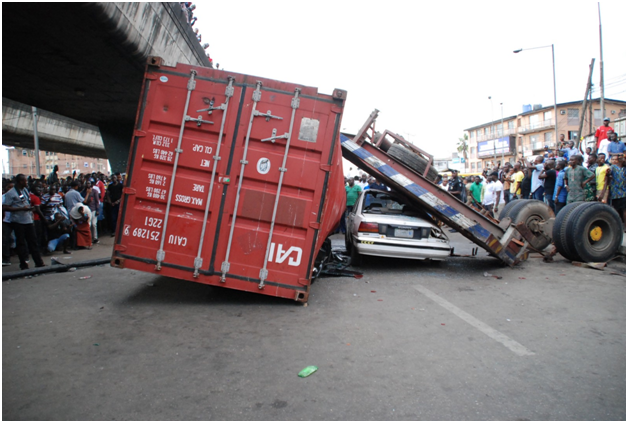
Collating incidents from the two national newspapers shows at least thirty significant crashes over six years. Early cases such as the September 2019 Nasarawa Eggon–Akwanga cement truck collision that killed eleven people drew attention but little systemic change. February 2021 brought the death of three tricycle occupants in Kwara after a tipper truck lost control. Lagos remains a recurring hotspot: a container truck toppled from the Ojuelegba bridge in January 2023 killing nine passengers, while April and May 2023 saw multiple fatalities in Ogun on the busy Epe–Ijebu-Ode and Abeokuta–Lagos corridors.

The later years are marked by mass casualty events. More than 140 people perished in Majia, Jigawa in October 2024 when a fuel tanker exploded as locals scooped petrol. Only three months later, a petrol truck accident in Dikko, Niger claimed eighty-six lives. Enugu–Onitsha Expressway has witnessed repeated disasters, including eighteen deaths in January 2025 and six more in February. July 2025 brought another twenty-one deaths on the Zaria–Kano Expressway. These figures underscore how quickly a routine trip can turn into a calamity when mechanical failure, poor road design and human behaviour intersect.

Factors Driving Recurrent Disasters

Repeated themes emerge across reports. Mechanical deficiencies are rampant. Brake failure and bald tires recur in Federal Road Safety Corps statements, suggesting gaps in inspection regimes. Infrastructure limitations compound the risk. Narrow bridges, eroded shoulders and pothole-ridden stretches on trunk roads reduce driver reaction time. Enforcement is inconsistent. Weight limits and speed regulations are routinely flouted, particularly at night when oversight thins. Human behaviour adds a lethal element. Fuel scooping after spills transforms manageable incidents into infernos, claiming dozens of lives in minutes.

Geography influences severity. Lagos and Ogun corridors see frequent low-fatality crashes linked to congestion and container instability. Northern and central states tend to record fewer incidents but suffer catastrophic losses when tankers collide with passenger buses or overturn near settlements.

Building a Culture of Safety

Thoughtful leadership requires moving beyond statistics to prevention. Strengthening vehicle standards is foundational. Annual road-worthiness tests for heavy vehicles must be digital, tamper-proof and enforced with roadside spot checks. Telematics can support real-time monitoring. Speed governors and GPS tracking tied to a national control centre would allow regulators and fleet owners to intervene before a reckless driver becomes a headline.

Corridor modernisation is equally important. Lagos–Ibadan, Zaria–Kano and Enugu–Onitsha roads need freight-specific lanes, durable guardrails and clear signage. Bridges such as Ojuelegba require physical barriers to prevent containers from toppling. Emergency response capacity must be expanded with well-equipped fire units and trained personnel who can handle volatile cargo.

Public engagement is vital. Campaigns that treat fuel scooping as a lethal act, not an opportunity, should be embedded in community dialogues and school curricula. Survivors’ testimonies from Jigawa and Niger tragedies can shift perceptions. Insurance incentives can nudge haulage firms to prioritise driver training, maintenance schedules and fatigue management.

Turning Tragedy into Transformation

Trucks will remain central to Nigeria’s supply chain, yet the current human toll is indefensible. Each fatality represents a parent, child or wage earner lost. The harmonised record of crashes shows the cost of inertia. Data transparency must become a norm, with every major crash logged in an open-access registry for researchers, insurers and civil society.

Leadership at federal and state levels, in collaboration with the haulage industry, can redefine expectations. Enforcing standards, investing in safer infrastructure and cultivating a public that rejects risky practices will bend the fatality curve downward. The country’s roads can shift from corridors of grief to channels of growth when evidence guides policy and accountability is shared by government, business and communities.

Nigeria’s economic future depends on efficient freight, yet prosperity cannot rest on preventable loss of life. In order to move beyond cycles of condolence into an era of safer and smart transport, our analyst notes that Nigeria needs to embrace data driven reforms and valuing every life on the highway.